Despite snow on the ground, we went for our customary walk in Valley View Park. On our way back home to Middleton, we took Highway #201 through Paradise and drove past our old house, #6326.
We had noticed changes to the garage and studio. There was a sign ‘Back to our Roots’. The new owners had moved from Deep Brook, bringing their business; the making and the sale of candles.
We are encouraged to see small manufacturing moving into Annapolis County.
Having owned #6326 for the last twenty four years, we continue to return to our roots. For me, that is a journey from suburban London to the geography of Canada. That includes living in Newfoundland, Nova Scotia, Ontario, Alberta and BC. For Heather, the starting point was Toronto followed by Nova Scotia, PEI, Newfoundland etc.
For both of us, the driving force has been the landscape; especially memorable has been the time in Iqaluit, Churchill, Haida Gwaii and Sable Island. Globally, shorter stints in California, Indonesia, China and South Africa.
Now, we can legitimately say, we have returned to our roots. One of these days, we shall drop in, buy a candle, to light our path.
Acknowledgements.
Thank you Heather and Edward for sharing the journey.
With a lifetime of books in the basement, I am trying to determine which ones are ‘sustainable publications’ and those categories of books that are no longer necessary.
This set me thinking about newspapers and magazines. In the category of ‘sustainable’ I would include the weekly, Bridgetown Reader, and monthly, The Grapevine.
This week, we have learned that there will be a recount for the two Liberal ridings held by Zach Churchill and Carman Kerr (see Close Race).
For my last blog, I sent Edward three photographs from the Rotary Riverside Park in Middleton.
They showed the memorial tree placement,
the yoga stations
and the watch that Heather found on the trail and placed on a tree (shown circled). This is consistent with the treasure-hunting theme (see Treasure Hunting).
Acknowledgement
Heather, likewise, has a significant collection of sustainable publications. Edward added the photographs.
On Wednesday morning I sent out an email to the family. Heather and I had voted for the incumbent candidate in the provincial election. Carman Kerr was ahead by three votes. Our votes do count!
Later in the day, I had to change my tune, the final count was David Bowlby by seven votes.
While I appreciate the good work by Carman for the residents of Annapolis County, it may be advantageous that our new representative is with the ruling party. He certainly possesses good credentials.
This week has been hard for rural residents. The media is full of political disputes at all levels—provincial, national, and North American. Combine this fact with the changes in delivery. It is perhaps not surprising that the CBC continues to load up on its advertising as we approach the Christmas season.
We have taken to daily walks at the Rotary Riverside Park. A couple of weeks ago , Heather found a watch on the trail. Perhaps the owner will reclaim it from its riverside perch. More hidden treasures (read Treasure Hunting)!
What struck me, were the maps of Japan on the inside cover. I do like ‘local’. I do enjoy Iyer’s writing style and content.
Acknowledgements
Heather and I have made it through an intense, political week. Time to head up to New Glasgow, weather permitting. Thanks to Edward for his support and collaboration.
With just seven votes separating the two front runners in our Annapolis Riding, a recount is required by election rule. It’s not over until the recount is completed in a few days. Alarmingly, only about 47% of eligible voters voted.
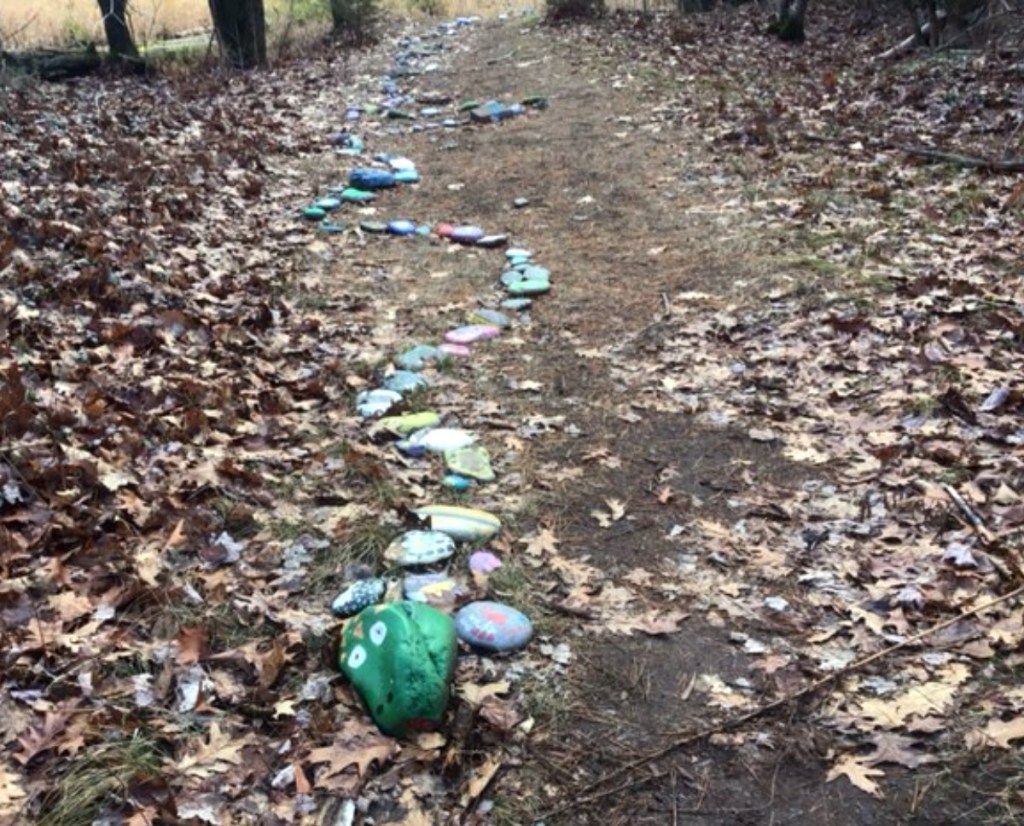
We went to Kingston this morning for a walk in the park. There we discovered Roscoe, the rock snake.
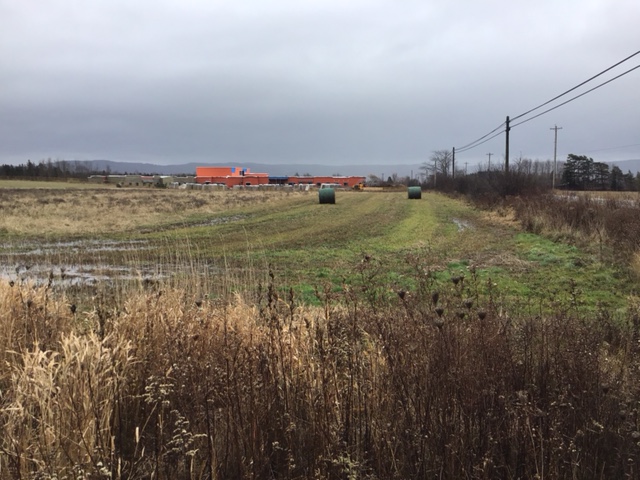
Afterwards, on our return, we pulled off Highway #101 to admire the rows of pumpkins, snaking across the field.
On another note, Frank Fox forwarded a YouTube link from England; an interview between James O’Brien and Guy Shrubsole about his book ‘The Lie of the Land‘.
‘Revealing how a small wealthy elite controls half of England’s land while claiming to be custodians of the countryside’.
From GoGeomatics Canada, I received a notice about LiDAR CANEX 2025.
The moderator is Tim Webster, Research Scientist with the Applied Geomatics Research Group (AGRG) in Middleton.
At The Inside Story bookstore in Greenwood, I noticed that most of the books by local authors, referenced in my previous blog post, were on display and available.
Edward contributed the links and graphics. Frank forwarded the interview with Guy Shrubsole, Jon Murphy, the notice on LiDAR CANEX 2025. Heather shared the discovery of the rock snake and the field of pumpkins.
Saturday was a dreary wet day. In The Reader, I noticed a book signing at Endless Shores in Bridgetown. It was a good excuse for a short drive. We met Cate Wilding. She lives in Port Lorne and has written three novels.
While at the bookstore, I picked up a flier ‘Great Reading Ideas for the Holidays’. It features Allison Maher’s “The Last of Firsts“, DJ Wiseman’s “Cara Rosa” and Sheila Graham-Smith’s “The View from Errisbeg“.
This set me thinking, about the relationship between authors and landscape and goes back to my abiding interest in Ernest Buckler and ‘The Mountain and the Valley’ (read my post The Mountain and the Valley).
What is the relationship between ‘place’ and our perception of ‘geography’?
Given the physical location of COGS (The Centre of Geographic Sciences) in Annapolis County, would there be merit in a book on ‘The Geography of Annapolis County’? (see earlier post Geobiography and the Annapolis Valley)
How would I define Geography?
Going back to my days at the University of Birmingham, it would include: Physical Geography: Geomorphology, Biogeography, Climatology. Economic Geography: Transportation, Settlement Infrastructure, Land Use Resource Management: Agriculture, Forestry, Mining, Fishing. Historical Geography, Regional Geography plus the various methodologies: Cartography, GIS, and Remote Sensing.
Saturday evening, I shared my thoughts over a beer with John Wightman. In particular, I was interested in the different trajectories of the towns: Annapolis Royal, Bridgetown, and Middleton, and the lack of a coherent vision.
John, correctly, expressed a concern that today, rather than think in terms of a book, we need to think in terms of an ‘online electronic presence’.
This led me to Bridgetown on a rainy Sunday afternoon. I wanted to photograph the site of the new building at Mountain Lea Lodge.
Photo by Bob Maher
What are the implications for the economic development of Bridgetown? If the Liberal party was successful in the provincial election, would we see a new hospital in town? Could Bridgetown become a centre of excellence in the long-term care for the elderly and infirmed? Would this attract a new generation of healthcare professionals to the Annapolis Valley? Would they be interested in understanding the Geography of Annapolis County? Would this expand the course offerings and the student population at the Annapolis Campus of the NSCC?
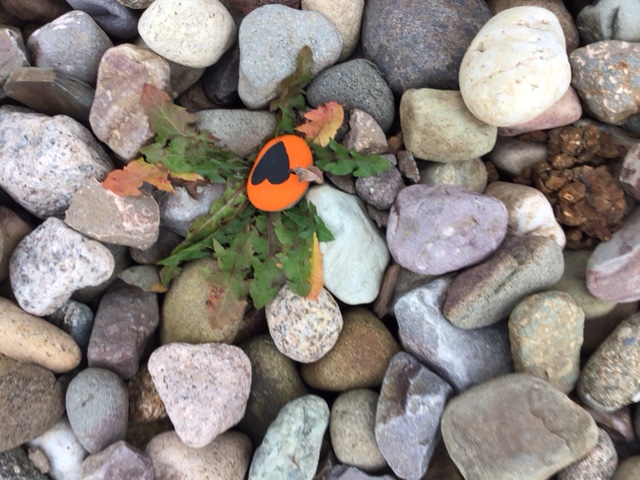
I did not take my phone or iPad. On the walk, we discovered some interesting stones. One thing led to another.
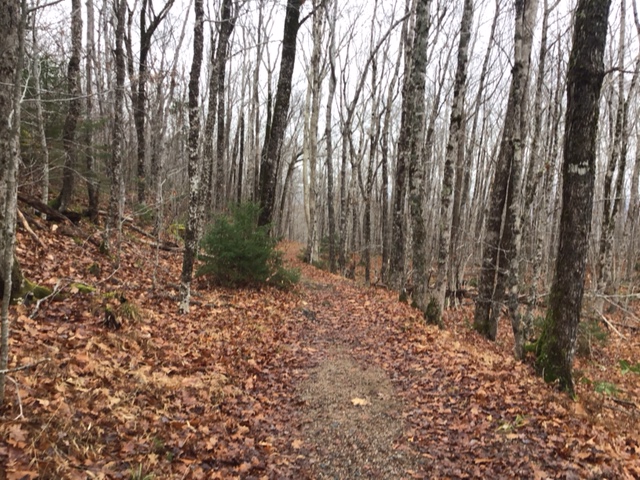
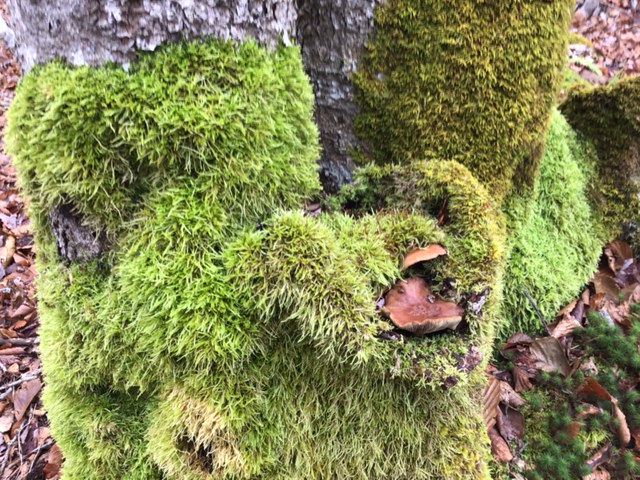
Today we returned to the Park with my iPad. I took the following photographs.
Can you find the treasure ?
Today, I had a second iteration. I noticed some stones at COGS. Again, this could provide material for a second treasure hunt (or geocache).
Let’s take the concept to a higher level. Imagine you wanted to engage students at COGS in exploring the landscape of Annapolis County. You could locate ‘geocache’ or treasures on various trails, bicycle routes, canoe routes etc. The treasures should be hidden on accessible public land.
Would this be a way to engage students at COGS with the surrounding community? Conversely, could this engage the community with resident students?
The common denominator would be a better understanding of our landscape.
The end result could be a book of hidden treasures of the Annapolis Valley. Ideally, the treasures would be natural features. They could be viewpoints or picnic sites too.
POSTSCRIPT FROM EDWARD
I sent a note to Bob, to include the following link and graphic in one of his posts. He hesitated, then wrote, “Please adapt the blog to include the information. I am biased. I do think the Brits have a better handle on Geography, the discipline than Canada“.
This global survey supports his “bias”.
2024 Shanghai Global Ranking of Academic Subjects in GEOGRAPHY Note how well the UK schools rank. Seven schools in the top 10 tell me they’re doing something right. Maybe COGS should look closely at this to unearth what makes the UK institutes so strong. Going out on a limb here, COGS could adapt or adopt valuable lessons from this ranking (and invite some UK geography talent?). UBC didn’t do too badly.
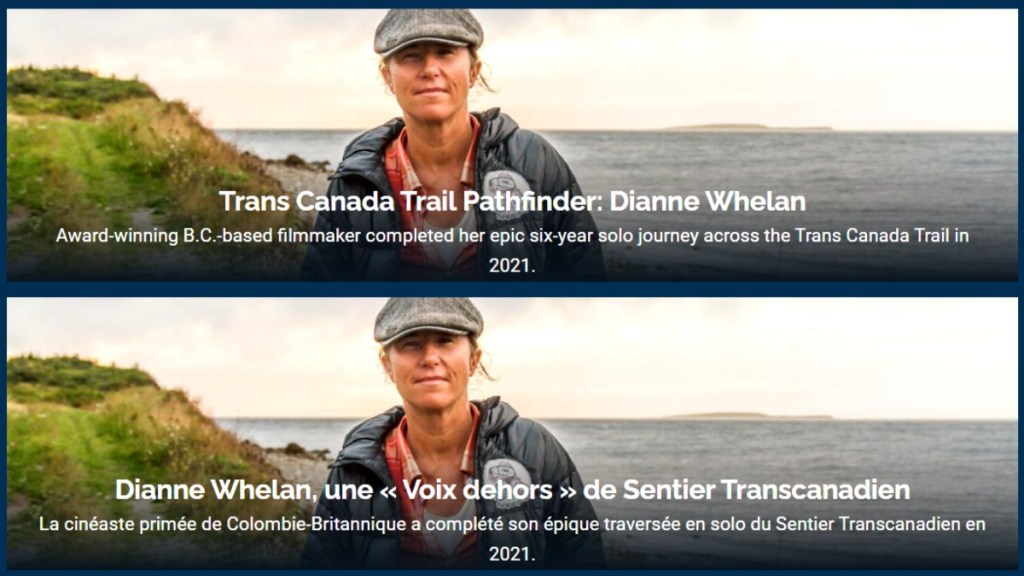
The keynote speaker was Dianne Whalen, an award-winning Canadian filmmaker, photographer, author and public speaker. The topic was ‘500 days in the Wild’.
She described her experience travelling across the country on the Trans-Canada Trail. The longest trail in the world: 24,000 kilometers. It was completed over a period of six years, and included hiking, bicycling, canoeing and skiing.
It was a memorable presentation, with numerous insights into the history and geography of Canada. It is available online.
David MacLean made the GIS Day presentation available online in the AV Room at COGS. We witnessed Alex Miller, President of ESRI Canada, present the Roger Tomlinson, Lifetime Achievement award to Gord Rasmussen, City of Calgary and the Making a Difference award to Cynthia Bettio on the partnership between the community of Stouffville and the local school. Both are well deserved.
The rest of the day included ‘lightening talks’ on AEC, Land Management, Public Safety and Health, Transportation, Utility and Emergency Management, Climate Change and the Environment.
The most shocking aspect of the day was that Heather and I were the only live audience in the AV room. Dave MacLean was available to discuss any technology issues. Everyone else at COGS was, by definition, online. This raises the question. At what point in the learning environment can be totally online? In which case, what is the future of a small college in rural Nova Scotia?
The contrast between Diane Whalen’s description, insights and experiences travelling through the Canadian landscape, and our experience visiting COGS was palpable. What is the value of gathering people into the same (virtual) location, and comparing their sense of Geography?
Edward responded to my earlier blog post (Passport Renewal). He recalled David Bowlby and Allison Maher (no relation) who owned Dempsey Corners farm.
Photo taken by Edward of Dempsey Corners farm several years ago.
Apparently, Allison was a supporter of the Ride the Lobster unicycle relay race event. Bowlby more recently worked at the Kentville Research station. Allison is a local author.
My interest was whether FAN fare extended into Annapolis County.
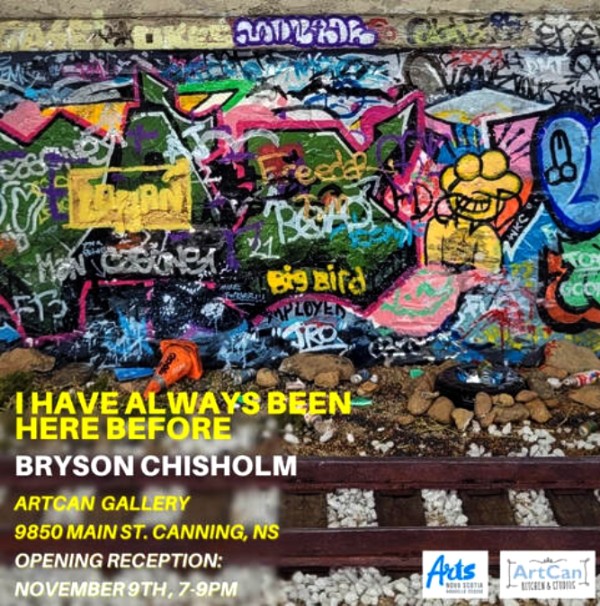
Today we planned to go to the Wolfville Farmers Market. We had forgotten that, at this time of year, Wolfville is hosting Christmas Craft Markets. So, quickly, we diverted to Canning to enjoy the ambience of the ArtCan Cafe.
From CORAH, I have learned that COGS will be hosting a used book sale at COGS. Perhaps, I can donate a couple of full boxes.
Finally on the theme of ‘joining the dots’ Edward queried OpenAI Chat GPT on a conference “Beyond the boundaries : Reimagining Nova Scotia” at COGS for 2025.
It came back with ten topics.
Geography as a Tool for Health Equity
Decolonizing Geography: indigenous knowledge and land stewardship
Geospatial Technology and the Future of Smart Cities
Climate change through a Geographical Lens
Reclaiming Geography for Political Discourse
The Geography of Education: mapping access, equity and opportunity
Reimagining geographies of Work in a digital age
Cultural Landscape: mapping arts, identity and place
Geopolitics and the global supply change
Spatialize Justice, rethinking equity in urban and rural contexts.
Acknowledgements
Edward for joining the dots. Dave for an update on COGS Geography Awareness Week. Heather for sharing lunch at the ArtCan Cafe. Celes for the link to the Food-Art-Nature newsletter.
(Edward is unavailable for a few days. I decided to publish without the added value of his graphics and links)
This Fall, I realized that my Canadian passport had expired. Today, it was my top priority to obtain new photographs for the next ten years, and obtain the necessary references. We visited Rick’s Frame and Art in New Minas. Later we stopped at the Service Canada office in Kentville.
Not having a valid passport, certainly focuses the mind. Not that we desperately need to travel, especially to the United States. But if there is a family crisis in England or Europe, we are stuck.
With elections south of the border, but also at the federal ( ?), provincial and municipal level there is a certain drive to understand the impact on the community. In our case, this means Middleton and Annapolis County. In rural Nova Scotia do we really need three levels of government ? How does that address the need for services at the local level ? What we need is more creativity in solving local problems, based on accurate, current geographic information, accessible with today’s technology.
Instead we are being fed centralized CBC coverage, loaded with endless advertising for products and services that do not improve our daily lives.
As a sign of the times, Sunday afternoon, we were enjoying a time-out after collecting up bags of Autumn leaves, when we received a knock on the door from our Premier, Tim Houston with David Bowlby , PC Candidate for Annapolis County in tow.
Meanwhile, I am waiting on three books.
I am waiting to receive my copy of Merritt Gibson, Within the View of Blomidon from the Blomidon Naturalists Society (arrived). From the Inside Story, Christopher Murphy, Far Out, and Bruce Partridge The Joy of Looking from MooseHouse Press.
Acknowledgements
Thank you to Edward for finding the time to apply his technical skills(ignore). Heather also needed to obtain a new passport, and shared the journey.
This weekend, we visited New Glasgow. I took time out to visit the Coles bookstore at the Highland Mall.
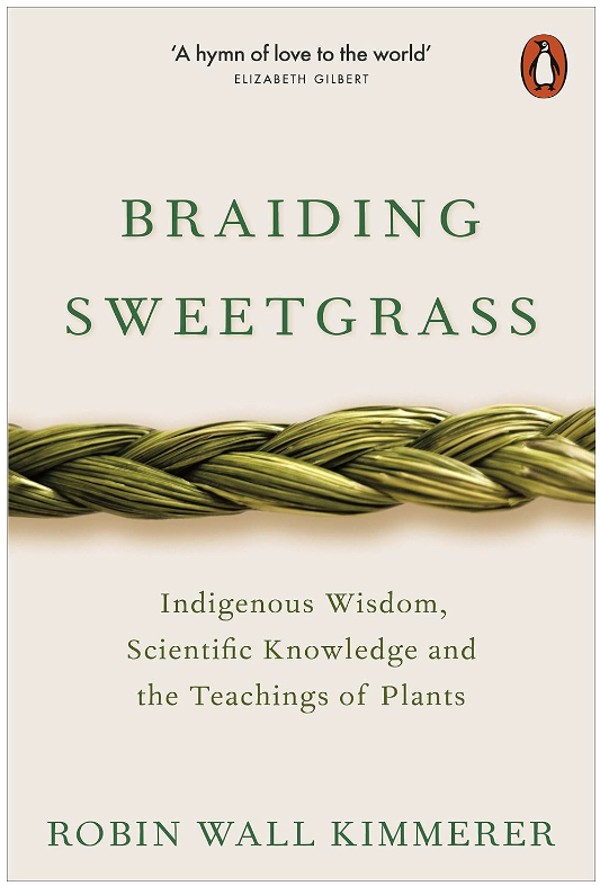
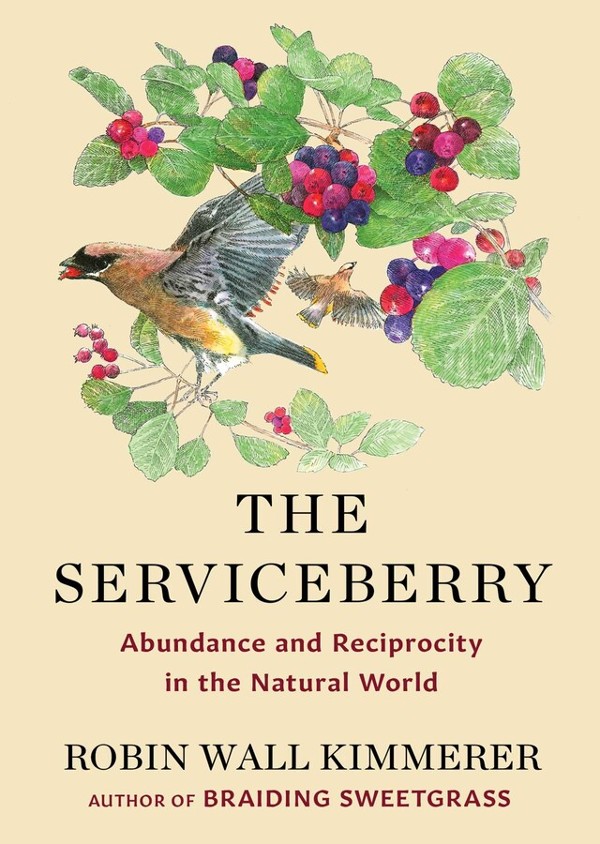
Fortuitously, I found a new book by Robin Wall Kimmerer, author of Braiding Sweetgrass.
The new book, The Serviceberry is a short but uplifting read on Abundance and Reciprocity in the Natural World.
As Kimmerer explains:
“ Serviceberries show us another model, one based on reciprocity rather than accumulation, where wealth and security come from the quality of our relationships, not from the illusion of self-sufficiency.”
We also enjoyed our Saturday evening with John watching PBS on the TV. It included ‘As Time Goes by’ and ‘Doc Martin’; both examples of community life in London and Southwest England. Given the programs come from Maine, it is easy to imagine the similarity of landscapes between rural Canada (Nova Scotia) and rural New England.
The emphasis, in both cases, is upon our sense of community.
Acknowledgements
Heather and I continue to enjoy the vibrant colours, especially the tamaracks, as we drive through the Rawdon Hills.
References
Robin Wall Kimmerer, 2024, The Serviceberry, Scribner/Simon&Schuster.













 Ernest Blair Experiment