Posted in Creative writing

Enlightenment

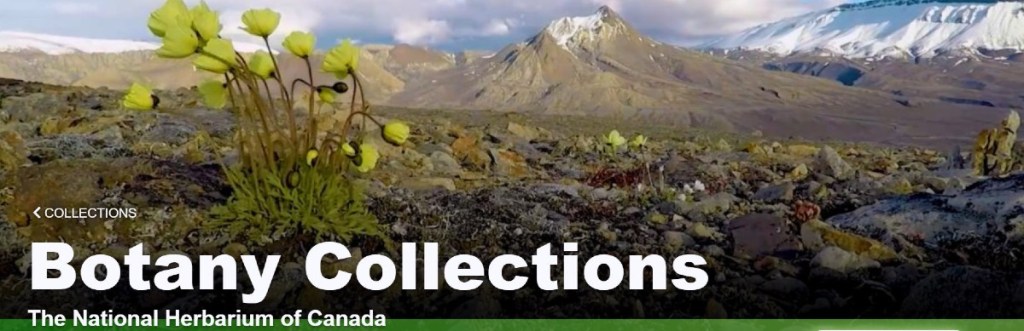
Heather and I met Trevor Goward in the late 1970s. It was a time when we were on the West Coast of Newfoundland (Gros Morne National Park) or in Ottawa at the National Herbarium. I was part of the Rare Plants team headed by George Argus. George was a Salix taxonomist. Other taxonomists, at the Museum, included Irwin Brodo (lichens), and Bob Ireland (mosses).
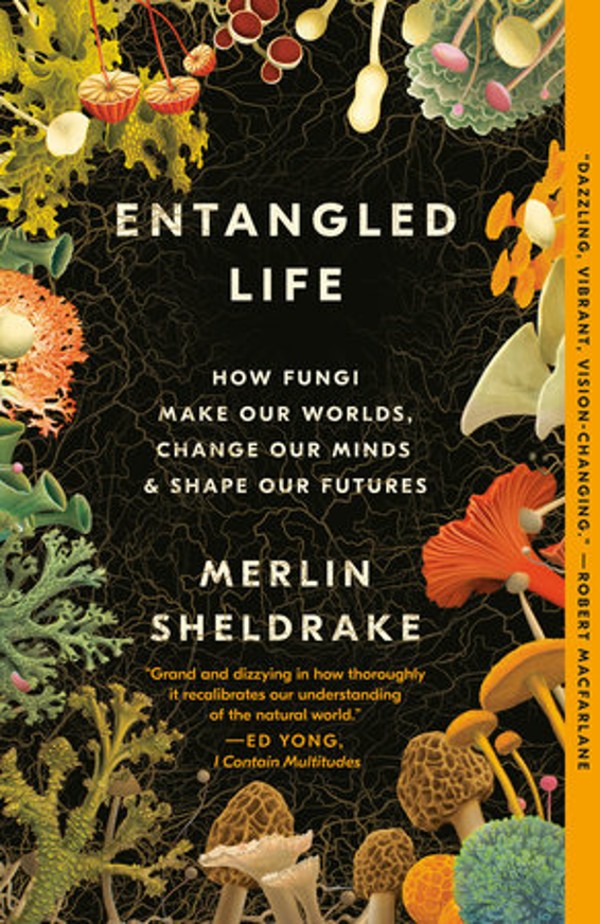
Fast forward to 2022, I am reading Merlin Sheldrake’s book Entangled Life.

’Goward, curator of lichens at UBC, is foremost a lichen obsessive (he has contributed around thirty thousand lichens to the university collection) and is no less a lichen taxonomist (he has named three genera and described thirty-six new lichen species).’ p.79.

He lives on the edge of a large wilderness in British Columbia (Wells Gray Provincial Park) and runs a website, Ways of Enlichenment.

The book ’Ways of Enlichenment’ is about forest lichens of northwest North America

’We believe that books on lichens need to answer two questions. The first question is, how does one learn to identify lichens. The second question is, why should one bother? It is this second question, not so much the first which is comparatively easy, that has preoccupied us for the past dozen years.’

From twelve readings on the lichen thallus.

”Lichens, he argues, have relevance far beyond their interest as objects of scientific inquiry. Lichens exist as a doorway, a portal. Look out this doorway in one direction and what you see is an ecosystem – a collection of unrelated species, fungi and alga and bacteria. But look out the same doorway in the other direction, and what you see now is an organism, in a sense no different from any other macroscopic organism.”

“The double status of lichens as organism and ecosystem make them the ideal model entities through which to contemplate a new scientific philosophic and artistic paradigm, now in the process of emerging.”

”In recent years, Trevor has reconfigured his 4 ha. home property, Edgewood Blue, into a not-for-profit place for learning, for naturalists and others committed to a closer relationship with the living world”.

Acknowledgements

Heather first discovered the Entangled Web. This, in turn, led us to the Ways of Enlichenment website. Edward added the graphics. Trevor responded to my email.

References

Merlin Sheldrake, 2020, Entangled Life: How fungi make our worlds, change our minds and shape our futures, Random House.

Trevor Goward and his team. Ways of Enlichenment web site waysofenlichenment.net

Postscript

If you find yourself in British Columbia, make the trip to Wells Gray Provincial Park. It is well worth the detour.

Posted in Creative writing, Event Review

Road Trip/ Landscape Painting

Last week, we held a meeting of the Ernest Buckler Literary Event Society (EBLES) committee at Anne Crossman’s, under the linden tree. We discussed plans for the next event, likely in West Dalhousie, 2023.

Jane Borecky returned Roger Deakin’s Waterlog: A Swimmers journey through Britain. Later at home, I checked through the index, and found and re-read #23 Orwell’s Whirlpool. Deakin describes his visit to Jura.

”Whirlpools and wild places are inextricably linked with our capacity for creativity“, as Orwell demonstrated when he chose to come to Jura to write his last novel.

Meanwhile, I had finished reading George Orwell’s Selected Writings. Besides excerpts from his life in Burma, Spain and Marakesh, it includes essays on the English class system, Boys’ Weeklies and Charles Dickens.

We headed up to New Glasgow on Friday. I was happy to find the latest issues of Canadian Geographic and Saltscapes. Under Canadian Geographic, People and Culture, five Canadian artists address increasingly threatened landscapes.

”A century after the Group of Seven became famous for an idealized vision of Canadian Nature, contemporary artists are incorporating environmental activism into work that highlights Canada’s disappearing landscapes.”

I forwarded the link to Edward and Anne Wedler. Meanwhile, Patrick emailed me a link to the Radical Landscapes exhibition in Liverpool, UK.


On Saturday, we took a road trip from New Glasgow to South Victoria, through Oxford, Pugwash, Tatamagouche, River John and home.

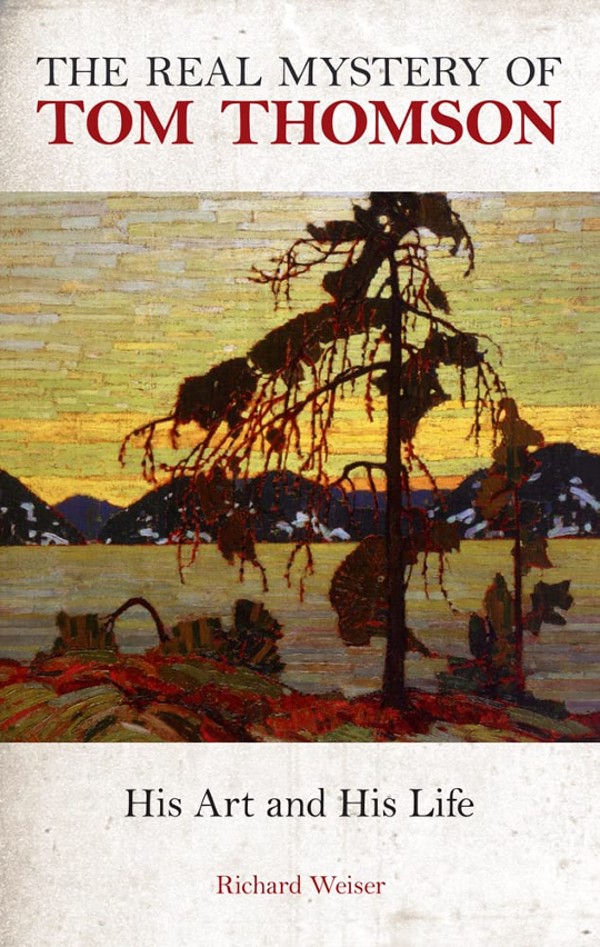
We stopped at Masstown market. Again, I found a book; The Real Mystery of Tom Tomson: His Art and His Life. Again, I forwarded the information to Edward. I thought it would be relevant to their journey, following in the footsteps of the Group of Seven.

As we drove from Oxford to South Victoria to Pugwash, we noticed significant changes in land use, both the forestry and even the roadside weeds. It would be a fascinating geographical study to map the changes in the demography and the landscape. Since we had both Heather and John Stewart in the car, we had an ongoing commentary on the changes that have taken place in the last fifty (plus) years.

Eventually, we arrived in River John for Sandy Stewart’s (Heather’s sister) birthday party. Sandy had been busy painting a new sign for the community of Melville.

Here are my questions.

If you are an artist painting landscapes, how do you separate your art from your life?

The same question applies to writers.

How do you separate your writing from your life? This certainly applies to George Orwell. I think the same applies to Roger Deakin. Hence, once back home, I pulled Roger Deakin’s book off the shelf, Notes from Walnut Tree Farm.

Acknowledgements

Heather and John Stewart accompanied me down memory lane. Sandra Stewart provided a painting of her place. Edward and Anne’s planned adventure brought the Group of Seven into focus. Plus a contribution from Patrick Maher (this week) at a conference in Ambleside, the Lake District.

References

Roger Deakin, 2000, Waterlog: a swimmer’s journey through Britain, Vintage Books.
Roger Deakin, 2008, Notes from Walnut Tree Farm, Penguin.
Richard Weiser, 2018, The Real Mystery of Tom Tomson, Dragon Hill.
George Bott (Ed), 1958, George Orwell: Selected Writings, Heinemann

Postscript

Just started Merlin Sheldrake’s book, Entangled Life: how fungi make our worlds, change our minds and shape our futures.

Merlin Sheldrake, 2021, Entangled Life, Random House.

Posted in biographical sketch

Falling into Place

Yesterday after the Wolfville Farmers Market, we stopped at The Odd Book.

This is a favourite book store. The owner’s interests seem well aligned with mine. It includes a section on George Orwell’s books, as well as recent publications from Gaspereau Press.

This time, I found a chapbook from Falling into Place. In 2002, Gaspereau published a groundbreaking geo-memoir by poet and long-time Hamilton resident, John Terpstra. It starts with the phrase.

’I am attached to this piece of Geography.’

A chapbook is a reading sample; in this case, thirty pages, ‘Terpstra’s investigations centre around the Iroquois Bar, a giant glacial sandbar which lies beneath one of Hamilton’s busiest transportation corridors.’

My second find was George Orwell’s Selected Writings, edited by George Bott.

’I have tried to show something of Orwell as a political apologist; something of his remarkable ability to record experience vividly and to argue convincingly; some autobiography, some literary criticism, some satire.’

This selection of George Orwell’s writings is intended mainly for sixth forms, adult classes and training college students.

First published in 1958. Topics include The English Class System, Politics and the English Language, Why I Write, Poetry and the Microphone.

Last night, we were settled in for an evening of British TV on PBS Maine. Around 9 pm, before Doc Martin, we received a call from New Glasgow. Watch the CBC documentary ’Elizabeth Bishop and the Art of Losing’.

We changed the channel and enjoyed an excellent program.

Acknowledgements

The Odd Book has the best-organized collection of second-hand books in the Valley. John Stewart phoned about the CBC documentary. Heather shared the Wolfville market experience. Edward added the graphics.

Postscript Images

Dogwood in our garden
Hollyhocks in our garden

References

John Terpstra, 2002, Falling into Place, Gaspereau Press.

George Bott (ed.), 1958, George Orwell: Selected Writings, Heinemann

CBC July 9,2022, Elizabeth Bishop and the Art of Losing.

Posted in Book Review

Middleton Library

After breakfast at the Green Elephant in Kingston, we stopped at the Middleton Library. It was very busy, and hard to find a parking spot. We picked up three books, a pedometer and a white spruce sapling.

Heather was pleased to find Ralph Pope’s, Mosses, Liverworts and Hornworts.

I found Lyme Brain by Nicole Ducharme. This interested me because I am scheduled for a blood test for Lyme’s disease next week.

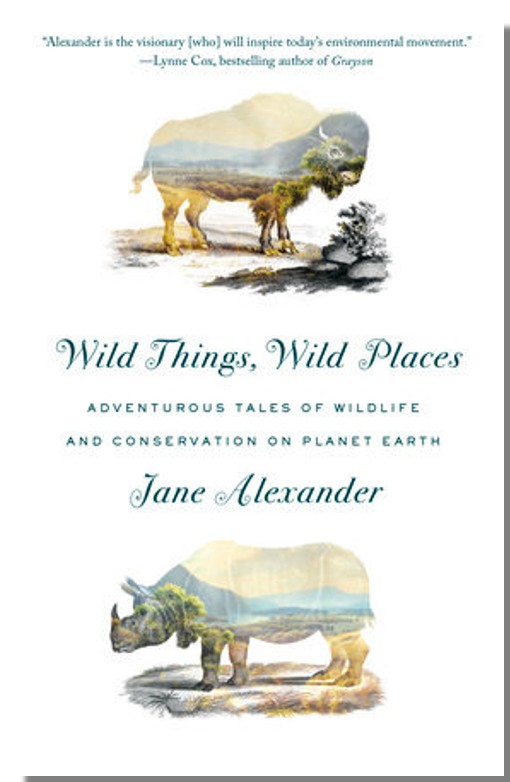
A second book was by Jane Alexander Wild Things, Wild Places.

To date, I am disappointed in my selection. Perhaps this makes the case for libraries, rather than bookstores.

The pedometer is courtesy of Heart and Stroke Walkabout ’walking takes you places’.

I tested it out this afternoon. This is part of my endeavour to increase both walking and bicycling. It fits too, with the ‘search for agency’. With so much news, beyond our control, it is important to focus on the small things.

Today, I had to agree with Heather about the selection and vibrancy at the Middleton Library.

Another bedside book is David Chernikoff’s, Life, Part Two. He offers seven keys to awaking with purpose and joy as you age. The first three chapters cover Embracing the Mystery, Choosing a Vision, and Awakening Intuition.

I am stuck in #4 Committing to Inner Work That leaves Suffering Effectively, Serving from the Heart, and Celebrating the Journey.

Acknowledgements

Heather continues to champion her botanical interests, as we await the completion of the studio. Edward continues to support us with his graphics.

References

Ralph Pope, 2016, Mosses, liverworts and hornworts: a field guide to common bryophytes of the NorthEast, Comstock Publishing.

Nicola Ducharme, 2016, Lyme Brain, Biomed Publishing.

Jane Alexander, 2016, Wild Things, Wild Places, Knopf.

David Chernikoff, 2021, Life, Part Two, Shambala.

Postscript

We will plant the white spruce in one of our hugelkultur beds.

Posted in biographical sketch

Other Lives

Mid-week, Heather and I returned from New Glasgow.

I returned in time to celebrate David Colville’s retirement from the NSCC, along with Roger Mosher at Lunn’s Mill.

Both David and Roger were students in the Scientific Computer Programming (SCP) program in the early 1980s.

We remembered times of transition from NSLSI to COGS to NSCC. At one time, we formed a company, MCM Geographics. This allowed us to design and develop GIS software. Later, David and Roger brought their programming and teaching skills to NSCC.


From Bras D’or Lake Biosphere Association, I received their Summer Solstice newsletter.

They have been re-certified for another ten years. They have also received over a half-million dollars from the federal government, through Environment and Climate Change Canada. This will allow them to hire Doug Foster, as full-time staff. Another familiar name was Teresa MacNeil.

I recall 2001 when I was Chair, Southwest Nova Biosphere Reserve Association, attending their AGM.

After reading the newsletter, I checked the SNBRA website. It describes one of their current projects, an Interactive Science Atlas, working with COGS-NSCC and Ian Manning.

It will be interesting to see how the new federal funding will be used by SNBRA. Especially with the retirement of David Colville.


Recent reading has seen a return to David Manners’, Convenient Season and Awakening from the Dream of Me.

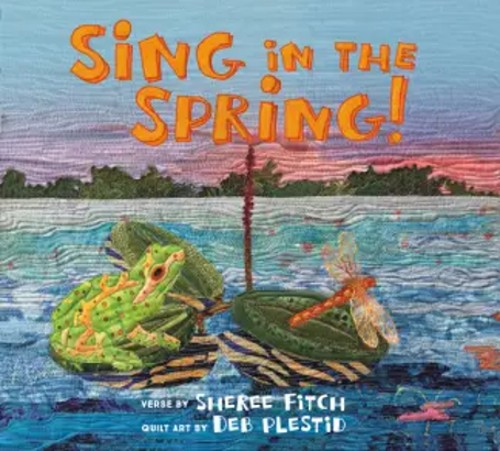
From Atlantic Books Today, #35. Heather noticed Sing in the Spring, verse by Sheree Fitch, and artwork by Deb Plestid. We were able to pick up a copy for our granddaughter at The Inside Story.

Acknowledgements

Thanks to David Colville and Roger Mosher for sharing the journey. The good work of Teresa MacNeil, Cliff Drysdale and others with the Biosphere Reserve Association in both Cape Breton and Southwest Nova. Heather shared her enthusiasm for Sheree Fitch and Mabel Murple’s Book Shoppe in River John. Edward added the links and graphics.

References

David Manners, 1941, Convenient Season, Dutton

David Manners, 1987, Awakening from the Dream of Me, Non-stop Books.

Sheree Fitch and Deb Plestid, 2022, Sing in the Spring! Nimbus

Atlantic Books Today, No 95, Spring 2022

Bras d’Or Lakes Biosphere Reserve Association, https://blbra.ca/

Southwest Nova Biosphere Reserve Association, http://swnovabiosphere.ca

Posted in biographical sketch

In Search of Agency

This has been a busy week, full of appointments health and home-related. It brings with it a deep sense of agency. Wednesday, Heather attended a talk, organized by CORAH, at the Middleton campus of the NSCC on Heart Health.

After a morning at Kings County Honda in Kentville, I just had time to browse the library at the College. Under new books, I found From Exclusion to Inclusion in Old Age: A Global Challenge.

With help from Andrew Hannam, I was able to sign it out. The edited papers included such inviting titles as:
Social Exclusion in later life.
Globalization, economic recession and social exclusion.
Revisiting social exclusion of older adults.
Demanding reading for the next few days.


Meanwhile, from the Marginalian, I noted The Living Mountain: pioneering Scottish mountaineer and poet, Nan Shepherd’s forgotten masterpiece about our relationship with Nature.

From the BC Knowledge Network, was listed the Lucerne Festival 2018 with Sol Gabetta’s performance of Martinu’s first cello concerto.

Acknowledgements

Andrew Hannam helped sign out the book from the Middleton campus. Heather McCormick at CORAH arranged the Heart health talk by Dr Buchholz. Edward edited with links and graphics.

Reference

Thomas Scharf and Norah C. Keating, 2012, From Exclusion to Inclusion in Old Age: A Global Challenge, Policy Press.

Posted in Book Review

Remembering Orwell

The last time I was in Wolfville we stopped at the Odd Book. It was a Saturday. We had to go to the Farmers Market to pick up the last three bottles of Hunter brandy.

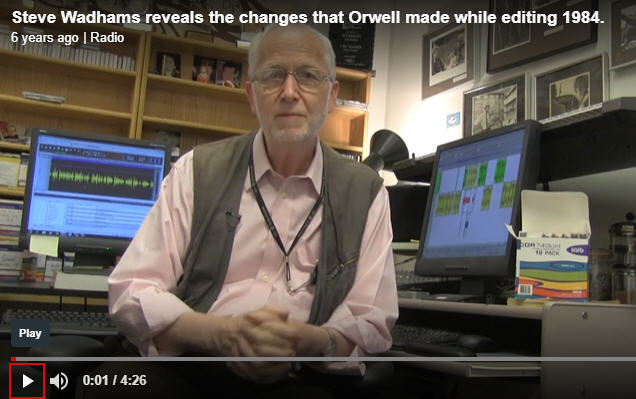
I found a signed copy of Stephen Wadham’s book, “Remembering Orwell”. Wadhams had produced “George Orwell: a radio biography” for the CBC (Part 1, Part 2 and Part 3).

This led to the book being published in 1984. It included an introduction by George Woodcock and five chapters.

To Burma and Back
In Search of Poverty
The Spanish Crucible
The Road to Animal Farm
1984

The book describes Orwell and his life through the eyes of individuals who knew him and who were interviewed by Wadhams for the CBC radio biography.

It is remarkable to realize that Orwell (Blair) was born in 1903, and died in 1950.

It is remarkable to realize that Orwell (Blair) was born in 1903, and died in 1950. My interest in Orwell, in part, relates to this blog ’Ernest Blair Experiment’. Eric Blair used the nom de plume of George Orwell. Thus, this became a play on words. Another interest besides his writing was his lifestyle and geography. He spent his last years, living on the island of Jura, off the Scottish coast, where he wrote 1984. Previously, he lived with Eileen in Wallington, Hertfordshire. He is buried at Sutton Courtenay.

From Rev. Gordon Dunstan. A request from David Astor.

”And he asked if I could help him bury a friend. The friend was George Orwell, whose love of England and the English countryside was such that he wanted to lay his body to rest in an English churchyard.” p.219.

Postscript

My last inter-library loan request for Jaki Fraser was Convenient Season, by David Manners. “It is a tale of a farm in the famous Annapolis Valley in Nova Scotia, where grow the best apples in the world…“

Acknowledgements
Heather shared the trip to Wolfville. Edward added the graphics. Best wishes to Jaki Fraser, our Lawrencetown librarian. She retires this weekend and heads west to live in British Columbia.

Reference

Stephen Wadhams, 1984, Remembering Orwell, Penguin Books.
David J. Manners,1941, Convenient Season, E.P.Dutton.

Posted in New thinking

Biogeography

Heather was reading Sonia Shah’s book, The Next Great Migration. She thought that I would be interested in two quotations on Biogeography.

”Today such questions about the origin and distribution of species and people would be sequestered into a field known as ’biogeography’, a fascinating but mostly obscure branch of science generally considered of marginal public interest,” p.64.

”Back then, biogeographical theory carried far-reaching consequences. The authority of the church, its hold on science, newly emerging from its shadows; the legitimacy of the colonial enterprise – and how generations of descendants would view and police migrants – all hung in the balance.”

This resonated with me. My PhD thesis at the University of Western Ontario was entitled ’An Inquiry into the Nature of Biogeography’ 1976. I pulled it down from the bookshelf. Almost fifty years ago, What did I say at that time?

”Biogeography is concerned with the nature of living matter and the nature of space. The discipline has a significant role in the future of Geography; it must reconcile and integrate contemporary issues of the biological sciences and the paradox of Geography.” p. v.

Before the PhD thesis, there was an M.Sc. thesis completed in 1971. Complexity Analysis of Vegetation Patterns in an Alpine Meadow. In this case, it is over fifty years ago. The location is Castleguard Meadows in the Canadian Rockies, adjacent to the Saskatchewan Glacier and Columbia Icefield.

My interest in Biogeography continued at Memorial University in St. John’s, Newfoundland and subsequently with the Rare Plants of Canada project at the National Museum under George Argus. This was all prior to working at NSLSI (COGS) in Lawrencetown, starting in 1980.

On the same bookshelf, I found Heather’s M.Sc. thesis from the University of Guelph, dated 1993, Reproductive Biology and Developmental Morphology of Agalinis Neoscotica (Scrophulariaceae ); supervisor, Judy Canne-Hilliker. This is another ’biogeography story’ about a uniquely Nova Scotian species, and its distribution; for another day — it’s really Heather’s story to tell.

Dogwood in our yard

Acknowledgements

Bill Crossman passed on his copy of Sonia Shah’s book. Heather discovered the quotations. Edward added the graphics.

References

Sonia Shah, 2020, The Next Great Migration, Bloomsbury

Robert Maher, 1971, Complexity Analysis of Vegetation Patterns in an Alpine Meadow, M.Sc. thesis Department of Geography, UWO.

Robert Maher, 1976, An Inquiry into the Nature of Biogeography, PhD thesis. Department of Geography, UWO.

Heather Stewart, 1993, Reproductive Biology and Developmental Morphology of Agalinis Neoscotica (Scrophulariaceae)

Posted in Event Review

Beyond van Gogh

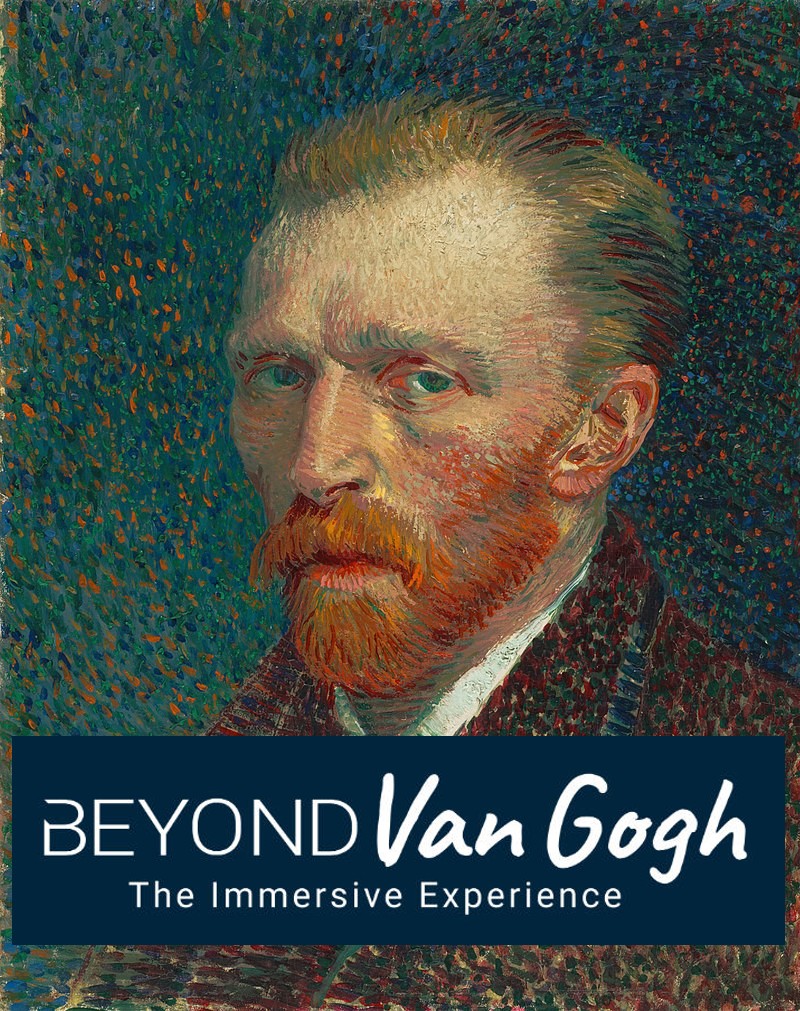
Thursday, Heather and I joined Sandy, Heather’s sister, at the Halifax Exhibition Centre for “Beyond van Gogh.”

Sandy had been previously with her students from Kings Edgehill School. My first impression of the building, in an industrial park, was not great.

However, once inside, we experienced three levels of immersion. The first was a focus on Vincent van Gogh, his life and exchanges with his brother, Theo. Various quotations could be viewed through empty picture frames. The second level was a small room depicting a waterfall. The final main hall was a full three-dimensional immersion experience of the themes which were vital to van Gogh’s art. This included scenes from rural life, characters, landscapes, flowers and the starry night. Seamlessly, projected on the walls, floor and ceiling, with accompanying music.

The message seemed clear. Beauty is all around us, especially in the natural environment. A painting is a “still life” within a picture frame.

Waking up the next morning, it was hard to ignore the dawn light, shining on the oak leaves, moving in the wind. or to look up through the skylight to again see the trees, with a backdrop of clouds, moving across the blue sky.

I noticed two other aspects of the exhibition. There was very little intellectualisation of the art. To place it within its historical or geographical context. The emphasis was on colour and movement. There was also little explanation of the underlying projection technology.

At the exit, the gift shop contained many common items, e.g. puzzles, key chains, prints, T-shirts adorned with familiar van Gogh images of sunflowers, corn fields, self-portraits and starry nights.

Afterwards, it was hard to drive back out through the grey, suburban concrete of Halifax — very different geography than the countryside we find in rural Nova Scotia.

Postscript

Saturday, we went to Alan Syliboy and the Thundermakers concert at the Macdonald Museum in Middleton.

It was great to go and listen to live music. We saw friends for the first time in several years. Syliboy’s art and music proved an excellent complement to the van Gogh exhibition.

Acknowledgements

Sandy Stewart for making the trip to Halifax. Heather shared the experience. Edward added the graphics. Congratulations to Jane Nicholson on receiving the Queens Platinum Jubilee Medal for her contribution to the Community.

Posted in Art

Footsteps East

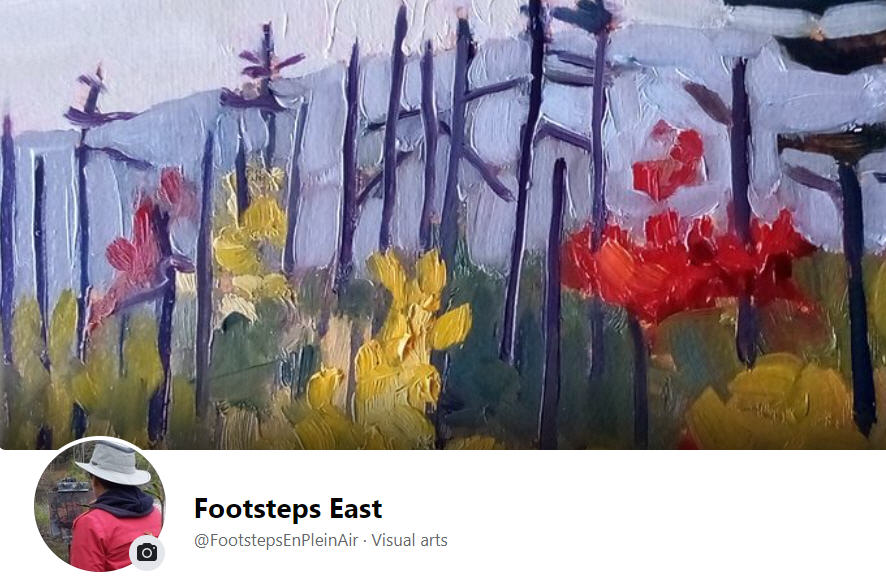
This week I received a notice from Edward Wedler. He and his wife Anne are embarking on a two-year painting project. It is an en Plein Air trek inspired by the Canadian Group of Seven. This will take them through Nova Scotia, Quebec and Ontario.

This ambitious project takes me back to earlier projects. For example, Ride the Lobster — an 800 km uni-cycle relay race through Nova Scotia. Or later, the Road to Georgetown, walking trails between Yarmouth and Georgetown, PEI to attend a conference on Redefining Rural. Along the way, there were many stories and places.

Of particular interest in Footsteps East will be the depiction of landscape and the changes over time. Edward will paint in watercolours. Anne will be painting in oils. The results will be on display at an art gallery in Halifax. All artwork that is to be shown at the gallery will be “under wraps” until after their trek is completed.

Another memory is from the 1980s. At COGS, Edward was teaching Remote Sensing. I was teaching Scientific Computer Programming. Later, my interest centred on the application of GIS software. My relationships with the industry included ESRI and ESRI Canada. Edward developed similar relationships with DIPIX and PCI. We both shared a common interest in sharing software/ computing skills to enhance understanding and application.

Subsequently, Edward and Anne purchased the bookstore, ’The Inside Story’ in Greenwood. Again, a shared interest.

With Footsteps East, the art of their paintings will share the landscape and the story of the landscape. This complements my interest in stories and living within the landscape.

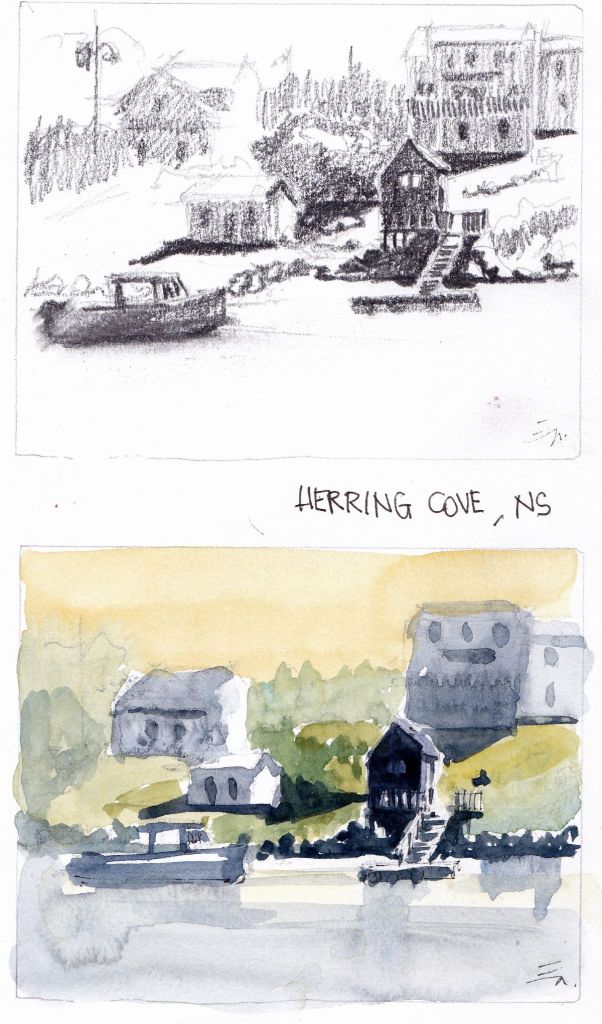
Shown here is a sketch-out at the first stop on their journey — Herring Cove, Nova Scotia — the location where Group of Seven artist, A.Y. Jackson painted back in 1919.

I look forward to our collaboration, as we attempt to bring together landscape, community, art and story, within a shared accessible digital environment. I anticipate Edward will contribute a number of blogs to EBE, as they make their journey — camping and all.

Acknowledgements

Edward and Anne Wedler as they show the way — active living in the landscape, through art. Check out their website at wedlerfineart.com