Posted in biographical sketch

Reaching Out

On the weekend, we took the time to visit Streets Ridge, Cumberland County.
Heather wanted to check the woodlot on the family property that was being managed by North Nova Forest Owners Co-op Ltd. It had been horse-logged, and then replanted with Acadian forest species. Nearby, a parcel had been scheduled for Glyphosate spraying. Reports confirmed that this did not happen.

On our return, we noticed that the Sweet Chestnut had started to drop seed. Today, we had the opportunity ’to roast chestnuts over an open fire’. Since it was the first year, the nuts were small. But it was symbolic.

Picture of Heather roasting chestnuts (photo-painted by Roger Mosher)

Frank Fox forwarded a link to a story maps web site that shows the distribution of private wells in Nova Scotia.

It is an excellent example of the use of maps to convey public information about arsenic, uranium and manganese in well water. With climate change, private wells will be at risk.
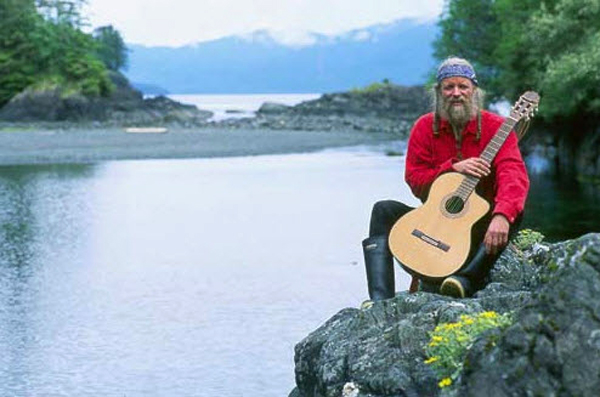

Back home, there was the opportunity to reflect on other experiences and places. This included listening to the guitar music of Tassilo. His CD’s were obtained when we were living on Haida Gwaii.

Or rediscovering the writing of Alan Drengson. His book, Wild Way Home, was purchased at Munro’s book Store in Victoria, Vancouver Island.


Finally, I picked up from the bookshelf, Dave and Paulette Whitman, The Valley Chronicles. In these tales of the Annapolis Valley, there are chapters on The Mi’kmaq of Paradise and Area, Ellenhurst, and Moving to the Valley. Chapter 8 includes our story, p. 210-214.

Postscript

In the current issue of Atlantic Books Today, I noted that Goose Lane is advertising both Waterfalls of Cape Breton Island , and Waterfalls of New Brunswick.

Acknowledgements

Frank Fox for the private wells link. Roger Mosher for the Sweet Chestnut tree. Max and Philip Stewart for the Streets Ridge news. Edward for adding the graphics and links. Heather for roasting the chestnuts.

References

Tassilo at Tassilomusic.com

Alan Drengson, 2010, Wild Way Home: Spiritual Life in the third Millenium, LightStar Press.

Dave and Paulette Whitman, 2016, The Valley Chronicles, Bailey Chase Books.

Posted in biographical sketch

Through the Grapevine


This week, I had to get my car serviced at Kings County Honda in Kentville. Apparently, there is a demand for second hand 2014 Honda CRV.

I also heard that there is plan to close the Scotiabank in Middleton.

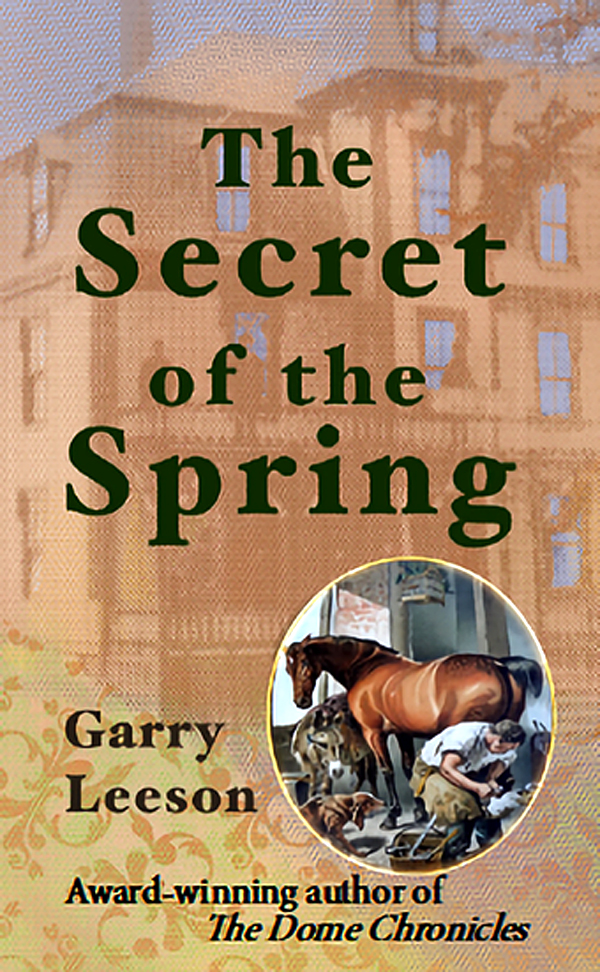
While waiting, I read The Grapevine, October 2021; devoted to Arts, Culture, Community. Within, I discovered Gary Leeson has published a second book, The Secret of the Spring. A novel centred on activities at the Spa Springs hotel in 1889. He has previously authored the award-winning The Dome Chronicles.

From AIRO, I received the link to the YouTube video Rural Renaissance, How Canada’s oldest town reinvented itself. Kudos to Jane Nicholson, Andrew Tolson and Wilfred Allan for this inspirational, one hour documentary. It shows the way forward.

This week too, I have made significant progress reading Beyond the Map (see earlier blog post) where Bonnett describes thirty nine places. I am on #26, Magical London.

Looking forward to his Epilogue:

”Geography is getting harder to read; the map is breaking up. It is an extraordinary, even magical sight, but its also bewildering and often frightening. I used to think that this kind of glittering spectacle could be described as ’enchanting’ and that what I was doing, as I captured and catalogued escapees from the map, was offering a ’re-enchanted’ geography. But now I am not so sure.’ p.284.

Whether its Annapolis Royal, Spa Springs or one of Bonnett’s thirty nine places, behind each one there is a story and a real ‘sense of place’.

Acknowledgements

Edward added the graphics and links. Rocky Hebb provided the local updates. Heather, the encouragement.

References

Gary Leeson, 2021, The Secret of the Spring, Moosehouse Press.

Alastair Bonnett, 2018, Beyond the Map, University of Chicago Press.

Posted in biographical sketch

Rural Life

On Saturday, we went to the Annapolis Royal Farmers Market.

MareGold bookstore had a stall, with an interesting selection of books. I was intrigued by Alastair Bonnett’s, “Beyond the Map“. Bonnett is Professor of Social Geography at Newcastle University. The book is divided into five sections: Unruly Islands, Enclaves and Uncertain Nations, Utopian Places, Ghostly Places and Hidden Places (to be reviewed in a later blog post).


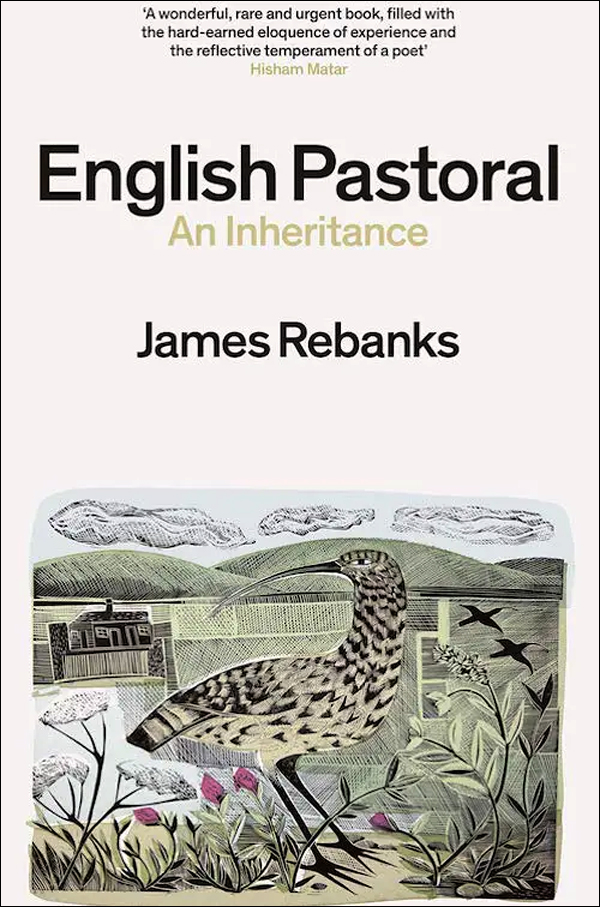
On CBC Radio, Sunday Morning, I enjoyed the interview with James Rebanks about his new book Pastoral Song. It describes the sheep farming culture in England’s Lake District.

Rebanks talks about ’rewilding’, ’living quietly’ and the landscape as a poem. Certainly, food for reflection on the state of agriculture in Annapolis County, and in the Annapolis Valley, in general.

With the spectacular Fall weather, we try to find a walk in the woods in the morning. Once the dew has burnt off, it is time to work in the garden: weeding, mulching, harvesting the remaining vegetables.

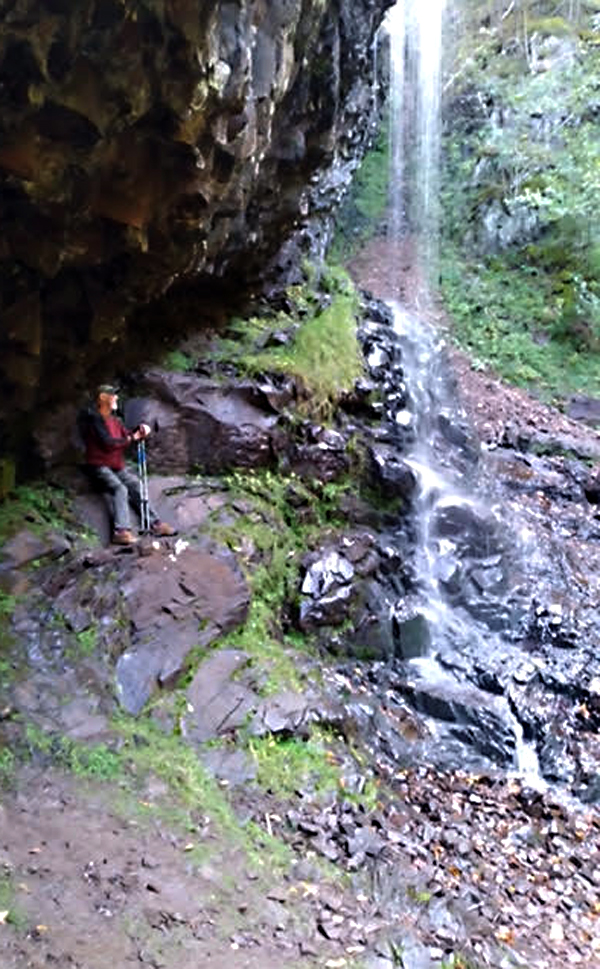
For today’s walk, we selected St Croix Fall from Benoit Lalonde’s , Waterfalls of Nova Scotia. The book describes one hundred waterfalls, with detailed directions. The St Croix Fall is one of the shorter hikes. The main challenge was finding the trail head.

Acknowledgements

MareGold is a Retreat Centre located in the village of Victoria Beach. Edward added the graphics and links. Heather shares the waterfall walks. We have completed three; ninety seven to go.

References

Alastair Bonnett, 2018, Beyond the Map, University of Chicago Press.

James Rebanks, 2021, Pastoral Song: A Farmer’s Journey, Harper Collins

Benoit Lalonde, 2018, Waterfalls of Nova Scotia, Goose Lane.

Posted in New thinking

Online Learning

In the Canadian Spatial Times (October 5,2021) there is notice for a Statistics Canada workshop onMeasuring Access to Services: International and Canadian Experiences in Rural Analysis’ to be held on October 13th.

This reminded me that several years ago, there was a provincial agency called ’Community Counts’ which provided detailed access to census data.

In the same newsletter, GoGeomatics announced the return of the popular Geospatial Career seminar.

In these COVID times, there is a demand for educational institutions to offer a mix of online and in-person courses. This spurred me to ask the faculty at COGS how they have changed their curriculum to meet these new demands. Hopefully, in a few weeks, I will be able to report on the changes in curriculum and courses, as educational institutions address the changing demands. There would seem to be new opportunities for collaboration, and thus, to resurrect the role of ’community counts’ in the overall equation.


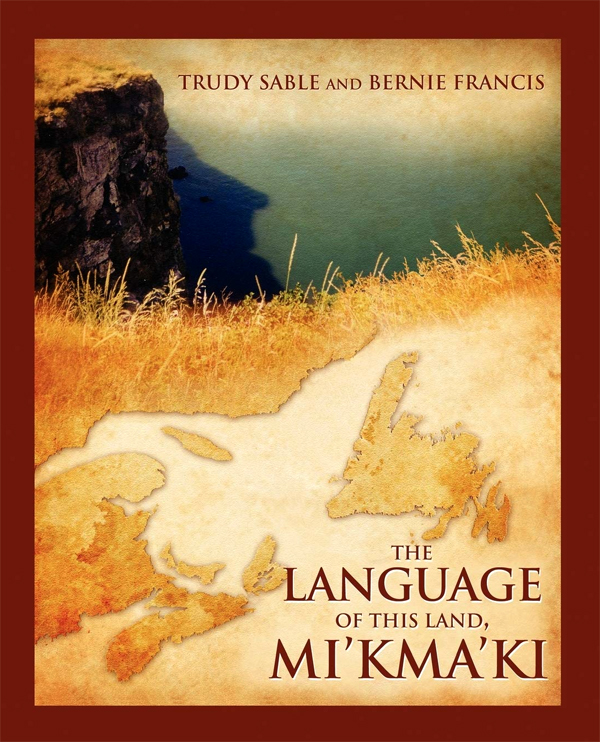
With regards, our collective understanding of landscape, I have rediscovered Trudy Sable and Bernie Francis, The Language of this Land, Mi’kma’ki.

From Chapter 1, Bernie Francis:
“Our language is verb oriented. We naturally see, and act, with the world differently than the speakers of English and French, both groups speaking language from the Indo-European stock.”

From Chapter 2, The Sentient Landscape and the Language of the Land:
”The Land is always stalking people. The land makes people live right.The land looks after us.The land looks after people.”

From a Cibecue Apache quote collected by Keith Basso.

This contrasts strongly with the Indo-European view of Herman Hesse in his ’Description of a landscape’ (see previous blog).

Acknowledgements

Jon Murphy for his good work at GoGeomatics. Dave MacLean at COGS for his encouragement. Edward Wedler supplied the graphics and links. Heather Stewart shares the journey.

References

Canadian Spatial Times. October5, 2021.

Trudy Sable and Bernie Francis, 2012, The Language of this Land, Mi’kma’ki, Cape Breton University Press, (Bill Jones contributed the maps of land use and occupancy).

Posted in Article Review

Fall Magazines 2021

It was Thanksgiving weekend 2020, and I wrote a blog on Fall Magazines that I read in New Glasgow. Here we are one year later. I have found three new items.

1) Unravel. Telling Halifax Stories.
2) Canada’s History. Special:The Beaver returns.
3) Canadian Geographic. Know your Canada: Ultimate Quiz Notebook.

Unravel is a new magazine.

September/October Vol1/No1 includes Halifax articles on people fighting for change, the film-making industry and a conversation with Sipekne’katik Chief Mike Sack on the fishery in Nova Scotia.

Canada’s History is the equivalent to Canadian Geographic.

In the latest issue (October/November 2021) there is a special section commemorating The Beaver. It includes two articles. Agowigiiwinan Bezhig Minawaa Niizhin celebrating the 150th anniversary of Treaties One and Two. The second article describes the work of seven artists, who formed the Professional Native Indian Artists Inc. to fight for professional respect and political self-determination.

Canadian Geographic September/October 2021. The Race to save Caribou includes a supplement, the Ultimate Geography Quiz. Map Edition by Nick Walker

“Geography makes sense of our world by describing locational patterns and relationships of the Earth’s natural and social systems – both past and present.”

It includes 42 questions designed to test your geo-IQ.

e.g. Question 1. True or False
Nova Scotia is made up of at least four ancient continents ?

Question 36.
Which Prime Minister famously said that Canada has “Too much Geography and not enough History”?


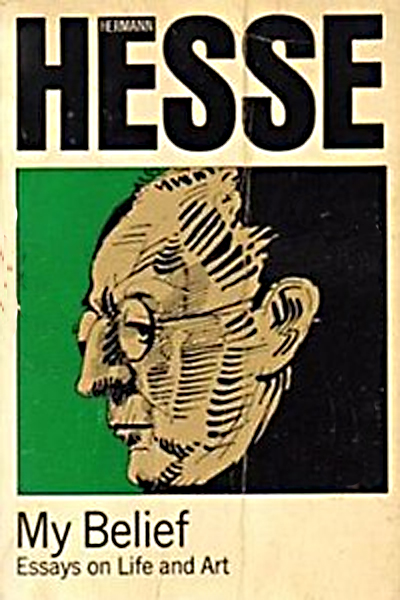
We stopped briefly at the New Glasgow library to laminate our vaccination records and found the book by Herman Hesse, My Belief: Essays on Life and Art. I look forward to reading ‘Description of a Landscape‘ p.230-240.

Reference

Herman Hesse, 1974, My Belief. Essays on Life and Art, Farrar, Straus and Giroux.

Acknowledgements

John Stewart continues to subscribe to the magazines. Edward added the graphics and links. Heather shared the drive.

Postscript

The weekend Chronicle Herald included “A Better Way Forward: 50 years in Nova Scotia”, published by Michelin Nova Scotia. It is time to re-evaluate a better way forward for all of us: our government, our industry and our communities.

Posted in Book Review

The Odd Book

On Monday, we had to return to the Opthalmologist in New Minas. This presented a fine excuse to visit The Odd Book store in Wolfville.

I was looking for some of Merritt Gibson’s writing. Fortunately, I found “The Old Place: A Natural History of a Country Garden“, illustrated by Twila Robar-DeCoste.

The subtitle is ‘Individual and Community Nature Stewardship’. The Old Place is in Canning. Twila Robar-DeCoste is in Aylesford. The book starts with a map of the geography, and then proceeds with the natural history of the different gardens.

Each chapter starts with a message for the reader. For example, Chapter One:

Locally, there is much that can be done for Nature stewardship begins with individuals and communities. Individuals and communities can protect and restore natural sites, and help ensure the survival of the plants and animals that live in them. An appreciation of nature is a prerequisite to such a goal.” p.9.

One of the pleasures of a visit to the Odd Book store is its collection of authors published by Gaspereau Press. This includes Harry Thurston, Peter Sanger, Soren Bondrup-Nielsen and many others.

While I am lost in Gaspereau Press, Heather is checking out butterfly books. This Summer, our garden has been a feast of colours and fruits. She found James Scott, The Butterflies of North America.

This complements a previous purchase from The Xerces Society, Gardening for Butterflies: How you can attract and protect beautiful, beneficial insects.

Postscript

Merritt Gibson (1930-2010) was professor emeritus of Biology at Acadia University.

Acknowledgements

Heather continues to share the pleasures of our ’old place’. Edward contributed the graphics and links.

References

Merritt Gibson, 1997, The Old Place: A Natural History of a Country Garden, Lancelot Press.

James A. Scott, 1986, The Butterflies of North America: A Natural History and Field Guide, Stanford University Press.

The Xerces Society, 2016, Gardening for Butterflies, Timber Press, Oregon.

Posted in Photo Essay

Mushroom Walk

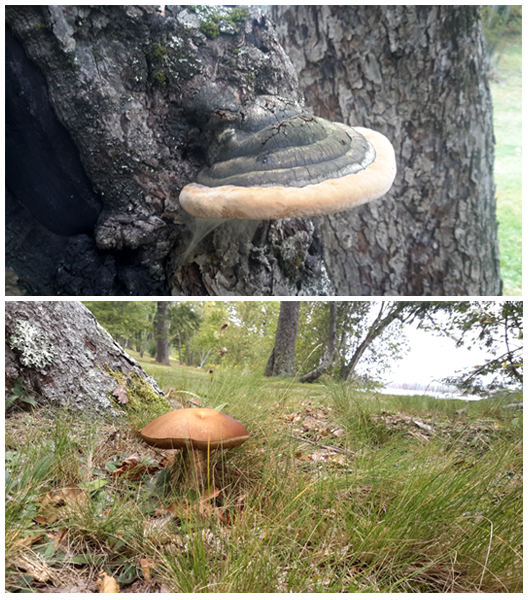
I noticed in The Bridgetown Reader that Keith Egger and Allison Walker are conducting a guided mushroom walk on October 2nd. This inspired me to walk down from the Hwy #201 to the Annapolis River with my iPad in hand.

This week, we were tidying up some orphan books, left over in Andrew’s barn. They included Kim Stafford’s book ’Having Everything Right: Essays of Place“. In 1986, it won Western States book awards citation for excellence.

“In an age in which we often find ourselves at odds with nature, Stafford serves as a guide and interpreter listening for the ways stories name of region, a country, and with familiarity and affection, explicating the terrain for those of us who have forgotten or never learned how.”

Heather also found Randall Jarrell’s allegorical children’s book ”The Bat-Poet”, illustrated by Maurice Sendak. The bat shares his poems with the mockingbird, the chipmunk and finally with the other bats.

”The trouble isn’t making poems. The trouble’s finding someone that will listen to them.” p.15.

An interesting comment on the creative process.

Acknowledgements

Edward has been very busy with the Parrsboro International Plein Air Festival (see blog post). Heather has been constrained by cataract surgery.

Postscript
Edward, too, has been photographing fungi — near Newville Lake, north of Parrsboro.

References

Kim R. Stafford, 1986, Having Everything Right, Penguin Books.

Randall Jarrell, 1964, The Bat-Poet, Harper-Collins.

Posted in Video Review

Know your place

Peter, my brother, sent me a wonderful link to the history of Whitton and Hounslow Heath in West London. It is a YouTube video that looks at that landscape over the last four hundred years.

https:www.youtube.com/watch?v=v0zt180cO-s

Hope this link works !

What was notable for me ? The interjection of historical maps with photographs of the current landscape. It takes me back to taking the Southern Region commuter train from Whitton to Chiswick. Both Peter and I attended Chiswick Grammar School for Boys.

Other memories include the stories of Hounslow Heath, Dick Turpin, the notorious highwayman, and his horse Black Bess.

The term ’know your place’ can be used in a different context. Know your place in society. Working class, Middle class, Upper class/landed gentry. It all comes back.

This week, Edward is busy with the Parrsboro International Plein Air Festival. As a consequence, this blog will be lacking his magic, artistic and technical touch. I have asked him for a blog on his experience, perhaps for next week.

Book recommendations come in. From Rocky Hebb, I received Lou Ureneck, Backcast. From Brian Arnott, The Abornaut. No shortage of good reads.

This week, John Wightman hosted a meeting between CANMAP and COGS/NSCC. I look forward to further developments on ’know your place’.

We do need a post-COVID twenty-first century Church map of Annapolis County. It should show the current land use, new businesses etc that reflect accurately the rural renaissance.

Don’t forget to see the movie of the same name, at Kings Theatre, free, this Sunday, September 19th. SOLD OUT.

Acknowledgements

Contributions from Peter Maher, Rocky Hebb, Brian Arnott and John Wightman.

References

Lou Ureneck. 2008. Backcast. Fatherhood, fly-fishing and a river journey through the Heart of Alaska. St Martins Press.

Meg Lowman. 2021. The Arbornaut.

Posted in Opinion

Climate Change

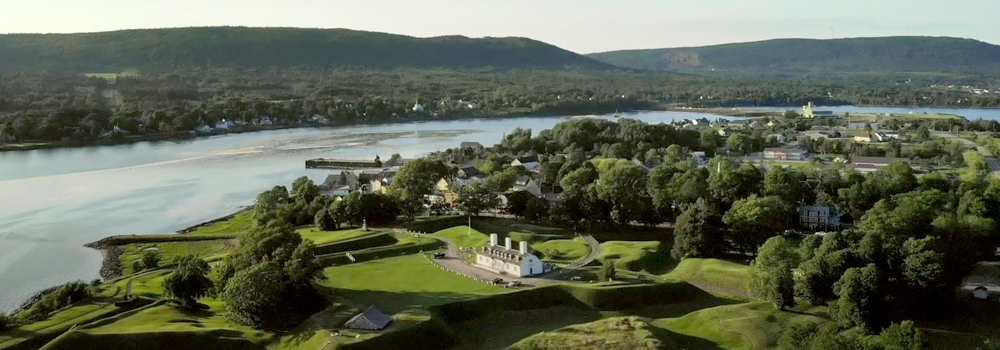
I heard on the CBC that Annapolis Royal is looking to hire a Climate Change Coordinator.

See video link of Annapolis Royal

This is good news. It brings to mind the work that Tim Webster, and others conducted at AGRG. With LiDAR it is possible to obtain an accurate three dimensional representation of the topography and, to a degree, the height of the forest canopy.

If there is co-ordination, it should include all the communities within the Annapolis watershed. Decisions in Annapolis Royal impact the ecology of the river e.g. the hydro dam. At the same time, it should engage with existing institutions and stakeholders in the watershed. To my mind, this includes collaboration with educational institutions and research groups. Any solution will require computer modelling based on our understanding of the hydrology, land use, climate and tides. It is a complex problem, demanding the best expertise in the region, as well as technical knowledge from other research groups.


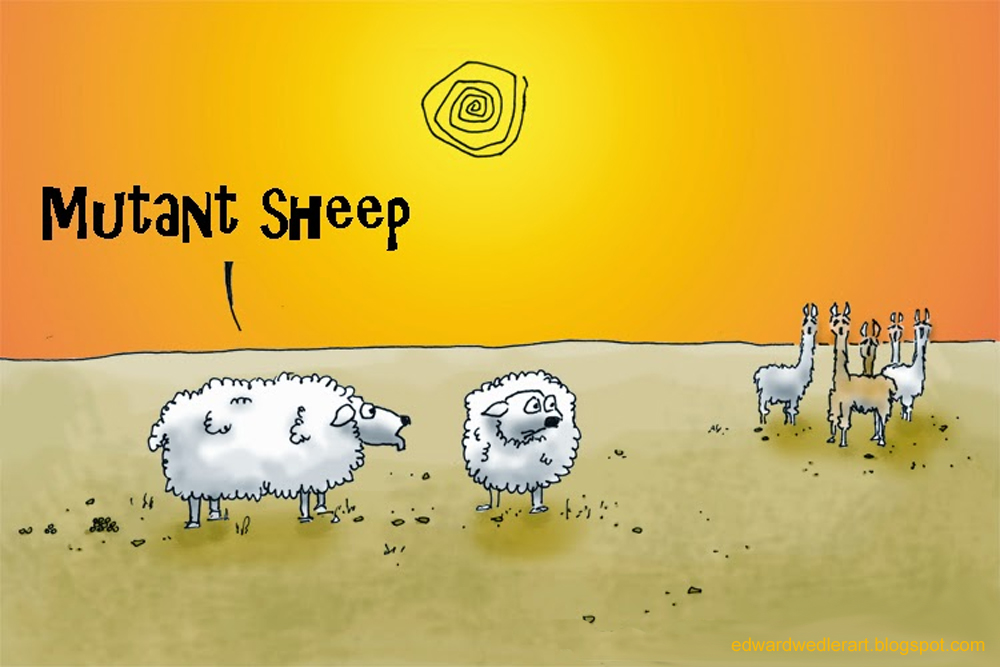
Outside of Bridgetown, I have noticed a small herd of alpaca. This species of South American mammal is more commonly found in Peru- Chile. An interesting sign of the times.
(cartoon by Edward)

I am still reading Lesley Choyce’s, Nova Scotia Shaped by the Sea, Chapter 4, The Land of the Mi’kmaq — a compelling statement based on Daniel Paul ’s book We were not the Savages.

Acknowledgements

Edward and Heather remain supportive.

References

Lesley Choyce, 2007, Nova Scotia Shaped by the Sea: A Living History, Pottersfield Press.

Daniel Paul, 1993, We Were Not the Savages, Nimbus Press (later editions by Fernwood Publishing)

Posted in Event Review

Trees and Water

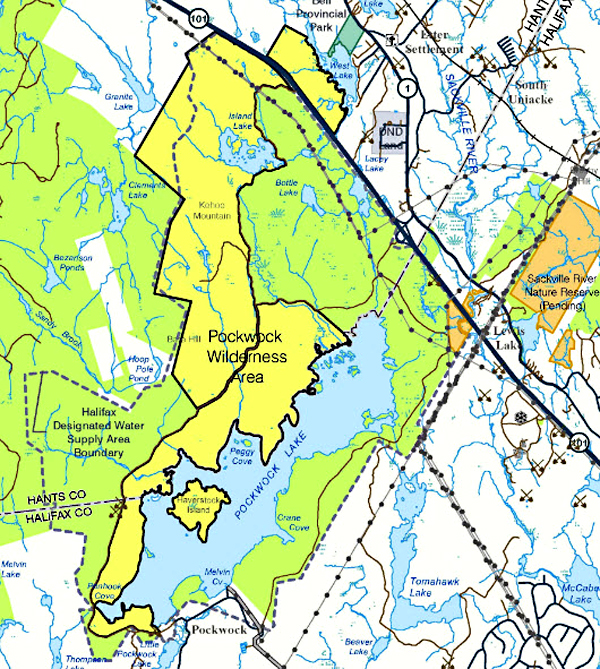
This Wednesday, John Wightman invited me along as a guest on a field trip to the Pockwock watershed. The trip was organized by the Western Region Stakeholders Interaction committee. The partners were WestFor Management, Halifax Water, Elmsdale Lumber, the forWater Research network and Dalhousie University.

Link to map source.

We left Bridgetown at 8 am, met the other members of the field trip at the firestation in Mount Uniacke. From there we crossed Highway 101 into the Pockwock watershed, the watersupply for the City of Halifax. In the watershed, we visited three sites: road and bridge construction, commercial thinning and group selection. David Foster, Ph.D student at Dalhousie University, School of Resource and Environmental Studies (SRES) produced an excellent twenty page guide detailing his research as well the role and contribution of the partner organizations. In total, there were approximately forty participants on the trip.

Besides reconnecting with Peter Duinker (Dalhousie University), Peter Neily (NS Lands and Forestry) and Peter Jones (previously with Bowater Mersey). I had the opportunity to see forest management collaboration in action.

Given the delays in the Lahey report implementation, I was encouraged by this obvious collaboration to secure a sustainable watershed future for Pockwock.

After a long day in the field, John dropped me off in Paradise around 6 pm.

Peter Duinker defined the key research question.

“What approaches to managing the watershed forest, focused mainly on harvest system and regeneration techniques, have the greatest potential to reduce the flow of terrestrial carbon into the lake?”

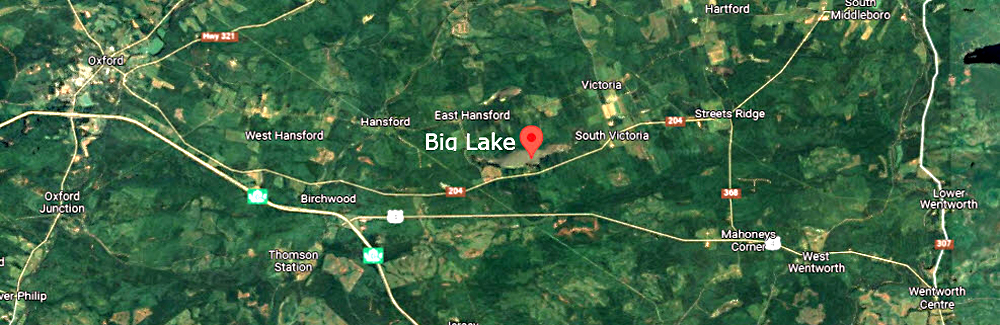
This same week, Heather and I received notice of aerial spraying around her family property near Big Lake, Cumberland County.

Obviously the clearing cutting / spraying option is not relevant to the Pockwock watershed however other parts of the province remain at risk.


Earlier this week, Niki Toomey at NSCC contacted me about their forthcoming 25th Anniversary. She was interested in the history behind the technical institutes that became incorporated into the community college.

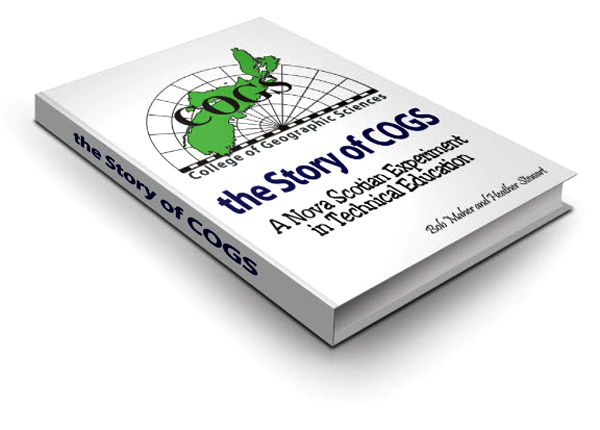
I did pull out the PDF that Heather and myself wrote and researched on the Story of COGS: a Nova Scotia experiment in Technical Education.

It was written in 2014 and is still worth re-reading. Especially, within the context of the type of collaboration demonstrated in the Pockwock watershed project

Acknowledgements

John Wightman for inviting me to join the field trip. Jillian Weldon-Genge for driving the forest roads of Pockwock. The quality of the presentations in the field from industry, government and the academic community was noteworthy. Edward added the links and graphics.

References

David Foster, September 2021, Field Tour handbook for the Pockwock Watershed, 20 pages.

Bob Maher and Heather Stewart, 2014, The Story of COGS, 42 pages.