The Municipality of Annapolis hosted a Climate Action Summit at Cornwallis Park on Saturday. There were over one hundred and fifty citizens in attendance. Overnight snow greeted us, as we drove down Highway #101 to Deep Brook.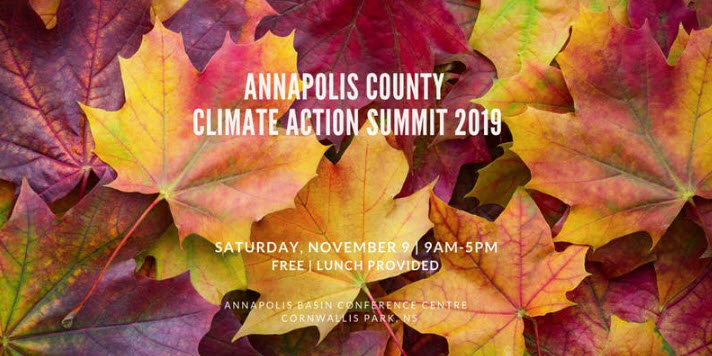 The day was structured into three parts:
a) keynote presentations from the Municipality and COGS;
b) community presentations;
c) specific breakout groups after lunch.
The keynotes were Timothy Habinski, Gregory Heming and Ed Symonds. Timothy emphasizes the need for action rather than talk ‘Be brave and be kind’.
Gregory reviewed a number of past actions by the county, including the municipal climate change action plan, the forestry review and economic development 2050. Themes included local agriculture, local energy, housing, education and training, clean air, water and soil. The move towards the third Industrial revolution: the restorative economy and right livelihood. Ed described his work at COGS and in particular the role of community mapping.
Community presentations were made by Medway Community Forest Cooperative, Acadian Seaplants, Bruce Family Farm, Nikian Farm, CARP, SNBRA, Centrelea Community Centre, the Red Cross and citizens concerned about plastics.
After an excellent buffet lunch, the afternoon was the opportunity to go into more depth. The discussion groups included energy resilience, displaced persons, crisis response, natural climate solutions, food independence. Given the inaction of the McNeil government on forestry, my interest was to understand and receive an update from Extinction Rebellion (XR) (Nina Newington) and the Healthy Forest Coalition (Donna Crossland).
By 4 pm, the enormity of the agenda and the cool temperatures in the Conference Centre forced an early retreat to the warmth of the woodstove back in Paradise.
There were a number of takeaways from the day.
1) there is an impressive number of engaged citizens in Annapolis County.
2) from the discussion on climate forestry, there is a need for private woodlots owners to think more about the economic dimensions of land trusts.
3) from a creative ‘humour ‘ perspective, I loved the concept from XR,
‘where is Stephen ?’ campaign. Right now, he is in China!
4) there is potential for a network of solar-powered community centres to mitigate climate risk
 Thinking about the complexity of the climate change agenda, and our inability to comprehend the interaction between the discussion topics in the afternoon; on returning home, looking for solace, I pulled down off the bookshelf Rooted in the Land edited by William Vitek and Wes Jackson. Essays on community and place. Published in 1996. Almost twenty-five years ago.
I would recommend the essay by David Orr, ‘Re-Ruralizing Education’. He starts with this quotation from Will Rogers:
“It ain’t what we don’t know that gives us trouble.
It’s what we know that ain’t right.”
Another essay, in the same book, which struck a chord, by Eric Zencey, ‘The Rootless Professors’.
At the follow-up Summit in 2020, I look forward to seeing positive action and further celebration of rural Nova Scotia.
Acknowledgements
Thanks to Roger Mosher, Bill Crossman and Heather Stewart for their company.
To the Municipality for organizing the Summit. And all the engaged citizens.
Edward for his graphics contribution. Larry Powell for his encouragement with the blog.
Reference
William Vitek and Wes Jackson(Ed). 1996. Rooted in the Land. Essays on Community and Place. Yale University Press.
 At the Tidewater Books and Browsery, I found a small book by Graeme Wynn. Graeme is Professor, Geography at UBC. The book, Culture and Agriculture on the Tantramar Marshes is based on his M.A thesis at the University of Toronto. It describes the utilization of the Chignecto Marshlands between 1750-1800, the Acadian settlement, the Planters and the Yorkshire and Loyalist influxes.
 I had noticed on a previous visit that they had a good selection of books by Harry Thurston, who lives at Tidnish Bridge. This time, I purchased
  One last literary reference. Last Summer in Langley, BC I was reading Wendell Berry’s
 Earlier in the week, we attended a talk, hosted by the Middleton Historical Society at the MacDonald Museum. Steve Skafte talked about the ‘lost roads of Nova Scotia’. He combined his interest in poetry and photography. Steve has self-published a number of books and maintains a tumbler site on the Internet.
 It is time to realize that the movement of individuals from elsewhere in Canada, or other countries, to Annapolis County is positive. It is time to stop thinking that more citizens who have reached retirement (arbitrarily, say 65 years) is negative. It is positive.
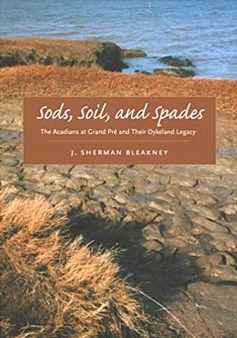 This discussion of the Language of Place took me back to my bookshelf. For Nova Scotia, I retrieved Sherman Bleakney’s book Sods, Soils and Spades: The Acadians at Grand Pre and their dykeland legacy. The word that triggered this search was aboiteau and its role in dykeland construction.
 This is his third book in the Politics of Place series. It includes chapters on walls in China, the United States, Israel and Palestine, the Middle East, the Indian subcontinent, Africa, Europe and the United Kingdom. Of particular interest was the chapter on the UK and its relationship to the Brexit vote. Looking at the map of voters who want to stay in the European Union and those who want to leave. Scotland, Northern Ireland, some of the cities in England want to stay whereas ‘rural’ England want to leave the EU.
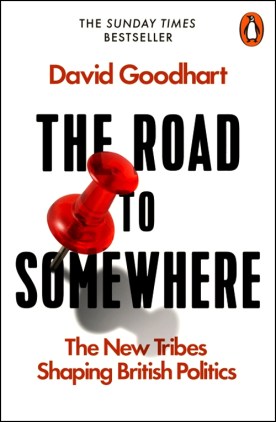 Marshall quotes from the book by David Goodhart,
  In Wolfville earlier this week, I picked up the
 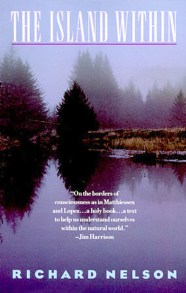 At the
  Brian Boates picked up eight bins for juicing in Woodville, before transporting it to Ironworks Distillery in Lunenburg. At the same time, I heard from Pierre that the first shipment of Hunter Brandy should be available later this month.
 My interest was the relationship between the different religious and education movements in rural Nova Scotia. Willy brought to my attention the book
  This week, there has been very little time or energy for reading. Picking apples in the orchard consumes both time and energy. I have fallen behind on my reading of George Woodcock’s story of George Orwell,
  Ernest Blair Experiment