Today, we had a good opportunity to conduct the ‘bus experiment’. Heather had a full day Buddhist retreat in Annapolis Royal. With early morning temperatures of -20C, she walked from our house on Hwy#201 in Paradise to the CRIA gas station in Lawrencetown. She caught the 3W bus to Bridgetown. In Bridgetown, she changed to the 4W bus, and continued on to Annapolis Royal. This evening, she will catch the 4E bus at the Annapolis Royal Fire Department at 5:31 pm, I will pick her up at CRIA around 6:11 pm.
The purpose of the experiment is to see the world through a different lens. Not from a car, bicycle or on foot, but rather through public transit.
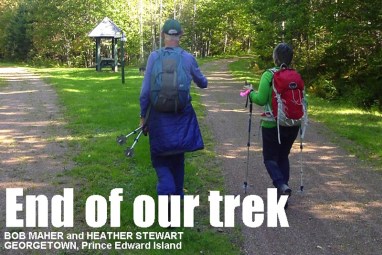 In my conversations with Edward Wedler, this relates back to the time when we decided to walk from Yarmouth to Georgetown, PEI, as part of our Road to Georgetown Trek. Many things have changed since those days.
Later, talking to Ed Symons at COGS, as part of his community mapping research, he is producing Kings Transit maps. Think of the value of adding the senior (citizen) experience to these maps. Ed’s students are working on a number of other sectors: food, forestry, culture, First Nations, community services and climate change. All of them can benefit from community (citizen) input.
At COGS, there has been a migration of staff from AGRG Middleton to Lawrencetown. From the outside, this appears to be a recognition of project-based learning. It will be interesting to see whether this corporate directive is reflected in the business plan for the new Innovation Hub (read this blog post). Rather than driven by business needs, the hub could be driven by the needs of the rural community and then to develop a geographic technology-related solution for these communities. The solutions can be transferred, and scaled, to other non-urban geographies. Use the intelligence of rural citizens in these communities to drive the design process right from project inception.
I hope on our return from Iqaluit (end of April) we will be able to review a business plan for the Innovation Hub, which reflects both our geographic reality and our citizens. Meanwhile, until we head North, we shall continue to ‘ride the buses’.
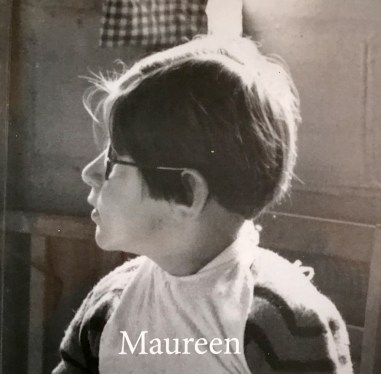 Today, I received a second book from my brother Peter. It is called ‘Maureen’ and is a collection of historic photographs, commemorating the life of my younger sister; thus, indirectly, our lives too.
Acknowledgements
Heather for her enthusiastic embrace of the bus fieldwork. Edward for fond memories of the Road to Georgetown. David Colville and Ed Symons for conversations on community mapping at COGS. Peter for another treasure from our common past.
References
Peter Maher. 2020. Maureen. Self-published.
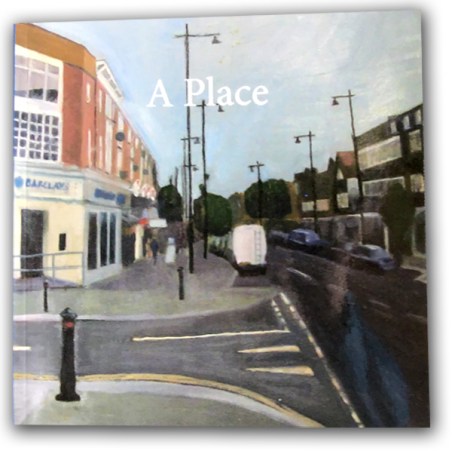 It shows thirteen pairs of images from
 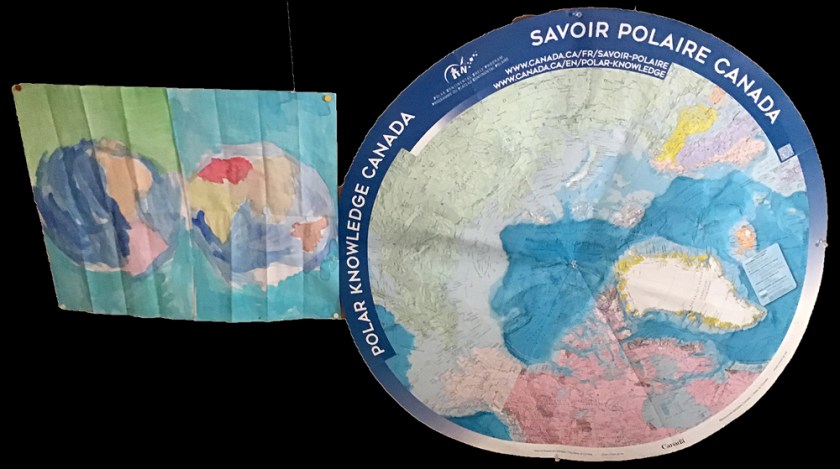 I reciprocated with photographs of two maps from my study. Polar Knowledge Canada and The Earth from Space, signed by Tom van Sant, from California days, 12/12/90.
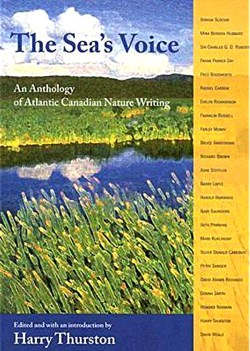 With the storms, I have been catching up with my reading, especially the work of David Adams Richards. In Harry Thurston’s book
  The difference at COGS is that we have a specialized suite of technologies: Geomatics or Geographic Sciences, and we live in a more rural environment. (This rural environment provides a likely explanation for the residency component).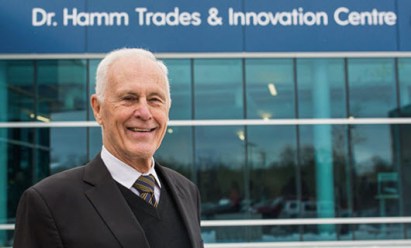
 I found the following quotation from
 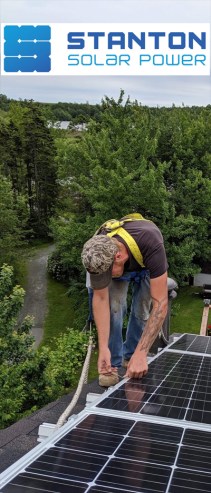 We live in changing times. This week, Nova Scotia Power inspected the solar panels on our roof. As part of the installation by
 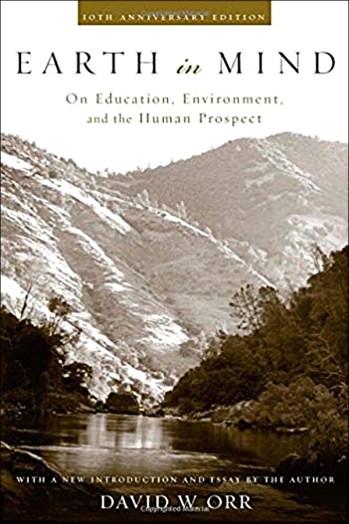 From the bookshelf, I selected David Orr’s
 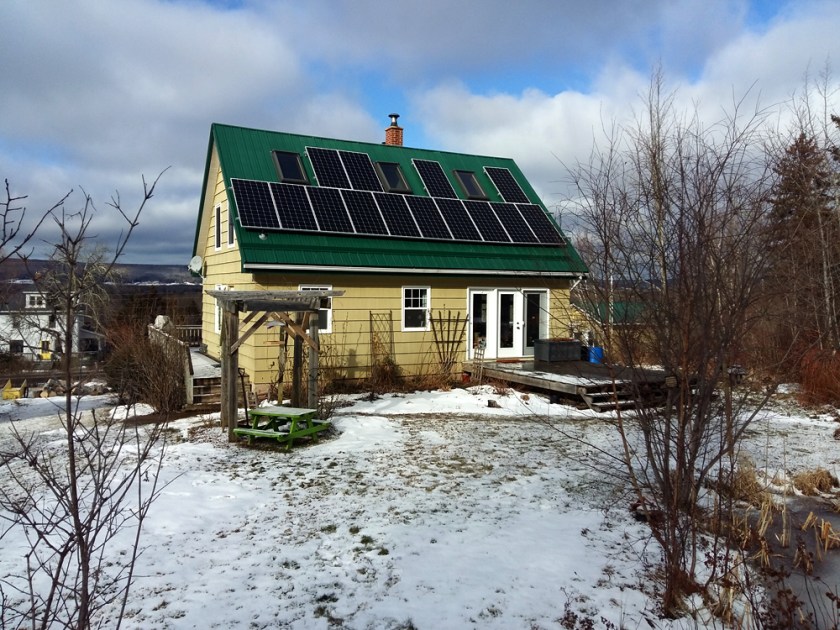 It was a good feeling to see the meter going in reverse. We were contributing electricity to the grid. Given the cost of the installation, it will be a few years, before we see a positive payback. But it seemed to be the right action in these times. Perhaps one day, we will be able to store the electricity in a battery which can provide power for an electric car, for short drives around the Valley.
 The second accomplishment was triggered by a visit to the Bridgetown library. I picked up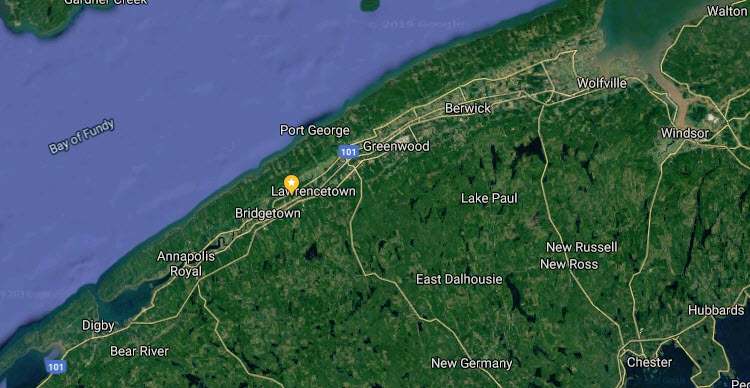
 (Photograph from 2019 conference).
 The takeaway message from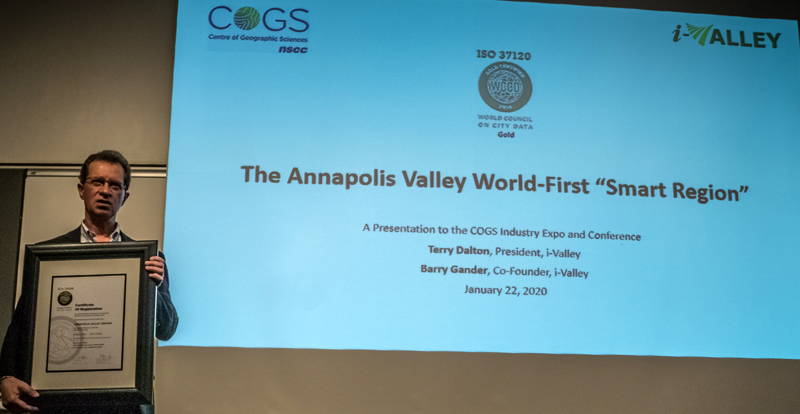
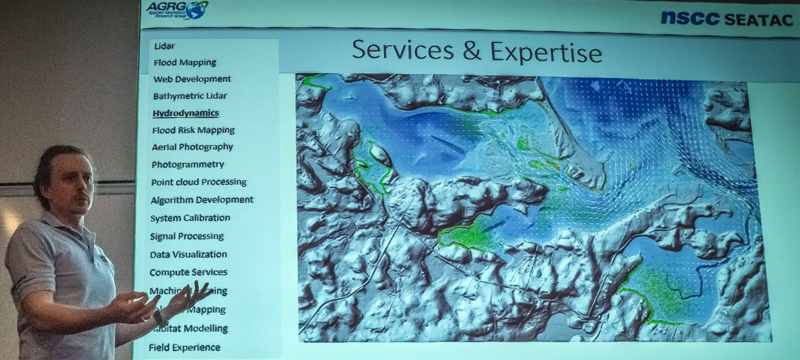 As informed citizens, we need to WAKE UP. We need to be talking about an Innovation Hub in Lawrencetown, evidence-based decision making, the use of current Geotechnologies.
 Eventually, Maureen was placed into long term care, funded and initially directed by our parents. In time, they were unable to provide the necessary support. Today, she lives in a home in Sandhurst, Berkshire,England.
 It was a challenging but worthwhile reading experience. The book is divided into four sections: roots, trunk, crown and seeds. The roots section introduces us to the lives of eight individuals. Each person has a relationship to trees on the earth.
 My next book on the bookshelf is
  Over the weekend, I have been reading a draft of Brian Arnott’s book Going to Town: the small town as micropolitan centre in the age of climate change. It should be published in 2020.


