Last week, a good friend from England sent me a link to the Oxford Symposium on Food and Cookery. This annual event is a weekend in July at St Catherine’s College, Oxford. The theme for 2017 was Food and Landscape. This was the start of an interesting week of discovery.
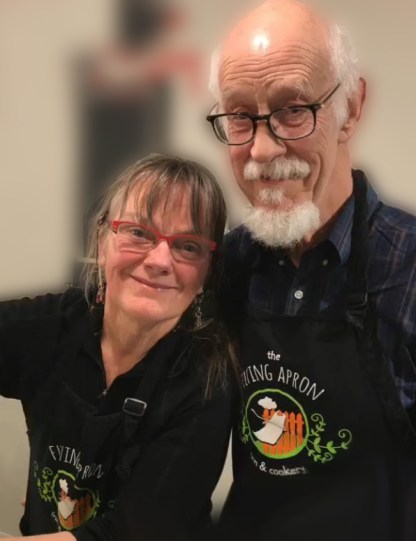 With a birthday and Valentine’s Day on February 14th., Heather and I decided to attend the Valentine’s Cookery School at the Flying Apron Inn in Summerville on Highway 215, East Hants, NS.
Before reaching Summerville, we stopped at Avondale to hike the community trails. The four kilometre loop wends through the ridges and sink holes of the gypsum formation. In the Spring, you can discover several species of Lady Slipper orchids (Cypripedium spp.). Avondale is also the home to Avondale Sky Winery and in the Summer, the annual Garlic festival.
The Flying Apron is an Inn, restaurant, Cooking School, post office and second-hand bookstore, all housed within a refurbished general store. It has several unique qualities:
- it is a cooperative marketing venture with Avondale Sky Winery and Meander River Farm and Brewery.
- Chef Chris offers a unique Cooking school.
- the signature event is ‘Dining on the Ocean Floor”, an outdoor meal served at low tide on the Bay of Fundy shore.
- it bring European cuisine to rural Nova Scotia, using local produce.
The Cookery School is an expandable concept. Students arrive to learn how to cook a three course dinner. All the ingredients are provided. The kitchen is well equipped with pots, pans, stoves, oven, refrigerator, and , of course, sharp knives. Chef Chris acts as the mentor. With proper equipment, local ingredients and a methodology, Chris guides the class through the creative process. At the end, there is the opportunity to savour the result, along with local wine or beer.
Take Home Lessons
Imagine we had a community college, with campuses in different landscapes across Nova Scotia. At each campus, we could identify the needs of the community. With a knowledgeable mentor (aka chef) who would bring experiences from other ‘geographies’, students could learn what are the key ingredients, the method, and create a product which they would test and share with members of the wider community. The cooking class could be a model for other crafts, hands-on activities, and even software development. Within the context of the community, students would learn about the landscape, the geology, ecology, heritage, as well as locally available resources.
After a night at the Inn, we continued along the Noel Shore to Maitland before heading back through the Rawdon Hills to Windsor, gateway to the Annapolis Valley. Driving along Highway 215, across the gypsum, in February, we noticed the abundance of red stems of the local species of Cornus (dogwood) in the wet hollows, along the roadside. Another unique quality of this landscape.
Footnotes
In the second-hand bookstore, I found Soul Voyage. This book is a fictional account by Cameron Royce Jess, of Joshua Slocum’s ‘Sailing Alone Around the World”. Slocum was born on a subsistence farm at Mount Hanley. Jess lives with his wife, Linda, in Hall’s Harbour.
On our return, I received an email, from another good friend, on ‘Evaluating the impact of subsidized food boxes in Nova Scotia’. Another, very different but important, community link between landscape and food. http://flip.it/_EgwY
Please compare this economy with the economy described by Bill Black (see previous blog).
References
Oxford Symposium on Food and Cookery started in 1983. Check Wikipedia or Google.
The Flying Apron Inn and Cookery www.flyingaproncookery.ca
Meander River Farm and Brewery www.meanderriverfarm.ca
Avondale Sky Winery www.avondalesky.com
Cameron Royce Jess. 2004. Soul Voyage. Inscape Publications, Port Williams.NS.
 In Saturday’s Chronicle Herald, Bill Black wrote an opinion column “How can rural NS prosper without resource extraction ?” and Joan Baxter (White) wrote ” For rural residents, all that glitters is not gold”. This resulted in the following Letter to the Editor.
 There were over twenty presentations and about two hundred persons in attendance. From my perspective, presentations could be divided into the following categories: technology, measurement science, applications, and implications for society and education.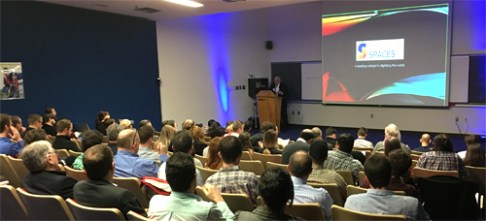
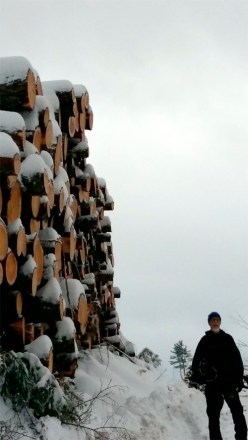
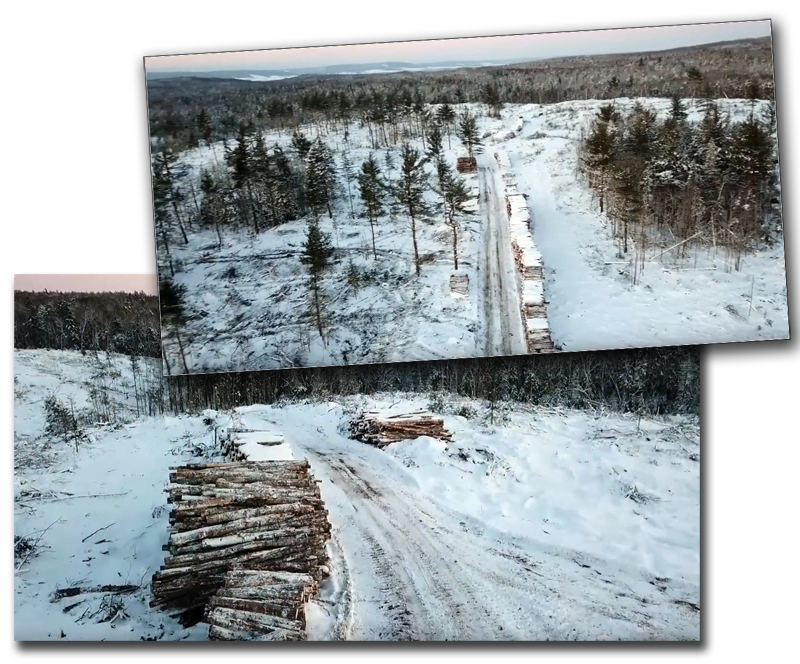
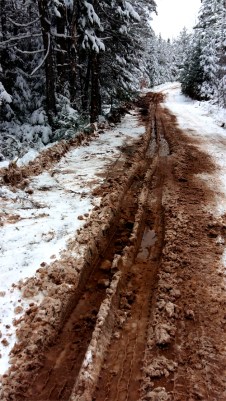
 Imagine the following scenario, COGS could have been expanded to form a network of campuses of the University of Geographic Sciences (UGS). This would permit technical resources to be applied to a wide range of geographic issues across the country. It would build on Canada’s history of innovation in Remote Sensing and GIS. Today, we could use the network to understand a wide range of geographic issues by monitoring and modelling different conditions. Smart ICE would be one example. We can imagine other contributions to our understanding of the boreal forest, or ocean management. Because of the geographic extent of the country, there are many opportunities to observe changes in land, sea and air. This natural laboratory, supported by a network of technical institutes could provide insight and offer solutions to a number of pressing global issues: climate change, urbanization, alternative energy sources.
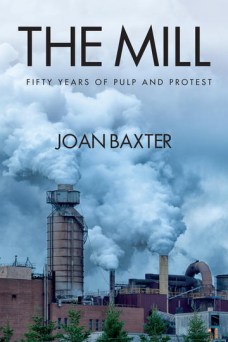 Over Christmas, while in Pictou County, there was the opportunity to read Joan Baxter’s book The Mill. Fifty Years of Pulp and Protest. Baxter provides a detailed and well-researched account of the impact of the Scott Paper Mill at Abercrombie Point, near Pictou. The book paints a sad picture of the relationship between government and the forestry sector and the effect on the local communities and the forest landscape.
 While in BC, and being in the Fraser Valley, I took the opportunity to check out the current work of Hugh Brody. Brody is the Canada Research Chair in Anthropology at the University of the Fraser Valley in Abbotsford. He is likely best known to Geographers for his book Maps and Dreams, published in 1981. From his web site, I noticed that he had recently given a talk at the Audain Gallery, Simon Fraser University. Fortunately, his talk is available as a
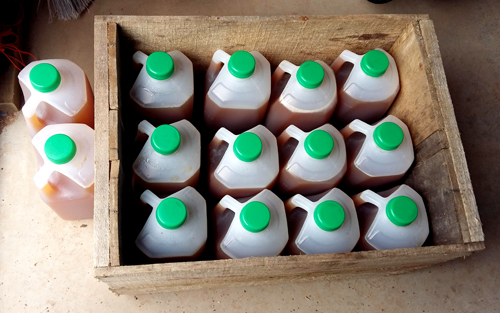
 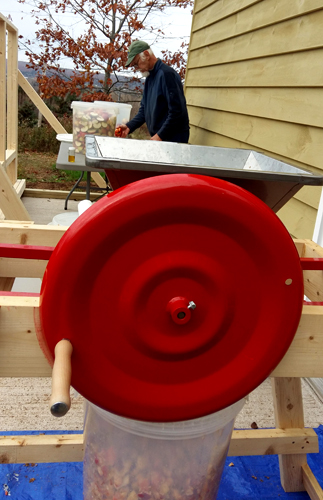 Richard Sennett says it well in the Acknowledgements to his book The Craftsman, “Making is Thinking’. This week, we have been busy pressing apples and making it into sweet cider.
 Ernest Blair Experiment