After we returned home from the West Coast in late Summer, we noticed that the water in our bathtub had a blue tinge to it. Upon further investigation, we learned that the water treatment system for arsenic and uranium had the side effect of creating water with a low ph (ie. acidic). The combination of acidic water with copper piping resulted in copper sulphate deposition. Fortunately, we have never used our well water for drinking or cooking.
This combination of events triggered memories of Health Geomatics Research with Dr Judy Guernsey at Dalhousie University. At that time (early 2000’s) we recommended the mapping of incidents of different cancer that could be potentially attributed to water quality. Then, it proved impossible to obtain statistics.
Moving to 2020, with the shortage of doctors, particularly in rural areas, it may be time to re-visit the question of human health and especially its relationship to water quality in arsenic/ uranium prone bedrock parts of the province.
This week, I have been trying to catch up with re-reading the Heather Menzies book. After attending the Climate Action Summit, my recommendation would be for both citizen groups and politicians to do some reading.
“The commons model offers a hopeful third choice: re-enfranchising people as responsible co-participants in the governance of the larger habitats that sustain them, including their individual lives.” p.184.
“ It’s about placemaking as I said, quoting Nicholas Blomley earlier: claiming our place as part of the picture from the local to the global. p.184.
“It involves people taking up the power of agency that is latent in every situation requiring change and becoming implicated participants in changing the status quo”. p.184.
Nicholas Blomley is Professor, Geography at Simon Fraser University.
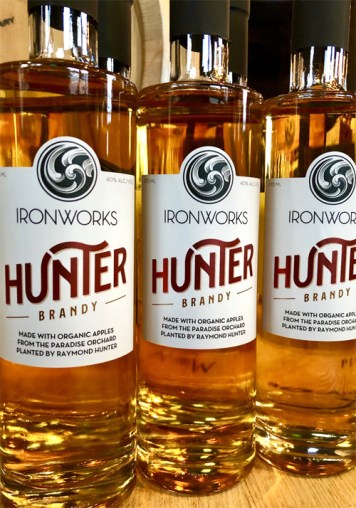 Yesterday, we went over to Lunenburg and picked up six bottles from the first shipment of Hunter Brandy by Ironworks Distillery. If you go online to their website, you can read a brief backstory to the product. It has been three years in the making.
Acknowledgements.
Steve at R & S Clear Water Specialists, Kentville for the blue water diagnosis. Pierre and Lynne at Ironworks Distillery, Lunenburg. Edward for his graphics contribution.
References
Heather Menzies. 2014. Reclaiming the Commons for the Common Good. New Society Publishers.
Nicholas Blomley. 1994. Law, Space and the Geographies of Power. Guilford Press.
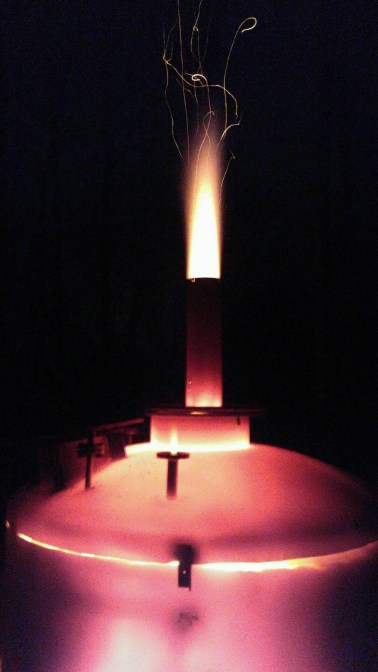 Quick Note
 At the Tidewater Books and Browsery, I found a small book by Graeme Wynn. Graeme is Professor, Geography at UBC. The book, Culture and Agriculture on the Tantramar Marshes is based on his M.A thesis at the University of Toronto. It describes the utilization of the Chignecto Marshlands between 1750-1800, the Acadian settlement, the Planters and the Yorkshire and Loyalist influxes.
 I had noticed on a previous visit that they had a good selection of books by Harry Thurston, who lives at Tidnish Bridge. This time, I purchased
  One last literary reference. Last Summer in Langley, BC I was reading Wendell Berry’s
  This is his third book in the Politics of Place series. It includes chapters on walls in China, the United States, Israel and Palestine, the Middle East, the Indian subcontinent, Africa, Europe and the United Kingdom. Of particular interest was the chapter on the UK and its relationship to the Brexit vote. Looking at the map of voters who want to stay in the European Union and those who want to leave. Scotland, Northern Ireland, some of the cities in England want to stay whereas ‘rural’ England want to leave the EU.
 Marshall quotes from the book by David Goodhart,
  My interest was the relationship between the different religious and education movements in rural Nova Scotia. Willy brought to my attention the book
  This week, there has been very little time or energy for reading. Picking apples in the orchard consumes both time and energy. I have fallen behind on my reading of George Woodcock’s story of George Orwell,
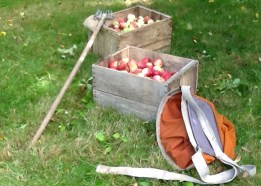 Meanwhile, at home, we are busy picking up the apple drops in the orchard. We wait for the apples to grow larger on the trees. We also wait for the first batch of Hunter’s brandy at
 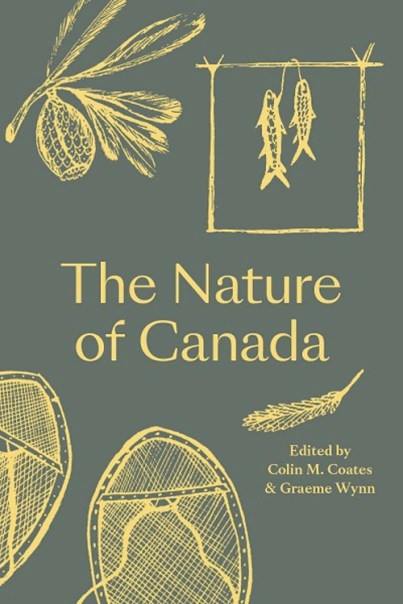 Subsequently, I picked up a copy at

 Joseph Weiss, in his book
 The third section addresses Care and Governance and the role of the
  on is the rightful heir to Haida Gwaii. Our culture is born of respect; and intimacy with the land and sea and air around us. Like the forests, the roots of our people are intertwined such that the greatest troubles cannot overcome us. We owe our existence to Haida Gwaii’ p.175

 Ernest Blair Experiment