Posted in Book Review

A Sense of Humus (Part 2)

As promised, I have read Bertha Damon’s book, shared by Jane Nicholson.

pic_mermaid
Our Mermaid in the Mulch

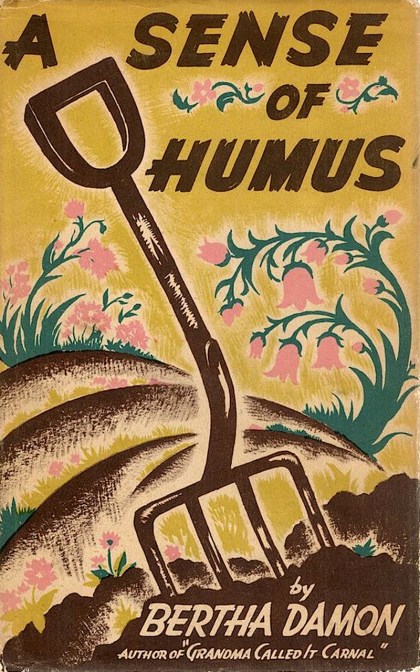
At the beginning of Chapter 9.bookCover_senseOfHumus

“The importance of humus in human economy seldom receives sufficient emphasis. Suffice it to say that it probably represents the most important source of human wealth on this planet” p.95.

Damon published the book in 1943 during the Second World War. It is a collection of twenty-two chapters. Besides Humus, other topics include Spring Doings, Plowing and Planting, In Defence of Weeds, Apples Old Style.

“To have a sense of humus is to have an appreciation of the past, to realize that to discard the achievements and virtues slowly built up through long periods of human society and to attempt to live solely in the present is like throwing away humus and trying to exist in more or less inorganic hardpan.”

“One who works much with humus sees it to be a symbol of democracy, in which many work for the good of one, and one works for the good of many.” p.101.

From Apples Old Style, Chapter 21.

“I have found that at least twenty two different varieties, well enough known to get into books, originated in New Hampshire.” p.230.
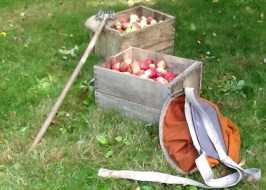
maher_apple_1This compares with the four varieties in our small orchard: NovaMac, NovaSpy, Liberty, MacFree.

After my earlier blog post, Brian Arnott made the comment.

“Is the mind a kind of compost pit? Do we break down ideas to create more potent matter? Yes, probably.”

On Friday afternoon, I had the opportunity to meet with both Roger Mosher and John Wightman. John kindly lent me two books by Thomas Raddall, “The Dreamers” and “Halifax: Warden of the North” as well as Will Bird’s, “Off-Trail in Nova Scotia”.
In these COVID times, books serve as a medium for sharing ideas, to add to the ‘compost pit’.

Postscript

Having a sense of humus, reminds me of the important role of elders in our society, without them, we are left with the inorganic hardpan. I also think of the work by Maria Popova and her web site, Brain Pickings. Check it out.

bookCover_wisdomOfTheEldersThis led to the following exchange with Edward Wedler.

”If society sees elders as simply ‘old people’ then we are missing out on the opportunity to harvest/apply this mental humus.”

Edward replied “There exist many cultures that value elders (Japanese and Canadian indigenous communities come to mind). David Suzuki once co-authored a book ‘Wisdom of the Elders’ where he explored this question.”

Acknowledgements

Brian Arnott, Roger Mosher and John Wightman for their contributions. Jane Nicholson for sowing the seed. Heather for her help in the garden. Edward for his feedback.

References

Bertha Damon, 1943. A Sense of Humus. Simon and Schuster.
Thomas H. Raddall, 1986. The Dreamers. Pottersfield Press.
Thomas H. Raddall, 2007. Halifax, Warden of the North. Nimbus Publishing.
Will R. Bird, 1956. Off-Trail in Nova Scotia. McGraw-Hill Ryerson.
David Suzuki and Peter Knudtson, 1993. Wisdom of the Elders. PenguinRandomHouse.
Posted in Book Review

A Sense of Humus

bookCover_senseOfHumusThis week, I picked up the book ‘A Sense of Humus’ from the post office in Bridgetown (Lawrencetown is closed). It had been sent to me by Jane Nicholson. She thought that I would enjoy it. Written in 1943 by Bertha Damon.
“It describes the pleasures of living in the country, the vicissitudes of gardening, the small lovable satisfactions of working on one’s own land.”

“If the reader’s own personal soul is winter-chilled, war-torn, tax-parched or just plain tired, ‘A Sense of Humus’ will do it considerable good.”

The book is set in New Hampshire. Written during the Second World War, there are parallels to COVID-19. I will offer a proper review, once I have finished it.

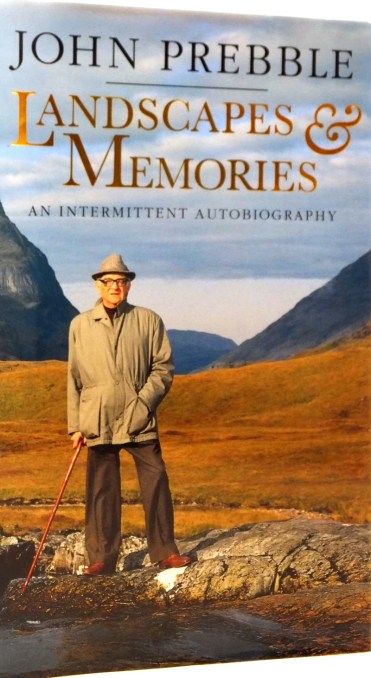
bookCover_landscapesAndMemoriesMeanwhile, Saturday, we went for a drive to Annapolis Royal and Victoria Beach. At Great Expectations Books and Cafe, I was able to pick up John Prebble’s Book, “Landscapes and Memories: an intermittent autobiography“. I am familiar with Prebble because of Heather’s Scottish heritage. Prebble wrote The Highland Clearances, Glencoe and Culloden.
It was wonderful to discover that the town is reopening. We stopped at Lola’s cafe and were able to purchase Cornish pasties and a roast lamb dinner for Sunday night.

The drive gave us a well-deserved break from the garden. With the black flies, the best time for planting is 6 am in the morning. After the heavy rain, we were able to transplant the tomatoes from the greenhouse and sow seeds: beans, carrots, beets, spinach and lettuce.

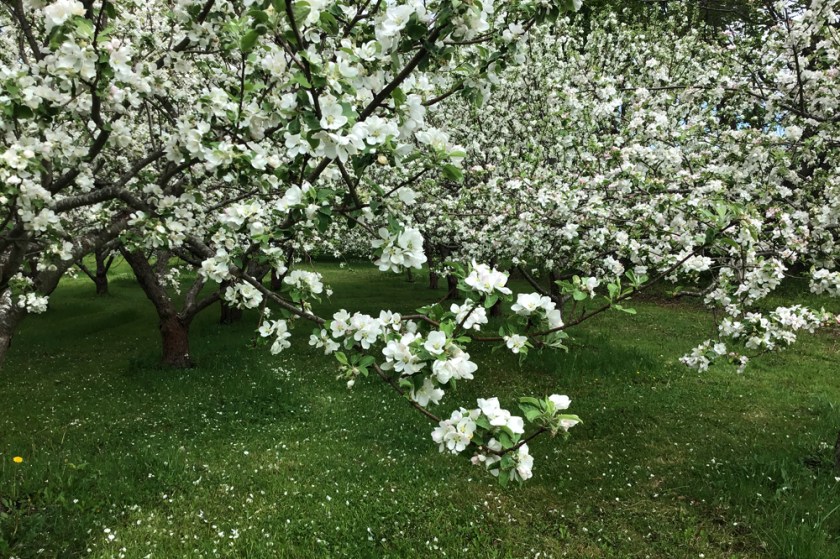
After the rain, the apple trees in the orchard were in full, white splendour accompanied by the sound of the bees.pic_orchard01Jun2020

Congratulations to Jane and Adele on the fourth anniversary of AIRO!

Sad news, writer Silver Donald Cameron died on Sunday night. He will be remembered for his Green Interviews.

Acknowledgements

Jane Nicholson for sending along the book. To Great Expectations for opening up the bookstore and cafe. To Lola for delicious food. Heather shared the road trip. Edward for his artistic talent.

References

Bertha Damon, 1943. A Sense of Humus. Simon and Schuster.
John Prebble, 1993. Landscapes and Memories. Harper Collins

Posted in Book Review

Turtle Talk

Turtle Talk is a slim collection of ‘voices for a sustainable future’, published by New Society Publishers.bookCover_turtleTalk It includes interviews by Christopher and Judith Plant with Gary Snyder, Peter Berg, Murray Bookchin and others. First published in 1990, with a Foreword by Kirkpatrick Sale. I found it hiding between Simple in Means: Rich in Ends and The Ecology of Wisdom (see the references, below). Deep Ecology is a large topic and won’t be discussed in this blog.
Sale tells the Lakota Sioux story of the creation of ‘Turtle Island’. Discussing the contributors:

“ What makes them special is that they are people not merely thinking but doing, despite the weight of the forces ranged against them – people who, it could be said, are sticking their necks out on behalf of all endangered species, including the human, including the living Earth itself. And it is the great lesson of the turtle, of course, that you can get ahead only when you stick your neck out.”

From Gary Snyder,

“The bioregional undertaking is to learn our region; to stay here and be at home in it, and to take responsibility for it, and treat it right.” p.14.

“ …you have people who say, “I’m not going to move” That’s where it gets new. People say “I’m going to stay here, and you can count on me being here in 20 years from now”. What that immediately does is make a politically-empowered community possible.” p.17.

From Peter Berg,

“The greatest shared value for the necessary upcoming ecological era is wilderness. Because wilderness already embodies systems, designs, purposes that are workable, are demonstratively eco-energetic – efficiënt in terms of energy and resources.” p.25.

“I think our working together to discover our own wildness, the wild Homo sapiens being within us, is very liberating, very exciting. It is the future from my point of view, and it’s pivotal in terms of human civilization.” p.29.

Finally, from Murray Bookchin:

“There’s a long tradition in New England and other parts of the United States, in which the town or the village is merely the nucleus of a much larger area, bringing the country and the town together.” p.130.

“We can decentralize our cities, we can use our land intelligently, ecologically, we can have people create new kinds of communities”. p.131.

It is a sobering thought to find this thin book, hidden away on the shelf. Also to realize that these interviews were recorded over thirty years ago.

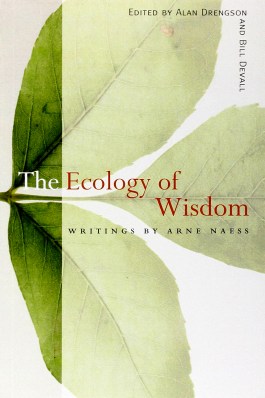
What has changed? What is their relevance to today’s global predicament? Is there a sustainable future?bookCover_ecologyOfWisdom

Many of those voices are no longer with us.

PS. Given that the libraries are closed. Please contact me, if you want to borrow any of these books.

Acknowledgements

Heather for her turtle talk, whether Blandings or Wood turtle.
Edward who has chosen Turtle Island (North America) as his home too. Plus his graphics contribution.

References

Christopher and Judith Plant, 1990. Turtle Talk: Voices for a Sustainable Future.
The New Catalyst Bioregional Series.

Bill Duvall, 1988. Simple in Means, Rich in Ends: Practicing Deep Ecology. Gibbs and Smith.
Alan Drengson and Bill Devall (Ed.), 2008. The Ecology of Wisdom: Writings of Arne Naess. Counterpoint Press.

Posted in Book Review, Opinion

Books and Memory

In the early ‘70s, I remember driving through Nova Scotia on my way back to Memorial University of Newfoundland (MUN) in St Johns. I stopped in Heatherton (near Antigonish) to meet with Allen van Newkirk, and his wife, Susan. Allen was a poet from Detroit who had set up the Institute for Bioregionalism Research.map_bioregionsNAmerica I was teaching Biogeography and Computer Mapping in the Department of Geography at MUN.

Fast forward, almost fifty years, I have pulled off the bookshelf my collection of books on Bioregionalism. They include:

Reinhabiting a Separate Country. A Bioregionalism Anthology of Northern California, Edited by Peter Berg.
Bioregionalism, Edited by Michael McGinnis.
Bioregionalism and Civil Society, by Mike Carr.

bookCover_bioregionalismMcInnisIn the McGinnis book, there is an excellent chapter by Doug Aberley.

“The term Bioregionalism was first conceived by Allen Van Newkirk who had been active in eastern US radical politics and who met Berg in San Francisco in 1969 and again in Nova Scotia in 1971.”

As conceived by Van Newkirk:

“ Bioregionalism is presented as a technical process of identifying biogeographically interpreted culture areas ….called bioregions. Within these territories, resident human populations would ‘restore plant and animal biodiversity’, ‘aid in the conservation and restoration of wild ecosystems’ and ‘observe regional models of new and relatively non-arbitrary scales of human activities in relation to the biological realities of the natural landscape.”

This led me to further research the writing and life of Peter Berg (see reference).

Meanwhile, from Chelsea Green Publishing:

‘Books provide a window into places we’ve never been and help us nurture imagination and explore new ideas from our own home‘.

This includes Rob Hopkins From What Is To What If: Unleashing the Power of the Imagination to Create the Future We Want.

From Edward Wedler, he forwarded a link to the bookstore in Parrsboro, Nonesuch.banner_nonesuchBookstore They are offering a surprise package of five books on any topic you are interested in for $60 includes delivery. I should send my $60, my topic would be ‘Bioregionalism’.
Finally, Saturday, we took a quick day trip to New Glasgow to check on Heather’s Dad. It was a pure pleasure to drive through a different landscape, in this case, the Rawdon Hills from Windsor to Truro.

Acknowledgements

Edward for the link to the Parrsboro bookstore. Heather, for sharing the drive to New Glasgow and back.

References

Michael McGinnis (Ed.) 1999. Bioregionalism. Routledge.
Peter Berg (Ed.) 1978. Reinhabiting a Separate Country: A Bioregionalism Anthology of Northern California. Planet Drum books
Mike Carr.2004. Bioregionalism and Civil Society: Democratic Challenges to Corporate Globalism. UBC Press.
Cheryll Glotfelty and Eve Quesnel (Ed.) 2014. The Biosphere and the Bioregion: Essential Writings of Peter Berg. Routledge Environmental Humanities Series.

Posted in Book Review

Happenstance

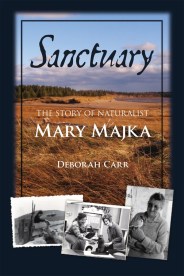
Over the weekend, I had the time to read Sanctuary: the biography of Mary Majka, written by Deborah Carr.bookCover_sanctuary Mary was born in Poland in 1923. She was sixteen when Hitler invaded Poland at the start of the Second World War. Eventually, she arrived at Pier21 with her husband, Mike, in 1951. They moved to New Brunswick in 1961.

Mary Majka has done more to preserve the natural and cultural legacy of the Bay of Fundy than anyone in our time.” Harry Thurston.

“Through the example of her life, she has shown that by simply following our true nature, the nugget of passion that resides in each heart, we change our world. It doesn’t have to be large or grandiose; it just needs to be true”
Carr p.227.

On Sunday, Heather shared with me a Zoom talk given by Bob Howard to the Annapolis Royal Shambhala Group on biodynamic French intensive horticulture and the work of Alan Chadwick. This led to some preliminary online research. I found two books of Chadwick’s talks plus a memoir by Paul Lee on Chadwick and the organic movement in California. The memoir excerpts look very promising. I contacted Bob and he suggested that I check the YouTube video, Garden Song.

bookCover_bioregionalismMeanwhile, Heather continues to organize our book collection. This brought to my attention, Mike Carr, Bioregionalism and Civil Society: Democratic Challenges to Corporate Globalism. It looks relevant today and should sustain me this week.

Footnote

Happenstance Books and Yarns is an independent bookstore in Lakefield, Ontario. They also sell knitting supplies.

Acknowledgements

Bob Howard for the reference to Alan Chadwick and the link, Garden Song. Heather for her attempts to put order into the book collection. Edward for his graphics contribution.

References

Deborah Carr, 2010. Sanctuary: The Story of Naturalist Mary Majka. Goose Lane.
Mike Carr, 2004. Bioregionalism and Civil Society: Democratic Challenges to Corporate Globalism. UBC Press.
Paul Lee, 2013. There is a Garden in the Mind: A Memoir of Alan Chadwick and the Organic Movement in California. North Atlantic Books,
Alan Chadwick, 2008. Performance in the Garden: a collection of talks on biodynamic French intensive horticulture. Logosophia
Alan Chadwick, 2013. Reverence, obedience and the Invisible in the Garden. Talks on the biodynamic French Intensive system. Logosophia

.

Posted in Book Review

Community Matters

Even before the events in Portapique last weekend, the church in Middleton had displayed the sign, in relation to the COVID-19 restrictions.

Things that matter are hard.

For several days, the thought of writing a blog seemed impossible.

pic_cleaningTheOrchard
Cleaning out the brush along the east side of the orchard.

bookCover_sanctuaryEventually, I turned to the bookcase, and rediscovered the biography of Mary Majka. She was a naturalist, living on the shores of the Bay of the Fundy in New Brunswick. She was the driving force behind Mary’s Point Western Hemispheric Shorebird Reserve.

Harry Thurston makes the following comment on Sanctuary by Deborah Carr.

“Sanctuary is an engaging and clear-eyed portrait of her indomitable spirit – a celebration of a courageous life – and an important book”

This led me to pull down my collection of Harry Thurston books. Thurston lives in Tidnish Beach.

I recalled meeting Thurston at the annual meeting, last Spring, of the Elizabeth Bishop Society of Nova Scotia in Great Village. He attended, along with Sandra Barry And hence, I searched out her books too.

I hope you find enjoyment in these books.

Acknowledgements

To those writers who choose to describe life in small communities.
Heather for encouraging me to spend more time outdoors this week.
Edward for his helpful support. Sandra Barry for her encouragement.

References
Deborah Carr, 2010. Sanctuary: The Story of Naturalist Mary Majka.Goose Lane.
Harry Thurston, 2004. A Place Between the Tides. Greystone Books
Harry Thurston, 2005. The Sea’s Voice. An Anthology of Atlantic Canadian Nature Writing. Nimbus Press.
Harry Thurston, 2009. Animals of my own kind: New and Selected Poems. Vehicule Press.
Allan Cooper and Harry Thurston, 2013. The Deer Yard. Gaspereau Press.
Harry Thurston, 2015. Keeping Watch at the End of the World. Gaspereau Press.
Barry S., Davies P., Sanger G. (Ed.), 2001. Divisions of the Heart: Elizabeth Bishop and the Art of Memory and Place. Gaspereau Press.
Sandra Barry, 2011. Elizabeth Bishop: Nova Scotia’s “Home-made” Poet. Nimbus Press.
Sandra Barry and Laurie Gunn (Ed.), 2013. Echoes of Elizabeth Bishop. Elizabeth Bishop Society of Nova Scotia.

Posted in Book Review, Opinion

Small Details

banner_dAubinMeats_3In these unusual times, it is the small details that catch one’s attention. Going to the grocery store is a different experience. Once a week, I stop at D’Aubin Meat Market in Bridgetown. This week, we needed a hambone to make our split pea soup. They had run out of bacon but offered instead a ham end, as a substitute. While there, I grabbed a bag of pea shoots, and goat cheese scones with chives and cranberries.
We are seeing changes in the availability of news from the Saltwire network. They publish the Annapolis Spectator and the Chronicle Herald. Instead, I notice an increase in online blogs – The Virus Diary (Anne Crossman), The Groundhog (Roger Mosher) and Ernest Blair Experiment (Bob Maher, Edward Wedler).

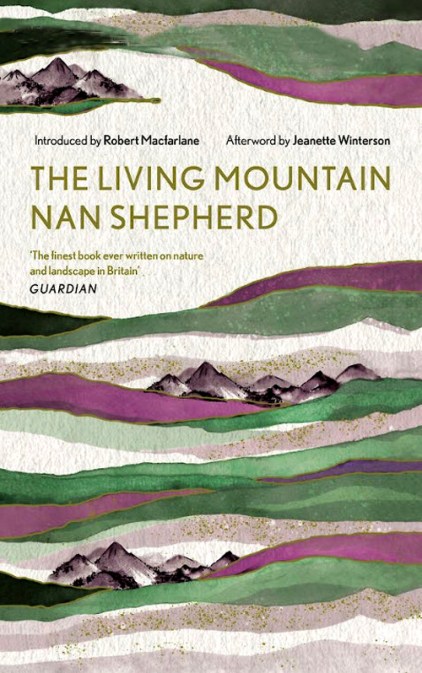
bookCover_livingMountainTwo years ago, I was in England and picked up Nan Shepherd’s The Living Mountain from the Weybridge Bookshop. After listening to Robert MacFarlane on CBC Radio, a couple of weeks ago, it was time to try to find my copy. The book, written towards the end of the Second World War but not published until 1977, describes her relationship with the Cairngorms in Scotland. It is considered a classic of nature writing. Twelve short chapters ranging from the Plateau through Water, Snow and Ice to Life (Plants, Birds, Animals, Insects and Man). She concludes with Being.

“I believe that I now understand in some small measure why the Buddhist goes on a pilgrimage to a mountain. The journey is itself part of the technique by which God is sought. it is a Journey into Being; for as I penetrate more deeply into the mountain’s life, I penetrate also into my own”. p.108.

In many ways, it is a Geography text.
MacFarlane provides an excellent thirty-page introduction to this slender book.

Acknowledgements

Ralph and Jennifer D’Aubin for their successful meat market and value-added products. Anne Crossman, Roger Mosher and Edward Wedler for their contributions to community blogs. Heather Stewart for her cuisine.

References
Nan Shepherd. 2011. The Living Mountain. Canongate Books

Posted in Book Review

The Song of the Dodo

In the last few days, David Quammen’s name has come to my attention, twice.bookCover_spillover_2 The first was a podcast, available through Emergence Magazine. The second was from Sandra Barry about an article in Orion magazine. In both cases, they refer to his book, Spillover: animal infections and the next human pandemic. It was published in 2013.

My interest in Quammen’s writing goes back to the mid-’90s.bookCover_songOfTheDodo After finishing graduate work in Biogeography, and spending time in Indonesia, I could not resist the Song of the Dodo, with its subtitle, Island Biogeography in an Age of Extinction. Today, we continue to divide our landscape into islands. For example, consider the continued forestry practices in Nova Scotia.
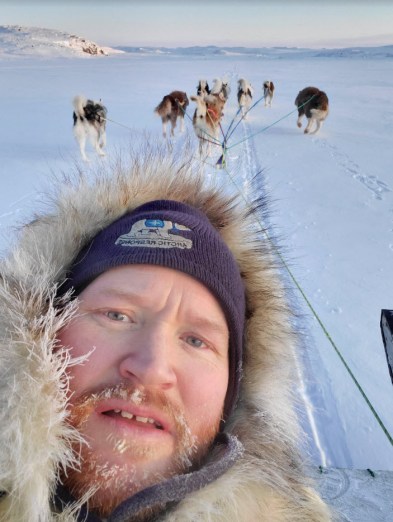
This Tuesday (March 31st) Heather and I were scheduled to visit grandchildren in Iqaluit.upNorthDogTeamSelfie Talking to Andrew (my son) on the weekend, the current procedure for visitors to Nunavut is two weeks quarantine in a designated hotel in Ottawa (or another transit centre) BEFORE travel. If the quarantine is successful, then one can visit. This provides a clear measure of the vulnerability of these Northern communities from the COVID-19 virus.

Today, Heather was noticing the lack of traffic on Highway #201. We were able to hear the songbirds that are arriving back in the Valley. On a beautiful morning, I had to break the silence, by getting the chainsaw out of the garage. There were yard chores — cutting off the larger dead branches from the Apple trees and trimming the silver maple in the front yard before it extends upwards to the Nova Scotia Power lines. The privet hedge contains too many old dead branches at their core.

The end result was a full day outside. If we can use this month of April (normally spent in the North) to clear out the old growth, then we can begin to imagine a larger garden and greater food self-sufficiency. At the same time, we add biomass to the compost pile and additional wood and kindling for the woodshed. This will warm us, sometime, next Winter.

Acknowledgements

Sandra Barry for resurrecting memories of David Quammen’s writing. Heather for sharing both the hard work and dreaming of a different future. Edward Wedler for his weekend blog, as well as his support and good humour.

References

David Quammen, 2013. Spillover: Animal Infections and the Next Human Pandemic WW Norton & Co.
Emergence Magazine podcast. Shaking the Viral Tree.
Orion Magazine. 17 March 2020. Why David Quammen is nor Surprised.
David Quammen. 1997. The Song of the Dodo. Island Biogeography in an Age of Extinction. Simon & Schuster.

Posted in Book Review

Reading Time

Over Christmas, we visited my brother’s family in Toronto. While there, I chanced to pick up Jane Jacobs’ book Vital Little Plans.bookCover_vitalLittlePlans One of the essays centres on a conversation between Janice Stein and Jane Jacobs at the ‘Grazing in the Commons’ conference in Toronto, November 15,2001. It is titled ‘Efficiency and the Commons’. In particular, I appreciated the following exchange.

p 379. Stein:

“I think we need to think about citizenship not just as voting in an election. We need to start thinking about citizenship as a part-time job that we all have. And then ask ourselves.
‘OK, which job am I going to take on?
Am I going to go to work in my local school?
Am I going to go help out in the local clinic?
Am I going to help out with a community issue?
Because it seems to me that’s what crosses that bridge that we build between states and markets.

We know states do some things and markets do others. How do we fit this part-time citizen into our economy ?”

Jacobs:

“I think what you are describing has a great deal in common with art, which has always been a big question mark. Art done for art’s sake is outside of economic life. Artists do need, somehow or other to eat, but that’s not why they do art. They do it because they’re driven to do it. And it’s a gift. And I think that community things are done not for livelihood and not for power. That’s where that work belongs.”

Before heading home from Florida, Edward forwarded this link from The Atlantic.
Anne Applebaum The Coronavirus Called America’s Bluff.CoVid19AmericasBluff

Another perspective on the current crisis can be found in Paul Kingsnorth contribution to this week’s Emergence Magazine. The op-ed piece is called Finnegas.

bobNhunterSocialDistancingFinally, at the end of the week, Charlie Hunter forwarded a photograph of our St. Patrick’s Day meeting, with the caption ‘You and I received more compliments on our social distancing than on our good looks !

Reading time should allow us some ‘deep thinking’ about government, capitalism and citizenship. On Sunday morning, CBC The Sunday Edition included interviews with both Robert MacFarlane and Rebecca Solnit, a couple of my favourite authors.

Acknowledgements

Edward Wedler for forwarding The Atlantic link, before heading home to Nova Scotia (now in mandatory self-isolation). Charlie Hunter for the photograph. Heather Stewart for her feedback.

References

Samuel Zipp and Nathan Storring(Ed) 2016. Vital Little Plans. The Short Works of Jane Jacobs. Vital Little Plans. Penguin Random House Canada.
Anne Applebaum. The Coronavirus Called America’s Bluff. The Atlantic.
Paul Kingsnorth. Emergence Magazine. March 20,2020. Finnegas.

Posted in biographical sketch, Book Review

A Place, A Time

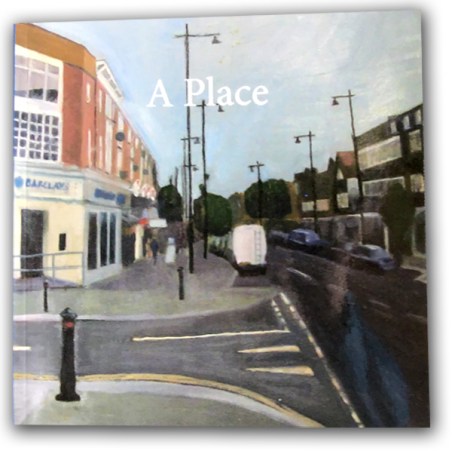
Today, by chance, I received a book from my brother Peter on my 75th birthday. It is called ‘A Place’.bookCover_place_2It shows thirteen pairs of images from Whitton (Middlesex, England).
On the left-hand page, a historic photograph and text explanation; on the right, an impressionist painting of the same location, today. Beautifully designed and published as a limited edition.

Yesterday, I was tidying up some papers in the basement. From 2004, I found two proposals.

1) Developing the ‘Centre of Rural Living’ concept at the Annapolis Valley campus, Nova Scotia Community College.

2) Model for Rural Development and Community Capacity Building. ‘ Applied Geomatics Innovation Cluster’. NSCC, WVDA, Annapolis and Digby Counties, NS.

Here we are sixteen years later. Sounds like an Innovation Hub to me!

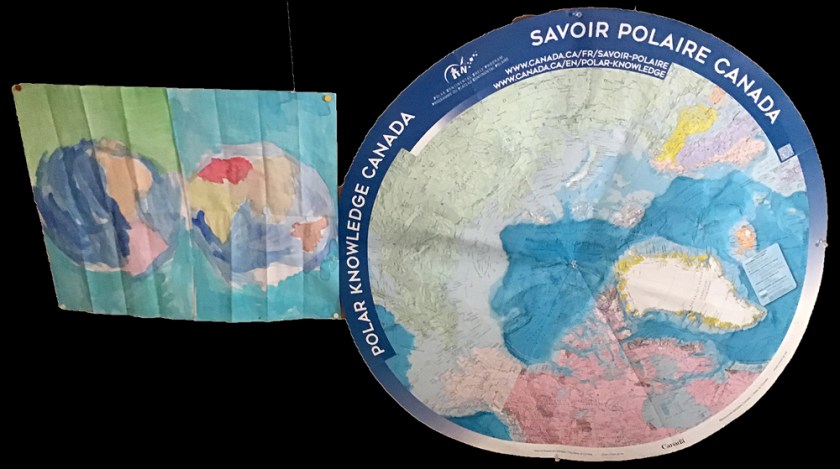
Last week, Logan, my grandson living in Peterborough, Ontario sent me his world map.map_polarCanadian I reciprocated with photographs of two maps from my study. Polar Knowledge Canada and The Earth from Space, signed by Tom van Sant, from California days, 12/12/90.
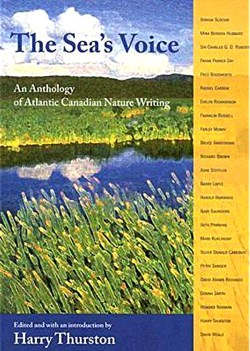
bookCover_seasVoiceWith the storms, I have been catching up with my reading, especially the work of David Adams Richards. In Harry Thurston’s book The Sea’s Voice: An Anthology of Atlantic Canadian Nature Writing, I found ‘Land’ from David Suzuki’s When the Wild Comes Leaping Up. It describes the back to the land movement in the Miramichi region of New Brunswick. As Thurston says:

“In all of his writing, Richards casts an uncompromising but compassionate eye on his subject, as he does in this essay about going back to the land”. P.232.

Acknowledgements

Peter Maher for his historical research and artist’s eye. Logan Root-Maher for cartographic enthusiasm. Edward Wedler for his artist’s eye and graphics skills.

References

Peter Maher. 2020. A Place. Editions La Liberté. Clermont-L’Herault.
Harry Thurston. 2005. The Sea’s Voice: An Anthology of Atlantic Canadian Nature Writing. Nimbus Publishing.
David Suzuki (Ed). 2002. When the Wild Comes Leaping Up. Douglas & McIntyre Ltd.