On the ferry between Vancouver and Nanaimo, I noted The Nature of Canada in the gift shop.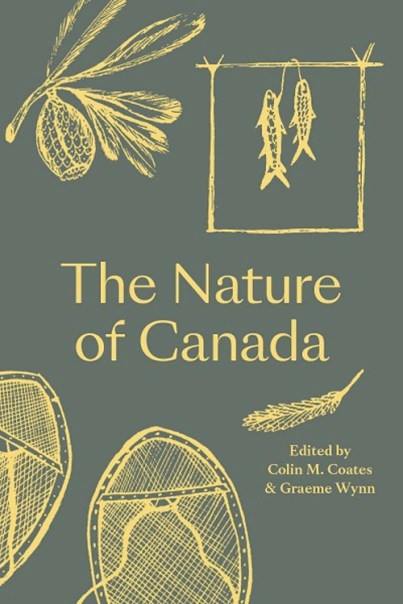 Subsequently, I picked up a copy at Munro’s Books in Victoria. It was categorized as a “Read Local BC Selection”; edited by Colin Coates and Graeme Wynn, published by UBC Press. Both Coates and Wynn are environmental historians.
The book included sixteen essays. Five authored or co-authored by Wynn, and one authored by Coates.
From Wynn:
Nature and Nation
Painting the Map Red
Eldorado North? (with Stephen Hornsby)
Nature we cannot see
Advocates and Activists (with Jennifer Bonnell)
From Coates:
Back to the Land
The book was purchased before my visit to Haida Gwaii; and only back in Nova Scotia did I have the time to reflect on its content.
What surprised me in this third reading was the distinction of Lessons from Haida Gwaii. Weiss, in Shaping the Future on Haida Gwaii, talks at length about care for the land. Davidson and Davidson, in Potlatch as Pedagogy, describe a very different relationship to the land.
Coates comments:
‘The hippies’ back-to-Nature dreams involved a certain degree of self-sufficiency which usually entailed small scale farming. In ways that they might not have appreciated – though many may have read Thoreau’s Walden (1854) for inspiration – agrarian independence had been a long-standing dream of many migrants to North America from the seventeenth century on.’
The one essay that did capture the indigenous perspective was Julie Cruikshank ‘Listening to Different Stories’.
“A story is different. It does not expand itself. It preserves and concentrates its energy and is capable of releasing it after a long time’ — quote from philosopher Walter Benjamin. The enchantment that pervades a universe inhabited by a community of beings in constant communication and exchange offers a hopeful (and possibly necessary) vision. It deserves more space in our modern world” p.97.
Or returning to Potlatch as Pedagogy:
“They lived the culture and it was common knowledge in my (Tsinii’s) time period. Like they knew the land, they knew the water, they knew the weather. I remember when Dad was looking at a tree, Tsinii said ‘There’s a tree at this….” and he would name the spot at Naden Harbour and describe the location. So they had a visual map of where the different trees were because their life relied on it. Being a canoe maker,(Tsinii) would know where the trees are. He would have a mental map.”
Acknowledgments
Heather, my travelling companion. Edward for his graphics contribution.
References
Colin Coates and Graeme Wynn. (eds.) 2019. The Nature of Canada. UBC Press.
Joseph Weiss. 2018. Shaping the Future on Haida Gwaii: Life beyond Settler Colonialism. UBC Press.
Sara Davidson and Robert Davidson. 2018. Potlatch as Pedagogy: Learning through Ceremony. Portage and Main Press.


 Joseph Weiss, in his book
 The third section addresses Care and Governance and the role of the
  on is the rightful heir to Haida Gwaii. Our culture is born of respect; and intimacy with the land and sea and air around us. Like the forests, the roots of our people are intertwined such that the greatest troubles cannot overcome us. We owe our existence to Haida Gwaii’ p.175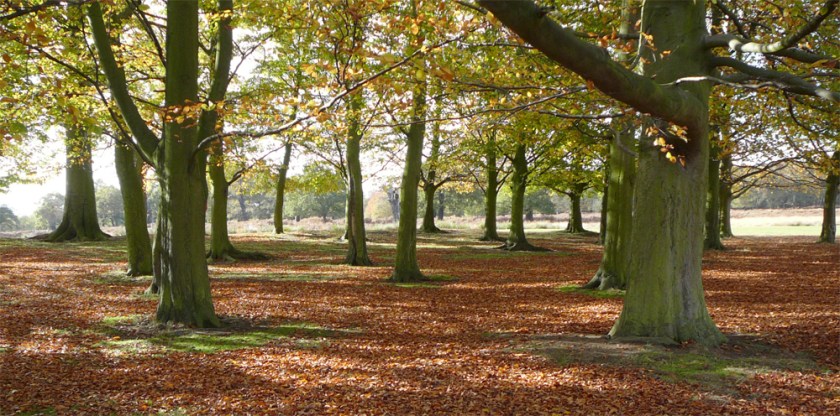

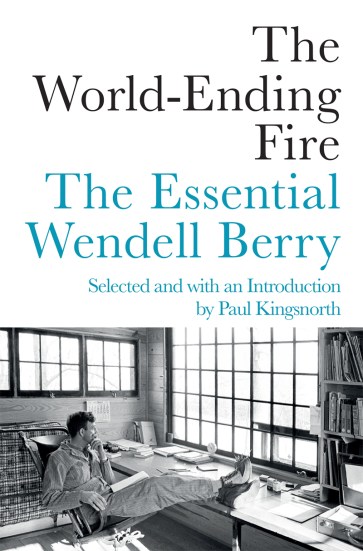 In his essay ‘Two Minds’,


 Combine these observations by Jacobs with the
 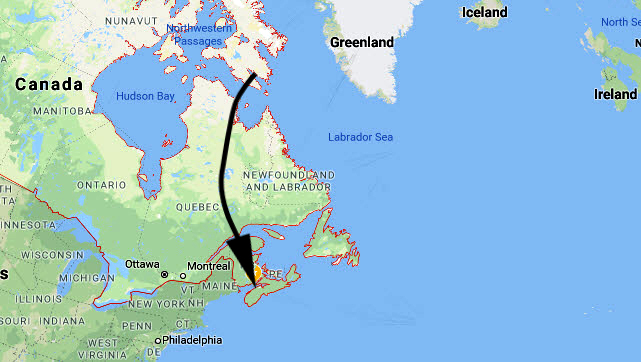 After five weeks in the North, what has changed on the home front? First, Dr Mackinnon has retired. This means no family doctor. Make sure that you have registered on the 811 list; not an encouraging sign, especially given the recent video that went viral on a young cancer patient. Second, Highway #201 is still full of logging trucks
  On a more positive note, courtesy of Amazon, I returned to find two new books by David Manners. You may recall from
 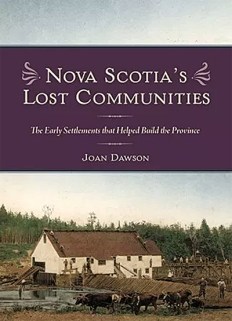 My last piece of reading, I picked up this week, at my father-in-law’s house in New Glasgow. The book is by Joan Dawson
 Number #99 was by George Orwell Some Thoughts on the Common Toad. It contained eight essays, including a defence of PG Wodehouse, an examination of Gullivers Travels, and a commentary on Tolstoy and William Shakespeare.
 The Orwell essays complemented my reading of Ernest Buckler. I had the opportunity to read Glance in the Mirror. This quotation caught my eye.

 Last night at the Centrelea Cinema, there was a showing of
  Ernest Blair Experiment