Posted in Book Review

Woman, Watching

This weekend, we returned to New Glasgow for the Easter holiday. During the week, Heather had the opportunity to finish reading Merilyn Simonds ‘Woman, Watching’, a biography of Louise de Kiriline Lawrence and the Songbirds of Pimisi Bay (see post Man, Watching). I also found the book excellent. I would recommend it for a number of reasons. It emphasizes the value of citizen science, in this case in the field of ornithology.
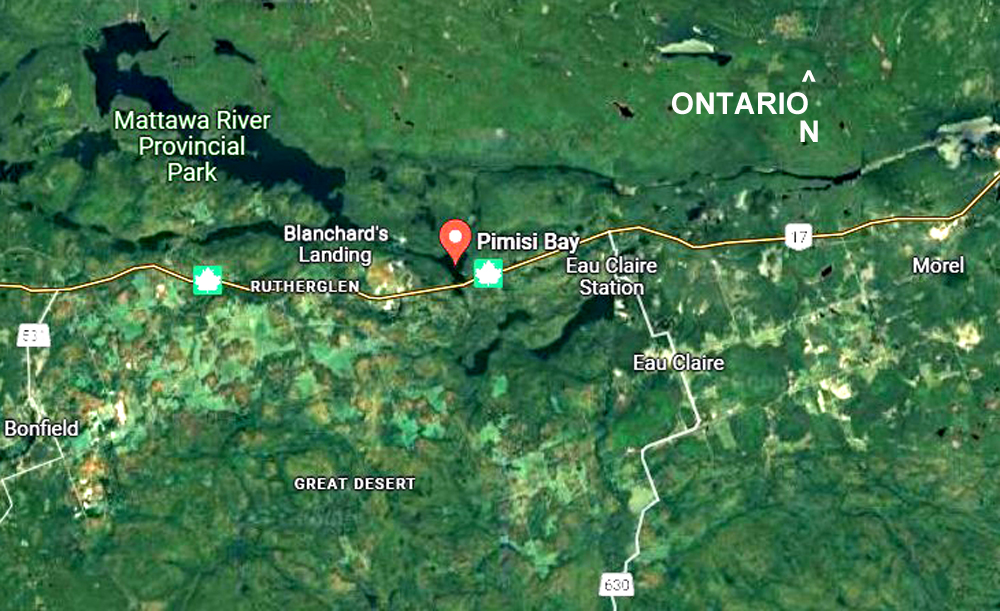
A second thread is the importance of a sense of place.Here, Louise lived at the Loghouse Nest on Pimisi Bay, outside of North Bay, Ontario for over fifty years.

Merilyn has written a well-researched biography. It includes detailed references to letters, publications and and books by Louise. Interwoven with her own biographical experience. It represents an inspirational piece of writing.


Before leaving the Valley, we checked out lunch at Junction Sixteen. With Anne and Bill Crossman, Roger Mosher, everyone enjoyed the pasta and the seafood. In New Glasgow, we went to the Blue Lobster Public House in Stellarton with John and Sandy Stewart. Another success.

To offset the excellent food, we took our first hike through our property on South Mountain, to the Inglisville Road. The snow has almost disappeared in the woods.

Along the gravel roadside, we saw the first sign of Spring, the yellow flowers of the Coltsfoot ( Tussilago farfara). In New Glasgow, the trails in Trenton Park were alive with walkers.

Acknowledgements

Heather selected the excellent read, Woman, Watching. We enjoyed the lunch company in both Bridgetown and Stellarton. Edward made his usual, valued contribution.

Reference

Merilyn Simonds, 2022, Woman, Watching, ECW Press.

Posted in Book Review

The Bookshelf

We have been reducing our book load, with help from Endless Shores in Bridgetown. In checking the top shelf, I found a number of books that have followed me from England, including:

The Spirit and Purpose of Geography by Wooldridge and East was a school prize for Mathematics in 1962. It includes chapters on different geographies: Physical Geography, Biogeography, Historical Geography, Economic Geography, Political Geography.

On the same shelf, we have my graduate theses. M.Sc. Complexity Analysis of Vegetation Patterns in an alpine meadow, 1971 and Ph.D thesis, Inquiry into the Nature of Biogeography, 1976.

Elsewhere in the house, I found two publications from the National Museum in Ottawa.

The Rare Vascular Plants of Nova Scotia, 1977, co-authored with David White, George Argus and Paul Keddy, Syllogeus 18.

The Rare Vascular Plants of Saskatchewan, 1978, co-authored with George Argus and Vernon Harms, Syllogeus 19.

[From the Alaska Dispatch] George Argus rests in a rescue sled after being injured in a climbing accident on Denali in spring 1954. (Photo courtesy of John DeLapp)

George Argus was responsible for bringing Heather and myself back to Canada from England. With some online research, I found that George died last Fall . Irwin Brodo and Erich Haber penned a wonderful tribute in the Canadian Field Naturalist.

From Wooldridge and East, Preface p.12.

We have tried to signpost a path which can lead the student, if he is so inclined, towards the full study of his heritage, the earth’s surface which he treads. And if he persevered along this path his journey will not prove unrewarding. For his effort will subject him to a discipline and yield him a philosophy.

Finally, from the Alaska Dispatch News November 19, 2022, by Ned Rozell ‘George Argus, a man of the mountains and its willows’.

Acknowledgements

Heather helps me clear the shelves. Edward adds his creative touch. To Mary Argus, fond memories of Ottawa.

References

S.W.Wooldridge and W. Gordon East, 1951, The Spirit and Purpose of Geography, Hutchinson University Library.

Irwin Brodo and Erich Haber, 2022, A Tribute to George William Argus: 1929-2022, The Canadian Field-Naturalist. Vol 136 No 3.

N. Rozell Nov 19, 2022, George Argus: a man of the mountains and its willows, Alaska Dispatch News.

Posted in Book Review

Community Engagement

This week, we have started to reduce our book collection.

Two boxes were taken to the Endless Shores. This gives us a credit on future purchases. In response, I obtained The Blomidon Naturalist Society’s ‘A Natural History of Kings County’. This excellent text would provide a wonderful template for Annapolis County.

I had hoped to pick up Peter Wyman’s short story ‘Crossing Thames’. This will have to wait until March 11, when he will be launching the book at the Annapolis Royal Library (11am – 2pm).

Today, I made a book swap with Sandra Barry. Heather had two copies of Robie Tufts’ ‘Birds of Nova Scotia‘. Sandra had Colm Toibin’s essays ‘A Guest at the Feast’.


Saturday, we met with Rick and Cathy Ketcheson at the Green Elephant Cafe in Kingston. Unfortunately, the cafe was closed for the staff winter holiday. We headed to Middleton to Bistro 300. Again closed. We ended up at the Capitol Pub.

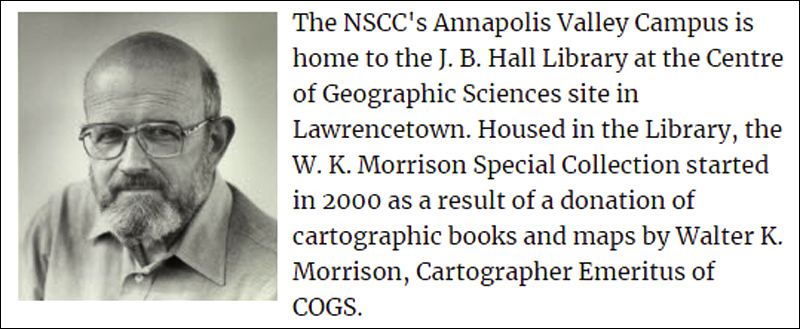
Later, that evening, I met with John Wightman. One of the many topics, was Walter Morrison, Cartographer Emeritus. Walter donated his historical map collection to the COGS library.

This raised the question of retired COGS faculty who continue to make a contribution to geographic sciences, and the community. This seems normal within the university culture. Not so much, at the Nova Scotia Community College. From CORAH , I noticed that Trish LeBlanc will be speaking on historic maps in Nova Scotia at COGS. (see below)

Organizing the bookshelves, within the framework of a future house move, is a harrowing task. Many of the texts have a context from earlier research, in Canada, as well as overseas.

Acknowledgements

Heather joined me in the challenge of reducing the number of text books from different disciplines and different geographies. Sandra Barry engaged in the book swap. John Wightman continues to exemplify Major Church’s dictum ‘Never retire’. Edward contributed the graphics and links.

References

Robie Tufts, 1986, Birds of Nova Scotia, Third Edition, Nimbus, Nova Scotia Museum.

Colm Toibin, 2023, A Guest at the Feast: Essays, McClelland and Stewart.

The Blomidon Field Naturalist Society, 1992, A Natural History of Kings County, Acadia University.

Trish LeBlanc, Antique Maps of Nova Scotia, March 14 1-2 pm, NSCC COGS campus.

Posted in Book Review, Creative writing

Community Development

This week, I visited Integrity Printing in Bridgetown to pick up Volume 7 (2022) hard copy of my blog texts. This allows me to visit previous years’ work.

For example, under GoGeomatics for February/March:

Under the Ernest Blair Experiment:


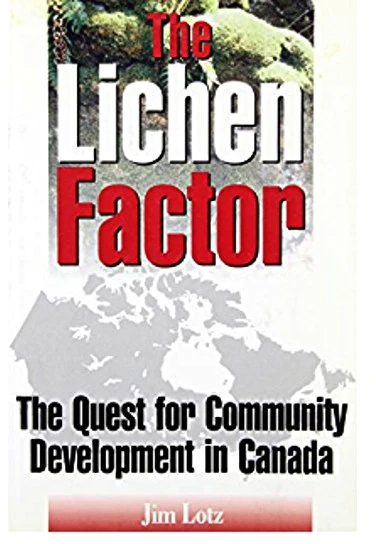
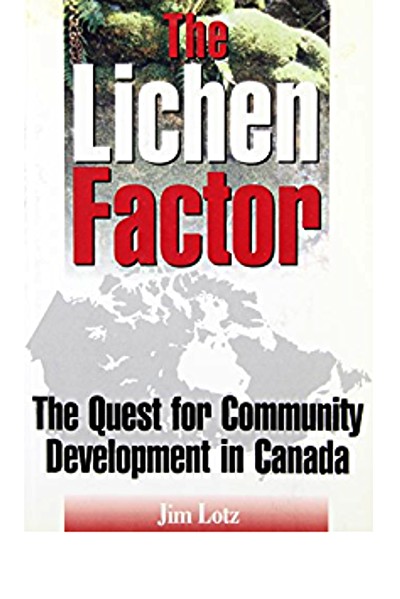
Reading Jim Lotz, the Lichen Factor, he describes a number of community development projects including the Prince Edward Island Ark (John Todd) and L’Arche ( Jean Vanier).

Lotz quotes Vanier, Community and Growth 1979 (p.199)

People can only put down roots in a community when that meets their deep and secret desire and their choice is free – because putting down roots, like any commitment implies a certain death. We can only welcome this death if there is a call for a new life that yearns to grow.

Our orchids at home tended by Heather

References

Jim Lotz, 1998, The Lichen Factor: The Quest for Community Development in Canada, UCCB Press.

Jean Vanier, 1979, Community and Growth: Our Pilgrimage Together, Griffith House, p70.

Acknowledgements.

Heather has been tending these orchids in the bathroom window for several years. Edward has added the graphics and links.

Posted in Book Review

The Road Here

I dropped into the Bridgetown Library. Heather had a dental appointment. I noticed a well-designed book, The Road Home: Stories from Senior Women in Rural Nova Scotia, edited and photographed by Rachel Brighton and published by the Western Area Women’s Coalition in Bridgetown in 2008. The book was printed and bound by Gaspereau Press. It traces the journeys of twenty one women living in rural Nova Scotia, in Digby and Annapolis Counties. The contributions are divided into four parts: Journey, Work, Community and Culture.

In the words of Brighton:

I would like to thank each of the women you meet in this book. One of them Frances Mills Clements who established a bursary for women pursuing a post-secondary education. The Women’s Place Resource Centre in Bridgetown is providing the proceeds of this book to that bursary – so the stories here are doubly inspiring.

My response to this 2008 publication is “The Road FROM Here?

It is fifteen years later. What has happened since 2008? Where are we going, in terms of Journey, Work, Community, Culture?

It would be wonderful, if Rachel was able to revisit these topics.


This afternoon, I had to take the CRV into Kings County Honda. While waiting, I read: “Honda: the Boy Who Dreamt of Cars.

Likewise published in 2008. My question for the Honda staff,
When can I trade my CRV for an electric car?“.

Acknowledgements

Heather enjoyed reading The Road Here. Edward added his magic touch.

References

Rachel Brighton, 2008, The Road Here: Stories from Senior Women in Rural Nova Scotia, The Western Area Women’s Coalition, Bridgetown, Nova Scotia.

Mark Weston, 2008, Honda: The Boy who dreamt of Cars, Lee and Low Books, New York.

Posted in Book Review

The Power of Geography

This week, I met with Sandra Barry at Bistro300. She wanted to return a couple of books by Peter Wyman. In return, she gave me Tim Marshall’s The Power of Geography:Ten maps that reveal the future of our world.

To date, I have only read the United Kingdom chapter. The book leaves me thinking about the map of Canada, and then, more specifically Nova Scotia.

Through inter-library loan, I received The Lichen Factor by Jim Lotz. It came from Cape Breton Regional Library. The sub-title is ‘the quest for community development in Canada.’

From Lotz:

‘What I have called the Lichen Factor is elusive and mysterious. It offers a way of restructuring human relationships, providing a basis for mutual aid and co-operation, indicating the potential for generating harmony among diverse peoples.’ p.17.

‘Lichens are not intellectual constructs, theories, concepts, hypotheses, paradigms. They do not exists to teach or preach about better ways of surviving or thriving in harsh environments. They simply are, integral parts of nature. Their symbiotic form, break through the entrenched ‘either/or’ mindset that divides people and communities’. p.18.

Perhaps now is the time to translate the Hope of Geography into the Power of Geography, with a little help from the lichens.

The Canadian North harbours over a thousand separate species of lichen. They are symbioses between two different forms of life, algae and fungi. One cannot live without the other.’ p.15.

We have a number of unique lichens in Southwest Nova Scotia.

Postscript

Sandra and I discussed access to information in Annapolis County. We agree that The Bridgetown Reader, published every Thursday is a wonderful resource. Lewes deserves special recognition.

Finally, I see that the End of the Line pub in Bridgetown has changed its name. Junction Sixteen, Kitchen and Bar is opening soon, under new ownership.

Acknowledgements

Sandra Barry shared the books. Edward added the graphics.

References

Tim Marshall, 2021, The Power of Geography, Scrivener.

Jim Lotz, 1998, The Lichen Factor, UCCB Press.

Posted in Book Review

Keep Sharp

This week in Halifax may be our last, for a while. I have been searching for The Lichen Factor (Jim Lotz).

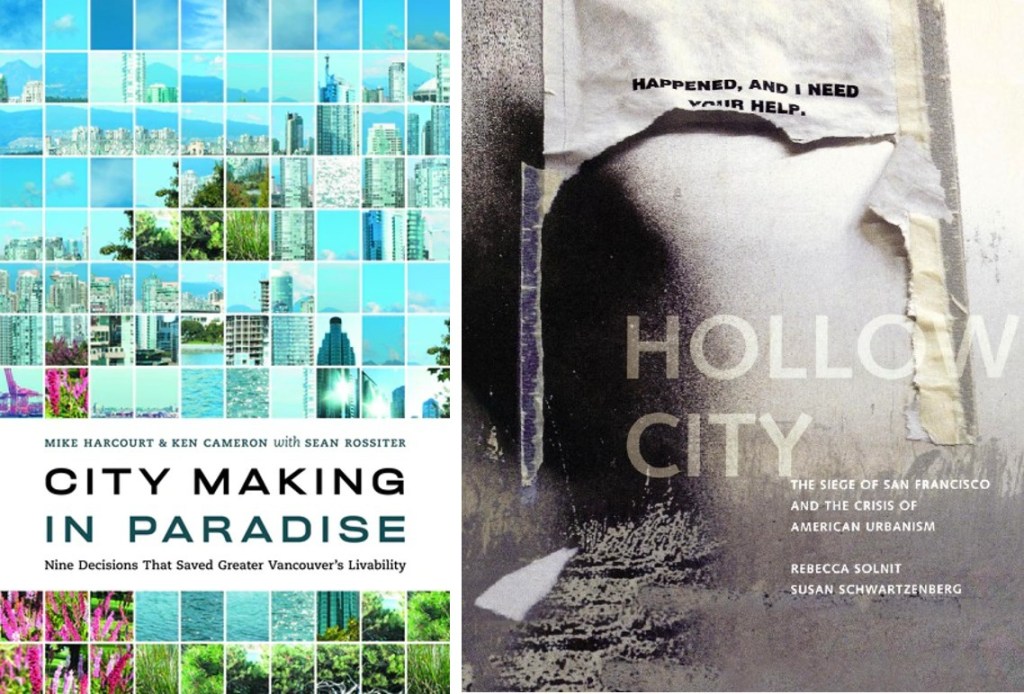
My first approach was through Andrew Hannam at the COGS library. No luck! My second was to check again at the Halifax Public Library under Community Development. Again, no luck! However, I did find two titles of interest, “City Making in Paradise: Nine decisions that saved Vancouver’s Livability” by Mike Harcourt, and “Hollow City: the Siege of San Francisco and the Crisis of American Urbanism” by Rebecca Solnit.

The reference to Paradise had instant appeal; the writing of Solnit is always a find.


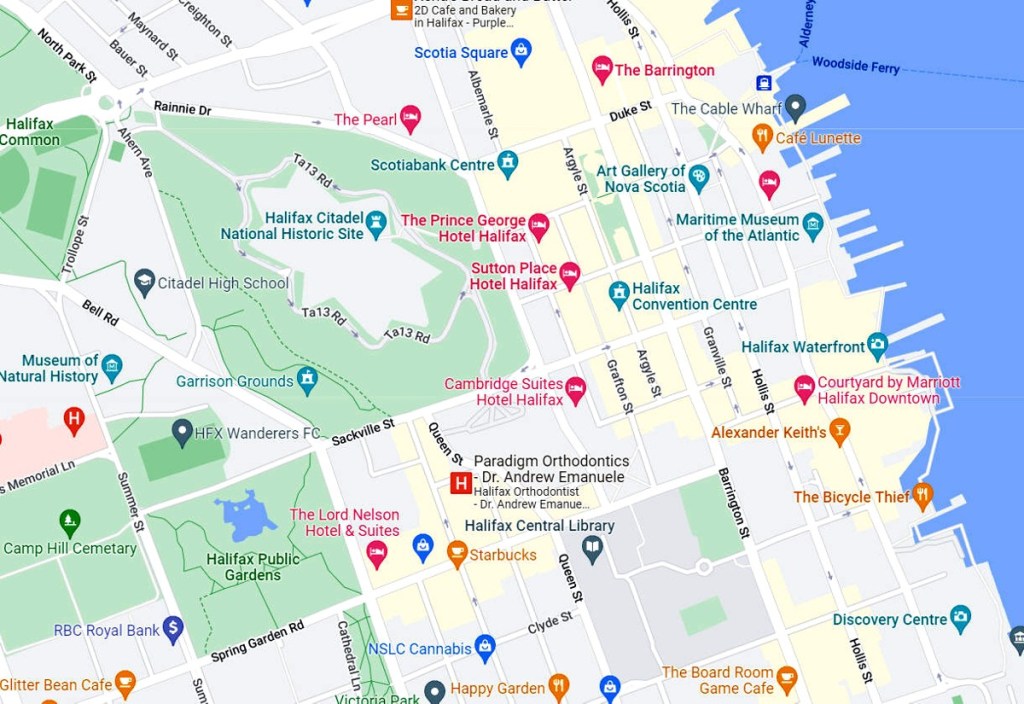
This morning, we walked along the boardwalk to Historic Properties, and across the ped-way to Scotia Square. We skirted Citadel Hill, before enjoying the late morning sunshine, sitting on a park bench in the Halifax Public Gardens. Afterward, we joined Frank Fox for lunch at Le Bistro by Liz on South Park. Our return trip was all downhill, behind the Library, and Province House, returning home to Lower Water Street.


Earlier this morning, I received a link from my brother, Peter’s blog www.petermaher.ca (see entry January 24, 2023)


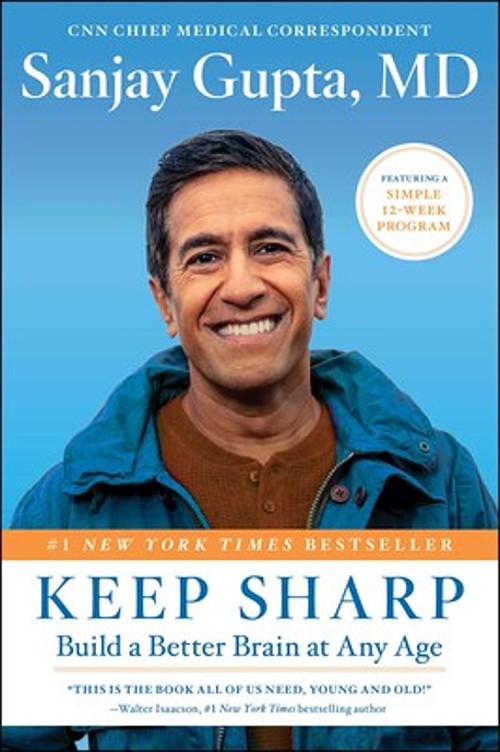
One last read. Sanjay Gupta’s Keep Sharp. Building a Better Brain at Any Age. He identifies five pillars: Move, Discover, Relax, Nourish and Connect. It was a good day for the brain!

Acknowledgments

Heather Stewart, Frank Fox, Peter Maher, and Andrew Hannam for the connections. Edward for adding the graphics.

References

Mike Harcourt, et al, 2007, City Making in Paradise, Douglas and McIntyre.
Rebecca Solnit, 2000, Hollow City, Verso London.
Sanjay Gupta, 2021, Keep Sharp: Build a Better Brain at Any Age, Simon and Schuster.

Posted in biographical sketch, Book Review

Thorndean

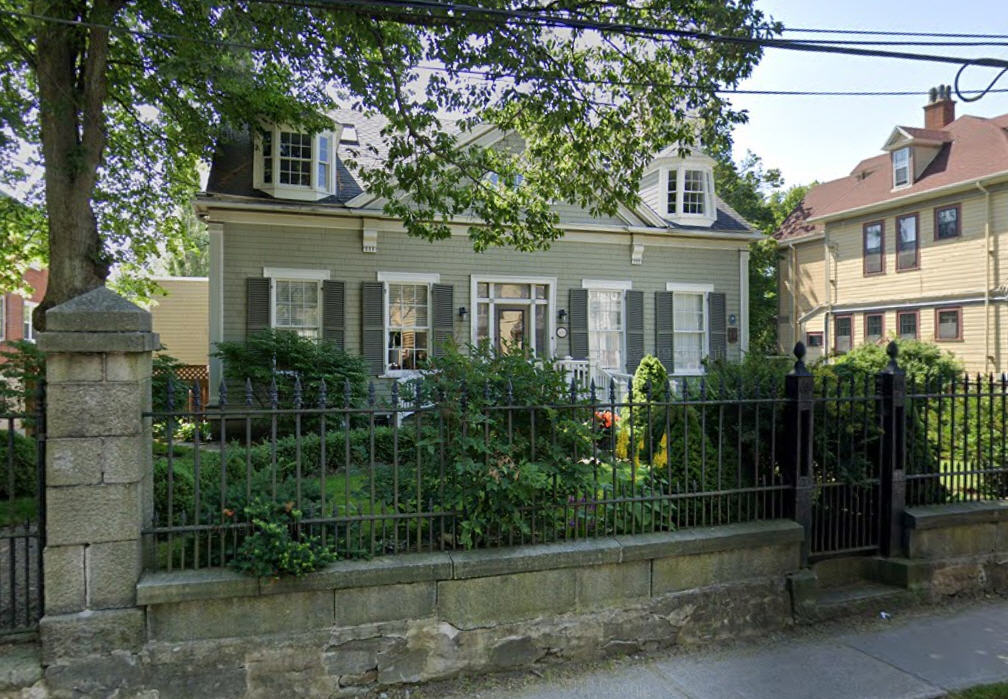
We wanted to enjoy a few more neighbourhood walks in Halifax. Today on Sunday, a beautiful blue sky day, we decided to return to Point Pleasant Park. En route, I wanted to see Thorndean on Inglis Street, where Jim and Pat Lotz had lived.

The route was quite circuitous. From Lower Water Street, we passed by Pier 21 and found a tunnel under the railway. This took us to Inglis Street. We passed Schooner Books and found Thorndean, 5680 Inglis Street.

The house is referenced in a couple of the books, written by Pat and Jim.

Afterwards, we continued to South Park. This leads to Point Pleasant Park. The trails were snow-packed and somewhat icy. There was a large collection of walkers, with their dogs. If we were to remain in Halifax, the South End would be an attractive neighbourhood.

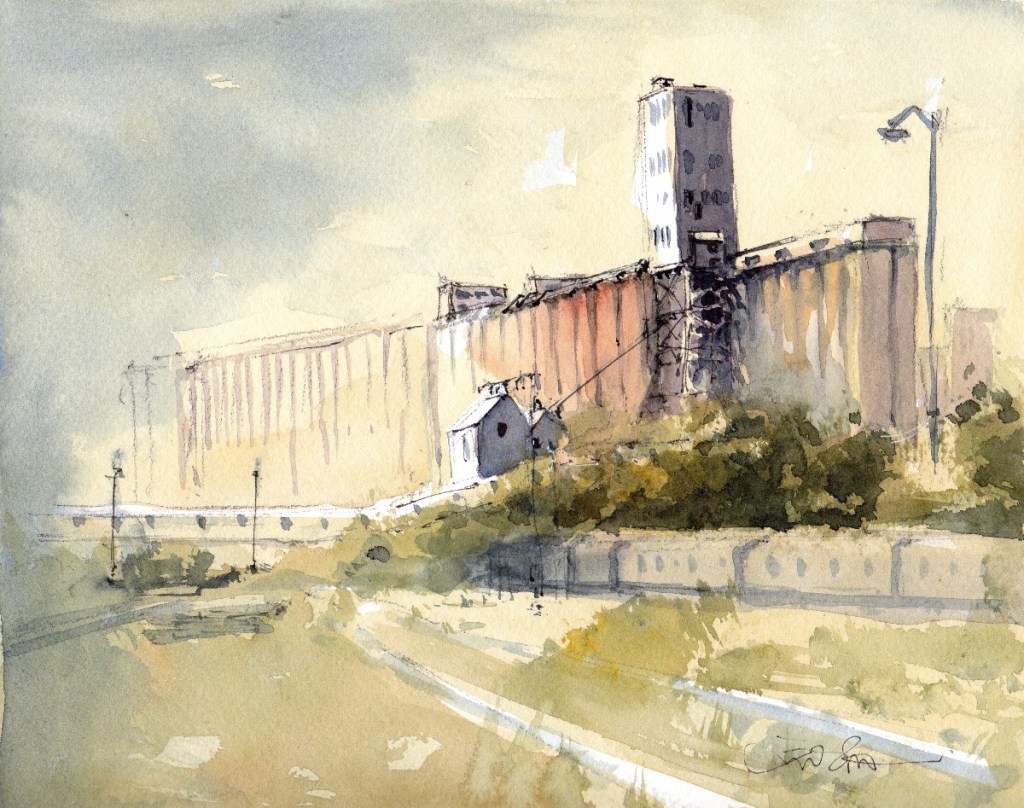
On our return, we passed the Halifax Port Authority, which includes the grain elevators, and container ships.

(“Halifax Grain Elevators”, watercolour by Edward Wedler)

Beyond the Westin Hotel, we rediscovered the Wired Monk, a coffee house on Morris Street.

Yesterday (Saturday) we took a day trip down to the Annapolis Valley. This allowed us to drop off any extra possessions, accumulated over the Winter. The remainder will fit in the car on January 31st.

Earlier in the week, while visiting Heather’s Dad, I stopped at the New Glasgow library. With help from the library staff, I was able to access an e-book that I can read on my iPad. It was Jim Lotz, Pilgrim Souls, Caring for a loved one with dementia. While a difficult read, it complements his previous work, Sharing the Journey.

Postscript

I noticed this at Cape Breton University Press, Jim Lotz, 1998, The Lichen Factor: the quest for community development in Canada. 28pp.

Acknowledgements

Heather continues to encourage me to take these long walks. We need to find an equivalent in the Annapolis Valley, aside from the shoulder of Highway 201. Candidates would be Valley View park and Kingston park. Edward added the graphics.

References

Jim Lotz, 2013, Pilgrim Souls, Pottersfield Press via Formac Publishing

Jim Lotz, 2015, Sharing the Journey, Pottersfield Press via Nimbus Publsihing.

Posted in biographical sketch, Book Review

Explorations

This week, I have been tracking the writing of Jim Lotz. I started at the Halifax Public Library with a list of his books – sixteen.

Lotz went to Manchester University to study Geography. I went to Birmingham University to study Geography. He came to Canada and spent time at the McGill Subarctic Research Laboratory (MSRL) in Schefferville, PQ in the late 50s. In the early 60s, I spent two summers at MSRL, conducting fieldwork on the Canadian Shield.

Jim’s career focused on Community Development. His life is described in the memoir, “Sharing the Journey”. In 1973, Jim, Pat, and his family moved to Halifax. They lived in the South End.

After reading the memoir, I picked up The Best Journey in the World: Adventures in Canada’s High Arctic at the Endless Shores Books in Bridgetown. It describes field research work on northern Ellesmere Island

My search took me to Schooner Books, owned by John Townsend on Inglis Street in Halifax. I was looking for Pilgrim Souls.

Instead, I found the following books. J and A. Gottfred’s, The Life of David Thompson, and Thomas Merton’s Zen and the Birds of Appetite.


Besides bookstores, we have explored Halifax. From the condo on Lower Water Street, we can walk past the dockyards to Point Pleasant Park. Returning to Spring Garden Road via Young and South Park, and stopped at the Bliss Caffeine Bar. Or taking a different route, we have ended up at Sobeys on Queen Street or at the Wired Monk coffee shop.

On our visits to medical services at the hospitals, we walked through the Halifax Public Gardens. At the Bookmark, we found a new book, The Halifax Public Gardens. The Creation, destruction and restoration of North America’s Finest Victorian Public Gardens.

We will miss these ‘geographies’ when we leave the city at the end of the month, and return to rural Paradise. Fortunately, we have stored many memories of life in Halifax. Either through direct experience or through the writing of Jim Lotz, and others.

Acknowledgments

Heather has shared the journey, finding interesting walks that challenge us, both physically and mentally. Edward added the graphics. Frank Fox suggested the visit to Schooner Books.

References

Jim Lotz, 2015, Sharing the Journey, Pottersfield Press via Nimbus Publishing

Jim Lotz, 2006, The Best Journey in the World: Adventures in Canada’s High Arctic, Pottersfield Press.

Jim Lotz, 2013, Pilgrim Souls, Formac Publishing

Schooner Books 5378 Inglis Street, Halifax.

J and A. Gottfred, 2007, The Life of David Thompson, Minuteman Press.

Thomas Merton, 1968, Zen and the Birds of Appetite, New Directions.

Robert Pace, Robert Salah and Peter Twohig, 2022, The Halifax Public Gardens: The Creation, Destruction and Restoration of North America’s Finest Victorian Public Gardens, Formac Press.

Postscript

Inside the book on David Thompson, I found ‘Surveying for Settlement’, an educational brochure published by the Association of Ontario Land Surveyors

Posted in Book Review

Home Place

We have to decide where we will find our ‘home place’.

Circumstance gives us the choice between urban Halifax and rural Paradise. From the perspective of health services, the decision would tip towards the city.


At the Carrefour Atlantique Emporium, Privateers Wharf, I chanced upon Gwendolyn Davies, “Studies in Maritime Literary History, 1760-1930“.

While I was interested in the early literature, it was not sufficient for a purchase. Instead, I went off to the Halifax Central Library. They did indeed have a copy, but it was in the closed stacks.

On request, I was able to read the book in the library. Of particular interest was the final chapter, the ‘Home Place’ in Modern Maritime Literature. Davies references David Adams Richards, George Elliott Clarke, Harry Bruce, Alistair MacLeod and Douglas Lochhead,

0ne may want to argue that ‘place’ is a central image in any country’s literature. …..But the emergence of the image in Maritime literature in the 1920’s, it would seem, has its genesis in the social, economic and cultural realities on the east coast that distinguish it from similar images in other areas of Canada”, p193

Of particular interest was the theme of the economy and the landscape. The impact of different industries on the rural economy (e.g. Britex in Bridgetown or Stanfields in Windsor). As we move forward, what are the new employment opportunities. Does the lack of health services impact the movement into the rural areas? Or is that impact, largely on the elders.

What would be informative, would be a second volume, Studies in Maritime Literary History 1930 – 2030 It would address the changes in society, in terms of its economic and social geography, as reflected in current literature and poetry. One example, would be Sandra Barry on Elizabeth Bishop. Or, the role of the Gaspereau Press in supporting local authors and poets.

Another dimension would be the role of educational institutions in our understanding of landscape, mapping and planning our economic geography — all within the context of government, politics and sustainable development.

References

Gwendolyn Davies, 1991, Studies in Maritime Literary History, 1760-1930, Acadiensis Press

Sandra Barry, Peter Sanger, Gwendolyn Davies, 2001, Divisions of the Heart: Elizabeth Bishop and the Art of Memory and Place, Gaspereau Press.