Posted in Book Review

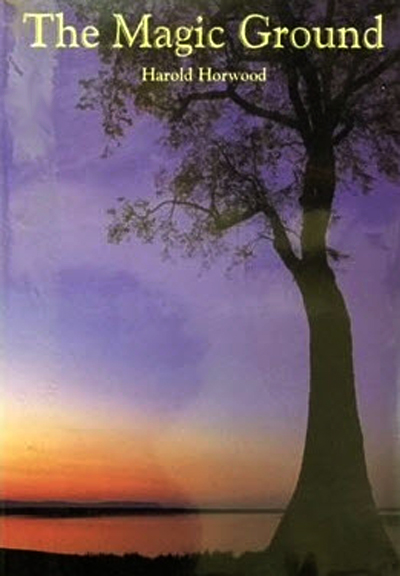
The Magic Ground

Last weekend we were at the New Glasgow library. I was looking for a specific Harry Thurston book for Heather’s Dad. While there, I discovered The Magic Ground, written by Harold Horwood. It includes an essay ‘In Defence of Hobby Farms’. The following paragraph on p.54 caught my attention.

“That is one of the reasons why I live on the shores of the Annapolis Basin, why I spend so much time in a woodlot and an orchard and among flower borders, why I choose to work here, surrounded by life triumphant, instead of in a great city, where death seems likely to succeed. Here I can hope that my work will inspire people, fill them with confidence, help them to love the world rather than dread its terrors.”

Subsequent research online, unearthed M.A. thesis by Rochelle Mary Spracklin at Memorial University, “Didacticism in the Fictional Work of Harold Horwood’, 1990.

Also referenced was a book of poetry, published by Gaspereau Press, Cycle of the Sun: A lament for northern Labrador. In Horwood’s own words, “the poet, Harry Thurston was in the audience and came to me and asked to be allowed to submit the poem to his publisher, Gaspereau Press”.

I will enjoy the remaining essays in the Magic Ground, while I wait to see if I can obtain a copy of Cycle of the Sun, through Jaki at the Lawrencetown library.

Acknowledgements

Jaki Fraser at the Lawrencetown library. Edward for his additions. Heather for sharing the drive to New Glasgow.

References

Harold Horwood, 1996, The Magic Ground, Nimbus Publishing.

Rochelle Mary Spracklin, Didacticism in the Fictional Works of Harold Horwood, M.A. thesis 1990, research.library.mun.ca

Harold Horwood, 2003, Cycle of the Sun, Gaspereau Press

Harold Horwood at encyclopedia.com
Posted in Book Review

Whole Earth

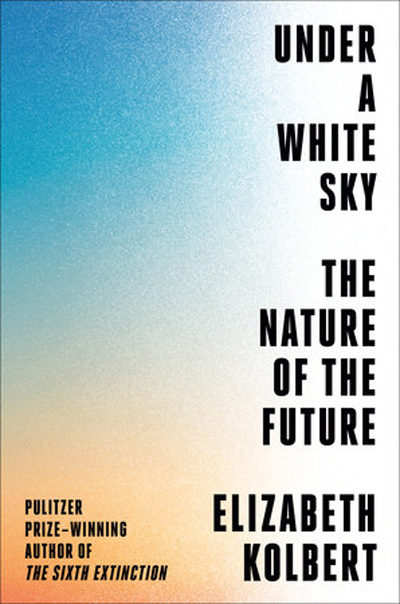
This week, I received a parcel in the mail from Amazon. It contained a book and a game, from Patrick and family, for my birthday. The book was Under a White Sky: the Nature of the Future by Elizabeth Kolbert. The game was Exit the Game. Dead Man on the Orient Express. (Have not checked out the game, yet)

Kolbert won the Pulitzer Prize for her previous book, The Sixth Extinction. She is a staff writer at the New Yorker. Heather had read the Sixth Extinction, and enjoyed it. “In The Sixth Extinction, Kolbert explored the ways in which our capacity for destruction has reshaped the natural world”. Patrick selected the book because he had not seen any blog references.

Kolbert divides her current book into three sections: Down the River; Into the Wild; Up in the Air. Down the River describes the diversion of the Chicago River, the invasive carp species, and the changes in the Mississippi’s hydrology. Into the Wild includes chapters on the endangered Pupfish in Death Valley, the global threats to the coral reefs, and invasive cane toads in Australia. The final section, Up in the Air, includes a chapter on climate change and the Greenland ice sheet.

In the words of the author:
“This has been a book about people trying to solve problems created by people trying to solve problems.”

My response to Kolbert’s book was to head back to my bookcase. Did not Stewart Brand talk about similar issues in Whole Earth Discipline: an Ecopragmatist Manifesto in 2009 ? On the same shelf, I noticed John Ralston Saul’s The Unconscious Civilization. Where does that fit ?

Another perspective can be found in the current Brain Pickings, February 21st. There, you will find reference to the writing of William Vogt, Road to Survival.

Postscript

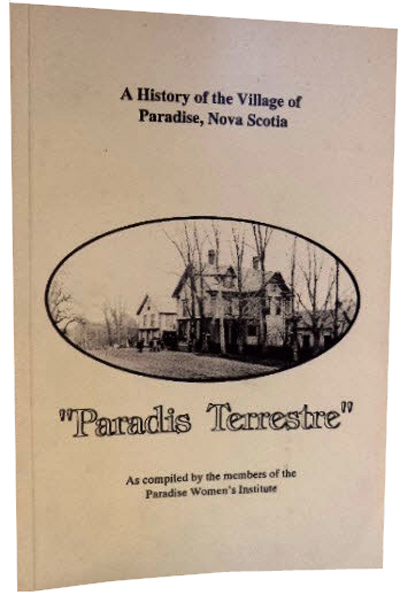
Friday morning, we dropped into the Bridgetown Library. I picked up a copy of Paradis Terrestre. It is a history of the village of Paradise, Nova Scotia compiled by members of the Paradise Women’s Institute. I was interested in Chapter 13, Micmac Memories. At the entrance to the Library, I noted a collection of books by, and about Ernest Buckler. Must check out, next time.

Today (Sunday) we skied the Rifle Range Road. It was hard going. Now, that the surrounding trees have been clear-cut, the trail is more exposed to the sunlight. This makes for heavier snow, especially in the late afternoon.

By the way, Edward and I share the same birthday, 14th February.

Acknowledgements

Patrick for the birthday gift. Edward for his artistic support. Heather for sharing the reading and the skiing.

References

Elizabeth Kolbert, 2021, Under a White Sky: the Nature of the Future, Penguin Random House

Stewart Brand, 2009, Whole Earth Discipline: an Ecopragmatist Manifesto, Viking (Penguin Random House).

John Ralston Saul, 1995, The Unconscious Civilization, House of Anansi.

Paradis Terrestre: a History of the Village of Paradise, Nova Scotia. Compiled by members of the Paradise Women’s Institute.

Brain Pickings February 21, 2021, Road to Survival.

Posted in Book Review, Video Review

Life Ahead

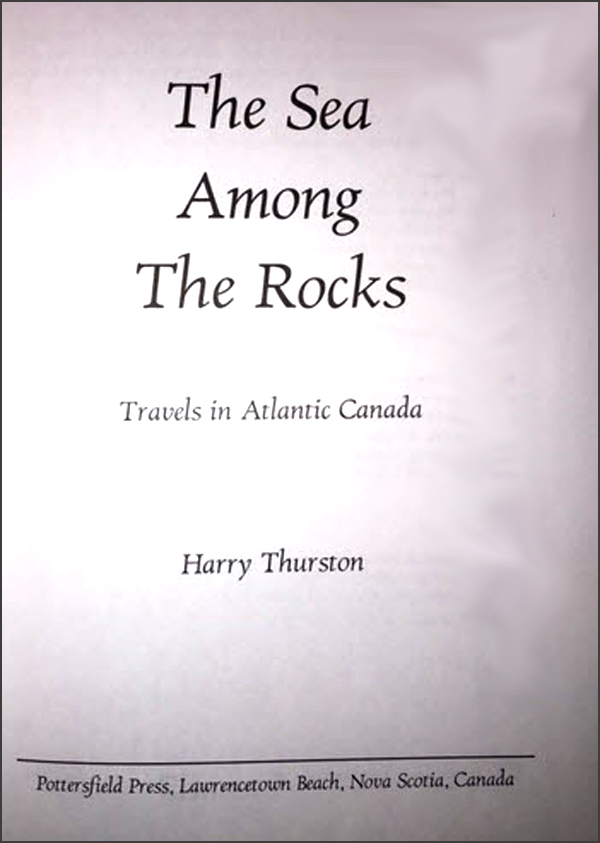
The Sea among the Rocks is a quotation from Evelyn Richardson, used as the title for Harry Thurston’s book of travels in Atlantic Canada.

“Though Morrill holds title to the Island of Bon Portage, who could sell or buy the sea among the rocks, the wind rippling the fields of grass, the moon’s lustrous path across the surging water, or the star-studded bowl of the night sky? They are without price, and priceless, and will be here for those who follow us. Then the work of our hands, those insignificant scratches on the face of the earth, may serve to remind others of our passing…”. p.255

I have just finished reading Thurston’s book. The writer has collected together a series of articles written between 1980-2000 in Atlantic Insight, Equinox, Harrowsmith and elsewhere. In all cases, they concern the use of the land and sea : farming, forestry, mining and fishing.

Examples include:

Prest’s Last Stand Mooseland, Nova Scotia
The Enemy Above Millstream, New Brunswick
The Fat of the Land Tatamagouche, Nova Scotia
North of Nain Cut Throat Island, Labrador

As we enter 2021, it would be worthwhile to revisit Murray Prest and the use of forests in Nova Scotia or the issue of aerial spraying (The Enemy Above).

Perhaps, is it time for Harry Thurston or the next generation of writers to document our relationship with the landscape; whether fishing, farming, forestry, mining in 2020?

This week, I received a notice from the province about an online survey to collect input directly from private woodland owners. www.novascotia.ca/woodland-owner-survey.

Postscript

My blog title, Life Ahead, is taken from the new Netflix movie starring Sophia Loren. Highly recommend.

Acknowledgements

John forwarded the link to woodland owner survey. Heather shared the movie night. Edward added his artistic touch.

References

Harry Thurston, 2002, The Sea among the Rocks, Pottersfield Press.
Where my roots go deep: the collected writing of Evelyn Richardson, 1996, Nimbus.
The Life Ahead, 2020, Netflix, starring Sophia Loren.

Posted in Book Review, Video Review

Redefining Retirement

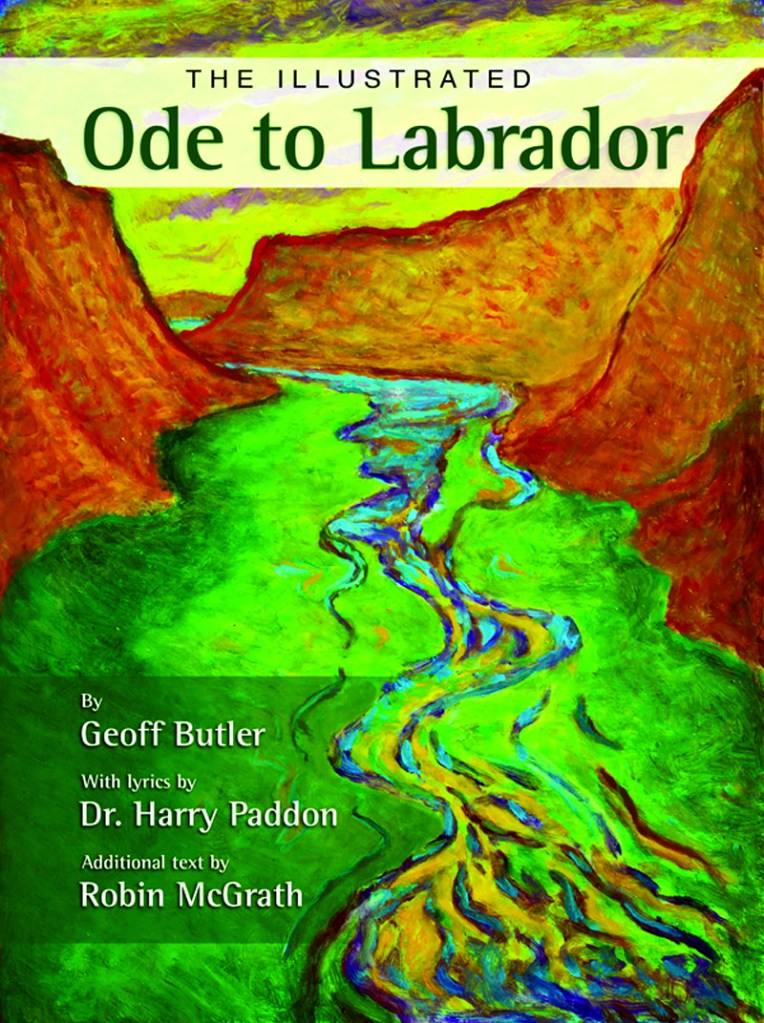
This weekend, we plan to send a care package to Iqaluit. It will include pairs of knitted socks, as well as a book illustrated by local artist, Geoff Butler “The Illustrated Ode to Labrador“.

The book was picked up months ago in Annapolis Royal. It tells the story of the Ode to Labrador. Besides the Art work, it contains lyrics by Harry Paddon and additional text by Robin McGrath.

I am sending it North for Andrew and the grandchildren to read. It brings back memories of my first field season in Labrador in 1964. I was based at the McGill Sub-Arctic Research Station in Schefferville, and developed a love for the Northern landscape.

Last Friday, we finished watching the BBC production of Victor Hugo, Les Miserables on Gem. While a gripping eight part series, it was hard to watch the turmoil of the French Revolution, as we endure the present COVID political uncertainties.

Same day, we had to pick up a book in Annapolis Royal. After enjoying the French Basin trail, dog walk with Siqsiq, we stopped for a morning coffee at Lola’s Café. This led to a brief stop at the Library. Here, I found an early Harry Thurston book (2002), “The Sea among the Rocks“. It is a collection of short pieces describing familiar places in Nova Scotia, Newfoundland and other parts of Atlantic Canada. In most cases, he writes from an environmental perspective.

‘Thurston writes passionately about the region’s bounty, the environmental destruction and the attempts to protect what’s left of our natural heritage. He shows how these concerns for the environment are inseparable from the spheres of community and culture’.

On returning home, I found an email from the Retired Teachers Organization (RTO) on a five part workshop, facilitated by the Acadia Entrepreneurship Centre. These online sessions address the topic of ‘redefining retirement’.

My questions are simple.

‘What can I do in 2021, to guarantee that there will be a Centre of Geographic Sciences in Lawrencetown for my grandchildren, should they decide to follow my career path — that means, the opportunity to study Cartography, Geographic Information Science, Remote Sensing and Surveying, ten years from now?

Retirement from an educational institution does not mean retirement from one’s life time academic and research interests. Most post-secondary institutions understand this point. How about the Nova Scotia Community College?

Postscript

We publish rural Nova Scotia. Check out Moose House Publications founded by Brenda Thompson in 2019. www.moosehousepress.com

Acknowledgements

Both Edward and Heather share many of the same interests. Friday evening, we had an excellent supper at The Station with Anne, Bill and Roger. Earlier, John shared his thoughts on the ‘state of the environment’.

References

Geoff Butler, 2016, The Illustrated Ode to Labrador, Breakwater Books.

Harry Thurston, 2002, The Sea among the Rocks: Travels in Atlantic Canada, Pottersfield Press.

Posted in Book Review, Video Review

Borealis and Back to the Land

After weeks of Netflix and CBC Gem, it was refreshing to rediscover National Film Board (NFB) documentaries. For those seeking to change society’s perception of our forests, I would recommend the film, Borealis.

It describes the intrinsic values of the Boreal forest, especially in these times of climate change. Made me wonder whether there should be a similar film made on the Acadian forest.

For dessert, we watched the NFB (1992) documentary on The Northern Lights.

This has been a particularly long weekend. I just hope the snow stays around for a cross-country ski tomorrow (Sunday).

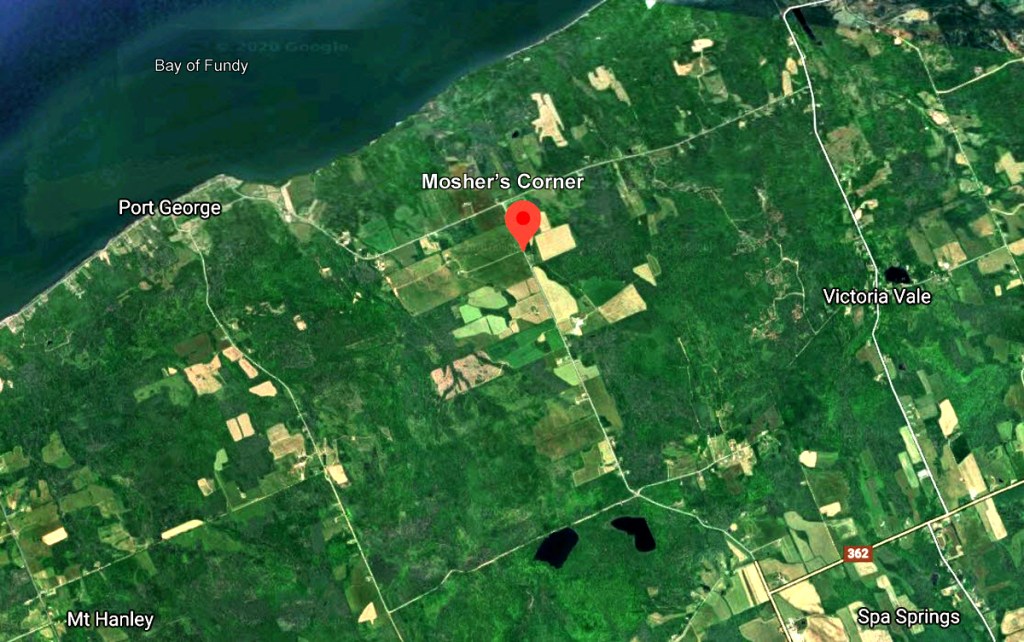
Over the Christmas holiday, I had the chance to read Paul Colville’s memoir, “Back to the Land”. It was an early draft that describes the journey of Paul and Ruth from the United States to Mosher’s Corner on North Mountain, and life thereafter.

Google satellite View around Mosher’s Corner, Nova Scotia

Each chapter looks at a decade of living, as part of the rural economy in Nova Scotia. It is planned for publication in 2021 (publisher to be determined). I look forward to the final version. No pressure, Paul.

Time to shovel the snow, and put on the skis.

Postscript

Just back from skiing. For the local reader, we parked at Lunn’s Mill. Skied through the Lawrencetown tree nursery to the Annapolis River. Along the river to Andrew’s property and up to our house. Turn round, and reverse the trip to Lunn’s Mill. Wish they were open on a Sunday, could do with a beer. Oh well, we have a growler of Brickyard Red at home.

Acknowledgements

Paul Colville, for the good times that go back to the Chimney Sweeping days. Heather for sharing the journey. Edward for his editorial insights.

References

National Film Board (NFB), 2020, Kevin McMahon, Borealis.
Explore how the plants and animals of Canada’s Boreal forest communicate and survive in this unique cinematic documentary’.

National Film Board (NFB), 1992, Alan Booth, The Northern Lights

Paul Colville, 2021, Back to the Land. Publisher, TBD.

Posted in Book Review

Christmas Books

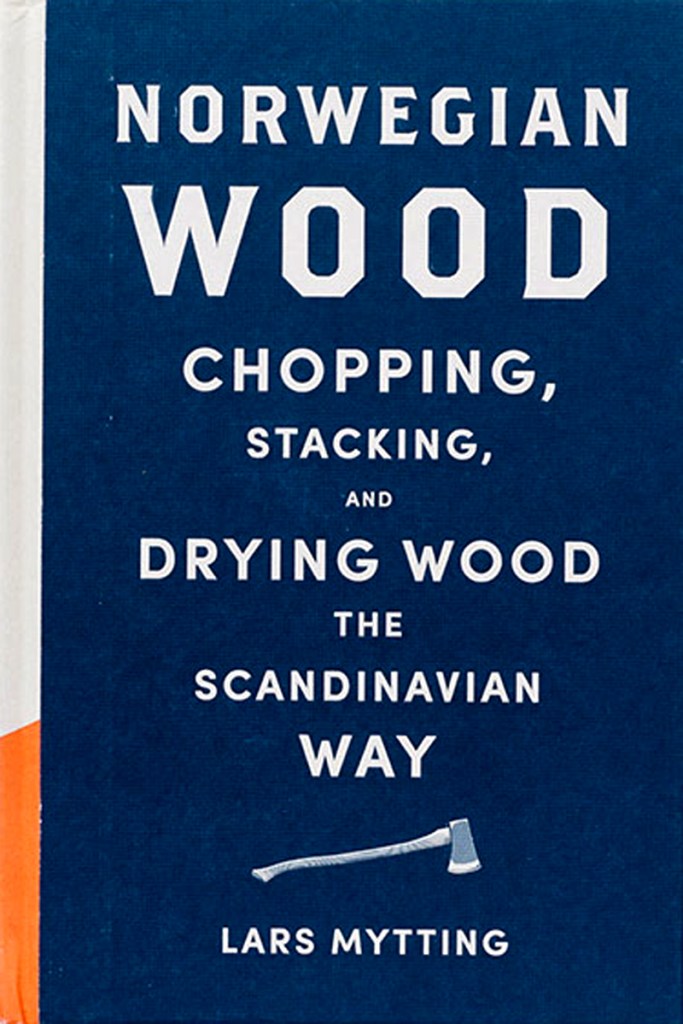
I received two books for Christmas from Patrick; Zena Hitz’ “Lost in Thought” and Lars Mytting’s, “Norwegian Wood”.

Hitz book is subtitled ‘The Hidden Pleasures of an Intellectual Life’. From the dust cover:

“Hitz says our intellectual lives are valuable not despite but because of their practical uselessness. And while anyone can have an intellectual life, she encourages academics in particular to get back in touch with the desire to learn for its own sake, and calls on universities to return to person-to-person transmission of the habits of mind and heart that bring out the best in us.”

Lars Mytting’s book is subtitled ‘Chopping, stacking and drying wood the Scandinavian Way’. Myttling talks about his neighbour, Ottar.

“For a man who had suffered his way through a long winter, struggling against age and ill health, here at last was a job where things made sense again. Once more he was able to enjoy the feeling of doing something meaningful, and the sense of calm security that comes to the man who knows he is well prepared, he is early, he has time on his side.”

In New Glasgow, John Stewart had two new books on his coffee table.

John Tattrie’s, “Peace by Chocolate”, and Donald Savoie’s “Thanks for the Business”.

Both books are about entrepreneurs. “Peace by Chocolate” describes the incredible journey by the Hadhad family from war-torn Syria to Antigonish, Nova Scotia, where they have re-established their chocolate making business. In “Thanks for the Business”, Donald Savoie describes the Irving Oil business in Atlantic Canada. He explains why ‘ I hold the view that Atlantic Canada needs to look to entrepreneurs and the private sector to grow their economy ‘.

Closer to home, in Lawrencetown, Annapolis County, we have another entrepreneurial example of the den Haan family who emigrated from Holland. Today, they are the primary supplier of cucumbers and other salad products in the region. As seen from our home, the night sky is illuminated in the direction of their greenhouses.

Acknowledgements

Patrick Maher for his online selection of Christmas books. John Stewart for access to his holiday reading. Heather for her photograph of the night sky. Edward for bringing together the graphics.

References

Zena Hitz, 2020, Lost in Thought: the hidden pleasures of an intellectual life, Princeton University Press.

Lars Mytting, 2020, Norwegian Wood: chopping, stacking and drying wood the Scandinavian way, Abrams Image.

John Tattrie, 2020, Peace by Chocolate: the Hadhad Family’s remarkable journey from Syria to Canada, Goose Lane Editions.

Donald J. Savoie, 2020, Thanks for the Business: KC Irving, Arthur Irving and the Story of Irving Oil, Nimbus Publishing.

Posted in Book Review

Buffer Zone

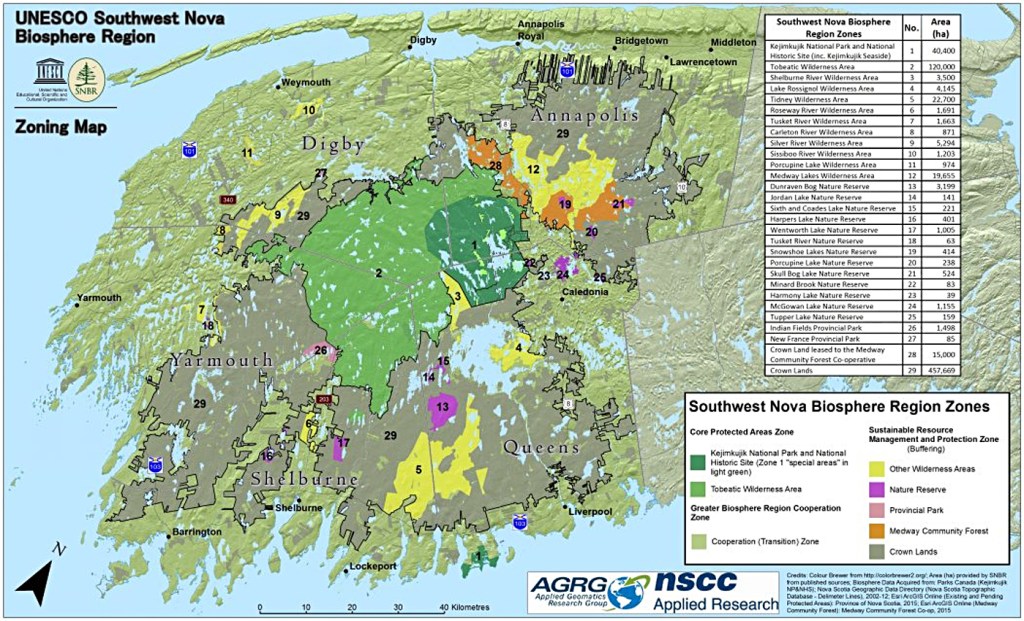
Today, Heather rediscovered her copy of the nomination document for the Southwest Nova Biosphere Reserve, dated July 2001.

I was interested in checking the designation of the buffer zone. At that time, the buffer zone included:

55 sq.km within Kejimkujik National Park (zone 3 and 4)

37 sq.km provincial crown land adjoining Kejimkujik National Park

53 km lower portion of the Shelburne River

Nova Scotia Power lands at north end of Lake Rossignol and upper reaches of the Mersey River.

Crown managed lands at Indian Fields, west of Tobeatic Wilderness Area.

Endorsements (i.e. in charge of the management of the buffer zone)

Nova Scotia Minister of Natural Resources, Fisheries and Agriculture

Freeman and Son Ltd

Nova Scotia Power Inc.

Mersey Woodlands

Where are we today, in 2020?

Clearly the description of the buffer zone (in 2001) did not satisfy the ten year UNESCO MAB review.

Today, we need to know :

a) the 2020 definition of the buffer zone. Which lands, where and size?

b) the parties in charge of the management of the buffer zone.

In the 2001 nomination document, there is a description of the values upheld by SNBRA.

“Ultimately the identity and success of the Southwest Nova Biosphere Reserve in addressing issues associated with advancing ecological, cultural and economic sustainability will depend on goodwill and civic spirit of the organization and citizens participating as members of the Association.”

LINK to http://agrgmaps.nscc.ca/SNBRA/

The same is true today.

On Sunday, November 29, 2020 there was an opportunity to watch the TVO documentary, Striking Balance that reaffirms these values. There is also the opportunity to protest the lack of transparency by the provincial government on its management of crown lands.

Acknowledgements

Heather produced the original submission in 2001. Edward added the graphics to this blog.

Reference

SNBRA, July 2001. Biosphere Reserve Nomination. Southwest Nova Biosphere Reserve
(link to 2010 Nomination Overview document)

Posted in Book Review

Bookcase 2, Shelf 6

Brian, my neighbour, was over this morning to fix the bookcases. They had collapsed, likely under the weight of the books. This has given me the opportunity to rediscover a number of books collected in our travels. For example, shelf 6 focuses on Haida Gwaii.

As I try to understand the stand off between the citizens in rural Nova Scotia with their concern for the forested landscape and associated species and the provincial government, intent on clear-cutting and spraying, I wonder whether there are lessons from Lyell Island on Haida Gwaii.

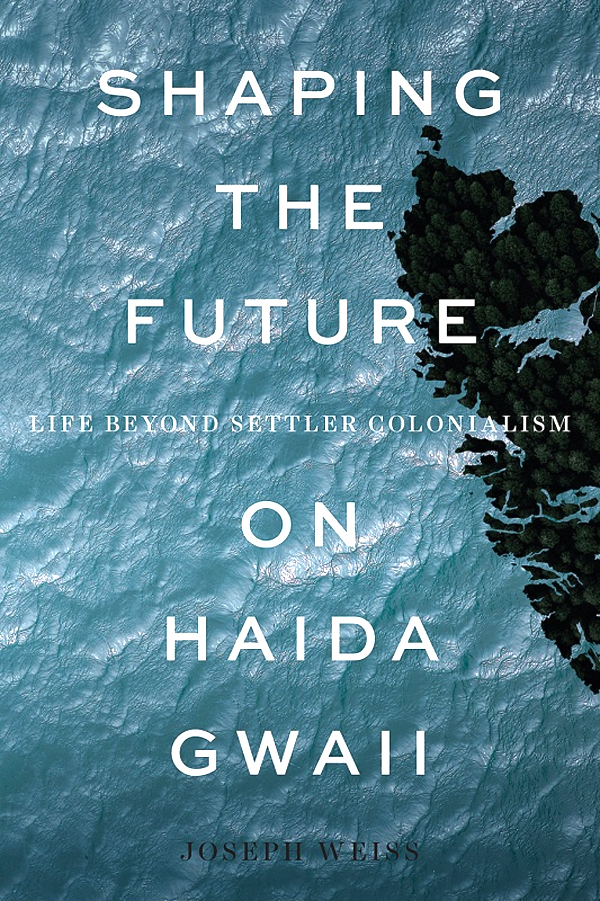
My starting point was the book by Joseph Weiss, Shaping the Future: life beyond settler colonization on Haida Gwaii.

Is there life beyond settler colonization in Nova Scotia?

On the same shelf, I found Islands in the Salish Sea: a community atlas.

Two quotations, from Geographers struck home. In the Preface from Robert Bateman,

“In our global, packaged world we are losing a sense of place. This is a philosophical tragedy. It results in a lack of caring, a lack of sense of community and a neglect of civil responsibility. It is also an environmental and human tragedy. For with the loss of knowledge of and intimacy with our home place, we are losing our sense of spirit.”

In the Foreword, Briony Penn:

“One thing I have learned as a professional geographer is that whoever has the maps in their hand controls the fate of the land. Cartographers have been at the forefront of turning land and nature into polygons of commodities.”

I would also recommend the writings from Robert Bringhurst and Ian Gill. For readers interested in Haida Gwaii, I have provided a list of titles from Shelf 6. Perhaps, at a later date, we can visit other shelves.

Acknowledgements

Heather shared the Haida Gwaii experience. Edward provided the graphics.

References

Joseph Weiss, 2018, Shaping the Future: life beyond settler colonization on Haida Gwaii. UBC Press.

Sheila Harrington and Judi Stevenson (Ed), 2005, Islands in the Salish Sea: a community atlas. The Land Trust Alliance of British Columbia.

Christie Harris, 1992, Raven’s Cry. Douglas and McIntyre.

Ian Gill, 2004, Haida Gwaii Journeys through the Queen Charlotte Islands, Rainforest Books.

Karen Duffek and Charlotte Townsend-Gault (Ed), 2005, Bill Reid and Beyond: expanding on modern native art, Douglas and McIntyre.

Robert Bringhurst (Ed), 2009, Solitary Raven : the essential writings of Bill Reid, Douglas and McIntyre.

Thom Henley, 2017, Raven walks around the World, Harbour Publishing.

Robert Bringhurst, 2012, A Story as Sharp as a Knife. Douglas and McIntyre.

Ian Gill, 2009, All that we say is ours: Guujaaw and the reawakening of the Haida Nation, Douglas and McIntyre.

Dennis Horwood and Tom Parkin, 2006, Haida Gwaii: the Queen Charlotte Islands, Heritage House.

Ruth Kirk, 1986, Wisdom of the Elders: native traditions on the Northwest coast, Douglas and McIntyre.

Christie Harris, 1977, Mouse Woman and the Mischief-maker, McLelland Stewart.

Sean Markey et al., 2005, Second Growth: community economic development in rural British Columbia, UBC Press.

Posted in Book Review

Rereading History

Monday, we headed up to Wolfville. I could not resist a quick stop at the Odd Book. Within minutes, I had found two keepers.

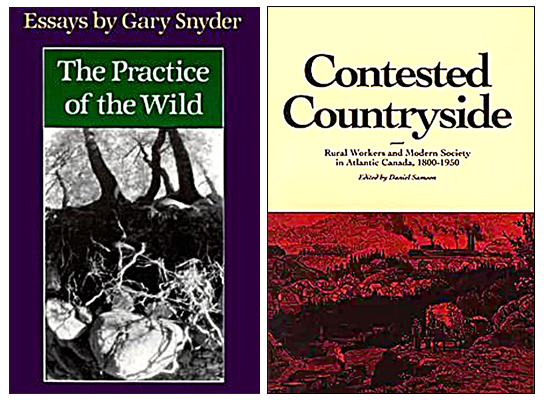
The Practice of the Wild, essays by Gary Snyder. It seemed very appropriate to the battle we face trying to preserve the forested landscape in Nova Scotia. The first essay, The Etiquette of Freedom talks about the words, Nature, Wild and Wilderness. The second essay, The Place, the Region and the Commons covers the world is places, understanding the Commons and Bio-regional perspectives.

The second book published by Gorsebrook Studies in the Political Economy of the Atlantic region, Contested Countryside : rural workers and modern society in Atlantic Canada 1800-1950, edited by Daniel Samson. Within the chapter by Erik Kristiansen, Time, Memory and Rural Transformation: Rereading History in the Fiction of Charles Bruce and Ernest Buckler, it places Buckler into the economic context after the Second World War. Not an easy read, but thought provoking. There is also an Afterword by Daniel Samson Capitalism and Modernization in the Atlantic Canada countryside. With that in mind, move forward to 2020.

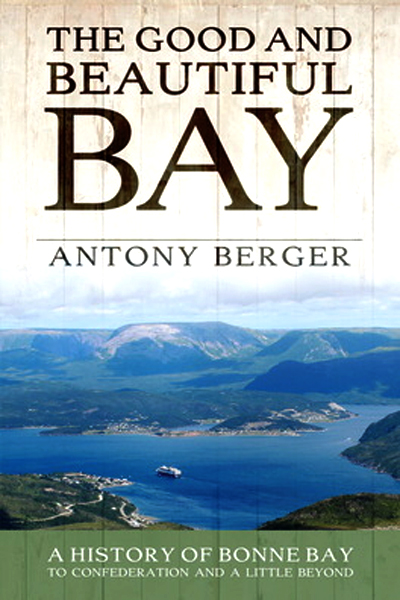
The third book is by Antony Berger and is the biography of his mother, Ella Manuel. This one came from the Lawrencetown library. Heather has snagged it, so this is an indirect review. It describes her life in Western Newfoundland, after the Second World War, a single Mother with young children, and the economic life in Lomond and Bonne Bay. Interestingly, Berger has also written about Bonne Bay: This Good and Beautiful Bay, a History of Bonne Bay to Confederation and a little beyond. Berger now spends his time between Wolfville and Woody Point.


All three books raise the question: what is the impact of the surrounding landscape and rural economy on the writers view of the world?

In the case of Gary Snyder, it is the Yuba River country in the Sierra Nevada of Northern California. For Ernest Buckler, it is the Annapolis Valley. For Ella Manuel and Antony Berger it is Bonne Bay, Western Newfoundland.

I would encourage reading the chapter in Contested Countryside, Rereading of History, by Eric Kristiansen; challenging, but definitely relevant to our times.

Last weekend, we attended the Dave Gunning concert in Bridgetown. We came away with two CDs. This week, I have been listening to ‘These Hands’ and ‘Circle of Boots’.


Finally, I had the chance to drop off some excess books at Endless Shores in Bridgetown and thus obtain a credit. The ones that were not of interest to Jennifer, I took to the Bridgetown post office.

Acknowledgements

The Odd Book in Wolfville, close to the university, is a readers’ goldmine. Jaki at the library obtained the Ella Manuel biography. Heather for her comments on the book. Edward for his graphics.

References

Gary Snyder, 1990. The Practice of the Wild. North Point Press.

David Samson (Ed.), 1994. Contested Countryside. Rural workers and modern society in Atlantic Canada 1880-1950. Acadiensis Press.

Antony Berger, 2014. The Good and Beautiful Bay: A History of Bonne Bay to Confederation and a little beyond. Flanker Press.

Antony Berger, 2020. No Place for a Woman. The life and Newfoundland stories of Ella Manuel. Breakwater Books.

Dave Gunning CDs No more Pennies 2012. Up against the Sky. 2019.

Posted in Book Review

Fall Magazines

Visiting New Glasgow for the Thanksgiving Weekend, I had the opportunity to catch up on the October/November magazines from Saltscapes, Volume 21 #5.

Saltscapes Magazine
“Some would make us just names on a list. But we are people in a place - and resist.” 

This seemed very appropriate at the time of our municipal elections.

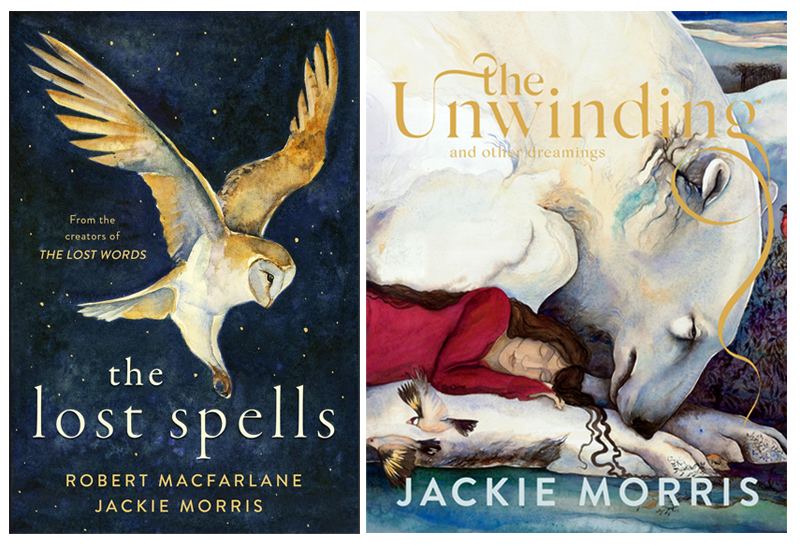
From Walrus, there is notice of a new book by Robert MacFarlane, illustrated by Jackie Morris, published by Anansi Press, The Lost Spells. In the latest Brain Pickings, see too, The Unwinding by Jackie Morris published in July 2020.

From Canadian Geographic, Volume 140 #5, there is a rich trove of articles.

  • Michif Revitalized: How to save an endangered language.
  • Mapping Canada’s biggest islands.
  • How to avoid the sixth extinction.
  • Keeping the inlet wild – Princess Louisa Inlet raised $3m in 3 months .
https://play.google.com/music/listen#/ps/I4q4mklvfb4sd6ho2jv3f55ecbu

Meanwhile online, Emergence Magazine Episode 6. The Power of Revitalization of Language Keepers: The struggle for Indigenous language survival in California. (Podcast link HERE)

From Chelsea Green Publishing, Chris Smaje’s book, A Small Farm Future. ‘Chris Smaje has worked a small farm in Somerset, southwest England for the last seventeen years. Previously, he was a university-based social scientist’.

At resilience.org you can find Podcast from the Prairie: Respecting your tools. A conversation with Wes Jackson, now 84 years old, from the Land Institute.

Acknowledgements

John Stewart for his rich collection of magazines. Heather Stewart and Siqsiq, my travel companions. Sandra Stewart and Don Higgins for the wonderful Thanksgiving Dinner. Edward for searching out the links and associated graphics.