Do you remember the children’s’ nursery rhyme ‘ The Five Little Pigs’? Counted out on the toes or fingers of the child.
“This little pig went to market. This little pig stayed home. This little pig had roast beef. This little pig had none. This little pig went wee-wee all the way home.’ Here are my five little pigs.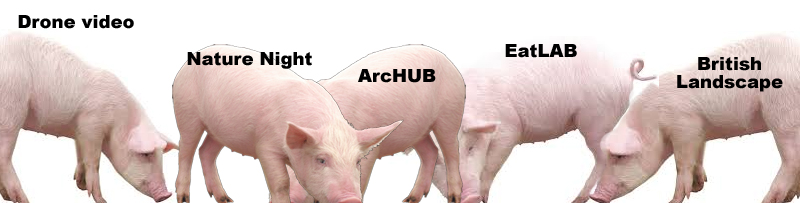
- new drone video from Neil Green of forest cutting above the Inglisville road. You can compare it with the video shot in January.
- This Saturday evening there is Nature Night at Sugar Moon Farm. It includes talks by Dale Prest, Community Forests International, Greg Watson from North Nova Forestry Co-operative (NNFC) and Tom Miller, Friends of Red Tail. The event is designed to engage Nova Scotia’s small private woodlot owners in the fight against climate change. We are members of the NNFC and will attend.
- David MacLean at COGS sent me a link to the work of Scott Morehouse at Esri on ArcHUB. This is of interest for two reasons. ArcHUB is an industry-driven approach to the Community Information Utility concept. At the end of the article, there is a link to a video where Scott describes his early beginnings in GIS. This time frame coincides with the history of COGS.
- Yesterday I bumped into Wayne Regier. Wayne worked with me at AGRG. He explained that there is now the EAT lab at NSCC, Middleton. EAT is Environmental and Agricultural Technologies. There is the likelihood that the climate network established by David Colville will be extended across the province. This makes tremendous sense in the light of climate change. Secondly, the Lab is using drone and soil sensor networks to monitor the condition of vineyards in the province. Both excellent, supportable initiatives.
- Finally, I have now finished Nicholas Crane ‘s book The Making of the British Landscape. I have been lugging this tome around for the last month or so. It covers the last ten thousand years. In the last chapter, Crane talks about the changes in the British urban landscape over the last hundred years, post the industrial revolution and post the second world war. It reminded me how much land use is impacted by our industrial economy. This linked, in my mind, to Closure, Dick Groot’s photographic exhibit in Windsor on the demise of manufacturing in Nova Scotia. I plan to see his exhibit this Friday at the Cedar Centre in Windsor.
These are my ‘five little pigs’. I shall be able to report back on #2 and #5 next week. I have started to read Simon Winchester’s book. Unfortunately, the style is rather pedantic; however, I shall persevere, because I am interested in the field work necessary to produce that first Geology map of the United Kingdom. I think that I now understand why I could go to two second-hand bookstores and find the same book!
Not exactly sure, what the symbolism might be about those five pigs.
REFERENCES
Neil Green video link https://youtu.be/_X78Ei38_Wo
Nature Night at Sugar Moon Farm https://www.sugarmoon.ca
Link to ArcHUB http://www.esri.com/esri-news/arcwatch/0418/back-to-basics
Nicholas Crane. 2016. The Making of the British Landscape. From the Ice Age to the Present. Weidenfeld and Nicholson. Chapter 22 Interland 1920-2016.
Simon Winchester. 2001. The Map that changed the World. William Smith and the birth of Modern Geology. Harper Collins.
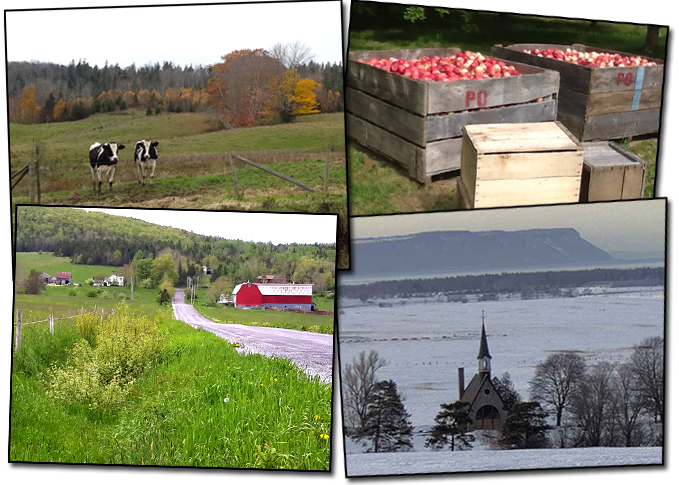
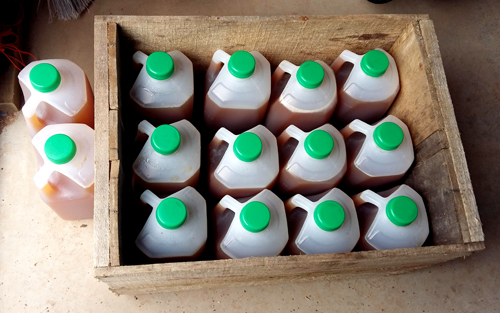
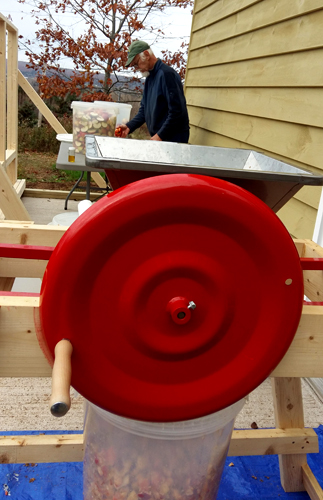 Richard Sennett says it well in the Acknowledgements to his book The Craftsman, “Making is Thinking’. This week, we have been busy pressing apples and making it into sweet cider.

 ” the business community, not just governments, has a responsibility for turning the region into something more than a region of the mind. Community institutions need to step up and contribute to the region’s economic development.” (July 29/17 Chronicle Herald F3).
 In my neighbourhood on Hwy 201, I see new craft beer company (Lunn’s Mill) and Beavercreek Winery. In Paradise, the Morse Estate (Buckler. The Cruelest Month 1963) has been transformed into Burnbrae Farm and Paradise Inn. The town of Bridgetown has merged with the Municipality of Annapolis County.


 Last week we stopped at the Alexander Graham Bell museum. I wanted to catch up on the work of the Bras d’Or Lake Biosphere Reserve Association (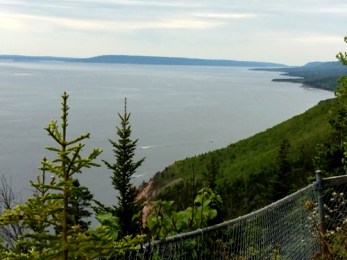

 Ken McLeod in his book ‘Reflections on Silver River’ translates and comments on Tokme Zongpo’s Thirty-Seven Practices of a Bodhisattva. Zongpo was a fourteenth century Buddhist monk living in Ngulchu (Silver River), Tibet. McLeod describes the fundamental Buddhist concept of gtong len, or empathy, where one receives the emotions of another person and responds by sending back supportive feelings. This concept raised the idea in my mind whether we can take or receive from a landscape and return positive empathy back to it.
