Posted in Creative writing

Citizen Engagement and Virtual Reality

This week, we celebrated the availability of craft beer from Lunn’s Mill Beer Company in Lawrencetown. Their elegant growlers include a couple of messages, as well as a map of Nova Scotia. The beer company is an example of engaging citizens in a rural business venture.
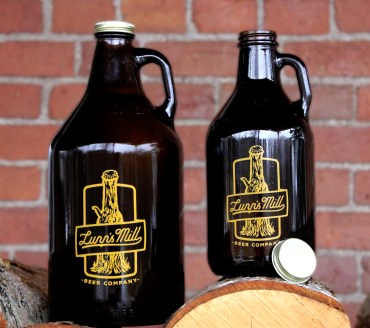
lunnsmillbeergrowlers
Lunn’s Mill growlers 

‘In 1760, this beautiful part of the Annapolis Valley was known as Lunn’s Mill, named after the major industry in the area a bustling sawmill owned by John Lunn. Around this time, the Charming Molly set sail from New England carrying the first New England Planters. These intrepid people helped expand the community with farms and shops and in 1822 it was renamed Lawrencetown.’

‘Lunn’s Mill pays homage to our past and to tIhe people who choose to come to Nova Scotia and make their living from the land. We strive to keep up this tradition using top quality ingredients locally sourced wherever possible, and partnering with local businesses to put Lunn’s Mill back on the map as a proud brewer of Nova Scotia craft beer.’

Meanwhile, in the weekend newspaper (Chronicle Herald) the debate continues about the state of the forests in Southwest Nova. The Opinion section includes columns by Mike Parker, author and researcher, as well as Jeff Bishop, Forest Nova Scotia. In the Style section of the Globe and Mail, there was a discussion on the use of Virtual Reality as a tool for interior designers.

Here is my point, why not use the tool of Virtual Reality to help engage citizens in decisions related to our landscape. First, a simple example, Nova Scotia Power is consulting with property owners about expanding (doubling) the buffer around power lines. Rather than go house to house, we could organize community meetings, where citizens could look at the impact of this expanded buffer, on their property as well as on the South Mountain as a geographic unit.

The same form of citizen engagement could take place, in relation to the planning of forest harvesting. Indeed, when I was interviewing Tim Webster, Research Scientist at AGRG, they had recently received funding to establish a Virtual Reality laboratory in Middleton.

Citizen engagement is a key ingredient in the new craft beer venture.
Could we not apply the same philosophy of citizen engagement, in terms of using virtual reality technology to make collective decisions with regards power line easements and forest harvesting practices ? This tool would allow all parties to see the same geography.

Of course, right now, today, there are some limitations with regards line speed and access to the Internet in rural areas. But we do have some key institutions in the regions with high speed access e.g. NSCC.

One final note, on Tuesday, March 7th, at the Centrelea Community Centre there is a session on the mapping of historic buildings in the community. This is a collaboration between a group of citizens and Ed Symons, instructor and students at COGS.(http://bit.ly/centrelea).

References
Mike Parker ‘Don’t listen to industry reassurances’ Chronicle Herald, March 4/17 Page F2.
Jeff Bishop. ‘Confusing opinion with the facts’. Chronicle Herald, March 4/17 Page F2.
Matthew Hague. ‘Noticed: Digital Design’.Globe and Mail, March 4/17. Style section page 5.
Posted in Creative writing

In praise of Second-hand Bookstores

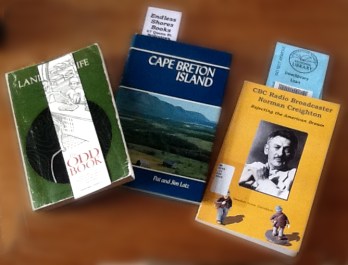
threebooksBefore Christmas, I went into Ed’s second-hand book store in Sydney, Cape Breton. I found a copy of ‘George Orwell’s Friend. Selected Writing by Paul Potts’. It caught my attention because of my personal interest in things ‘Orwellian’.I also appreciated the use of Orwell’s name to introduce the work of Paul Potts, a little-known Canadian poet. There were several remaindered copies, all signed by the author.How did they end up in Sydney ?
In January, I was advised to go to Endless Shores Books in Bridgetown. I was looking for a copy of Whirligig, a selection of Ernest Buckler’s short prose. Instead, I discovered ‘Cape Breton Island’ by Pat and Jim Lotz. Essentially, a geography of Cape Breton written in 1974. It begged the question of an updated version in 2017. Jim was a Geographer and independent writer (he died last year).

This weekend, we went to Wolfville and gravitated to The Odd Book, a second-hand bookstore on Front Street. As a university town, there seemed to be an excellent supply of books. I found ‘Land and Life. A Selection from the writings of Carl Ortwin Sauer’ 1967, edited by John Leighly. As the quotation on the back cover states ‘ Geographers will treasure this volume for many generations’ The Professional Geographer.

In Part V, The Pursuit of Learning, we find essays on ‘The Morphology of Landscape’ and ‘The Education of a Geographer’. Inside the back cover a previous owner had made the following notes:

‘The Valley’s physical boundaries are everywhere visible. North and South Mountains…’

‘Landscapes have subjective meaning for the inhabitants (cf page.344).’idiom’ and ‘vernacular’ are part of that, and so is distance perception and knowledge limitations’.

This brings up two questions. First, there is no teaching of Geography at Acadia University, who was the previous owner of the book ?

Second, there is the larger question. How, and what books find their way into second-hand bookstores ? What is the history of a particular book, as it passes hand to hand ?

References

Paul Potts. 2006. George Orwell’s Friend. Selected Writing by Paul Potts. Introduction by Ronald Caplan. Breton Books.

Pat and Jim Lotz. 1974. Cape Breton Island.  Douglas, David and Charles, Vancouver.

Carl O. Sauer. 1967. Land and Life.A Selection from the writings of Carl Ortwin Sauer. Edited by John Leighly. University of California Press, Berkeley.

Postscript

Through inter-library loan, I received from Acadia University library.

Heather Davidson 2005.CBC Broadcaster Norman Creighton. Rejecting the American Dream. This book is about the life and times of Norm Creighton, long time resident of Hantsport.

Inside the front cover, three very timely quotations.

Edward Albee

‘The play (The American Dream) is an examination of the American scene, an attack on the substitution of the artificial for real values in our society, a condemnation of complacency, cruelty, emasculation and vacuity; it is a stand against the fiction that everything in this slipping land of ours is peachy-keen’.

John Maynard Keynes

‘Capitalism is the extraordinary belief that the nastiest of men for the nastiest of motives will somehow work for the benefit of all’.

ee cummings

to be nobody but myself, in a world which is doing its best night and day to make me everybody else, means to fight the hardest battle which any human being can fight and never stop fighting’.

Posted in Creative writing

A Proposal: Crowdsourcing and Citizen Scientists

Let’s connect the needs of remote coastal communities in the Arctic with the expertise of the Geomatics and education communities (e.g. AGRG/COGS and other institutions who are familiar with the analysis of satellite imagery) and with data suppliers (e.g. Digital Globe).

citizenscience_04
Top: Arctic Bay/ Ikpiarjuk, Nunavut, Canada – Mike Beauregard.  Bottom: VIIRS image from Suomi National Polar-orbiting satellite – NASA Jeff Schmaltz

Remote  Arctic communities can identify their needs in terms of change detection and can provide intimate knowledge of their environment with ground truthing. The education/science community can provide both scientific and technological image analysis expertise. Industry can provide the data under an appropriate business model. This is a classic case of ‘joining the dots’ and crowdsourcing.

Crowdsourcing is the process where you use the resources available through the Internet to complete a task. The usual model is one person has an idea and is looking for funding partners. However, it could be using personal computers to run different climate models or it could be organizing citizens to detect change from high resolution satellite imagery.

At the recent workshop on High Resolution mapping of the coastal zone at the Centre of Geographic Sciences(COGS) John Roos, from Canada Digital Globe showed examples of crowdsourcing with their WorldView satellite data.The data is stored in the cloud and can be accessed by a variety of users.
At the same workshop, I had a conversation with Don Forbes, Emeritus Research Scientist from the Bedford Institute of Oceanography(BIO) with expertise in Coastal Geomorphology, about his involvement in Circum-Arctic Coastal Communities Knowledge Network (CACCON) and SmartICE

It seems to me that my proposed collaboration would be of interest to both GeoAlliance Canada and GoGeomatics because it would be national in scope, and would engage Geomatics professionals as Citizen Scientists. Along side the networking, there might be the possibility of developing an online course e.g. Digital Canada 101. This course could define the procedures as well as illustrate different Northern landscapes.

This concept does not have to be limited to change detection in the coastal environment. Recently, there has been a lot of discussion in the Halifax newspaper, Chronicle Herald (February 11th Opinions F4) about changes in the forest cover of Nova Scotia. We could link citizens conducting field work, with Geomatics professionals interpreting change from high resolution satellite imagery. This type of connection, combining crowdsourcing and citizen science, would create a better awareness of our forests on the ground, and enhance communication within our communities.

Whether marine resources or land resources, innovative approaches are available that allow us to be better informed and more effective in our resource management. We just need to collaborate across institutional boundaries, and to engage citizens across generational/educational boundaries: schoolchildren, college graduates, Geomatics professionals, retired scientists. (The last category is an oxymoron. Scientists never really ‘retire’; they simply ‘fade away’).

Posted in Creative writing

Bodhisattva

This is what I don’t understand
How does Bodhi know
When is the time for a walk ?

bohdi_01

This is what I don’t understand
Why is the predominant value
An economic one ?

This is what I don’t understand
As we move down past the first field
He wants to turn back home.

This is what I don’t understand
How much education takes place
Outside of the public institutions.

This what I don’t understand
Down in the nursery he follows
A limited number of paths.

This is what I don’t understand
How did we inherit a dog
With a name meaning ‘enlightened one’?

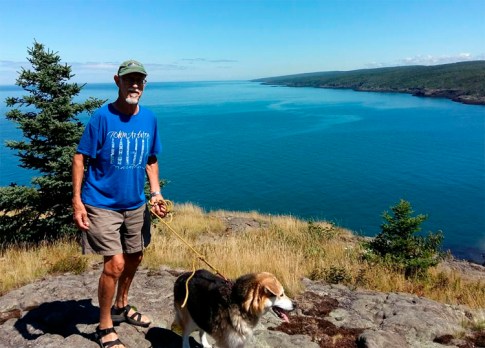
Photograph: Bob and Bodhi above Gulliver’s Cove on Digby Neck, NS.

Bodhi died February 15,2017. Rest in Peace.