Posted in Opinion

Thinking Rural

As I reorganized papers around the house, I found a six page geographic description of the Annapolis Valley: the Geology, the Soils, the Habitats, the Primary Industries: Bay of Fundy fisheries, Forestry, Mining and Agriculture, the Micmac and the Land, the Future. I believe that it came from the MacDonald Museum in Middleton in the 1980’s. No author. No date.
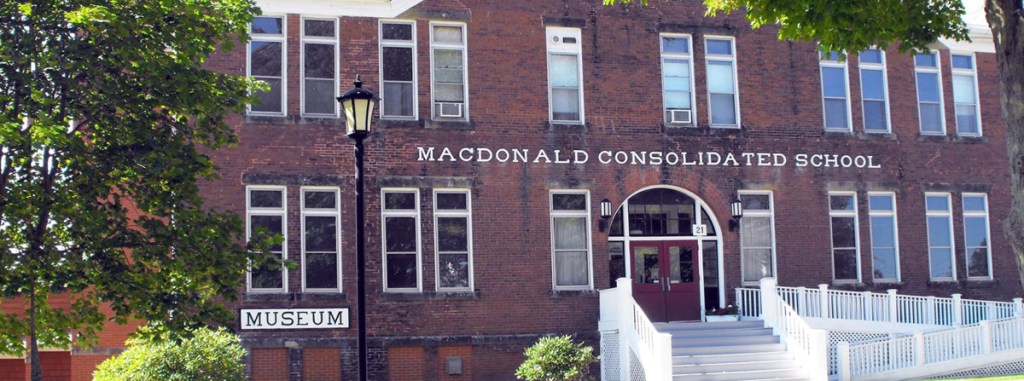
LINK to the MacDonald Museum website

Here is the final paragraph: the Future.

“We understand today, that we do not command the environment but are very much a part of it, and that what we do to the environment will sooner or later affect us.

Slowly we are learning that we must work with nature, not against it. This means abandoning old habits of careless consumption and adopting the wisdom of intelligent conservation.

Our Natural History Exhibit is designed to help visitors appreciate these fundamental truths. We have the land – the natural resources – we have clean air and water. If we managed these assets we have a great deal to look forward to in the ‘Valley of the Future.'”

If we agree with the sentiment, what are the actions?

What is the vision for our institutions?

What role should the Museums play in Annapolis County?

What is the role of the Annapolis Valley Exhibition?

Does the presence of the Centre of Geographic Sciences (COGS) in Lawrencetown have implications for the management of the rural landscape in the Annapolis Valley? Can we apply geographic science to better understand the impact of our actions?

The COVID pandemic has created a window for rethinking ‘rural’, for redefining our institutions and their behaviour, to establish a new vision that redefines our sense of community.

There is ample evidence of new business initiatives in the region. However less evidence of a collective new vision, and the need for institutional change to meet the new reality.

And yet, from the Annapolis Valley paper:

“Beginning in late May or early June, tens of thousands of apple trees from Windsor to the shores of the Annapolis Basin are a mass of delicate colours.

Acknowledgements

I believe the Annapolis Valley paper goes back to the days when Heather helped the MacDonald Museum set up its Natural History Exhibit in the Greenhouse, working with Alex Wilson, Curator at the Nova Scotia Museum. (1980’s). Edward added the graphics.

Posted in Opinion

Send in the Geographers ?

On Friday, we returned from New Glasgow. We stopped in Truro for Heather to receive her Pfizer vaccination. It was a very different experience at the NSCC campus — lots of support staff, signage etc. We arrived early and were allowed to go to one of the several vaccination stations set up on the second floor. After the injection, we waited the prerequisite fifteen minutes, and then were back on the road driving through the Rawdon Hills to the Valley.

This was different from the single vaccination station at Lawton’s Drugs in Shelburne the previous week. Lots of support staff, signage etc.

Perhaps the difference was because of the different vaccination type. What did occur to me, was that the NSCC, with campuses across the province, could offer significant vaccination support and coverage.

This week, the Premier announced his economic advisory council, under Chairman, Scott Brison. Given the nature of the resource management issues in the province, I wondered if the technology and expertise at the Centre of Geographic Sciences (COGS) could be applied to develop a better understanding of our geography and its input into the economy. The digital GIS technology could be used to efficiently share different scenarios with industry, government and the wider communities.

The same technology can be applied to questions of demography — essential to the health and welfare of Nova Scotians in these COVID times (click HERE for a technical example on how GIS can be used in Health Care, for Care, Cure and Community).

In the health sector, the emphasis has been on the need for ‘good science’. The same is true for the resource sector, whether forestry, fisheries, agriculture or mining. As we approach the climate change agenda, we need to apply the same digital geographic technologies (for example, LiDAR to measure the impact of sea level rise) to undertake ‘good science’.

Acknowledgements

Heather and I compared notes on the different vaccination scenarios. Edward added the links and graphics.

Postscript

Thanks to Rick and Cathy Ketcheson for inviting us to join them at Evergreen Theatre for the Cape Breton group, Hauler.

References

Check the Centre of Geographic Sciences (COGS) web site for a full description of their Advanced Diploma programs.

The NSCC for a map of campus locations.

Other resources would include the
GeoNova government office in Amherst.
Geography degree programs at St Mary’s University.

Earlier efforts at applying this technology include Community Counts at the provincial level and “CLICK” for the Annapolis Valley.

Posted in New thinking, Opinion

Nanny State

Friends, Shirley and Klaus Langpohl, in an email comment, made reference to Nova Scotia as a ‘Nanny State’. This took me back to the UK and the days of Margaret Thatcher. In these days of COVID and the state of Health Services in Nova Scotia, it’s hard not to be concerned about the ‘nanny state’.

To offset this thought, Heather and I watched a Zoom presentation on Glyphosate spraying and it’s impact on wildlife and forest birds. Presented by Rod Cumberland and Marc-Andre Villard, and moderated by Catherine Harrop, CBC.

It was revealing to learn that Glyphosate spraying has been banned in Quebec. Also, there is a lot of scientific evidence on the impact of Glyphosate spraying in New Brunswick. In New Brunswick, the scientific community is at odds with JD Irving and the Forest industry.

What is happening in Nova Scotia?

Last Summer, we managed to stop spraying on a few parcels. What will happen this season? From the Zoom call, we learned that the spray season tends to be August-September. The land that has been clear-cut this Winter, will it be sprayed this August/September? What happens to the residue, will it flow into the river systems? Last Summer, the village of Lawrencetown had to notify the government about our water supply.

Who will be watching in 2021?

Given the situation in Quebec and New Brunswick, why are we spraying Crown lands? This must STOP! It will only stop, if there is community engagement and we pay attention to the science.


To change the topic, and offer a more optimistic tone. From Chelsea Green Publishing, online ‘Farming for the Future: a journey into regenerative practice’ webinar series. This involves collaboration with Dartington Trust. I went to their web site.

They offer a M.A in Arts and Place. Does that sound like a good fit for Annapolis County? We have a significant number of artists living in the region AND we have a Centre of Geographic Sciences.

Dartington Trust is in Totnes, Devon, England and is linked to Schumacher College (Small is Beautiful).

Acknowledgements

Klaus and Shirley for helping me focus. Jacob Fillmore and Extinction Rebellion fighting to save our forests from clearcutting and aerial spraying. Edward and Heather contribute in so many ways.

References

Rod Cumberland and Marc-Andre Villard Zoom meeting moderated by Catherine Harrop, CBC.

Chelsea Green Publishing , Farming for the Future Webinar Series

Dartington Trust M.A in Arts and Place.

Posted in Opinion

Spring Break

First, let me thank Edward Wedler for his blog contribution. The mapping of Plein Air Art sites supports our tourism industry.

While away in New Glasgow, I received the Winter Solstice newsletter from Bras D’Or Lake Biosphere Reserve. Check out the link below. It is a worthwhile read.

As we crossed the Kings-Annapolis County line on Highway #101, I noted the Southwest Nova Biosphere Reserve sign and wondered why a similar newsletter is not available here. Both biosphere reserves operate under the criteria set down by the UNESCO Man and Biosphere program. And yet, we still see the ongoing debate about forestry practices in our region.

On Friday, I picked up the latest Bridgetown Reader. It now offers a regular section ‘Reading where we live’. This week, it features Robie Tufts and’Birds of Nova Scotia’. Another new feature is the Word Search.

Since Stephen McNeil is not re-offering in the next provincial election, we are beginning to see candidates vying for the Liberal seat. In the current Reader, there are advertisements from Bill MacDonald, Carman Kerr and Susan Robinson-Burnie.

Given my concern about glyphosate spraying, as part of clearcutting (click here, here and here), I hope that we have candidates who support the Man and Biosphere values for Southwest Nova. This does not appear to have been the case under the present Liberal government.

For background, I would recommend the essay by Harry Thurston in The Sea among the Rocks ‘The Enemy Above, Millstream, New Brunswick’.

Coincidentally, Harry was interviewed Sunday by Angela Antle on CBC Atlantic Voice about his latest memoir, Lost River.

Postscript.

Frank Fox sent along the link to the Weekly Guardian. ‘Activist on hunger strike, calls for Canadian government to halt logging.’ In this case, it is the Nova Scotia government.

From the Bras D’Or Lake Biosphere Reserve Association (BLBRA).

Please help us connect people and nature. You can enrich the Bras D’Or Lake and it’s watershed through sustainable development, conservation and climate change adaptation. With the spirit of community and the power of global presence we can keep the lake golden. We are all in this together

I agree wholeheartedly from the perspective of the Southwest Nova Biosphere Reserve.

Acknowledgements

Frank Fox for the Guardian link. Edward Wedler for his blog on mapping Plein Air Art.

Heather shares my concern about the status of the Southwest Nova Biosphere Reserve and the impact of glyphosate spraying.

References

Harry Thurston, 2002, The Sea among the Rocks, Pottersfield Press.

Harry Thurston, 2020, Lost River, Gaspereau Press.

Bras D’Or Lake Biosphere Reserve quarterly newsletter, Spring Equinox Edition, March 20, 2021.

The Bridgetown Reader, Volume 13, Issue 9, March 19, 2021.

Posted in New thinking, Opinion

GIS and Vaccination

Brenda Thompson raised the question about travel time to vaccination clinics (CH Wednesday, March 17, page A8). From the description it appears that there are presently no vaccination clinics in Annapolis and Digby counties for the over 80 cohort, partly because of the specialized storage requirements.

In the same time window (this week) I have noticed:

  1. Statistics Canada is seeking to hire staff for the next census;
  2. COGS is looking for graduating student projects in Lawrencetown.

Let me join the dots.

Not too many years ago, the provincial government had a group called Community Counts. This group used GIS technology to massage Statistics Canada census data at the enumeration area (EA) level. Given the need to locate vaccination clinics throughout Nova Scotia to meet the diverse needs of the population, would it not make sense to use this type of information and technology to map the demand?

Here is my proposal.

Obtain the latest census information for the province. Map the existing vaccination sites. Analyse the travel time for citizens to attend these sites. Identify the additional vaccination sites which maximize the accessibility for vulnerable populations.

In my day (pre-2011) this would be a relevant, excellent public service project for students graduating from COGS.

If we wanted to add an additional dimension, how about a map of citizens without a family doctor? Or access to high speed Internet? These are all examples of geographic research which could be facilitated by NSCC and CORAH . It is also an example of giving citizens access to public information. It’s also the “community” in Community College.


Ray Cronin has an essay in A Plague Year Reader on Maud Lewis. Here are a couple of quotations:

One cannot discuss Maud Lewis without also discussing tourism and the economic factors that made tourism so important in her life.”

“Tourism has been the most successful strategy for bringing jobs, even if only seasonally, to rural Nova Scotia. That seasonal market, coupled with government assistance programs, enabled people to stay in their rural homes and help fuel a folk art boom in the latter half of the 20th century unique to Nova Scotia in its scope and impact.”
p.115.


From Oliver Sacks’s book ‘Why we need gardens?’ p.243-247

The wonder of gardens was introduced to me very early, before the war, when my mother or Auntie Len would take me to the great botanical gardens at Kew.

The effect of nature’s qualities on health are not only spiritual and emotional but physical and neurological. I have no doubt that they reflect deep changes in brain physiology and perhaps even its structure

I remember well trips to Kew Gardens (see also The Royal Landscape) from my childhood days in West London.

Acknowledgements

Edward provided his critical artistic eyes. Heather shared the same space.

References

Ian Fairclough, Woman questions travel time to vaccine clinics, Chronicle Herald, Wednesday March 17, 2021, A8.

Ray Cronin, Gaspereau Field Guides to Canadian Artists, No. 5. Maud Lewis: Creating an Icon.

Oliver Sacks, 2020, Everything in its Place, Vintage Canada.

Posted in Opinion

Found Words

Last week, Heather attended a Centre of Rural Aging and Health (CORAH) seminar at the NSCC campus in Middleton. The concept of rural aging intrigued me. How does that contrast with urban aging? Does rural aging take into account the lack of high speed Internet or the shortage of family doctors?

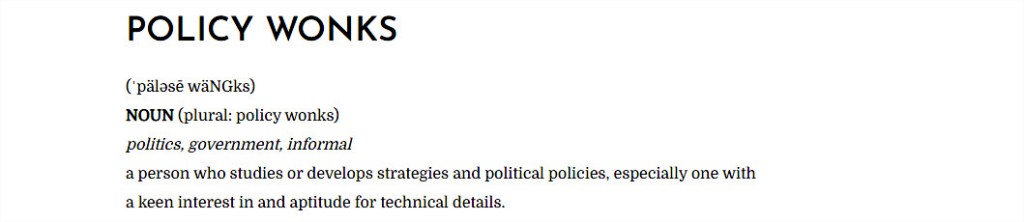
Peter Nicholson and Jeff Larsen (Chronicle Herald, page D4) talk about the province leading in digital and virtual health care, post-pandemic. Will that help in rural areas of Nova Scotia? Interestingly, Edward Wedler discovered a reference to their web site ‘Policy Wonks’. Check it out.

As a a member of the Retired Teachers Organization (RTO) this week, I also received notification of two seminars, related to aging. From Aging 2 Halifax. Technology and Seniors: Stories that resonate. on March 15 and 18.

My belief is that we need to deal with our sense of place. Residents of Annapolis Royal have the option of walking the French Basin Trail. With the signage, they can start to identify ducks and other species.

If you live near Bridgetown, hike up to the Communications Tower above Valley View Park. Last week, at the top, we discovered a sign to Chalet. We followed it through the woods, eventually returning to the Mountain Road, where we had parked the car. Some interpretative signage would certainly enhance the experience.

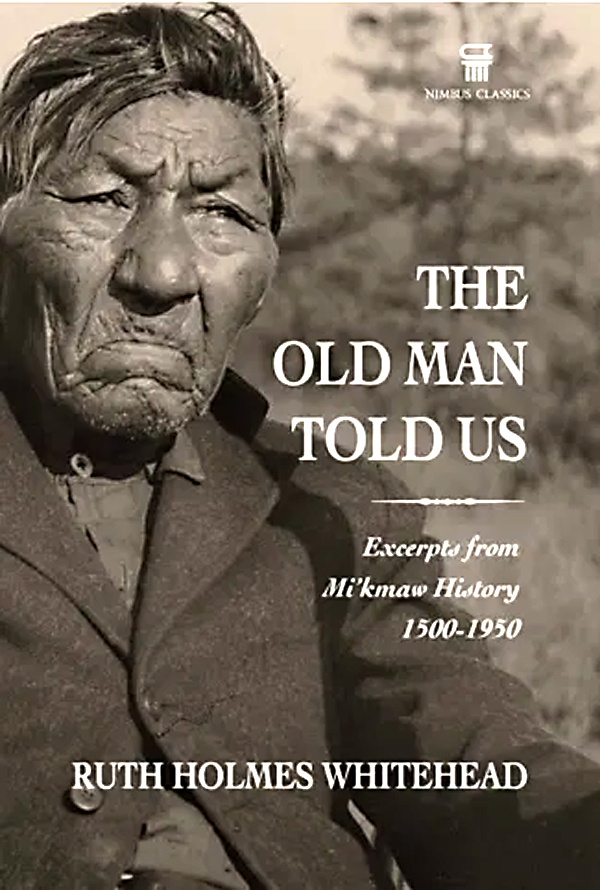
Rural aging really amounts to ‘aging in place’. Whether living in Halifax or Paradise, there exists many opportunities to find those ‘lost words’, at the same time as discovering a new vocabulary. Just one example, check out Ruth Holmes Whitehead’s The Old Man Told Us: excerpts from Micmac history. 1500-1950. Learn more about eel weirs.

Acknowledgements

Edward found the Policy Wonks web site. Heather found the Chalet sign above Valley View park.

References

Policy Wonks web site

RTO link to seminars.

Ruth Holmes Whitehead, 1991, The Old Man Told Us: Excerpts from Micmac History, 1500-1950. Nimbus Publishing (link is to the new edition)

Posted in Book Review, Opinion

Lost Words

In 2007, the Oxford Junior Dictionary dropped forty common words concerning nature. In 2018, Robert MacFarlane and Jackie Morris co-authored, The Lost Words, “ a spell book that conjures back twenty of these lost words and the beings they name from acorn to wren”.

In 2020, MacFarlane and Morris published The Lost Spells. Last weekend, I found a copy at the Mad Hatter bookstore in Annapolis Royal.

To enchant means both to make magic and to sing out. So let these spells ring far and wide; speak their words and seek their art, let the wild world into your eyes, your voice, your heart

It starts with Red Fox and ends with Silver Birch, a lullaby. At the end is a glossary of sixty-four species.

Seek each flower and insect in these pages, speak each creature, find each tree. Then take this book to wood and river, coast and forest, park and garden; use it there to look, to name, to see.”

The book is a beautiful combination of language and art. It is designed to be read aloud. It includes a glossary and quiz — to find these species in nature.

Could we apply the same approach to ‘our nature’?

Last weekend, Peter Nicholson and Jeff Larsen published an opinion piece in the Chronicle Herald (D4) entitled “Welcome to InnovScotia — Six Ways to Build Back Better Post-pandemic“. While I can agree with their six strategies, my focus would be to promote ‘local-hood’. For example, can we develop a new language/art of landscape in Nova Scotia? How would we begin?

My suggestion, re-read Ernest Buckler’s Ox Bells and Fireflies in combination with Harold Horwood’s ‘The Magic Ground’.

Peter Nicholson uses the term ‘InNova- Scotia’. My approach would redefine the term to ‘In Nova Scotia’, with the emphasis on the geography. Consult with our leading ‘nature writers’ e.g Harry Thurston and others. Study the relationship between language (MacFarlane) and art (Morris), then apply to the present landscape.

As I mentioned to Edward, what we need is ‘the Inside Story’. This is a bit of a joke, since Edward and Anne used to run the bookstore, The Inside Story in Greenwood.

Postscript

Frank Fox sent me a link from the Guardian. That land has more value if left to Nature than if farmed. Interesting economics.

Photograph: Stephen Fleming/Alamy in The Guardian

Acknowledgements

Edward brings his artist mind to every blog. Rocky Hebb challenged me on the blog format. Heather and Siqsiq share our walks in Nature.

References

Robert MacFarlane and Jackie Morris, 2018, The Lost Words, Anansi Press.

Robert MacFarlane and Jackie Morris, 2020, The Lost Spells, Anansi Press.

Peter Nicholson and Jeff Larsen, 2021, Welcome to InnovaScotia — Six Ways to Build Back Better Post-pandemic, Chronicle Herald March 6. Page D4.

Ernest Buckler, 1968, Ox Bells and Fireflies, McClelland and Stewart, New Canadian Library, N99.

Harold Horwood, 1996, The Magic Ground, Nimbus Publishing.

Posted in Opinion

When the Science of Where meets the Geography of Here

Edward Wedler suggested this title within the context of a CBC article on Canadians moving back to the province to work remotely from home. Another candidate title would be Making Lemonade. This relates to the latest AIRO newsletter on opportunities arising from the COVID pandemic.

These discussions take me back to the 80’s. As we developed new technology programs, we worked closely with the vendors to ensure that our graduates would find employment in the industry. This resulted in a steady flow of GIS graduates to California and Toronto, and a similar migration to Ottawa in Remote Sensing. Over the last four decades, there has been a return flow back to Nova Scotia.

Given the new economy, it would be in the interest of COGS, NSCC and the provincial government to revisit our previous model.

For example, all students in the programming diploma programs completed a co-operative project with industry and/or government. As we introduced new technologies, we would make sure our graduates had the appropriate software development tools. Then, as we delivered these programs and gained co-op expertise, we transferred the curriculum to other countries, e.g. Indonesia, China, and Argentina.

Now, in 2021, we see companies willing to allow employees to work remotely. We also have a new facility on the COGS campus that will allow short residential courses. To build the technology community in the Annapolis Valley we need to reflect on our history, as well as take advantage of these new opportunities. As part of the effort, we should look to apply technology solutions to the resource management issues of Nova Scotia, then migrate these solutions to other jurisdictions — building a technically-creative economy.

Edward Wedler and Jane Nicholson are both correct. We can apply the science of where to the geography of here. We do have the capacity to make lemonade, even when dealt a handful of lemons.

We have a long history of partnerships with the GIS, Remote Sensing and Geomatics industry and government. It is time to revisit these relationships, readying Nova Scotia for the post-COVID world.

Postscript

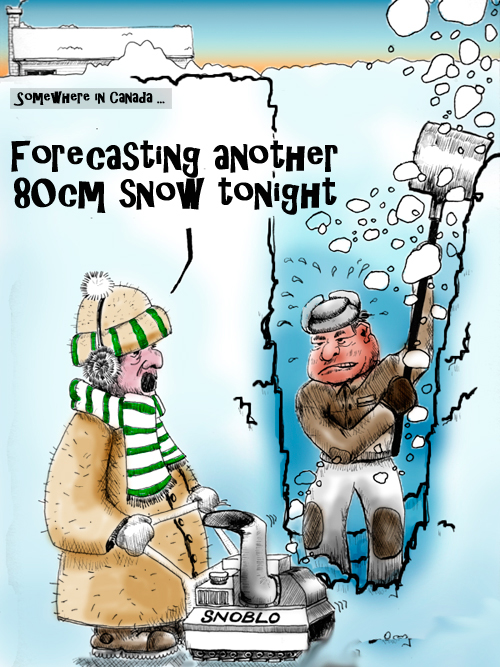
Monday afternoon. After shovelling 18” of snow out of the driveway in the morning, went for a cross-country ski down through Andrew’s fields. It was hard work.

Cartoon by Edward Wedler

Acknowledgements

Edward Wedler and Jane Nicholson for their entrepreneurial energy. Dave MacLean and David Colville for keeping open the communication channels to COGS. Heather for supporting the Geography of Here.

References

AIRO newsletter, “We’ve got to do something with our lemons”, February 5, 2021.

CBC post on Canadians returning to Nova Scotia to work remotely from home.

Posted in New thinking, Opinion

COGS Weather Network

This week, I had the opportunity to follow up with David Colville at COGS about his team’s work on the Applied Research Weather Network.

Image courtesy of David Colville

In particular, I was interested in the availability of the current and historic data from the weather stations. From my perspective, access to these records over the last ten to twenty years would be helpful, as the region seeks to address climate change.

COGS Applied Research Weather Network Map close-up

In the Register (January 28, 2021) an adhoc coalition is advocating the creation of a world class climate change and ecological research centre. The Annapolis Climate and Ecological Research Centre (ACERC) spokesperson is Peter Nicholson.

He is also Chair for the Canadian Institute for Climate Choices (CICC).

To my mind, these two initiatives beg the question : at what point does weather turn into climate? Will the data from the weather stations be analyzed in terms of climate change? Would historical data allow us to investigate whether we are seeing warmer drier Summers ? Are we seeing fewer, less severe Winter storms? What will be the impact on the hydrology of the Annapolis River system? What will be the impact on agricultural practices? Does the climate change impact our forests and their ecology?

There would appear to be considerable room for collaboration between the community interests and the educational centres in the region. This would include both the work on the weather network, as well as the work by Tim Webster’s team on sea level rise at AGRG in Middleton.

The availability of on-line ‘story-maps’ demonstrates the technology which now exists in support of this type of collaboration.

Later in the week, I visited Endless Shores Books in Bridgetown. In the spirit of ‘Reading where we Live’. (see The Bridgetown Reader, January 29, 2021). I noticed copies of Will Bird ‘This is Nova Scotia’ and Harold Horwood ‘Dancing on the Shore. A Celebration of Life at Annapolis Basin’ on the shelves.

At home, I checked out the new edition of Horwood’s book and came across the following quotations.

So the whole region from Digby to Belleisle enjoys a microclimate like that of regions some hundreds of miles to the south…. It is consequently, not only a good place for raising animals but also for gardening. Such vegetables as tomatoes, peppers and squash flourish mightily on the shores of the Annapolis Basin.” p.23.

Whoever first planted peach trees on these shores must have been amazed at their success. A few of us even grow melons besides our patches of corn, potatoes and peas.” p.24.

Harold Horwood wrote the book in Upper Clements, where he lived with his family.

Postscript

Friday was a beautiful cross country ski day. Along the Rifle Range road towards Trout Lake. Just animal tracks, and two sets of ski tracks.

Acknowledgements

I want to acknowledge both Ashley Thompson for the excellent content of the Annapolis Valley Register, and Lewis for the contribution of The Reader to our community. While I was employed at AGRG in Middleton, I always enjoyed the company of excellent researchers, technicians, support staff and students. Edward and Heather continue to be supportive today.

References

COGS Applied Research Weather Network.

Annapolis Valley Register. January 28, 2021. Land in Atlantic Canada is sinking.

The Reader, January 29, 2021, Reading Where We Live: This is Nova Scotia.

Harold Horwood, 2010, Dancing on the Shore. a Celebration of Life at Annapolis Basin, Pottersfield Press.

Will Bird. 1950. This is Nova Scotia.

Posted in Opinion

A Time of Transition

This morning (Sunday), Heather left early to attend a Winter Solstice ceremony in Annapolis Royal.

Meanwhile, I am trying to adjust to the changes in government. At the municipal level, the departure of John Ferguson and Bruce Gillis. At the provincial level, Stephen McNeil has shut down the government process. What can we expect?

Clearly, the COVID pandemic will continue through 2021. Will we take the time to reinvent the democratic processes? Will we see a more inclusive approach towards communities and citizens?

Yesterday, I met with good friend, Paul Colville. As part of the conversation, we reflected on the changes in the rural economy of Nova Scotia over the last forty or more years. What was influencing those changes? Have the changes in our technologies made life easier or more challenging? There is the potential to be more informed, but what about the content of that information?

Every Sunday, I receive electronically, Brain Pickings. This week, the Annual Special : Favourite Books of 2020. It includes reference to twenty books. This is far too much for me to absorb.

What is not changing?

I could say, the birds looking for winter food, or the wintery weather. The view across the Valley to North Mountain. The need to load wood into the stove. And yet, if we look closely, these elements of the exterior environment are indeed changing too. In some cases, imperceptibly slowly.

The optimist in me, says that perhaps the human systems are changing too, also imperceptibly. And in what direction? My fear is that while we are caught up in the pandemic we, as a society, are unable to do two or more things at the same time. Even though, they are complexly intertwined.

Postscript

Illustration by Christelle Enault as in Emergence Magazine

From Emergence Magazine, The Serviceberry: an Economy of Abundance, essay by Robin Wall Kimmerer (Podcast available at the link).