Posted in Opinion

Municipal slogans etc.

sign_KingsCountyYesterday, I had to go to Kentville for a doctor’s appointment. On my way, I noticed the Kings’ County sign is ‘Orchards, vineyards and tides’ then, as one approaches Kentville on the Highway #101, the sign is ‘A breath of fresh air’.sign_Kentville

At the doctor’s office, we chatted about the fact that the town of Kentville is hosting a party for nine new doctors (including mine), with an invitation list of five hundred. Coming from Annapolis County, this was definitely, a breath of fresh air.

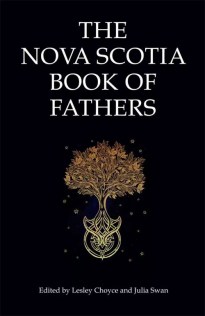
bookCover_NSbookOfFathers

With time in hand, I visited the Shelf Life Used Books, I picked up a copy of The Nova Scotia Book of Fathers; a collection of short essays by twenty Nova Scotia writers about their father, including Lesley Choyce, Harry Thurston, Alexander Macleod, Joan Baxter and others.

The one that struck a chord was Alexander Macleod’s description of his father’s little house in Broad Cove, looking out over Margaree Island.

‘When he was a younger man, he built himself a little house, a separate connected place, where he could practise his craft without ever really leaving his other home behind’ p22.

As we prepare for the release of Hunter’s brandy, made from apples in our orchard, I am receiving a number of emails of photographs and memories of Raymond Hunter from his sons and family.

Meanwhile, Edward researched the ‘Naturally Connected‘ slogan from Richmond County. It seems that that may have been a community or private sign. The sign exists on Highway #105 between Sydney and the Causeway. However, it is not attributable to Richmond County.

If someone is driving that highway, please let us know which community owns the slogan.

This evening at the MacDonald Museum, the Valley Regional Enterprise Network (VREN) is hosting a public forum in Middleton. They are looking for citizen input ‘to create a brand for the entire Annapolis Valley region’.
Unfortunately, in The Reader, they had the wrong time. It was this morning at 9 am. Oh dear !

It’s an interesting scenario. Middleton is ‘the Heart of the Valley’ and yet neither the County of Annapolis nor the town of Annapolis Royal are members of the VREN. Meanwhile, Valley Waste municipal partners are reportedly suing Annapolis County.

Certainly, it is time for ‘a breath of fresh air’!

A further example can be found in The Grapevine (August 22 -September 5),
Both the Mayors of Kentville and Wolfville welcome students back to their communities. p3 and p15.

Acknowledgements

Edward for his research commitment. Anne Crossman for fact-checking.

References

Lesley Choyce and Julia Swan(Ed).2017. The Nova Scotia Book of Fathers. Pottersfield Press.

The Grapevine. Arts, Culture, Community. August 22 – September 5 2019.

Posted in Book Review, Opinion

Two landscapes

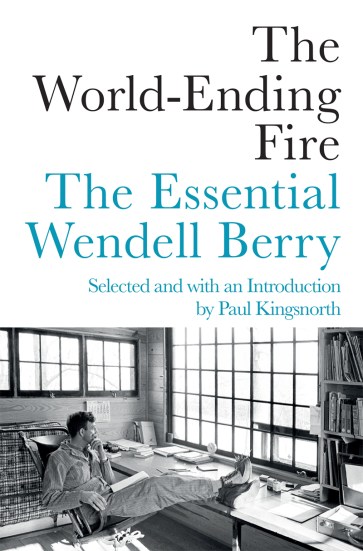
bookCover_worldendingFireIn his essay ‘Two Minds’, Wendell Berry talks in terms of the Rational Mind and the Sympathetic Mind.

“We humans necessarily make pictures in our minds of our places and our world….. we live in two landscapes, one superimposed upon the other” p.177

“First there is the cultural landscape made up of our knowledge of where we are, of landmarks and memories, of patterns of use and travel.”

“And then there is the actual landscape, which we can never fully know, which is always going to be to some degree a mystery, from time to time surprising us.”
“These two landscapes are necessarily and irremediably different from each other.”

“If the cultural landscape becomes too different from the actual landscape, then we will make practical errors that will be destructive of the actual landscape or of ourselves or both” p178.

“And so conservationists have not done enough when they conserve wilderness or biological diversity. They also must conserve the possibilities of peace and good work, and to do that they must help to make a good economy.”p200.

Elsewhere, in the essay ‘In Defense of Literacy’.

“I am saying, then, that literacy – the mastery of language and the knowledge of books – is not an ornament, but a necessity. It is impractical only by the standards of quick profit and easy power” p295.

And so, I am facing two landscapes: the landscape of rural Nova Scotia and the landscape of suburban Greater Vancouver.
ruralNSvancouver
The landscape of rural Nova Scotia I can find described in the writing of Ernest Buckler or the recent column by John DeMont in the Chronicle Herald. Perhaps in the weeks ahead, I will find equivalent descriptions in British Columbia.

In the meantime, I shall enjoy the other essays in ‘The World-Ending Fire: The Essential Wendell Berry’.

Acknowledgements

To Anne Crossman for the Buckler and DeMont links. To John Rostron for early insights into BC living. To Edward Wedler for his graphics.

References
Wendell Berry. 2017. The World-Ending Fire: The Essential Wendell Berry. Selected and with Introduction by Paul Kingsnorth. Counterpoint Press.
John DeMont. Chronicle Herald July 16,2019. Most of Nova Scotia is Empty, Thank Goodness for That.
Ernest Buckler. Maclean’s. June 1,1949. Last Stop before Paradise.
https://archive.macleans.ca/article/1949/6/1/last-stop-before-paradise

Postscript ‘Praise for Wendell Berry’
“He writes at least as well as George Orwell and has an urgent message for modern industrial capitalism…..Nobody can risk ignoring him”. Andrew Marr, New Statesman.

AFTERWORD
This is chalkboard on the stairs in my daughter’s house.
chalkboard

Posted in Event Review, Opinion

The Pastoral Economy

Last weekend, we went to New Glasgow for Fathers Day.banner_johnnyMilesRunningEvent Besides the celebration, we checked out the chimney swifts at the old school (we estimated over two hundred). Heather participated in the Johnny Miles Running Event (it was started in 1975).

En route to New Glasgow, we connected with Edward in Bedford. We wanted to discuss the involvement of Nova Scotia Plein Air in public events. He had been working with the Halifax Northwest Trails Association. Heather had been working with Clean Annapolis River Project (CARP) What are the logistics for engaging artists in the larger landscape?

As part of the information exchange, Edward gave me a copy of a book by Art White. It is a collection of short stories about living in the Valley, around Clementsport.

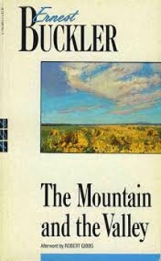
2bucklerBooksbookCover_MountainValley

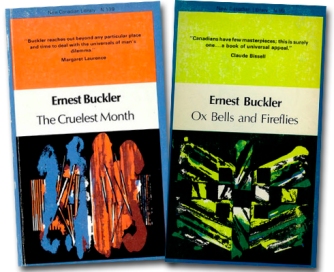
Returning home, I revisited Ernest Buckler’s “Ox Bells and Fireflies”. In the Introduction, Alan Young has the following description.

” ‘The Mountain and the Valley’, ‘The Cruelest Month’ and ‘Ox Bells and Fireflies’ are indeed ‘regional’ in their conscious attempt to portray the life and character of a recognizable locale within a specific historical and social framework, at the same time all three belong to the much wider literary context known as ‘pastoral’ and partake of a mythology that transcends the bounds of what is merely national or regional.”

This set me thinking about a short story competition. There is a precedent in ‘Echoes of Elizabeth Bishop’, edited by Sandra Bishop and Laurie Gunn.

I came up with two quick candidate titles.TickBobolinks

“Deer Ticks and Bobolinks”

This would describe the impact of changes in climate and agriculture on the Annapolis Valley.

“High Tech Haven”

This would be based on the location of a new secondary school in the Annapolis Valley, equipped with the latest technology (e.g a combination of Gordonstoun Nova Scotia and an expanded COGS.

Meanwhile, as a result of citizen pressure, there has been an adjustment in the forest cutting above Bridgetown, with respect to nesting migrant bird species.

If we are to invent a ‘new rural society’, it will be imperative to monitor changes in the climate, the landscape and the economic practices. This could be achieved by a ‘community information utility’, managed at the municipal level.

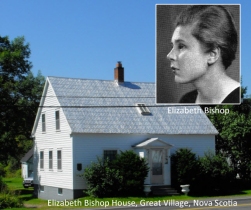
elizabethBishopAndHouseNext weekend, the Elizabeth Bishop Society of Nova Scotia (EBSNS) is hosting their AGM in Great Village, on Saturday June 22nd. Guest speaker is Harry Thurston, poet and naturalist, living in Tidnish. Check out his book from Gaspereau Press, “Keeping Watch at the End of the World“.

Acknowledgements

Edward Wedler for his artwork and sharing his experiences. Sandra Barry for her connection to EBSNS. Extinction Rebellion for their citizen engagement with the Department of Forestry.

References

Art White, 1994. From Away, Here to Stay. Stories from the Valley. Pen Pal Publishing.
Ernest Buckler, 1968. Ox Bells and Fireflies. McClelland and Stewart. Introduction by Alan Young. 1974.
Sandra Barry and Laurie Gunn (ed), 2013. Echoes of Elizabeth Bishop. Elizabeth Bishop Centenary (2011) Writing Competition. Published by EBSNS.
Harry Thurston.2015. Keeping Watch at the End of the World. Gaspereau Press.

Posted in Opinion

Writing v. Reporting

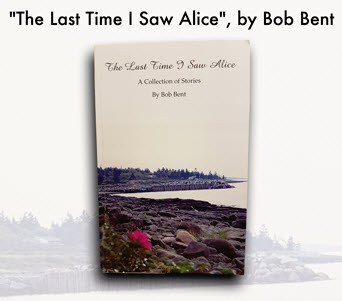
bookCover_LastTimeISawAliceIn preparation for the EBLES event on June 29th, we have been assembling a representative list of local books. This includes the work of Bob Bent, Marilyn Jones-Bent and Dianne Legard who are part of the Panel Discussion. It is truly remarkable the number of writers living in this part of Nova Scotia. Meanwhile, we are connecting with our invited guests: Whit Fraser and John DeMont.

One question that has been troubling me is the distinction between ‘writing and reporting’. Both Fraser and DeMont have had careers as reporters before their book writing.

I have noticed that in these days of social media, changes in the content and quality of our newspapers: the Chronicle Herald and the Annapolis Spectator.
For example, I was surprised to see a notice from the Municipality of Annapolis County on the status of high-speed Internet service in The Reader. I would have expected a critical review in the Annapolis Spectator (perhaps I missed it).

This leads to another question.tablet_reader With the increased use of social media, how is that impacting the quality of the reporting in the traditional media? At what point, do we stop purchasing the newspaper? If all your information arrives electronically, then you are subjected to a barrage of advertisements and other material that matches your ‘electronic profile’.

Of course, books are not resistant to technological change. We can now avail ourselves of electronic books or audio-books.

On a more positive note, in response to one of my blogs, I did receive the following link from Gregory Heming: An ode to the countryside in response to Don Mills’ neoliberal mantra

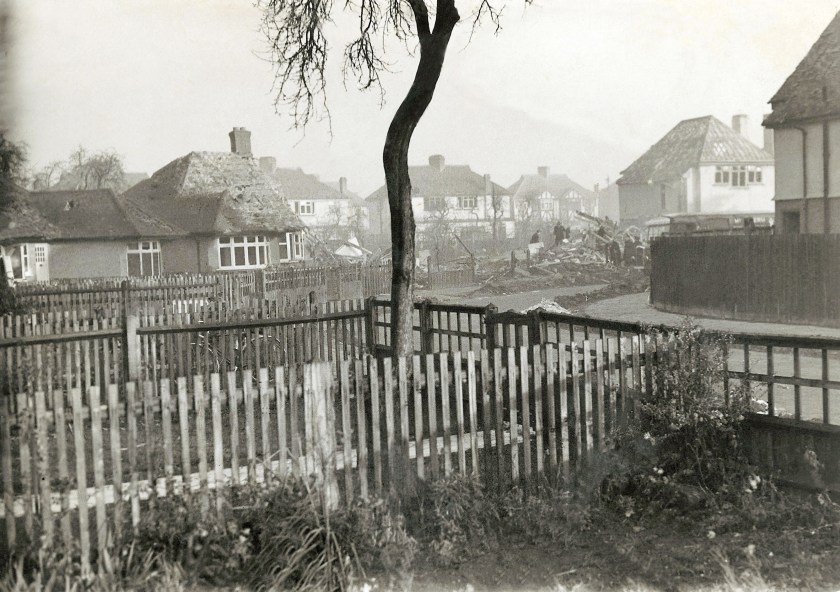
Last week, too,  I received this photograph from my brother.picFromPeterMaherToBob It is from another place and another time. We both grew up at 39 Hazel Close, Whitton (a suburb of London, UK). The photograph shows the damage caused by a flying bomb that hit #51 in the Second World War, shortly after my brother was born. That’s a long way from Paradise, Annapolis County.

Acknowledgements

Thanks to the EBLES team, augmented by Nancy Godfrey, Centrelea Design(Designed for Real Life).

Gregory Heming for his essay. To Peter Maher for his research into our old neighbourhood. Edward Wedler for his continued support. Frank Fox and Paul Colville for our lunch conversations at the End of the Line pub in Bridgetown.

References

Bob Bent.2018. The Last Time I saw Alice. Self-published.
Marilyn(Musial) Jones. 2017. Growing Up in Cape Breton. Self-published.
Dianne Hankinson Legard. 2019. The Lost Voices of WWII RAF/RCAF Greenwood. Gaspereau Press.
Chronicle Herald June 4th Opinion. Gregory Heming
History of Whitton

Posted in Opinion

Carpe Diem

On Friday, I cycled to COGS to meet with Wayne St-Amour (Principal, Annapolis Valley campus NSCC) and Michael Purcell (Manager, COGS). The chat was about the new residence on the Lawrencetown site. On my way, I noticed the OPEN sign at the WineMakers  Tavern on the corner.Screenshot_2019-05-11-10-35-03 Later in the day, Heather and I stopped there for an inaugural lunch. This opening, combined with the renovations at the Lawrencetown restaurant, shows a real commitment by local business to the community. These investments are complemented by the activities across the river at the BeaverCreek Winery and Lunn’s Mill Beer Company.

This week proved to be a painful transition for me. It was time to start up the ride-on lawn mower, as well as the tractor for the orchard. My enthusiasm was dampened by the need to replace the batteries, but also to switch mental gears. I had to ‘get out of my head’ and ‘get into my hands’. Two very different types of thinking.

This transition coincided with listening to a couple of podcasts on CBC Radio Ideas. This week, Jean Vanier died, aged 91, in Paris. Vanier was the founder of the L’Arche movement. The podcasts, The Rabbit and the Giraffe replayed  interviews with Vanier about his life and philosophy. I was struck by his holistic philosophy, but also his deep sense of community.

As I reflect on the initiatives taking place in the Annapolis Valley, it seems that we must ‘seize the moment’. In my conversation with Wayne and Michael, it appears that not a lot has changed since the early days of COGS (1980’s). We still possess a unique circumstance of a specialized technical institute, located in a diverse, culturally-rich, rural setting. There are however some questions that we need to collectively answer:

What is happening to the high speed Internet for the region?

We have talented elders in the region who are having a difficult time conducting their business because of the continuing poor Internet service; undoubtedly placing some at a competitive disadvantage.

What is happening to Gordonstoun Nova Scotia?

This initiative makes sense, especially if it is coupled with the interests of other post-secondary institutions, like COGS. The underlying values are consistent.

What is the vision and business plan for the new residence  at COGS?

We need to understand the market for the courses that will be offered at this facility so that it will cover the initial investment and annual costs.

From where I sit, on the East Side of Eden, the opportunity to grow ‘the creative rural economy’ remains. Carpe Diem. But we do need answers to these three questions. Within the community, there are elders who can assist in finding these answers.

Postscript.

We went to see Sharkwater Extinction at the Kings Theatre, Annapolis Royal on Friday evening. It is a documentary on the life of film maker and conservationist, Rob Stewart. We were surprised at the low attendance. Perhaps, our marine environment remains under-appreciated by land-based rural residents.

References

CBC Radio Ideas. 2019. Two part series. Remembering Jean Vanier: The Rabbit and the Giraffe. Available as podcast.

Acknowledgements

To Wayne St Amour and Michael Purcell for their willingness to chat. John Wightman and Roger Mosher for their regular Friday afternoon feedback. And Edward Wedler for his remote contribution.

Posted in Event Review, Opinion

COGS awards night 2019

bookCover_storyOfCOGS

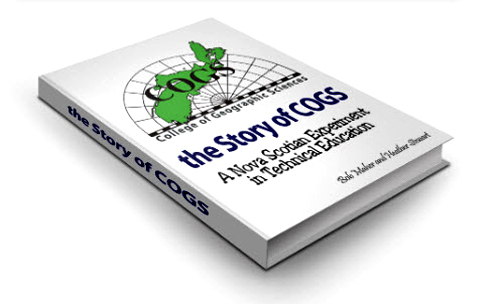
I have been invited to hand out four awards on Friday, May 3rd at the Lawrencetown Fire Hall to graduates of COGS. They are two CANMAP awards, and two  Roger F. Tomlinson awards for excellence in GIS; one associated with Esri Redlands and the other with CANMAP. Given this unique opportunity, I thought that I would write a blog to share some of the history behind these relationships. If you are interested in more details, go to the web site thestoryofCOGS.ca

We have to go back to 1980.  At that time, COGS was called the Nova Scotia Land Survey Institute (NSLSI). It was one of only a handful of technical institutes training surveyors in Canada. I arrived, with my young family, to establish a new program in Scientific Computer Programming (SCP) with Bruce Peveril. We purchased a Prime mini-computer. During the 1980’s we designed and delivered new programs in Business Computer Programming, Computer Graphics, GIS, and Remote Sensing. After eight years of contract employment, I was exhausted and we headed for Indonesia and later California.

With access to new digital technology, we were looking for application software. From my previous academic career at Memorial University, I was familiar with the mapping software from the Harvard Lab of Computer Graphics. I was also aware that Scott Morehouse had left Harvard to join Jack Dangermond in California at Esri. By chance, the Esri software Arc/Info and Grid ran on Prime computers.

John Wightman was Vice-Principal at NSLSI. John had previously been a Cartography instructor at NSLSI. John and Jim Doig (Principal) recognized the value of this new technology. He formed CANMAP (Centre for Advanced Numerical Mapping Applications) to apply the new technologies to government and industry projects in Nova Scotia. This was really the predecessor to the Applied Geomatics Research Group (AGRG) and the only mechanism to conduct applied research outside of the teaching environment. CANMAP made a profit. The CANMAP awards come from those funds.

In 1986, NSLSI changed its name to the College of Geographic Sciences (COGS) to better reflect the wider range of technologies in Lawrencetown. At that time, besides our industry relationship with Esri and Esri Canada, we had similar relationships with Geobase (Strings), TYDAC (Spans), Dipix and PCI.

When John instigated the name change, he consulted with his friend, and mentor, from Acadia University days, Roger Tomlinson. Roger taught Physical Geography at Acadia and John was his teaching assistant. Roger was running a Consulting Geographers business in Ottawa, called Tomlinson Associates.

Besides Roger’s fundamental role in the Canadian Geographic Information System (CGIS), he advised governments and industry on the implementation of GIS. Associates of Tomlinson included Ray Boyle (inventor of the digitizing table), Michael Goodchild (champion of Geographic Information Science) and myself (instructor at COGS). I worked with Roger on a number of GIS systems implementation for the New Brunswick government, the Nova Scotia government and the City of Ottawa.

In the 1980s diploma programs were three sixteen week semesters. The third semester was dedicated to a cooperative project with government or industry. When Alex Miller left MMM and formed Esri Canada he recruited from the SCP program: David Roscoe, John Houwelling and Eric Melanson. Almost all new Esri Canada installations hired COGS graduates to run their systems. David MacLean started his career with Alan Brackley at JD Irving in New Brunswick. We also started to send our graduates down to Redlands, California.

There is still a connection today. Current instructors: David MacLean, David Colville, Jim Verran all followed this pathway from the SCP program. Other graduates include Tim Webster, Kathleen Stewart, Joy Brown and Konrad Dramowicz. Many graduates find their first job with Esri or an Esri Canada customer.

Transition

Eventually, COGS became part of the NSCC (Nova Scotia Community College) system. It was renamed the Centre of Geographic Sciences.

Today and beyond.

This year, the NSCC has announced a new $9M expansion of the Lawrencetown campus. How will that impact the curriculum, the instructors, the relationship between industry/government and community? Will we see a new relationship with the elders? There are over a dozen ex-COGS instructors living within a one hour drive of the campus. Will we follow Albert Marshall, Mi’kmaq concept and adopt ‘two-eyed seeing’? Will we see the residences used for international students? In the 1980’s we modelled ourselves on the ITC in the Netherlands. We worked with the Environmental Management Development Indonesia (EMDI) program at Dalhousie University. Today, we have a joint Masters degree in Applied Geomatics with Acadia University. There is a program at BIOTROP in Indonesia following the original COGS curriculum. What is their status today? Valerie Thomas and Stephen Rawlinson, both COGS graduates, went there as instructors for a year, to help with the technology transfer.

Will we continue to recruit both local instructors and instructors from the global market? What is the difference between research at AGRG, and research at COGS? What is the new equivalent company to Esri today? Is there a new Roger Tomlinson? Could it be Jon Murphy who is organizing the GeoIgnite conference in Ottawa next month? Jon is a COGS graduate.

Acknowledgements

Thanks to John Wightman and David MacLean for suggesting my name to present these four awards. I look forward to meeting the next generation of Geographic Scientists. I hope you enjoy this snapshot of history. Ted MacKinnon curates the storyofcogs.ca site on my behalf. Edward Wedler, another ex-COGS instructor brings both his Remote Sensing teaching expertise and graphics skills to this blog. In memory of Pat Castel and Bill Power, both SCP instructors at COGS.


Posted in Opinion

Toonik Tyme

This weekend, it is the start of Toonik Tyme, a celebration of the start of Spring in the North.


It includes outdoor events: ski, snowmobile and dogsled races and the sharing of traditional food and crafts.

Last night, at the Visitors Centre, we went to see two classic NFB films, Land of the Long Day (1952) and People of the Ice (2003). The latter featured Sheila Watt-Cloutier and is a documentary on the effects of global warming on the Arctic environment and the Inuit culture. The film is now sixteen years old, pre-dating the argument in her book, The Right to be Cold.

Next week, Wayne Johnston comes to town. He will talk on Ten Cities: the past becomes the present. He will look at the relationship between place and memory through writing and drawing. In preparation, I picked up his novel, The Navigator of New York at the Iqaluit library.

banner_BBChereBeDragonsFrom my brother, I received another BBC podcast, Here be Dragons. It explores the relationship between poetry and maps. The most obscure was the idea of using a city map of Havana to navigate the landscape of the Isle of Angelsey.
I did manage to finish Rubinstein’s book Born to Walk. While I enjoyed the chapter on Creativity, I found the book overall, very uneven.

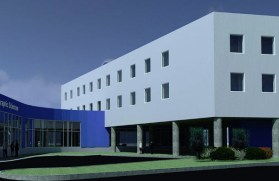
COGSexpansionThis week, I received an email about the expansion of the COGS campus. While the additional infrastructure will provide a short term economic boost to the village of Lawrencetown. There were no details on the impact on the curriculum, research and teaching, or the relationship to the larger community, and rural economic development. It continues to amaze me at the lack of connectivity with place.

In a different context, to quote Sheila Watt-Cloutier:

“A great disconnect has grown between our communities, our economies and our environment. This has resulted in rapid climate change that now spirals out of control and fundamentally threatens the world. Those who have traditionally lived closest to the land, and who today maintain the strongest connections to nature, are now at risk of becoming just a footnote in the history of globalization.” p.323.

I would add that we need to demonstrate much more holistic, inclusive thinking, especially from our educational institutions.

Acknowledgements

To Heather and Edward willing participants in the journey.


Posted in Opinion

Lessons from Nunavut

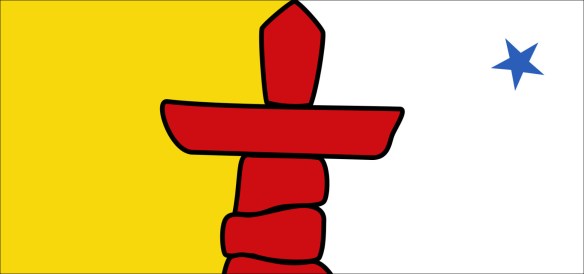
banner_nunavutApril 1st. Twenty years ago, Nunavut was created as a separate territory from Canada’s NWT.flag_Nunavut
In the weekly Nunatsiaq News, there was a special 20th-anniversary supplement. It includes the following articles, in both Inuktitut and English.

  • Don’t forget Nunavut’s rural and remote regions
  • Has Nunavut’s economic boom left the small communities behind?
  • Learning our own language
  • Nunavut high performers: twenty years up on stage
  • The connected territory? Nunavut still waits (high-speed Internet)
  • After 165 years Inuit knowledge leads to Franklin’s wrecks
  • The big thaw: climate change
  • Nunavut’s protected areas for wilderness and wildlife

It would be interesting if our politicians in Nova Scotia could develop a relationship with Nunavut, and see how different jurisdictions address the same issues.

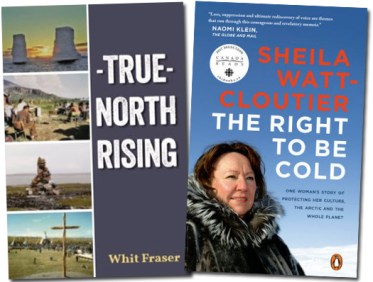
bookCover_2booksThis week, I visited one of the book/craft stores in Iqaluit and purchased two new books: True North Rising by Whit Fraser (book launch video) and The Right to be Cold by Sheila Watt Cloutier (presentation video). Both are biographical in nature. It was fun to read Whit’s book which starts with his employment at the CBC Northern Service in 1967, while I was looking out across the sea ice on Frobisher Bay. Both books provide a model for ‘life as an elder’.

There are also connections. Whit describes his association with Fred Roots, through Students on Ice. I recall Fred from the UNESCO MAB program. Heather and I were shepherding the nomination document for the Southwest Nova Biosphere Reserve through the bureaucratic process. Another connection, going back even further, was to Trevor and Hugh Lloyd, Geographers. I remember meeting them at the McGill SubArctic Research Lab in Schefferville, Quebec in 1964/65.

Whit is a keynote speaker at the EBLES event at the Temple on Queen Street, Bridgetown on June 29th. The other keynote is John Demont, who also comes from the reporting tradition, at the Chronicle Herald.

On Saturday night, we attended a concert at the Iqaluit High School. It was a high energy performance by the Jerry Cans. What was most surprising, was the audience demographic. Young Inuit families. Such a contrast to the Kings Theatre.

Another point of reference is the Iqaluit Centennial Library. This was a chance to catch up on lost gems.  I found Robert McGhee’s book  The Last Imaginary Place. A Human History of the Arctic World and Edward Said’s Culture and Imperialism.

sleemanLagerA final note. There is now a beer store in Iqaluit. Twenty-four Sleeman Silver Creek lager cost me $86. BTW the new snow has created excellent conditions for cross country skiing.

Acknowledgements
Thanks to Andrew and Julia for their hospitality. Edward for his support.

References
Nunatsiag News Nunatsiaq News
The Jerry Cans The Jerry Cans
Whit Fraser. 2018. True North Rising. Burnstown Publishing.
Sheila Watt-Cloutier. 2015. The Right to be Cold. Penguin  Books.
Robert McGhee. 2004. The Last Imaginary Place. Key Porter.
Edward Said. 1993. Culture and Imperialism. Alfred Knopf.

Posted in Opinion

Spring forward

Edward Wedler in his postscript (previous blog post) referenced the link between art and science to address public awareness of climate change. This connects well with the work of the Centre for Local Prosperity and their climate change video, as well as installations by Uncommon Common Art in Kings County.

The Ancestral Landscape of Sikniktuk.
The Ancestral Landscape of Sikniktuk. Map by Marcel Morin.

Last week, I turned the page on my Esri Canada calendar, and noticed for March 2019, the map by Marcel Morin, Lost Art Cartography of the ancestral landscape of the Sikniktuk. It shows the dykes and aboiteaux in the Chignecto region, Cumberland County.

If we want to maintain the dykelands of Nova Scotia, we must understand the risk from sea level rise. A recent example was the destruction of an aboiteau outside of Hantsport, leading to flooding of the river valley.

We need to combine the latest science on climate change, with new LiDAR-based topographic maps, combined with the art of cartography to gain a broader understanding of the impact on our landscape.

ebles_1Yesterday, we held a meeting of the Ernest Buckler Literary Events Society (EBLES) board over on the Bay of Fundy shore. In preparation for the program design for June 29th, it was necessary to read some of the related literature.
Barbara Pell’s book A Portrait of the Artist: Ernest Buckler’s The Mountain and the Valley offered the following quotations.

“Margaret Atwood told us in 1972:

‘Literature is not only a mirror, it is also a map, a geography of the mind. Our literature is one such map, if we can learn to read it as OUR literature, as the product of who and where we have been.’ p.13

“As contemporary political debates continue to illustrate, regionalism has always been a distinguishing feature of Canadian identity and literature. The Mountain and the Valley joins a long tradition of Maritime fiction that idyllically and elegiacally celebrates rural Atlantic Canada.’ p.14

” in its evocation of geography and history, it touches themes of universal importance. Buckler saw the advantages of his regional setting “In the Nova Scotia country,…… you get the universals more than almost anywhere else”.p.14

This afternoon, Heather and I are heading up to the Gaspereau Valley and Avondale to join a tour by Solar Nova Scotia on alternative designs for solar homes. Perhaps Spring is not far away.

Acknowledgements

To Anne Crossman for her storehouse of Buckler books. To Edward Wedler for his enthusiastic championing of science-meets-art. To Jane Borecky for hosting the EBLES board meeting.

References

Barbara Pell 1995. A Portrait of the Artist: Ernest Buckler’s The Mountain and the Valley. ECW Press.

Marcel Morin, Lost Art Cartography. Contribution to the Esri Canada 2019 calendar March.

Posted in Opinion

Uncommon Common Science in Annapolis County

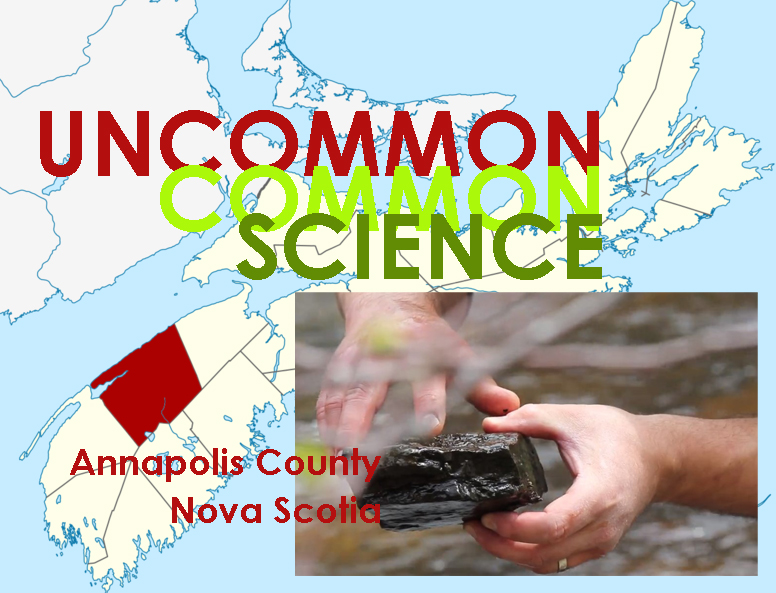
Inspired by Uncommon Common Art in Kings County, I thought it might be useful to propose a list of locations for Uncommon Common Science in Annapolis County. The two would be complementary. Uncommon Common Art has about seventeen stops, plus a few “eye candy” locations. There are related events that extend from June to the end of October.

unCommonCommonScienceACHere is a suggested list of Uncommon Common Science stops in Annapolis County.

  1. Geomatics (Centre of Geographic Sciences: Lawrencetown)
  2. Geomatics (Applied Geomatics Research Group: Middleton)
  3. Dark Sky Preserve (Kejimkujik National Park: Maitland Bridge)
  4. Blandings Turtle (Kejimkujik National Park: Maitland Bridge)
  5. Coastal Plain Species (Kejimkujik National Park: Maitland Bridge)
  6. Coastal Geology (Bay of Fundy )
  7. Space Agency (Annapolis Royal)
  8. Mi’kmaq Science (Bear River)
  9. Historical and Graveyard Science (Annapolis Royal)
  10. Bay of Fundy Tides
  11. Bloody Creek meteor crater
  12. CARP, Clean Annapolis River Project (Annapolis Royal)

Can you offer an uncommon common science stop in Annapolis County or Annapolis Valley — some local science worth exploring?