Posted in Opinion, Uncategorized

Financial Desert

On Thursday afternoons I pick up a copy of The Reader at the Lawrencetown Library.

This week, I was pleased to also find a copy of the current issue of The Grapevine for pick up.

In the Reader there were two articles of interest.

  1. On the front page, an announcement by the Valley Credit Union on a Banking Needs Survey meeting, Tuesday, November 14, 6:30 pm at the Bridgetown Fire Hall.
  2. In the centre fold, a letter from Carman Kerr, MLA Annapolis County to Krista Pridham, ScotiaBank, Director of Regional Banking, Atlantic Region. Carman notes that with the closure of the Bridgetown and Annapolis Royal branches, ScotiaBank will have no branches in Annapolis County.

While I was pleased to see some reaction in the Reader, there remain several unanswered questions.

  1. What is the position of the Municipality of Annapolis County? Are they representing the best interests of the citizens in the County?
  2. What about the educational institutions, e.g. Annapolis Valley campus in Middleton and Lawrencetown? Can they remain viable?

This evening, I did go down to the laundromat in Lawrencetown to see if it had a bank machine? NO.

I look forward to reading the response from ScotiaBank to Carman Kerr. I also plan to attend the Banking Needs Survey meeting in Bridgetown.

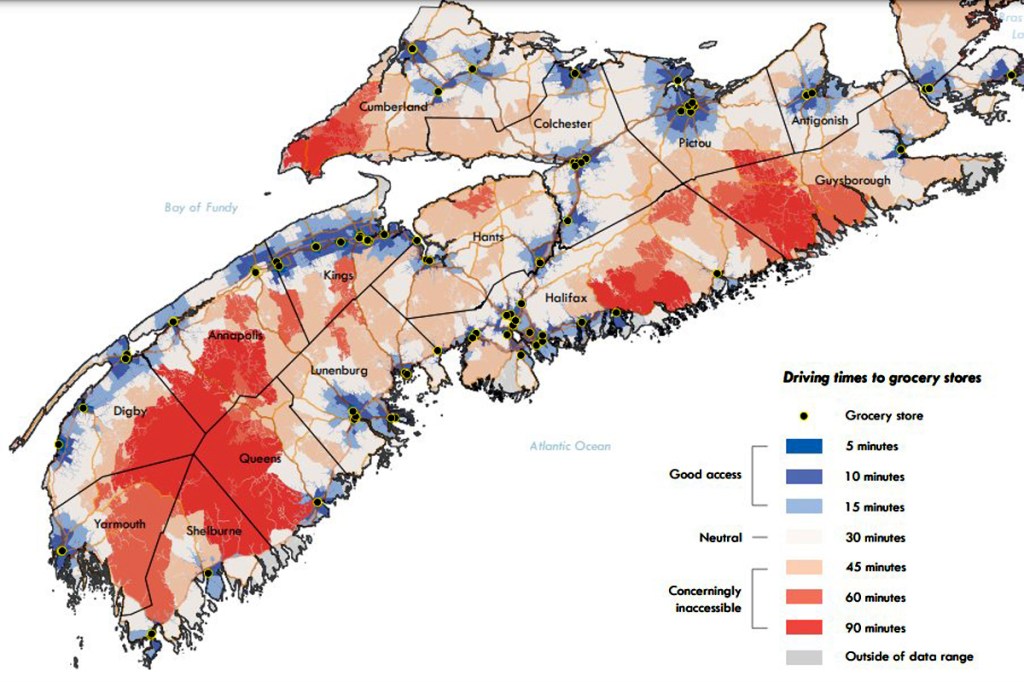
I would challenge our representatives on the municipal council of Annapolis County to host a public meeting on the potential ‘financial desert’ I.e. lack of access to face to face banking services.

I would challenge the students/faculty at COGS to produce a map that shows the potential ‘financial desert’ in Annapolis County, within the context of other Counties in Southwest Nova Scotia (note Scotia Bank closures).i.e. travel distance to nearest bank machine/bank.

Posted in Book Review

Future Thoughts

This weekend, I found myself in New Glasgow, without books. I checked the shelves and pulled out:

Lesley Choyce’s (Ed), Nova Scotia: Visions of the Future, Published in 2009, and Scott Milsom’s Voices of Nova Scotia Community: A Written Democracy, Published in 2003.

Choyce received responses from over forty Nova Scotians, ranging from Harry Thurston to Ron Colman.

Milsom provided articles from Coastal Communities News, as well as Communities Day to Day and Musings on Community. These articles were published in 2003.

What has changed in the last twenty years? The Foreword was written by the late Silver Donald Cameron (died in 2020).

Together these books reflect the relationship between community engagement and a shared vision of our common future. It would be valuable to revisit both of these books in 2023 ( 14 years and 20 years respectively). That is, perhaps, more critical for the contributors to Lesley Choyce’s book.

Postscript

Sad day in the Valley yesterday !

I received in the mail, notice from the Bank of Nova Scotia, that they are closing their branches in Bridgetown and Annapolis Royal, effective November 2024. A sign of the times.

Perfect Morning

Heather has been reading Jay Ingram, The End of Memory. A Natural History of Aging and Alzheimer’s. He recommends paying attention to both exercise and diet. I had the following agenda, despite the unsettled weather. We went to Annapolis Royal, via Highway#201, and walked the French Basin Trail. Afterwards we stopped at the Brown Dog Kitchen (at the Library). I wanted to try their takeout curries. We returned home via Highway #1.

On returning home, the wood stove was a bed of hot coals. We could enjoy a late lunch: meat and vegetarian curry, basmati rice and naan.

Acknowledgements

Edward found the time to overcome technical issues arising from his relocation to Florida. Heather shared our idea of a ‘perfect morning’ in rural Nova Scotia.

References

Lesley Choyce (Ed), Nova Scotia: Visions of the Future, Nimbus Publishing, 2009.

Scott Milsom, Voices of Nova Scotia Community: A Written Democracy, Fernwood Publishing, 2003.

Jay Ingram. 2014. The End of Memory. Harper Collins

Posted in biographical sketch, Nature

School Day

Last Wednesday morning, I attended Dave MacLean’s FunGIS class. The topic was calculating the area of a polygon using a Python script. Unannounced, at 9 am , there was an unveiling of artwork by Phillip Bailey in the AV room.

Phillip is a member of the African Nova Scotia community, from Lequille, Annapolis County, and grandson of Harold Cromwell.

The Art is now on display in the entry way at COGS. It is a composite of the African Nova Scotia flag, a topographic representation of the province and identifying the primary African Nova Scotia communities.

A third element of the morning was a presentation on the joint M.Sc. in Applied Geomatics between COGS and Acadia University. Unfortunately, the need for snow tyres meant that I was unable to hear the presentation. The program was established by John Roth at Acadia and myself at COGS.


A couple of weeks ago, Heather attended a guided fungi walk with Keith Egger, organized by the Arlington Forest Protection Society (see post Saving Forests). On Keith’s recommendation we ordered Mushrooms of the Northeastern United States and Eastern Canada by Timothy Baroni.

It arrived this week at The Inside Story in Greenwood.

The excellent illustrations will be invaluable, as we continue to walk through our property to the Inglisville Road.

Acknowledgements

Dave MacLean’s class on Wednesdays, give me an insiders perspective on the activities at COGS. The guided walk by the Arlington Forest Protection Society added to our botanical reference collection.

Postscript

There will be a delays in posting these recent blogs, as Edward relocates to his Winter base in Florida.

References

T.J.Baroni, 2017, Mushrooms of the Northeastern United States and Eastern Canada, Timber Press.

Phillip Bailey, CartographMe. Combining cartography and art. I create hand-drawn maps that hold customized meaning through a description of people, places and events. https://www.cartographme.com

Posted in Book Review

Buy Local; Read Local

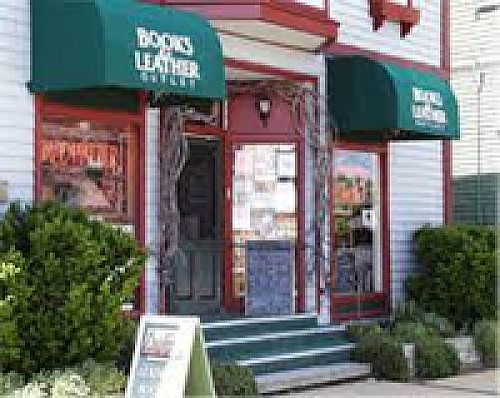
Today, I stopped at the Bees Knees Bakery in Lawrencetown. I ended up buying apple turnover for dessert and a book by Linda Hegland.

Sandra Barry had mentioned that there was a poetry reading at Bees Knees on Sunday, October 15th by Jan Coulter and Linda Hegland. We were on the road to Peterborough.

The store had several books by Linda Hegland.

Given my interest in ‘place’ and writing. I was intrigued to find that the author is now a resident of Clarence on North Mountain.

In response to my latest blog, Edward Wedler asked questions about the relationship between IoT ( Internet Of Things), AI (Artificial Intelligence) and GIS (Geographic Information Systems).

Did I see these other technologies interacting with GIS education at COGS?

Perhaps with time, I will be able to offer an informed response. It is certainly a changing technological complex world which will impact COGS and its graduates.

With the changing weather, today, I was able to celebrate by lighting the wood stove.

Postscript

I understand that there will be further literary events at the Bees Knees bakery. That’s good news. I intend to go to my next FunGIS class on Wednesday morning. This blog may be delayed, as Edward is travelling down to Florida.

Acknowledgements

Sandra Barry mentioned the poetry reading at Bees Knees. Edward continues to challenge my understanding of the changing technologies and Geography. Bees Knees offers a range of quality baked goods.

References

Linda Hegland, 2020, Place of the Heart: Life on Fat Hummingbird Farm, Published by Cyberwit.net

Jan Coulter, 2023, Fragments of the Mind, Published by Cyberwit.net

The Indian Institute of Remote Sensing, https://www.India today.in/education-today/news/story/isro-offers-free-certificate-course-in-remote-sensing-and-gis

Posted in Event Review

Biochar

A few years ago, Alex Cole of Little Foot Yurts would visit us in the Fall (see post, Coppicing and Charcoal-Making).

He would make Biochar, using an old dairy condenser on Andrew’s property across the road.
(image by K.salo.85 – Own work, CC BY-SA 4.0)

One of the participants was Rick Ketcheson from Annapolis Royal.

Today Rick and Kathy invited us to attend a Biochar event on their property in Perotte. It was a beautiful day to be outside making Biochar.


Afterwards, we came home via the old military road to West Dalhousie. We did not see a soul. Even the campground at Gibsons Lake was deserted. Along the road the tamarack foliage was simply spectacular.

The previous day, we had been to Annapolis Royal for a medical appointment. Afterwards, at about the same time (3 pm) we went over to Parker’s Cove to take the coastal road to Hampton The same late afternoon light highlighted the striking colours of the foliage on North Mountain.

This evening, I checked my book shelves, I found Sacred Soil: Biochar and the Regeneration of the Earth, dated 2017.

(see post Overstory)

Acknowledgements

To Rick and Kathy Ketcheson for inviting us to the hands-on demo at Perotte. Rekindling our interest in Biochar. Edward Wedler continues to make a significant contribution to these blogs. He searches the web and finds interesting connections. This week, he heads down to Florida, as a snow bird. We will try to maintain the connection. Heather travelled the same road with me.

References

Robert Tindall, Frederique Apffel-Marglin and David Shearer, 2017, Sacred Soil: Biochar and the Regeneration of the Earth, North Atlantic Books.

Posted in biographical sketch

Experiment

Years ago, I had called my blog Ernest Blair Experiment. Ernest for Ernest Buckler. Blair for Eric Blair aka George Orwell. Now I am conducting an experiment (see also an early post We Are All Geographers).

In order to understand the changes in GIS technology, I asked David Maclean if I could sit in on his Fundamentals of GIS (FunGIS) class, offered at 8:30 am on Wednesday mornings — not to become proficient in the latest technology but rather to appreciate the learning environment. The session this morning introduced me to some of the new materials from ESRI. For example, Briefings – how – to – info.

My plan is to attend every Wednesday morning class. Today, there were eighteen students; each working with two computer screens.

My intention is not to disturb the learning process. Instead to understand the technology, and how it can be applied to current geographic problems in society.

My hope is to attend COGS on a regular basis, on Wednesdays, attend the FunGIS class and watch the learning process with my new cohorts.

In my mind, this is an experiment. Can a retired faculty member/educator still make a contribution across the generations?

From the Reader, Community Spaghetti Dinner at COGS Thursday, October 26 5-6:30 pm. Adults $10.

Acknowledgements

Thank you, David Maclean for facilitating my experiment / learning opportunity. From Jennifer at the COGS Bookstore, I learned that there is a knitting session at the cafeteria on Wednesday at 11:30 am. Heather has gone to check it out today.

Reference

Briefings in ArcGIS StoryMaps.

POSTSCRIPT

Here is an entertaining read of COGS’ First Semester Overview Fundamentals of GIS for non-Geomatics Grads by Liam Gowan, as posted with ESRI Canada Centres of Excellence.

Posted in biographical sketch, Book Review

Made It, HOME

We were away for a week. Two days driving each way from Paradise to Peterborough. Three days in Peterborough, enjoying activities with grandchildren, Fraser and Logan. Total distance travelled 3878 kilometers.

While in Peterborough, we watched speed skating practice and training for soccer. We managed to find time to visit By the Books, Thoughtfully curated used books on Water Street.

I found Peterborough, Land of Shining Waters, a centennial volume published by the City and County of Peterborough 1967. Also, The Wilderness Companion. Reflections for the Back-Country Traveler.

From the Preface:
Sigurd Olsen once wrote that a long standing habit of his canoe trips was to take little scraps of paper on which he’d copied brief passages taken from writings of poets, saints and other spiritual seekers. He would gather these bits of prose and poetry in what he called his ‘medicine bag’ and now and then, while he was in the canoe he’d pick one out, put it on the pack in front of him, anchor with a stone, and slowly read it.” P4.

Heather found three books:
Taming the Ox
Zen Lessons: the Art of Leadership
Daily OM


What were the highlights of the trip ?

We visited the British store, outside of Peterborough. I picked up winter supplies of Branston pickle. The other highlight, we picked up our Swift canoe to bring it home to Nova Scotia.

In terms of travel, we enjoyed our best night at the Quality Inn in Levis on the way home. We also enjoyed the fabulous colours, as we followed Highway 20E through Quebec province.

The greatest challenge was the final day of driving. Levis- Rivière de Loup- Fredericton – Moncton – Amherst – Truro – Paradise.

Mistakenly, at the end of the last day, we took the route through the Rawdon Hills.

The roads were dark, and it started to rain. We took our time and thankfully arrived safely, with the canoe.

PS. Peterborough is certainly ‘Canoe Country’.

Acknowledgements

Patrick, Emily and the boys looked after us well for the three rest days in Peterborough. Patrick gave the driver, a rest after two days on the road. Heather shared the journey. Edward added the links and graphics.

References

Peterborough: Land of Shining Waters, 1967, An Anthology. U of T Press.

David Backes,1999, The Wilderness Companion: Reflections for the Back-Country Traveller, NorthWord Press.

Madisyn Taylor, 2008, Daily OM: Inspirational thoughts for a happy, healthy and fulfilling day, Hay House.

Zen Lessons, 2004, The Art of Leadership, Translated by T. Cleary, Shambhala Classics

Charles Johnson, 2014, Taming the Ox: Buddhist Stories and Reflections on Politics, Race, Culture and Spiritual Practice, Shambhala Publications

Posted in biographical sketch

Screening / Road Trip

Saturday night, we attended the screening of ‘In the Quiet and the Dark, Saving the Eastern Hemlock’ at Kings Theatre in Annapolis Royal,

The documentary by local film maker (Tupperville), Nance Ackerman follows the passionate people to save Eastern Hemlock from an invasive tree-dwelling insect (Hemlock Woolly Adelgid) in hopes of preventing ecological catastrophe. Film-goers were also treated to a screening of Tim Wilson’s short documentary Old Growth, before the main feature and to a Panel Discussion featuring Nance Ackerman, Donna Crossland, Sally Steele, Lorne Julien and Nina Newington.

Both documentaries were beautiful works of art, featuring local concerned , environmental citizens. The screening raised a number of questions.

As a Geographer, I had questions on the distribution of Eastern Hemlock in Nova Scotia and beyond. I wanted to see maps of existing stands, the distribution of both healthy and damaged stands. What is the forest matrix within which the Hemlock stands exist? I recognize that this information on the forest matrix raises many additional concerns.

It was an excellent artistic, community event. With high attendance, and many salient questions from the audience.


Before the showing, we had decided to take a road trip to Peterborough, Ontario to visit family. Hence, on early Sunday morning, it was time to ‘get out of Dodge’. We spent a good twelve hours on the highway. And made it to Levis, PQ, just east of Quebec City. Our objectives were simple:

a) can we still make long-distance drives across the country?
b) how will the ‘new-to-us’ Honda HRV perform ?

The answers: Yes and Well.

The next day, we arrived in Peterborough. The weather and the forest colours were stunning. As usual, we were shocked by the road traffic on Highway 20 West and Highway 401. Montreal proved challenging, even on Monday morning.

Acknowledgements

John Wightman joined us for the Kings Theatre screening. We were thankful for the welcome in Peterborough from Patrick, Emily, Fraser and Logan. We plan to return home, next weekend.

Reference

SOOF Newsletter, Sunday, October 15, 2023 (see post SOOF presentation)

Posted in Book Review

Canadian Magazines

We are in New Glasgow for Thanksgiving weekend. This is an opportunity to catch up with the Fall magazines. From Saltscapes (October/ November 2023 ), I find In Praise of Books (and the people who sell them). One of the feature stores is Endless Shores Books in Bridgetown and Jennifer Crouse. Last week , Jennifer was recommending to Heather ‘The Last Bookshop in London’ by Madeline Martin.

“The Last Bookshop in London is an irresistible tale which shows the transformative power of literacy, reminding us of the hope and sanctuary our neighbourhood bookstores offer during the perilous trials of war and unrest”, Kim Michele Richardson.

In the same issue of Saltscapes (p.28-33), Written in Rock, Table
Point Newfoundland
records a prehistoric moment. This brought back memories of Gros Morne National Park, Western Brook Pond and the Serpentine Tableland.

The second magazine, Canadian Geographic (September/October 2023) is full of interesting articles. Here I will select Opoyastin’s Wolves of the Big Wind ( p.78-85).

An early morning encounter. With the first rays of sun warming their fur, members of the pack rose one by one to stretch. (Photo: Christoph Jansen) (Canadian Geographic)

”What makes Churchill Wild’s Wolf program unique is the interpretative approach to citizen science, the program pairs traditional field work with indigenous oral history”, p.83.

This reminded Heather of her time spent at Wapusk National Park.


Since my previous blog post, I have had the time to finish Graham Greene’s A Burnt-Out Case. To fully appreciate the book I had to remind myself about Graham Greene’s life. The simple solution was to use Google. Greene was born in 1904; died in 1991. He was a sub-editor of The Times. In 1926, he had been received into the Roman Catholic church. In 1940 he became literary editor of the Spectator. The next year, he undertook work for the Foreign Office and was sent to Sierra Leone in 1941-43. All of these ‘life experiences’ are captured in A Burnt-Out Case.

I found this short book, deeply moving, as the main character is defined as a ‘burnt-out case’ – a mental leper through whom the disease has run its course.’

I will swap this book with Heather for ‘The Last Bookshop in London’ A novel of World War II.

References

Madeline Martin, 2021, The Last Bookshop in London, Hanover Square Press.
Graham Greene, A Burnt-Out Case, Penguin Books.
Saltscapes, October/November 2023.
Canadian Geographic, September/ October 2023.

Acknowledgements

Jennifer Crouse passed ‘The Last Bookshop in London’ to Heather. John Stewart provided access to both Saltscapes and Canadian Geographic magazines. I found the Graham Greene book in the recycled bin at the Annapolis Royal library. Edward added the artwork and links. Edward and Anne were previous owners of The Inside Story bookstore in Greenwood, NS.

Posted in Uncategorized

Brown and Greene

This Fall, we have been in the habit of stopping at the Brown Dog Kitchen when we visit Annapolis Royal.

Besides coffee, we can be tempted to pick up a savoury pie or the curry of the day. The cafe is in the same building as the Library.

This week, at the kitchen, I picked up a brochure on Meguma Canoe.

They provide rentals for trips on the Annapolis River. Later, I learned that Don MacLean at COGS is the person behind the new venture. The brochure includes a map showing the routes on the Annapolis River between Nictaux and Hebbs Landing.


At the Annapolis Royal library there are used books for sale.

I picked up Graham Greene, A Burnt-out Case; a Penguin book, first published in 1960. Time for a book review.

From the back cover, Raymond Mortimer, Sunday Times:
”I do not think that he has ever written anything more persuasive, more deeply-felt or more powerful.”

In a despairing fling to have done with the world and women and fame a well-known architect buries himself at an isolated leper colony in the Belgian Congo. He is recognizable, by his mutilated mind, as a ‘burnt-out case’ – a mental leper through whom the disease has run its course.

In his relations with his native servant, with the colony’s doctor, and its Catholic fathers, Querry discovers a sort of sunset peace. But the outside world is tragically incapable of leaving the story there.”


This week, as part of Plannapolis, there are a series of community meetings.

Looks like, I will attend the session at the Lawrencetown Fire Department, Monday, October 16, 6-9 pm.

Stantec and municipal staff will be presenting the proposed Municipal Planning Strategy and Land Use bylaw for public input. (see posts 2022 “Lawrencetown Event“, “A Vision for the Annapolis Region“, “Home Place“)

Will they be addressing no spraying of Glyphosate in Annapolis County? (see posts “A Green Future?“, “Habitat Destruction“, and “Citizen Celebration in Burlington“)

Acknowledgements

Edward has returned from Cape Breton.

References

Graham Greene, 1960, A Burnt-Out Case, Penguin Books.

Meguma Canoe. explore@megumacanoe.com or megumacanoe.com