This has been a busy week, full of appointments health and home-related. It brings with it a deep sense of agency. Wednesday, Heather attended a talk, organized by CORAH, at the Middleton campus of the NSCC on Heart Health.
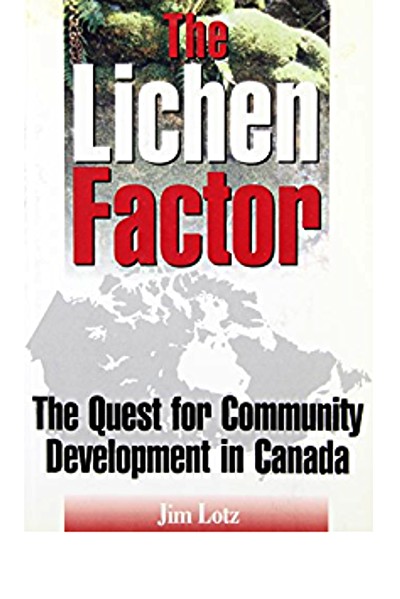
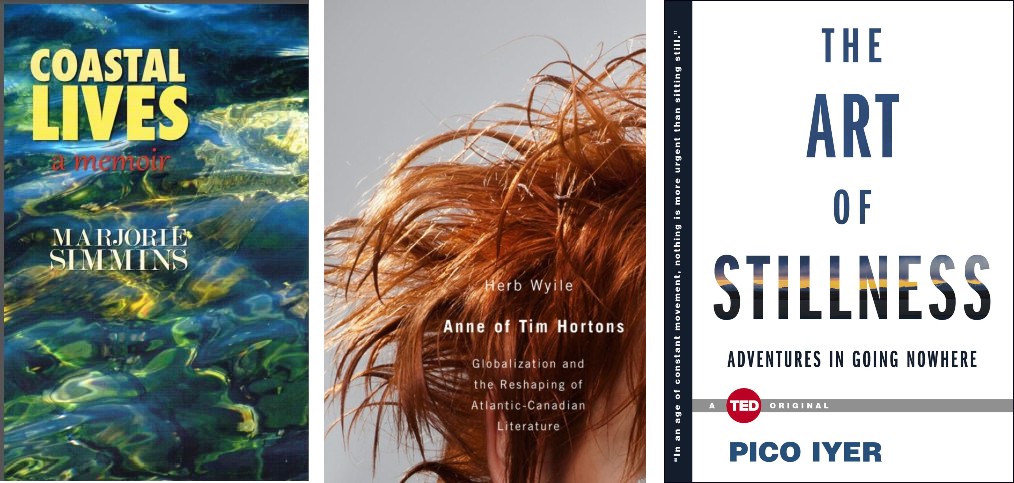
With help from Andrew Hannam, I was able to sign it out. The edited papers included such inviting titles as: Social Exclusion in later life. Globalization, economic recession and social exclusion. Revisiting social exclusion of older adults. Demanding reading for the next few days.
From the BC Knowledge Network, was listed the Lucerne Festival 2018 with Sol Gabetta’s performance of Martinu’s first cello concerto.
Acknowledgements
Andrew Hannam helped sign out the book from the Middleton campus. Heather McCormick at CORAH arranged the Heart health talk by Dr Buchholz. Edward edited with links and graphics.
Here is an excerpt from the first map I have created in preparation for Footsteps East. The map pins look a bit strange, but let me explain.
The pins sit over some of the paint-out locations of members of Canada’s Group of Seven Artists. Each coloured square represents a different member. I experimented with several different pins and ended up with this design in order that multiple artists could be shown at the same location, without overlapping/obscuring map pins.
This map will help plan a travel route through Eastern Canada.
Zeroing in on Herring Cove (our first step), you can see that I have included our journey’s log and sketch on the map.
Also shown at Herring Cove is the A.Y. Jackson map pin.
Once we have painted at three locations, I will make the map and social media links public.
This coming week (21-26th June 2022) we get to meet plein air artists from across Canada and the USA, in a competition to paint the landscapes around Parrsboro, Nova Scotia (Parrsboro International Plein Air Festival). We are up against some seriously talented pros.
For August, Anne and I have collaborated with King’s County Museum to design “Brush with Nature“. This is where regional artists come to paint features of natural/historical interest in a LONG BRUSH event (01-18th August 2022) within Kings County and a SHORT BRUSH event (Saturday, 20th August 2022) at Miner’s Marsh in Kentville. The first Call to Artists has already attracted some great local talent.
ACKNOWLEDGEMENTS
Anne is my painting buddy and we share this Footsteps East journey. Bob is my Geographic Mentor sharing his wit and wisdom.
The last time I was in Wolfville we stopped at the Odd Book. It was a Saturday. We had to go to the Farmers Market to pick up the last three bottles of Hunter brandy.
I found a signed copy of Stephen Wadham’s book, “Remembering Orwell”. Wadhams had produced “George Orwell: a radio biography” for the CBC (Part 1, Part 2 and Part 3).
This led to the book being published in 1984. It included an introduction by George Woodcock and five chapters.
To Burma and Back In Search of Poverty The Spanish Crucible The Road to Animal Farm 1984
The book describes Orwell and his life through the eyes of individuals who knew him and who were interviewed by Wadhams for the CBC radio biography.
It is remarkable to realize that Orwell (Blair) was born in 1903, and died in 1950.
It is remarkable to realize that Orwell (Blair) was born in 1903, and died in 1950. My interest in Orwell, in part, relates to this blog ’Ernest Blair Experiment’. Eric Blair used the nom de plume of George Orwell. Thus, this became a play on words. Another interest besides his writing was his lifestyle and geography. He spent his last years, living on the island of Jura, off the Scottish coast, where he wrote 1984. Previously, he lived with Eileen in Wallington, Hertfordshire. He is buried at Sutton Courtenay.
From Rev. Gordon Dunstan. A request from David Astor.
”And he asked if I could help him bury a friend. The friend was George Orwell, whose love of England and the English countryside was such that he wanted to lay his body to rest in an English churchyard.” p.219.
Postscript
My last inter-library loan request for Jaki Fraser was Convenient Season, by David Manners. “It is a tale of a farm in the famous Annapolis Valley in Nova Scotia, where grow the best apples in the world…“
Acknowledgements Heather shared the trip to Wolfville. Edward added the graphics. Best wishes to Jaki Fraser, our Lawrencetown librarian. She retires this weekend and heads west to live in British Columbia.
Reference
Stephen Wadhams, 1984, Remembering Orwell, Penguin Books. David J. Manners,1941, Convenient Season, E.P.Dutton.
Heather was reading Sonia Shah’s book, The Next Great Migration. She thought that I would be interested in two quotations on Biogeography.
”Today such questions about the origin and distribution of species and people would be sequestered into a field known as ’biogeography’, a fascinating but mostly obscure branch of science generally considered of marginal public interest,” p.64.
”Back then, biogeographical theory carried far-reaching consequences. The authority of the church, its hold on science, newly emerging from its shadows; the legitimacy of the colonial enterprise – and how generations of descendants would view and police migrants – all hung in the balance.”
This resonated with me. My PhD thesis at the University of Western Ontario was entitled ’An Inquiry into the Nature of Biogeography’ 1976. I pulled it down from the bookshelf. Almost fifty years ago, What did I say at that time?
”Biogeography is concerned with the nature of living matter and the nature of space. The discipline has a significant role in the future of Geography; it must reconcile and integrate contemporary issues of the biological sciences and the paradox of Geography.” p. v.
Before the PhD thesis, there was an M.Sc. thesis completed in 1971. Complexity Analysis of Vegetation Patterns in an Alpine Meadow. In this case, it is over fifty years ago. The location is Castleguard Meadows in the Canadian Rockies, adjacent to the Saskatchewan Glacier and Columbia Icefield.
My interest in Biogeography continued at Memorial University in St. John’s, Newfoundland and subsequently with the Rare Plants of Canada project at the National Museum under George Argus. This was all prior to working at NSLSI (COGS) in Lawrencetown, starting in 1980.
On the same bookshelf, I found Heather’s M.Sc. thesis from the University of Guelph, dated 1993, Reproductive Biology and Developmental Morphology of Agalinis Neoscotica (Scrophulariaceae ); supervisor, Judy Canne-Hilliker. This is another ’biogeography story’ about a uniquely Nova Scotian species, and its distribution; for another day — it’s really Heather’s story to tell.
Dogwood in our yard
Acknowledgements
Bill Crossman passed on his copy of Sonia Shah’s book. Heather discovered the quotations. Edward added the graphics.
Thursday, Heather and I joined Sandy, Heather’s sister, at the Halifax Exhibition Centre for “Beyond van Gogh.”
Sandy had been previously with her students from Kings Edgehill School. My first impression of the building, in an industrial park, was not great.
However, once inside, we experienced three levels of immersion. The first was a focus on Vincent van Gogh, his life and exchanges with his brother, Theo. Various quotations could be viewed through empty picture frames. The second level was a small room depicting a waterfall. The final main hall was a full three-dimensional immersion experience of the themes which were vital to van Gogh’s art. This included scenes from rural life, characters, landscapes, flowers and the starry night. Seamlessly, projected on the walls, floor and ceiling, with accompanying music.
The message seemed clear. Beauty is all around us, especially in the natural environment. A painting is a “still life” within a picture frame.
Waking up the next morning, it was hard to ignore the dawn light, shining on the oak leaves, moving in the wind. or to look up through the skylight to again see the trees, with a backdrop of clouds, moving across the blue sky.
I noticed two other aspects of the exhibition. There was very little intellectualisation of the art. To place it within its historical or geographical context. The emphasis was on colour and movement. There was also little explanation of the underlying projection technology.
At the exit, the gift shop contained many common items, e.g. puzzles, key chains, prints, T-shirts adorned with familiar van Gogh images of sunflowers, corn fields, self-portraits and starry nights.
Afterwards, it was hard to drive back out through the grey, suburban concrete of Halifax — very different geography than the countryside we find in rural Nova Scotia.
It was great to go and listen to live music. We saw friends for the first time in several years. Syliboy’s art and music proved an excellent complement to the van Gogh exhibition.
Acknowledgements
Sandy Stewart for making the trip to Halifax. Heather shared the experience. Edward added the graphics. Congratulations to Jane Nicholson on receiving the Queens Platinum Jubilee Medal for her contribution to the Community.
This week I received a notice from Edward Wedler. He and his wife Anne are embarking on a two-year painting project. It is an en Plein Air trek inspired by the Canadian Group of Seven. This will take them through Nova Scotia, Quebec and Ontario.
This ambitious project takes me back to earlier projects. For example, Ride the Lobster — an 800 km uni-cycle relay race through Nova Scotia. Or later, the Road to Georgetown, walking trails between Yarmouth and Georgetown, PEI to attend a conference on Redefining Rural. Along the way, there were many stories and places.
Of particular interest in Footsteps East will be the depiction of landscape and the changes over time. Edward will paint in watercolours. Anne will be painting in oils. The results will be on display at an art gallery in Halifax. All artwork that is to be shown at the gallery will be “under wraps” until after their trek is completed.
Another memory is from the 1980s. At COGS, Edward was teaching Remote Sensing. I was teaching Scientific Computer Programming. Later, my interest centred on the application of GIS software. My relationships with the industry included ESRI and ESRI Canada. Edward developed similar relationships with DIPIX and PCI. We both shared a common interest in sharing software/ computing skills to enhance understanding and application.
Subsequently, Edward and Anne purchased the bookstore, ’The Inside Story’ in Greenwood. Again, a shared interest.
With Footsteps East, the art of their paintings will share the landscape and the story of the landscape. This complements my interest in stories and living within the landscape.
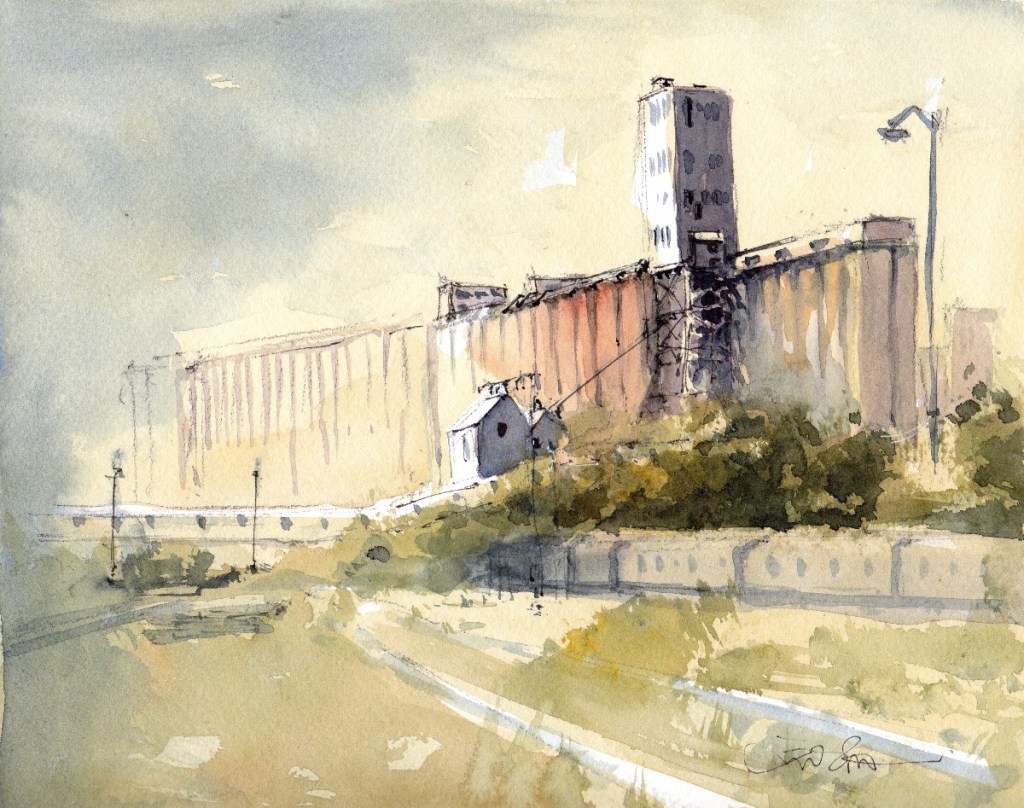
Shown here is a sketch-out at the first stop on their journey — Herring Cove, Nova Scotia — the location where Group of Seven artist, A.Y. Jackson painted back in 1919.
I look forward to our collaboration, as we attempt to bring together landscape, community, art and story, within a shared accessible digital environment. I anticipate Edward will contribute a number of blogs to EBE, as they make their journey — camping and all.
Acknowledgements
Edward and Anne Wedler as they show the way — active living in the landscape, through art. Check out their website at wedlerfineart.com
I was surprised to read that this will be the last issue by this team. In the Summer supplement, two articles caught my attention.
The story of Louis Coutinho and their family buying the Avondale Sky winery. On their website (avondalesky.com) there is a link to four podcast episodes on their experience. Each runs for half an hour. This takes me back to my meeting Louis when he was CAO for the town of Windsor. It was a time when we were part of the Valley REN.
The second article (on the same page 10) is by Gary Leeson, The Dome Chronicles: a Father’s gift.
’They were back-to-the-landers. Over the next forty years, through flood and fire, triumph and catastrophe, they persevered, unwittingly sowing the seeds for the modern small-farm movement.’
One example would be Jim Todd’s rendition, Bird’s Eye View of Annapolis Royal and Lequille, 2005. Another would be Walk Annapolis, recreation and walking trails. The thirty-two-page free guide includes a wealth of historical information for both the visitor and Valley residents.
We capped off the week with a short walk to Peter Point, Kejimkujik National Park. It must have been at least three years, since the last time we were in the Park.
Acknowledgements
Heather shared a memorable lunch at the Green Elephant cafe. Edward made his artistic contribution.
Heather and I went down to Annapolis Royal. The drive on Highway #101 is very efficient, from exit 21 to exit 22. We wanted a short walk. Our choice was the French Basin Marsh trail, a 1.2-mile loop.
There was great bird watching on the water, as well as the occasional muskrat. The hawthorn and cherries were in full bloom. The next stop was the Mad Hatter wine bar, sipping Annapolis cider, with a view along the Basin shore.
Today, we wanted a longer walk. We followed the road, past the Fairview Cemetry to the Lawrencetown Water Supply. The road passes through Hemlock groves and Acadian mixed forest. We reached Inglisville road. The return trip was around two hours. A good leg stretch up South Mountain.
From Sandra Barry, I learned that the Winemakers Tavern in Lawrencetown has been sold. Its future may include a bakery, cafe and grocery store. This would be a welcome addition to the local economy. Brian Reid confirmed the story.
Acknowledgements
Sandra and Brian for the information on the Winemakers Tavern. Heather shared both the short and long walks (twice). Edward added the graphics.
Ernest Buckler died in Bridgetown, in 1984. (He was born in West Dalhousie, 1908).
from the Nova Scotia archives.
From the back cover of “The Mountain and the Valley“, ”set against the backdrop of the Annapolis Valley’s natural beauty, The Mountain and the Valley captures a young man’s spiritual awakening and the growth of artistic vision.” Published in 1952.
Today, in 2022, Annapolis County is attempting to develop a municipal plan. Indeed, the County includes four distinct regions: South Mountain, the Valley, North Mountain and the Bay of Fundy shore. Each region depends on a different mix of resources: forestry, agriculture, fishing and mining.
Within the County, we have separate municipal units: Annapolis Royal and Middleton as well as a number of smaller villages. To plan the future of the County, requires representation from the four landscape units, the different resource sectors, the various municipal units, and the business community, as a whole.
We need a consortium of citizens who can agree on a planning methodology, the mechanism for understanding our geography, e.g. land use, population distribution, river networks, road networks, climate conditions, housing stock, etc.
Without an agreed methodology, plus access to common geographic information, it will be impossible to reach a consensus on a common future.
These discussions cannot be left to County employees or an external consulting company. Instead, we need a citizen consortium, with representative voices from the different geographies, sectors, and communities.
With a common geographic database, we can at least share our understanding of the County, its resources and hence possible future.
Let us follow in Ernest Buckler’s footsteps and in his artistic vision.
Acknowledgements
I have benefited from conversations with my new neighbour, Rob Jarvis, with Jane Nicholson, with John Wightman, with Brian Reid. Edward added the graphics. Heather shared the gardening.
Reference
Ernest Buckler, 1952, The Mountain and the Valley, McClelland and Stewart Inc. (link to 2010 edition HERE)
Attendance was excellent, with over seventy community members. This was my second meeting, as I also attended the one in Centrelea.
What did I learn? What questions remain?
The format was similar between Centrelea and Lawrencetown. The only difference was the attendance of Stantec Senior Planner, John Heseltine.
My impression was that the municipal planners would be responsible for the six coloured areas on the map and Stantec would look after the rest of the county. Coloured areas include Cornwallis, Habitation, Upper Clements Park, East End, Bridgetown and Water Supply areas. Also on the map was a large area of South Mountain designated as a ’wind resource’.
It was a lively session, with many perspectives from the agricultural community. At one level, it is positive that the province has determined there is a need for a review of municipal planning. On another level, it does beg the question, what has happened over the last twenty-plus years.
A long time ago, there were identifiable planning staff. There was a vibrant planning program at COGS. Certainly, I can recall Nick Lasch, Phil Hore, Mike Donnelly and, more recently, Ed Symons.
Fundamental to the planning process is understanding and mapping the land use. This includes agriculture, forestry and other resources. There was a time when GIS technology was used to provide this baseline information. Is that still the case today?
In Annapolis County, what is the separation between lands managed by the province, (e.g. crown lands) and those managed by the county? Within the county, why is Bridgetown a separate entity, but not Middleton, Annapolis Royal etc? I think the answer, was that Bridgetown found itself in financial difficulty. Should that impact the planning process?
Is the situation in Annapolis County similar or different from Kings County or Queens County? Are there province-wide standards for planning? If you do not know the resource, where and how much, how can you plan?
There should be sufficient residual resources at COGS/AGRG to develop a current county-wide map of land uses. Or does that infringe on the rights of citizens and communities? or COGS?
The citizens have shown initiative and direction with MapAnnapolis, perhaps a somewhat similar approach could be applied to Plannapolis.
Acknowledgements
These are the personal view of a long time, Annapolis County resident, on and off, since 1980. They have been influenced by students and colleagues at both COGS and AGRG. Edward added the graphics. For more details on the current process, check the Plannapolis website.
Postscript
I wonder whether the reaction to ’resource planning’ is a characteristic of rural Nova Scotia. Edward tells me that Beavercreek Winery has been sold, presumably, with the Tavern too. Hope new owners will maintain their investment.
I share with you the large Horse Chestnut tree across the road.