Posted in Book Review

Running TO Paradise

On Monday, we went to Wolfville. The town was crowded. There were protestors, faculty and students, responding to the strike at Acadia University. At the same time, there was a drive-in pick up of COVID test kits at the sports arena parking lot.

We went to EOS, to pick up some yoghurt starter and coffee filters. Next door is the Odd Book store.

We treated ourselves. I found two books of interest. In the section for Gaspereau Press, there was a copy of Donna Smyth’s play, Running TO Paradise, about the life of Elizabeth Bishop. I was attracted by the title. In this case, I think Paradise likely refers to her time with Lota Soares in Brazil. It ends with her award of an honorary degree from Dalhousie University in 1979.

I know what I’ll tell them – Dear Class of 1979, go forth and be not afraid. Think of Darwin on his lonely voyages. Writing down all the details …….. writing what he saw, (Pause). Some of the giant tortoises on the Galapagos are hundreds of years old. Buried deep in turtle memory is the beginning of this land.” p.65.

In the Geography section, I found Jonathan Sauer’s Plants and Man on the Seychelles Coast: A Study in Historical Biogeography. Jonathan Sauer was the son of Cultural Geographer, Carl Sauer.

This book returned me to my graduate studies in Biogeography. It also links back to the work of Alfred Wallace, Island Life (1880).

Back to ’Running to Paradise’, the concept set up a chain of thinking ’Walking from Paradise’. The obvious choices are the 110 km Harvest Moon Trailway to Annapolis Royal or back to Wolfville.

Another option is the trail from Valley View Park above Bridgetown along North Mountain to Middleton …

… or on South Mountain, from West Inglisville to Roxbury, or south to Paradise Lake and Trout Lake. These trails are open for skiing, hiking or bicycling. Although on South Mountain, we see the continuous loss of habitat, through the current forestry practices.

Acknowledgements

Sandra Barry provided additional details on the play. Edward added the graphics. Heather shared the Wolfville experience.

References

Donna E. Smyth, 1999, Running to Paradise: A play about Elizabeth Bishop, Gaspereau Press.

Jonathan D. Sauer, 1967, Plants and Man on the Seychelles Coast: A Study in Historical Biogeography, University of Wisconsin Press.

Posted in Creative writing

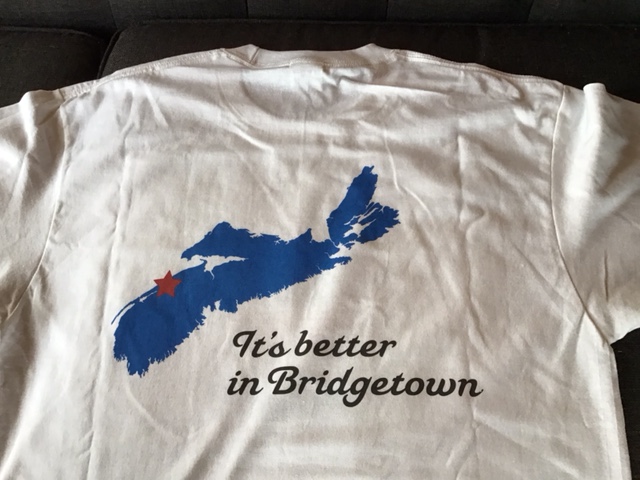
Bridgetown: a sense of place

As we drive on Highway #1 from Bridgetown East, we keep a lookout for the Alpacas. Will they be outside in the snow or in their house? We speculate on the ownership, perhaps Wools on the Corner, Heather suggests.

On the right-hand side, we stop at D’Aubin Family Meats to buy sausages and bacon.

We notice that there are cars parked in front of the Bridgetown Motor Inn. JFW tells me that it is the meeting place for the morning coffee club. The Inn is operating under new ownership.

A couple of times a year, I have to stop at Bridgetown Watch and Clock repair. David changes the battery, replaces the watch strap. Stop at the Bank of Nova Scotia to pick up some cash. (It was only yesterday, that I witnessed the closure of the branch in Middleton).

On Thursdays, late afternoon, I can stop at the PharmaSave to pick up a copy of the Reader and the Register. The Reader, published by TAR, is a free weekly paper serving the communities and people of Annapolis County.

Stop at Integrity Printing to obtain a hard copy of my 2021 blogs.

My last stop would be the Bridgetown library, especially if I wanted to read Ernest Buckler or David Manners, both local authors who wrote about the town and country.

I wonder when they will reopen The Station. I stand corrected, The Station is open Wednesday through Sunday. (Thanks, Jane for the correction)

Leaving town, I must decide whether to visit friends in Centrelea or head back home, along Highway #201, past the Eden Golf and Country Club in West Paradise, Burnbrae Farm and Paradise Inn.

Finally, home …

Postscript

At COGS in Lawrencetown, we teach Esri GIS software. Specifically, the use of ’story maps’. In this case, in collaboration with Edward Wedler, I wanted to produce a ‘map story’. The story is about Bridgetown. The map is one way of sharing that story about a special place.

Acknowledgements

Edward continues to add depth and colour to the blog. Heather adds insight too.

Posted in New thinking, Opinion

Shorefast

From the Shorefast Foundation web site:

A shorefast is the line and mooring used to attach a traditional cod trap to the shore. It is a strong symbol of Fogo Island’s cod fishing heritage, and we chose this name because it symbolizes a belief in the importance of holding on to community and culture and in the power of authentic connections between individuals, their community, culture and place.

What can you do?

Our mission is to build cultural and economic resilience on Fogo Island and to serve community well-being by sharing place-based models of economic development.”

I would like to see the Annapolis Valley join the list of communities sharing place-based models of economic development. We are well-positioned. We have a strong history of place.

The work of AIRO has demonstrated this type of initiative.

In addition, the Centre of Geographic Sciences (COGS) gives us access to skilled practitioners in geographic information technology.

On Fogo Island, the heritage has been on the fishery. In the Annapolis Valley, the heritage has been more on agriculture.

Just looking at the Reading List, non-fiction illustrates compatibility:
EF Schumacher Small is Beautiful;
Peter Senge The Necessary Revolution;
Barry Lopez Arctic Dreams;
Mark Roseland Towards Sustainable Communities.

I first met Zita Cobb at the Georgetown conference in PEI, Rural Redefined (2013). Our paths crossed again at the Esri Canada virtual conference in November 2021.

If we were to establish a foundation in the spirit of Shorefast, what would it look like?

Given the importance of apple orchards, perhaps it should be called the Honeycrisp Foundation.

Finally, from Zita Cobb again:

We exist in relationship to the whole planet, the whole of humanity, the whole of existence. It is our job to find ways to belong to the whole while upholding the specificity of people and place.

Check out “cauliflower thinking” and the “floret videos” on the website.

Acknowledgements

Thanks to Zita Cobb for the inspiration. Edward joined Heather and me on the Road to Georgetown in 2013.

Reference

The Shorefast Foundation at shorefast.org

Posted in Article Review

Getting to know

The Reader (January 28, 2022) was full of helpful community news.

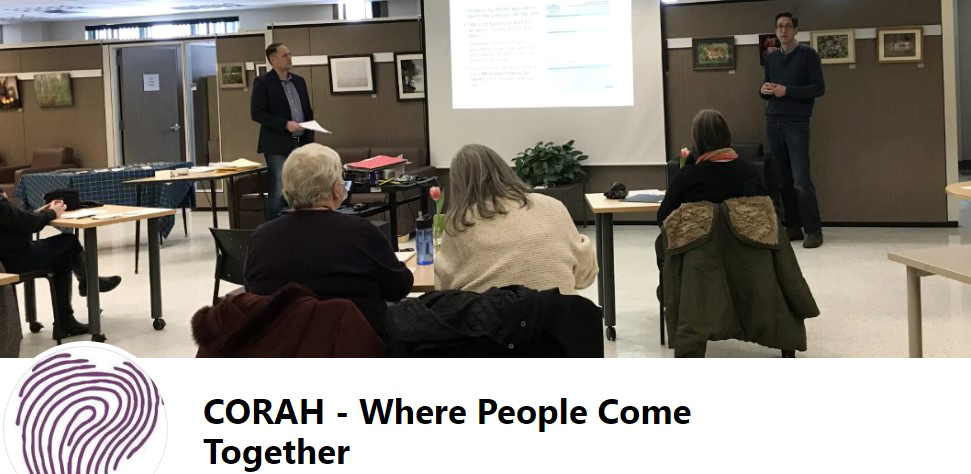
It included a “Getting to Know” column on Moose House Publications; Planning your Garden, Think Local on seed catalogues; and, Spring courses and events at CORAH, NSCC Middleton. Their latest Word Search Puzzle introduced me to a number of heirloom tomato varieties.

It is time to give a ’shout out ’ to Louis and Julia Falls. The Reader gives us both a ’sense of place’ and ’community.’ The Falls were profiled in Dave and Paulette Whitman’s The Valley Chronicles, p 217-218.

At the Endless Shores (previously owned by the Falls) I found Resist Much, Obey Little. Some Notes on Edward Abbey. It contains contributions from Wendell Berry, Barry Lopez and Gary Snyder. Edward Abbey (1927-1989). Good reading for the next Winter storm.


Meanwhile, I am trying to book a romantic getaway package at the Flying Apron and Cookery in Summerville (see this past blog post).

Acknowledgements

Edward added the links and graphics. Heather plans to share the weekend in Summerville.

References

The Bridgetown Reader, Volume 14 Issue 3, January 28, 2022.

Dave and Paulette Whitman. 2016. The Valley Chronicles. Tales of the Annapolis Valley. Bailey Chase Books, Paradise, NS.

James Hepworth and Gregory McNamee (editors), 1985, Resist Much, Obey Little, Some Notes on Edward Abbey, Harbinger House.

The Flying Apron and Cookery, info@flyingaproncookery.ca

Posted in biographical sketch, Book Review

Evangeline

This Monday, I had to take Heather to the dentist in Bridgetown. While waiting, I stopped for a coffee at the aRoma Mocha café.

I noticed an old copy of Longfellow’s Evangeline on the counter. The price was marked at five dollars. The cafe owner allowed me to buy it.

The small book was published by MacMillan Company in 1914. The inside cover bears the stamp of Frontier College ’founded in 1900 to promote Camp Education. This book provided for the use of men in camps.’

The book includes an introduction to Longfellow’s Life and Works, the Acadians and the Metre of Evangeline, and maps of both Nova Scotia and Louisiana.

It offered a strong contrast to my latest reading, Richard Powers Bewilderment; a novel about Theo Byrne, an astrobiologist, and his relationship to his son, Robin.

What can a father do when the only solution offered to his rare and troubled son is to put him on psychoactive drugs? What can he say when his son comes to him wanting an explanation for a world clearly in love with its own destruction?

This book is a remarkable story, following his previous, Pulitzer-Prize Winning book ’The Overstory’. ‘Bewilderment contains overtones of Greta Thunberg. Check out CBC Writers and Company, October 29, 2021, interview with Eleanor Wachtel.

Postscript

In Panama, they recently have named a new species of frog after Greta Thunberg.

Acknowledgements

To my old school friend, Andrew Ronay who had expressed an interest in the Story of Evangeline. Edward added the graphics and links. Heather maintains her fascination with both birds and plants. For Richard Powers; his geography is the Great Smoky Mountains, Tennessee. For us, it is the Acadian Forest, and beyond.

References

Henry Wadsworth Longfellow, 1914, Evangeline (Edited with notes and introduction by Lewis B. Semple), MacMillan Company.

Richard Powers, 2021, Bewilderment, Random House Canada.

Eleanor Wachtel, CBC Writers and Company, October 29, 2021, Conversation with Richard Powers.

Posted in Book Review

Collaborative Research

In New Glasgow this week, I phoned the library and discovered that they had a copy of The Stone Canoe. It is a collaboration between Elizabeth Paul, Peter Sanger and Alan Syliboy published by Gaspereau Press.

’This is a story about two stories and the authors’ travels through the written record. Peter Sanger uncovered two manuscripts among the Rand holdings at Acadia.’

‘Both are among the earliest examples of indigenous Canadian literature recorded in their original language.

Sanger contributes two essays.
I. Looking for Someone who sees.
II. Riding the Stone Canoe.

Alan Syliboy provided the artwork.

Elizabeth Paul provided the translation. Of course, the book produced by Andrew Steeves is also a work of art. It is an example of the role of the printer in society.

I would heartily recommend two other books by Peter Sanger: White Salt Mountain: Words in Time (2005) and Spar: Words in Place (2002). both published by Gaspereau Press.

Postscript

The sticker on the cover says ’one of the 150 books of influence’ Libraries150. (150booksns.ca)

Acknowledgements

Andrew Steeves for their excellent work at Gaspereau Press. Edward Wedler for his collaborative research. Heather shares the outdoor travel: canoeing and snowshoeing.

References

Elizabeth Paul, Peter Sanger, Alan Syliboy, 2007, The Stone Canoe: Two lost Mi’kmaq texts, Gaspereau Press.

Peter Sanger, 2005, White Salt Mountain: Words in Time, Gaspereau Press.

Peter Sanger, 2002, Spar: Words in Place, Gaspereau Press.

Posted in biographical sketch, Book Review

Not moles

voles, not moles is the fifth book written by Soren Bondrup-Nielsen and published by Gaspereau Press.

This book is a memoir describing his career conducting biological research in Canada, as well as Northern Europe (Norway, Finland, Poland and Russia). The research subjects included birds and voles.

Perhaps most interesting for me were the end chapters describing his teaching at Acadia University, within the Annapolis Valley landscape.

The Mi’kmaq have a concept called netukulimk, which means to live sustainably by not taking more than you need. Survival is ensured by looking after society and the environment’ p.225.

Western societies today appear to have lost touch with these widespread and ancient human values. Humans now seem to be preoccupied with the individual and with amassing possessions so much so that our sense of community is diminishing. How has that change come about?’ p.226.

We are part of nature, and if nature is not sustainable neither are we. We must learn that wealth cannot be measured only in terms of money.’ p.231

Co-operation for the united benefit of society and the biosphere must be our new mantra.


This morning (Tuesday), I visited Integrity Printing in Bridgetown. They had previously printed the text from my blogs (Volume 1-5). I requested Volume 6 for 2021. Together, this represents over 370 blog entries. While there, I asked Stephen Bezanson If I could photograph a poster on the wall. It is a quotation from Charles Dickens.

Postscript

Just arrived in New Glasgow. Highway #101 was excellent. Highway #104, over Mount Thom, not so good. down to a single lane.

Acknowledgements

Integrity Printing for their excellent work. Edward Wedler for his excellent work too. Heather shared the day-to-day events.

References

Soren Bondrup-Nielsen, 2021, voles, not moles, Gaspereau Press, Kentville.

Charles Dickens, 1850, The Printer.

Posted in biographical sketch

Missed News

On Friday, I stopped at the Lawrencetown library to pick up an inter-library loan, Bewilderment by Pulitzer Prize-winning author Richard Powers.

While there, I noticed the Annapolis Valley Register, December 16. ( We were away on that date, in Iqaluit). The front-page story was the unveiling of a mural by Alan Syliboy at the Kings County Museum in Kentville. He calls it Little Thunder and the Stone Canoe. The book was published by Gaspereau Press.

Over the weekend, I researched their catalogue and found Peter Sanger, Elizabeth Paul, Alan Syliboy The Stone Canoe: two lost Mi’kmaq texts.

Incidentally, I found two new (to me) publications by Henry David Thoreau, The Library a Wilderness, and Man is Altogether Too Much Insisted Upon.


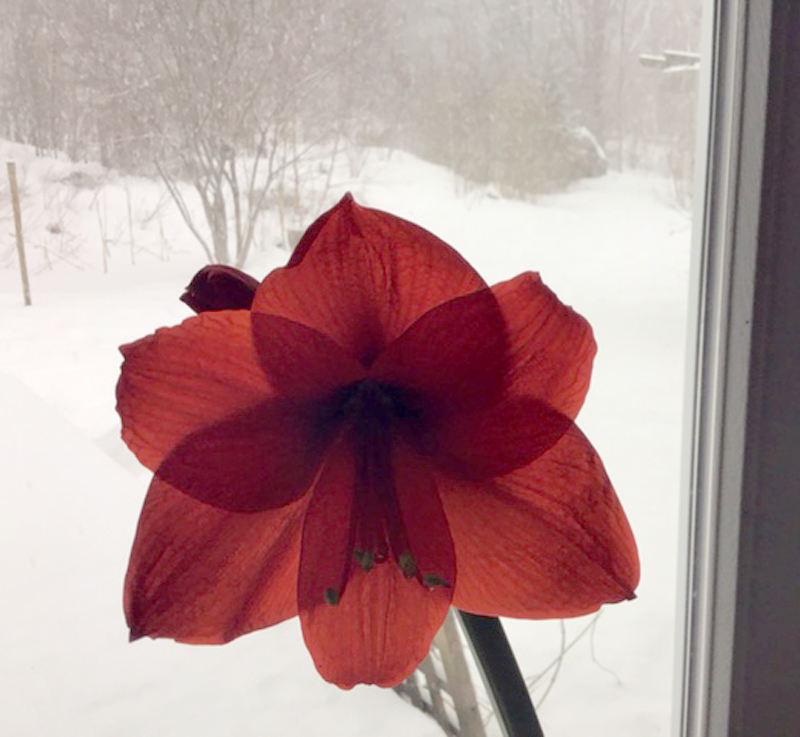
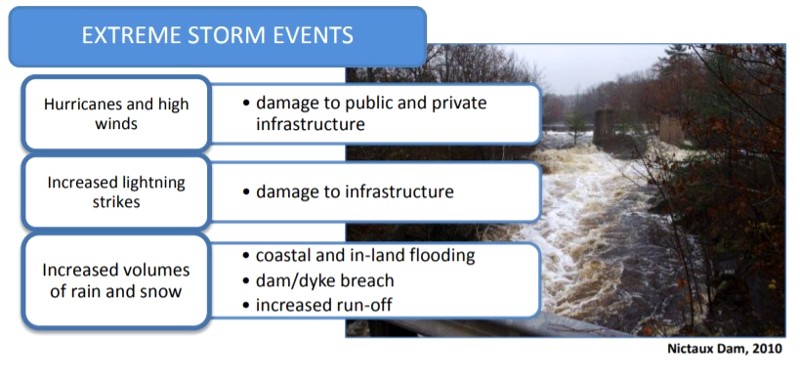
This weekend, we endured our second major Winter storm. The end result was that we could not obtain the Weekend edition of the Chronicle Herald. Power was returned within hours. Heather, and I could relax and enjoy PBS Maine. Judy Dench in “As Time Goes By”, and John Cleese in “Hold the Sunset”; both suitable for retired husbands.


Edward Wedler reminded me about the success of murals in Chemainus, BC on Vancouver Island. There are community lessons to be learned here. We both recognized the value of the creative rural economy and the importance of place-based engagement.


Finally, a word of thanks to the local libraries for printing out vaccination passports. We were able to add the booster information from the walk-in clinic at the Middleton fire hall. Thanks, Jaki.

Acknowledgements

Heather shared the snow removal, the reading, and entertainment. Edward made his usual contribution. Jaki Fraser assisted at the Library.

References

Richard Powers, 2021, Bewilderment, W.W. Norton

Peter Sanger, Elizabeth Paul, Alan Syliboy, 2007, The Stone Canoe: two lost Mi’kmaq texts, Gaspereau Press.

Henry David Thoreau, 2021, Man is Altogether Too Much Insisted Upon, Gaspereau Press.

Henry David Thoreau, 2021, The Library a Wilderness, Gaspereau Press.

Posted in Book Review

Whirligig

Before Christmas, I discovered Ernest Buckler’s book Whirligig in a second-hand bookstore in Annapolis Royal.

From biographer, Claude Bissell:

‘This book will come as a surprise to Buckler readers.’

‘But we must not identify him completely with Ernest Buckler, the writer, who lives in an old farmhouse, on the highway to Annapolis, just outside of Bridgetown.’ p.7.

‘The narrator has less respect for his literary work than Buckler for his; he tends to agree with his neighbour that a man who neglects the duties of the farm to write fancy stories doesn’t really count for much’. p.8

Another example.
Tenure be Damned p.56.
Some colleges are largely staffed
With moldy Ph.D’s
But if the students win the day
They’ll lose their faculties.’

In response to my previous blog post, I received a number of updates.

From Heather Leblanc … she reminded me of the new material on the mapannapolis.ca website. Besides the StoryMaps, it includes the Youtube channel created by Andrew Tolson.

From David Colville … he pointed out the link to the Interactive Nova Scotia Science Atlas, featuring the work of Ian Manning, and others.


Today, I had reason to go to Kentville. I stopped at Chisholm’s bookstore and picked up Meditation for Makers (for Heather Stewart) and Wild Green Light: Poetry by David Adams Richards and Margo Wheaton.

Afterward, up the hill to Gaspereau Press, I discovered two more finds:

Soren Bondrup-Nielsen’s Voles, not Moles: A personal journey connecting with nature and Bren Simmers’, if, when (poetry)

And a T-shirt!

“Quit your unjust gaslighting of circumspect whelps with unverified reports of zippy brown foxes.
Fake News!”

Gaspereau Press. Printers and Publishers. Literary Outfitters and Cultural Wilderness Guides The typeface is Rod McDonald’s Laurentian.

Postscript

Today, in Annapolis Royal at the Historical Gardens, we picked up Alan Syliboy’s children’s book, The Thundermaker. This is such a good Mi’kmaq message.

Acknowledgements

Heather LeBlanc and David Colville provided feedback. Edward Wedler added the graphics and links.

References

Ernest Buckler, 1977, Whirligig: Selected prose and verse, McLelland and Stewart.
Deanne Fitzpatrick, 2022, Meditation for Makers, Nimbus Publishing.
David Adams Richards and Margo Wheaton, 2021, Wild Green Light, Pottersfield Press.
Soren Bondrup-Nielsen, 2021, voles, not moles, Gaspereau Press.
Bren Simmers, 2021, if, when, Gaspereau Press.
Alan Syliboy, 2015, The Thundermaker, Nimbus Press (Translated by Lindsay R. Marshall) (Mi’kmaq)

.

Posted in New thinking, Opinion

Reaching Out

Christmas is the time when you hear from friends and relatives across the globe. In my case, this includes colleagues from both the academic and business community. At the local level, besides COVID, we were able to get through a multi-day power outage, caused by the latest snowstorm.

With the New Year, there is time to recall graduate studies at the University of Western Ontario, teaching Geography at Memorial University, and then teaching GIS technology at the Nova Scotia Land Survey Institute (1980). It is over forty years since we graduated our first GIS graduates. Many of these individuals are likely retired.

I contacted Jack Dangermond, President, Esri about the ongoing need for a Geographic approach. He responded with advice on ’StoryMaps tech and ArcGis hub for community engagement. That is my challenge for 2022.

Is there a mechanism to link my blog (map stories) to story maps or is that simply my play on words?

After talking to David Colville at COGS, I also tend to agree with Alex Miller, President, Esri Canada (shown here) that I cannot ignore the three pillars of our world – Society, Economy, Environment.

Edward suggested that if I wanted to start a ’geographic-mindset movement’ check out this short Youtube video.

There’s a lesson to be learned, here, as to who is most important for a leader to realize their ambition’, Wedler January 2022. He found that important person, for example, when he initiated “Ride the Lobster” back in 2008.

Listen to ESRI Podcasts on “Geographical Thinking”for inspiring stories from thought leaders and GIS users across business, government and education in Canada.

Acknowledgements

Sincere thanks to Jack Dangermond, Alex Miller, David Colville, and Edward Wedler for their comments and feedback.

Reference

Derek Sivers, “How to Start a Movement“, April 2010, YouTube Video.