Posted in Video Review

Know your place

Peter, my brother, sent me a wonderful link to the history of Whitton and Hounslow Heath in West London. It is a YouTube video that looks at that landscape over the last four hundred years.

https:www.youtube.com/watch?v=v0zt180cO-s

Hope this link works !

What was notable for me ? The interjection of historical maps with photographs of the current landscape. It takes me back to taking the Southern Region commuter train from Whitton to Chiswick. Both Peter and I attended Chiswick Grammar School for Boys.

Other memories include the stories of Hounslow Heath, Dick Turpin, the notorious highwayman, and his horse Black Bess.

The term ’know your place’ can be used in a different context. Know your place in society. Working class, Middle class, Upper class/landed gentry. It all comes back.

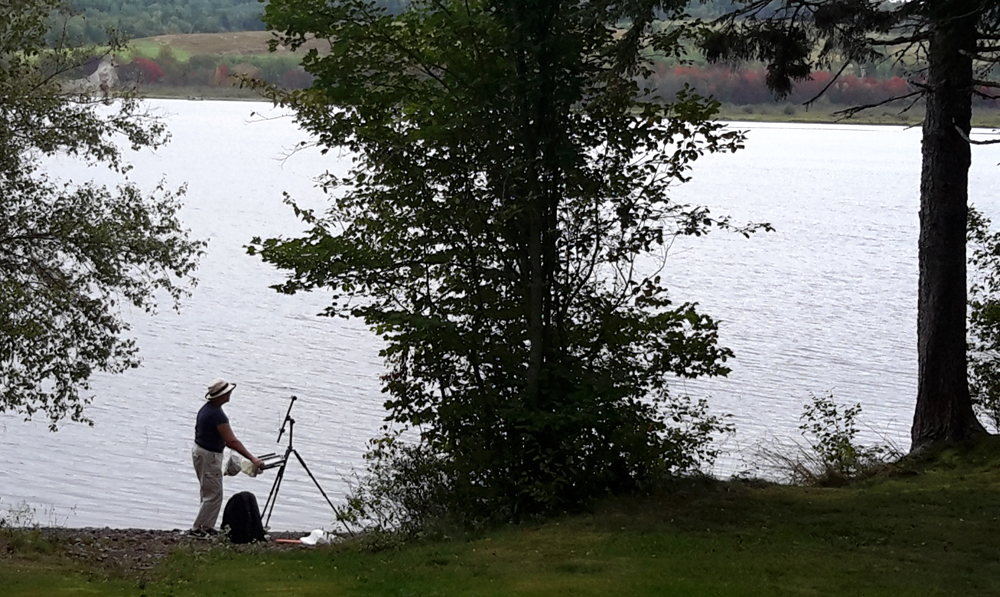
This week, Edward is busy with the Parrsboro International Plein Air Festival. As a consequence, this blog will be lacking his magic, artistic and technical touch. I have asked him for a blog on his experience, perhaps for next week.

Book recommendations come in. From Rocky Hebb, I received Lou Ureneck, Backcast. From Brian Arnott, The Abornaut. No shortage of good reads.

This week, John Wightman hosted a meeting between CANMAP and COGS/NSCC. I look forward to further developments on ’know your place’.

We do need a post-COVID twenty-first century Church map of Annapolis County. It should show the current land use, new businesses etc that reflect accurately the rural renaissance.

Don’t forget to see the movie of the same name, at Kings Theatre, free, this Sunday, September 19th. SOLD OUT.

Acknowledgements

Contributions from Peter Maher, Rocky Hebb, Brian Arnott and John Wightman.

References

Lou Ureneck. 2008. Backcast. Fatherhood, fly-fishing and a river journey through the Heart of Alaska. St Martins Press.

Meg Lowman. 2021. The Arbornaut.

Posted in Opinion

Climate Change

I heard on the CBC that Annapolis Royal is looking to hire a Climate Change Coordinator.

See video link of Annapolis Royal

This is good news. It brings to mind the work that Tim Webster, and others conducted at AGRG. With LiDAR it is possible to obtain an accurate three dimensional representation of the topography and, to a degree, the height of the forest canopy.

If there is co-ordination, it should include all the communities within the Annapolis watershed. Decisions in Annapolis Royal impact the ecology of the river e.g. the hydro dam. At the same time, it should engage with existing institutions and stakeholders in the watershed. To my mind, this includes collaboration with educational institutions and research groups. Any solution will require computer modelling based on our understanding of the hydrology, land use, climate and tides. It is a complex problem, demanding the best expertise in the region, as well as technical knowledge from other research groups.


Outside of Bridgetown, I have noticed a small herd of alpaca. This species of South American mammal is more commonly found in Peru- Chile. An interesting sign of the times.
(cartoon by Edward)

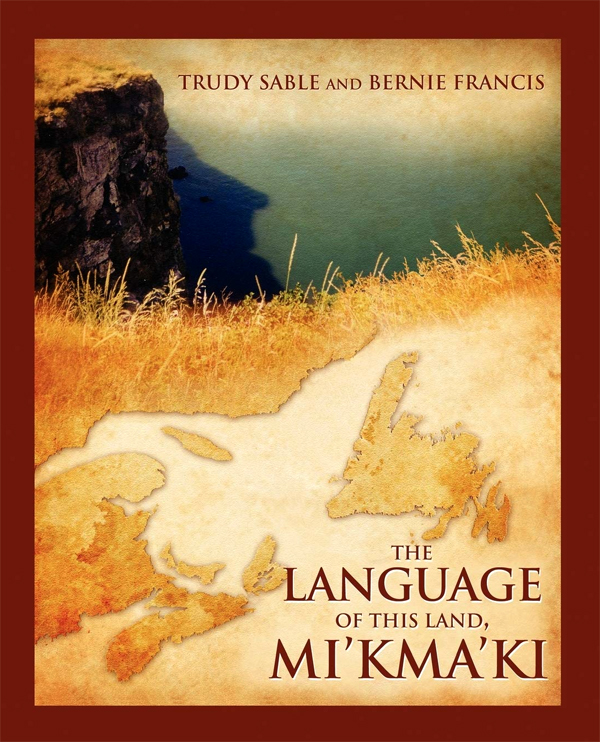
I am still reading Lesley Choyce’s, Nova Scotia Shaped by the Sea, Chapter 4, The Land of the Mi’kmaq — a compelling statement based on Daniel Paul ’s book We were not the Savages.

Acknowledgements

Edward and Heather remain supportive.

References

Lesley Choyce, 2007, Nova Scotia Shaped by the Sea: A Living History, Pottersfield Press.

Daniel Paul, 1993, We Were Not the Savages, Nimbus Press (later editions by Fernwood Publishing)

Posted in Event Review

Trees and Water

This Wednesday, John Wightman invited me along as a guest on a field trip to the Pockwock watershed. The trip was organized by the Western Region Stakeholders Interaction committee. The partners were WestFor Management, Halifax Water, Elmsdale Lumber, the forWater Research network and Dalhousie University.

Link to map source.

We left Bridgetown at 8 am, met the other members of the field trip at the firestation in Mount Uniacke. From there we crossed Highway 101 into the Pockwock watershed, the watersupply for the City of Halifax. In the watershed, we visited three sites: road and bridge construction, commercial thinning and group selection. David Foster, Ph.D student at Dalhousie University, School of Resource and Environmental Studies (SRES) produced an excellent twenty page guide detailing his research as well the role and contribution of the partner organizations. In total, there were approximately forty participants on the trip.

Besides reconnecting with Peter Duinker (Dalhousie University), Peter Neily (NS Lands and Forestry) and Peter Jones (previously with Bowater Mersey). I had the opportunity to see forest management collaboration in action.

Given the delays in the Lahey report implementation, I was encouraged by this obvious collaboration to secure a sustainable watershed future for Pockwock.

After a long day in the field, John dropped me off in Paradise around 6 pm.

Peter Duinker defined the key research question.

“What approaches to managing the watershed forest, focused mainly on harvest system and regeneration techniques, have the greatest potential to reduce the flow of terrestrial carbon into the lake?”

This same week, Heather and I received notice of aerial spraying around her family property near Big Lake, Cumberland County.

Obviously the clearing cutting / spraying option is not relevant to the Pockwock watershed however other parts of the province remain at risk.


Earlier this week, Niki Toomey at NSCC contacted me about their forthcoming 25th Anniversary. She was interested in the history behind the technical institutes that became incorporated into the community college.

I did pull out the PDF that Heather and myself wrote and researched on the Story of COGS: a Nova Scotia experiment in Technical Education.

It was written in 2014 and is still worth re-reading. Especially, within the context of the type of collaboration demonstrated in the Pockwock watershed project

Acknowledgements

John Wightman for inviting me to join the field trip. Jillian Weldon-Genge for driving the forest roads of Pockwock. The quality of the presentations in the field from industry, government and the academic community was noteworthy. Edward added the links and graphics.

References

David Foster, September 2021, Field Tour handbook for the Pockwock Watershed, 20 pages.

Bob Maher and Heather Stewart, 2014, The Story of COGS, 42 pages.

Posted in Video Review

Nicholas Cage in Pig

Friday evening, we went to the King’s Theatre in Annapolis Royal to watch Nicholas Cage in Pig.

There was a relatively small masked audience. The film is about a Truffle hunter (Cage) and his pig. It is set in the Oregon forests outside of Portland. The story starts out in the woods and the stealing of the pig. Most of the movie is focused on Cage’s pursuit of the thieves. It also sheds light on the gourmet food trade in the region. In an earlier life, Cage (the character) was a well-known chef.

The film offers insight into authenticity, life on the west coast of the United States and Buddhism.


Meanwhile from AIRO in Annapolis Royal, I received the trailer to Rural Renaissance: How Canada’s oldest town reinvented itself. There will be three free showings on September 19th. at Kings’s Theatre. But you must reserve in advance.


On the home front, it is time for harvest processing. First, the gooseberries with elderberries jam, then the grapes, and, of course, we are inundated with tomatoes. The 2021 climate has created a bumper season for the different types of berries. And yet, for some reason, our Apple crop is a bust. We are not sure whether lack of pollination or a local pest outbreak. Overall, across the Valley, it looks to be a great Apple harvest.

Acknowledgements

Edward added the links and graphics. Heather shared the processing of the garden fruits.

References

Nicholas Cage, 2021, Pig

Rural Renaissance: How the citizens of Annapolis Royal reinvented Canada’s oldest town. Showing on September 19,2021.

Posted in biographical sketch

Visions of the Future

This weekend, Heather and I were in New Glasgow and Pictou. We stopped in Stellarton to look at an exhibit at the Museum of Industry. It was Colour with a ‘U’, a juried exhibition of quilts on the theme of diversity and inclusion.

In the gift shop, I purchased Lesley Choyce (ed.) Nova Scotia: Visions of the Future, published in 2009. Choyce invited Nova Scotians to contribute their vision of the future.

”The voices you are about to read are from Nova Scotians who care deeply about the future. There is a passion here for a place and a people.”p.11

I can’t even begin to imagine what a reader in the year, say, 2029 would make of the ideas here.” p.14.

Here we are, it’s 2021 in a COVID pandemic. We can read the Visions of the Future from over forty voices (from 2009). Many of the voices have passed on.

Later in the weekend, back in Pictou, I found Choyce’s Nova Scotia: Shaped by the Sea, A Living History and, in the same store, Dave Gunning’s Two-bit World recorded at Riverside Studios in New Glasgow.

Over the weekend, from Brian Arnott, a question: ‘Did I know of a map of farms in Annapolis County?’

At that point, I tried to ‘join the dots’. What will Annapolis County look like in 2040?

Certainly, I am noticing changes in agriculture, forestry and the fisheries.

Lesley Choyce had his wish list in 2009.

  1. Clean, renewable, non-nuclear energy for all our needs.
  2. Enlightened, long-term management of all our resources.
  3. Public and institutional enthusiasm for all of our unique cultural endeavours.
  4. An enlightened and generous policy towards immigrants including refugees.
  5. Preservation of our natural wonders.
  6. A cultivated openness to new ideas, alternatives, beliefs and enriching technologies.
  7. Access to education for everyone in the province, and
  8. The fostering of the spirit of cooperation as professed by Father Moses Coady and the Antigonish movement.

It is a moving target. I expect Choyce would have to update his list today.

Acknowledgements

Brian Arnott for his question. Edward, Paul, Frank and others at COGS on the answer. Heather shared family time with the grandchildren at Pictou Lodge. It is their future that is under discussion.

References

Lesley Choyce.(Ed.) 2009, Nova Scotia: Visions of the Future, Pottersfield Press.

Lesley Choyce, 2007, Nova Scotia: Shaped by the Sea, A Living History, New Revised Edition. Pottersfield Press.

Dave Gunning, 2004, Two-bit World, CD.

Posted in Photo Essay

This Place

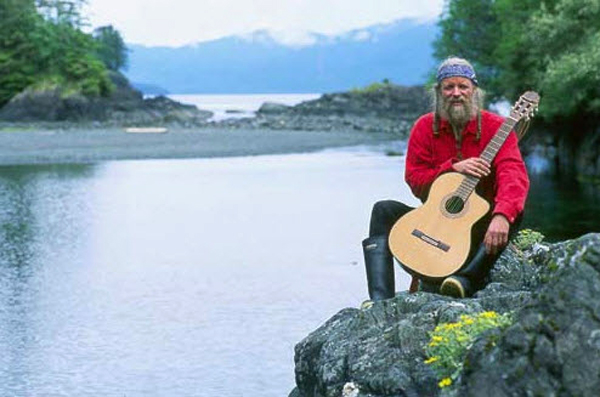
In the last few days, I have become very ‘place-conscious’. Likely, the result of reading The Hermit of Gully Lake.

One of our regular walks is through the old Lawrencetown Forest Nursery, down to the Annapolis River. This week, I noticed that the platform used by the Lawrencetown Voluntary Fire Department to dry out their hoses has been repainted red and black. It should now be visible from the air.

The abandoned nursery is adjacent to the Lunn’s Mill beer company. There would seem to be a potential collaborative business venture. The old nursery could be turned into an outdoor museum, demonstrating the different planting practices over the last several decades. Visitors to Lunn’s Mill could walk, snowshoe or cross country ski the trails, enjoy the outdoor museum, before heading back indoors for a beer.

A second observation was the ‘outhouse’ on the front yard at Lawrencetown Lane. In fact it is a free library, with a book exchange, groceries and seasonal vegetables. ‘Take what you need; Leave what you can’.

These mini-library ‘book exchanges’ have popped across rural Nova Scotia. Previously, I had seen them in rural British Columbia, and Scarborough, Ontario.

Before taking the photograph, I stopped to ask permission. The owner, named ‘ Outhouse’, had moved to the Valley from Digby Neck. They had received support from the LifeSchoolHouse group in Clarence for this venture.

These two examples are evidence of the subtle changes that are taking place in rural society, in response to the larger societal shifts.

Acknowledgements

Edward kindly inserted the photographs. Heather shared the walks.

Postscript

I managed to find the first edition of Joan Baxter’s book ‘The Hermit of Gully Lake’ at Endless Shores Books in Bridgetown. It was first published in 2005. There are differences with the new 2021 edition however the story remains essentially the same, about a specific person and a particular place.

Posted in Book Review

The Hermitage

I have just finished reading Joan Baxter’s book ‘The Hermit of Gully Lake’, 2nd edition. It is a remarkable story. Sympathetically written and researched. It raises several questions.

The first is a technical one. What have been the changes, if any, between the first and second edition ? I am now trying to track down a copy of the first edition through the Library.

The second is more philosophical. As a Geographer, we talk a lot about ‘a sense of place’. What does a sense of place mean to a hermit? What was special about Gully Lake? Can any place be a ‘special place’ or hermitage?

Willard Kitchener MacDonald ‘jumped from a troop train to avoid going off to battle in World War II and lived for more than half a century in the woods around Earltown in northern Nova Scotia’ p.7.

At about 2 pm on June 27,2004 they found the remains of a ‘deceased elderly man in a wooded area on the east side of Gully Lake’. p.133.

In her epilogue, Baxter quotes the refrain from a song ‘Let him be’ by Dave Gunning and John Meir. I was able to find it online on their CD Two-bit World.

Checking my bookcase, I rediscovered The True Solitude. selections from the Writings of Thomas Merton. Here is an unspeakable secret writes Father Merton.

Paradise is all around us and we do not understand. It is wide open. The sword is taken away, but we do not know it: we are off ‘one to his farm’ and ‘another to his merchandise’…..’Wisdom’ cries the dawn deacon, but we do not attend’. From the inside of the back cover.

See ”Day of a Stranger” a meditation describes his way of life as a hermit “.

Acknowledgements

Edward added the links and graphics. Heather shares the journey.

References

Joan Baxter, 2021, The Hermit of Gully Lake: The Life and Times of Willard Kitchener MacDonald, 2nd. Edition, Pottersfield Press.

Dean Walley selections 1969. From the writings of Thomas Merton. The True Solitude. Hallmark Editions.

Dave Gunning and John Meir, Let Him Be, On their CD Two-bit World.

Postscript

I also unearthed Thomas Raddall The Dreamers published by Pottersfield Press in 1986. More light reading.

Tomorrow is Register-Reader day !

Posted in Book Review

Register-Reader Day

Thursday has become “Register-Reader Day”. It is the day of the week to catch up with our community.

From the Annapolis Valley Register (page 8) in these times of Health Services challenge, we see opinions on Diabetes and Dementia. Meanwhile, the Reader gives us a celebration of the life of Kent Thompson. In particular, I recall his book ‘Getting out of town by book and bike’ published by Gaspereau Press, from the back cover,

Thompson also investigates the role of bicycle in books by writers ranging from DH Lawrence and HG Wells, to Elizabeth Bishop and Ernest Buckler.

To survive these challenging times, I found a couple of books. At the Inside Story, I spotted Don Pentz ‘Images of Keji Country’.

Kejimkujik National Park resonates with the distant forces of the Mi’kmaq ancestors. Those voices are given a visual presence through hundreds of petroglyphs rock engravings, the moss-covered fire rings that dot the Keji shorelines and the stirrings of buried artifacts. These things tie the Mi’kmaq to the bold nature of ‘place’.

At Chisholm’s Stationers in Kentville, I found the Second Edition of ‘The Hermit of Gully Lake’ by Joan Baxter. I had enjoyed her writing ‘The Mill: fifty years of pulp and protest’.

From Henry David Thoreau, Walden.

Men frequently say to me, “I think you would feel lonesome down there, and want to be nearer folks, rainy and snowy days and nights especially.”

The book is published by Pottersfield Press. I think that I have a copy of the First Edition but have been unable to find it.

Acknowledgements

Edward added the links and graphics. Heather shared a very busy, tumultuous week.

References

The Annapolis Valley Register, Thursday August 19, 2021, p.8, Diabetes: let’s change the conversation, Brooks Roche, Dementia: Twists and turns on the road to awareness, J. Archibald.

Kent Elgin Thompson. 3 February 1936 – 13 August 2021. The Reader August 20, 2021 submitted by David Thompson.

Kent Thompson, 2001, Getting out of town by books and bike, Gaspereau Press.

Donald R. Pentz, 2021, Images of Keji Country, SSP Publishers.

Joan Baxter, 2021, The Hermit of Gully Lake, The Life and Times of Willard Kitchener MacDonald, Second Edition, Pottersfield Press.

Posted in Event Review

AF Church Historical Maps Specialist Workshop

On Saturday afternoon, I attended the AF Church Historical Maps workshop at the Rath Eastlink Community Centre in Truro. Through David Raymond, I was invited to present the keynote address on Historical GIS in Canada.
(Image of AF Church)

In practice, I was able to provide some background on the history of GIS in Canada and some of the personalities. In reality, I was there to learn about the progress to date on the steps in the transformation of the large format late nineteenth century county maps into a digital database to support genealogical research.

The presentations explained four steps in the process.

  1. Julia Landry described the conservation of these county maps. It included the cleaning and repair.
  2. Christian Laforce presented the challenges in the compilation of high level digitization using overhead photography.
  3. The third step was described by David Raymond who used GIS software to geo-reference the images delivered by Christian.
  4. The last presentation on open source programming was scheduled for Shaun Johansen but had to be presented by Paul Armstrong. It described software that would allow the genealogist to link digital data derived from the AF Church maps to the 1881 census.

In the Chronicle Herald (August ,14) there was a half page on E3 ‘Help Us Map Your People’ placed by the Kith Observatory Inc. It confirmed that they have conserved and digitized maps for Antigonish, Hants and Halifax counties. They are seeking help in matching the names and locations on these maps with the 1881 census. They are seeking ‘doers’, ‘knowers’ and ‘benefactors’.

Prior to attending the workshop, I had a very fuzzy notion of Historical GIS. After the workshop, I had a much better appreciation of the practical challenges faced by the Genealogy community in working with the large format AF Church maps, using current technology.

I concluded my keynote, citing the writings of Carl Sauer ‘Land and Life’. By understanding the lives of rural Nova Scotians in the late nineteenth century, we also develop an appreciation of land management in that time frame. That may serve us well, as we move forward.

Acknowledgements

David Raymond for suggesting my participation in the specialist workshop. Paul Armstrong for his work at the Kith Observatory Inc. Edward added the graphics and links.

References

Kith Observatory Inc. kithobservatory.ca

Carl Sauer, 1967, Land and Life, University of California Press, Berkeley.

Postscript

It is interesting that the acronym GANS stands for both the Genealogical Association of Nova Scotia as well as the Geomatics Association of Nova Scotia. Hope this does not lead to any confusion.

You may be interested in “Historical GIS Research in Canada“, Jennifer Bonnell and Marcel Fortin (eds), University of Calgary Press.

Posted in Book Review

Reading and Writing

This week, I finished Graham Steele’s book, Nova Scotia Politics, 1945-2020: from MacDonald to McNeil.

I thought it might offer insights as we approach next week’s Provincial Election. In particular, I was looking to understand the relationship between economic development and ecological landscape management.

I did come across Appendix 2: Top 10 Nova Scotia politicians 1945-2020. (p.236-7). This included: ”Peter Nicolson MLA 1956-1978. Finance Minister 1970-78. Set the gold standard for ministers. Smart, respected.

This in turn, reminded me of all those days that I walked through the front doors of NSLSI (COGS) and view this plaque.


Through the Annapolis Valley library, I received Linda Lear’s “Beatrix Potter: a Life in Nature”.

I have just started this lengthy tome (584 pages). I am encouraged by the map of Beatrix Potter’s Lakeland 1892-1943. And from the first sentence in the Acknowledgements (p.ix).

Beatrix Potter was first of all an artist and writer of place who found her personal and intellectual freedom in nature. She later became a conservationist in an effort to preserve the landscape that had inspired her art.


This week, too, I am preparing for the AF Church Historical Maps Specialist workshop (see previous blog post). I am charged with the following topics

  1. outline the development of Historical GIS in Canada;
  2. discuss the prospects for development of this technology in Nova Scotia.

To speak to the first topic, we must explore the history of GIS in Canada and elsewhere. For the second, we must visit technological development in Nova Scotia and beyond.

Since the invitation to speak at the workshop in Truro, I have used my blog: ernestblairexperiment.wordpress.com
to reflect on both topics.

After the workshop, I hope to be in a better position to comment on current directions, within the context of the AF Church maps.

Acknowledgements

David Raymond initiated the workshop process and provided the link to “GIS Applications in Human Geography“. Edward Wedler added both his technical expertise and insight into Remote Sensing.

References

Graham Steele, 2021, Nova Scotia Politics, 1945-2020: from MacDonald to McNeil, Pottersfield Press.

Linda Lear, 2007, Beatrix Potter: A Life in Nature, St Martin’s Press.

AF Church Historical Maps: Specialist Workshop, August 14, 2021, Truro, NS.