Posted in Book Review

Leaves of Grass

At the Inside Story, I chanced to find a copy of Walt Whitman’s book, Leaves of Grass. The First (1855) Edition.

It includes a lengthy editors introduction by Malcolm Cowley – 37 pages, followed by Whitman’s Introduction 19 pages. This is followed by twelve poems – 120 pages. To date, I am part way through the first poem. This is not easy reading..

Meanwhile, I continue to receive Brain Pickings, twice per week..

”Walt Whitman, felled by a paralytic stroke, he considered what makes life worth living and instructed himself: ”Tone your wants and tastes down enough, and make much of negatives, and more daylight and the skies””.

“He spared himself the additional self-inflicted suffering of outrage at how his body failed him – perhaps because, having proclaimed himself the poet of the Body and the poet of the Soul, he understood the two to be one. He squandered no emotional energy on the expectation that his suddenly disabled body perform a counter possible feat against reality to let him enjoy his beloved tree workouts and daily excursions to the river. He simply edited his expectations to accord with his new reality and sought to find joy there, within these new parameters of being.”

In the same Brain Pickings, there is a link to John Burroughs book ‘Whitman: A Study’.

Meanwhile, from Emergence Magazine, Kathleen Dean Moore Listen : four love songs. Regent Honeyeaters, Western Meadowlank, Brown-headed Cowbird and Red- winged Blackbird.


(photo by Kathrin Swoboda)

When we listen, we open ourselves to new, joyous relationships with species other than our own.


On our way to New Glasgow, we stopped at West Brooklyn to pick up the newly bound books by Legge Conservation Services (see earlier blog post HERE). They now have a new lease on life.

Acknowledgements

Edward added the links and graphics. Heather and Siqsiq travelled the backroads of Nova Scotia with me.

Postscript

Forests are not renewable’: the felling of Sweden’s ancient trees | Environment | The Guardian

References

Walt Whitman, 1986, Leaves of Grass, The First (1855) Edition, Penguin Classics

Brain Pickings. April 18th,2021. The Stoic remedy for when people let you down.

Emergence Magazine. April 18th,2021, Celebrating Earth Week.

Posted in biographical sketch

A Round Trip

Last Thursday, we had to drive to Shelburne for a Moderna vaccination at Lawton Drugs. We left around 8:30 am for the 1 pm appointment. Afterwards, we continued on Highway #103 to Yarmouth and back home by 4:30 pm.

The highlight of the trip was the stop at Pine Grove Park, just outside of Liverpool.

It contains a wonderful collection of rhododendron and azaleas planted by Captain Dick Steele. The park has been renamed in his memory. Online, later that evening, I found Jodi DeLong’s tribute, dated 17 March 2010, under Bloomingwriter: Gardening in Nova Scotia.The piece is titled: “The plant does all the work. Remembering my friend.”

The roads were empty. Across from Annapolis Royal to Liverpool on Highway #8, via Kejimkujik National Park. Along Highway #103 to Shelburne. We arrived early and had time for seafood chowder at the Sea Dog Saloon on the waterfront.

At the Shelburne Mall, I noticed a Trans County Transportation Society (TCTS) vehicle from Bridgetown. Obviously others were making the long trek across the province. The injection took one minute and then a fifteen minutes wait to ensure no reaction.

After talking to the TCTS driver, we decided to return to the Valley via Yarmouth. The end result was a round trip of over 500 kilometers.

Here are a couple of lessons:

  1. When you drive the south shore from Liverpool to Yarmouth you realize that the landscape is full of treed bogs and barrens. Imagine the United Empire Loyalists who arrived in Shelburne and Birchtown. What were the opportunities for making a livelihood, from the sea? Yes. From the land? No. This part of Nova Scotia is a Mecca for rare and unique coastal plain species. I remember from my days at the National Museum, developing the list of rare plants of Nova Scotia. Heather remembers it too from her graduate work on Agalinis neoscotica.
  2. Talking to the TCTS driver, it seems odd that residents from Annapolis County had to travel that far for a vaccination. Could the vaccinations not be offered on a geographic basis ? Why not Bridgetown? In remote communities in BC, they offer vaccinations for several age groups in the community.

IF BOOKS COULD SPEAK

Through Neptune Theatre, books can speak. Heather recently signed up for an audio book ‘We keep the Light by Evelyn Richardson (published in 1954).

Through Neptune Theatre books can speak. Heather recently signed up for an audio book ‘We keep the Light by Evelyn Richardson (published in 1954).

In looking through her collection of botanical books, Heather found three in need of repair:

Moss flora of the Maritime Provinces (1982)
Vascular Plants of the Pacific Northwest, Part 3 (1961)
Vascular Plants of the Pacific Northwest, Part 4 (1959)

A phone call to Gaspereau Press directed us to Legge Conservation Services in West Brooklyn, Nova Scotia. Next week, we will pick up rebound copies.

The first book was written by Robert Ireland. I recall working at the National Museum in Ottawa. Ireland was Curator of Bryophytes. I was working with George Argus on Rare Plants of Canada. We published Rare Plants of Nova Scotia (1978) and Rare Plants of Saskatchewan (1979).

Later in 2000, Heather worked on the Grasses of the Columbia Basin of British Columbia at the BC Museum in Victoria. At that time she acquired Vascular Plants of the Pacific Northwest.

Books do speak. They remind us of other places and times. Different geographies and different interests. In our case, forty and twenty years ago.

References

Robert Ireland, 1982, Moss flora of the Maritime provinces.

Cronquist et al. Vascular Plants of the Pacific Northwest.

Postscript.

I had the chance to check the work of George Argus, my mentor at the National Herbarium. George is a renowned expert on willows. http://skvortsovia.uran.ru

Acknowledgements

Heather and Siqsiq joined me on the round trip. Edward added the graphics and links.

Posted in Video Review

Public Broadcasting

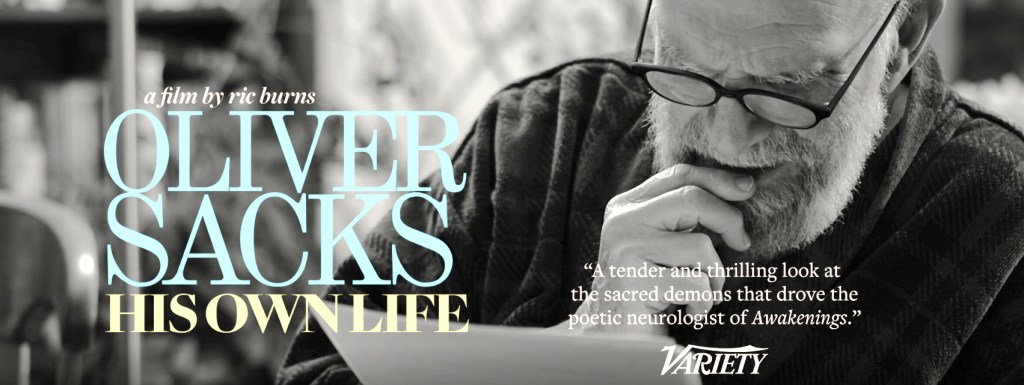
In New Glasgow, we have access to PBS Maine. This allowed us to watch American Masters, Oliver Sacks: his own life. ‘The video looks at the life and work of the legendary neurologist and story teller, as he shares intimidate details of his battles with drug addiction, homophobia, and the medical establishment. ‘


Now I need to find Awakenings on Netflix with Robin Williams and Robert de Niro.

Saturday night on PBS Maine seems to be ‘Brit comedy night’ it includes Judy Dench in ‘As Time goes by’ and then later, John Cleese in ‘Hold the Sky’. Brings back memories of the quirky British humour. Often, politically incorrect.

Public Broadcasting, sponsored by corporations and individual foundations, offers a significant contrast to the CBC.

Meanwhile, after our return drive through the Rawdon Hills, I was able to catch Eleanor Wachtel in conversation with Alex Christofi on his book, “Dostoevsky in Love” on CBC Writers and Company.

A satisfactory conclusion to a weekend organizing vaccination appointments across the province. More to come, next week.

Acknowledgements

John Stewart for access to PBS, Maine. Heather, my travel companion. Edward for online research and graphics.

References

PBS Maine, Oliver Sacks: his own life, American Masters, April 9,2021.

Alex Christofi, Dostoevsky in Love: An Intimate Life, CBC Writers and Company, April 9,2021.

Postscript.

Oliver Sacks

I have found only two types of non-pharmaceutical ‘therapy’ to be critically important for patients……. music and gardens.’


Brain Pickings April 11, 2021.

Posted in Video Review

Conviction

We headed back to New Glasgow on Thursday. Thursday has become Reader/Register day. This week’s news included an update on the candidates to replace Stephen McNeil. They appear to be Carman Kerr and Bill MacDonald.

In the evening, we watched Conviction, a documentary by Nance Ackerman.


‘Conviction went inside Canada’s women’s prisons to imagine alternatives to incarceration through art and music and premiered at the Hot Docs International Film Festival’.

I checked out Nance Ackerman’s web site. It took me to other documentaries, Heartstring Productions in Tupperville with her partner Jamie Alcorn, and Cousin Tours, workshops with Nance and her cousin, Laurie Nassif.

This reminded me of Anne Crossman’s list of local authors. In this case, it would be a list of creative film makers. It also reminded me of Carman Kerr and his interest in Adventure Tourism.

Acknowledgements

Heather journeyed with me to New Glasgow. Edward added the links and graphics. Anne Crossman shared her interest in local authors.

References

Through nanceackerman.com, you can find links to documentaries : Conviction, Carry me Home, Cousins Photo Tours.

Anne Crossman column in the Register, April 8th. lists many of our local authors.

Posted in Article Review

Easter Eggs

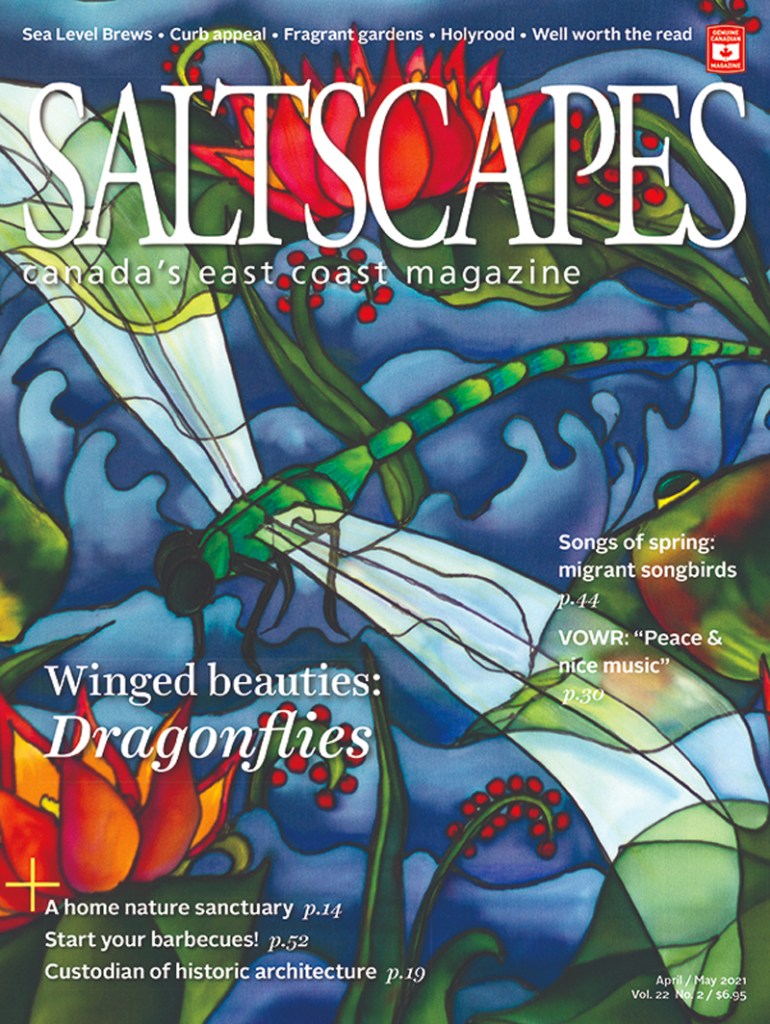
We came up to New Glasgow for Easter. As usual, it was an opportunity to catch up with the latest magazines. In Saltscapes, there is a photoessay by Scott Leslie, Migrant Songs of Spring.

Every Spring we welcome back throngs of songbirds to the region’s forests, as neotropical migrants of every shape, size and colour lift our spirits with a serenade that grows a little quieter each passing year. By truly adopting in both spirit and practice ecologically sensitive sustainable forestry practices we can ensure that this wondrous natural event can continue indefinitely.” p.49.

In Canada’s History, Nancy Payne’s Dreams of Harmony describes the utopian Finnish community of Sointula on Malcolm Island. Malcolm Island is off the northeast coast of Vancouver Island.

Even though it’s name means place of harmony in Finnish, life in Sointula had never been easy. Born of deeply held beliefs in equality, cooperation and hard work, the colony had for a few short years at the start of the twentieth century, offered a shining alternative to a world of exploitation and competition” p.36.

Canada’s History magazine used to be The Beaver. It is the history equivalent to Canadian Geographic.

Refreshed, I continued with my reading of Wendell Berry’s essays. From Preserving Wildness, p.151

Looking at the monoculture of industrial civilization, we yearn with a kind of homesickness for humanness and the naturalness of a highly diversified, multipurpose landscape, democratically divided, with many margins. The margins are of utmost importance. They are the divisions between holdings, as well as between kinds of work and kinds of lands. These margins – lanes, streamsides, wooded fencerows, and the like – are always freeholds of wildness, where limits are set on human intention.” p.151.

Acknowledgements

John Stewart for his magazine subscriptions. Edward for his editorial graphics. Heather for her support.

References

Scott Leslie. Migrant Songs of Spring. Saltscapes. April/May 2021 Vol 22 No 2. p. 44-49.

Nancy Payne. Dreams of Harmony. Canada’s History. April/May 2021. p.36-43.

Wendell Berry. 1987. Home Economics. Preserving Wildness. p.137-151. North Point Press.

Posted in biographical sketch, Video Review

A Global View

There are days when Spring has not arrived. It is cold rain and windy, a time for watching a video in front of the woodstove. This week, we watched two movies:

  1. The 100 Year March: a Philosopher in Poland.
  2. Seaspiracy

Klaus and Shirley recommended the first; Edward recommended the second.

A Philosopher in Poland looks at the events of the Second World War and the freedom of the Polish people. Seaspiracy looks at the global exploitation of the oceans: the killing of whales, sharks, tuna indeed it deals with all marine species. Both films provide a sobering perspective on today’s society.

A Philosopher in Poland raises the question of nation states. This is particularly poignant given the time of COVID. What lessons can/have been learned from the Second World War? It would be interesting to see similar documentaries on other countries e.g.Russia, China, the United States. And, at the local level, Canada and Nova Scotia.

The same is true for Seaspiracy given the Canadian (Nova Scotia) approach to the management of natural resources. What is happening off the coasts, in terms of the fishing industry? Canada is bounded by three oceans.

Looking for answers, I happened upon a short essay in Wendell Berry’s book Home Economics, titled ‘A Nation rich in Natural Resources’, p 133-136. It was helpful. (also, see HERE)

”Indeed, once our homeland, our source, is regarded as a resource we are sliding downwards towards the ash heap or the dump”.

The ‘icing on the cake’ was the recent Guardian Weekly, March 26, 2021. It included two items on the United Kingdom. Edward Docx ‘Send in the Clown’ Making sense of Boris Johnson and Priyamvada Gopal ‘Why can’t Britain handle the truth about Churchill?’

Both articles led to a reflection on the post-war era in England. My time was 1945-1969. I arrived at the University of Western Ontario to start graduate work in Geography, over fifty years ago. Canada is now my homeland.

Acknowledgements

Edward and Klaus/Shirley for their viewing recommendations. Edward added the graphics. Heather shared the viewing.

Postscript
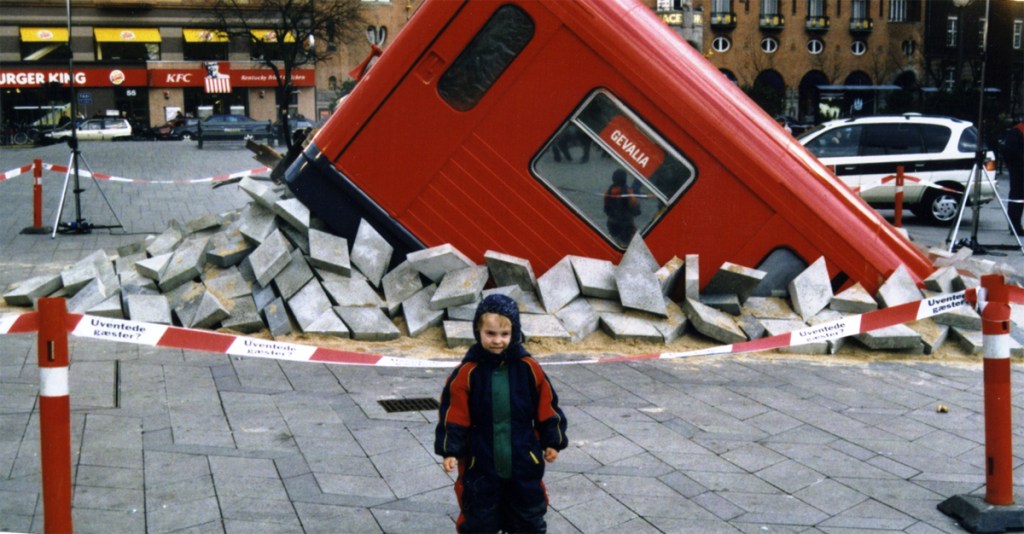
NEW SUBWAY CONSTRUCTION ACCIDENT IN COPENHAGEN DENMARK
Details HERE.

Image courtesy of Lars Andersen

Reminder of what day this is!

References

The 100 year March: A Philosopher in Poland. Stefan Molyneux, host of Freedomain Radio

Seaspiracy on Netflix

Wendell Berry, 1987, Home Economics: A Nation rich in Natural Resources, p.133-136, North Point Press

Posted in Book Review

Buckler and Berry

This week , I needed to find some ‘light reading’. I packed up a box of books to take to the Endless Shores bookstore in Bridgetown. They will give me credit towards any book that I might purchase.

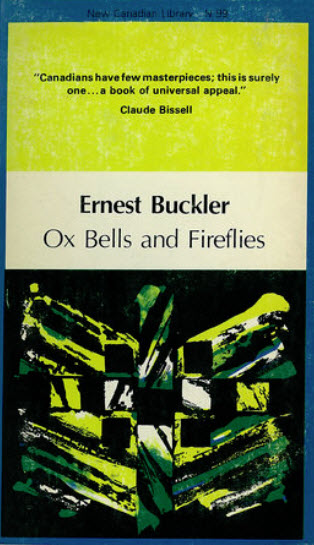
When I was last in Bridgetown library they had a display copy of “Nova Scotia: Window on the Sea”. However, it could not be taken out of the library. I found a copy at Endless Shores. It was written in 1973. Buckler wrote the text to accompany the photographs by Hans Weber (see fiftieth anniversary note HERE).

Would the writing continue the style from Ox Bells and Fireflies 1968? Included are five essays: Amethysts and Dragonflies, Mast and Anchors, Man and Snowman, Faces and Universes, Counterfeit and Coin (see posts, Chance Encounters and Pastoral Economy).

In Buckler’s words, “Nova Scotia is nearly an island, nearly the last place left where place and people are not thinned or adulterated with graftings that grow across the grain.” p.12 or

It’s mountains take on no Cabot lordliness. They chat like uncles with their nephew valleys.”p.12.

Nova Scotia is the face from Genesis and the face from Ruth. The face from Greco and the face from Rubens. The life of Faulkner and the life from Hardy…..It is a dictionary where the seasons look up their own meanings and test them. It is a sea-son where men can man their own helms.” p.16

After finding Buckler, I went on a search for George Orwell (Eric Blair). I found “Animal Farm” but was not ready to read it. Instead I chanced on Wendell Berry, “Home Economics: fourteen essays“. The last essay is titled “Does Community have a Value?” It describes farming in the hilly country near Port Royal (Kentucky) in 1938.

The local community must understand itself finally as a community of interest — a common dependence on a common life and a common ground. And because, a community is, by definition, placed, its success cannot be divided from the success of its place, its natural setting and surroundings : its soils, forests, grasslands, plants and animals, water, light and air. The two economies, the natural and the human, support each other; each is the other’s hope of a durable and a livable life.” p.192.

I think the same is true for Nova Scotia.

Acknowledgements

Jennifer Crouse, owner of the Endless Shores Books and other Treasures. Edward added the graphics. Heather shared our weekend reading of Voice of the People, Chronicle Herald March 27 D4. Are we ‘tree-huggers’ or’sub-hillbillies’ ?

References

Ernest Buckler and Hans Weber, 1973, Nova Scotia: Window on the Sea, McClelland and Stewart Ltd.

Wendell Berry, 1987, Home Economics: Fourteen essays by Wendell Berry, North point Press.

Postscript

I wanted to title the blog ‘Buckler and Blair’ to correspond with the Ernest Blair Experiment but had to settle for Buckler and Berry.

Posted in New thinking, Opinion

Nanny State

Friends, Shirley and Klaus Langpohl, in an email comment, made reference to Nova Scotia as a ‘Nanny State’. This took me back to the UK and the days of Margaret Thatcher. In these days of COVID and the state of Health Services in Nova Scotia, it’s hard not to be concerned about the ‘nanny state’.

To offset this thought, Heather and I watched a Zoom presentation on Glyphosate spraying and it’s impact on wildlife and forest birds. Presented by Rod Cumberland and Marc-Andre Villard, and moderated by Catherine Harrop, CBC.

It was revealing to learn that Glyphosate spraying has been banned in Quebec. Also, there is a lot of scientific evidence on the impact of Glyphosate spraying in New Brunswick. In New Brunswick, the scientific community is at odds with JD Irving and the Forest industry.

What is happening in Nova Scotia?

Last Summer, we managed to stop spraying on a few parcels. What will happen this season? From the Zoom call, we learned that the spray season tends to be August-September. The land that has been clear-cut this Winter, will it be sprayed this August/September? What happens to the residue, will it flow into the river systems? Last Summer, the village of Lawrencetown had to notify the government about our water supply.

Who will be watching in 2021?

Given the situation in Quebec and New Brunswick, why are we spraying Crown lands? This must STOP! It will only stop, if there is community engagement and we pay attention to the science.


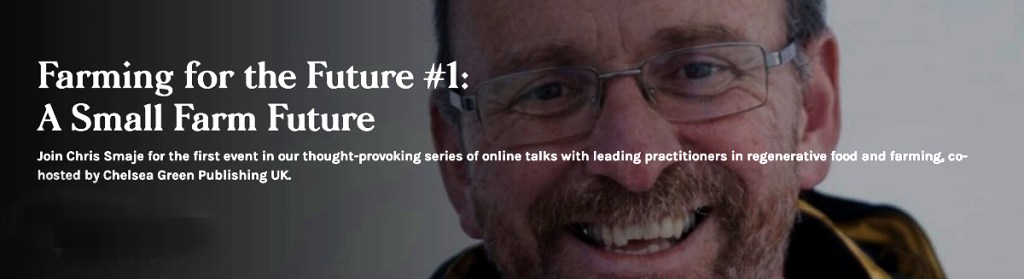
To change the topic, and offer a more optimistic tone. From Chelsea Green Publishing, online ‘Farming for the Future: a journey into regenerative practice’ webinar series. This involves collaboration with Dartington Trust. I went to their web site.

They offer a M.A in Arts and Place. Does that sound like a good fit for Annapolis County? We have a significant number of artists living in the region AND we have a Centre of Geographic Sciences.

Dartington Trust is in Totnes, Devon, England and is linked to Schumacher College (Small is Beautiful).

Acknowledgements

Klaus and Shirley for helping me focus. Jacob Fillmore and Extinction Rebellion fighting to save our forests from clearcutting and aerial spraying. Edward and Heather contribute in so many ways.

References

Rod Cumberland and Marc-Andre Villard Zoom meeting moderated by Catherine Harrop, CBC.

Chelsea Green Publishing , Farming for the Future Webinar Series

Dartington Trust M.A in Arts and Place.

Posted in Opinion

Spring Break

First, let me thank Edward Wedler for his blog contribution. The mapping of Plein Air Art sites supports our tourism industry.

While away in New Glasgow, I received the Winter Solstice newsletter from Bras D’Or Lake Biosphere Reserve. Check out the link below. It is a worthwhile read.

As we crossed the Kings-Annapolis County line on Highway #101, I noted the Southwest Nova Biosphere Reserve sign and wondered why a similar newsletter is not available here. Both biosphere reserves operate under the criteria set down by the UNESCO Man and Biosphere program. And yet, we still see the ongoing debate about forestry practices in our region.

On Friday, I picked up the latest Bridgetown Reader. It now offers a regular section ‘Reading where we live’. This week, it features Robie Tufts and’Birds of Nova Scotia’. Another new feature is the Word Search.

Since Stephen McNeil is not re-offering in the next provincial election, we are beginning to see candidates vying for the Liberal seat. In the current Reader, there are advertisements from Bill MacDonald, Carman Kerr and Susan Robinson-Burnie.

Given my concern about glyphosate spraying, as part of clearcutting (click here, here and here), I hope that we have candidates who support the Man and Biosphere values for Southwest Nova. This does not appear to have been the case under the present Liberal government.

For background, I would recommend the essay by Harry Thurston in The Sea among the Rocks ‘The Enemy Above, Millstream, New Brunswick’.

Coincidentally, Harry was interviewed Sunday by Angela Antle on CBC Atlantic Voice about his latest memoir, Lost River.

Postscript.

Frank Fox sent along the link to the Weekly Guardian. ‘Activist on hunger strike, calls for Canadian government to halt logging.’ In this case, it is the Nova Scotia government.

From the Bras D’Or Lake Biosphere Reserve Association (BLBRA).

Please help us connect people and nature. You can enrich the Bras D’Or Lake and it’s watershed through sustainable development, conservation and climate change adaptation. With the spirit of community and the power of global presence we can keep the lake golden. We are all in this together

I agree wholeheartedly from the perspective of the Southwest Nova Biosphere Reserve.

Acknowledgements

Frank Fox for the Guardian link. Edward Wedler for his blog on mapping Plein Air Art.

Heather shares my concern about the status of the Southwest Nova Biosphere Reserve and the impact of glyphosate spraying.

References

Harry Thurston, 2002, The Sea among the Rocks, Pottersfield Press.

Harry Thurston, 2020, Lost River, Gaspereau Press.

Bras D’Or Lake Biosphere Reserve quarterly newsletter, Spring Equinox Edition, March 20, 2021.

The Bridgetown Reader, Volume 13, Issue 9, March 19, 2021.

Posted in Art, New thinking

Mapping Nova Scotia Artists’ Plein Air Sites

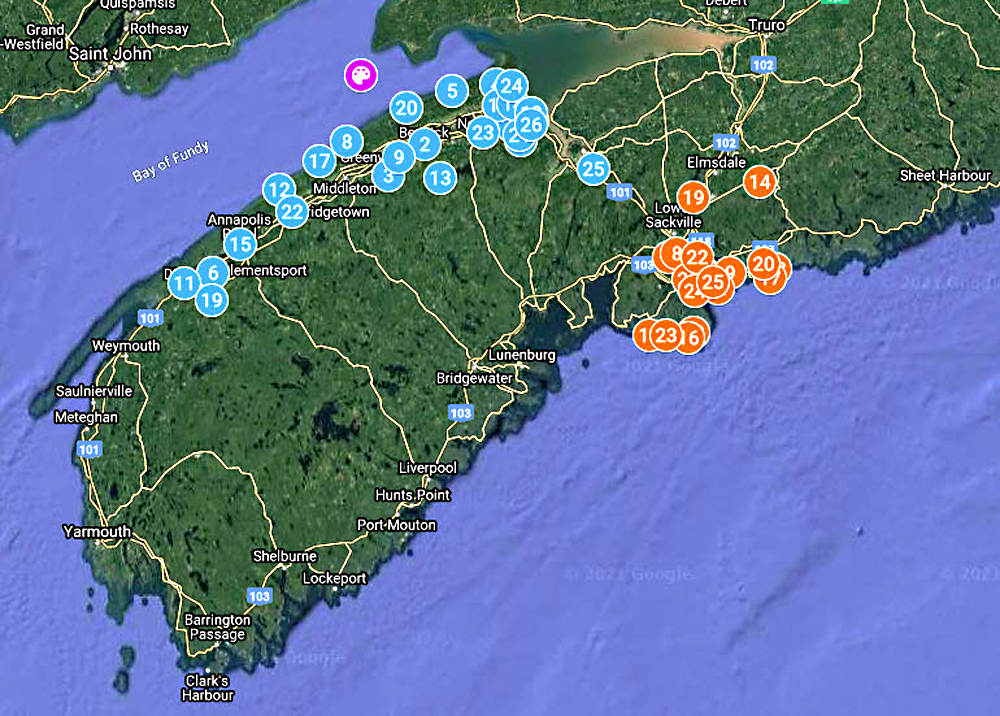
Fifty-two paint-out sites are planned for this season’s plein air artists in the Annapolis Valley and HRM.

For location details, click the map link: http://tinyurl.com/PleinAirMap then click a map pin or legend.

The one valued attribute of those artists who paint outdoors, on location (en plein air) is “extended geographic memory”. We watch, listen, smell, taste and touch our surroundings — for 2-3 hours. Geography becomes imprinted. As we gain artistic skills, we paint more than what we know. We paint more than what we see. We paint what we feel.

Eric Rhoads, publisher of Plein Air magazine and Fine Art Connoisseur magazine in the USA, states that the plein air movement is currently the fastest growing art movement in the world. There are tens of thousands of plein air artists in the world. So when they reacted positively to my interactive Google map that was a big deal for me. This is probably the first such map for plein air artists in the world, and so much more is possible.

Wow, that is very cool!

— Plein Air Magazine

I wrote back to Plein Air magazine, “Thanks. I did this on my own but with the right development team in place [thinking COGS’ student project] a plein air map could be scaled globally so artists could see when and where paint-outs are located, with contact and other information. This would go a long way to network the plein air community on their travels.“. They are now looking into this further.

Reactions from elsewhere have also been very positive.


POSTSCRIPT

Not many of our readers know we have a celebrated, world-class plein air artist living in Digby, Nova Scotia; just down the road.

Poppy Balser recently received yet another prestigious international award. This time it was for her watercolour “Light Washes Over Tidal Pools”, inspired by her many visits to Point Prim and area.

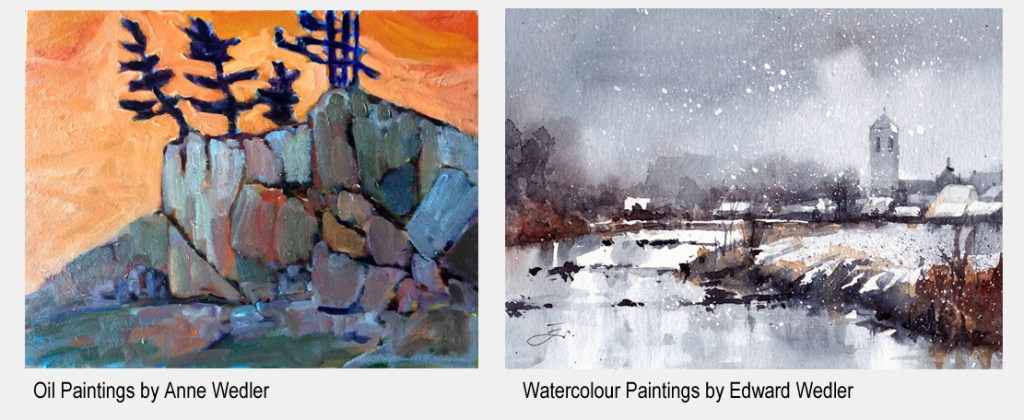
Oh, why not toot my own horn? A website I share with Anne is located at wedlerfineart.com
95% of our work is en plein air.