Posted in New thinking, Opinion

GIS and Vaccination

Brenda Thompson raised the question about travel time to vaccination clinics (CH Wednesday, March 17, page A8). From the description it appears that there are presently no vaccination clinics in Annapolis and Digby counties for the over 80 cohort, partly because of the specialized storage requirements.

In the same time window (this week) I have noticed:

  1. Statistics Canada is seeking to hire staff for the next census;
  2. COGS is looking for graduating student projects in Lawrencetown.

Let me join the dots.

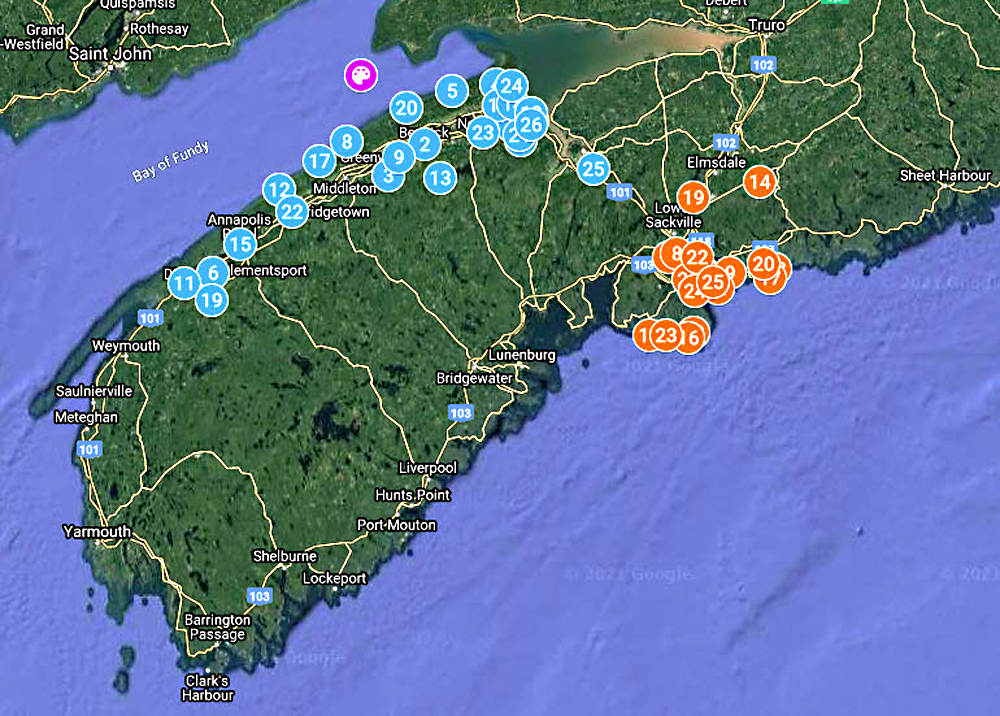
Not too many years ago, the provincial government had a group called Community Counts. This group used GIS technology to massage Statistics Canada census data at the enumeration area (EA) level. Given the need to locate vaccination clinics throughout Nova Scotia to meet the diverse needs of the population, would it not make sense to use this type of information and technology to map the demand?

Here is my proposal.

Obtain the latest census information for the province. Map the existing vaccination sites. Analyse the travel time for citizens to attend these sites. Identify the additional vaccination sites which maximize the accessibility for vulnerable populations.

In my day (pre-2011) this would be a relevant, excellent public service project for students graduating from COGS.

If we wanted to add an additional dimension, how about a map of citizens without a family doctor? Or access to high speed Internet? These are all examples of geographic research which could be facilitated by NSCC and CORAH . It is also an example of giving citizens access to public information. It’s also the “community” in Community College.


Ray Cronin has an essay in A Plague Year Reader on Maud Lewis. Here are a couple of quotations:

One cannot discuss Maud Lewis without also discussing tourism and the economic factors that made tourism so important in her life.”

“Tourism has been the most successful strategy for bringing jobs, even if only seasonally, to rural Nova Scotia. That seasonal market, coupled with government assistance programs, enabled people to stay in their rural homes and help fuel a folk art boom in the latter half of the 20th century unique to Nova Scotia in its scope and impact.”
p.115.


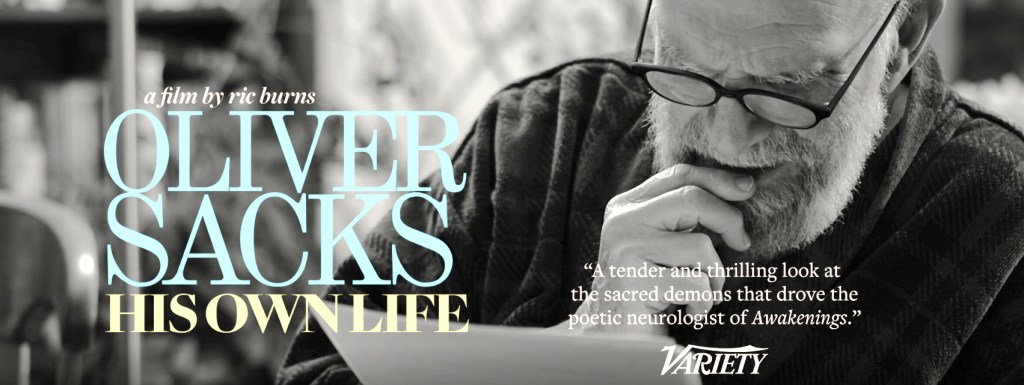
From Oliver Sacks’s book ‘Why we need gardens?’ p.243-247

The wonder of gardens was introduced to me very early, before the war, when my mother or Auntie Len would take me to the great botanical gardens at Kew.

The effect of nature’s qualities on health are not only spiritual and emotional but physical and neurological. I have no doubt that they reflect deep changes in brain physiology and perhaps even its structure

I remember well trips to Kew Gardens (see also The Royal Landscape) from my childhood days in West London.

Acknowledgements

Edward provided his critical artistic eyes. Heather shared the same space.

References

Ian Fairclough, Woman questions travel time to vaccine clinics, Chronicle Herald, Wednesday March 17, 2021, A8.

Ray Cronin, Gaspereau Field Guides to Canadian Artists, No. 5. Maud Lewis: Creating an Icon.

Oliver Sacks, 2020, Everything in its Place, Vintage Canada.

Posted in biographical sketch, Book Review

Happenstance

Siqsiq enjoys walking the trails in the Village of Kingston park. For her it is the chance to savour the scent trails, not found at home on the property in Paradise.

We added some extra dimensions to the trip. Rather than taking the direct route along Highway #1 or #201, we explored the country roads, along the edge of South Mountain from Nictaux Falls to Torbrook, Tremont to Greenwood.(page 55-56,Nova Scotia Atlas). This route offers spectacular views across the Valley to see the forest cover on North Mountain.

In Greenwood, we stopped at the Inside Story. On the newspaper rack, I spied A Plague Year Reader. It was free ‘Being a sampler of books issued by Gaspereau Press in the complicated year 2020’. The catalogue, of course, was beautiful in its black cover design.

For each publication, it includes the object, synopsis, about the author, Q & A with the author. The section headings are poetry, prose and limited editions. Within prose, I gravitated to Lost River: the Waters of Remembrance by Harry Thurston and Maud Lewis: creating an icon by Ray Cronin. Under limited editions, Wendell Berry. Notes: unspecializing poetry and Aldo Leopold Wherefore Wildlife Ecology ?

There was also time to purchase a book: Oliver Sacks’ Everything in its place, published in 2019. Sacks died in 2015.

So far, I have enjoyed ‘Remembering South Kensington’. I remember, too, the museums of South Kensington, especially the Natural History and Science museums. The result of a childhood, living in West London.

On the back cover, Maria Popova, Brain Pickings comments:

Everything in its place is a wondrous read in its entirety, irradiating Sack’s kaleidoscopic curiosity across subjects”.

I look forward to reading the remainder of Sack’s collection.

Check out, Brain Pickings, March 14, 2021 Wendell Berry’s poem, written in 1968, The Peace of Wild Things.

Postscript

With the occasional Spring day, we have been able to get into the orchard for the annual pruning. A delight !

Addendum
This is for Rocky Hebb

Let us read Nova Scotia Premier Iain Rankin‘s, Rethinking our health and wealth. Chronicle Herald D3, updated March 13th.

We will be asking whether existing programs are affordable, but more importantly asking whether they enhance our lives and livelihoods, and whether they sustain or harm the environment.”

Well, Mr Rankin, we will be watching closely how your actions sustain the environment. We have not been too impressed by your actions, when you had direct responsibility for this portfolio, under former Premier, Stephen McNeil. Specifically, the question of spraying and clearcutting of the forested landscape.

Acknowledgements

Heather and Siqsiq shared the walk and drive. Staff at Gaspereau Press and the Inside Story for their service to the community.

References

Andrew Steeves, 2021, A Plague Year Reader, Gaspereau Press.

Oliver Sacks, 2019, Everything in its place: first loves and last tales, Vintage Canada.

Maria Popova, Brain Pickings, March 14, 2021.

Iain Rankin, Rethinking our health and wealth. Chronicle Herald, updated March 13, 2021, page D3.

Posted in Opinion

Found Words

Last week, Heather attended a Centre of Rural Aging and Health (CORAH) seminar at the NSCC campus in Middleton. The concept of rural aging intrigued me. How does that contrast with urban aging? Does rural aging take into account the lack of high speed Internet or the shortage of family doctors?

Peter Nicholson and Jeff Larsen (Chronicle Herald, page D4) talk about the province leading in digital and virtual health care, post-pandemic. Will that help in rural areas of Nova Scotia? Interestingly, Edward Wedler discovered a reference to their web site ‘Policy Wonks’. Check it out.

As a a member of the Retired Teachers Organization (RTO) this week, I also received notification of two seminars, related to aging. From Aging 2 Halifax. Technology and Seniors: Stories that resonate. on March 15 and 18.

My belief is that we need to deal with our sense of place. Residents of Annapolis Royal have the option of walking the French Basin Trail. With the signage, they can start to identify ducks and other species.

If you live near Bridgetown, hike up to the Communications Tower above Valley View Park. Last week, at the top, we discovered a sign to Chalet. We followed it through the woods, eventually returning to the Mountain Road, where we had parked the car. Some interpretative signage would certainly enhance the experience.

Rural aging really amounts to ‘aging in place’. Whether living in Halifax or Paradise, there exists many opportunities to find those ‘lost words’, at the same time as discovering a new vocabulary. Just one example, check out Ruth Holmes Whitehead’s The Old Man Told Us: excerpts from Micmac history. 1500-1950. Learn more about eel weirs.

Acknowledgements

Edward found the Policy Wonks web site. Heather found the Chalet sign above Valley View park.

References

Policy Wonks web site

RTO link to seminars.

Ruth Holmes Whitehead, 1991, The Old Man Told Us: Excerpts from Micmac History, 1500-1950. Nimbus Publishing (link is to the new edition)

Posted in Book Review, Opinion

Lost Words

In 2007, the Oxford Junior Dictionary dropped forty common words concerning nature. In 2018, Robert MacFarlane and Jackie Morris co-authored, The Lost Words, “ a spell book that conjures back twenty of these lost words and the beings they name from acorn to wren”.

In 2020, MacFarlane and Morris published The Lost Spells. Last weekend, I found a copy at the Mad Hatter bookstore in Annapolis Royal.

To enchant means both to make magic and to sing out. So let these spells ring far and wide; speak their words and seek their art, let the wild world into your eyes, your voice, your heart

It starts with Red Fox and ends with Silver Birch, a lullaby. At the end is a glossary of sixty-four species.

Seek each flower and insect in these pages, speak each creature, find each tree. Then take this book to wood and river, coast and forest, park and garden; use it there to look, to name, to see.”

The book is a beautiful combination of language and art. It is designed to be read aloud. It includes a glossary and quiz — to find these species in nature.

Could we apply the same approach to ‘our nature’?

Last weekend, Peter Nicholson and Jeff Larsen published an opinion piece in the Chronicle Herald (D4) entitled “Welcome to InnovScotia — Six Ways to Build Back Better Post-pandemic“. While I can agree with their six strategies, my focus would be to promote ‘local-hood’. For example, can we develop a new language/art of landscape in Nova Scotia? How would we begin?

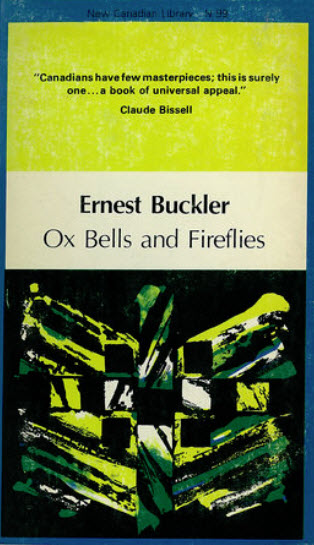
My suggestion, re-read Ernest Buckler’s Ox Bells and Fireflies in combination with Harold Horwood’s ‘The Magic Ground’.

Peter Nicholson uses the term ‘InNova- Scotia’. My approach would redefine the term to ‘In Nova Scotia’, with the emphasis on the geography. Consult with our leading ‘nature writers’ e.g Harry Thurston and others. Study the relationship between language (MacFarlane) and art (Morris), then apply to the present landscape.

As I mentioned to Edward, what we need is ‘the Inside Story’. This is a bit of a joke, since Edward and Anne used to run the bookstore, The Inside Story in Greenwood.

Postscript

Frank Fox sent me a link from the Guardian. That land has more value if left to Nature than if farmed. Interesting economics.

Photograph: Stephen Fleming/Alamy in The Guardian

Acknowledgements

Edward brings his artist mind to every blog. Rocky Hebb challenged me on the blog format. Heather and Siqsiq share our walks in Nature.

References

Robert MacFarlane and Jackie Morris, 2018, The Lost Words, Anansi Press.

Robert MacFarlane and Jackie Morris, 2020, The Lost Spells, Anansi Press.

Peter Nicholson and Jeff Larsen, 2021, Welcome to InnovaScotia — Six Ways to Build Back Better Post-pandemic, Chronicle Herald March 6. Page D4.

Ernest Buckler, 1968, Ox Bells and Fireflies, McClelland and Stewart, New Canadian Library, N99.

Harold Horwood, 1996, The Magic Ground, Nimbus Publishing.

Posted in biographical sketch

Chance Encounters

I received a phone call from Pam Ellis at the Bridgetown library. Last time I was there, I noticed a commemorative shelf of Ernest Buckler books and medals. The librarian encouraged me to request Gregory Cook’s (ed.) Ernest Buckler: Critical Views on Canadian Writers, published in 1972 through inter-library loan. It arrived this week.

The collection of criticism addresses all three of Buckler’s books: The Mountain and the Valley (1952), The Cruelest Month (1963) and Ox Bells and Fireflies (1968).

The copy on the shelf was donated by John Montgomerie, dated 1975. John is also a member of EBLES (Ernest Buckler Literary Event Society). Only after reading Cook’s book did I fully appreciate that Buckler only wrote three books.

After reading Harold Horwood, The Magic Ground, today (Friday) I found myself in Kentville and decided to visit Gaspereau Press on Church Street. Even though the sign said ‘no visitors’ I was welcomed and able to ask about Horwood’s Cycle of the Sun. I purchased #24 of a limited edition of fifty copies. Cycle of the Sun is a five part poem. The five parts are Proem, Fire Festival, Caribou Hunt, Winter Solstice and Return of the Sun. From the prefatory note:

Life was an interlocking series of cycles closely related to the seasons and the migration of game animals (particularly seals, caribou, fish and birds). The cycle of the sun was, of course, paramount to all this, and was seen as the mainspring of the cosmology.

The Inuit, the northern hunters, are those whom the author has been associated both by family and by experience”.

From Chelsea Green Publishing, I received notice of a book by Robert Somerville, Barn Club: a tale of forgotten elm trees, traditional craft and community spirit. The email includes a link to a short YouTube video. The construction of the barn reminded me of the work of Alex Cole at Little Foot Yurts. For several years, Alex has coppiced poles for yurt construction on Andrew’s property, within the context of hands-on workshops.

This serves to illustrate common values, plus illustrate alternative use relationships to the Acadian forest landscape.

Afterthought.

Peter, my brother, sent me this audio link from the BBC. Hope you enjoy it, as much as I did.
Sacred Cows and Sushi Rolls

Postscript

Congratulations to Lunn’s Mill beer company on their fourth birthday. It’s good to support local.

Acknowledgements

Pam Ellis at Bridgetown library. Unknown staffer at Gaspereau Press. Peter for the BBC4 point of view. Edward for his artistry. Heather travelled with me to Kentville.

References

Gregory Cook (Ed.), 1972, Ernest Buckler: Critical Views of Canadian Writers, McGraw Hill.

Harold Horwood, 2003, Cycle of the Sun, Gaspereau Press.

Robert Somerville, 2021, Barn Club: a tale of forgotten elm trees, traditional craft and community spirit, Chelsea Green Publishing.

Posted in Book Review

The Magic Ground

Last weekend we were at the New Glasgow library. I was looking for a specific Harry Thurston book for Heather’s Dad. While there, I discovered The Magic Ground, written by Harold Horwood. It includes an essay ‘In Defence of Hobby Farms’. The following paragraph on p.54 caught my attention.

“That is one of the reasons why I live on the shores of the Annapolis Basin, why I spend so much time in a woodlot and an orchard and among flower borders, why I choose to work here, surrounded by life triumphant, instead of in a great city, where death seems likely to succeed. Here I can hope that my work will inspire people, fill them with confidence, help them to love the world rather than dread its terrors.”

Subsequent research online, unearthed M.A. thesis by Rochelle Mary Spracklin at Memorial University, “Didacticism in the Fictional Work of Harold Horwood’, 1990.

Also referenced was a book of poetry, published by Gaspereau Press, Cycle of the Sun: A lament for northern Labrador. In Horwood’s own words, “the poet, Harry Thurston was in the audience and came to me and asked to be allowed to submit the poem to his publisher, Gaspereau Press”.

I will enjoy the remaining essays in the Magic Ground, while I wait to see if I can obtain a copy of Cycle of the Sun, through Jaki at the Lawrencetown library.

Acknowledgements

Jaki Fraser at the Lawrencetown library. Edward for his additions. Heather for sharing the drive to New Glasgow.

References

Harold Horwood, 1996, The Magic Ground, Nimbus Publishing.

Rochelle Mary Spracklin, Didacticism in the Fictional Works of Harold Horwood, M.A. thesis 1990, research.library.mun.ca

Harold Horwood, 2003, Cycle of the Sun, Gaspereau Press

Harold Horwood at encyclopedia.com

Posted in biographical sketch, Video Review

The Food Chain

Heather has been feeding the birds all Winter. The main customers are chickadees, mourning doves, blue jays and red polls, and an assortment of woodpeckers — plus the squirrel family. Tuesday, looking out the living room window, I saw a bird flash by. It was a sharp-shinned hawk, in the process of preying on a mourning dove. Clearly, we are feeding others in the food chain.

On Edward’s recommendation, we started to watch the series: Canada: the story of us on CBC Gem. There are ten episodes, each of forty five minutes, covering the main events in the history of the country. Initially, we were stunned by the combination of beautiful landscapes, with commentaries by well-known Canadian personalities. It was a great way to fill snowy evenings. We are on episode six; it covers the First World War. The format is beginning to seem repetitious, however, I am sure we will finish the series.

In return, I would suggest Mango Dreams on Netflix. This is the story of an Indian doctor, reliving his childhood memories. Again, it offers insight into the political reality of the Indian sub-continent.

Acknowledgements.

Edward for his movie recommendation. Checking Google, it seems there are similar series for both the United States and Australia. Of course, I imagine that not everyone in Atlantic Canada will have the same list of historical events. Heather shared the movie watching.

References

Canada: the story of us on Gem (2017).
Mango Dreams on Netflix (2016)

Posted in Book Review

Whole Earth

This week, I received a parcel in the mail from Amazon. It contained a book and a game, from Patrick and family, for my birthday. The book was Under a White Sky: the Nature of the Future by Elizabeth Kolbert. The game was Exit the Game. Dead Man on the Orient Express. (Have not checked out the game, yet)

Kolbert won the Pulitzer Prize for her previous book, The Sixth Extinction. She is a staff writer at the New Yorker. Heather had read the Sixth Extinction, and enjoyed it. “In The Sixth Extinction, Kolbert explored the ways in which our capacity for destruction has reshaped the natural world”. Patrick selected the book because he had not seen any blog references.

Kolbert divides her current book into three sections: Down the River; Into the Wild; Up in the Air. Down the River describes the diversion of the Chicago River, the invasive carp species, and the changes in the Mississippi’s hydrology. Into the Wild includes chapters on the endangered Pupfish in Death Valley, the global threats to the coral reefs, and invasive cane toads in Australia. The final section, Up in the Air, includes a chapter on climate change and the Greenland ice sheet.

In the words of the author:
“This has been a book about people trying to solve problems created by people trying to solve problems.”

My response to Kolbert’s book was to head back to my bookcase. Did not Stewart Brand talk about similar issues in Whole Earth Discipline: an Ecopragmatist Manifesto in 2009 ? On the same shelf, I noticed John Ralston Saul’s The Unconscious Civilization. Where does that fit ?

Another perspective can be found in the current Brain Pickings, February 21st. There, you will find reference to the writing of William Vogt, Road to Survival.

Postscript

Friday morning, we dropped into the Bridgetown Library. I picked up a copy of Paradis Terrestre. It is a history of the village of Paradise, Nova Scotia compiled by members of the Paradise Women’s Institute. I was interested in Chapter 13, Micmac Memories. At the entrance to the Library, I noted a collection of books by, and about Ernest Buckler. Must check out, next time.

Today (Sunday) we skied the Rifle Range Road. It was hard going. Now, that the surrounding trees have been clear-cut, the trail is more exposed to the sunlight. This makes for heavier snow, especially in the late afternoon.

By the way, Edward and I share the same birthday, 14th February.

Acknowledgements

Patrick for the birthday gift. Edward for his artistic support. Heather for sharing the reading and the skiing.

References

Elizabeth Kolbert, 2021, Under a White Sky: the Nature of the Future, Penguin Random House

Stewart Brand, 2009, Whole Earth Discipline: an Ecopragmatist Manifesto, Viking (Penguin Random House).

John Ralston Saul, 1995, The Unconscious Civilization, House of Anansi.

Paradis Terrestre: a History of the Village of Paradise, Nova Scotia. Compiled by members of the Paradise Women’s Institute.

Brain Pickings February 21, 2021, Road to Survival.

Posted in Article Review, Video Review

Glad Tidings

This week, I received the quarterly newsletter from Jon Percy. Fundy Tidings is a useful compendium of initiatives that impact the ecology of the Bay of Fundy. It serves to reinforce the concept that even within the global pandemic environment, there are still individuals concerned about our local geography: landscape and seascape.

Jon performs a service to the community by documenting the activities of the Bay of Fundy Ecosystem Partnership (BOFEP).

Green Elephant

To celebrate my birthday and Valentine’s Day, Heather and I enjoyed a breakfast of Belgian waffles at the Green Elephant in Kingston.

White Tiger

To top off the day, we watched The White Tiger on Netflix. Set in India, the story describes the journey from rural poverty to entrepreneurial success.

Of course, white tigers are extremely rare, as indeed, are green elephants.

Postscript

On Friday afternoon, we picked up ‘take and bake’ tacos with the fixings at Lunn’s Mill on the Carleton Road, Lawrencetown ( Highway #201). Very good.

Acknowledgements

Jon Percy for Fundy Tidings. Heather for sharing our meetings with both the Green Elephant and the White Tiger. Edward added his graphic talent.

References

Fundy Tidings, Newsletter of the Bay of Fundy Ecosystem Partnership, Creating-sharing-using knowledge about the Bay of Fundy, February 2021 issue

The White Tiger 2021. Netflix movie.

Posted in biographical sketch

Thunder and Ocean

This week, I was listening to Shelagh Rogers on CBC, The Next Chapter. She was interviewing Bruce Kirkby about his book, Blue Sky Kingdom. This coincided with a stop at the Odd Book store. Heather found a copy of Chogyam Trungpa, Born in Tibet.

In the Blue Sky Kingdon, Kirkby and his family spend time at a Buddhist monastery in Tibet. Trungpa describes their daring escape from Tibet into India, fleeing the Chinese communists.

Back home, I pulled off the shelf, David Swick’s book Thunder and Ocean: Shambhala and Buddhism in Nova Scotia. I had read it several years ago. From the backcover,

Thunder and Ocean is the story of an historic union: one old Canadian province and two ancient spiritual traditions”.

Besides asking Jaki Fraser at the Lawrencetown library to request the Bruce Kirkby book, I had the following questions:
Is it possible to separate the religious beliefs from the landscape?
Like Kirkby, do we need to see how these beliefs are practiced in Tibet today?
What is it about the Nova Scotia landscape that attracted Trungpa and his followers?

Certainly, I remember well the trip that Heather and I made to Gampo Abbey at Pleasant Bay, Cape Breton.

Gampo Abbey, Cape Breton, Nova Scotia

Wednesday was a cross-country ski day. Rick and Kathy invited us to their property on the Perotte Road. South Mountain gave us deep powder snow after Monday’s storm. En route, we stopped at the old Post Office for treats, and take out coffee at Lola’s Café, before turning onto the West Dalhousie Road at Lequille.

Postscript

Thinking about Annapolis County. Reading the works of Steve Skafte on Abandoned Roads of Nova Scotia, leads to questions about the history of our landscape. Is that part of the attraction?

Acknowledgements

Thanks to Rick for the skiing invitation. Kathy, Angela and Jan for the lunch snacks. Edward provided graphics support; Heather for her Shambhala library.

References

Bruce Kirkby, 2020, Blue Sky Kingdom, Simon and Schuster.

David Swick, 1996, Thunder and Ocean: Shambhala and Buddhism in Nova Scotia, Pottersfield Press.

Chogyam Trungpa, 1966, Born in Tibet, Shambhala Publications.