Posted in biographical sketch

After Teddy, Bear?

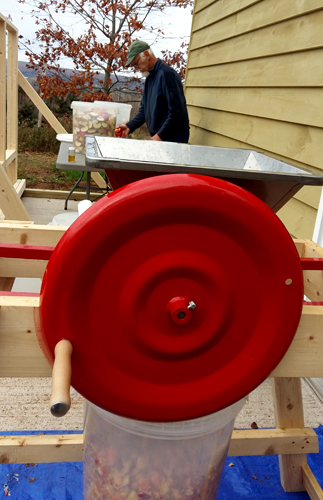
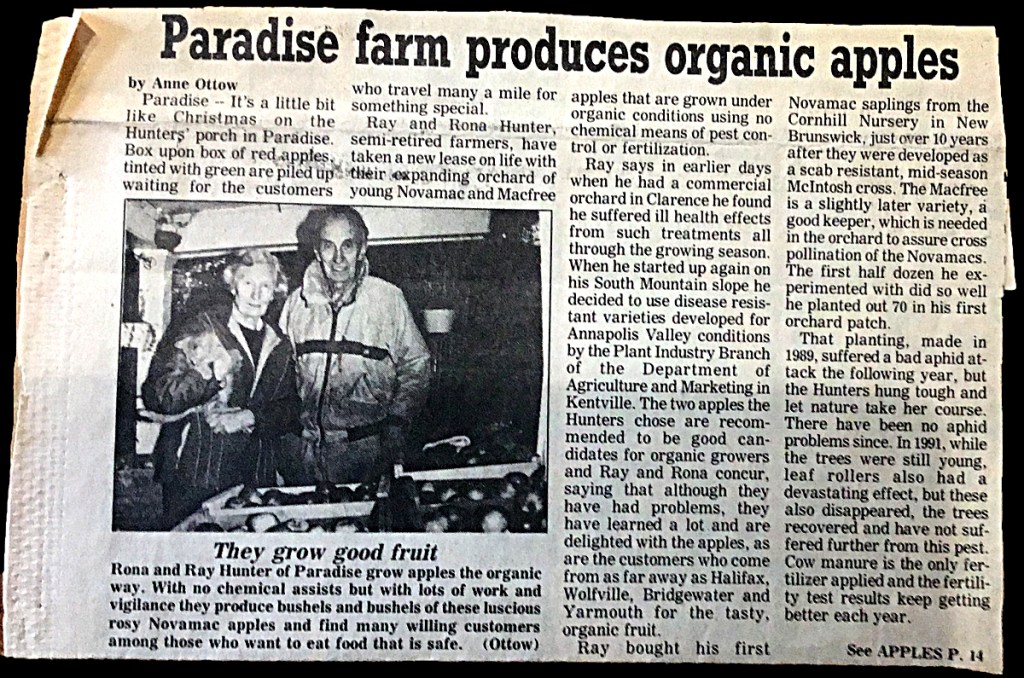
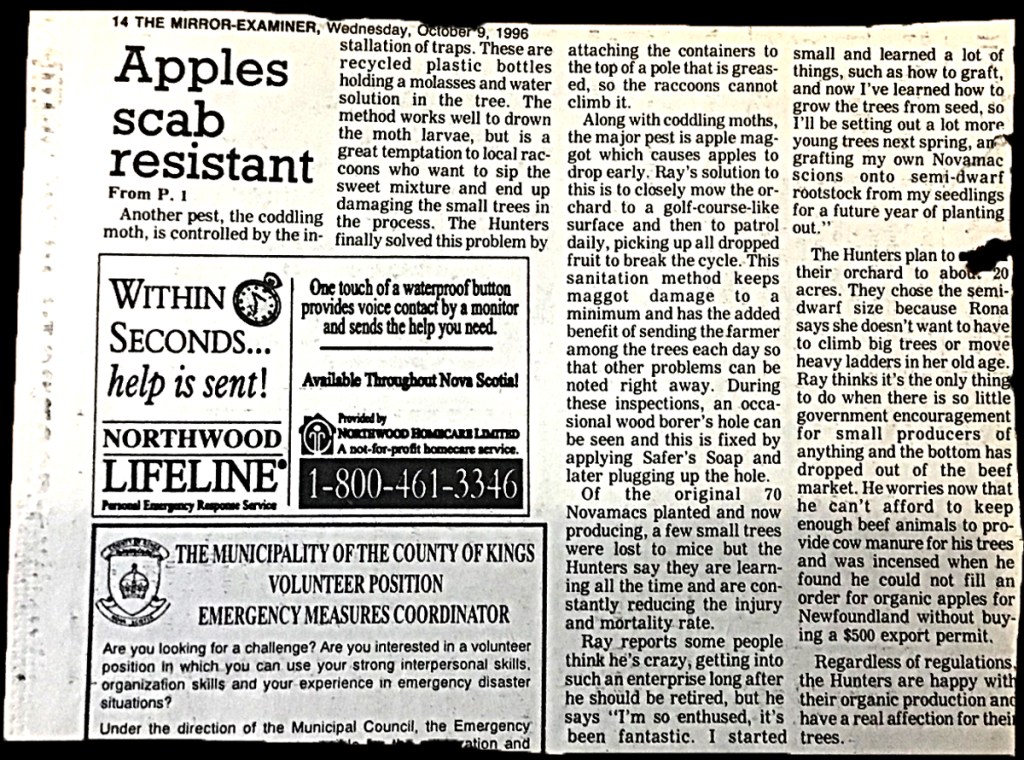
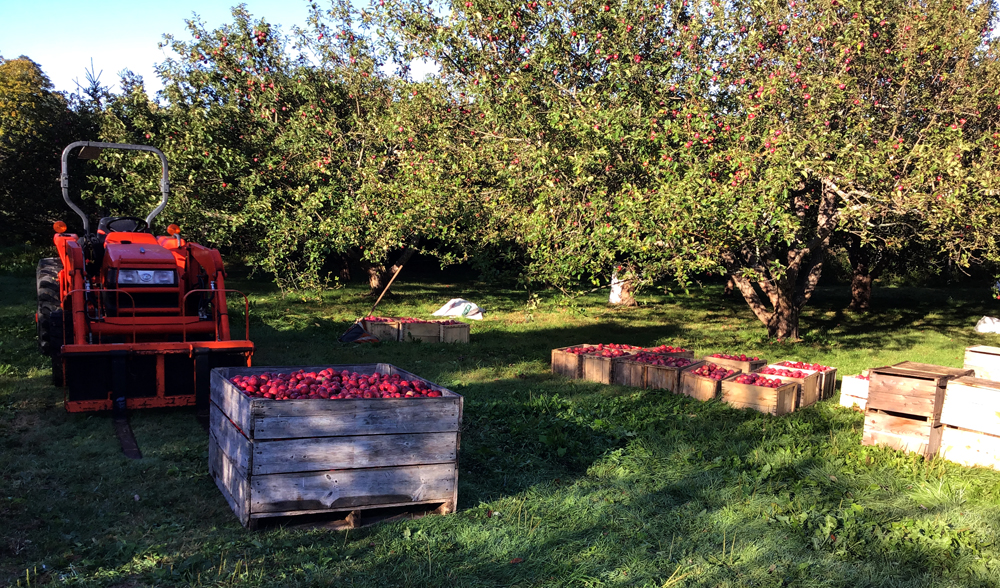
For the last twenty-four hours we have had a reprieve from apple picking. Tropical storm ‘Teddy’ gave us high winds and 50-100 mm. of rain. Fortunately, our organic orchard is somewhat protected, but the storm has added to the drops which need to be picked up and shipped to Brian Boates Farm for organic cider vinegar.

Boates Farm

In response to Edward’s post on ‘Maps Through the Eyes of Children’, I received the following comment from my graduate supervisor, Mike Goodchild.


“An interesting topic indeed. It reminds me of Allestone, William Blake and Benjamin Heath Malkin, imaginary maps in general and imaginary maps created by children in particular.”

“Grandson Alastair (now 15) has been fascinated with maps from an early age; when he was planting out broccoli in our garden this Spring he called his work Utah because of the shape of the area he filled with plants”

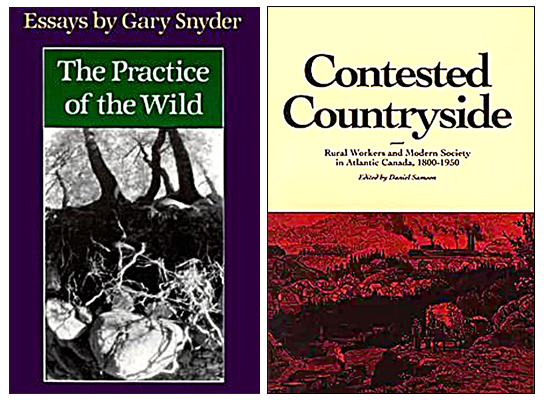
After going to the bank in Bridgetown, Heather and I casually dropped into Endless Shores Books. Within fifteen minutes, I had ‘discovered‘ three books.

1 Tim Smit, 2002, Eden. Edenproject Books


‘In March 2001, the completed Eden Project in Cornwall opened its gates for the first time. Out of a disused china clay pit the vision of a living theatre of plants and people, and refuge for the world’s endangered species, had at last been realized.’

2 Tim Homan (Ed.), 1991, A Yearning Towards Wildness. Peachtree Publishers.


The book is divided into three sections:
In Wildness is the Preservation of the World
Consider the Beauty of the Earth
Let Man tread gently through Nature

3 Gretel Ehlich, 1985, The Solace of Open Spaces. Penguin.

’Ehrlich’s best prose is in a league with Annie Dillard and even Thoreau. The Solace of Open Spaces releases the bracing air of the wildness into the stuffy, heated confines of winter in civilization’

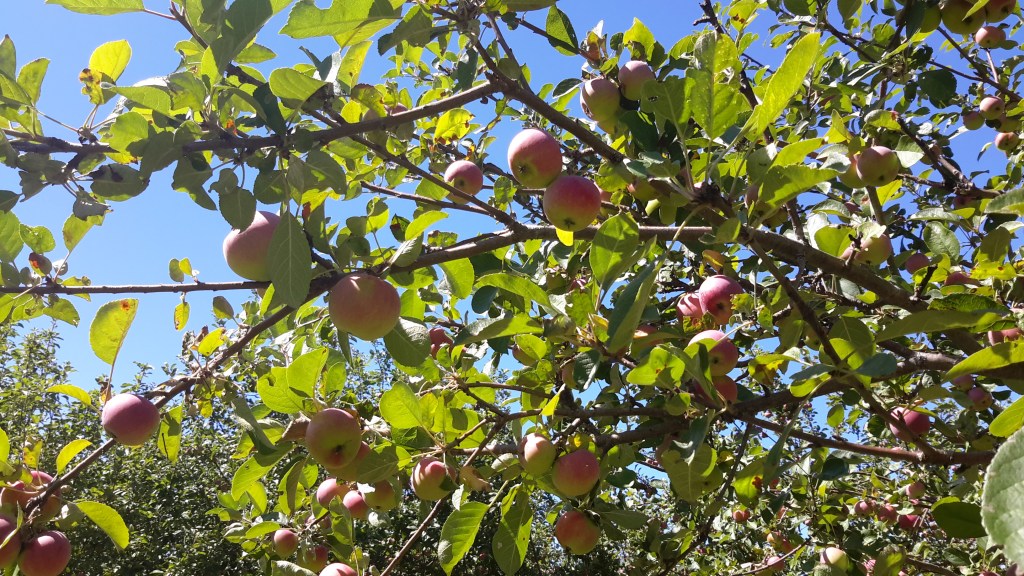
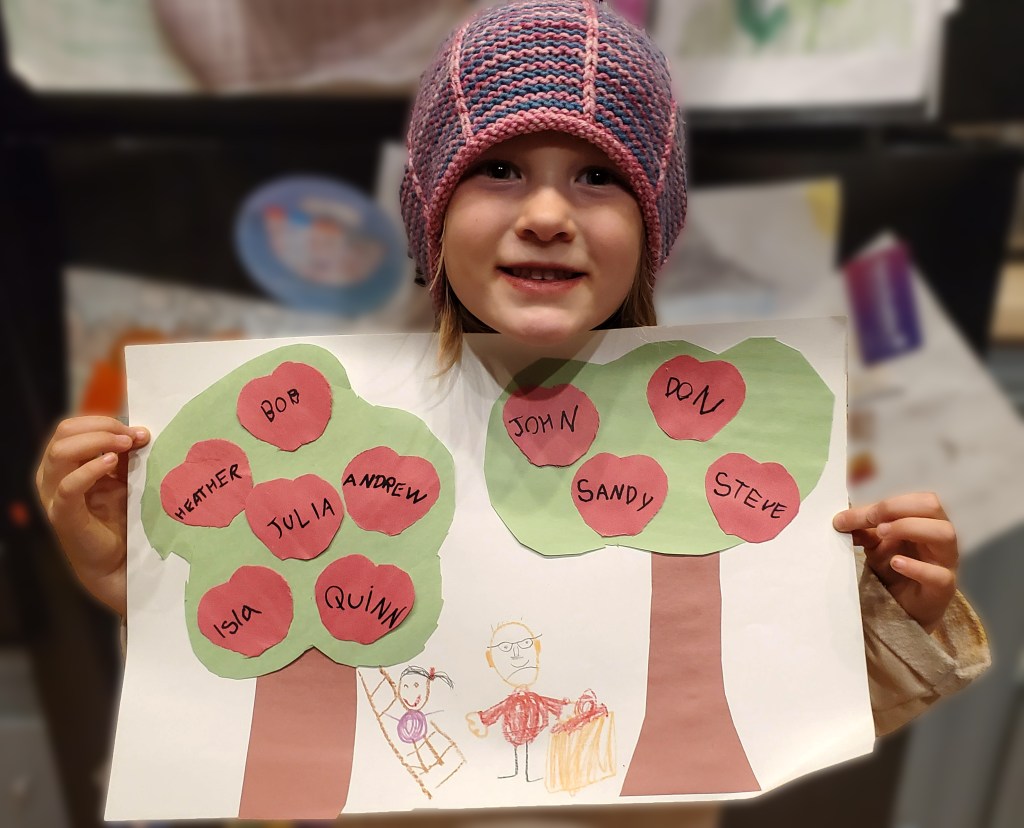
This morning, I checked out the orchard. The branches are still heavy with apples and droplets of rain. On the ground, it looks like another critter had enjoyed the fruit (bear scat).

Apple drop and animal droppings

Acknowledgements
Thank you to Edward on his blog post, and the feedback from Mike Goodchild. I will have to check the references. Heather has been working hard in the orchard picking from the trees, as I attempt to keep up with the drops.

References

Tim Smit, 2001, Eden. Edenproject Books.
Tim Homan (Ed.), 1991, A Yearning towards Wildness. Peachtree Publishers.
Greta Ehrlich, 1985. The Solace of Open Spaces. Penguin Books.

Posted in New thinking

Maps in the Eyes of Children

My daughter, Allison, spent much of the summer camping in Southern Ontario, close to her home. On those trips my two grandchildren created maps as one of their pastime activities. My grandson is six years old and his sister is four years old.

Great Lakes as imagined by my six-year old grandson.

To place his campsite location in context within a larger geography, my grandson mapped the Great Lakes from memory — something I would have difficulty doing.

Closer to home, he mapped features that were important to him at each campground.

Campground map by my grandson

The features intrigued me. He names the trails and records their lengths, marks roadways and walkways, streams and green spaces, and important features to a six-year old that I cannot recognize. Tents are numerous and line well-travelled paths. Important to him (and the family) is the location of the public washrooms. This is one of about eight maps he drew at different campsites.

Of importance to his younger four-year-old sibling was the location of two blue water bodies, connecting river, and the land in between. An understandably simpler map.

I recall my many mapping conversations with former COGS instructor Konrad Dramowicz, years ago. He studied how children perceive their space and geography from maps he had them create, based on their travels to and from school.


Looking further into this topic, I was referred to Dr David Sobel in New Hampshire, and his book Mapmaking With Children, in which he discusses the crisis in geography education. The story doesn’t end here. I emailed Dr Sobel and he writes,

Yes, some children have the mapmaking gene expressed more strongly — a great thing to encourage.  Unusual, from a developmental perspective, for a 6 year old to have internalized a map image of the scope of the Great Lakes system.

My two older grandchildren from Nova Scotia also create maps. These maps are dynamic and strategic based on their invented game call “The Wall”. It is a game designed to see who can outwit the other, to infiltrate their opponent over, under, around or through The Wall. This game has provided hours of entertainment for them, and their adult challengers as well.

While instructing at COGS, eons ago, I did visit some elementary schools in Annapolis County to talk about Canada’s space, remote sensing and mapping programs. When bringing in some local airphotos and topographic maps to middle school aged youth their exuberance was surprisingly upbeat. Youth want to understand their geography. I hope that COGS continues to fightback the geography crisis noted by Dr Sobel.


Reference

Dr David Sobel, 1998, Mapmaking with Children: sense of place education for elementary years, Heinemann.

Postscript

For those interested in making a “collage map” watch this video from the Art Gallery of Nova Scotia. LINK: https://youtu.be/H1FXyFH7HrE This project is inspired by the 1975 work, “A Map of Meagher’s Grant”, by artist Evelyn Dickie.

“This is a great activity to do to celebrate the neighbourhood we live in or a home from the past that holds dear to our heart.”

Posted in Event Review

Anatomy of a Protest

This is written from a Geographer‘s perspective. Nina Newington and the team from Extinction Rebellion would likely have a different, but complementary perspective.

Protest site (a Neil Green drone image).

Step 1 Where are the spray parcels? There were three parcels for spraying in Annapolis County. What are their PIDs? (Parcel Identification)

Given the PIDs, they can be located on a map. David Colville at COGS produced a map showing the three parcels on a topographic map base.

Step 2 How do you get to the parcels if you plan to occupy the site?

This requires field work. Driving rough logging roads looking for access points to the spray parcels. Since the decision has been made to occupy, you need good directions and maps to assist anyone interested in the occupation. David added routes to the parcel map.

Step 3 Which residents of Annapolis County will be directly impacted by the spray? i.e. down slope / down wind. The most adjacent citizens live along West Inglisville Road and Highway 201.

We produced an 8 x 11″ handout with a map of South Mountain showing the parcels. On the back, the warden’s letter to the province requesting NO Spraying in Annapolis County. We distributed the handout to citizens in the immediate area. This led to the identification of Mud Lake as part of the Village of Lawrencetown water supply catchment.

Step 4 Once the protest camp was in place, contacted Neil Green about drone photography of the site. This clearly shows the camp on the spray parcel. Release information to the media.

Protest site at clear-cut (A Neil Green drone image)

These are only some of the actions. Others include making signs visible from the air, placards, posters. We received excellent support from Integrity Printers, Lucky Rabbit, ARCH and PO bakery.


What are the lessons?

  1. Engage other like minded citizens and protest organizations
  2. Create products that can be understood by the different groups (i.e. maps)
  3. Support community organizations representing citizens e.g. Municipality of Annapolis, Village of Lawrencetown to lobby provincial government.

What next?

We now have had a second small victory – first Burlington and now Eel Weir Lake and Paradise Lake (Roxbury). We know there are 42 sites across the province approved for spraying by Nova Scotia Environment in Amherst. We have stopped 3 sites in Annapolis County and one in Kings County. Where are the other 38 sites?


What do citizens need from this government?

  1. A searchable map of all ‘current’ crown land.
  2. A map of the crown land that has been made available to the forest industry for harvest.
  3. A map of the land that has already been harvested by clear-cutting or ecological forestry.
  4. A map of the current clear-cuts. That shows which have already been sprayed. That shows which are designated for spraying. (38 sites). The spray window is September 1 – November 1.

Conclusion

Access to geographic information is critical. We need maps, drone photography, satellite imagery. These resources can help generate input from citizens as part of the decision process. We cannot achieve sustainable Forestry without these inputs. Citizens need to know when crown land has been redefined, and for what purpose.

There is a wonderful role for students at the community college (e.g. COGS) to help make this type of Geographic information available to community groups.

For a different forestry perspective, check out the CBC interview with Ken Gray, the province/WestFor is competing directly with the small loggers in SW Nova Scotia.

The bottom line … we need to start respecting the landscape, it’s inhabitants and fellow citizens. No clear-cutting and no spraying. There is a better way.

Acknowledgements

I want to acknowledge the efforts of Heather Stewart. She was instrumental in the design of posters, placards and sandwich boards. She also conducted much of the door to door contact with residents. I want acknowledge Nina Newington in her communication and coordination role. Politically, Timothy Habinski and Council, Brian Reid and the water supply committee for Lawrencetown were the interface with the provincial government. Thank you. Finally, Larry Powell for his excellent video and Neil Green for dramatic drone imagery. Edward Wedler for adding the graphics. He understands Remote Sensing too.

Postscript

Camping out in a gravel pit in a clear-cut, listening to coyotes, makes you appreciate the plight of the homeless in our cities. Reminds me of George Orwell’s book ‘Down and Out in Paris and London’.

Posted in Opinion

What is truth ?

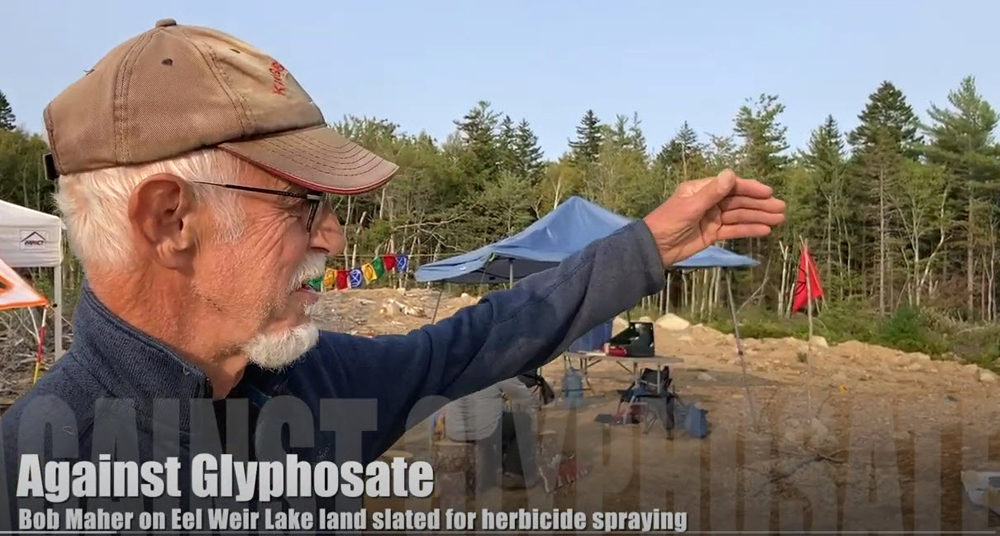
This week, Heather and I have been spending a fair amount of time at the Eel Weir Lake camp with the Extinction Rebellion, protesting the aerial spraying with Glyphosate over three parcels in Annapolis County : one at Eel Weir Lake and two at Paradise Lake.

At the protest site. VIDEO LINK (by media reporter Lawrence Powell)

As we tried to help with directions to the site, Heather noticed a a difference between the fifth edition of The Nova Scotia Atlas (2001) and the seventh edition (2019).

Maps from two dates, about twenty years apart (Left 2001; Right 2019)

Her sharp eye noted:

  1. The location of West Inglisville has moved from the turn in the road on the West Inglisville Road to the end of the Trout Lake Road (cartographic freedom)
  2. the road changed from Local Road (red) to Loose Surface(black)
  3. the areas designated as crown land (Green) were much more extensive in 2019 than 2001.
  4. You can still observe the Eel Weir Lake parcel however it is now surrounded by crown land, especially towards Paradise Lake.

The questions are:

Can the crown land now be clear-cut?

If so, by whom. Freeman Lumber?

After clear-cutting, will we see more aerial spraying?


I remember when I used to teach Geography at the university that Mark Monmonier wrote a wonderful book, How to Lie with Maps (1996).

In the case of the Nova Scotia Atlas, it seems that there have been political decisions to change the designation of crown land. This would then give the government the go ahead to contact the forestry sector for forest management. It could be clear-cutting, including spraying, or it could be ecological forestry. Either way, there should be a process where the citizens can see these maps. At the current rate, the whole province could be designated clear-cut and set to be sprayed. This is TOTALLY unacceptable.

What is the definition of ‘crown land’? Is it land for recreation and enjoyment by Nova Scotians? Or simply a land bank for the forestry industry?


Last night, I was talking to George Rizsanyi at the protest camp. We were talking about Labrador and Mina Hubbard. Here is the reference.
The woman who mapped Labrador: the life and expedition diary of Mina Hubbard.

George, enjoy.

Acknowledgements

Thanks to those individuals who joined us the camp: Steve, Rick, Carol, Kathy, Heather, Darlene, Debby, Nina, Peter, Neil, Justine, George. Visits from Larry Powell and Tim Habinski. Some dropped in, others stayed overnight. Special kudos to the Extinction Rebellion team. Heather for all her hard work and keen eye. Siqsiq for keeping the coyotes at bay. Edward and David for help with the graphics.

References

Mark Monmonier, 1996. How to lie with maps. University of Chicago Press

Mina Hubbard, May 2012. The woman who mapped Labrador: the life and expedition diary of Mina Hubbard. McGill University Press.

Posted in Opinion

No Spraying in Paradise

It is a busy time in Paradise. Time to pick apples, and to harvest tomatoes and vegetables from the garden. And, protest about the possibility of aerial spraying at Roxbury on Paradise Lake and at Eel Weir Lake. There are two parcels of land at Roxbury and one parcel at Eel Weir Lake (see map HERE).

“Don’t Spray Us” sign on Hwy 201

The Eel Weir Lake and Mud Lake are part of the water supply catchment for the Village of Lawrencetown.

Heather and I made a reconnaissance of the Eel Weir Lake parcel. We checked out the access roads, off the Inglisville Road. Finally, deciding that the best access to the protest camp would be from the Rifle Range Road.

On our travels, we found the remains of the tree planters bus. Hidden away in the woods, after the last cycle of harvesting and planting.

Bus buried into the South Mountain woods

If you want to obtain a good visual picture of the forest cover, and landscape, key in West Inglisville into Google Earth.


When we were at the Burlington rally, one of the team mentioned the title of a folk song, ‘No cell phones in Paradise’. I would add a sign ‘No spraying in Paradise‘. Note the frog in the above poster.

If you spend time up in the woods on South Mountain, you will notice the beautiful night sky. On the ground, you will see the amphibians (frogs, toads, salamanders), the bees on the goldenrod, the birds and other critters. Plus the rich mix of Acadian forest species.

If you live down slope, along the Inglisville Road, Highway #201 or Highway #1 it is likely that the rain falling on the forests of South Mountain is making its way down to the Annapolis River.

Please check the news release for further information , and support ‘No spraying in Paradise’.

Postscript

Want to see what happens three years after whole forest clear-cutting near Middle Musquodoboit, Nova Scotia? Click HERE.

Posted in Event Review

Out of Sight; Out of Mind ?

This Tuesday, Annapolis County municipal council voted unanimously to send a letter to the provincial Ministers of Lands and Forests, and Environment to stop aerial spraying of glyphosate in the County. In particular, three parcels owned by Freeman Lumber Ltd: two in Roxbury adjacent to Paradise Lake and one next to Eel Weir Lake.

This weekend, a map was produced showing the three parcels on a topographic base.

Land set for aerial spraying shown in red.


Also, on the weekend, I finished reading Brenda Thompson’s book Tales from the End of the Old Military Road.


I found these two paragraphs relevant today.

“Most local people were disgusted and referred to the clear cuttings as ‘moonscapes’. The land looked barren, scary as if the world we knew was coming to an end And this was what the new world would look like. The new world was called Clear Cutting and everything in the path of the monsters, save one ridiculous little patch of trees was sheared, ripped and slashed down. Trees, brush, nests, dens – it did not matter to the Monsters. All of it was to be killed.” p.134.

“The local people had tried hard to convince both their government and the corporations that logging could be done in a different manner, a responsible manner which did not have land looking like a war zone with animals, birds and even mushrooms losing their habitats. The government listened but were politically beholden to the corporations.” p.135.

What can we do?

Over two years ago, I have posted a couple of blogs.

Community monitoring of the landscape, 21 January 2018 (Drone video link HERE).

The Five Little Pigs, 04 May 2018 (Drone video link HERE).

These blogs have links to drone video of the clearcuts on South Mountain taken by Neil Green.

What can we do today in 2020?

We can encourage Annapolis County Municipal council to represent the interests of its citizens. DONE.

We can obtain maps of Annapolis County which show all theparcels that have been clearcut, their ownership and spray schedule.

We should notify citizens living down stream/ down slope of the spray parcels.

We should work with forestry companies to adhere to ecological forestry practices, especially in those watersheds containing rural communities.

Acknowledgements

The support of the Annapolis County Municipal Council. The Burlington team and the Extinction Rebellion group for dogged determination. Edward supplied the blog graphics.

Postscript

Heather joined me on a road trip this evening (Wednesday). From our house on Hwy#201, we went up the Trout Lake Road to the Crisp Road and to Hwy. #10. Turn off to Trout Lake Road. Drive logging roads to Roxbury, from Roxbury to Hwy #201 and home. Total distance 39 km. Time 6 pm – 7:40 pm. We were in a Honda CRV. Only recommend for high clearance trucks.

Road Trip Wed 09 Sep 2020

Reference

Brenda Thompson, 2019. Tales from the End of the Old Military Road. Moose House Publications.


Posted in New thinking

Island of Hope: the Annapolis Valley

After the rally in Burlington, the next step was to try to persuade the Annapolis Municipal Council to ban spraying in the County. The Warden and some Councillors appear to be receptive to the motion.

The need to spray is contingent on previous forest clear-cutting. Therefore, the larger issue is to stop clear-cutting.

What can citizens do (for example)?

In the case of spraying in Annapolis County, we can lobby our Councillors. We also need to be fully informed. We need to know:

  1. Which parcels are designated for spraying?
  2. Where are they located? A map.
  3. Who owns the land?
  4. Who will conduct the spraying? When?

If necessary, Annapolis County citizens will have to stand up in the same way as the citizens of Burlington.

If we wish to stop clear-cutting, we need to know:

  1. Which parcels have been clear-cut, by whom, when?
  2. Which parcels are designated for future clear-cut by whom, when?
  3. Which parcels that have been clear-cut, and have already been sprayed?

As in all these situations, a key is the understanding the geography of our landscape. Again, we can lobby, the Centre of Geographic Sciences (COGS), to help us map the landscape, the forest cover and areas at risk.

Centre of Geographic Sciences

With the forthcoming municipal election, we should promote the concept of an Island of Hope. This could be just Annapolis County or it could extend through the physiographic region, the Annapolis Valley.

An Island of Hope is a region where life has a higher value than money. This will require a different definition of economy and well-being.

In nature’s economy the currency is not money, it is life

— Vandana Shiva


If our municipal units agree with this approach, we can all learn through citizen engagement, collaboration with our educational institutions, and sharing our findings with other regions of the province and beyond.

Our experiment is only as effective as the initial design.

Acknowledgements

First, the inspirational efforts of the citizens in the Burlington area. Those citizens of Annapolis County who have responded to the call for action. Edward for mastering the new WordPress editor. Heather for passing along her Facebook feedback and the Dave Gunning song.

References

Rick Ketcheson link, “How Economic Growth has become Anti-Life
Celes Davar link.
Circular Economy. Explainer video.

Footnote

Listen to Dave Gunning “Wish I Was Wrong

Posted in Event Review

Citizen celebration in Burlington

Heather and I, along with a number of other Annapolis County residents, went to the Burlington Community Hall in Kings County to hear about the protest against aerial spraying of glyphosate of 115 acres of land owned by Five Islands Forest Development Ltd.

Photo by Heather Stewart

At the meeting, it was confirmed that the property owners no longer intend to spray. In the words of Don Osburn:

“We are asking Nova Scotians to stand up and join us to get the province to agree to end the spraying of herbicides on the woodlands in Nova Scotia. It has to stop. It’s unsustainable. We’re in a climate emergency. That’s all there is to it.”

— Don Osburn

As residents of Annapolis County, we are asking our municipal council to pass a motion to stop clear cutting and aerial spraying in the county. We know that there are parcels scheduled for spraying in the Inglisville and Paradise section of South Mountain.

Photo by Heather Stewart

The next steps are to identify the parcels on a map, their size, ownership and the schedule for spraying. We need to know where organic farms/orchards and operations exist. The spray season has started September 1st. We need to come up with a citizen action plan.

Leo Glavine, MLA

In Burlington, Leo Glavine, MLA for Kings County spoke against the spraying of glyphosate. We need the same leadership in Annapolis County, at both the municipal and provincial table. In Burlington, Nina Newington from Extinction Rebellion, and resident of Annapolis County, spoke against clear cutting and aerial spraying in Nova Scotia.

In the words of Dave Gunning, “What shall I do with these hands of mine?

Acknowledgements

Cathy and Rick Ketcheson joined us for the drive to Burlington. Nina Newington, Jane, Olga and Stephanie were also there from Annapolis County. Edward joined us in spirit.

References

Ashley Thompson. Kings County News. September 3rd.

Dave Gunning, These Hands, 2012.

Posted in Creative writing

Some thoughts on the yellow-spotted salamander

pic_yellowSpottedSalamander
By Camazine, Wikipedia, CC BY-SA 3.0

In the Spring, Heather and I noticed a yellow-spotted salamander on the edge of our garden pond. Today, the pond is almost dry, full of weeds and bulrushes. The pond depends on the runoff from South Mountain.

The salamander is at risk, as the provincial government supports the use of sprays to manage the clear-cuts. Who will speak for the salamander?

Meanwhile, as we approach a municipal election, candidates focus on fiscal accountability. If we destroy our landscape and the species that call it home, then arguing about the costs of different projects is relatively insignificant.

This Thursday, there is a protest against spraying on North Mountain,
https://www.facebook.com/ExtinctionRebellionNovaScotia/posts/1114729368923750 Image may contain: plant, tree, grass, outdoor and nature

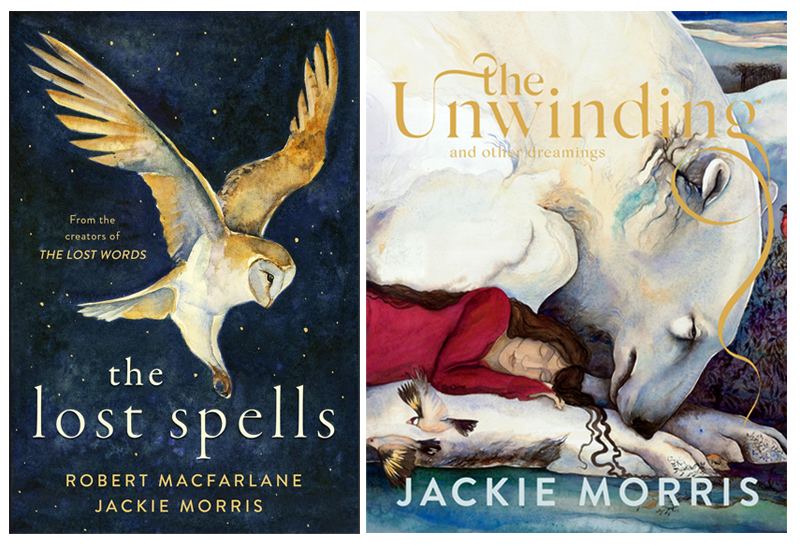
My brother, Peter sent me a BBC4 interview with Robert MacFarlane. MacFarlane is well known for his books on the ‘language of place’.banner_BBC4interviewRobertMacFarlane In the podcast, he makes a couple of interesting points.

MacFarlane quotes the poet, W.H.Auden:

“Culture is no better than its woods”

He also speaks to the need to collaborate with artists and musicians, especially when campaigning to save the trees and the landscape.

Acknowledgements

Peter Maher for his support from France. Edward and Heather for their support in Nova Scotia. Nina Newington for her campaigning.

pic_3_orchard26Aug2020References

BBC4 Front Row. Interview with Robert MacFarlane by Kristy Lang.
George Orwell. Some Thoughts on the Common Toad. Penguin Great Ideas. #99.

The title of this blog is a homage to George Orwell (1903-1950). His thoughts on the Common Toad was first published in 1946. He concludes the essay.

“The atom bombs are piling up in the factories, the police are prowling through the cities, the lies are streaming from the loudspeakers, but the earth is still going round the sun, and neither dictators nor the bureaucrats, deeply as they disapprove of the process, are able to prevent it”. p.6.

Post-postscript

From one of my boxes of books, I noticed, peaking out, David Knight and Alun Joseph (Ed) 1999. Restructuring Societies: Insights from the Social Sciences. It contains an essay by Bob Rae. ‘Two men against Revolution. Edmund Burke and George Orwell’. That is now over twenty years ago!

Posted in Event Review

Meat and Greet

banner_dAubinMeats_3Living in Annapolis County, one of the many pleasures is to be able to support local businesses. It is a joy to go to the D’Aubin Family Meats market and purchase smoked bacon and fresh-made sausages.

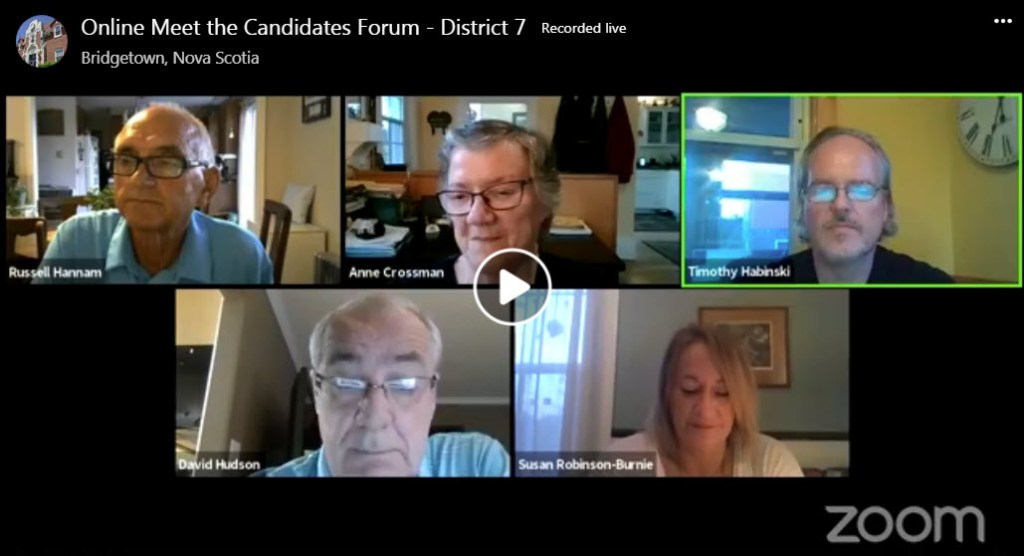
This week, Susan Robinson-Burnie organized a ‘meet and greet’ at Paul and Fiona Hubble’s farm. There were six Annapolis County municipal election candidates from six different districts in Annapolis County. map_AnnapolisCoMunicipalityDistrictsThe venue had a number of positives:

  • the opportunity to meet neighbours on Hwy # 201.
  • to hear questions from like-minded citizens of District #7.
  • to recognize that candidate councillors from different districts represent a collective demand for change.

Of course, there were a few things missing, from my perspective.

We are hearing about the prospect of forest spraying on South Mountain. If this goes ahead, it will impact all of the watershed flowing into the Annapolis River.

If the municipal council represents the interests of the citizens of Annapolis County.

1) What is the voice to the provincial government on forestry land-use practices?
2) Does the county have a land-use plan?
3) Do we have a land-use planner?
4) How do the concerns of Annapolis County citizens get voiced at the provincial table? Through Stephen McNeil?
5) Is Annapolis County, the only municipal unit that does not have input into provincial land use plans?

It seems time for citizens to be heard at both the municipal table and the provincial table.

Indeed, do we really need two tables? One balanced on top of the other?
Does that not result in a lack of accountability to the citizens ?

How does it work in other geographies, larger in size, or with a greater population?
Are we suffering from the Nova Scotia factor? Our history, our geography?

Postscript
We recommend the forest walk around First Lake outside of Annapolis Royal.
Park at Highway #101 and enter across the road. Follow the signs.

Acknowledgements
Edward for his graphics. Heather for her concern about the spraying.