Posted in biographical sketch, Book Review

Reflections on a Misunderstood Way of Life

Note:
The GoGeomatics conference review is now available. Check link on the right hand side of the Ernest Blair Experiment site.

This week, we had two accomplishments.

Neil Stanton and his team installed fourteen solar panels on our south-facing roof. 20200128_133625It was a good feeling to see the meter going in reverse. We were contributing electricity to the grid. Given the cost of the installation, it will be a few years, before we see a positive payback. But it seemed to be the right action in these times. Perhaps one day, we will be able to store the electricity in a battery which can provide power for an electric car, for short drives around the Valley.

bookCover_facingTheHunterThe second accomplishment was triggered by a visit to the Bridgetown library. I picked up Facing the Hunter: Reflections on a misunderstood Way of Life. This book, by David Adams Richards describes his life, growing up in the north woods of New Brunswick.

I particularly liked the following quotation from p.89.

“My neighbours do not understand me. That I am the fellow who devoted his life to writing books….
And I think of many of them like this:

”If people were actually paid for their value, these people of self-reliance would surely be living in the finest houses.”

“A nice enough woman novelist once told me I shouldn’t give too much credit to the working class. I don’t – it’s just that I refuse to give them less credit than I give anyone else.”

Here is a follow up to recent blogs. I managed with the help of Kyle to transfer all my blogs from GoGeomatics and Ernest Blair Experiment to a thumb drive. Integrity Printers will give me a quote on a hard copy version.

Yesterday, I had a meeting with Ed Symons, Planning Instructor at COGS. Ed told me that he had converted the blogs into a podcast MP3 file for use on his mobile phone. That way, he can listen to them on his Highway#101 commute from Port Williams to Lawrencetown. I will ask for the link.

Acknowledgements

Kyle Hackenschmidt at Bridgetown Computers for his technical skills. Likewise for Ed Symons and Edward Wedler.

Reference

David Adams Richards. 2011. Facing the Hunter: Reflections on a misunderstood way of life. Doubleday Canada.

PS. Perhaps, after I have curated my blog collection, it could be titled:
Seeking the Geographer: Reflections on a Misunderstood Way of Life’.

Posted in New thinking, Opinion

A Vision for the Annapolis region

As a Geographer, I think of the Annapolis Valley as a physiographic unit. Travelling from Halifax, you enter the Valley around Windsor on Highway #101. It is bounded on two sides by North Mountain and South Mountain and extends down towards Digby. It also includes the Fundy shore.map_annapolisValley_satelliteView

Despite, the recent i-Valley definition, my definition includes Annapolis County and Annapolis Royal.

From an educational perspective, Annapolis County has much to offer the region. At the recent COGS conference, the resources at both Middleton and Lawrencetown demonstrated national significance. Middleton campus is the home to the Applied Geomatics Research Group (AGRG). The Lawrencetown site has a long tradition of teaching Geographic Sciences (Surveying, Cartography, Planning, GIS, Remote Sensing and the associated IT). There is now a plan to establish an Innovation Hub and residence at COGS.

Other educational dimensions include the Environment and Agriculture Technology Laboratory (EATLAB) and access to Geomatics technologies as part of the corporate NSCC SEATAC initiative.

All of these activities bode well for education and research in the Annapolis Region. It links to high school activities in Annapolis Royal. If we are successful with Gordonstoun School, the resident expertise in the County can offer pathways from secondary school through to graduate work. There is an existing joint Masters degree in Applied Geomatics between Acadia University and the NSCC.

What is needed to support this vision?

1) we need to extend the Valley Computer Fibre Network and high-speed Internet throughout the Valley region.
2) the expertise at i-Valley should not stop at Middleton.
3) the Innovation Hub at Lawrencetown needs to be part of the Valley network.
4) Municipal government needs to work with the existing educational institutions to support all citizens in the larger geography.
5) the Geomatics technologies at the NSCC should be used to address sustainability issues in the region.

Ultimately, better collaboration, better communication, and leadership that respects the needs of all citizens in the larger region.

Many years ago, John Wightman, former Principal at COGS, created a non-profit entity, CANMAP. That acronym remains relevant today!

Acknowledgements

To those colleagues who have worked hard, to build up the educational resources in the region.

Posted in Event Review, Opinion

COGS Conference 2020

This week, I attended a two day Winter conference at COGS on Geotechnologies and Resource Management.Image result for Winter conference at COGS on Geotechnologies and Resource Management (Photograph from 2019 conference).
As a trade for free registration, I have written a blog for GoGeomatics. This should be available later in the week. Meanwhile, I would like to highlight a few citizen lessons from the event. The conference is in January to coincide with the industry expo at COGS. This is the opportunity for COGS students to arrange interviews with government and private sector employers.

Community Connections!The takeaway message from Hugh MacKay, MLA for Chester- St. Margaret’s Bay, and previously, Geomatics businessman, is that we need to create more Geomatics jobs in Nova Scotia. Part of that agenda is the building of an Innovation Hub at COGS in Lawrencetown. Scheduled for completion in 2021. Another part is the commitment by the provincial government to high-speed Internet throughout Nova Scotia. To my mind, this means collaboration across the three levels of government: federal, provincial, municipal. Unfortunately, multi-layers of government does not bode well for quick, efficient solutions that serve the needs of the citizens.

Another presentation by Terry Dalton from i-Valley sharply illustrated the same point. i-Valley is defined as the world’s first ‘smart and sustainable region’.M.Bickford / COGS / Jan 2020
Do we recognize ourselves in this profile? Are we doing well on sustainable resource management — forestry, agriculture, mining, fisheries, health services? Unfortunately, the geography of i-Valley is currently defined by the participants who are part of the Valley Regional Enterprise Network (VREN). This means the ‘valley’ is defined as the region between Windsor and Middleton. It does not include Annapolis County or the other towns and villages in the county.

M.Bickford / COGS / Jan 2020As informed citizens, we need to WAKE UP. We need to be talking about an Innovation Hub in Lawrencetown, evidence-based decision making, the use of current Geotechnologies. The new SEATAC (Sensing, Engineering and Analytics Technology Access Centre) is one of thirty centres funded through the federal government. The NSCC in Halifax/Dartmouth will be the main business presence.

Please, can someone shake some ‘remote sense’ into our Annapolis County councillors !!

Posted in New thinking

Postcard to Maureen

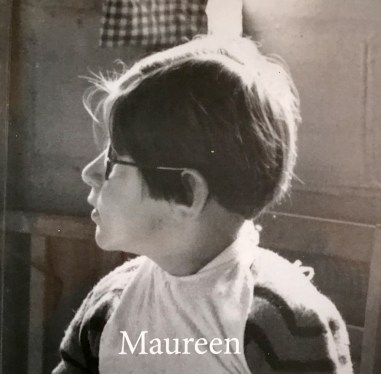
My sister was born June 24th 1948. She was the youngest of three children, including myself and my older brother, Peter. Early on, she was identified as ‘mentally handicapped’. From that time forward, both of us, were encouraged ‘to go out into the world and build our own future ‘.postcardToMaureenEventually, Maureen was placed into long term care, funded and initially directed by our parents. In time, they were unable to provide the necessary support. Today, she lives in a home in Sandhurst, Berkshire,England.

My centre of gravity has become Canada. Peter divides his time between Europe and Canada.

Recently, with help from Jason, his son, they produced a video for Maureen. It gives insight into our childhood through a series of family photographs. I hope Maureen will enjoy those memories too.

Acknowledgements

Credit for the video goes to the team of Peter and Jason Maher. Much appreciated.

Posted in Book Review

The Overstory

This week, I have been busy reading the five hundred page novel, The Overstory by Richard Powers.bookCover_Overstory It was a challenging but worthwhile reading experience. The book is divided into four sections: roots, trunk, crown and seeds. The roots section introduces us to the lives of eight individuals. Each person has a relationship to trees on the earth.

The trunk brings together these individuals within the context of activism and the Timber Wars in the Pacific Northwest of the United States. It is a challenge to keep track of inter-twining of these individual stories (roots). The final sections play out the outcomes from their collective activist events (seeds).

The importance of trees, their inter-connectivity and their relationship to global climate change offers a sobering alternative to traditional scientific thinking.

bookCover_sacredSoilMy next book on the bookshelf is Sacred Soil: Biochar and the regeneration of the earth. On our small acreage, we need to develop a better understanding of the soils and their fertility.

Visiting the COGS Library, I discovered the biography of Dr. John Mitchell: The Man who made the Map of North America, written by Edmund Berkeley and Dorothy Smith Berkeley. Mitchell was a botanist, born in Virginia in 1711.

‘It was at the request of Lord Halifax and the Board of Trade that he made his famous map, one of the period’s outstanding cartographic achievements and perhaps the most important map in the history of North America.’

I thought that perhaps the book was part of the Walter Morrison collection at COGS. But apparently, that is not the case.

Acknowledgements

Andrew Hannam for his help at the COGS library. Heather for her empathetic reading. Edward for his graphics.

References

Richard Powers.2018. The Overstory. W.W. Norton and company.
Robert Tindall et al. 2017. Sacred Soil: Biochar and the regeneration of the earth. North Atlantic Books.
Edmund Berkeley and Dorothy Smith Berkeley. 1974. Dr. John Mitchell: The man who made the map of North America. University of North Carolina Press.

Posted in Book Review, New thinking

Repurposing the rail lines

In response to my last blog, Andrew Ronay in England reminded me that they had repurposed the Battersea Power Station in London.banner_BatterseaPowerStation Over the weekend, I have been reading a draft of Brian Arnott’s book Going to Town: the small town as micropolitan centre in the age of climate change. It should be published in 2020.pictou

One of Brian’s themes is the impact of the automobile on towns and cities.

Reflecting on the future of small towns in Nova Scotia, in an era of climate change, repurposing of the railway network would significantly reduce the impact of cars. Indeed, the railbed already exists.endOfTheLinePub

Of course, we may have to rename The End of the Line Pub in Bridgetown, especially, if there was high-speed rail between Halifax and Yarmouth.

This week, I walked down highway #201 to chat with Dave Whitman. Dave is both an author and a publisher. I was seeking his advice on the best approach to publishing my blogs. I have written over one hundred and sixty in the last two years at ernestblairexperiment.wordpress.com My fear was that a technology failure would erase the collection. It looks like I can find a solution, using the expertise of Kyle at Bridgetown Computers, and the folks at Integrity Printing.bookCover_Overstory

In addition to my books from Toronto, Heather purchased The Overstory by Richard Powers. From the back cover, Robert MacFarlane:

‘Dazzlingly written …… Powers is as brilliant on trees and arborescence as he has been in past novels on music, AI, and neuroscience’.

It looks at human lives in North America from the perspective of different tree species. Made me think about the voice of those species that are the remnants of the Acadian forest.

Acknowledgements

Heather for buying a copy of The Overstory. Andrew for his thoughts on repurposing. Brian for sharing a draft of his forthcoming book. Edward for the graphics. Dave Whitman for his timely advice.

References

Brian Arnott. Going to Town. The small town as micropolitan centre in the age of climate change. Expect to be published in 2020.
Richard Powers.2018. The Overstory: A Novel. W.W. Norton and Company.
Battersea Power Station. Check website. batterseapowerstation.co.uk

Posted in New thinking

Repurposing the Northern Pulp mill

While in Toronto, we visited the Don Valley Brick Works Park.donValleyBrickworksPark

‘From 1889-1989 the Don Valley Brick Works was the location of a thriving brick making and distribution industry in the heart of Toronto. The City of Toronto began restoration in 1995 with the generous support of The W. Garfield Weston Foundation’.

Today, the park includes a garden market, a school, future cities centre, as well as the Weston Family Quarry Garden.

Just before Christmas, Stephen McNeil upheld the government decision on Boat Harbour and hence the impact on the Northern Pulp Mill.bookCover_theMill

Can we use this decision to repurpose the mill facility?

Can we take the opportunity to signal to the world the change in Nova Scotia’s Forest industry?

Initially, the focus will be on the necessary steps to clean up the impact on the terrestrial and marine environment. We could showcase the history of the industry (Baxter 2017) leading up to this momentous decision. Parts of the mill could be refurbished to illustrate the new forestry practices. In the spirit of the Brick Works Park, the site would include a mix of educational and tourist facilities, compatible with the new thinking.

The new vision would emphasize the relationship between Nova Scotians and their marine and terrestrial environment. It would demonstrate the inclusiveness of the different communities in the region. To support the new vision will require input from all sectors of society: the communities, government, private corporations and non-profit organizations. As we make progress on the cleanup, there will be a new story to be told. That story is a new vision and shows a real change in our relationship to the environment.

Acknowledgements

Heather Stewart, a former resident of New Glasgow, and passionate advocate for our ecosystems. Edward Wedler, a firm believer, in the power of communication technology.

References

Don Valley Brick Works Park. Web site: Toronto.ca/Brickworks
Joan Baxter. 2017. The Mill: Fifty Years of Pulp and Protest. Pottersfield Press.

Posted in biographical sketch

Country Mouse / City Mouse

This year for the festive season we visited family in Ontario. After flying into Billy Bishop City airport we ended up taking the GO train to Oshawa, and eventually north of Peterborough to the cottage country of the Kawartha Lakes. It was time to find our previous family homes from the 1990s in Peterborough and to remember canoe trips, North of the city.

bookCover_palacesForThePeopleThe second week, we came back down to Scarborough and Toronto. This meant purchasing a Presto card and negotiating the links between the streetcars and the subway system. It is over fifty years since I had been immersed in this urban geography: walking down Yonge Street, visiting the Eaton Centre, window shopping at the Hudson Bay company, staying at the Chelsea Hotel.

On Sunday, we walked around the Don Valley Brick Works Park and visited the Future Cities Centre. Found a couple of interesting books on urban living. Eric Klinenberg, Palaces for the People. How social infrastructure can help fight inequality, polarization and the decline of city life. I liked this quotation.

“Social infrastructure provides the setting and context for social participation, and the library is among the most critical form of social infrastructure that we have”. p.32

bookCover_walkableCitySecond, Jeff Speck‘s book Walkable City. How downtown can save America, one step at a time. He has ten steps from ‘putting cars in their place’ to ‘plant trees’. Later in the week, we dropped into BMV, a second-hand bookstore and I found Zipp and Storring (Ed) Vital Little Plans: The Short Works of Jane Jacobs.

Within Greater Toronto, there are several YMCAs. This gave me a chance to address an old knee injury. So we went to an AquaFit class with my brother. Now, on my return to the Annapolis Valley, I must see what is available at the Fundy YMCA in Cornwallis Park.

For our last night in Toronto, we stayed at the Strathcona Hotel, which is near Billy Bishop airport.bookCover_ageingInEverydayLife There, I found a collection of essays, edited by Stephen Katz. He was Professor, Sociology at the Trent Centre for Aging and Society. The book is Ageing in Everyday Life: Materialities and Embodiments.

“The authors of this book have backgrounds in social gerontology, geography, feminism, the humanities, social work, sociology, health and dementia studies which gives this diverse and interdisciplinary group critical access to the immediate world in which we live, the bodies we know and touch, and both the real and fantastic realms of existence with which we engage.” P.10

The country mouse has returned to the country. There is a significant stack of books to read, while the snow blows across the fields. The dogs will need to be walked. The orchard pruned. Visits to the nearest swimming pool. New technology to be mastered – common in the city, less so in the country.

Acknowledgements

Thanks to our extended family and friends for helping with our transition to city living. Patrick, Emily and family in Peterborough. Peter, my brother for the AquaFit experience. Carole, Jason and family, Julia and family for their generous hospitality in Toronto. Heather for her company and support. Edward for his contribution.

References

Eric Klinenberg.2018. Palaces for the People. Broadway Books.
Jeff Speck.2012. Walkable City. North Point Press.
Samuel Zipp and Nathan Storring. (Ed) 2016. Vital Little Plans: The Short Works of Jane Jacobs. Random House.
Stephen Katz (Ed) 2018. Ageing in Everyday Life. Policy Press.

Postscript

There are some take-home messages. The city mouse walks much more than the country mouse. There is much greater access to diverse facilities in the city: YMCA, theatres, libraries, universities, shopping centres, restored industrial space.

Posted in Opinion

Little Libraries

Little libraries have popped up across the country. On Haida Gwaii, there is one along the roadside between Queen Charlotte and the ferry terminal. In the Annapolis Valley, they can often be found in banks and post offices.

bookCover_voluntarySimplicityToday, I picked up Duane Elgin’s Voluntary Simplicity at the Bridgetown post office. Seems like a good message for 2020!

“Voluntary Simplicity. Towards a way of life that is outwardly simple, inwardly rich”.

Merry Christmas and a Happy, (Simple) New Year.

Acknowledgements

Thank you to the followers of my blog. Edward for his feedback. Heather for her patience and support.

Reference

Duane Elgin. 1993. Voluntary Simplicity. Revised Edition.Quill, William Morrow, New York.

Posted in Book Review, Event Review

Arts Space

glennPatschaTrioMusique Royale brought the Glenn Patscha Trio to the Dawn Oman Art Gallery in Bridgetown on Friday, December 13th. The trio included Glenn Patscha on piano, Tom Roach on drums and Larry Bjornson on bass. It was a unique setting surrounded by the rich colours of Dawn Oman’s art. To complement the experience, I picked up a book. Have Yourself a Silly Little Christmas, self-published by Bob Bent, with illustrations by Andrea Wood. So far, I have only read ‘The North Pole is Melting’; a story of four children visiting Santa Klaus at the North Pole, including David Suzuki. Today, it speaks well to the ‘climate crisis’.

Friday, 13th. Black Friday. Following the election of Boris Johnson, Conservative in the UK. The resignation of Andrew Scheer, Conservative Leader in Canada. From The Reader, on this date, Emily Carr was born in 1871 in Victoria, BC.

bookCover_haveYourselfSillyLittleXmasBob Bent’s book put these events into their proper perspective. It was only the day before (12th.) we had Kevin from Stanton installing the racks for solar panels on the south-facing roof. Ernie was at the house, removing a large ash tree, which threatened the roof. Now, it has added to our winter wood supply. Down below, on Andrew’s property, Alex Cole, Silas and Rick were unpacking charcoal and tidying up coppiced wood. Eventually, we may be able to produce Biochar to enhance our garden fertility.

It is truly remarkable that on a dark evening, we can head to Bridgetown and enjoy an arts space, far removed from the political agenda.

snowFlakesWith Bob Bent’s book in our suitcase, we can enjoy a Silly Little Christmas with grandchildren in Ontario. Best wishes for the Christmas season. I look forward to 2020 with its music, art and books.

Acknowledgements

To Rick Ketcheson for reminding us about Musique Royale. To the Reader, for memories of Haida Gwaii (Emily Carr). Bob Bent and Andrea Wood for a children’s perspective on Christmas. Edward Wedler for his steadfast support.
Roger Mosher for his valued conversations at the End of the Line pub on Friday evenings.

Reference

Bob Bent and Andrea Wood. 2013. Have Yourself a Silly Little Christmas. Self- published.

POSTSCRIPT
Meanwhile, from up North, this gorgeous-day, “dog team selfie” came in from my son, Andrew Maher.
upNorthDogTeamSelfie_AndrewMaher