This Thursday, we walked with Rocky and Debby Hebb from our house down to the Annapolis River,
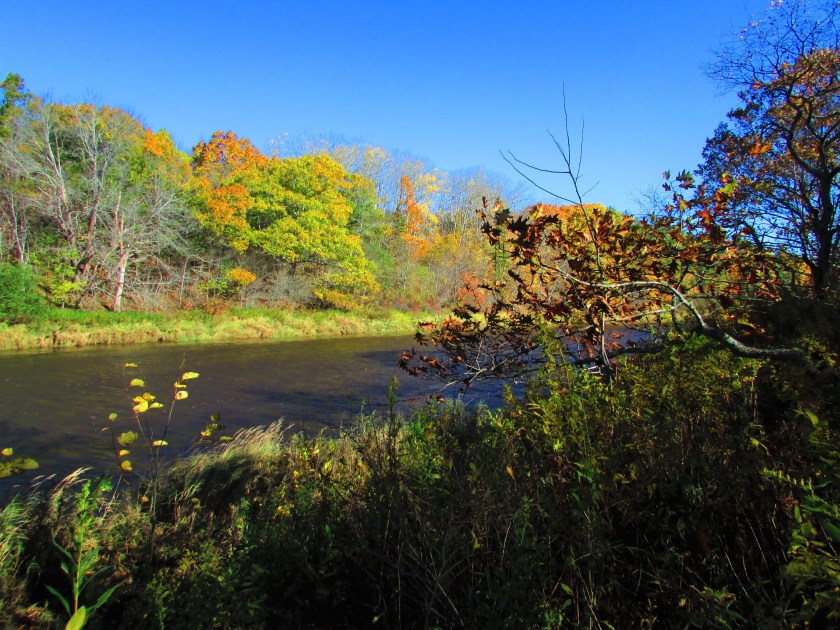
through to the old Lawrencetown Tree Nursery, and up to Lunn’s Mill for lunch. The old roads run through the mixed oak/maple/pine woods along the Annapolis River. On the nursery land, you can still see evidence of different tree-planting experiments.
If Stephen McNeil was serious about forestry practices in Nova Scotia, one strategy would be to reinvent the network of tree nurseries across the province. We will need more trees in the future.
 Earlier in the week, we attended a talk, hosted by the Middleton Historical Society at the MacDonald Museum. Steve Skafte talked about the ‘lost roads of Nova Scotia’. He combined his interest in poetry and photography. Steve has self-published a number of books and maintains a tumbler site on the Internet.
Here are a couple of diary entries, to give a flavour of his work.
“October 21, 2019, South Williamson.
“Jerusalem Road.
The definition of a backwoods adventure is always the same to me. A tree-lined lane, narrowly crowded by branches meeting overhead. A natural arbor, bordered in by some geography. Hillsides, stream and hollow are what I’m after, difficulties to keep loggers at bay.”
“October 16, 2019, Arlington West
The time has passed for hippies and draft dodgers, forest farmers, deep daydream ‘North Mountain hippies’ as Spider Robinson called them. In the woods they left well-lived, crumbling remnants, and some unfinished projects like this one.”
Check his tumbler site for more inspiration.
For a darker perspective on lost roads, try Christy Ann Conlin’s short story ‘Full Bleed’ in her recent book collection Watermark.
Acknowledgements
Debby Hebb for her photographs. Steve Skafte for his diary entries.
Edward Wedler added the graphics. Heather, Rocky and Debby were my walking companions.
References
Steve Skafte. Go to steveskafte.tumblr.com1

 I also received email from Brian Arnott that Robert MacFarlane will be on CBC Sunday Morning with Michael Enright. (see the
 It is time to realize that the movement of individuals from elsewhere in Canada, or other countries, to Annapolis County is positive. It is time to stop thinking that more citizens who have reached retirement (arbitrarily, say 65 years) is negative. It is positive.
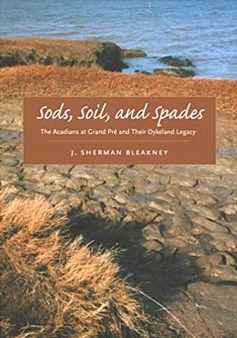 This discussion of the Language of Place took me back to my bookshelf. For Nova Scotia, I retrieved Sherman Bleakney’s book Sods, Soils and Spades: The Acadians at Grand Pre and their dykeland legacy. The word that triggered this search was aboiteau and its role in dykeland construction.
 This is his third book in the Politics of Place series. It includes chapters on walls in China, the United States, Israel and Palestine, the Middle East, the Indian subcontinent, Africa, Europe and the United Kingdom. Of particular interest was the chapter on the UK and its relationship to the Brexit vote. Looking at the map of voters who want to stay in the European Union and those who want to leave. Scotland, Northern Ireland, some of the cities in England want to stay whereas ‘rural’ England want to leave the EU.
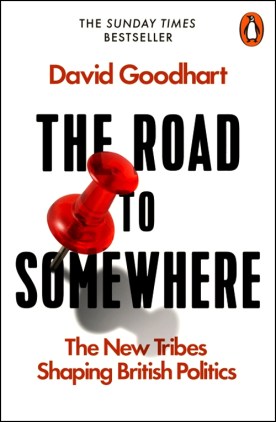 Marshall quotes from the book by David Goodhart,
  In Wolfville earlier this week, I picked up the
 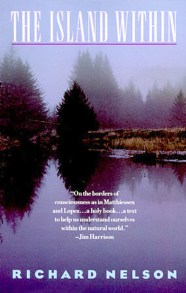 At the
  Brian Boates picked up eight bins for juicing in Woodville, before transporting it to Ironworks Distillery in Lunenburg. At the same time, I heard from Pierre that the first shipment of Hunter Brandy should be available later this month.
 My interest was the relationship between the different religious and education movements in rural Nova Scotia. Willy brought to my attention the book
  This week, there has been very little time or energy for reading. Picking apples in the orchard consumes both time and energy. I have fallen behind on my reading of George Woodcock’s story of George Orwell,
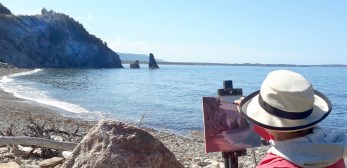 While painting Pillar Rock from Presqu-île, near the southern part of the Cape Breton Highlands National Park, we noted dozens of visitors come for a few minutes to snap photos then move on. Did they see the otters swim the nearby pond? Did they note how the sun lit up the rocky shoreline as it rose above Jerome mountain? Did they hear the high-pitched piping notes of the eagle?
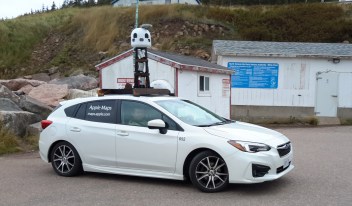 At the other extreme, we were greeted several times by the “
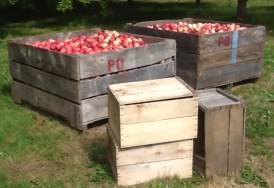 September is also the month when I need to be prepared for harvesting our organic apples. This means ensuring that the tractor is in good working order. Over the Winter, it developed a flat rear tire. This has led to the purchase of a new rim ($500) and its installation by
 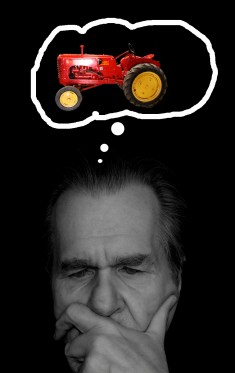 The capacity to move seamlessly from abstract thinking to practical task thinking is something that is needed by all elements of society. To address the climate emergency, we need to learn the details of new technologies, as well as to think differently with existing technologies. The new technologies include solar and wind energy. Existing technologies include different forms of communication. We also need a different approach to the concept of community.
 Ernest Blair Experiment