Walnut Grove lies in the Township of Langley, British Columbia, between the United States border and the Fraser River.
Like many communities in Southern Canada, the roads follow a grid pattern: streets run North/South and the avenues run East/West. On arrival, our first task was to re-learn how to navigate this dense man-made, built landscape.
In Nova Scotia, we are looking to grow walnuts on our property in Paradise, Annapolis County. There, the challenge is to fully understand the fine mosaic of plant habitats, related to slope, aspect, soil and climate conditions. The book by Hart surfaced the concept of forest gardening.
Within the context of visiting grandchildren, we had been given the opportunity to explore a man-made, urban landscape and to compare it to our knowledge of a rural landscape.
 While in BC, and being in the Fraser Valley, I took the opportunity to check out the current work of Hugh Brody. Brody is the Canada Research Chair in Anthropology at the University of the Fraser Valley in Abbotsford. He is likely best known to Geographers for his book Maps and Dreams, published in 1981. From his web site, I noticed that he had recently given a talk at the Audain Gallery, Simon Fraser University. Fortunately, his talk is available as a video online. The subject was the indigenous knowledge of the land by the Dunne-Za in North East British Columbia, The one hour video talks, in terms, of invisibility, dreams, art, making the invisible visible, cultural mapping, and the importance of knowledge of the land in a traditional hunter/gatherer society. His original field work was completed in the late ’70’s.
The end result was, on returning home, to pull from the bookcase, my copy of The Other Side of Eden, written in 2000.
I highly recommend watching the video. Hopefully, your Internet service is not too slow. In Canada, not only can we enjoy the many different landscapes, we have the opportunity to appreciate a wide range of traditional knowledge of the land, described, in this case by anthropologist/writer/film maker, Hugh Brody.
Thanks again, to Edward Wedler for his help with the graphics and feedback on the earlier draft
References
Hugh Brody. 1981. Maps and Dreams.; Indians and the British Columbia Frontier. Douglas and McIntyre.
Hugh Brody. 2000. The Other Side of Eden. Hunters, Farmers and the Shaping of the World. Douglas and McIntyre.
Robert A. de J. Hart. 1996. Forest Gardening. Chelsea Green Publishers.
Malachy Tallack. 2016. Sixty Degrees North. Around the World in Search of Home. Pegasus Books, New York. Book Review describes it as one of new genre of travel writers on psychogeography.
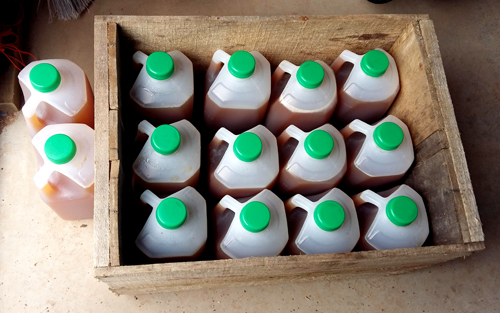
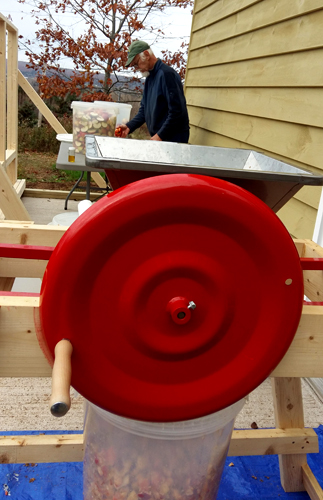 Richard Sennett says it well in the Acknowledgements to his book The Craftsman, “Making is Thinking’. This week, we have been busy pressing apples and making it into sweet cider.


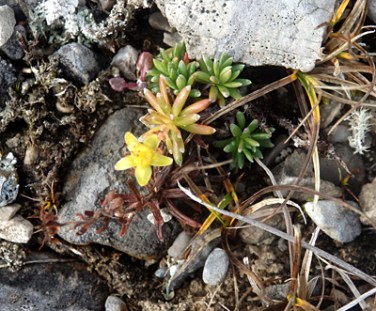 We had many personal realizations. While we had studied the plants in the National Park, visiting the serpentine Tablelands and the barrens on the top of Gros Morne, we had not gone North of the park. Over the last forty years, scientists have rediscovered the geology and biology of the Great Northern peninsula, in particular the uniqueness of the limestone barrens.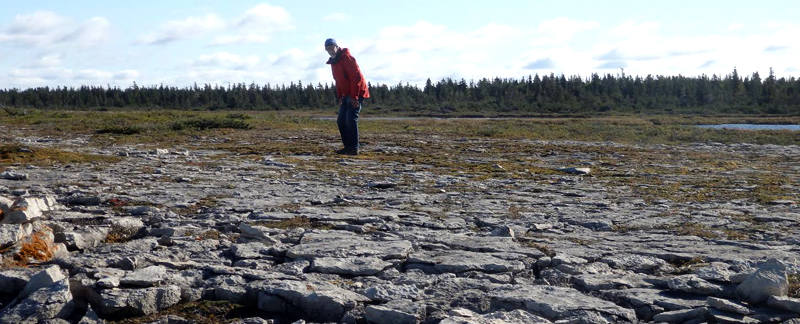
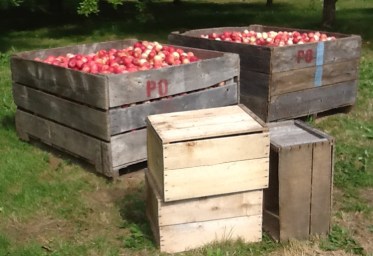 Last year, we picked fourteen bins. It takes eighteen boxes to fill a single bin. The apples come from ninety one trees; four varieties: NovaMac, MacFree, Liberty and NovaSpy — all scab free. We arranged for Brian Boates in Woodville to pick up the fourteen bins on a flat bed, and then to juice the crop. The juice was transported to Ironworks distillery in Lunenburg, where Pierre Guevremont is turning it into apple brandy. It will be another year before we can sample the result.This year, so far, we have picked five bins. It looks like the yield will be less this year. The size of the harvest depends on pruning, pollination and microclimate. This year we pruned the higher branches to make for easier picking. We have had a dry, warm Summer. Less water likely affects the number and size of the apples.
 Future considerations include the addition of organic fertilizer (earthworm castings), drip irrigation in dry years, the addition of beehives for increased pollination. These thoughts are my brain pickings from the orchard.
 First, there was the news that the tenant was moving from Andrew’s farm house across the road. This meant screening a number of possible new tenants. Meanwhile, there was a significant number of ‘to do’ tasks while Heather was away. They included chain sawing several cords of firewood, painting outbuildings, and getting organized for this year’s apple harvest in the orchard. Apple picking demands moving full apple bins with the fork lift on the tractor. Ah yes, this requires fixing the ‘soft’ tire on the tractor.

 ” the business community, not just governments, has a responsibility for turning the region into something more than a region of the mind. Community institutions need to step up and contribute to the region’s economic development.” (July 29/17 Chronicle Herald F3).
 In my neighbourhood on Hwy 201, I see new craft beer company (Lunn’s Mill) and Beavercreek Winery. In Paradise, the Morse Estate (Buckler. The Cruelest Month 1963) has been transformed into Burnbrae Farm and Paradise Inn. The town of Bridgetown has merged with the Municipality of Annapolis County.
 Ernest Blair Experiment