For the last two weeks, I have been visiting friends and family in England. Specifically, I stayed in Byfleet, Surrey.
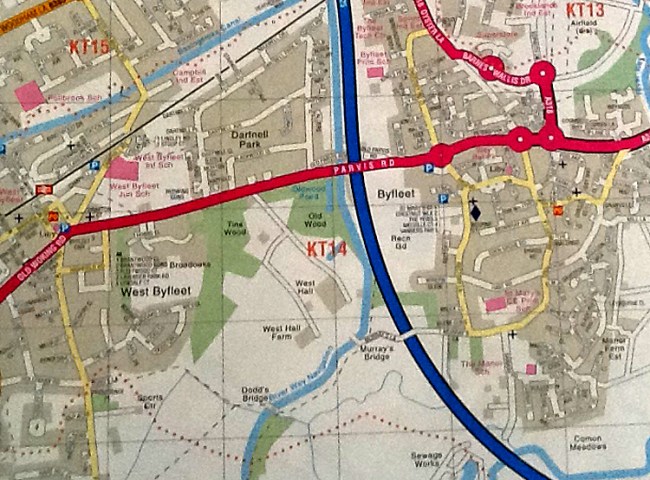 My original intent was to meet my brother for a nostalgic walk throughout our childhood neighbourhood: Twickenham, Whitton, Hounslow, and Hampton. This was abandoned when a winter storm hit England and Europe (the Beast from the East) and he was unable to join me.
But, lets start from the beginning. I left Halifax for Heathrow airport reading Richard Holmes This Long Pursuit. By the time I had landed, the book was finished. I was up to date on the confessions of a Romantic Biographer. Filled with essays on the lives of Keats, Shelley, Byron, Coleridge and Blake.
First stop was the Royal Horticultural Society (RHS) gardens at Wisley. The large greenhouse had its annual display of tropical butterflies. On entering the gardens, I noted that the RHS Library had a book sale. This led two purchases. At the end of the visit, we ended up at the shop. There is a section of the store dedicated to gardening and the English landscape. With future walks in mind, I walked away with seven additional purchases (see references below).
As I pondered on my childhood days in England, I recalled listening to BBC Radio 4. When I found Caroline Hodgson For the Love of Radio 4, there were two quotations that struck a chord.
‘Robin Oakley relates that Jeffrey Archer once said to him that the world is divided into those who know how to make money and those who don’t. You, Robin, are in the second category !’ I guess that Bob Maher is in the second category too. p.89
(Jeffrey Archer is a British ex politician and story teller)
Talking about the program, Letter from America by Alistair Cooke:
‘It is perhaps the ultimate audio blog, and like all good bloggers Cooke knew that his words were intended for an audience rather than the product of a mere navel-gazing exercise’ p 232
This left me thinking, well who is my audience ?
I found a partial answer when I was reading The Spectator. Hugh Thomson reviewed two books under the title ‘A Drizzle of Nature Writers’. He reviewed books by Tim Dee and Paul Readman (see references). Readman references George Orwell (ah-ha):
‘the world centres around the English village, and round the trees and hedges of that village, rather than the houses and the people’.
Readman concludes his book:
‘ we still like to define ourselves as an essentially rural nation, despite all indications to the contrary’
or from Orwell:
‘There is no question that a love of what is loosely called Nature is widespread in England’
Leaving Thomson to state:
‘The fact is that those who really have to deal with Nature have no cause to be in love with it’.
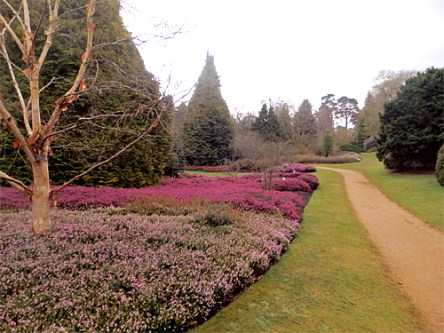 These literary digressions have to be put in the context of my time in England. Most days there was the opportunity to walk through the Surrey landscape. This included Windsor Great Park, Richmond Park, the River Wey Navigations. One trigger for me, was the branding of The Royal Landscape. To park your car and go for a walk through Savill Gardens or the Heather Gardens, you could purchase a membership card to The Royal Landscape. Likewise, if you were a polo player, you could do the same.
This raised the question of land ownership in Surrey. There are numerous estates, clubs, golf courses in this part of England. How does this contrast with rural England or rural Nova Scotia? My tentative conclusion is that they are totally different worlds, with very different sets of values.
My take home message, besides the books, is to research in more detail the writing of George Orwell, and then to move to the present day and look at current writers on ‘the houses and the people’.
One final story. At Waterstones, I noticed a small book (an essay) by Robert MacFarlane, The Gifts of Reading. The essay is only thirty four pages long. I purchased five copies to give away as gifts. From p 19, where MacFarlane references The Gift by Lewis Hyde.
“Gifts give on”, says Hyde, this is their logic. They are generous acts that incite generosity. He contrast two kinds of ‘property’: the commodity and the gift. The commodity is acquired, and then hoarded, or resold. But the gift is kept moving, given onwards in a new form. Whereas the commodity circulates according to the market economy, the gift circulates according to the gift economy. In the market economy, value accrues to the individual by means of hoarding or ‘saving’. In the gift economy value accrues between individuals by means of giving and receiving’.
What exactly has happened through the branding of The Royal Landscape? Is it a commodity? What is meant by the term ‘Middle England’? Is that the new ‘middle class’ in England?
References
Richard Holmes.2016 This Long Pursuit. Harper Collins, London.
Caroline Hodgson. 2014. For the Love of Radio 4. An Unofficial Companion. Summersdale Publishers Ltd.
At RHS Booksale
Peter Alfred Please. 1997. Holine – A British Journey Bulletins from the Wayside 1950-1997. Away Publications
Michael Leapman. 2000. The Ingenious Mr. Fairchild. The Forgotten Father of the Flower Garden. Headline Books.
At the RHS book store.
Rob Cowen. 2015. Common Ground.Windmill Books.
Nicholas Crane. 2007. Great British Journeys. Weidenfeld and Nicholson.
Nicholas Crane. 2016. The Making of the British Landscape.From the Ice Age to the Present. Weidenfeld and Nicholson.
Matthew Engel. 2014. Engel’s England. Thirty nine Counties, One Capital and One Man. Profile Books.
Kathleen Jamie. 2012. Sightlines. Sort Of books
Nan Shepard.2011. The Living Mountain. Canongate Books
Christoper Somerville. 2017. The January Man. A Year of Walking Britain. Black Swan.
Hugh Thomson. A Drizzle of Nature Writers. The Spectator. March 3, 2018. p 48.
He reviews books by Tim Dee and Paul Readman.
Tim Dee (ed). Ground Work: Writings of People and Places.
Paul Readman. Storied Ground: landscape and the shaping of National Identity.
Robert MacFarlane. 2016. The Gifts of Reading. Penguin Books. 34pp.
Thanks as always to Edward Wedler for his graphics capabilities.
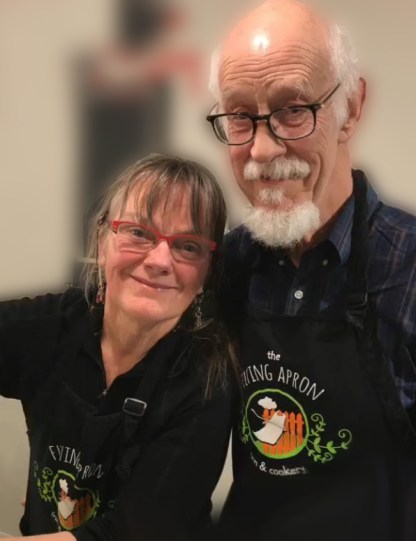 With a birthday and Valentine’s Day on February 14th., Heather and I decided to attend the Valentine’s Cookery School at the Flying Apron Inn in Summerville on Highway 215, East Hants, NS.
 In Saturday’s Chronicle Herald, Bill Black wrote an opinion column “How can rural NS prosper without resource extraction ?” and Joan Baxter (White) wrote ” For rural residents, all that glitters is not gold”. This resulted in the following Letter to the Editor.
 There were over twenty presentations and about two hundred persons in attendance. From my perspective, presentations could be divided into the following categories: technology, measurement science, applications, and implications for society and education.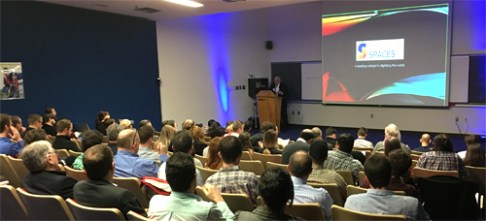
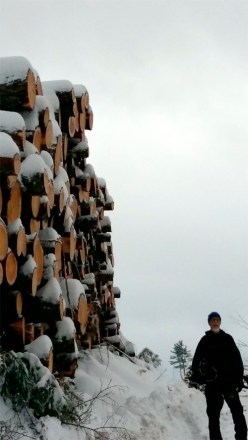
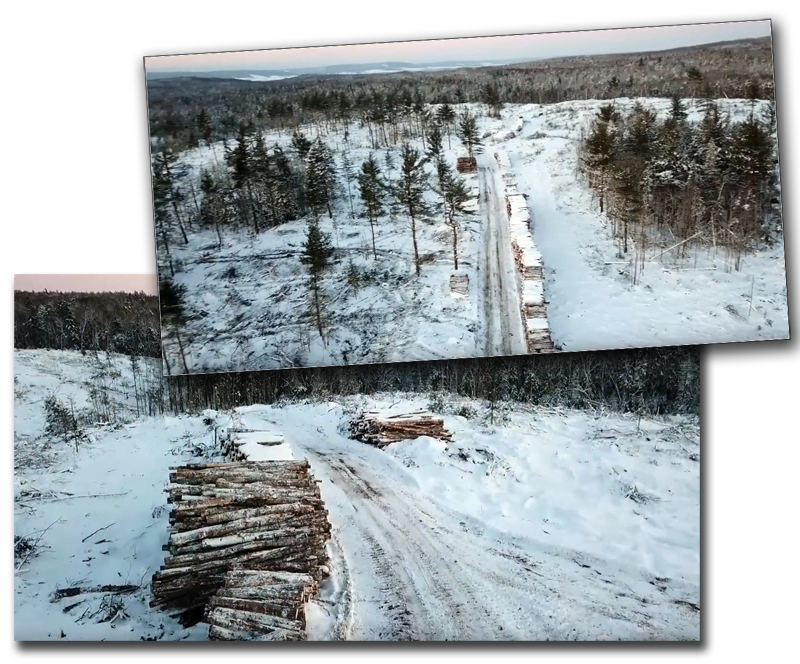
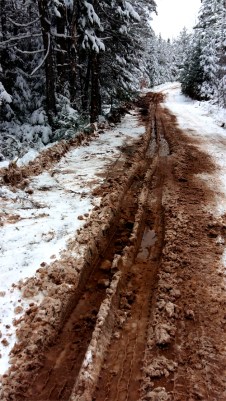
 Imagine the following scenario, COGS could have been expanded to form a network of campuses of the University of Geographic Sciences (UGS). This would permit technical resources to be applied to a wide range of geographic issues across the country. It would build on Canada’s history of innovation in Remote Sensing and GIS. Today, we could use the network to understand a wide range of geographic issues by monitoring and modelling different conditions. Smart ICE would be one example. We can imagine other contributions to our understanding of the boreal forest, or ocean management. Because of the geographic extent of the country, there are many opportunities to observe changes in land, sea and air. This natural laboratory, supported by a network of technical institutes could provide insight and offer solutions to a number of pressing global issues: climate change, urbanization, alternative energy sources.
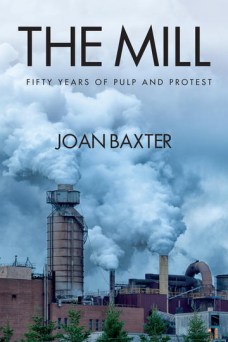 Over Christmas, while in Pictou County, there was the opportunity to read Joan Baxter’s book The Mill. Fifty Years of Pulp and Protest. Baxter provides a detailed and well-researched account of the impact of the Scott Paper Mill at Abercrombie Point, near Pictou. The book paints a sad picture of the relationship between government and the forestry sector and the effect on the local communities and the forest landscape.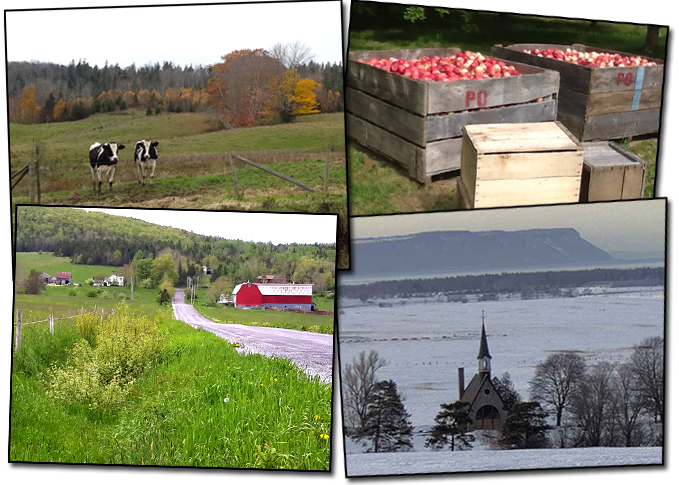
 While in BC, and being in the Fraser Valley, I took the opportunity to check out the current work of Hugh Brody. Brody is the Canada Research Chair in Anthropology at the University of the Fraser Valley in Abbotsford. He is likely best known to Geographers for his book Maps and Dreams, published in 1981. From his web site, I noticed that he had recently given a talk at the Audain Gallery, Simon Fraser University. Fortunately, his talk is available as a
