Posted in Nature

Oak Leaves/ Book Boxes

We have five large oak trees in our new garden, overlooking the Annapolis River. We had not been prepared for the large volume of leaves and acorns falling to the ground.

This year, we bagged them and took them to the Valley Waste facility in Lawrencetown. In the future, we will turn them into compost.

Last night we witnessed squirrels climbing into the crown of one of the trees, with leaves in their mouths, to build a nest for the Winter. This attracted our attention, but also the attention of a family of blue jays. We have a wonderful viewpoint to monitor the interaction of other species on the flood plain.


I have managed to begin the Winter task of sorting my books. I had hoped to get this done before the Big Book Sale at the Annapolis Royal Library. Unfortunately, I started John Muir’s The Story of my Boyhood and Youth. The first chapter describes his life in Scotland.

From the first box, I have set aside, Tim Dee’s Ground Work: Writings on Places and People, followed by Richard Nelson’s The Island Within, and Carl Sauer’s Land and Life.

Perhaps, I can write a blog, one box at a time (only thirty nine to go!)


Yesterday’s walk took us to the Lawrencetown Tree Nursery, down to the river, and then back up to Highway #201 through Andrew Maher’s old property, previously owned by Raymond Hunter; now owned by Rob and Sinead (see previous posts Guided Walk, Naturally Rooted: Hunter’s Brandy and Preparing for Experiential Tourism). The walk is through mixed riverine woods; elapsed time fifty minutes. To avoid trespass, you can complete a loop down to the river, within the nursery land.

References

John Muir, 2023, The Story of my Boyhood and Youth, Canongate Books.
Tim Dee (ed), 2018, Ground Work: Writings on Place and People, Vintage.
Richard Nelson, 1991, The Island Within, Vintage Books.
Carl Sauer, 1967, Land and Life, University of California Press.

Acknowledgements

Heather shares both the walking and nature observation. Edward shares our interest in ‘joining the dots’.
Posted in Creative writing, Travel

Country Diary

I found the following quotation in the latest issue of The Guardian Weekly.

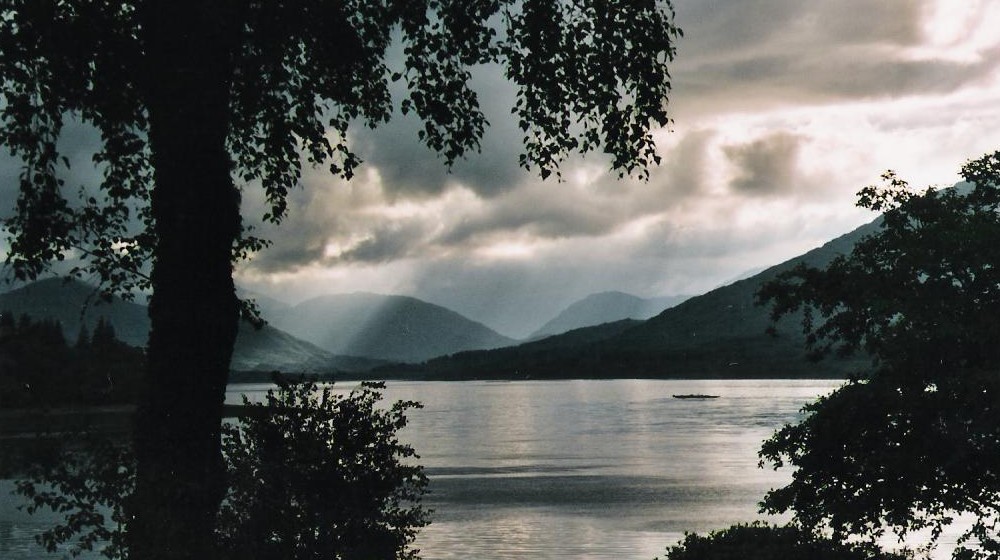
As the ferry returns to Corran, my gaze lingers over Loch Linnhe’s glassy surface.

These peninsulas take the water between thumb and finger / like women feeling for the smoothness of yard goods.” Wrote Elizabeth Bishop in her poem, The Map. While she didn’t mean precisely here, between the water’s sheen and my revised grasp of local geography, I can see exactly what she meant.”

This resonates with me on several fronts. I enjoyed the reference to Elizabeth Bishop (EB). It brings to mind the efforts of the Elizabeth Bishop Society of Nova Scotia and Great Village. It also reminds me of Elizabeth Bishop House and the archival guide to her life in Nova Scotia by Sandra Barry (see my posts One, Two Three, Two Conversations, and Reading Where We Live)

Second, the reference to EB brings to mind the role of West Dalhousie in the life of Ernest Buckler (another EB).

Here we are connecting Scotland (the West Highlands) and New Scotland i.e. Nova Scotia. We are also connecting the sense of place, across both sides of the Atlantic.


On Fridays, Heather and I are able to attend classes at CORAH. For Heather, it’s Chair Yoga and for me it’s Mens’ strength and fitness. These opportunities for ‘rural aging in place’ contrast with the distractions/frustrations of a mixture of online learning and global politics.

Reference

The Guardian Weekly 25 October 2024, p.62. Country Diary Ardnamurchan, West Highlands, Scotland, UK by Mary Montague.

Acknowledgements

Sandra Barry is a cornerstone of the Elizabeth Bishop Society of Nova Scotia. Edward Wedler added the graphics and links. Heather Stewart shares my ‘sense of place’ across the two continents.

Postscript.

From my perspective, the blog is, in its own way ‘A Country Diary’.

Posted in Event Review

Flavour Delights

Today, Heather and I celebrated the closing of the sale of our house in Paradise.


We had lived there for twenty four years.

We will keep the memories of the orchard, the apple picking and the making of Hunter brandy.

Fortunately, we can still walk down to the Annapolis River, through the Lawrencetown tree nursery,

… and enjoy a beer at Lunn’s Mill.

The celebration started in Annapolis Royal. We stopped at the Historical Gardens.

The courtyard was decked out in its Halloween finery. It was a beautiful sunny, cool late October morning.

Afterwards, as a treat, for Heather and myself, we stopped at Flavour Delights, the Indian Masala House in Bridgetown.

It had been on my ‘to do’ list for some time. What an amazing discovery, at two o’clock in the afternoon there were two other couples at the tables. The food was simply excellent. Beautiful decor. We ended with a take-away for supper.

With the house sale complete, I realized the immense strain of dealing with financial uncertainties over the last six months. Now it’s time to look forward to decide on the activities which we can enjoy from the Middleton location.

I can imagine visitors from England, United States or elsewhere in Canada (BC, Ontario, Nunavut)

(cartoon by Edward)

… sharing a meal at the Indian Masala House in Bridgetown. Time for the next leg of the journey.

Acknowledgements

Heather shared the day. We returned home to see the newly renovated front steps to our house. We embrace the richness that small town Nova Scotia has to offer in Annapolis Royal, Bridgetown and Middleton.

Edward added the links and graphics.

The Indian Masala House. www.flavourdelights.com 1-902-349-5115.

Posted in Uncategorized

Playing Catch Up

Friday, Heather and I had lunch at the Green Elephant with Paul and Ruth ( Colville) and Cliff and Alice (Drysdale).

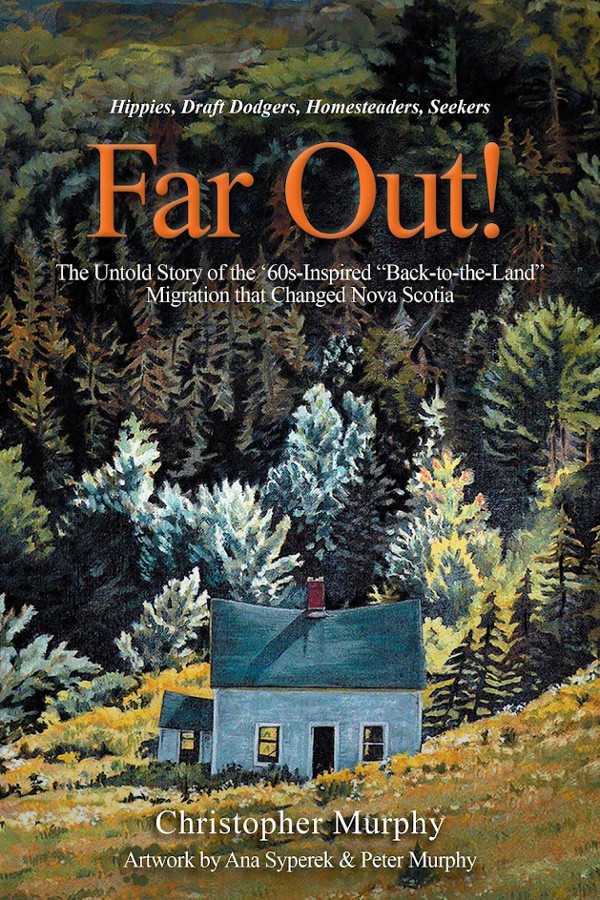
Paul was very enthusiastic about a new book by Christopher Murphy, Far Out! The untold story of the ‘60s inspired back-to-the-land migration that changed Nova Scotia. The following day, I was able to put my name on a copy at The Inside Story.

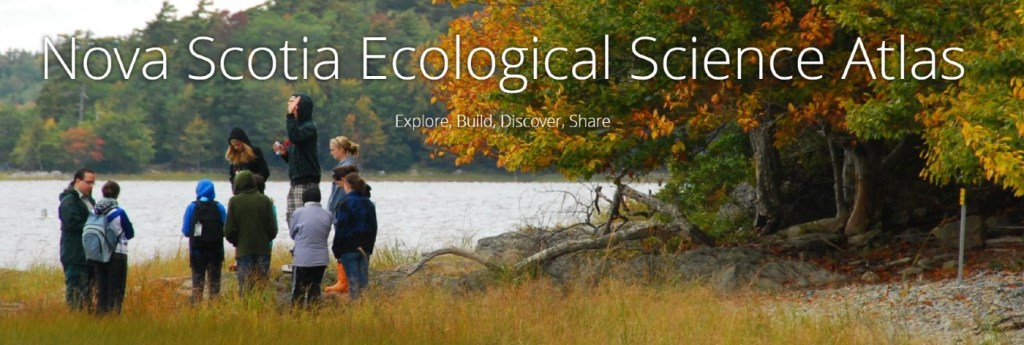
Cliff was able to give me an update on the Southwest Nova Biosphere Reserve Association (SNBRA). He is Vice-Chairman. SNBRA, in collaboration with COGS, has produced an online Nova Scotia Ecological Science Atlas.

This project was initiated in 2017. It is another example of collaboration between the NSCC and the community. It complements similar efforts with MapAnnapolis (check out past posts Crown Lands, Buffer Zone, and AGRG at 20) .

Earlier in the week, I received a call from Russell at MareGold. He had a book ordered in for Heather, 52 weeks of Socks: Beautiful patterns for year-round knitting. While browsing, I found Geoff Nicholson, Walking in Thin Air. A Life Journey in 99 steps. ‘A profound meditation on life, art, walking and immortality’ — Travis Elborough. Already, I am on #82.

Acknowledgements

Thank you, Ruth, Paul, Alice and Cliff. Heather shared in the conversations and subsequent follow up. Edward added the links and graphics.

References

Christopher Murphy, 2024, Far Out, Friesen Press.
Nova Scotia Ecological Science Atlas
52 weeks of Socks, 2020, Hardy Grant Books.
Geoff Nicholson, 2023, Walking on Thin Air, The Westbourne Press.

Postscript

Sad to hear that Gaspereau Press in Kentville is closing down; one of my favourite stops in the Valley (see “Something we may never see the likes of again here.”

Heather joined Christine Heming and others at Granville Ferry hall for a day of Shambala meditation. (Today, Sunday)

Posted in Opinion, Travel

A Tale of Two Geographies

This weekend, we visited New Glasgow. After celebrating the birthdays of Paul Colville and Frank Fox, Heather and I took the ‘high road’ through the Rawdon Hills to New Glasgow via Truro. Heather’s Dad needed some support for his MRI at the Aberdeen hospital. While in town, we returned our library books to the deCoste Centre (also read my blog post Pictou Visit).

We stopped briefly at the Highland Mall, where I found Alec Bruce’s book, The Cooperators. I also browsed a book on the beaches of Nova Scotia.

We checked out Melmerby sand beach on the Northumberland Strait. It is a very different experience to the pebbles on Hampton Beach, on the Bay of Fundy. The waters are warmer too.


For the last several months we have been selling the house in Paradise. As we reach the final stages, we are dealing with the Cooperators Insurance, as well as the Credit Union. The house is now sold,

Moving between Annapolis and Pictou Counties, I am always struck by the difference in the culture. New Glasgow has had a strong industrial base: Michelin, Scott Paper, Trenton. This is reflected in the information available to citizens. Pictou County produces a regular newsletter The health services at the Aberdeen hospital are second to none. This week, I also had an appointment for an MRI. We went to the hospital in Kentville.

Politically, Pictou County likely benefits from the residence of both the Premier, as well as a history of federal-level politicians. With the municipal elections behind us, we will watch to see the difference.

Acknowledgements.

We enjoyed our time away in Pictou County. We always enjoy the ups and downs of the road through the Rawdon Hills. Certainly, we appreciate the history of the Cooperators. Thank you, John, Heather and Edward.

Reference

Alec Bruce, 2024, The Cooperators: The People behind the Rebirth of a Nova Scotia Movement, 1949-2024, Pottersfield Press.

Posted in New thinking

To be a Geographer

Last Thursday, it was Open House at the Centre of Geographic Sciences (COGS). I dropped into the college briefly to catch up with a couple of the faculty. Open House is an annual NSCC event with emphasis on showcasing the unique programs at each campus.

I was successful on two accounts. I had a chance to chat with Ed Symons about municipal planning, GIS technology and the community. It seems only yesterday that MapAnnapolis was founded and there was a collaboration between the Community Planning program at COGS, the Community and the Municipality. In fact, it is likely closer to twenty years.

Ed and I discussed the new potential for combining the mandate of CORAH (Centre of Rural Aging and Health) with the mapping technology at COGS (also see my blog post, Applied Geomatics/CORAH presentation).

Second, John Wightman dropped by COGS to loan me a copy of Farley Mowat’s The Desperate People. John had a request.

Given your unique perspective in living in so many geographic areas of Canada, perhaps your thoughts on the changes since 1980 to the 2024 status of the impact of environmental change. In particular to those in our Arctic regions’.

This request coincided with a call from Andrew Ronay, a schoolboy friend from England. He had been asked to mentor a recent graduate in Geography from Oxford University. Could I be a Canadian resource?

To satisfy these two requests I need to look back on the period , 1980-2024. I found a copy of my ‘retired’ curriculum vitae.

1980-88 Lawrencetown, Nova Scotia
1988-89 Jakarta, Indonesia
1989-1990 Redlands, California
1990-1998. Peterborough, Ontario
1999 Victoria, British Columbia
1999-2011 Lawrencetown, Nova Scotia
Also Haida Gwaii, British Columbia. Iqaluit, Nunavut.
2011-Lawrencetown, Nova Scotia (retired)

Before 1980, graduate work included time in the Rockies, Newfoundland and Labrador. My first visit to Canada (from England) was in 1964 at the McGill Subarctic Research Lab, Schefferville, Quebec.

One approach:

I have been writing weekly blogs since 2013. This includes the period when Heather was working for National Parks in Churchill, Iqaluit and Haida Gwaii. Could I summarize over ten years of blogs, and thereby answer the question:

“To be a Geographer? “

A quick look at the ten volumes of blogs – What a daunting task!

Let me think about that challenge.

First, certainly, PLACE is important to me. Second, in the words of David Suzuki from The Sacred Balance, “We need to rediscover our ‘Place in Nature’”.

Geographers must play their part.

Posted in Uncategorized

Nova Scotia Cider Route

This morning, we had to go to Greenwood to pay the bill for furnace maintenance. At this time of year, buying a new house means ensuring that the heating systems are ready for Winter.

Afterwards, we stopped at the Kingston municipal park for a short but colourful walk (read post Happenstance), then stopped at Gouchers for beets and pumpkin.

Final stop at Spurr Brothers in Wilmot for a morning coffee. I picked up a map of the Nova Scotia Cider Route.

Nova Scotia Ciders: as unique and beautiful as the land itself. Apples were first cultivated in Canada by early French settlers in the Annapolis Valley with planted trees appearing as far back as 1633. Enjoying significant geographic advantages including proximity to the Bay of Fundy, the ‘Valley’ enjoys more hours of sunshine without getting too hot, and a longer growing season than most places in Atlantic Canada, creating a perfect ecosystem – terroir – for growing apples for cider.”

Spurr Brothers in Wilmot is a must stop for local products and its agricultural vista.

Acknowledgements

Heather shared the Autumn drive. Edward added the graphics and links

Postscript 1

It’s tough to prepare two houses for the Winter season. Fortunately, we are able to enjoy the ‘terroir’ and its products. Today we voted online for the Middleton town council. Finished the afternoon, driving from Bridgetown to West Dalhousie, and across to New Albany on Highway #10 home. Again, the colours are stunning !

Postscript 2 from Edward

These days, maps come via various routes, as with the Mi’kmaw Place Names Digital Atlas QR code. I picked this up during my visit to the Lunenburg library this week.

This is Mi’kmaq Month in Nova Scotia.

Posted in Art, Book Review, Nature

Giving Thanks

On Sunday we had a beautiful, blue sky day. Heather and I decided it was a day for a walk in Kejimkujik National Park.

Early, we headed down Highway #8. Our destination was the Peter Point Trail. It was a delightful six kilometer stroll. The trail was covered in pine needles. The yellow, orange and red deciduous leaves were stunning.

Afterwards, it was time for a different route home. We headed down to South Brookfield, where we turned east on Highway #268, and cross-country through Pleasant River-Compton-Hemford-New Germany. At. New Germany, we turned North on Highway #10 to Middleton.

Two observations on the day:

  1. The colours on November 13 in rural Nova Scotia were fantastic because of the mix of hardwood tree species.
  2. The landscape mosaic of rural Nova Scotia is remarkable. If only, we would follow the practices of sustainable forestry.

This weekend, I received an inter-library loan notice from the Middleton library.

Jack Dangermond at Esri had recommended Our Towns by Jim and Deborah Fallows. A 100,000-mile journey into the Heart of America. A quick glance took me to the chapter on Redlands, California (also see the video in my post West Dalhousie Visit).

Redlands is the home town of Jim Fallows. It is also the headquarters of Esri and home town of Jack and Laura Dangermond.

We went with our young family to Redlands in the late ’80s. I had spent the early ‘80s designing and delivering new programs at COGS. After a year with EMDI in Jakarta, we landed in Redlands. Heather took graduate courses in Biology at the University of California, Riverside.

Thank you Jack for the reference, and the opportunity to spend time in Redlands., your town.

Reference

James and Deborah Fallows, 2028, Our Towns, Pantheon Books.

Acknowledgements

Head of Chezzetcook intertidal area painted in watercolour by Edward Wedler

Thank you , Edward. I know you were able to paint and capture the colours of the Nova Scotia landscape this weekend.

Posted in Book Review

All Mapped Out

Last weekend, after our French Basin trail walk, we stopped at Mare Gold bookstore in Annapolis Royal (see also An Author’s Market). It is a real treasure. Heather found a book on botanical illustration. I saw a couple of interesting titles but decided to hold off. Why?

a) do we really need more books?
b) managing two houses is a financial burden.

Later, I went online and researched Mike Duggan, Kings College, London.

The end result was that we returned to Mare Gold on Wednesday. I picked up two books.

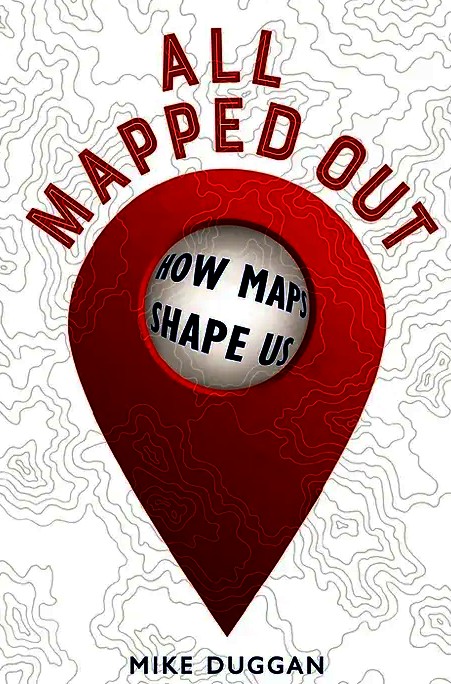
Mike Duggan’s, All Mapped Out: How maps shape us.
and John Muir’s “The Story of my boyhood and youth: a memoir”.

The second was for Heather.

From the back cover of Muir.
Robert MacFarlane. “No other writer is so ceaselessly astonished by the natural world as Muir, or communicates that astonishment more urgently.

From the back cover of Duggan:
Mike Duggan asks questions of our present reliance on digital mapping: how the technologies subtly pervade our lives, condition our consumption habits and even shape our experience of the world,” Veronica Della Dora, Professor of Human Geography, University of London.

For myself, it is a marvel that I can discover these books so close to home (Middleton to Annapolis Royal). Given my interests in ‘all things geographic’, I struggle with the impact of technology: GPS, and Google Maps. Duggan helps to put it in perspective. He also introduces me to happenings on the other side of the Atlantic, and authors like Phil Cohen, and Livingmaps Network.

Both Edward, and myself, appreciate and enjoy this perspective on our world. Do pay a visit to Mare Gold. They offer a unique resource in the region.

REFERENCES

Mike Duggan, 2024, All Mapped Out: How maps shape us, Reaktion Books (U Chicago Press distributor)
John Muir, (orig. 1913) The Story of my boyhood and youth: A Memoir, U Wisconsin Press

Posted in Uncategorized

Middleton Walks (1)

Both Bridgetown and Annapolis Royal have walking groups, They meet on Wednesday at 10 am (see The Reader). Heather has joined the Bridgetown walk on occasion.

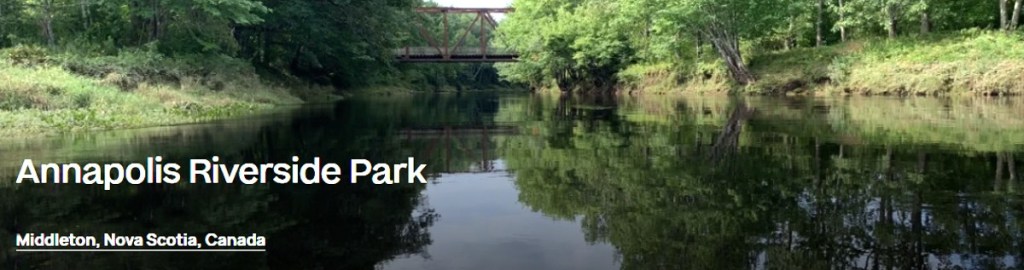
Today, we started the day with a walk around Riverside Park.

There you can enjoy benches alongside the river and the colours of the maple trees.

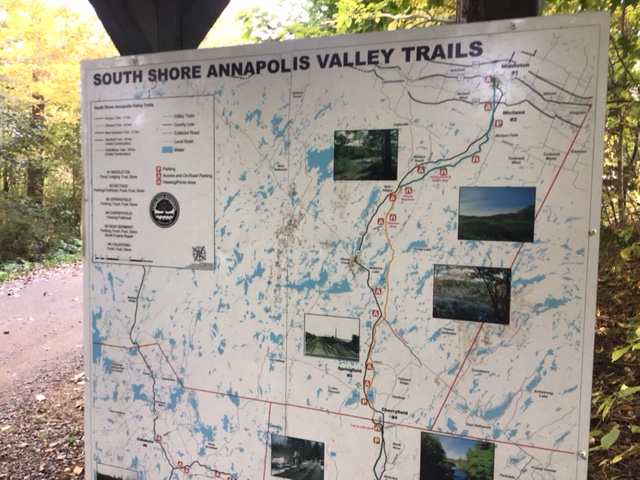
To extend our walk, we decided to cross over the river bridge and make the connection to the South Shore Annapolis Valley trails. This allowed us to complete a one hour walk. Returning via the Family Feed Store on Highway #1, before reaching Tim Hortons, the post office and the bank.

The walk could be extended to include the CARP marsh trail, before returning home.

Sunday evening I received a call from Nick Lasch. Nick used to be Director of Planning, Annapolis County Planning Department, in the late ‘80s. He now lives in Ontario. In March, he had sent me a copy of the Municipal Planning Strategy, dated Fall 1988. I had promised to return it to him, but with our move, the document had languished in a desk drawer.

Now with my interest in a Community Information Utility (CIU) it is a good time to ask the following questions.

What happened to the Municipal Planning Strategy (36 years later)?
Would the community (aka Annapolis County) support the development of a CIU?

Given my recent experience in Pictou, what is the likelihood of a similar collaboration in Annapolis County — to include Annapolis Royal, Bridgetown, Lawrencetown and Middleton?

In the meantime, Heather and I shall continue to explore, by bicycle or by foot, the South Shore Annapolis Valley Trails .