Posted in Event Review

Antique Maps tour

Today (Thursday, 25th), Heather and I joined the Antique Maps tour at COGS. Our guides were Andrew Hannam and Chelsea Heighton. The collection contains over 2500 antique maps, atlases and books that once belonged to Walter Morrison, David Raymond and Leslie Marcus. The event was organized by the Centre of Rural Aging and Health (CORAH), NSCC Annapolis Valley campus, Middleton.

I knew both Walter and Dave from my time teaching at COGS. From the tour, I gained a new appreciation of Walter’s interest in the history of map production. At the same time, it was good to see the local maps for the Annapolis Valley, Louisburg , Halifax. It is hard to estimate the value of these maps. They deserve a wider audience, perhaps with an exhibition in Halifax.

Walking the corridors, I noticed a display by the COGS Library which named the current programs offered on-site and on-line at COGS. Later I returned to the campus to photograph this display.

Resident programs (2023-24) include:

  • Survey
  • Marine Geomatics
  • GIS
  • Remote Sensing
  • GIS Technician
  • IT Programming

Online programs include:

  • Cartography and Geovisualization
  • Geospatial Data Analytics.

Residential-Online programs include:

  • GIS
  • GIS technician.

This display was the first time that I have been able to discern programs that are solely online, and those that are available both on-site and on-line.

Hopefully this will help the wider public better understand our modern learning environment.

Acknowledgements

Thanks to Andrew Hannam and Chelsea Heighton for the tour and the display.

Posted in Event Review

Industry Expo at COGS

COGS hosted its annual industry expo, starting on Monday evening with two keynote presentations and a social at Lunn’s Mill. Tuesday was a full day including company presentations and an industry panel. In the gymnasium, there were forty industry partner booths.

My interests were three fold:

  1. To understand the suite of technologies currently taught at COGS;
  2. What were the expectations of the industry partners ?
  3. What are the programs offered at COGS today ?

The Monday evening keynotes were delivered by Justin Chang, MOBIA and Frank King, Halifax Water, both graduates from COGS, working in Halifax.

Tuesday , I had the opportunity to meet some of the industry partners. This included Derek Weatherbe from ESRI , Redlands; Simeon Roberts, Association of Nova Scotia Land Surveyors and Colin MacDonald, provincial government.

I attended the industry panel, focussed on tips for finding a job; and a presentation on NSCC Applied Research. This includes research with industry partners into Energy, Engineering technology, Environment and Agriculture, Geomatics, IT and Social Science, across all of the NSCC campuses.

My relationship with COGS started in 1980 teaching in the Scientific Computer Programming program, through to 2011 with the Applied Geomatics Research Group. I was Head, Department of Computer Programming 1980-88. Between 1988-2000, I worked for EMDI Indonesia, ESRI, OMNR and Royal Roads University. I returned to COGS to set up AGRG in 2000.

I was seeking to understand the current programs at COGS. In the 1980’s we had three departments: Surveying, Computer Programming and Cartography/Planning. Today, we have a wide range of technologies: new sensors, new platforms (eg drones) and new software environments (eg Artificial Intelligence)

Given these rapidly changing technologies, what has happened to the science of Geography, and its application, in a rapidly changing world?

From the ESRI brochure:

At ESRI we bring meaning to maps. We pioneer problem solving using geographic information systems (GIS) and we believe the geographic approach can transform the world by unlocking data’s full potential in every organization. Our users are creating the maps that are changing the world and shaping our future.”

Acknowledgements

David MacLean helped me navigate the Expo. I had useful conversations with a number of the exhibitors. Edward Wedler put in his time as a Remote Sensing instructor at COGS. Our collaboration continues today.

Reference

Map your career at ESRI, 2023, ESRI.com/careers/#esriexperience

Posted in Uncategorized

The Story of COGS (one more time)

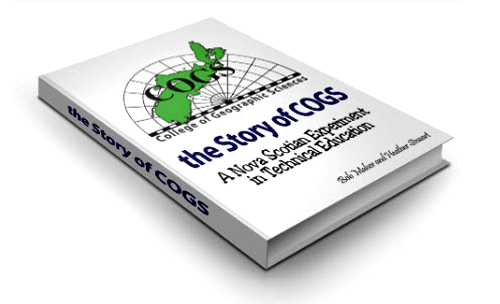
After attending the industry expo, I was moved to write the story of COGS (again).

I wanted to ensure that the current students are aware of the importance of ‘story telling’ and ‘a sense of place’.

This blog post is a short précis; top of mind.

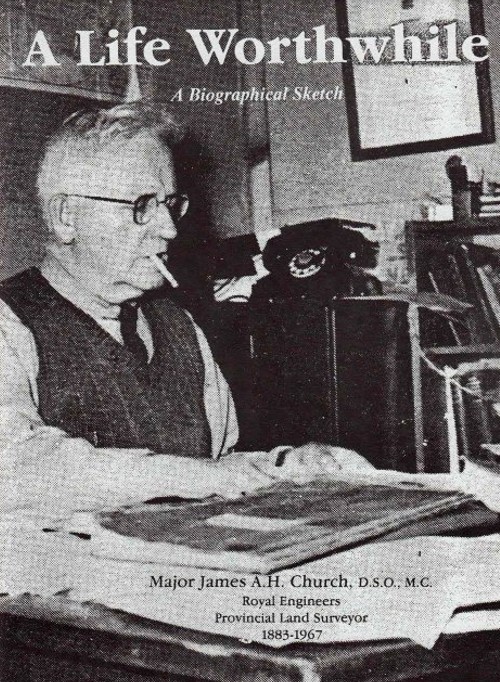
It starts with Major Church and his survey school in Lawrencetown, after the Second World War (see post Never Retire).

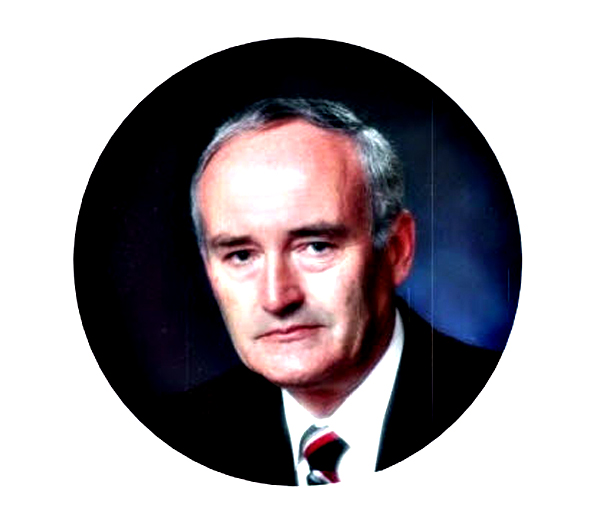
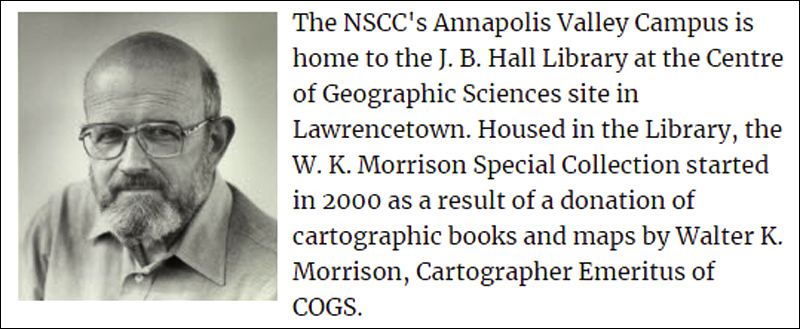
This led to the addition of Cartography, the hiring of Walter Morrison and John Wightman (pic shown).

At the industry expo, the librarian Andrew Hannam had prepared an excellent display in the Boardroom of Walter’s antique map collection (see post Map Stories).

From John Wightman, we link to Roger Tomlinson who was teaching at Acadia University and is remembered as the ‘father of GIS’ (see post Journey Back in Time).

In the 1980’s it was recognized that there was a need for computer technology and GIS. This was when I stepped onto the stage. This step created a strong link between COGS and ESRI/ESRI Canada. The story has unfolded from there.

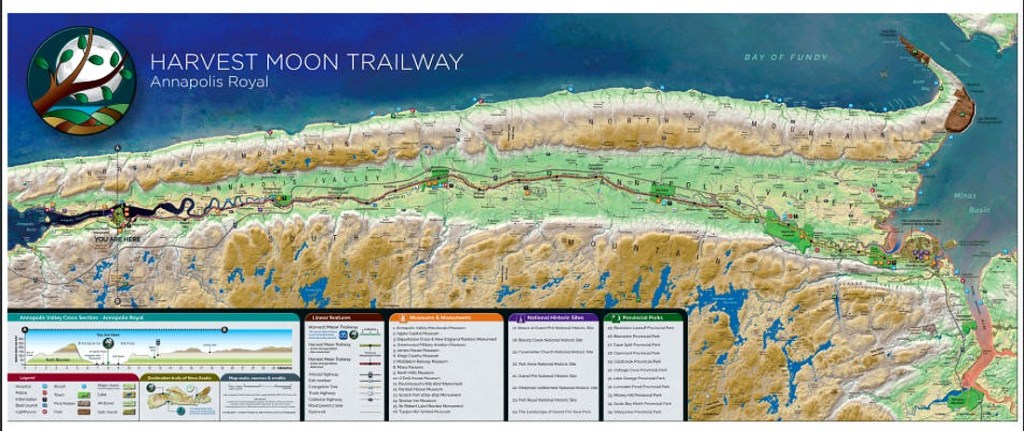
For today’s student. I would encourage them to understand this place and landscape. Read the local story tellers, especially David Manners, Ernest Buckler and, more recently, Bob Bent. Take the drive up the Morse Road from Bridgetown to West Dalhousie. Walk through Valley View Park, above Bridgetown, and head across North Mountain towards Middleton. Get on your bicycle, ride the Harvest Moon trail to Annapolis Royal. Stop at Grand Pre and admire the cartography of Marcel Morin. Take a drive to Port George on the Bay of Fundy.

Enjoy!

Postscript

This evening (Wednesday), Heather and I are joining Jeannie Barteaux to see the fantasy movie, The Boy and the Heron at the Kings Theatre, Annapolis Royal animated by Hayao Miyazaki. Thanks, Jeannie.

Posted in Event Review

SOOF Soup Sunday

Today, I attended the Save Our Old Growth Forests (SOOF) meeting at the Centrelea Community Hall. The hall was full, about sixty in attendance, of all ages.

The meeting was part of the SOOF campaign coordinated by the Arlington Forest Protection Society (AFPS) (see previous post Saving Forests),

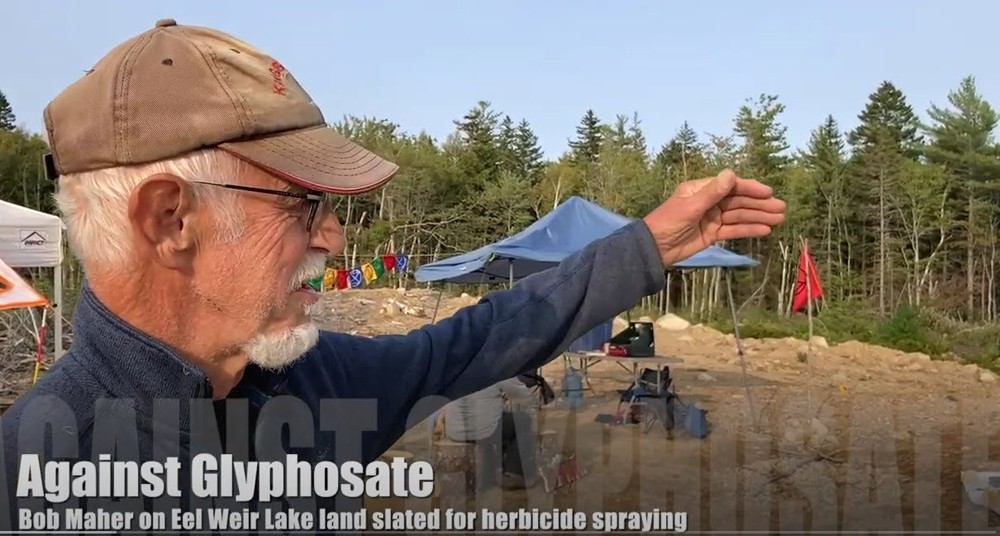
It is surprising to me; it is four years since we were camping out in protest against the clearcutting and spraying on South Mountain (see previous posts Anatomy of a Protest, A Green Future?, and Striking Balance).

Besides the excellent lunch, we received an update on the proposed Goldsmith Lake and Beals Brook Wilderness Areas. This will be followed by a public meeting at the Bridgetown Legion (next Sunday, 1:30 – 3:30 pm).

’Over 23,000 acres have been identified by the NS Department of Natural Resources and Renewables, as potential sites for clearcutting and spraying on Crown Land in Annapolis County.’

At the meeting today, I learned that there are petitions in Pictou, Colchester, Cumberland, Yarmouth, Halifax and Digby, as well as Annapolis County.

Today’s event raised a number of questions.

What was the condition of the Forest in Nova Scotia, after the shipbuilding era?

Is there agreement on the definition of Old Growth Forest?


When the provincial government looks at crown land in Nova Scotia, what is their definition of old growth? Is it the same as AFPS’ definition?


What is the probability there will be further clearcutting and spraying on Crown Land in Annapolis County?

Acknowledgements

Rob and Laura Bright at AFPS for organizing the event. Nina Newington for sharing her experience of old growth in Annapolis County.

References

YouTube video The Return of Old Growth Forests, New England Forests

Posted in Article Review, Event Review

Lazy Friday

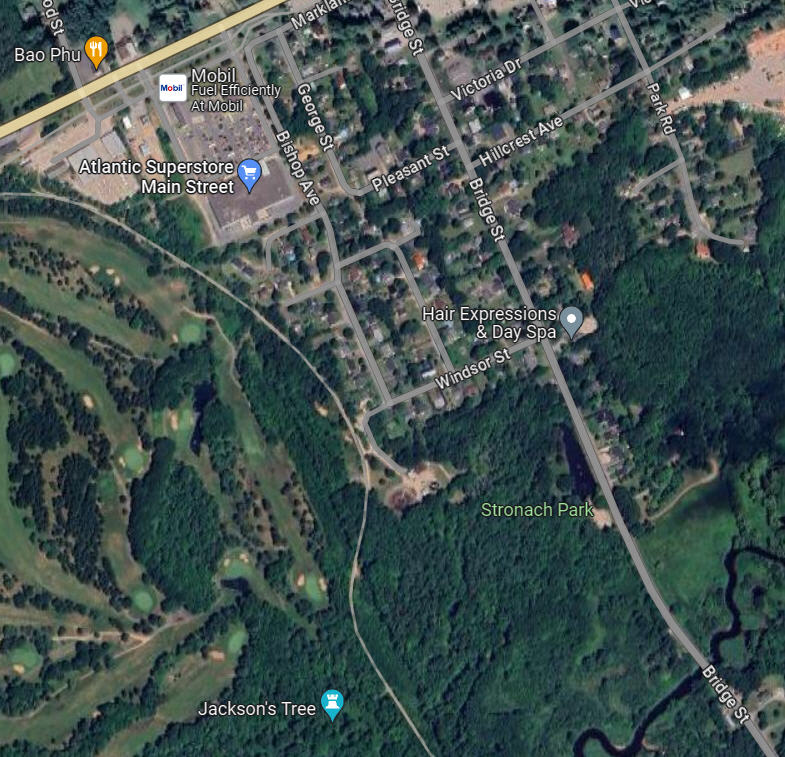
We wanted to make lasagna for Supper. Time to visit Atlantic Superstore in Kingston. Afterwards, we enjoyed our customary short walk through the Kingston village park (aka Stronach Park).

Since we were near Greenwood, let’s stop at the Inside Story bookstore. In the magazine section, I found the latest issue of the Nova Scotia Journal of Sustainable Community Development (Spring/Summer 2023).

Articles included ‘ Investment firm energizes Annapolis area economy’ — the story of Annapolis Investments in Rural Opportunities (AIRO). The work of Jane Nicholson and Adele MacDonald.

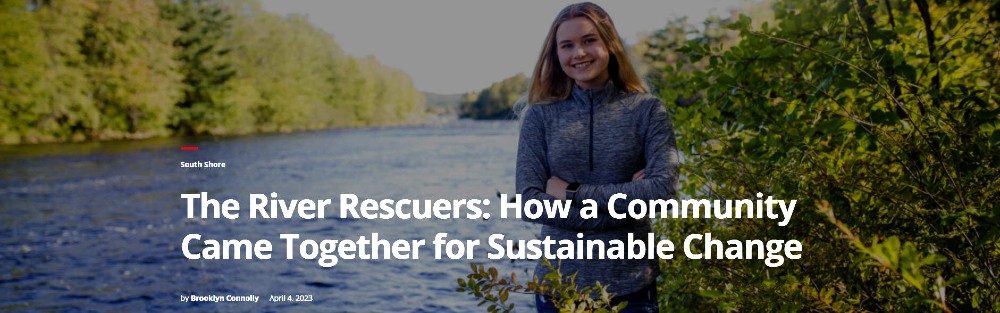
A second story was The River Rescuers: how a community came together for sustainable change in addressing pollution in the LaHave River (Lunenburg County).


On our return home, we stopped at Bees Knees in Lawrencetown. It was a lucky day for hand pies, quiche and brown bread.

It was a lucky day for hand pies, quiche and brown bread (check out their Facebook site)


Next week will be busy. One Tuesday, COGS campus hosts the Industry Expo in Lawrencetown. Thursday will be Antique Maps: a Journey through time and place (again at COGS).

Friday, it’s my time to pay attention to the body — men’s strength and fitness at CORAH, NSCC Middleton.

In the Bridgetown Reader, I see that they are recruiting a General Manager for the Annapolis Valley Exhibition. I hope there is a community vision to link the geographic sciences at COGS with the opportunity for educational events that apply these technologies to agriculture at the Exhibition.

Acknowledgements

Heather brought along her favourite lasagna recipe. I checked out the book shelves. Edward contributed the graphics.

References

Nova Scotia Journal of Sustainable Community Development. Spring/Summer 2023.

Centre for Local Prosperity centreforlocalprosperity.ca

Posted in Uncategorized

Loose Ends

After returning home from British Columbia, there remain a few loose ends. On our drive between Rossland and Kelowna, there were trucks on the highway, salting and spreading gravel. We sustained a flying rock to the windscreen. This week, I was dealing with the car rental company and my auto insurance.

I also found on my return that I was unable to update the operating system on my iPad. It required more space. After conversations with Kyle at Bridgetown Computing, it seems that I am destined to update my ‘go to’ technology.

This week, I have been thinking about long distance walks. This started with Emergence Magazine, an interview with Paul Salopek. He has been on a 24,000 mile journey retracing the migration pathways of the earliest humans who migrated out of Africa in the Stone Age.

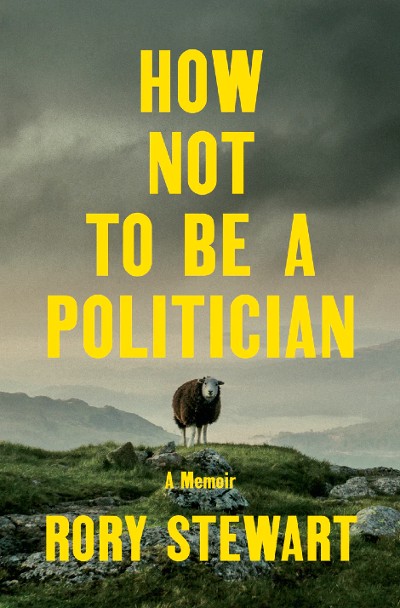
This coincided with an interview on the CBC with Rory Stewart. This led me to Lawrencetown library and his book ‘How not to be a politician : a memoir (published in the UK as Politics on the Edge).

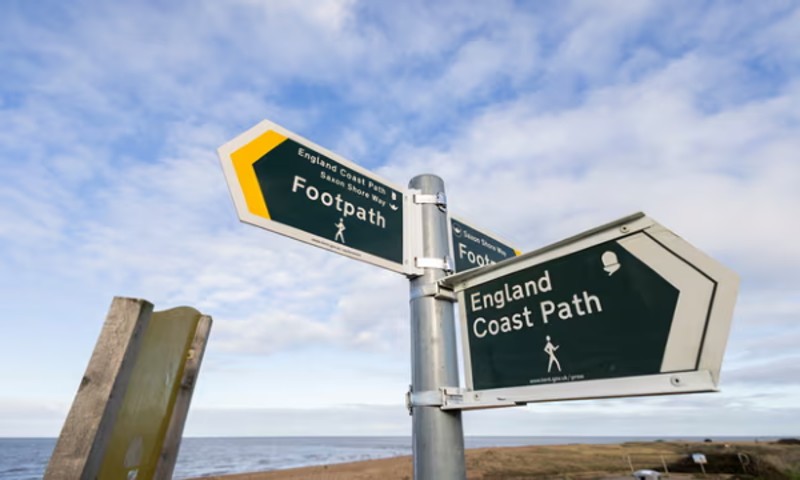
Finally, in this week’s Guardian Weekly, ‘English coastal route on the path to completion’.

To date, 616 km are awaiting approval while 3697 km have been signed off. Of those 2019 have work in hand and 1673 km completed’. To circumnavigate the country would be a wonderful achievement. See the Guardian’s King Charles III England Coast Path article).

Photo by Graeme Robertson, The Guardian (LINK)

Postscript

While away from home over the Christmas break, the Bridgetown Reader has morphed from a handy-sized record of local events into a full-sized newspaper. Fortunately, it contains the same valuable community content.

Acknowledgements

Kyle at Bridgetown Computing helped diagnose the limitations of my trusty iPad. Heather shared the harrowing drive through the Kootenays. Edward added the graphic content and links.

References

Emergence Magazine, Sunday January 14, 2024, A Path Older than Memory: an interview with Paul Salopek.

Rory Stewart, 2023, Politics on the Edge: a Memoir from Within, Penguin Books

The Guardian Weekly, January 5, 2024. p9, English coastal route on the path to completion.
The Guardian Weekly, December 28, 2023, Path of Much Resistance

Posted in Uncategorized

Second Christmas

This weekend, we headed up to New Glasgow. There remained a few presents under the Christmas tree from Patrick’s family. They were unable to join us in British Columbia.

Patrick has spent time in Scandinavia. For Christmas, he sent:
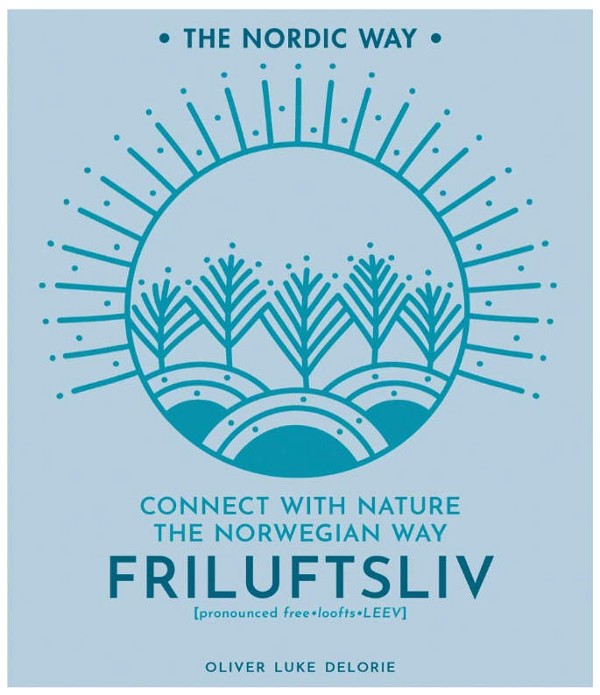
Connect with Nature, the Norwegian Way, Friluftsliv.

In his 1859 poem “Paa Vidderne” Norwegian playwright, Henrick Ibsen expresses the concept of living a ‘free air life’ as our basic human need to be outside and connect with nature. He describes the need for time in solitude in nature to clarify one’s thoughts.’

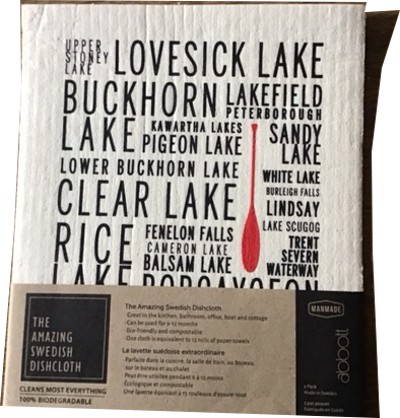
The second item in the parcel was the amazing Swedish dishcloth. In this case, it showed the place names of the geography around Peterborough, Ontario.

The third item was a packet of red velvet cocoa.

Heather also received a parcel. It contained The Mindfulness Doodles Coloring Book and ten coloured pencils, chocolate cocoa, and Burts’ Bees hand cream.

In response to my previous blog ‘Place Matters’ Edward sent me a link to a video ‘Landscape Looking’ by UK artist Oliver Pyle. Edward also posed the question:

’How do others such as geographers, mycologists, botanists, foresters, hydrologists, geologists, historians, architects etc conduct “Landscape Looking “? Also artists, and photographers.

Postscript

Meanwhile, we are working away at 1000 piece puzzle, Songbirds Tree. Perhaps we will finish it, next time we come for a visit.

References

Oliver Luke Delorie, 2020, Connect with Nature the Norwegian Way, Friluftsliv, Sterling Ethos, NY.
Mario Martin, 2023, The Mindfulness Doodles Coloring Book, The Experiment, NY.
Oliver Pyle, Landscape Looking, YouTube Video.

Acknowledgements

Thanks to Patrick, Emily, Fraser and Logan for the Christmas present selection. Edward for his feedback and link to the work of Oliver Pyle, UK artist.

Posted in Art, Book Review

Place Matters

Roger Lewis is Professor Emeritus in English Literature at Acadia University. He has retired and now lives in Slocan, BC.

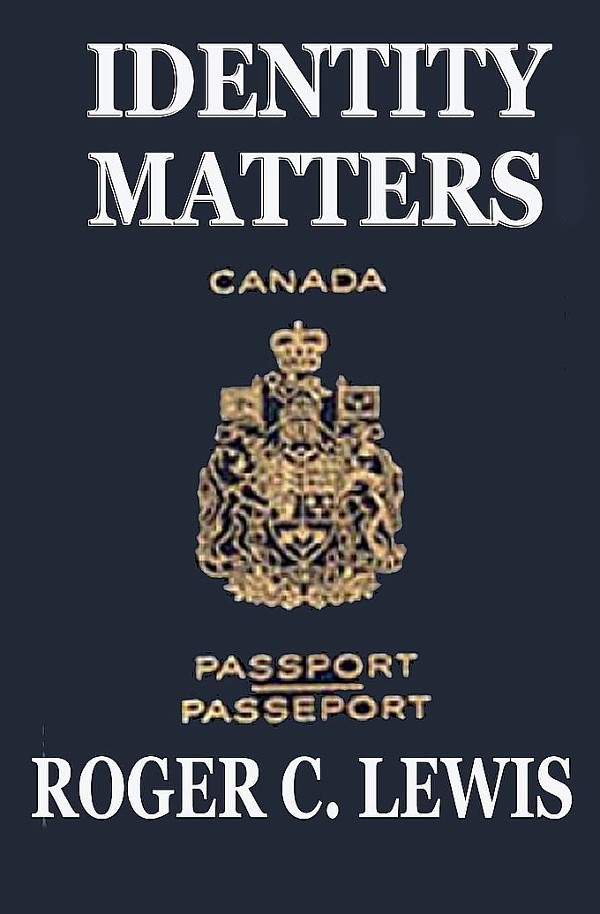
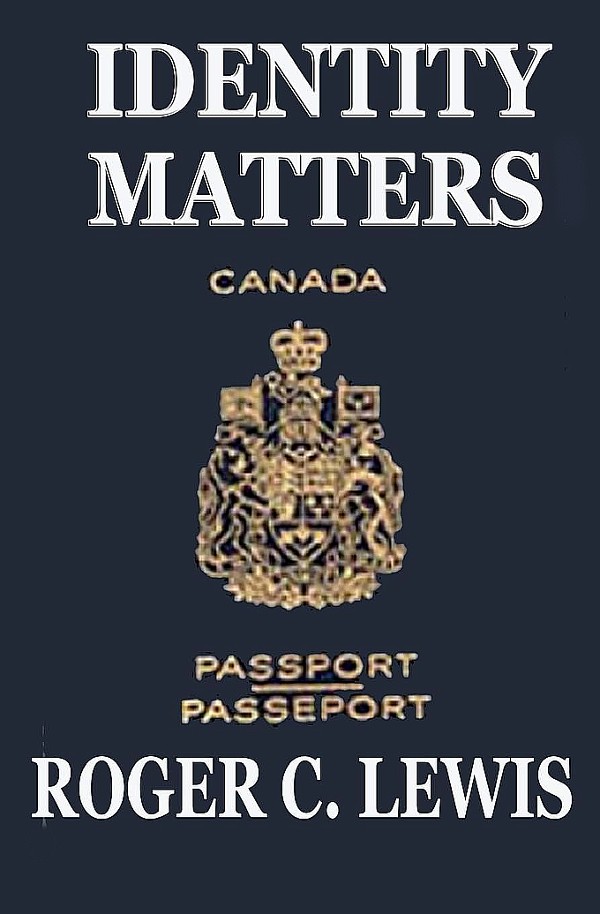
 His publication, ‘Identity Matters‘ is a collection of short stories. Some stories are set in Fundyville (aka Wolfville). Others are set in the mountains in British Columbia.

Lewis raises questions about identity and the effects of ‘place’. Given we have just spent two weeks in BC (Port Moody and Rossland). It proved to be a very thought-provoking read.

Aside from the references to the familiar geography of the Annapolis Valley, the descriptions of BC mountain culture – skiing, climbing and cannabis culture seemed very accurate.

It is somewhat insightful to realize the difference between North Mountain/South Mountain life in the Annapolis Valley and the concept of mountain life in West Kootenay, BC.

The ‘mountain’ landscape of Nova Scotia is much easier for our generation than the mountain landscapes of British Columbia.

I found the most poignant short story to be #14, A Father’s Diary. It is a description of an avalanche accident in Revelstoke. Lewis quotes, Group of Seven painter, JEH MacDonald as an epitaph:

He lived humbly but passionately with the wild. It made him brother to all untamed things of nature. It drew him apart and revealed itself wonderfully to him … and it took him to itself at last.” p.150.

This was epitaph to artist Tom Thompson, drowned accidentally in Canoe Lake, Algonquin Park, Ontario, even though he was an expert canoeist and swimmer.

Lewis uses the concept of identity in many different ways, however in all cases ‘the real question defining Canadian identity is not ‘who are we?’ but ‘where is here?’; from renowned Canadian thinker, Northrop Frye.

Acknowledgement

Heather shared the BC adventure. She is now reading, Identity Matters. Edward has just returned from Florida, arriving in a snow storm.

Reference
Roger C. Lewis, 2017, Identity Matters, Custom Books Publications

POSTSCRIPT

Anne Wedler’s plein air oil painting, “Achray” and Edward Wedler’s watercolour, “Achray Stone House” were created close to the sites of Tom Thomson’s paintings in the Algonquin Park (see their Footsteps East Map paint-out site 46).

(Left) “Achray” plein air oil painting by Anne Wedler
(Right) “Achray Stone House” plein air watercolour by Edward Wedler
Posted in biographical sketch, New thinking

AI chat GPT

Jonathan Murphy, founder of GoGeomatics Canada, for fun, asked Artificial Intelligence chatGPT

I forwarded it to Edward Wedler. His suggestion was that the response should reference my over 500 blog posts spanning several years. This is interesting, since the blogs are published under ernestblairexperiment.wordpress.com. The name comes from Ernest, for Ernest Buckler, and Blair, for Eric Blair (aka George Orwell) . Experiment – life is an experiment.

Today, I visited Integrity Printing in Bridgetown to request a hard copy of my 2023 blogs. Volume 8. This blog post will be #550.

Jon’s response from AI chat GPT raises a number of interesting questions about the impact of AI on Geography/ Geographic Information Systems.


In the mail, on our return from BC, I found the 2024 Esri Canada calendar.

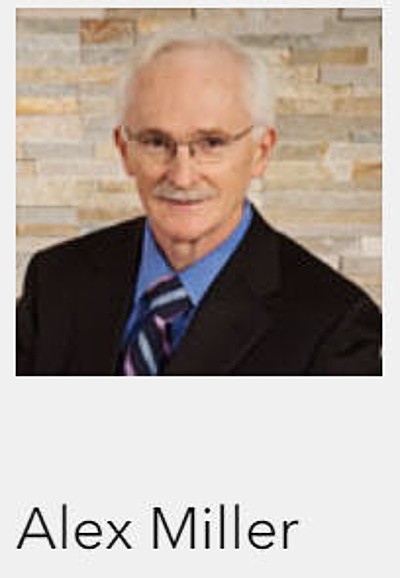
In the letter from the President, Alex Miller, he describes the founding of Esri Canada in 1984. Forty years ago. I remember well; Alex’s visit to COGS

From COGS, he hired David Roscoe, John Houwelling and Eric Melanson. It has been an exciting journey.

In the Esri 2024 calendar, the map for July shows the Harvest Moon Trailway through the Annapolis Valley (see Tourism Nova Scotia’s Harvest Moon Trailway LINK). The Map was designed and produced by Marcel Morin, Lost Art Cartography — another COGS graduate, living and working in Grand Pre, Nova Scotia (see the Recording of Marcel’s December 2023 meeting of the Blomidon Naturalists Society).

Acknowledgements

Jon Murphy, a COGS graduate, initiated the inquiry. Edward Wedler, retired COGS faculty, added value to the query.

Reference
ESRI Canada 2024 Calendar, Forty Years, The Science of Where.

Posted in Uncategorized

Travel Tip #3

Home, sweet home !
We arrived back in Paradise last night at 12:30 am (Monday). It proved to be a three day return trip. On Friday, Andrew escorted us down from Rossland to Grand Forks. Afterwards, we were on our own, until we returned the car rental at the Kelowna airport on Saturday morning.

The flight to Toronto was scheduled for midnight. Unfortunately, the flight was delayed. This meant that we did not make our connecting flight to Halifax. We arrived back in Halifax around 6 pm Sunday. It was snowing, and the roads were slick. The road conditions improved as we headed west beyond Windsor to exit #19 Lawrencetown.

Lessons

Andrew had made the travel arrangements. Talking, and watching other passengers, those with cell phones seemed able to reschedule, ‘on the fly’. Could we have obtained an earlier flight to Halifax?

If passengers can use their cell phones to intervene without going through an agent at the airport does that result in a two tier system — those of us who are cell-phone-savvy versus those who need the intervention of an agent?

I don’t know the answer. I DO know that there is a generation of ‘seniors’ who have not grown up with the technology of the day.


Fortunately, I was in the company of the book by Roger Lewis’ ‘Identity Matters’. I will write a separate book review, once we have our lifestyle back to normal.

What is salient about Roger is that he has spent time teaching English Literature at Acadia University. He now lives in the Slocan Valley, BC.

His collection of short stories cover both geographies.

For now, from the cover, I will only quote Canadian thinker, Northrop Frye who declared ‘that the real question defining Canadian identity is not‘ what are we?’ But ‘where is here?’ Lewis explores both questions.

Acknowledgements

I appreciate the support of both my BC families: Laurel and Nic in Port Moody; Andrew and Julia in Rossland. They provided remarkable insight into the two BC geographies. Heather shared with me the two, very different landscapes and cultures. Edward added the illustrations and links.

Reference
Roger C, Lewis, 2017, Identity Matters, Custom Book Publications.