Posted in Opinion

Thinking Rural

As I reorganized papers around the house, I found a six page geographic description of the Annapolis Valley: the Geology, the Soils, the Habitats, the Primary Industries: Bay of Fundy fisheries, Forestry, Mining and Agriculture, the Micmac and the Land, the Future. I believe that it came from the MacDonald Museum in Middleton in the 1980’s. No author. No date.
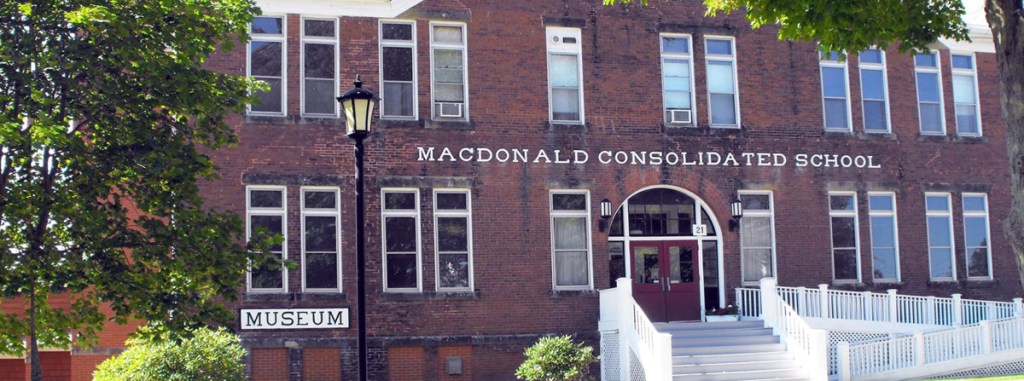
LINK to the MacDonald Museum website

Here is the final paragraph: the Future.

“We understand today, that we do not command the environment but are very much a part of it, and that what we do to the environment will sooner or later affect us.

Slowly we are learning that we must work with nature, not against it. This means abandoning old habits of careless consumption and adopting the wisdom of intelligent conservation.

Our Natural History Exhibit is designed to help visitors appreciate these fundamental truths. We have the land – the natural resources – we have clean air and water. If we managed these assets we have a great deal to look forward to in the ‘Valley of the Future.'”

If we agree with the sentiment, what are the actions?

What is the vision for our institutions?

What role should the Museums play in Annapolis County?

What is the role of the Annapolis Valley Exhibition?

Does the presence of the Centre of Geographic Sciences (COGS) in Lawrencetown have implications for the management of the rural landscape in the Annapolis Valley? Can we apply geographic science to better understand the impact of our actions?

The COVID pandemic has created a window for rethinking ‘rural’, for redefining our institutions and their behaviour, to establish a new vision that redefines our sense of community.

There is ample evidence of new business initiatives in the region. However less evidence of a collective new vision, and the need for institutional change to meet the new reality.

And yet, from the Annapolis Valley paper:

“Beginning in late May or early June, tens of thousands of apple trees from Windsor to the shores of the Annapolis Basin are a mass of delicate colours.

Acknowledgements

I believe the Annapolis Valley paper goes back to the days when Heather helped the MacDonald Museum set up its Natural History Exhibit in the Greenhouse, working with Alex Wilson, Curator at the Nova Scotia Museum. (1980’s). Edward added the graphics.

Posted in Book Review

Reading Rural

I have been slowly reading from my ‘Treasure Chest’. Specifically, Ah, Sweet Mystery of Life’, the country stories of Roald Dahl, published in 1989.

The Parson’s Pleasure describes a day in the life of Mr. Boggis, an antique collector who masquarades as a country parson. In the story, Dahl describes his approach:

So Mr Boggis bought maps, large scale maps of all the counties around London, and with a fine pen he divided each of them up into a series of squares. Each of these squares covered an actual area of five miles by five, which was about as much territory, he estimated, as he could cope with on a single Sunday.

He didn’t want the towns and the villages. It was the comparatively isolated places, the large farmhouses and the rather dilapidated country mansions, that he was looking for.” p.17.

It is a marvellous story, with a surprising ending. The book has seven short stories.

Roald Dahl is one of the most successful and well-known of all children’s writers.

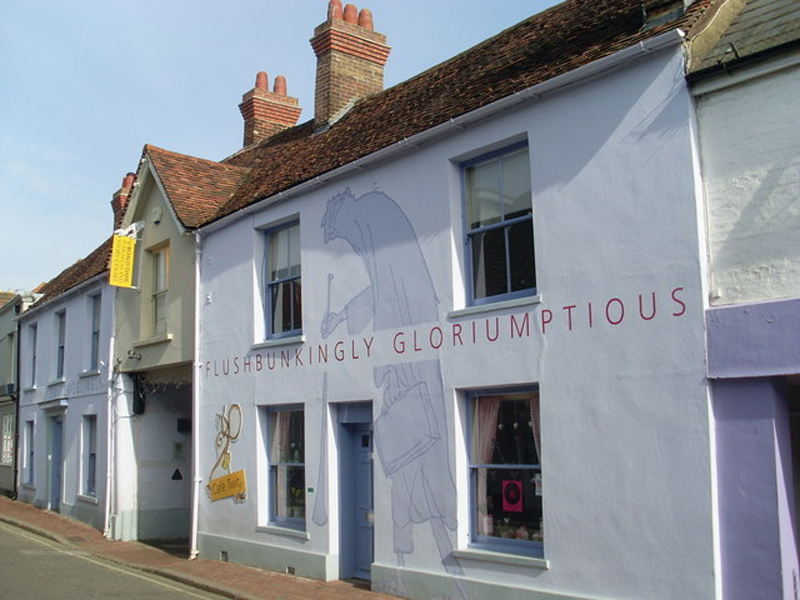
I went to check Google (roalddahl.com) and discovered the Roald Dahl Museum and Story Centre in Great Missenden, Buckinghamshire.
(photo by David Hillas)


Later in the week, I received a notice about the passing of a school friend from Chiswick, Robert Frith. His obituary was found in The Blackmore Vale. The newsletter is yet another example of ‘rural writing’ from the UK.

LINK to Blackmore Vale magazines

PS
My previous blog post on Clacton-on-sea struck a chord with Sandra Barry. Particularly, the link to Elizabeth Bishop’s great uncle, the painter George Wylie Hutchinson who lived there for several years.

Acknowledgements

Andrew Ronay forwarded the link to The Blackmore Vale. Sandra Barry forwarded the link to The Elizabeth Bishop Centenary. Edward added the links and graphics. Heather provided her support.
References

Roald Dahl 1989, Ah, Sweet Mystery of Life: the Country Stories of Roald Dahl, Penguin Books.

Roald Dahl Museum and Story Centre: roalddahl.com

The Blackmore Vale link

The Elizabeth Bishop Centre link.

Post Script.

I wonder about a Museum and Story Centre in rural Nova Scotia ?

Posted in Uncategorized

Making Connections

I received this photograph a couple of days ago from my brother.

It shows paddle steamers docking at Clacton Pier in 1938. This is before the Second World War. Clacton is in Essex on the East coast of England, about one hundred miles northeast of London. From the photograph, it looked to be quite prosperous.

Fast forward to the late 1950s. My grandfather, Harry Ballard on my mother’s side, was a taxi driver in London, driving a black cab. On his retirement, he and his wife, Jane bought a bungalow on the cliff tops at Holland-on-Sea.

LINK to online image of Holland-on-Sea.

Our family of five used to go there to visit during the Summer holidays. We would walk, bicycle or bus to Clacton, go out on the pier and watch the fishermen (and ladies) cast their lines into the water. Other days, we would go North to Frinton-on-Sea, again along the coastal path.

Meanwhile, on my Father’s side, John Maher and his wife lived nearby in Hampton. He was a nurseryman, growing and breeding chrysanthemums. They would be sold at the Covent Garden market in London.

LINK to online image of Covent Garden history.

Today, I find myself combining a taxi-driver sense of place with a nurseryman’s interest in plants.

I noticed, today, that the rhododendrons, which we purchased several years ago from Captain Steele’s nursery on the South Shore, are in flower.

The yellow variety was named after his wife. They seem particularly happy in the woods at the foot of the slope of South Mountain.

These connections come together in the study of Biogeography: place and plants.

Acknowledgements

Peter found the photograph of Clacton Pier (1938). I snapped the photograph of the rhododendron. Heather works hard, sharing the gardening. Edward shares the blogging.

Postscript

Check out Brain Pickings, May 5, 2021, David Whyte, A Velocity of Being: Letters to a Young Reader. “Collection of 121 original illustrated letters to children about why we read and how books transform us.”

Posted in New thinking

A Treasure Chest

As part of the sale, we had to clean out the attic of the farm house. There were several totes, containing possessions from Andrew, Julia and Julia’s Dad. They proved to be a literary treasure chest.

They included three books by Roald Dahl : Ah, Sweet Mystery of Life; Boy: Tales of Childhood; and, George’s Marvelous Medicine.

From Farley Mowat, High Latitudes: an Arctic journey (with a foreword by Margaret Atwood); and Colin Fletcher, The Man Who Walked Through Time.

A separate box contained thirty volumes of Granta, a quarterly paperback magazine of new writing, published by Penguin, from #21 to #69. For example, #21 The Story-Teller includes contributions from Bruce Chatwin, Oliver Sacks and Primo Levi (1987).

The icing on the cake was the Signet classic, George Orwell, Animal Farm with a new Preface by Russell Baker(1996).


Thank you, to Brent Hall, who responded to the link on Lonnie Donegan and skiffle (see blog post HERE), with two additional links showing the trajectory from Donegan via James Page to Led Zeppelin.

Via Brent Hall, check out Lonnie Donegan’s “Rock Island Line“, “Mama Don’t Want to Skiffle Anymore” and “Led Zeppelin“.

Wonderful entertainment !


Postscript

We rescued the Hunter chest from the wood shed and returned it to the rightful owners, the Hunter family.

Acknowledgements.

Through gifting links, we find a sense of community. The above books represent only a subset from the ‘treasure chest’. En route, I appreciated the feedback from Jane, Peter, Andrew Ronay and others overseas. Heather and Edward enjoyed the results with me.

References

Roald Dahl, 1990, Ah, Sweet Mystery of Life, Penguin.

Roald Dahl, 1986, Boy: Tales of Childhood, Puffin.

Roald Dahl, 1983, George’s Marvellous Medicine, Bantam.

Farley Mowat, 2002, High Latitudes. An Arctic Journey, Steerforth Press.

Colin Fletcher, 1989, The Man who walked through time., Vintage Books.

George Orwell, 1956, Animal Farm, Signet Classic.

Granta 21 The Story-Teller. Spring 1987.

’The Story-Teller. What does it suggest? Folk-tales, myths, sea voyages, a cartoon campfire. In short, a way of writing that is distinctly “unmodern”.

Posted in biographical sketch

Winds of Change

As we started the two week COVID provincial lockdown, it coincided with the sale of Andrew’s farm across the road. Fortunately, we were able to take advantage of the annual Spring Clean Up to dispose of some surplus furniture.

Meanwhile in Iqaluit, their life remains same. Mother is KaiuKuluk and Father is Niksik.


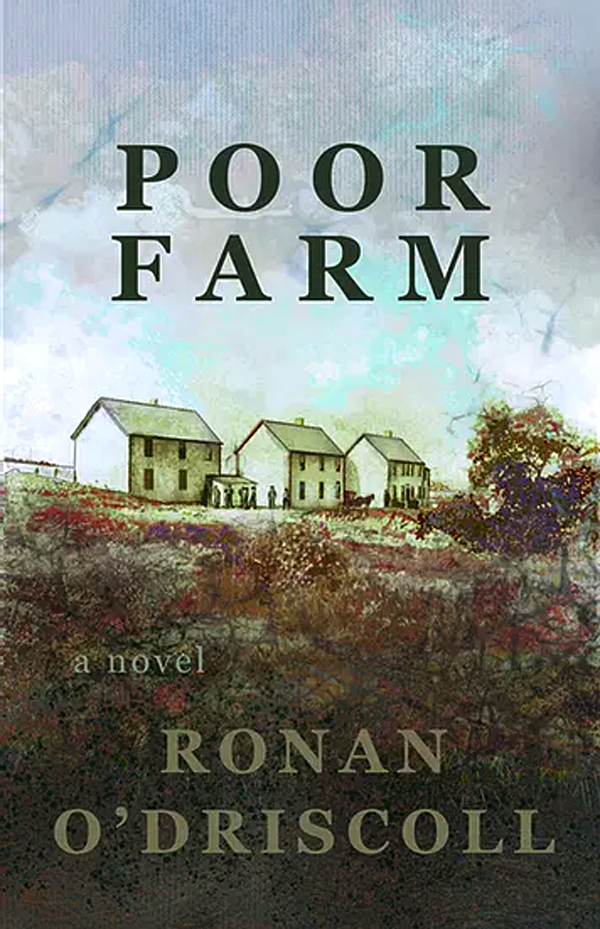
From the Bridgetown Reader, Moose House Publications celebrates two years of publishing books, written by rural Nova Scotian writers. The latest include Ronan O’Driscoll’s Poor Farm, Jan Fancy Hull’s The Church of Little Bo Peep and Jockie Loomer Kruger’s Until the Day we Die. Congratulations to both Brenda Thompson and Andrew Wetmore.


On Friday, I received a gift from Peter, my brother. It was the link, From BBC 4 Great Lives Series 26 Lonnie Donegan. Heather and I put our feet up for half an hour. It took me back to my teenage years in suburban West London. I am gifting it forward.


Meanwhile, we wait to hear whether the new owners of the farm from the Greater Toronto Area (GTA) plan to maintain Raymond Hunter’s organic orchard. Hope they do !

Acknowledgements

Heather and I are coming up for air, after a demanding week. Edward has given his full support. As indeed, has our extended family: Laurel, Andrew and Patrick.

References

BBC Radio 4 Great Lives Series 26 Lonnie Donegan.

Posted in Article Review

Enforced Withdrawal

In response to my latest blog, I received two helpful links. Gregory Heming sent me the link to Paul Kingsnorth article in Orion magazine on Dark Ecology and withdrawal.

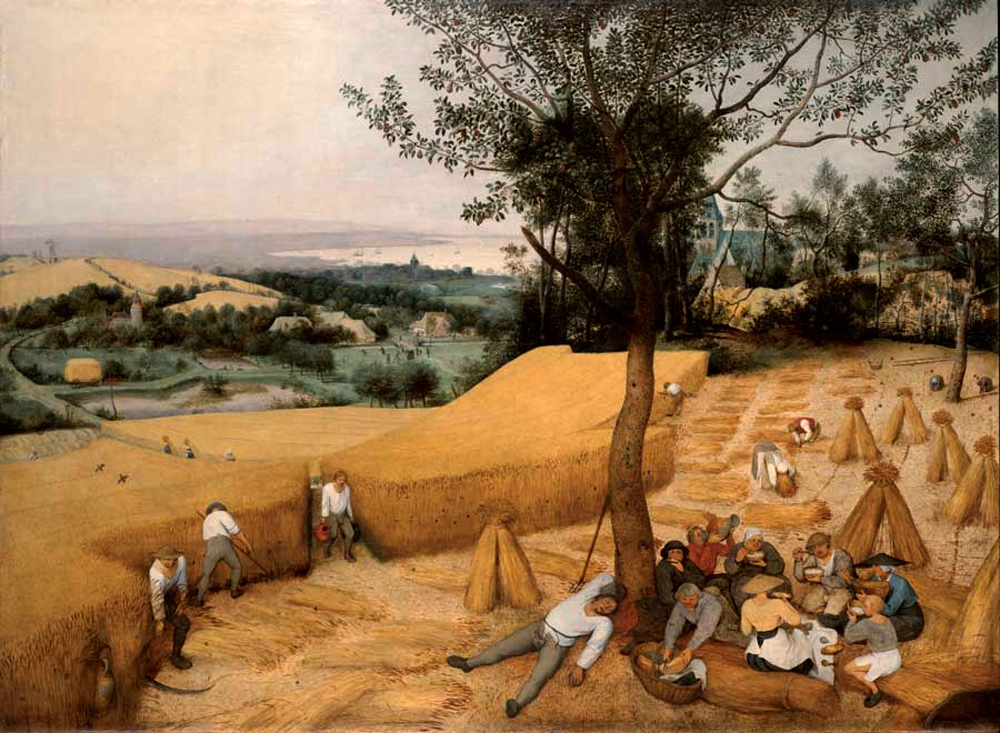
“The Harvesters” painted by Pieter Bruegel the Elder

Withdrawal so that you can allow yourself to sit back quietly and feel, intuit, what is right for you and what nature might need from you .”

Brian Reid sent me the link to the Village of Lawrencetown web site www.Lawrencetownnovascotia.ca

This helped me understand what has been happening locally, especially at the Lawrencetown Community Health Centre.

Meanwhile, under new COVID restrictions, I am trying to maintain my business interests that include filing income tax and access to computer services.

My latest challenge is maintaining Gmail service, as I am ‘almost out of storage and may not receive new emails’.

Access to Internet is temperamental in rural Nova Scotia. Combine that situation with the possibility of the loss of email access. I am certainly in line with Paul Kingsnorth and Gregory Heming, however not because of enforcement by Google. I have addressed the issue this morning by subscribing to Google One and cleaning up my files.

Acknowledgements

Thanks to both Gregory Heming and Brian Reid. Edward and Heather continue to support my blog activity. Kyle at Bridgetown Computers, and Tanya at Hollis Wealth have both been helpful.

Reference

Paul Kingsnorth, 2013, Dark Ecology: Searching for Truth in a post-green world,
Orion Magazine.

Posted in Opinion

Send in the Geographers ?

On Friday, we returned from New Glasgow. We stopped in Truro for Heather to receive her Pfizer vaccination. It was a very different experience at the NSCC campus — lots of support staff, signage etc. We arrived early and were allowed to go to one of the several vaccination stations set up on the second floor. After the injection, we waited the prerequisite fifteen minutes, and then were back on the road driving through the Rawdon Hills to the Valley.

This was different from the single vaccination station at Lawton’s Drugs in Shelburne the previous week. Lots of support staff, signage etc.

Perhaps the difference was because of the different vaccination type. What did occur to me, was that the NSCC, with campuses across the province, could offer significant vaccination support and coverage.

This week, the Premier announced his economic advisory council, under Chairman, Scott Brison. Given the nature of the resource management issues in the province, I wondered if the technology and expertise at the Centre of Geographic Sciences (COGS) could be applied to develop a better understanding of our geography and its input into the economy. The digital GIS technology could be used to efficiently share different scenarios with industry, government and the wider communities.

The same technology can be applied to questions of demography — essential to the health and welfare of Nova Scotians in these COVID times (click HERE for a technical example on how GIS can be used in Health Care, for Care, Cure and Community).

In the health sector, the emphasis has been on the need for ‘good science’. The same is true for the resource sector, whether forestry, fisheries, agriculture or mining. As we approach the climate change agenda, we need to apply the same digital geographic technologies (for example, LiDAR to measure the impact of sea level rise) to undertake ‘good science’.

Acknowledgements

Heather and I compared notes on the different vaccination scenarios. Edward added the links and graphics.

Postscript

Thanks to Rick and Cathy Ketcheson for inviting us to join them at Evergreen Theatre for the Cape Breton group, Hauler.

References

Check the Centre of Geographic Sciences (COGS) web site for a full description of their Advanced Diploma programs.

The NSCC for a map of campus locations.

Other resources would include the
GeoNova government office in Amherst.
Geography degree programs at St Mary’s University.

Earlier efforts at applying this technology include Community Counts at the provincial level and “CLICK” for the Annapolis Valley.

Posted in Book Review

Leaves of Grass

At the Inside Story, I chanced to find a copy of Walt Whitman’s book, Leaves of Grass. The First (1855) Edition.

It includes a lengthy editors introduction by Malcolm Cowley – 37 pages, followed by Whitman’s Introduction 19 pages. This is followed by twelve poems – 120 pages. To date, I am part way through the first poem. This is not easy reading..

Meanwhile, I continue to receive Brain Pickings, twice per week..

”Walt Whitman, felled by a paralytic stroke, he considered what makes life worth living and instructed himself: ”Tone your wants and tastes down enough, and make much of negatives, and more daylight and the skies””.

“He spared himself the additional self-inflicted suffering of outrage at how his body failed him – perhaps because, having proclaimed himself the poet of the Body and the poet of the Soul, he understood the two to be one. He squandered no emotional energy on the expectation that his suddenly disabled body perform a counter possible feat against reality to let him enjoy his beloved tree workouts and daily excursions to the river. He simply edited his expectations to accord with his new reality and sought to find joy there, within these new parameters of being.”

In the same Brain Pickings, there is a link to John Burroughs book ‘Whitman: A Study’.

Meanwhile, from Emergence Magazine, Kathleen Dean Moore Listen : four love songs. Regent Honeyeaters, Western Meadowlank, Brown-headed Cowbird and Red- winged Blackbird.


(photo by Kathrin Swoboda)

When we listen, we open ourselves to new, joyous relationships with species other than our own.


On our way to New Glasgow, we stopped at West Brooklyn to pick up the newly bound books by Legge Conservation Services (see earlier blog post HERE). They now have a new lease on life.

Acknowledgements

Edward added the links and graphics. Heather and Siqsiq travelled the backroads of Nova Scotia with me.

Postscript

Forests are not renewable’: the felling of Sweden’s ancient trees | Environment | The Guardian

References

Walt Whitman, 1986, Leaves of Grass, The First (1855) Edition, Penguin Classics

Brain Pickings. April 18th,2021. The Stoic remedy for when people let you down.

Emergence Magazine. April 18th,2021, Celebrating Earth Week.

Posted in biographical sketch

A Round Trip

Last Thursday, we had to drive to Shelburne for a Moderna vaccination at Lawton Drugs. We left around 8:30 am for the 1 pm appointment. Afterwards, we continued on Highway #103 to Yarmouth and back home by 4:30 pm.

The highlight of the trip was the stop at Pine Grove Park, just outside of Liverpool.

It contains a wonderful collection of rhododendron and azaleas planted by Captain Dick Steele. The park has been renamed in his memory. Online, later that evening, I found Jodi DeLong’s tribute, dated 17 March 2010, under Bloomingwriter: Gardening in Nova Scotia.The piece is titled: “The plant does all the work. Remembering my friend.”

The roads were empty. Across from Annapolis Royal to Liverpool on Highway #8, via Kejimkujik National Park. Along Highway #103 to Shelburne. We arrived early and had time for seafood chowder at the Sea Dog Saloon on the waterfront.

At the Shelburne Mall, I noticed a Trans County Transportation Society (TCTS) vehicle from Bridgetown. Obviously others were making the long trek across the province. The injection took one minute and then a fifteen minutes wait to ensure no reaction.

After talking to the TCTS driver, we decided to return to the Valley via Yarmouth. The end result was a round trip of over 500 kilometers.

Here are a couple of lessons:

  1. When you drive the south shore from Liverpool to Yarmouth you realize that the landscape is full of treed bogs and barrens. Imagine the United Empire Loyalists who arrived in Shelburne and Birchtown. What were the opportunities for making a livelihood, from the sea? Yes. From the land? No. This part of Nova Scotia is a Mecca for rare and unique coastal plain species. I remember from my days at the National Museum, developing the list of rare plants of Nova Scotia. Heather remembers it too from her graduate work on Agalinis neoscotica.
  2. Talking to the TCTS driver, it seems odd that residents from Annapolis County had to travel that far for a vaccination. Could the vaccinations not be offered on a geographic basis ? Why not Bridgetown? In remote communities in BC, they offer vaccinations for several age groups in the community.

IF BOOKS COULD SPEAK

Through Neptune Theatre, books can speak. Heather recently signed up for an audio book ‘We keep the Light by Evelyn Richardson (published in 1954).

Through Neptune Theatre books can speak. Heather recently signed up for an audio book ‘We keep the Light by Evelyn Richardson (published in 1954).

In looking through her collection of botanical books, Heather found three in need of repair:

Moss flora of the Maritime Provinces (1982)
Vascular Plants of the Pacific Northwest, Part 3 (1961)
Vascular Plants of the Pacific Northwest, Part 4 (1959)

A phone call to Gaspereau Press directed us to Legge Conservation Services in West Brooklyn, Nova Scotia. Next week, we will pick up rebound copies.

The first book was written by Robert Ireland. I recall working at the National Museum in Ottawa. Ireland was Curator of Bryophytes. I was working with George Argus on Rare Plants of Canada. We published Rare Plants of Nova Scotia (1978) and Rare Plants of Saskatchewan (1979).

Later in 2000, Heather worked on the Grasses of the Columbia Basin of British Columbia at the BC Museum in Victoria. At that time she acquired Vascular Plants of the Pacific Northwest.

Books do speak. They remind us of other places and times. Different geographies and different interests. In our case, forty and twenty years ago.

References

Robert Ireland, 1982, Moss flora of the Maritime provinces.

Cronquist et al. Vascular Plants of the Pacific Northwest.

Postscript.

I had the chance to check the work of George Argus, my mentor at the National Herbarium. George is a renowned expert on willows. http://skvortsovia.uran.ru

Acknowledgements

Heather and Siqsiq joined me on the round trip. Edward added the graphics and links.

Posted in Video Review

Public Broadcasting

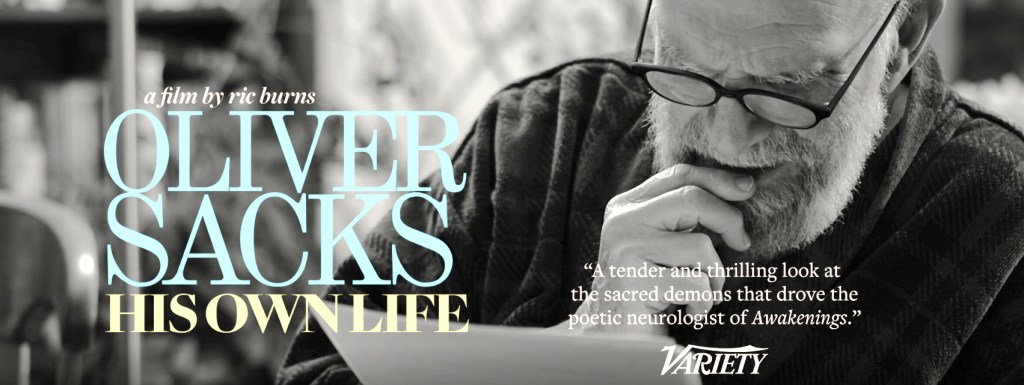
In New Glasgow, we have access to PBS Maine. This allowed us to watch American Masters, Oliver Sacks: his own life. ‘The video looks at the life and work of the legendary neurologist and story teller, as he shares intimidate details of his battles with drug addiction, homophobia, and the medical establishment. ‘


Now I need to find Awakenings on Netflix with Robin Williams and Robert de Niro.

Saturday night on PBS Maine seems to be ‘Brit comedy night’ it includes Judy Dench in ‘As Time goes by’ and then later, John Cleese in ‘Hold the Sky’. Brings back memories of the quirky British humour. Often, politically incorrect.

Public Broadcasting, sponsored by corporations and individual foundations, offers a significant contrast to the CBC.

Meanwhile, after our return drive through the Rawdon Hills, I was able to catch Eleanor Wachtel in conversation with Alex Christofi on his book, “Dostoevsky in Love” on CBC Writers and Company.

A satisfactory conclusion to a weekend organizing vaccination appointments across the province. More to come, next week.

Acknowledgements

John Stewart for access to PBS, Maine. Heather, my travel companion. Edward for online research and graphics.

References

PBS Maine, Oliver Sacks: his own life, American Masters, April 9,2021.

Alex Christofi, Dostoevsky in Love: An Intimate Life, CBC Writers and Company, April 9,2021.

Postscript.

Oliver Sacks

I have found only two types of non-pharmaceutical ‘therapy’ to be critically important for patients……. music and gardens.’


Brain Pickings April 11, 2021.