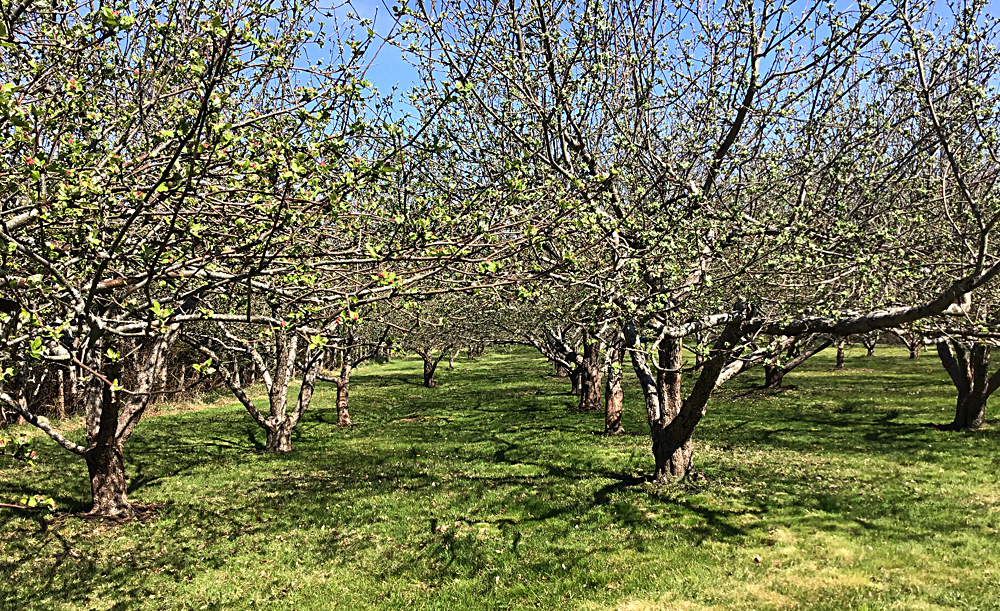
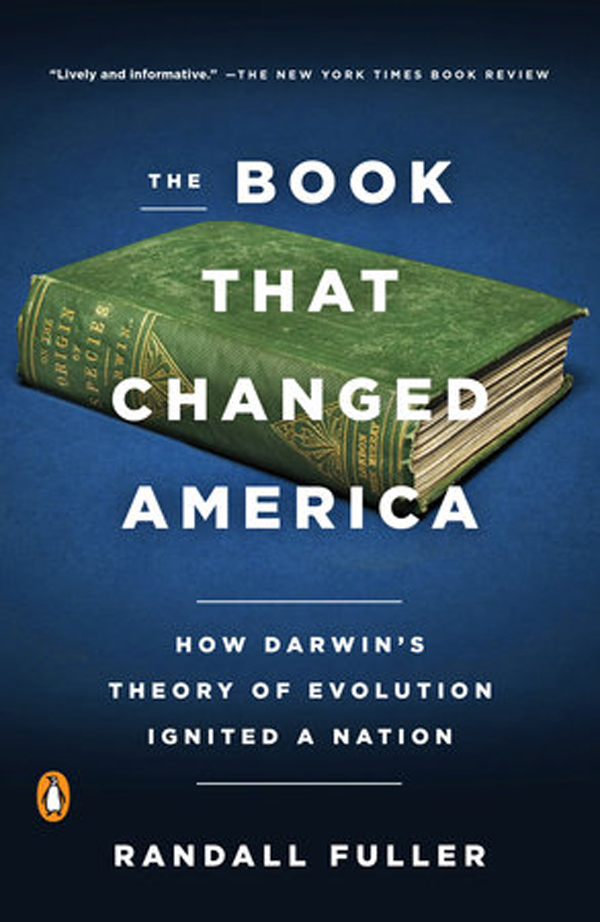
Last weekend we were at the New Glasgow library. I was looking for a specific Harry Thurston book for Heather’s Dad. While there, I discovered The Magic Ground, written by Harold Horwood. It includes an essay ‘In Defence of Hobby Farms’. The following paragraph on p.54 caught my attention.
“That is one of the reasons why I live on the shores of the Annapolis Basin, why I spend so much time in a woodlot and an orchard and among flower borders, why I choose to work here, surrounded by life triumphant, instead of in a great city, where death seems likely to succeed. Here I can hope that my work will inspire people, fill them with confidence, help them to love the world rather than dread its terrors.”
Also referenced was a book of poetry, published by Gaspereau Press, Cycle of the Sun: A lament for northern Labrador. In Horwood’s own words, “the poet, Harry Thurston was in the audience and came to me and asked to be allowed to submit the poem to his publisher, Gaspereau Press”.
I will enjoy the remaining essays in the Magic Ground, while I wait to see if I can obtain a copy of Cycle of the Sun, through Jaki at the Lawrencetown library.
Acknowledgements
Jaki Fraser at the Lawrencetown library. Edward for his additions. Heather for sharing the drive to New Glasgow.
Heather has been feeding the birds all Winter. The main customers are chickadees, mourning doves, blue jays and red polls, and an assortment of woodpeckers — plus the squirrel family. Tuesday, looking out the living room window, I saw a bird flash by. It was a sharp-shinned hawk, in the process of preying on a mourning dove. Clearly, we are feeding others in the food chain.
On Edward’s recommendation, we started to watch the series: Canada: the story of us on CBC Gem. There are ten episodes, each of forty five minutes, covering the main events in the history of the country. Initially, we were stunned by the combination of beautiful landscapes, with commentaries by well-known Canadian personalities. It was a great way to fill snowy evenings. We are on episode six; it covers the First World War. The format is beginning to seem repetitious, however, I am sure we will finish the series.
In return, I would suggest Mango Dreams on Netflix. This is the story of an Indian doctor, reliving his childhood memories. Again, it offers insight into the political reality of the Indian sub-continent.
Acknowledgements.
Edward for his movie recommendation. Checking Google, it seems there are similar series for both the United States and Australia. Of course, I imagine that not everyone in Atlantic Canada will have the same list of historical events. Heather shared the movie watching.
This week, I received a parcel in the mail from Amazon. It contained a book and a game, from Patrick and family, for my birthday. The book was Under a White Sky: the Nature of the Future by Elizabeth Kolbert. The game was Exit the Game. Dead Man on the Orient Express. (Have not checked out the game, yet)
Kolbert won the Pulitzer Prize for her previous book, The Sixth Extinction. She is a staff writer at the New Yorker. Heather had read the Sixth Extinction, and enjoyed it. “In The Sixth Extinction, Kolbert explored the ways in which our capacity for destruction has reshaped the natural world”. Patrick selected the book because he had not seen any blog references.
Kolbert divides her current book into three sections: Down the River; Into the Wild; Up in the Air. Down the River describes the diversion of the Chicago River, the invasive carp species, and the changes in the Mississippi’s hydrology. Into the Wild includes chapters on the endangered Pupfish in Death Valley, the global threats to the coral reefs, and invasive cane toads in Australia. The final section, Up in the Air, includes a chapter on climate change and the Greenland ice sheet.
In the words of the author: “This has been a book about people trying to solve problems created by people trying to solve problems.”
Another perspective can be found in the current Brain Pickings, February 21st. There, you will find reference to the writing of William Vogt, Road to Survival.
Postscript
Friday morning, we dropped into the Bridgetown Library. I picked up a copy of Paradis Terrestre. It is a history of the village of Paradise, Nova Scotia compiled by members of the Paradise Women’s Institute. I was interested in Chapter 13, Micmac Memories. At the entrance to the Library, I noted a collection of books by, and about Ernest Buckler. Must check out, next time.
Today (Sunday) we skied the Rifle Range Road. It was hard going. Now, that the surrounding trees have been clear-cut, the trail is more exposed to the sunlight. This makes for heavier snow, especially in the late afternoon.
By the way, Edward and I share the same birthday, 14th February.
Acknowledgements
Patrick for the birthday gift. Edward for his artistic support. Heather for sharing the reading and the skiing.
This week, I received the quarterly newsletter from Jon Percy. Fundy Tidings is a useful compendium of initiatives that impact the ecology of the Bay of Fundy. It serves to reinforce the concept that even within the global pandemic environment, there are still individuals concerned about our local geography: landscape and seascape.
To top off the day, we watched The White Tiger on Netflix. Set in India, the story describes the journey from rural poverty to entrepreneurial success.
Of course, white tigers are extremely rare, as indeed, are green elephants.
Postscript
On Friday afternoon, we picked up ‘take and bake’ tacos with the fixings at Lunn’s Mill on the Carleton Road, Lawrencetown ( Highway #201). Very good.
Acknowledgements
Jon Percy for Fundy Tidings. Heather for sharing our meetings with both the Green Elephant and the White Tiger. Edward added his graphic talent.
References
Fundy Tidings, Newsletter of the Bay of Fundy Ecosystem Partnership, Creating-sharing-using knowledge about the Bay of Fundy, February 2021 issue
This week, I was listening to Shelagh Rogers on CBC, The Next Chapter. She was interviewing Bruce Kirkby about his book, Blue Sky Kingdom. This coincided with a stop at the Odd Book store. Heather found a copy of Chogyam Trungpa, Born in Tibet.
In the Blue Sky Kingdon, Kirkby and his family spend time at a Buddhist monastery in Tibet. Trungpa describes their daring escape from Tibet into India, fleeing the Chinese communists.
“Thunder and Ocean is the story of an historic union: one old Canadian province and two ancient spiritual traditions”.
Besides asking Jaki Fraser at the Lawrencetown library to request the Bruce Kirkby book, I had the following questions: Is it possible to separate the religious beliefs from the landscape? Like Kirkby, do we need to see how these beliefs are practiced in Tibet today? What is it about the Nova Scotia landscape that attracted Trungpa and his followers?
Certainly, I remember well the trip that Heather and I made to Gampo Abbey at Pleasant Bay, Cape Breton.
Gampo Abbey, Cape Breton, Nova Scotia
Wednesday was a cross-country ski day. Rick and Kathy invited us to their property on the Perotte Road. South Mountain gave us deep powder snow after Monday’s storm. En route, we stopped at the old Post Office for treats, and take out coffee at Lola’s Café, before turning onto the West Dalhousie Road at Lequille.
Postscript
Thinking about Annapolis County. Reading the works of Steve Skafte on Abandoned Roads of Nova Scotia, leads to questions about the history of our landscape. Is that part of the attraction?
Acknowledgements
Thanks to Rick for the skiing invitation. Kathy, Angela and Jan for the lunch snacks. Edward provided graphics support; Heather for her Shambhala library.
Edward Wedler suggested this title within the context of a CBC article on Canadians moving back to the province to work remotely from home. Another candidate title would be Making Lemonade. This relates to the latest AIRO newsletter on opportunities arising from the COVID pandemic.
These discussions take me back to the 80’s. As we developed new technology programs, we worked closely with the vendors to ensure that our graduates would find employment in the industry. This resulted in a steady flow of GIS graduates to California and Toronto, and a similar migration to Ottawa in Remote Sensing. Over the last four decades, there has been a return flow back to Nova Scotia.
Given the new economy, it would be in the interest of COGS, NSCC and the provincial government to revisit our previous model.
For example, all students in the programming diploma programs completed a co-operative project with industry and/or government. As we introduced new technologies, we would make sure our graduates had the appropriate software development tools. Then, as we delivered these programs and gained co-op expertise, we transferred the curriculum to other countries, e.g. Indonesia, China, and Argentina.
Now, in 2021, we see companies willing to allow employees to work remotely. We also have a new facility on the COGS campus that will allow short residential courses. To build the technology community in the Annapolis Valley we need to reflect on our history, as well as take advantage of these new opportunities. As part of the effort, we should look to apply technology solutions to the resource management issues of Nova Scotia, then migrate these solutions to other jurisdictions — building a technically-creative economy.
Edward Wedler and Jane Nicholson are both correct. We can apply the science of where to the geography of here. We do have the capacity to make lemonade, even when dealt a handful of lemons.
We have a long history of partnerships with the GIS, Remote Sensing and Geomatics industry and government. It is time to revisit these relationships, readying Nova Scotia for the post-COVID world.
Postscript
Monday afternoon. After shovelling 18” of snow out of the driveway in the morning, went for a cross-country ski down through Andrew’s fields. It was hard work.
Cartoon by Edward Wedler
Acknowledgements
Edward Wedler and Jane Nicholson for their entrepreneurial energy. Dave MacLean and David Colville for keeping open the communication channels to COGS. Heather for supporting the Geography of Here.
References
AIRO newsletter, “We’ve got to do something with our lemons”, February 5, 2021.
CBC post on Canadians returning to Nova Scotia to work remotely from home.
This week, we had to drive from New Glasgow to Antigonish. It was surprising to see the twinning of Highway #104. As part of the construction, this leads to significant removal of forest cover.
From England, I received the PLANTED newsletter, including an interview by Sam Peters with Nick Hayes on his book, The Book of Trespass. Hayes describes the lack of access to the English landscape, and makes comparisons to Scotland and Scandinavian countries. This also contrasts with the situation in Canada, and Nova Scotia in particular. Here, we have protesters in the courts for challenging the clearcutting of crown land in Digby County.
It seems such a long time ago. In 1964, after a summer working in Labrador, I returned to Montreal where I bought a Greyhound bus pass, $99 for 99 days of unlimited travel. This allowed me to travel down to Mexico, across to the west coast, California, before heading North to Victoria, BC. I caught the airplane home to England from Montreal. Later, I recall discussing the trip with a school friend, Roy Peters. He made a similar trip the following year. His son, Sam Peters is the Principal at PLANTED.
I also recall the days of hitch-hiking in the United Kingdom. We would take off on long weekends to go caving (spelunking). From the University of Birmingham, this included the Peak district, Derbyshire, the Mendips in the Southwest, and also Lisdoonvarna, on the west coast of Ireland. It’s hard to imagine this freedom, especially now in these COVID-19 days.
While in New Glasgow this week, I finished reading Harold Horwood’s Dancing on the Shore. It represents excellence in Canadian nature writing.
”The tides sweep over the clam flats in a great flood twice daily. The migrants sweep through the sky in great flocks twice a year. These vast rhythms, so visible in such a small space, seem very like the heartbeat and the breathing of a living planet.”
Postscript
Bloom where you are planted
— Raymond Hunter, an early organic farmer in the Annapolis Valley, cited on the Ironworks Hunter Brandy bottle.
Acknowledgements
Thanks to Roy Peters and Andrew Ronay for the connection to the Planted newsletter. Heather shared the drive to Antigonish. Edward for his graphics.
This week, I had the opportunity to follow up with David Colville at COGS about his team’s work on the Applied Research Weather Network.
Image courtesy of David Colville
In particular, I was interested in the availability of the current and historic data from the weather stations. From my perspective, access to these records over the last ten to twenty years would be helpful, as the region seeks to address climate change.
COGS Applied Research Weather Network Map close-up
In the Register (January 28, 2021) an adhoc coalition is advocating the creation of a world class climate change and ecological research centre. The Annapolis Climate and Ecological Research Centre (ACERC) spokesperson is Peter Nicholson.
To my mind, these two initiatives beg the question : at what point does weather turn into climate? Will the data from the weather stations be analyzed in terms of climate change? Would historical data allow us to investigate whether we are seeing warmer drier Summers ? Are we seeing fewer, less severe Winter storms? What will be the impact on the hydrology of the Annapolis River system? What will be the impact on agricultural practices? Does the climate change impact our forests and their ecology?
There would appear to be considerable room for collaboration between the community interests and the educational centres in the region. This would include both the work on the weather network, as well as the work by Tim Webster’s team on sea level rise at AGRG in Middleton.
The availability of on-line ‘story-maps’ demonstrates the technology which now exists in support of this type of collaboration.
Later in the week, I visited Endless Shores Books in Bridgetown. In the spirit of ‘Reading where we Live’. (see The Bridgetown Reader, January 29, 2021). I noticed copies of Will Bird ‘This is Nova Scotia’ and Harold Horwood ‘Dancing on the Shore. A Celebration of Life at Annapolis Basin’ on the shelves.
At home, I checked out the new edition of Horwood’s book and came across the following quotations.
“So the whole region from Digby to Belleisle enjoys a microclimate like that of regions some hundreds of miles to the south…. It is consequently, not only a good place for raising animals but also for gardening. Such vegetables as tomatoes, peppers and squash flourish mightily on the shores of the Annapolis Basin.” p.23.
“Whoever first planted peach trees on these shores must have been amazed at their success. A few of us even grow melons besides our patches of corn, potatoes and peas.” p.24.
Harold Horwood wrote the book in Upper Clements, where he lived with his family.
Postscript
Friday was a beautiful cross country ski day. Along the Rifle Range road towards Trout Lake. Just animal tracks, and two sets of ski tracks.
Acknowledgements
I want to acknowledge both Ashley Thompson for the excellent content of the Annapolis Valley Register, and Lewis for the contribution of The Reader to our community. While I was employed at AGRG in Middleton, I always enjoyed the company of excellent researchers, technicians, support staff and students. Edward and Heather continue to be supportive today.
References
COGS Applied Research Weather Network.
Annapolis Valley Register. January 28, 2021. Land in Atlantic Canada is sinking.
The Reader, January 29, 2021, Reading Where We Live: This is Nova Scotia.
What impressed me about the conversation between two writers that I have enjoyed – was their emphasis on language, and it’s relationship to Geography.
It does not take much effort to transform ‘conversation’ to ‘conservation’.
Acknowledgements
Sandra Barry for the kindness of forwarding the link to Orion magazine. Moose House Publications for their story map. Edward and Heather continue their support.
It was an overview of a set of three hour workshops to be offered in February. Afterwards I decided that I could pursue my retirement activities without the Zoom workshops. But I did learn about the Japanese concept of Ikigai, that means ‘ reason for being’.
Meanwhile, I dropped off a thumb drive to Integrity Printing in Bridgetown. It contains the text of my blogs for 2020. In total, one hundred and five. Some of which were contributed by Edward Wedler.
I wanted to ensure that all was not lost, if for some reason, we suffered an electronic meltdown. The year, 2020 constituted Volume 5. Volume 1 contains blogs for Go-Geomatics before 2017; Volume 2, 2017, Volume 3, 2018, and Volume 4, 2019.
Over a week ago, I was in the Odd Book store in Wolfville. When there, I often look for publications by Gaspereau Press. In the past, I have picked up the writing of Peter Sanger, Harry Thurston and Soren Bondrup-Nielsen. This time, no luck. Perhaps I was looking in the wrong part of the store.
Next time I am in Kentville, I should go to the source: 47, Church Avenue. Meanwhile from their online catalogue, I noted the following:
This week saw the return of the Bridgetown Reader after their Christmas break. It includes updates on the relationship between the municipality and Gordonstoun, as well as a report on the Public Health Care Clinic in Middleton.
‘Where there is little or no public opinion, there is likely to be bad government, which sooner or later becomes autocratic government’ ‘Sounds like us’ !