Today, by chance, I received a book from my brother Peter on my 75th birthday. It is called ‘A Place’.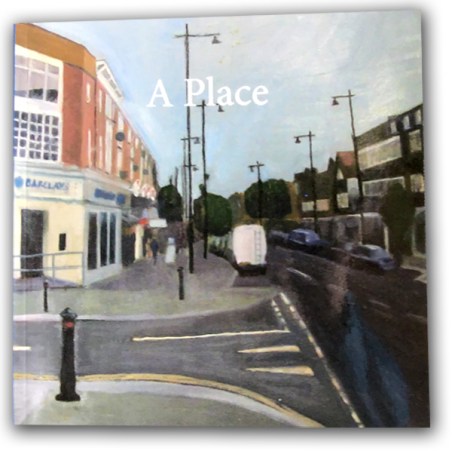 It shows thirteen pairs of images from Whitton (Middlesex, England).
On the left-hand page, a historic photograph and text explanation; on the right, an impressionist painting of the same location, today. Beautifully designed and published as a limited edition.
Yesterday, I was tidying up some papers in the basement. From 2004, I found two proposals.
1) Developing the ‘Centre of Rural Living’ concept at the Annapolis Valley campus, Nova Scotia Community College.
2) Model for Rural Development and Community Capacity Building. ‘ Applied Geomatics Innovation Cluster’. NSCC, WVDA, Annapolis and Digby Counties, NS.
Here we are sixteen years later. Sounds like an Innovation Hub to me!
Last week, Logan, my grandson living in Peterborough, Ontario sent me his world map.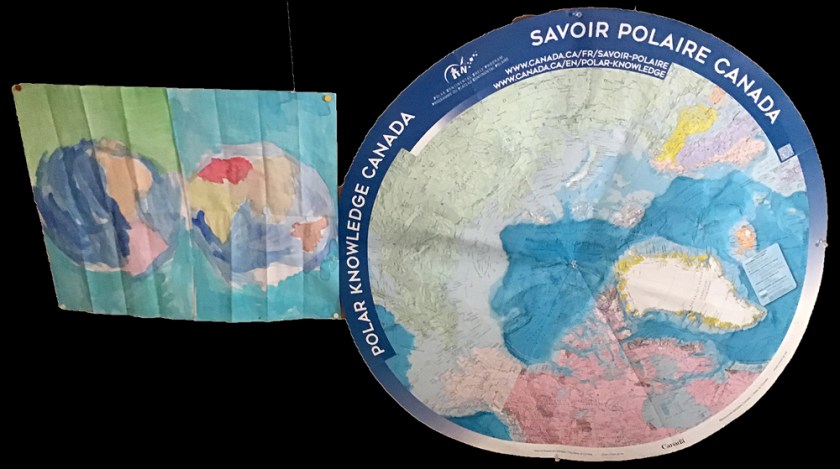 I reciprocated with photographs of two maps from my study. Polar Knowledge Canada and The Earth from Space, signed by Tom van Sant, from California days, 12/12/90.
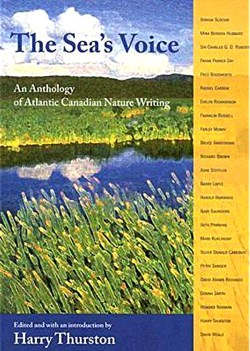 With the storms, I have been catching up with my reading, especially the work of David Adams Richards. In Harry Thurston’s book The Sea’s Voice: An Anthology of Atlantic Canadian Nature Writing, I found ‘Land’ from David Suzuki’s When the Wild Comes Leaping Up. It describes the back to the land movement in the Miramichi region of New Brunswick. As Thurston says:
“In all of his writing, Richards casts an uncompromising but compassionate eye on his subject, as he does in this essay about going back to the land”. P.232.
Acknowledgements
Peter Maher for his historical research and artist’s eye. Logan Root-Maher for cartographic enthusiasm. Edward Wedler for his artist’s eye and graphics skills.
References
Peter Maher. 2020. A Place. Editions La Liberté. Clermont-L’Herault.
Harry Thurston. 2005. The Sea’s Voice: An Anthology of Atlantic Canadian Nature Writing. Nimbus Publishing.
David Suzuki (Ed). 2002. When the Wild Comes Leaping Up. Douglas & McIntyre Ltd.
 The difference at COGS is that we have a specialized suite of technologies: Geomatics or Geographic Sciences, and we live in a more rural environment. (This rural environment provides a likely explanation for the residency component).
 I found the following quotation from
 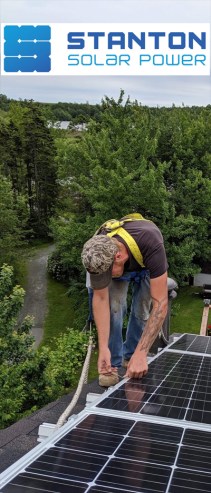 We live in changing times. This week, Nova Scotia Power inspected the solar panels on our roof. As part of the installation by
 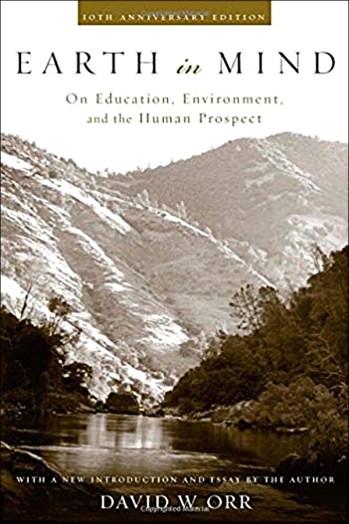 From the bookshelf, I selected David Orr’s
 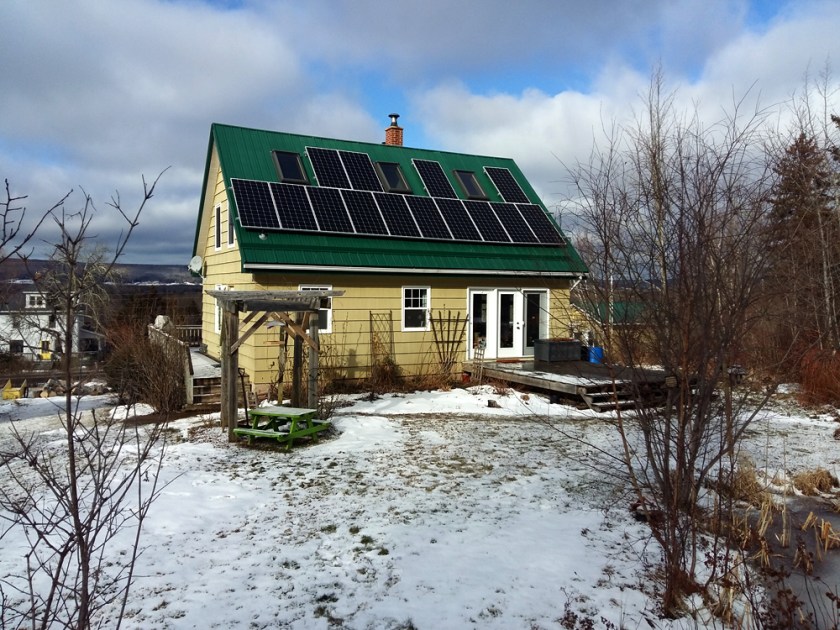 It was a good feeling to see the meter going in reverse. We were contributing electricity to the grid. Given the cost of the installation, it will be a few years, before we see a positive payback. But it seemed to be the right action in these times. Perhaps one day, we will be able to store the electricity in a battery which can provide power for an electric car, for short drives around the Valley.
 The second accomplishment was triggered by a visit to the Bridgetown library. I picked up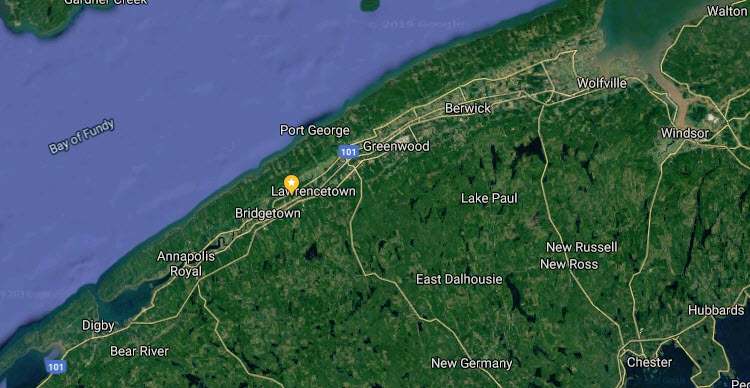
 (Photograph from 2019 conference).
 The takeaway message from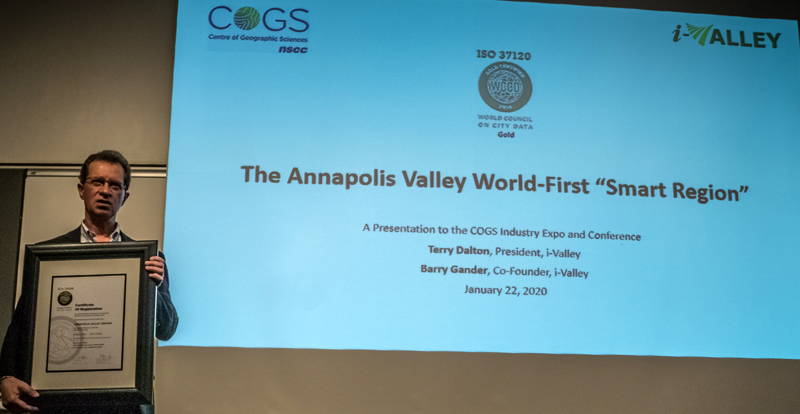
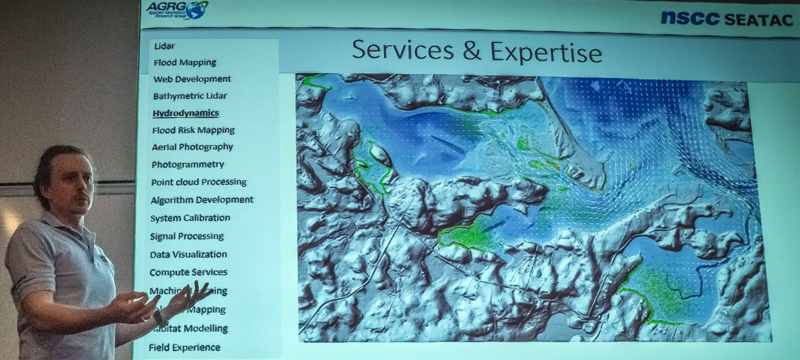 As informed citizens, we need to WAKE UP. We need to be talking about an Innovation Hub in Lawrencetown, evidence-based decision making, the use of current Geotechnologies.
 Eventually, Maureen was placed into long term care, funded and initially directed by our parents. In time, they were unable to provide the necessary support. Today, she lives in a home in Sandhurst, Berkshire,England.
 It was a challenging but worthwhile reading experience. The book is divided into four sections: roots, trunk, crown and seeds. The roots section introduces us to the lives of eight individuals. Each person has a relationship to trees on the earth.
 My next book on the bookshelf is
  Over the weekend, I have been reading a draft of Brian Arnott’s book Going to Town: the small town as micropolitan centre in the age of climate change. It should be published in 2020.


 Ernest Blair Experiment