Posted in Book Review, Event Review

Mythology

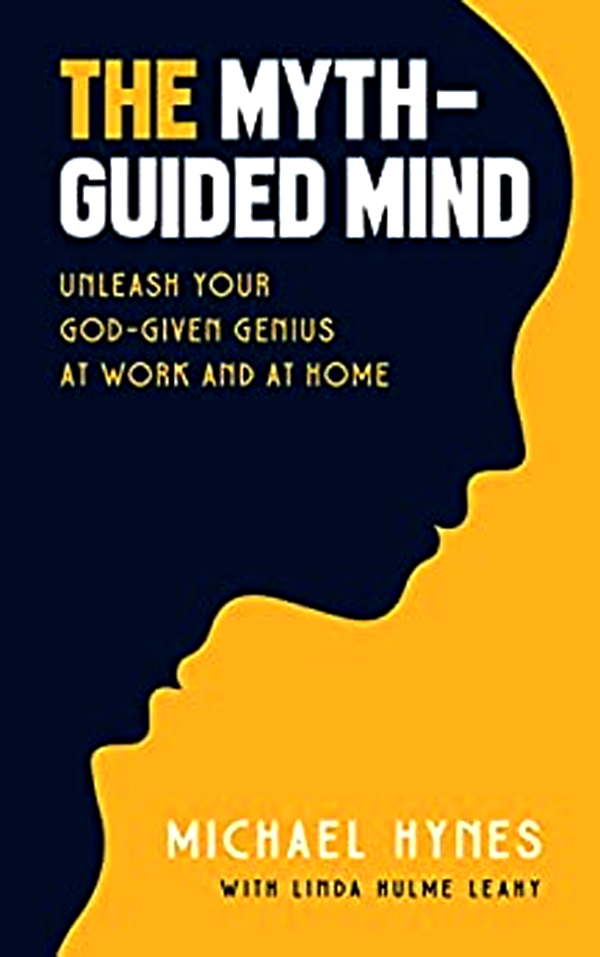
I finished reading Michael Hynes, “The Myth-Guided Mind: Unleash our God-given Genius at Work and at Home“. The book was written with Linda Hulme Leahy, who has a heritage apple farm in Round Hill. That likely explains why I was able to obtain a copy at Endless Shores Books in Bridgetown.

I found this to be a remarkable book. From the beginning, the title could be a word play on the mis-guided mind. I particularly enjoyed the references to the work of Joseph Campbell. It is a short book (123 pages) with chapters titled:

e.g.
Mental Health, Not Mental Wealth;
Somatics and Embodiment – A Primer;
The Myth will Choose You;
Becoming an Expert in Being You.

I plan to read it a second time, very shortly.


There is planned clearcutting again on South Mountain. Heather and I drove along the Trout Lake Road (from Highway #10) and then walked along the woods road towards Inglisville. To date, there has not been any new cutting, however, along with Extinction Rebellion, we shall monitor the situation.


I did receive a report from Jeff Wentzell on the MIT Agri Tech seminar this week. Presentations included drone technology, greenhouse AI tech and aquaponics.

My vision is somewhat different. How can we use Geomatics technology to better understand the changes in agricultural land use in the Annapolis Valley? Better information, leading to better decision making.

Acknowledgements

Jeff Wentzell for his feedback on the Agri Tech seminar. Heather Stewart joined me on a walk in the woods, near Cranberry Lake. Edward added the graphics from Florida.

Reference

Michael Hynes with Linda Hulme Leahy, 2021, “The Myth-Guided Mind: Unleash your God-given Genius at Work and at Home, Catapult Press. (Michael Hynes is a Toronto-based corporate and personal coach).


Posted in Book Review

Joining the dots

In New Glasgow, this weekend, I visited the local library. I wanted to follow up on Thomas McCulloch and the Pictou Academy. I found a copy of Marjory Whitelaw’s, “Thomas McCulloch: His Life and Times“; a small book published by the Nova Scotia Museum.

.

”McCulloch and the Academy flourished together for a remarkably short time – only fifteen years. But in those few years he gave his students the expression of an ideal about the vigour of liberal thought to which they responded and in turn passed on”.

I discovered that McLelland and Stewart had published his The Stepsure Letters. That book will have to be ordered through the Lawrencetown library.


After listening to Zita Cobb, I wanted to follow up on the creative rural economy. Edward reminded me of his investigations in the 2013-14 time frame. I recall too the workshop by Celes Davar on experiential tourism. That was held in November 2007.

McCulloch led me to William Dawson, a graduate of Pictou Academy. Dawson, besides his Geological research, was superintendent of Education. He designed the Mount Hanley schoolhouse.

Joshua Slocum was a student at the school until his family moved to Brier Island in 1854. Slocum was the first to sail single-handed around the world.

Acknowledgements

Edward reminded me of his blog on the Creative Rural Economy. I remembered Celes Davar’s Experiential Tourism workshop. Heather enjoyed the trip through Old Barns, South Maitland, Kennetcook to Windsor, and home.

References

Marjory Whitelaw, 1985, Thomas McCulloch: His Life and Times, NS Museum, 42 pp.

Thomas McCulloch, 1960, The Stepsure Letters, McLelland and Stewart, New Canadian Library.

Celes Davar, 2007, Fundy Riches and Valley Traditions: Experiential Tourism and Capacity Building in the Annapolis- Digby area, Earth Rhythms Inc.

Posted in biographical sketch, Book Review

World GIS Day

Yesterday (November 17) was World GIS Day. This seemed appropriate since Roger Tomlinson, ’Father of GIS’ was born November 17, 1933. He died in 2014.

Esri Canada celebrated with a Virtual Conference. The keynote speaker was Zita Cobb.

She presented her work with the Shorefast Foundation on Fogo Island, Newfoundland, entitled ’The Possibility of an Island’. It was a remarkable presentation with many insights, into the role of community and Geography.

(I have asked Alex Miller, President, Esri Canada if he could arrange access to an online link to her presentation). Here is a sample of her selected quotations.

  • Geography is how we are going to reinvent.
  • Every snowflake in an avalanche, pleads not guilty.
  • Nature and Culture are the two great garments of life.
  • The unit of change is community.
  • The PLACE model.

I attended the Zoom call as the recipient of the RF Tomlinson Lifetime Achievement award. This feels very weird. Almost a “kiss of death”. But stay tuned, as we try to understand how the ideas of Zita Cobb can be applied in the Annapolis Valley.


Meanwhile, I dropped into Beavercreek Winery Christmas Craft Fair last weekend. I found the Mare Gold bookstore had travelled along Highway #201 from Annapolis Royal. They usually have a stall at the Annapolis Royal market. Among the excellent selection, I picked out two books: Sue Stuart-Smith’s “The Well-Gardened Mind: The Restorative Power of Nature”, and MacDonald and Gates’, “Orchard: A Year in England’s Eden“.

Both books are recent contributions from England. The first appeals directly to our gardening in rural Nova Scotia. The second is a brief history of the English orchard. It follows the seasons, one chapter for each month of the year. Since we have managed Raymond Hunter’s organic orchard for the last decade or so, it was easy to relate to the ecology, even in a different country.

Acknowledgements

Alex Miller and his team for hosting the online celebration. Zita Cobb for setting a wonderful example of community. Edward for his artistic and technical skills. Heather for her botanical interests which connect with my Biogeography.

References

Sue Stuart-Smith, 2020, The Well-Gardened Mind, Scribner.

B.MacDonald and N. Gates, 2021, Orchard: A Year in England’s Eden, William Collins Books.

Zita Cobb, 2021, The Possibility of an Island, Shorefast Foundation, a presentation on World GIS Day, November 17, 2021.

Posted in Book Review

Groundmass

Peter Sanger’s book contains four essays. I have now had the chance to read all four. The book title, Spar, comes from the Anglo-Saxon for gypsum.

In 2002, Sanger was living in South Maitland on the Shubenacadie River, famous for its tidal bore from the Bay of Fundy. The last essay, ’Groundmass’ describes the connections between the Geologists, Charles Lyell, and J.W.Dawson, and Charles Darwin. Darwin had Lyell’s Principles of Geology with him on the Beagle on his Galapagos expedition. Dawson dedicated his Acadian Geology: an account of the geological structure and mineral resources of Nova Scotia to Lyell in 1855.

Sanger also connects Elizabeth Bishop with the tidal bore she witnessed, either in Great Village or Truro. And also connects Darwin’s expedition to the Galapagos Islands over a hundred years earlier.

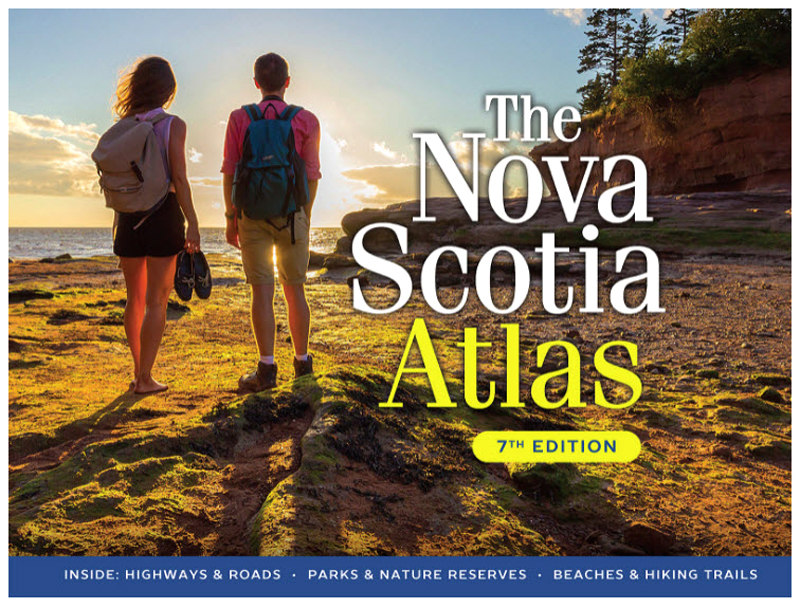
When you drive through the Rawdon Hills from Windsor to Truro on Highway #236 you cross the Shubenacadie River at South Maitland. This part of Nova Scotia has had links with the scientific community and literary community that go back two hundred years. And yet the region is small and finite, centred on Truro extending down to Windsor, across to Parrsboro, and on the North shore from Pictou to Pugwash. It covers less than ten pages in the Nova Scotia Atlas (1:150,000. 90 pages).

Sanger’s book is difficult to review. The other three essays are Biorachan Road, The Crooked Knife and Keeping: the Cameron Yard. My best recommendation is “read it”; check it out, from the library, especially the last essay, Groundmass, for the relationship between words and place.

Acknowledgements

Edward added the graphics. Heather shared in the reading and the travel.

References

Peter Sanger, 2002, Spar: Words in Place, Gaspereau Press.

Province of Nova Scotia, 2019, The Nova Scotia Atlas, 7th Edition, Formac Publishing.

Postscript

Apologies for two blogs on consecutive days. I had to go back and read Sanger’s book a second time.

BTW. For a good laugh, check out YouTube from Edward in the Comments to the previous blog.

Posted in Book Review

Words in Place

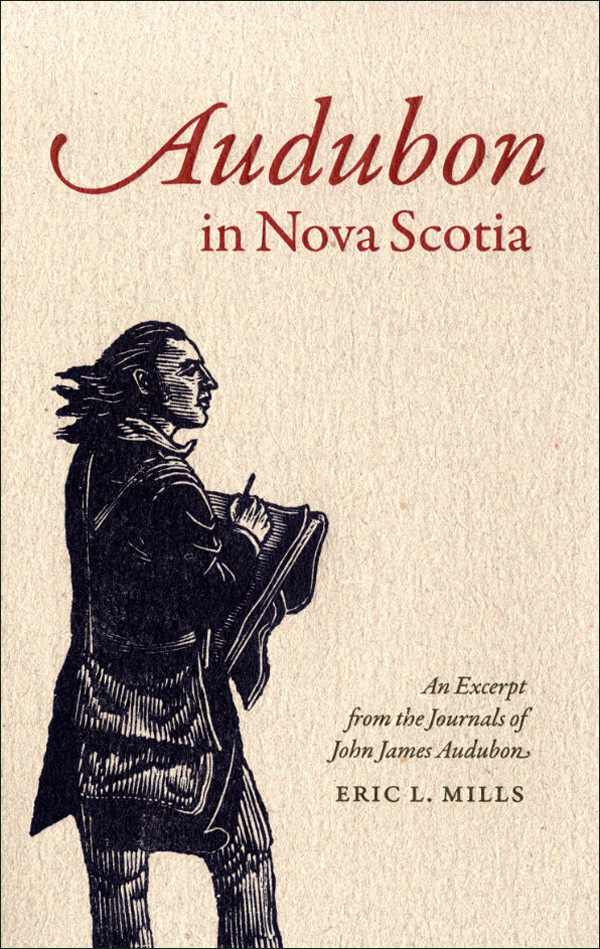
On our way home from Heather’s eye check-up in New Minas, we stopped in Kentville. I was looking for a copy of Peter Sanger’s book Spar: Words in Place. I went to the office of the Gaspereau Press. I was not disappointed. I found a single copy; as well, I picked up Audubon in Nova Scotia by Eric Mills.

From Sanger’s Foreword:

These essays are pauses during which I looked at a map. Their concerns are the ways in which we take words with us when we journey, what they do with our conversation while we travel, and how we may learn to live with their consequence when we have found a destination. p.13.

I remember reading the first essay, Biorachan Road, sometime after we had walked the same route. Perhaps, as part of our ’Road to Georgetown’ trek.

Eric Mills describes Audubon’s trip from Pictou (August 22,1833) to Windsor (August 29, 1833) via Truro and Halifax. it is an excerpt from Audubon’s journal.

”What had brought this British province to Audubon’s attention? It had to be one, or perhaps both, of two connections involving bird collection, both centering on the educator and Presbyterian clergyman, Thomas McCulloch, who at that time lived in Pictou.

McCulloch established the Pictou Academy, providing education beyond grammar school level to local youth. McCulloch’s philosophy of education was broadly based. He believed that Nova Scotian students should receive an education not based solely on the classics, but on knowledge useful to students and their communities. In this, religion, the classics and especially knowledge of the natural world were of prime importance. And the natural world could be taught well with the aid of equipment for experiments in the physical sciences and the use of museum collections, primarily animals, notably birds.’ p.18. Sounds relevant today!


This morning, we stopped at Joanne’s Cafe, Chocolates and Books in Annapolis Royal. I found a copy of Buckler’s Whirligig and an old school book from the Baddeck Rural High School Library. The Land and People of Canada by Frances Ross, published in 1947. More reading.

Acknowledgements

Heather shared the book discovery travel from Kentville to Annapolis Royal. Edward added the graphics.

References

Peter Sanger, 2002, Spar: Words in Place, Gaspereau Press.

Eric L. Mills, 2018, Audubon in Nova Scotia, Gaspereau Press.

Ernest Buckler, 1977, Whirligig: Selected Prose and Verse, McClelland and Stewart (eBook link)

Frances Aileen Ross, 1947, The Land and People of Canada. Longmans, Green and Co.

Posted in Book Review

Field Work

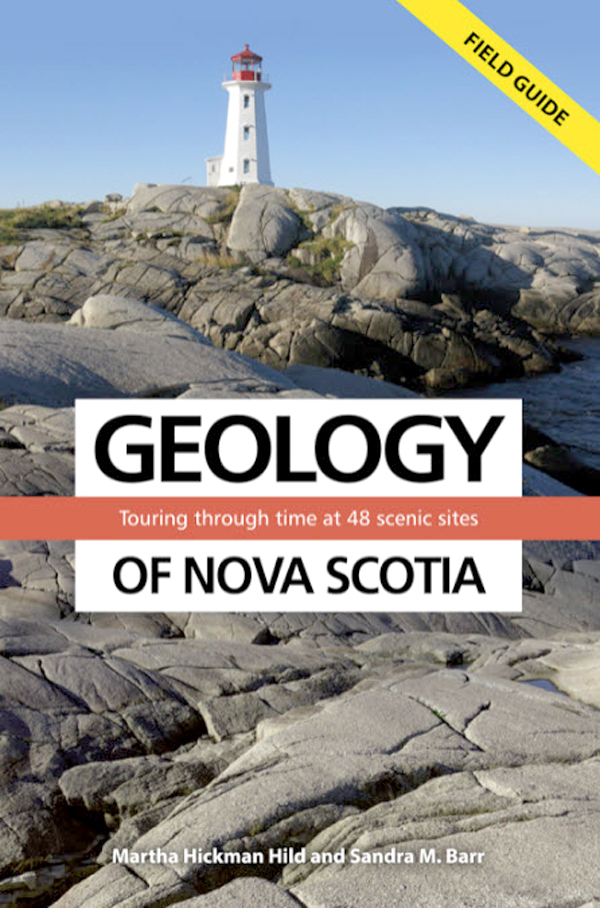
Heather and I were discussing changes in the landscape. She pulled off the shelf, Geology of Nova Scotia.

The field guide by Hild and Barr describes forty-eight sites across Nova Scotia, divided into three sections: Foundation, Meguma, and Pangaea. Looking forward, we have grandchildren who are interested in geology and the natural landscape. Now is the time to add geological sites to our search for waterfalls. The field guide gives a trip planner, maps, and specific points of interest.


As we approach the Christmas Season, The Reader is full of events and celebrations: Christmas market in Clarence, vermiculture workshops, the Bridgetown Motor Inn under new ownership.

We drove through Clarence, our old house between the Elliots and the vanRoestels has been removed without a trace. The Bent farm now extends west from the Mount Hanley road towards the Fitch Road.

In Paradise, besides the sale of Andrew’s farm opposite, our neighbours to the west, have sold their property. Rural Nova Scotia is changing. It’s a new demography.


Sunday morning, I receive by email Emergence Magazine and the Marginalian. Emergence Magazine includes the essay ’They carry Us with Them’.

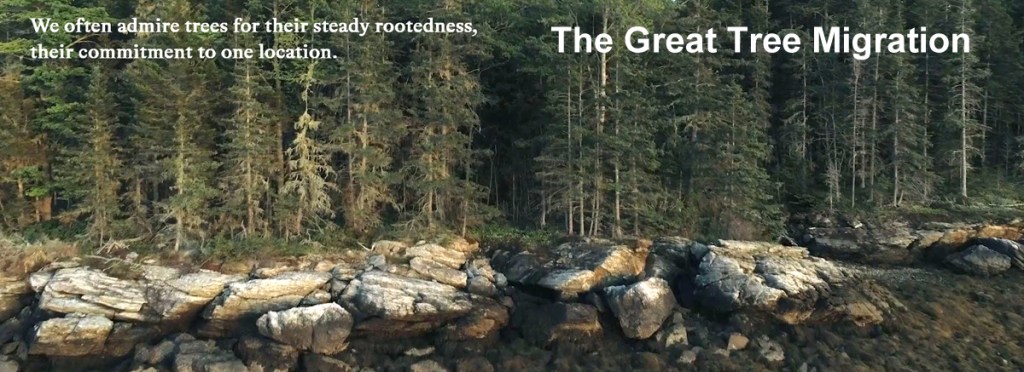
The great tree migration explores tree migration in Maine, from the perspective of black ash, sugar maple, paper birch and red spruce.

Acknowledgements

Heather rediscovered the Field Guide, Geology of Nova Scotia, and recognized the growing interest of our grandchildren. Louis Falls continues to produce The Reader each week, including the Word Search puzzle. Edward added the links and graphics.

References

Martha Hickman Hild and Sandra M. Barr, 2015, Geology of Nova Scotia: Touring through time at 48 scenic sites, Boulder Publications.

Emergence Magazine, November 7, 2021, They Carry Us With Them: The Great Migration.

The Reader, November 5, 2021, Vol 13, Issue #42. A Free weekly paper serving the communities and people of Annapolis County.

Posted in biographical sketch, Book Review

Hunting Season

Last Sunday, Heather decided to walk the Inglisville loop.

From the house to Lawrencetown Lane, turn right up the Trout Lake road. At the top, right again, along the Inglisville gravel road, pass the DNR rifle range turn, and then back down the mountain to Highway 201 and home.

Partway along the Inglisville Road, a deer ran across the road, at the same time, she heard gunshots to her right. She turned around and came home. The hunting season has started. This week, we limited our walks to the French Basin trail and the Valley View Park trail.


On a visit to the Inside Story in Greenwood, I picked up Donald Savoie’s latest book on John Bragg, the force behind Oxford Frozen Foods and Eastlink. The book title is The Rural Entrepreneur. It follows his other books on economic development, Visiting Grandchildren and Looking for Bootstraps, and his books on the McCain and Irving families.

What attracted my attention was Chapter 6, Rural Development: one community at a time. In Bragg’s case, it was Oxford/Collingwood.


Through LinkedIn, Jonathan Murphy shared a post ’GIS made in Canada – Doug Seaborn’s vision’ and from Hugh Millward’s’ Wickedly good work using GIS at SMU’.

This week, I have enrolled in the Tai Chi class at the Middleton campus, NSCC. It is one of many programs offered by CORAH (Centre of Rural Aging and Health). I am looking forward to my first session. This should complement my training sessions with Cathy Bruce West at Healthy Bodies.

We have been busy chipping brush. This will be used as Winter mulch for our fruit bushes (gooseberries and red currants) and the grapes.

Postscript

From Alexander Graham Bell:
”When one door closes, another opens, but we often look so long and so regretfully upon the closed door that we do not see the ones which open for us.”

Last sentence in Savoie’s book. p.244.

Acknowledgments

Heather McCormick at CORAH for Tai Chi registration. Cathy Bruce West for the weekly training sessions. Jonathan Murphy for the LinkedIn link. Heather shared the chipping, mulching and putting the garden to bed. Edward added the graphics.

Reference

Donald J. Savoie, 2021, The Rural Entrepreneur: John Bragg, Nimbus Publishing.

Posted in Book Review

The Odd Book

On Monday, we had to return to the Opthalmologist in New Minas. This presented a fine excuse to visit The Odd Book store in Wolfville.

I was looking for some of Merritt Gibson’s writing. Fortunately, I found “The Old Place: A Natural History of a Country Garden“, illustrated by Twila Robar-DeCoste.

The subtitle is ‘Individual and Community Nature Stewardship’. The Old Place is in Canning. Twila Robar-DeCoste is in Aylesford. The book starts with a map of the geography, and then proceeds with the natural history of the different gardens.

Each chapter starts with a message for the reader. For example, Chapter One:

Locally, there is much that can be done for Nature stewardship begins with individuals and communities. Individuals and communities can protect and restore natural sites, and help ensure the survival of the plants and animals that live in them. An appreciation of nature is a prerequisite to such a goal.” p.9.

One of the pleasures of a visit to the Odd Book store is its collection of authors published by Gaspereau Press. This includes Harry Thurston, Peter Sanger, Soren Bondrup-Nielsen and many others.

While I am lost in Gaspereau Press, Heather is checking out butterfly books. This Summer, our garden has been a feast of colours and fruits. She found James Scott, The Butterflies of North America.

This complements a previous purchase from The Xerces Society, Gardening for Butterflies: How you can attract and protect beautiful, beneficial insects.

Postscript

Merritt Gibson (1930-2010) was professor emeritus of Biology at Acadia University.

Acknowledgements

Heather continues to share the pleasures of our ’old place’. Edward contributed the graphics and links.

References

Merritt Gibson, 1997, The Old Place: A Natural History of a Country Garden, Lancelot Press.

James A. Scott, 1986, The Butterflies of North America: A Natural History and Field Guide, Stanford University Press.

The Xerces Society, 2016, Gardening for Butterflies, Timber Press, Oregon.

Posted in Book Review

The Hermitage

I have just finished reading Joan Baxter’s book ‘The Hermit of Gully Lake’, 2nd edition. It is a remarkable story. Sympathetically written and researched. It raises several questions.

The first is a technical one. What have been the changes, if any, between the first and second edition ? I am now trying to track down a copy of the first edition through the Library.

The second is more philosophical. As a Geographer, we talk a lot about ‘a sense of place’. What does a sense of place mean to a hermit? What was special about Gully Lake? Can any place be a ‘special place’ or hermitage?

Willard Kitchener MacDonald ‘jumped from a troop train to avoid going off to battle in World War II and lived for more than half a century in the woods around Earltown in northern Nova Scotia’ p.7.

At about 2 pm on June 27,2004 they found the remains of a ‘deceased elderly man in a wooded area on the east side of Gully Lake’. p.133.

In her epilogue, Baxter quotes the refrain from a song ‘Let him be’ by Dave Gunning and John Meir. I was able to find it online on their CD Two-bit World.

Checking my bookcase, I rediscovered The True Solitude. selections from the Writings of Thomas Merton. Here is an unspeakable secret writes Father Merton.

Paradise is all around us and we do not understand. It is wide open. The sword is taken away, but we do not know it: we are off ‘one to his farm’ and ‘another to his merchandise’…..’Wisdom’ cries the dawn deacon, but we do not attend’. From the inside of the back cover.

See ”Day of a Stranger” a meditation describes his way of life as a hermit “.

Acknowledgements

Edward added the links and graphics. Heather shares the journey.

References

Joan Baxter, 2021, The Hermit of Gully Lake: The Life and Times of Willard Kitchener MacDonald, 2nd. Edition, Pottersfield Press.

Dean Walley selections 1969. From the writings of Thomas Merton. The True Solitude. Hallmark Editions.

Dave Gunning and John Meir, Let Him Be, On their CD Two-bit World.

Postscript

I also unearthed Thomas Raddall The Dreamers published by Pottersfield Press in 1986. More light reading.

Tomorrow is Register-Reader day !

Posted in Book Review

Register-Reader Day

Thursday has become “Register-Reader Day”. It is the day of the week to catch up with our community.

From the Annapolis Valley Register (page 8) in these times of Health Services challenge, we see opinions on Diabetes and Dementia. Meanwhile, the Reader gives us a celebration of the life of Kent Thompson. In particular, I recall his book ‘Getting out of town by book and bike’ published by Gaspereau Press, from the back cover,

Thompson also investigates the role of bicycle in books by writers ranging from DH Lawrence and HG Wells, to Elizabeth Bishop and Ernest Buckler.

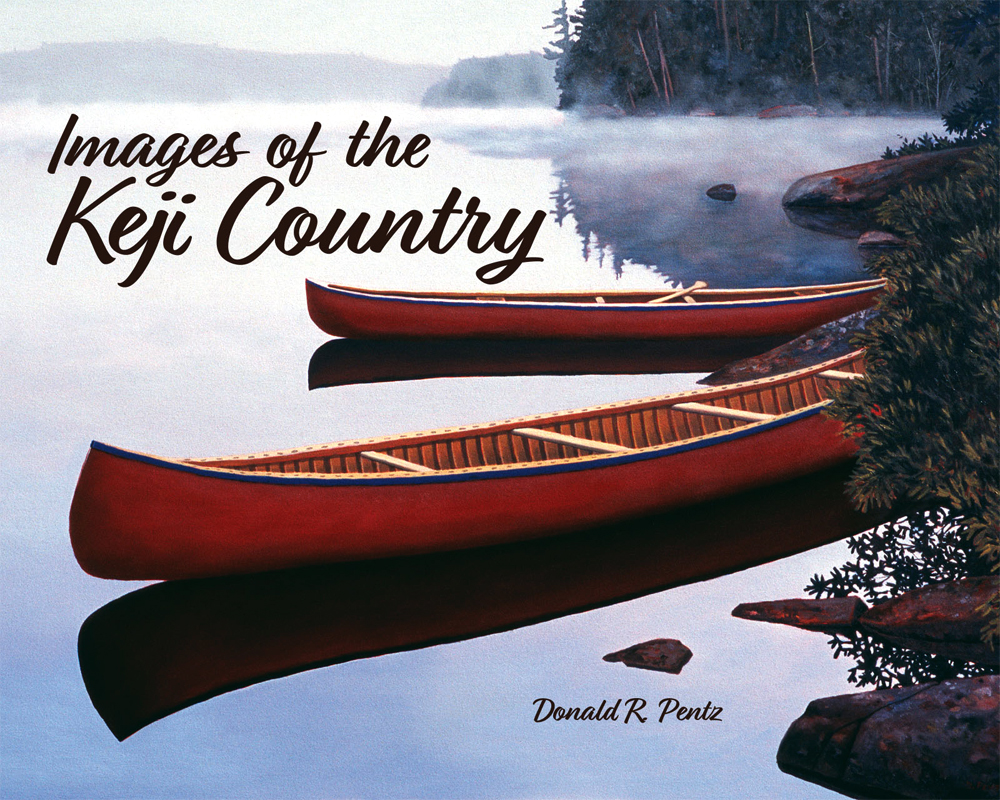
To survive these challenging times, I found a couple of books. At the Inside Story, I spotted Don Pentz ‘Images of Keji Country’.

Kejimkujik National Park resonates with the distant forces of the Mi’kmaq ancestors. Those voices are given a visual presence through hundreds of petroglyphs rock engravings, the moss-covered fire rings that dot the Keji shorelines and the stirrings of buried artifacts. These things tie the Mi’kmaq to the bold nature of ‘place’.

At Chisholm’s Stationers in Kentville, I found the Second Edition of ‘The Hermit of Gully Lake’ by Joan Baxter. I had enjoyed her writing ‘The Mill: fifty years of pulp and protest’.

From Henry David Thoreau, Walden.

Men frequently say to me, “I think you would feel lonesome down there, and want to be nearer folks, rainy and snowy days and nights especially.”

The book is published by Pottersfield Press. I think that I have a copy of the First Edition but have been unable to find it.

Acknowledgements

Edward added the links and graphics. Heather shared a very busy, tumultuous week.

References

The Annapolis Valley Register, Thursday August 19, 2021, p.8, Diabetes: let’s change the conversation, Brooks Roche, Dementia: Twists and turns on the road to awareness, J. Archibald.

Kent Elgin Thompson. 3 February 1936 – 13 August 2021. The Reader August 20, 2021 submitted by David Thompson.

Kent Thompson, 2001, Getting out of town by books and bike, Gaspereau Press.

Donald R. Pentz, 2021, Images of Keji Country, SSP Publishers.

Joan Baxter, 2021, The Hermit of Gully Lake, The Life and Times of Willard Kitchener MacDonald, Second Edition, Pottersfield Press.