Posted in Book Review

Reading and Writing

This week, I finished Graham Steele’s book, Nova Scotia Politics, 1945-2020: from MacDonald to McNeil.

I thought it might offer insights as we approach next week’s Provincial Election. In particular, I was looking to understand the relationship between economic development and ecological landscape management.

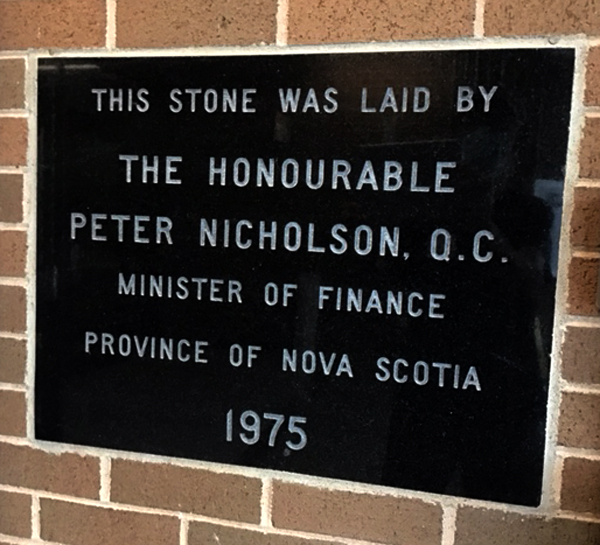
I did come across Appendix 2: Top 10 Nova Scotia politicians 1945-2020. (p.236-7). This included: ”Peter Nicolson MLA 1956-1978. Finance Minister 1970-78. Set the gold standard for ministers. Smart, respected.

This in turn, reminded me of all those days that I walked through the front doors of NSLSI (COGS) and view this plaque.
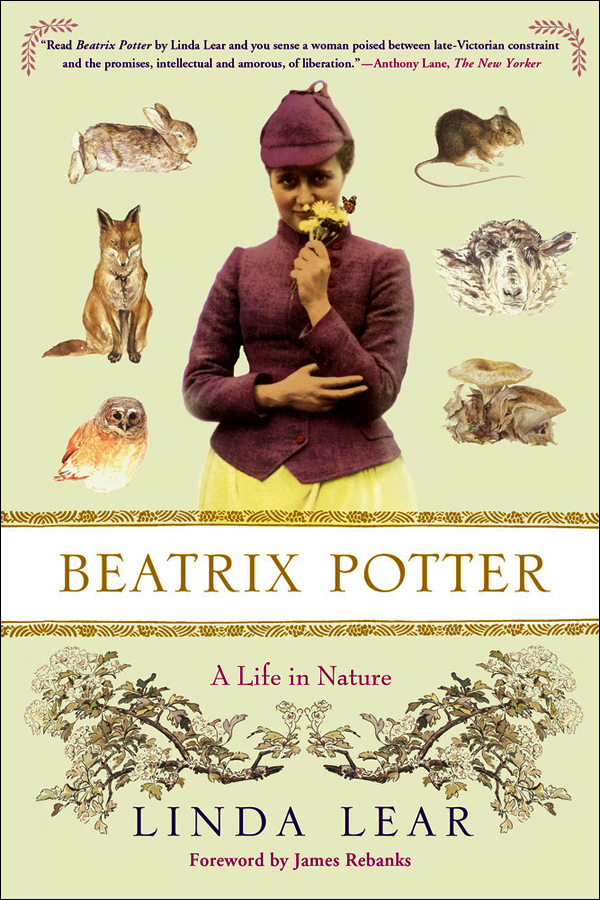

Through the Annapolis Valley library, I received Linda Lear’s “Beatrix Potter: a Life in Nature”.

I have just started this lengthy tome (584 pages). I am encouraged by the map of Beatrix Potter’s Lakeland 1892-1943. And from the first sentence in the Acknowledgements (p.ix).

Beatrix Potter was first of all an artist and writer of place who found her personal and intellectual freedom in nature. She later became a conservationist in an effort to preserve the landscape that had inspired her art.


This week, too, I am preparing for the AF Church Historical Maps Specialist workshop (see previous blog post). I am charged with the following topics

  1. outline the development of Historical GIS in Canada;
  2. discuss the prospects for development of this technology in Nova Scotia.

To speak to the first topic, we must explore the history of GIS in Canada and elsewhere. For the second, we must visit technological development in Nova Scotia and beyond.

Since the invitation to speak at the workshop in Truro, I have used my blog: ernestblairexperiment.wordpress.com
to reflect on both topics.

After the workshop, I hope to be in a better position to comment on current directions, within the context of the AF Church maps.

Acknowledgements

David Raymond initiated the workshop process and provided the link to “GIS Applications in Human Geography“. Edward Wedler added both his technical expertise and insight into Remote Sensing.

References

Graham Steele, 2021, Nova Scotia Politics, 1945-2020: from MacDonald to McNeil, Pottersfield Press.

Linda Lear, 2007, Beatrix Potter: A Life in Nature, St Martin’s Press.

AF Church Historical Maps: Specialist Workshop, August 14, 2021, Truro, NS.

Posted in Book Review, Opinion

Map Stories

If you want to discover stories about maps, a good starting point is the Library at COGS. Speak to the Librarian, Andrew Hannam. In my case, I recalled a book on the History of GIS. Instead, I found two other books.

Joan Dawson, The Mapmakers’ Legacy.
Anne Knowles, Placing History

The book by Dawson provided me with a context for the Church maps. Chapter 4, Natural Resources : minerals, wood and water, highlights the geology of Gesner and Dawson, as well as Church’s mineral map.

The second book, edited by Anne Knowles for Esri Press, contains essays in historical GIS.

Brian Donahue ‘Mapping husbandry in Concord: GIS as a tool for Environmental History’.
GIS mapping can help build a complex, productive engagement between people and the places they inhabit. It can pull together the layers of environmental history to inform how we care for our land today.” p.175.

Michael Goodchild ‘Combining space and time: new potential for temporal GIS’.
In short, the transition to object-oriented data modeling in GIS has solved some basic problems, allowing a rapid expansion of interest in the use of GIS to improve our understanding of historical and other time-dependent phenomena.” p.196.

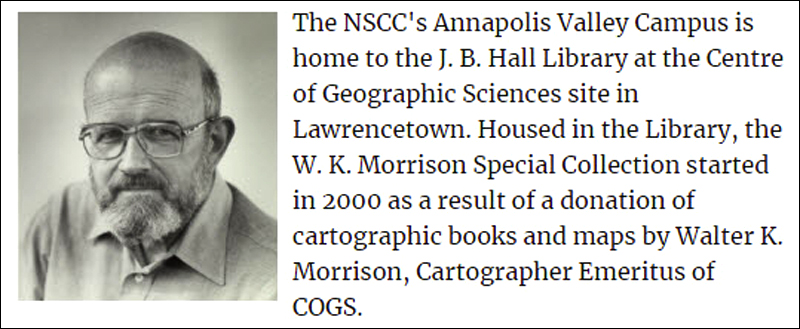
While at COGS, I wanted to check out the Walter Morrison Map Collection.

Because of COVID, things were closed up, however I was able to find a listing of the maps online. I will have to return another day to take a closer look at the Church maps.

It remains remarkable that I can find these resources, locally available in Lawrencetown, and to find Cartographer Monica Lloyd responsible for the site.

The Church maps give us a picture of settlement in Nova Scotia from the mid-nineteenth century. What we need is a picture of the landscape from the pre-settlement (colonial) period to the twenty-first century (2021).

If we could look at landscape change, in Nova Scotia, in terms of forest cover, agricultural land use, mineral exploitation over time, we would have a better understanding of the impact of today’s land use management decisions.

What resources exist to map these changes? Within a historical GIS (see an upcoming blog post)?

Postscript

The Esri Press book was published 2008. What is the status of Historical GIS in 2021? We shall find out!

Acknowledgements

Andrew Hannam and Monica Loyd at COGS. David Raymond, Michael Goodchild and Brent Hall for their intellectual companionship. Edward Wedler added the graphics and links.

References

Joan Dawson, 2007, The Mapmakers’ Legacy. Nineteenth-century Nova Scotia through Maps, Nimbus Publishing.

Anne Knowles (Ed), 2008, Placing History. How maps, spatial data and GIS are changing historical scholarship, Esri Press.

The Walter Morrison Map Collection.

Posted in Book Review

Story Maps

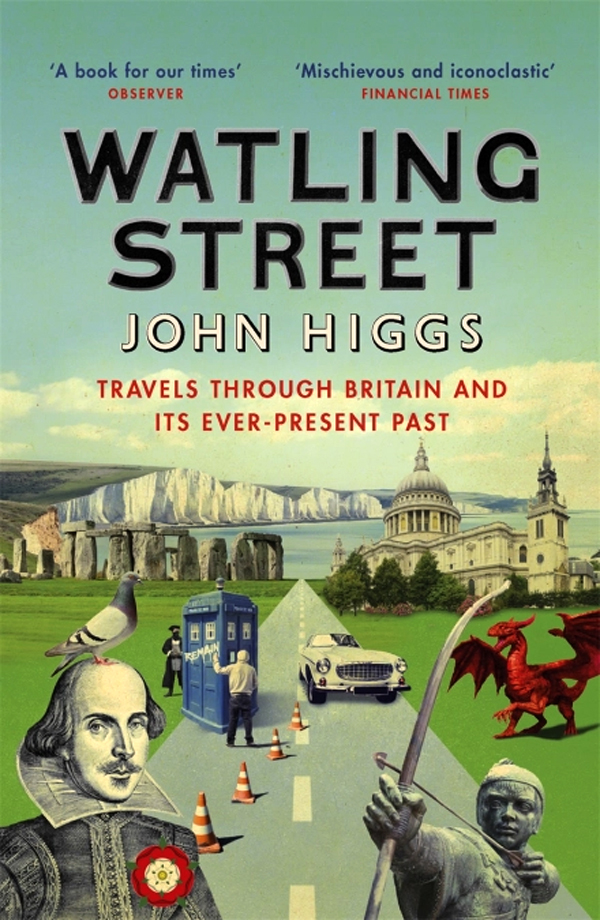
This weekend, we were away from the Valley at Pictou Lodge. It gave me the opportunity to read John Higgs’ book, Watling Street. Higgs uses the geography of Watling Street from Dover to Anglesey, stopping in Canterbury, St Albans and Rugby to tell the story of the British landscape

Watling Street is simultaneously mundane and extraordinary. It facilitates movement, which generates stories, which creates history.

At Western Park (Chapter 12), hé raises the Lloyd George question:

Who made 10,000 owners of the land and the rest of us trespassers in the land of our birth?” P.308.

Many who campaigned to leave the European Union did so because they want to ‘take their country back’“. There is one perspective from which the slogan becomes meaningful and one way it could be achieved.

When a new system to replace European farming subsidies is debated, the subject of land reform and a Land Value Tax may be finally be exposed to light.”

This presents a parallel to discussion in Nova Scotia about the definition and use of Crown Land.


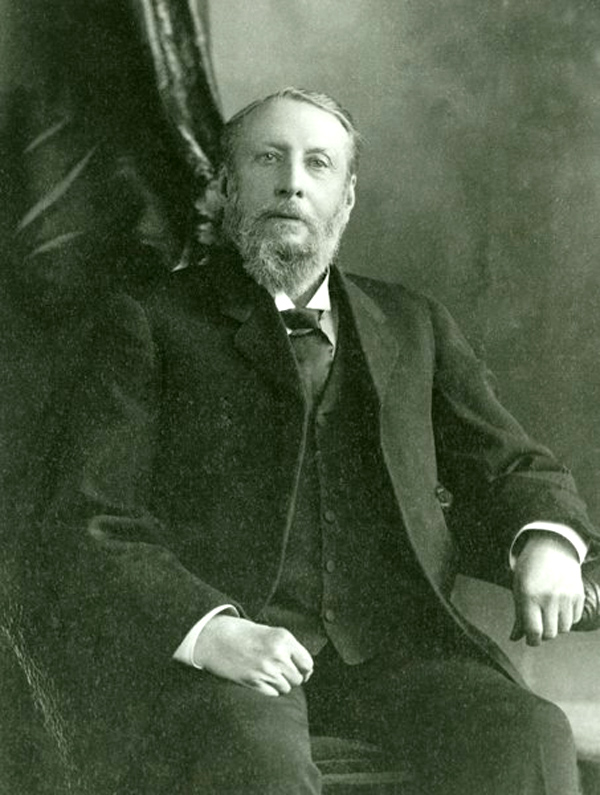
David Raymond sent me a paper by Charles Fergusson, published in the Dalhousie Review, on Ambrose F. Church, Map-Maker. Church published a series of topographical township maps between 1865-1888.

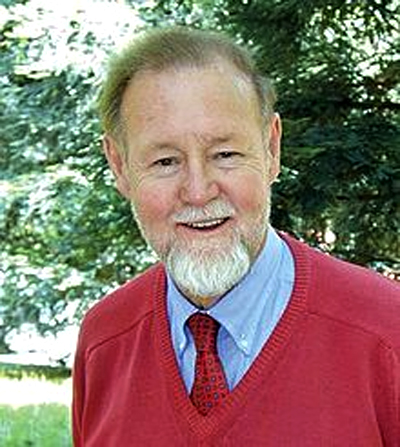
Photo of A.F. Church via https://www.mircs.ca/geogen/concept/

He forwarded an electronic copy of the Church map for Cumberland County, which I was able to display on my iMac. I had planned to visit Heather’s family farm (South Victoria and Streets Ridge).

My next step is to obtain a smaller subset of the Church map. Second, from David Raymond, his document for genealogists to add census data from that time period. This will form the basis of my next blog, entitled, Map Stories.

Acknowledgements

David Raymond for creating a digital copy of the Church maps, and for instructions on adding early census data. Heather and John Stewart have expressed an interest in the project. Edward added the graphics.

References

John Higgs, 2017, Watling Street: Travels through Britain and it’s ever-present past, Weidenfeld and Nicholson.

Charles Fergusson, Dalhousie Review, P.505-516, Ambrose F. Church: Map-Maker.

Posted in Book Review

Journey back in Time

Tuesday morning I went down to Smith’s Cove to visit David Raymond. David, like myself, had taught at the Centre of Geographic Sciences (COGS). In his case, in the Cartography program; in my case in the Department of Computer Programming. David has invited me to be a speaker at an event planned for Truro, August 14th. It is a workshop on the A.F. Church Historical Maps hosted by the Genealogical Association of Nova Scotia.

Clearly, I have much to catch up on, specifically the topic of Historical GIS. As I undertake my background research, I anticipate a series of blogs on the topic.

In Canada, it is hard to use the term GIS (Geographic Information System) without reference to Roger Tomlinson.

Roger was instrumental in the development of the Canada Geographic Information System (CGIS) initially designed to handle the Canada Land Inventory (CLI) for the federal government. Roger ran a consulting company, Tomlinson Associates from Ottawa. In the 1980’s, as COGS developed training programs in GIS, our paths crossed on many occasions. In the Maritimes, I recall the competition between the CARIS system from New Brunswick (Sam Masry and YC Lee), the STRINGS system used by MRMS in Amherst and the Arc/Info system from Esri in California.

There was a time when new COGS graduates were a pre-requisite for Esri systems as they were installed across North America.

What was a GIS? It was computer software that managed geographic data, portrayed on maps as points, lines and polygons, their associated attributes, as well as imagery (e.g. aerial photographs and satellite imagery). It allowed for a wide range of analyses of both the geography and the related attributes.

COGS was well positioned, with access to survey science, photogrammetry, remote sensing, cartography, planning as well as computer programming.

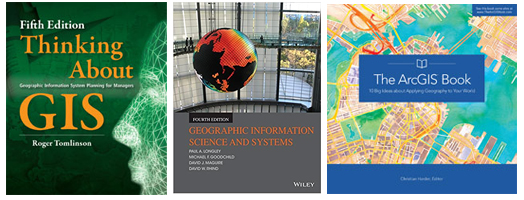
For a more recent view, I have pulled from my bookshelves three seminal texts.

  1. Roger Tomlinson, 2013, Thinking about GIS: Geographic Information System Planning for Managers (5th. Edition), Esri Press.
  2. Paul Longley, Michael Goodchild, David Maguire, and David Rhind, 2015, Geographic Information Science and Systems, (4th. Edition), Wiley.
  3. Christian Harder (Ed.), 2015, The ArcGIS book: 10 Big Ideas about applying Geography to your world, Esri Press.

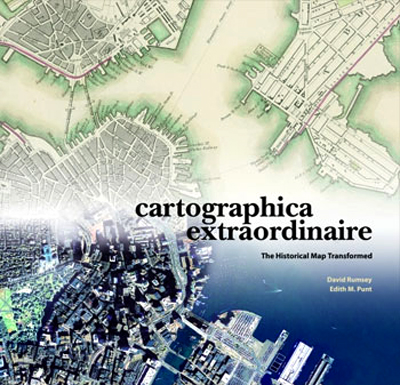
David Raymond lent me his copy of ‘Cartographica Extraordinaire’ The Historical Map Transformed by David Rumsey and Edith Punt. Punt was a Cartography graduate from COGS. She works for Esri in Redlands, California.

From the back cover,

Extraordinary is the value of this book as a gateway into the Rumsey web site – the chronological listing of all illustrations in the book is carefully referenced to the digital collection on the Internet where users can select their own details”.

David Woodward, Arthur Robinson Professor of Geography Emeritus, University of Wisconsin- Madison,

David Rumsey and Edith Punt, 2004, Cartographica Extraordinaire: The Historical Map Transformed, Esri Press.

Postscript

Please note my references are all before 2015. There have been many new developments in the last six years. Time for more research.

Just returned from the Lawrencetown library, John Higgs’ book, Watling Street, has arrived from the University of Alberta. Travels through Britain and its ever-present past. Recommended by Peter Maher.

Acknowledgements

Thanks to David Raymond for sharing his knowledge and expertise. Edward added the graphics. Edward was Remote Sensing instructor at COGS, contemporary with David and myself.

Posted in Book Review

Simplify

From the Introduction by Joseph Wood Krutch to Thoreau: Walden and other writings.

The lessons he had taught himself, and which he tried to teach others, was summed up in the one word ‘Simplify’. That meant simplify the outward circumstances of your life, simplify your needs and ambitions; learn to delight in the simple pleasures which the world of Nature affords. It meant also, scorn public opinion, refuse to accept the common definitions of success, refuse to be moved by the judgement of others.” p.1.

Directly from Thoreau:

Men have an indistinct notion that if they keep up this activity of joint stocks and spades long enough all will at length ride somewhere, in next to no time, and for nothing; but though a crowd rushes to the depot, and the conductor shouts “All aboard!” When the smoke has blown away and the vapor condensed, it will be perceived that a few are riding, but the rest are run over – and it will be called, and will be, ‘a melancholy accident ‘.” p.2.

Next to our bed, Heather has hung on the wall a needlework sampler. Yes, it read ‘Simplify’.

In these COVID times, it is sometimes difficult to accept the government imposed simplification. From my previous blog post, Rocky Hebb noted that The Inside Story bookstore in Greenwood is outside of the municipality. He further raised the question, whether a book is an ‘essential good’?

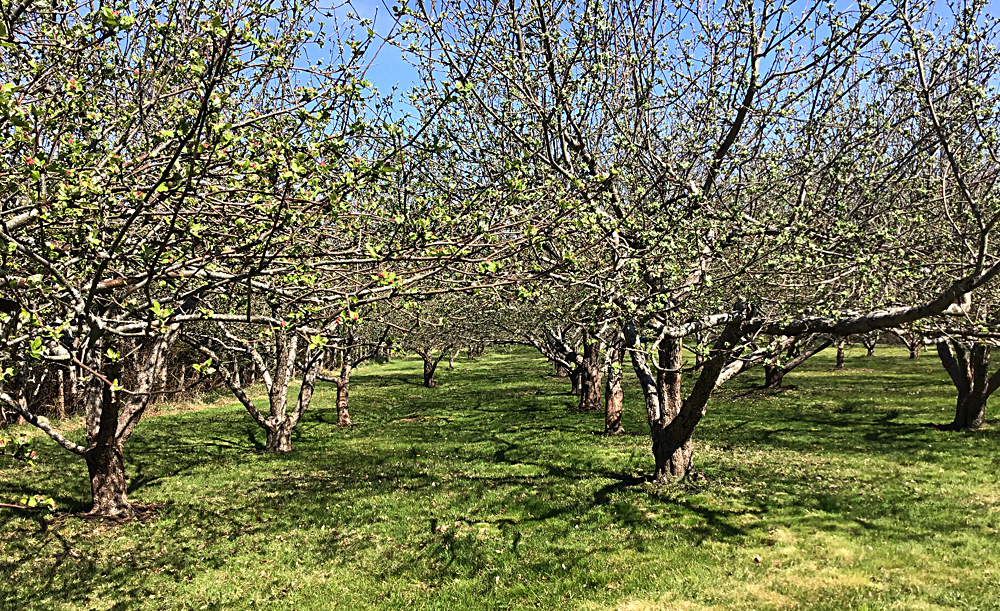
The best antidote seems to be working in the garden or getting the orchard in good shape. Or walking down through the property to the Annapolis River. Or bicycling along the Middle Road to Middleton.


Heather LeBlanc responded to my previous blog post with an update on The Mapannapolis Project.

LINK to Mapannapolis.ca

They have announced Mapannapolis 2.0. It started in 2011. Ten years ago. We look forward to the next ten years of progress. It would be wonderful if this initiative became part of a formal relationship between COGS and the community.


With the sale of Andrew’s farm, we have a new audience for background information on Annapolis County. We look forward to welcoming Sinead, Robert and family (some time later in 2021).

Acknowledgements

Thanks to everyone for their blog feedback. In particular, Rocky Hebb, Heather LeBlanc and Sinead Wills. Heather shares the pleasures of garden and orchard. Edward shares his graphics talent.

References

Joseph Wood Krutch, 1962, Thoreau’s Walden and other writings, Bantam Books.

Mapannapolis Project

Postscript

It appears that Annapolis County along with adjacent municipal units has resolved the Valley Waste Disposal issue. Hopefully, this is the sign of better collaboration, as we go forward.

Posted in Book Review

Reading Rural

I have been slowly reading from my ‘Treasure Chest’. Specifically, Ah, Sweet Mystery of Life’, the country stories of Roald Dahl, published in 1989.

The Parson’s Pleasure describes a day in the life of Mr. Boggis, an antique collector who masquarades as a country parson. In the story, Dahl describes his approach:

So Mr Boggis bought maps, large scale maps of all the counties around London, and with a fine pen he divided each of them up into a series of squares. Each of these squares covered an actual area of five miles by five, which was about as much territory, he estimated, as he could cope with on a single Sunday.

He didn’t want the towns and the villages. It was the comparatively isolated places, the large farmhouses and the rather dilapidated country mansions, that he was looking for.” p.17.

It is a marvellous story, with a surprising ending. The book has seven short stories.

Roald Dahl is one of the most successful and well-known of all children’s writers.

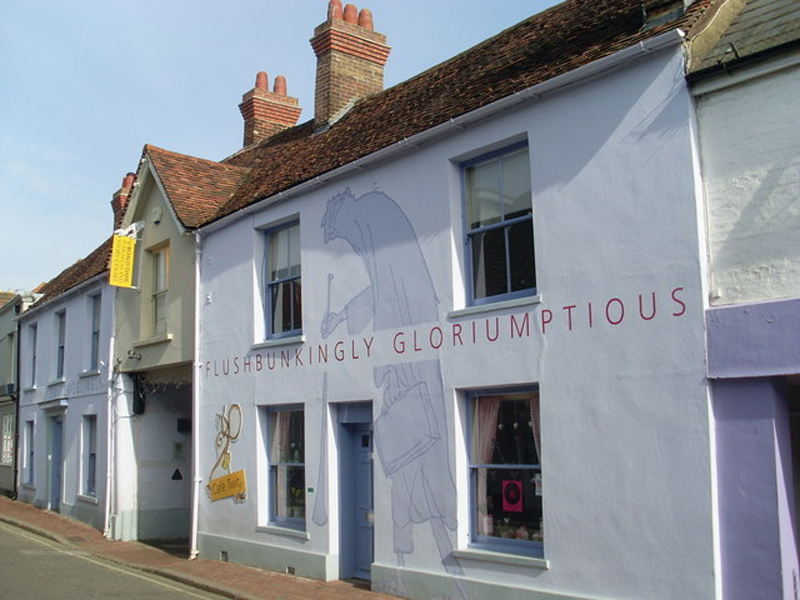
I went to check Google (roalddahl.com) and discovered the Roald Dahl Museum and Story Centre in Great Missenden, Buckinghamshire.
(photo by David Hillas)


Later in the week, I received a notice about the passing of a school friend from Chiswick, Robert Frith. His obituary was found in The Blackmore Vale. The newsletter is yet another example of ‘rural writing’ from the UK.

LINK to Blackmore Vale magazines

PS
My previous blog post on Clacton-on-sea struck a chord with Sandra Barry. Particularly, the link to Elizabeth Bishop’s great uncle, the painter George Wylie Hutchinson who lived there for several years.

Acknowledgements

Andrew Ronay forwarded the link to The Blackmore Vale. Sandra Barry forwarded the link to The Elizabeth Bishop Centenary. Edward added the links and graphics. Heather provided her support.

References

Roald Dahl 1989, Ah, Sweet Mystery of Life: the Country Stories of Roald Dahl, Penguin Books.

Roald Dahl Museum and Story Centre: roalddahl.com

The Blackmore Vale link

The Elizabeth Bishop Centre link.

Post Script.

I wonder about a Museum and Story Centre in rural Nova Scotia ?

Posted in Book Review

Leaves of Grass

At the Inside Story, I chanced to find a copy of Walt Whitman’s book, Leaves of Grass. The First (1855) Edition.

It includes a lengthy editors introduction by Malcolm Cowley – 37 pages, followed by Whitman’s Introduction 19 pages. This is followed by twelve poems – 120 pages. To date, I am part way through the first poem. This is not easy reading..

Meanwhile, I continue to receive Brain Pickings, twice per week..

”Walt Whitman, felled by a paralytic stroke, he considered what makes life worth living and instructed himself: ”Tone your wants and tastes down enough, and make much of negatives, and more daylight and the skies””.

“He spared himself the additional self-inflicted suffering of outrage at how his body failed him – perhaps because, having proclaimed himself the poet of the Body and the poet of the Soul, he understood the two to be one. He squandered no emotional energy on the expectation that his suddenly disabled body perform a counter possible feat against reality to let him enjoy his beloved tree workouts and daily excursions to the river. He simply edited his expectations to accord with his new reality and sought to find joy there, within these new parameters of being.”

In the same Brain Pickings, there is a link to John Burroughs book ‘Whitman: A Study’.

Meanwhile, from Emergence Magazine, Kathleen Dean Moore Listen : four love songs. Regent Honeyeaters, Western Meadowlank, Brown-headed Cowbird and Red- winged Blackbird.


(photo by Kathrin Swoboda)

When we listen, we open ourselves to new, joyous relationships with species other than our own.


On our way to New Glasgow, we stopped at West Brooklyn to pick up the newly bound books by Legge Conservation Services (see earlier blog post HERE). They now have a new lease on life.

Acknowledgements

Edward added the links and graphics. Heather and Siqsiq travelled the backroads of Nova Scotia with me.

Postscript

Forests are not renewable’: the felling of Sweden’s ancient trees | Environment | The Guardian

References

Walt Whitman, 1986, Leaves of Grass, The First (1855) Edition, Penguin Classics

Brain Pickings. April 18th,2021. The Stoic remedy for when people let you down.

Emergence Magazine. April 18th,2021, Celebrating Earth Week.

Posted in Book Review

Buckler and Berry

This week , I needed to find some ‘light reading’. I packed up a box of books to take to the Endless Shores bookstore in Bridgetown. They will give me credit towards any book that I might purchase.

When I was last in Bridgetown library they had a display copy of “Nova Scotia: Window on the Sea”. However, it could not be taken out of the library. I found a copy at Endless Shores. It was written in 1973. Buckler wrote the text to accompany the photographs by Hans Weber (see fiftieth anniversary note HERE).

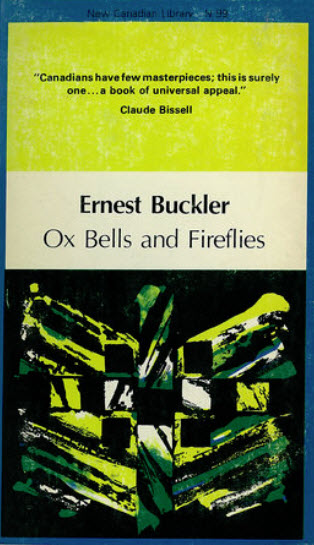
Would the writing continue the style from Ox Bells and Fireflies 1968? Included are five essays: Amethysts and Dragonflies, Mast and Anchors, Man and Snowman, Faces and Universes, Counterfeit and Coin (see posts, Chance Encounters and Pastoral Economy).

In Buckler’s words, “Nova Scotia is nearly an island, nearly the last place left where place and people are not thinned or adulterated with graftings that grow across the grain.” p.12 or

It’s mountains take on no Cabot lordliness. They chat like uncles with their nephew valleys.”p.12.

Nova Scotia is the face from Genesis and the face from Ruth. The face from Greco and the face from Rubens. The life of Faulkner and the life from Hardy…..It is a dictionary where the seasons look up their own meanings and test them. It is a sea-son where men can man their own helms.” p.16

After finding Buckler, I went on a search for George Orwell (Eric Blair). I found “Animal Farm” but was not ready to read it. Instead I chanced on Wendell Berry, “Home Economics: fourteen essays“. The last essay is titled “Does Community have a Value?” It describes farming in the hilly country near Port Royal (Kentucky) in 1938.

The local community must understand itself finally as a community of interest — a common dependence on a common life and a common ground. And because, a community is, by definition, placed, its success cannot be divided from the success of its place, its natural setting and surroundings : its soils, forests, grasslands, plants and animals, water, light and air. The two economies, the natural and the human, support each other; each is the other’s hope of a durable and a livable life.” p.192.

I think the same is true for Nova Scotia.

Acknowledgements

Jennifer Crouse, owner of the Endless Shores Books and other Treasures. Edward added the graphics. Heather shared our weekend reading of Voice of the People, Chronicle Herald March 27 D4. Are we ‘tree-huggers’ or’sub-hillbillies’ ?

References

Ernest Buckler and Hans Weber, 1973, Nova Scotia: Window on the Sea, McClelland and Stewart Ltd.

Wendell Berry, 1987, Home Economics: Fourteen essays by Wendell Berry, North point Press.

Postscript

I wanted to title the blog ‘Buckler and Blair’ to correspond with the Ernest Blair Experiment but had to settle for Buckler and Berry.

Posted in biographical sketch, Book Review

Happenstance

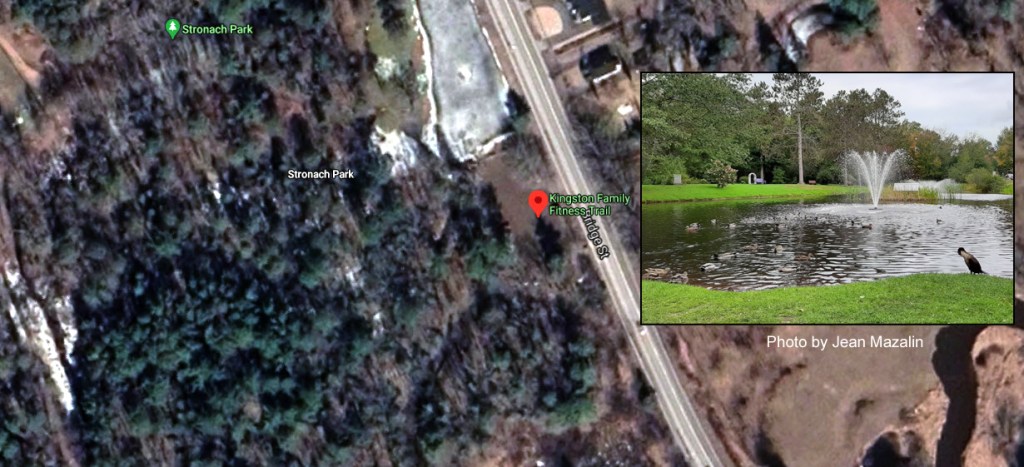
Siqsiq enjoys walking the trails in the Village of Kingston park. For her it is the chance to savour the scent trails, not found at home on the property in Paradise.

We added some extra dimensions to the trip. Rather than taking the direct route along Highway #1 or #201, we explored the country roads, along the edge of South Mountain from Nictaux Falls to Torbrook, Tremont to Greenwood.(page 55-56,Nova Scotia Atlas). This route offers spectacular views across the Valley to see the forest cover on North Mountain.

In Greenwood, we stopped at the Inside Story. On the newspaper rack, I spied A Plague Year Reader. It was free ‘Being a sampler of books issued by Gaspereau Press in the complicated year 2020’. The catalogue, of course, was beautiful in its black cover design.

For each publication, it includes the object, synopsis, about the author, Q & A with the author. The section headings are poetry, prose and limited editions. Within prose, I gravitated to Lost River: the Waters of Remembrance by Harry Thurston and Maud Lewis: creating an icon by Ray Cronin. Under limited editions, Wendell Berry. Notes: unspecializing poetry and Aldo Leopold Wherefore Wildlife Ecology ?

There was also time to purchase a book: Oliver Sacks’ Everything in its place, published in 2019. Sacks died in 2015.

So far, I have enjoyed ‘Remembering South Kensington’. I remember, too, the museums of South Kensington, especially the Natural History and Science museums. The result of a childhood, living in West London.

On the back cover, Maria Popova, Brain Pickings comments:

Everything in its place is a wondrous read in its entirety, irradiating Sack’s kaleidoscopic curiosity across subjects”.

I look forward to reading the remainder of Sack’s collection.

Check out, Brain Pickings, March 14, 2021 Wendell Berry’s poem, written in 1968, The Peace of Wild Things.

Postscript

With the occasional Spring day, we have been able to get into the orchard for the annual pruning. A delight !

Addendum
This is for Rocky Hebb

Let us read Nova Scotia Premier Iain Rankin‘s, Rethinking our health and wealth. Chronicle Herald D3, updated March 13th.

We will be asking whether existing programs are affordable, but more importantly asking whether they enhance our lives and livelihoods, and whether they sustain or harm the environment.”

Well, Mr Rankin, we will be watching closely how your actions sustain the environment. We have not been too impressed by your actions, when you had direct responsibility for this portfolio, under former Premier, Stephen McNeil. Specifically, the question of spraying and clearcutting of the forested landscape.

Acknowledgements

Heather and Siqsiq shared the walk and drive. Staff at Gaspereau Press and the Inside Story for their service to the community.

References

Andrew Steeves, 2021, A Plague Year Reader, Gaspereau Press.

Oliver Sacks, 2019, Everything in its place: first loves and last tales, Vintage Canada.

Maria Popova, Brain Pickings, March 14, 2021.

Iain Rankin, Rethinking our health and wealth. Chronicle Herald, updated March 13, 2021, page D3.

Posted in Book Review, Opinion

Lost Words

In 2007, the Oxford Junior Dictionary dropped forty common words concerning nature. In 2018, Robert MacFarlane and Jackie Morris co-authored, The Lost Words, “ a spell book that conjures back twenty of these lost words and the beings they name from acorn to wren”.

In 2020, MacFarlane and Morris published The Lost Spells. Last weekend, I found a copy at the Mad Hatter bookstore in Annapolis Royal.

To enchant means both to make magic and to sing out. So let these spells ring far and wide; speak their words and seek their art, let the wild world into your eyes, your voice, your heart

It starts with Red Fox and ends with Silver Birch, a lullaby. At the end is a glossary of sixty-four species.

Seek each flower and insect in these pages, speak each creature, find each tree. Then take this book to wood and river, coast and forest, park and garden; use it there to look, to name, to see.”

The book is a beautiful combination of language and art. It is designed to be read aloud. It includes a glossary and quiz — to find these species in nature.

Could we apply the same approach to ‘our nature’?

Last weekend, Peter Nicholson and Jeff Larsen published an opinion piece in the Chronicle Herald (D4) entitled “Welcome to InnovScotia — Six Ways to Build Back Better Post-pandemic“. While I can agree with their six strategies, my focus would be to promote ‘local-hood’. For example, can we develop a new language/art of landscape in Nova Scotia? How would we begin?

My suggestion, re-read Ernest Buckler’s Ox Bells and Fireflies in combination with Harold Horwood’s ‘The Magic Ground’.

Peter Nicholson uses the term ‘InNova- Scotia’. My approach would redefine the term to ‘In Nova Scotia’, with the emphasis on the geography. Consult with our leading ‘nature writers’ e.g Harry Thurston and others. Study the relationship between language (MacFarlane) and art (Morris), then apply to the present landscape.

As I mentioned to Edward, what we need is ‘the Inside Story’. This is a bit of a joke, since Edward and Anne used to run the bookstore, The Inside Story in Greenwood.

Postscript

Frank Fox sent me a link from the Guardian. That land has more value if left to Nature than if farmed. Interesting economics.

Photograph: Stephen Fleming/Alamy in The Guardian

Acknowledgements

Edward brings his artist mind to every blog. Rocky Hebb challenged me on the blog format. Heather and Siqsiq share our walks in Nature.

References

Robert MacFarlane and Jackie Morris, 2018, The Lost Words, Anansi Press.

Robert MacFarlane and Jackie Morris, 2020, The Lost Spells, Anansi Press.

Peter Nicholson and Jeff Larsen, 2021, Welcome to InnovaScotia — Six Ways to Build Back Better Post-pandemic, Chronicle Herald March 6. Page D4.

Ernest Buckler, 1968, Ox Bells and Fireflies, McClelland and Stewart, New Canadian Library, N99.

Harold Horwood, 1996, The Magic Ground, Nimbus Publishing.