Posted in biographical sketch, Book Review

Not moles

voles, not moles is the fifth book written by Soren Bondrup-Nielsen and published by Gaspereau Press.

This book is a memoir describing his career conducting biological research in Canada, as well as Northern Europe (Norway, Finland, Poland and Russia). The research subjects included birds and voles.

Perhaps most interesting for me were the end chapters describing his teaching at Acadia University, within the Annapolis Valley landscape.

The Mi’kmaq have a concept called netukulimk, which means to live sustainably by not taking more than you need. Survival is ensured by looking after society and the environment’ p.225.

Western societies today appear to have lost touch with these widespread and ancient human values. Humans now seem to be preoccupied with the individual and with amassing possessions so much so that our sense of community is diminishing. How has that change come about?’ p.226.

We are part of nature, and if nature is not sustainable neither are we. We must learn that wealth cannot be measured only in terms of money.’ p.231

Co-operation for the united benefit of society and the biosphere must be our new mantra.


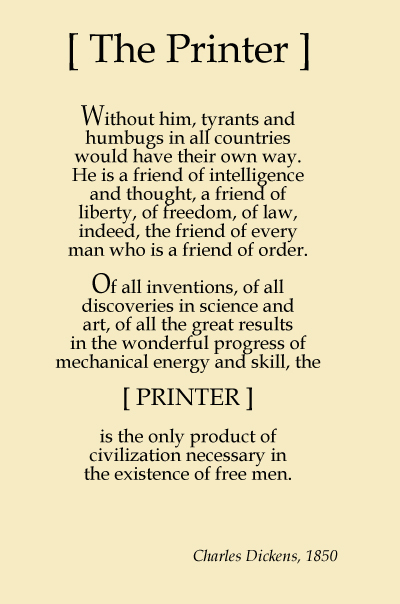
This morning (Tuesday), I visited Integrity Printing in Bridgetown. They had previously printed the text from my blogs (Volume 1-5). I requested Volume 6 for 2021. Together, this represents over 370 blog entries. While there, I asked Stephen Bezanson If I could photograph a poster on the wall. It is a quotation from Charles Dickens.
Postscript

Just arrived in New Glasgow. Highway #101 was excellent. Highway #104, over Mount Thom, not so good. down to a single lane.

Acknowledgements

Integrity Printing for their excellent work. Edward Wedler for his excellent work too. Heather shared the day-to-day events.

References

Soren Bondrup-Nielsen, 2021, voles, not moles, Gaspereau Press, Kentville.

Charles Dickens, 1850, The Printer.

Posted in Book Review

Whirligig

Before Christmas, I discovered Ernest Buckler’s book Whirligig in a second-hand bookstore in Annapolis Royal.

From biographer, Claude Bissell:

‘This book will come as a surprise to Buckler readers.’

‘But we must not identify him completely with Ernest Buckler, the writer, who lives in an old farmhouse, on the highway to Annapolis, just outside of Bridgetown.’ p.7.

‘The narrator has less respect for his literary work than Buckler for his; he tends to agree with his neighbour that a man who neglects the duties of the farm to write fancy stories doesn’t really count for much’. p.8

Another example.
Tenure be Damned p.56.
Some colleges are largely staffed
With moldy Ph.D’s
But if the students win the day
They’ll lose their faculties.’

In response to my previous blog post, I received a number of updates.

From Heather Leblanc … she reminded me of the new material on the mapannapolis.ca website. Besides the StoryMaps, it includes the Youtube channel created by Andrew Tolson.

From David Colville … he pointed out the link to the Interactive Nova Scotia Science Atlas, featuring the work of Ian Manning, and others.


Today, I had reason to go to Kentville. I stopped at Chisholm’s bookstore and picked up Meditation for Makers (for Heather Stewart) and Wild Green Light: Poetry by David Adams Richards and Margo Wheaton.

Afterward, up the hill to Gaspereau Press, I discovered two more finds:

Soren Bondrup-Nielsen’s Voles, not Moles: A personal journey connecting with nature and Bren Simmers’, if, when (poetry)

And a T-shirt!

“Quit your unjust gaslighting of circumspect whelps with unverified reports of zippy brown foxes.
Fake News!”

Gaspereau Press. Printers and Publishers. Literary Outfitters and Cultural Wilderness Guides The typeface is Rod McDonald’s Laurentian.

Postscript

Today, in Annapolis Royal at the Historical Gardens, we picked up Alan Syliboy’s children’s book, The Thundermaker. This is such a good Mi’kmaq message.

Acknowledgements

Heather LeBlanc and David Colville provided feedback. Edward Wedler added the graphics and links.

References

Ernest Buckler, 1977, Whirligig: Selected prose and verse, McLelland and Stewart.
Deanne Fitzpatrick, 2022, Meditation for Makers, Nimbus Publishing.
David Adams Richards and Margo Wheaton, 2021, Wild Green Light, Pottersfield Press.
Soren Bondrup-Nielsen, 2021, voles, not moles, Gaspereau Press.
Bren Simmers, 2021, if, when, Gaspereau Press.
Alan Syliboy, 2015, The Thundermaker, Nimbus Press (Translated by Lindsay R. Marshall) (Mi’kmaq)

.

Posted in Book Review

Arctic Dreams II

Sunrise over Iqaluit

Returning to Iqaluit, I find old books on the shelves from previous visits. That includes Barry Lopez, Arctic Dreams (see post Arctic Dreams). Meanwhile, this week’s issue of Emergence Magazine gives a tribute to the author, who died over a year ago.

The Internet service in Nunavut makes it a challenge to watch the film Horizons by Jeremy Seifert or read the essay ’An Unbroken Grace’ by Fred Bahnsen. First published in Notre Dame Magazine.

”Starlings show us a way around the dilemma of scale, a model for human cooperation and deference towards others. A murmuration shows the idea of genius residing in one individual, and recognizes that genius is actually possessed by community. Human genius ”might rise up and become reified in a single person in a group.” Barry said ’but it doesn’t belong solely to that person.”

Barry Lopez: ”one of the reasons we’re lonely is that we’ve cut ourselves off from the nonhuman world and have called this ’progress.’

Yesterday, we walked to downtown Iqaluit. It takes about forty five minutes each way. Stopped at the Arctic Ventures store. No new books jumped out at me. Sun sets around 3:15 pm.

Acknowledgements

Edward added the graphics and links. Heather shared the cold walk in the snow.

References

Barry Lopez, 1986, Arctic Dreams: Imagination and Desire in a Northern Landscape, Bantam Books.

Emergence Magazine. A Tribute to Barry Lopez. December 19, 2021.

Posted in Book Review

The Stepsure Letters

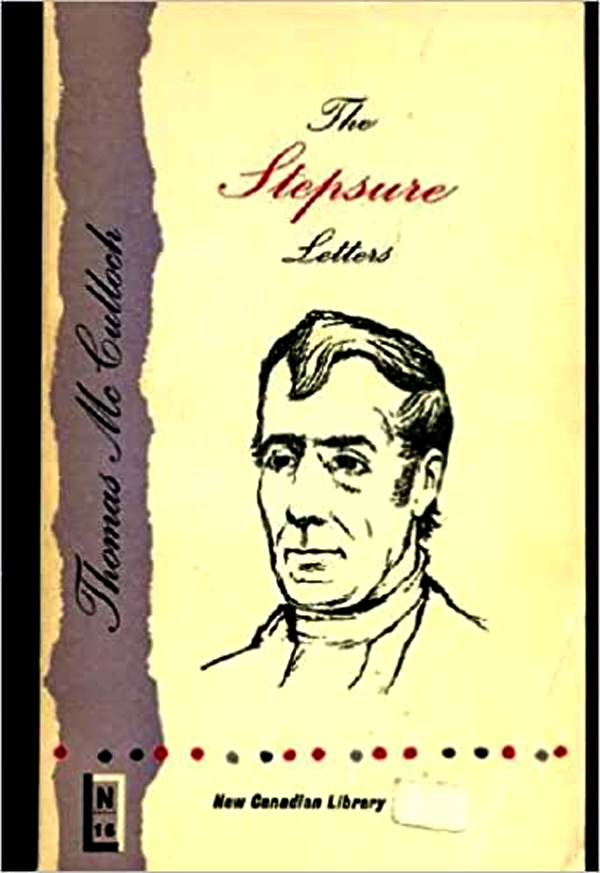
Through interlibrary loan, I received Thomas McCulloch ’s The Stepsure Letters. Published in the New Canadian Library series by McLelland and Stewart in 1960. It contains eighteen letters written by McCulloch to the Editor, Acadian Recorder in 1821-22. The letters were originally published under title The Letters of Mephibosheth Stepsure.

In the New Canadian edition, there is an Introduction by Northrop Frye.

”McCulloch is the founder of genuine Canadian humour: that is, of a humour which is based on a vision of society and is not merely a series of wisecracks on a single theme.” p. ix.

In the words of John A. Irving,

”When he died in 1843, Nova Scotia lost its ablest and most persistent champion of liberal education.” p.153.

“Long before Joseph Howe began his work, McCulloch was teaching the people of Nova Scotia the new ideas which were ultimately to change the whole system of government. Howe himself used to say that he learned the principles of responsible government from a man in Pictou.” p.156.

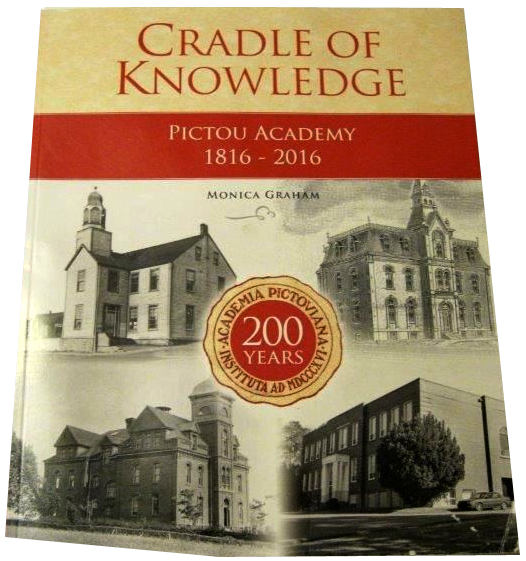
This weekend, I found in the New Glasgow library, Monica Graham ’s book Cradle of Knowledge, Pictou Academy 1816-2016.

McCulloch’s Dream p.1
”Rev Dr. Thomas McCulloch stepped ashore in Pictou in 1803 with a globe mapping the earth tucked under one arm. Under the other arm, he carried a second globe mapping the stars.”

p5.
“A liberal education involves training and study that develops students’ intellectual abilities, piques their curiosity about the world and teaches them how to learn, rather than instructing them in specific professional or manual skills. The term is not a political label.”

p.12.
”Also about 1824-25 Academy supporters and its liberally-educated graduates became increasingly outspoken against the oligarchic political system that saw the province governed by a wealthy minority of Halifax Anglicans. Pictou’s rebelliousness gained the town a reputation as the provincial centre of reform politics.”

When I visited the MacDonald Museum last Tuesday, I found a second-hand copy of Joshua Slocum ’Sailing Alone around the World’.

It starts:
“In the fair land of Nova Scotia, a maritime province, there is a ridge called North Mountain, overlooking the Bay of Fundy on one side and the fertile Annapolis Valley on the other. On the northern slope of the range grows the hardy spruce-tree, well adapted for ship-timbers, of which many vessels of all classes have been built”.

Slocum was born in Mount Hanley.

What are the lessons ?

Over two hundred years ago, McCulloch was championing liberal education. We need McCulloch today to challenge our educational institutions, to provide genuine Canadian humour. Perhaps, too, we need more Joshua Slocums from rural Nova Scotia.

Acknowledgements

Thanks to Library staff for access to these books. Edward added the graphics. Heather joined me on the trip to New Glasgow.

References

Thomas McCulloch, 1960, The Stepsure Letters, McClelland and Sewart.

Monica Graham, 2015, Cradle of Knowledge, Pictou Academy 1816-2016, Pictou Academy Educational Foundation.

Capt. Joshua Slocum, 1999, Sailing Alone around the World, Reprinted Sheridan House.

Posted in Book Review, Event Review

Mythology

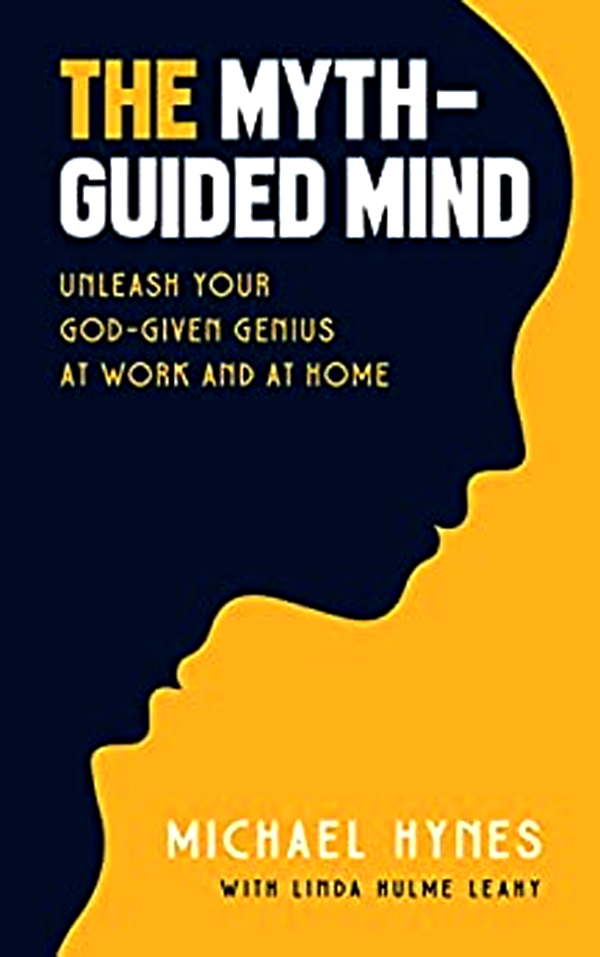
I finished reading Michael Hynes, “The Myth-Guided Mind: Unleash our God-given Genius at Work and at Home“. The book was written with Linda Hulme Leahy, who has a heritage apple farm in Round Hill. That likely explains why I was able to obtain a copy at Endless Shores Books in Bridgetown.

I found this to be a remarkable book. From the beginning, the title could be a word play on the mis-guided mind. I particularly enjoyed the references to the work of Joseph Campbell. It is a short book (123 pages) with chapters titled:

e.g.
Mental Health, Not Mental Wealth;
Somatics and Embodiment – A Primer;
The Myth will Choose You;
Becoming an Expert in Being You.

I plan to read it a second time, very shortly.


There is planned clearcutting again on South Mountain. Heather and I drove along the Trout Lake Road (from Highway #10) and then walked along the woods road towards Inglisville. To date, there has not been any new cutting, however, along with Extinction Rebellion, we shall monitor the situation.


I did receive a report from Jeff Wentzell on the MIT Agri Tech seminar this week. Presentations included drone technology, greenhouse AI tech and aquaponics.

My vision is somewhat different. How can we use Geomatics technology to better understand the changes in agricultural land use in the Annapolis Valley? Better information, leading to better decision making.

Acknowledgements

Jeff Wentzell for his feedback on the Agri Tech seminar. Heather Stewart joined me on a walk in the woods, near Cranberry Lake. Edward added the graphics from Florida.

Reference

Michael Hynes with Linda Hulme Leahy, 2021, “The Myth-Guided Mind: Unleash your God-given Genius at Work and at Home, Catapult Press. (Michael Hynes is a Toronto-based corporate and personal coach).

Posted in Book Review

Joining the dots

In New Glasgow, this weekend, I visited the local library. I wanted to follow up on Thomas McCulloch and the Pictou Academy. I found a copy of Marjory Whitelaw’s, “Thomas McCulloch: His Life and Times“; a small book published by the Nova Scotia Museum.

.

”McCulloch and the Academy flourished together for a remarkably short time – only fifteen years. But in those few years he gave his students the expression of an ideal about the vigour of liberal thought to which they responded and in turn passed on”.

I discovered that McLelland and Stewart had published his The Stepsure Letters. That book will have to be ordered through the Lawrencetown library.


After listening to Zita Cobb, I wanted to follow up on the creative rural economy. Edward reminded me of his investigations in the 2013-14 time frame. I recall too the workshop by Celes Davar on experiential tourism. That was held in November 2007.

McCulloch led me to William Dawson, a graduate of Pictou Academy. Dawson, besides his Geological research, was superintendent of Education. He designed the Mount Hanley schoolhouse.

Joshua Slocum was a student at the school until his family moved to Brier Island in 1854. Slocum was the first to sail single-handed around the world.

Acknowledgements

Edward reminded me of his blog on the Creative Rural Economy. I remembered Celes Davar’s Experiential Tourism workshop. Heather enjoyed the trip through Old Barns, South Maitland, Kennetcook to Windsor, and home.

References

Marjory Whitelaw, 1985, Thomas McCulloch: His Life and Times, NS Museum, 42 pp.

Thomas McCulloch, 1960, The Stepsure Letters, McLelland and Stewart, New Canadian Library.

Celes Davar, 2007, Fundy Riches and Valley Traditions: Experiential Tourism and Capacity Building in the Annapolis- Digby area, Earth Rhythms Inc.

Posted in biographical sketch, Book Review

World GIS Day

Yesterday (November 17) was World GIS Day. This seemed appropriate since Roger Tomlinson, ’Father of GIS’ was born November 17, 1933. He died in 2014.

Esri Canada celebrated with a Virtual Conference. The keynote speaker was Zita Cobb.

She presented her work with the Shorefast Foundation on Fogo Island, Newfoundland, entitled ’The Possibility of an Island’. It was a remarkable presentation with many insights, into the role of community and Geography.

(I have asked Alex Miller, President, Esri Canada if he could arrange access to an online link to her presentation). Here is a sample of her selected quotations.

  • Geography is how we are going to reinvent.
  • Every snowflake in an avalanche, pleads not guilty.
  • Nature and Culture are the two great garments of life.
  • The unit of change is community.
  • The PLACE model.

I attended the Zoom call as the recipient of the RF Tomlinson Lifetime Achievement award. This feels very weird. Almost a “kiss of death”. But stay tuned, as we try to understand how the ideas of Zita Cobb can be applied in the Annapolis Valley.


Meanwhile, I dropped into Beavercreek Winery Christmas Craft Fair last weekend. I found the Mare Gold bookstore had travelled along Highway #201 from Annapolis Royal. They usually have a stall at the Annapolis Royal market. Among the excellent selection, I picked out two books: Sue Stuart-Smith’s “The Well-Gardened Mind: The Restorative Power of Nature”, and MacDonald and Gates’, “Orchard: A Year in England’s Eden“.

Both books are recent contributions from England. The first appeals directly to our gardening in rural Nova Scotia. The second is a brief history of the English orchard. It follows the seasons, one chapter for each month of the year. Since we have managed Raymond Hunter’s organic orchard for the last decade or so, it was easy to relate to the ecology, even in a different country.

Acknowledgements

Alex Miller and his team for hosting the online celebration. Zita Cobb for setting a wonderful example of community. Edward for his artistic and technical skills. Heather for her botanical interests which connect with my Biogeography.

References

Sue Stuart-Smith, 2020, The Well-Gardened Mind, Scribner.

B.MacDonald and N. Gates, 2021, Orchard: A Year in England’s Eden, William Collins Books.

Zita Cobb, 2021, The Possibility of an Island, Shorefast Foundation, a presentation on World GIS Day, November 17, 2021.

Posted in Book Review

Groundmass

Peter Sanger’s book contains four essays. I have now had the chance to read all four. The book title, Spar, comes from the Anglo-Saxon for gypsum.

In 2002, Sanger was living in South Maitland on the Shubenacadie River, famous for its tidal bore from the Bay of Fundy. The last essay, ’Groundmass’ describes the connections between the Geologists, Charles Lyell, and J.W.Dawson, and Charles Darwin. Darwin had Lyell’s Principles of Geology with him on the Beagle on his Galapagos expedition. Dawson dedicated his Acadian Geology: an account of the geological structure and mineral resources of Nova Scotia to Lyell in 1855.

Sanger also connects Elizabeth Bishop with the tidal bore she witnessed, either in Great Village or Truro. And also connects Darwin’s expedition to the Galapagos Islands over a hundred years earlier.

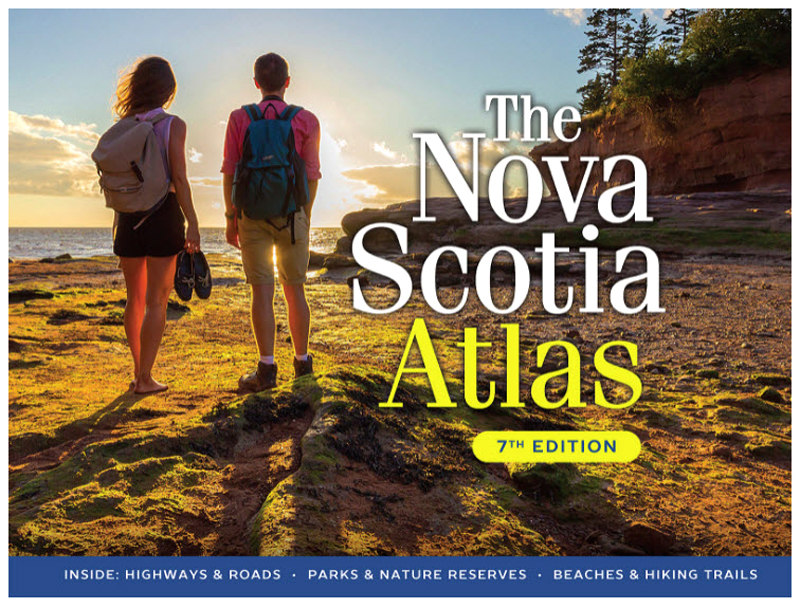
When you drive through the Rawdon Hills from Windsor to Truro on Highway #236 you cross the Shubenacadie River at South Maitland. This part of Nova Scotia has had links with the scientific community and literary community that go back two hundred years. And yet the region is small and finite, centred on Truro extending down to Windsor, across to Parrsboro, and on the North shore from Pictou to Pugwash. It covers less than ten pages in the Nova Scotia Atlas (1:150,000. 90 pages).

Sanger’s book is difficult to review. The other three essays are Biorachan Road, The Crooked Knife and Keeping: the Cameron Yard. My best recommendation is “read it”; check it out, from the library, especially the last essay, Groundmass, for the relationship between words and place.

Acknowledgements

Edward added the graphics. Heather shared in the reading and the travel.

References

Peter Sanger, 2002, Spar: Words in Place, Gaspereau Press.

Province of Nova Scotia, 2019, The Nova Scotia Atlas, 7th Edition, Formac Publishing.

Postscript

Apologies for two blogs on consecutive days. I had to go back and read Sanger’s book a second time.

BTW. For a good laugh, check out YouTube from Edward in the Comments to the previous blog.

Posted in Book Review

Words in Place

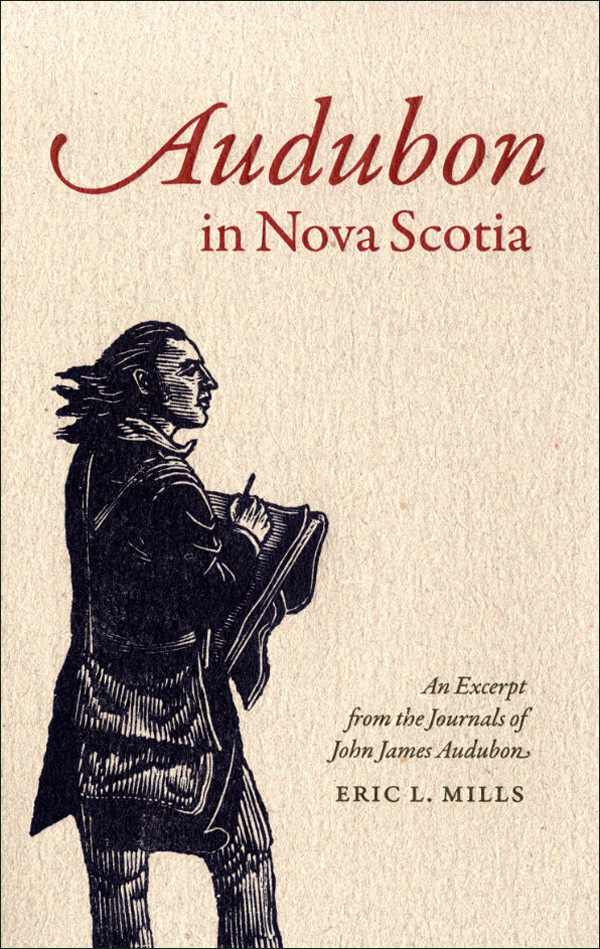
On our way home from Heather’s eye check-up in New Minas, we stopped in Kentville. I was looking for a copy of Peter Sanger’s book Spar: Words in Place. I went to the office of the Gaspereau Press. I was not disappointed. I found a single copy; as well, I picked up Audubon in Nova Scotia by Eric Mills.

From Sanger’s Foreword:

These essays are pauses during which I looked at a map. Their concerns are the ways in which we take words with us when we journey, what they do with our conversation while we travel, and how we may learn to live with their consequence when we have found a destination. p.13.

I remember reading the first essay, Biorachan Road, sometime after we had walked the same route. Perhaps, as part of our ’Road to Georgetown’ trek.

Eric Mills describes Audubon’s trip from Pictou (August 22,1833) to Windsor (August 29, 1833) via Truro and Halifax. it is an excerpt from Audubon’s journal.

”What had brought this British province to Audubon’s attention? It had to be one, or perhaps both, of two connections involving bird collection, both centering on the educator and Presbyterian clergyman, Thomas McCulloch, who at that time lived in Pictou.

McCulloch established the Pictou Academy, providing education beyond grammar school level to local youth. McCulloch’s philosophy of education was broadly based. He believed that Nova Scotian students should receive an education not based solely on the classics, but on knowledge useful to students and their communities. In this, religion, the classics and especially knowledge of the natural world were of prime importance. And the natural world could be taught well with the aid of equipment for experiments in the physical sciences and the use of museum collections, primarily animals, notably birds.’ p.18. Sounds relevant today!


This morning, we stopped at Joanne’s Cafe, Chocolates and Books in Annapolis Royal. I found a copy of Buckler’s Whirligig and an old school book from the Baddeck Rural High School Library. The Land and People of Canada by Frances Ross, published in 1947. More reading.

Acknowledgements

Heather shared the book discovery travel from Kentville to Annapolis Royal. Edward added the graphics.

References

Peter Sanger, 2002, Spar: Words in Place, Gaspereau Press.

Eric L. Mills, 2018, Audubon in Nova Scotia, Gaspereau Press.

Ernest Buckler, 1977, Whirligig: Selected Prose and Verse, McClelland and Stewart (eBook link)

Frances Aileen Ross, 1947, The Land and People of Canada. Longmans, Green and Co.

Posted in Book Review

Field Work

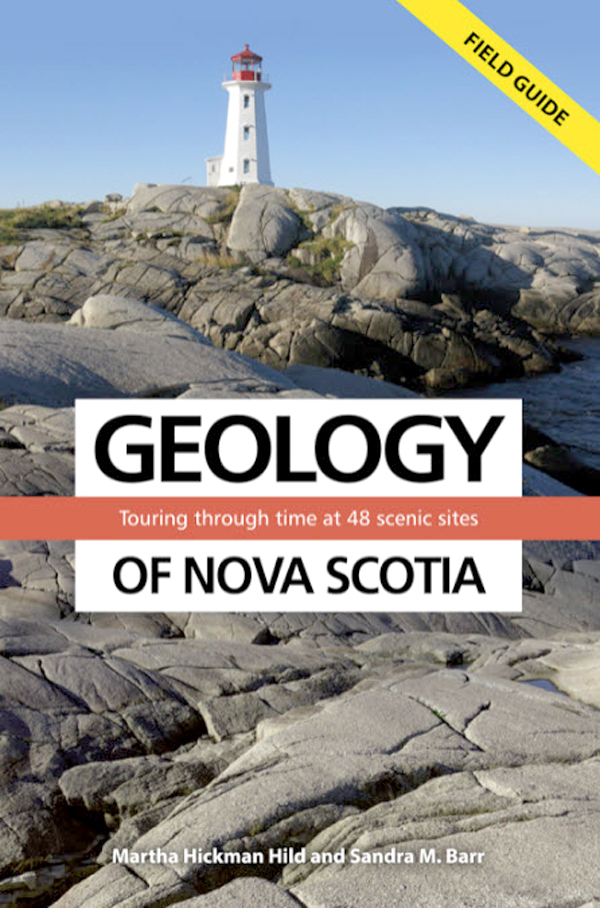
Heather and I were discussing changes in the landscape. She pulled off the shelf, Geology of Nova Scotia.

The field guide by Hild and Barr describes forty-eight sites across Nova Scotia, divided into three sections: Foundation, Meguma, and Pangaea. Looking forward, we have grandchildren who are interested in geology and the natural landscape. Now is the time to add geological sites to our search for waterfalls. The field guide gives a trip planner, maps, and specific points of interest.


As we approach the Christmas Season, The Reader is full of events and celebrations: Christmas market in Clarence, vermiculture workshops, the Bridgetown Motor Inn under new ownership.

We drove through Clarence, our old house between the Elliots and the vanRoestels has been removed without a trace. The Bent farm now extends west from the Mount Hanley road towards the Fitch Road.

In Paradise, besides the sale of Andrew’s farm opposite, our neighbours to the west, have sold their property. Rural Nova Scotia is changing. It’s a new demography.


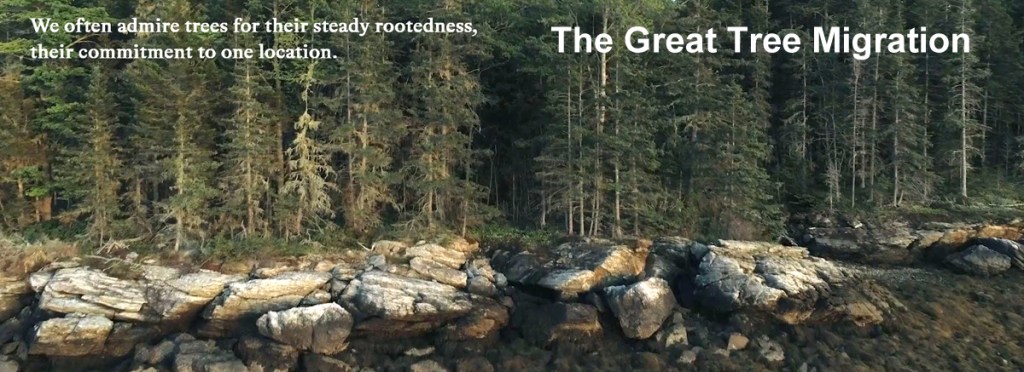
Sunday morning, I receive by email Emergence Magazine and the Marginalian. Emergence Magazine includes the essay ’They carry Us with Them’.

The great tree migration explores tree migration in Maine, from the perspective of black ash, sugar maple, paper birch and red spruce.

Acknowledgements

Heather rediscovered the Field Guide, Geology of Nova Scotia, and recognized the growing interest of our grandchildren. Louis Falls continues to produce The Reader each week, including the Word Search puzzle. Edward added the links and graphics.

References

Martha Hickman Hild and Sandra M. Barr, 2015, Geology of Nova Scotia: Touring through time at 48 scenic sites, Boulder Publications.

Emergence Magazine, November 7, 2021, They Carry Us With Them: The Great Migration.

The Reader, November 5, 2021, Vol 13, Issue #42. A Free weekly paper serving the communities and people of Annapolis County.