
The Inside Story in Greenwood (previously owned by Edward and Anne Wedler) maintains a good collection of books by local authors. I picked up Allison Mitcham’s Prophet of the Wilderness . It is a biography of Abraham Gesner (1797-1864). Gesner is perhaps best known for the invention of a new fuel ‘kerosene’. He also wrote the first treatise on the geology and mineralogy of Nova Scotia. From Mitcham’s title, Gesner was a prophet about the future of the wilderness, in this case, Nova Scotia. Although he also conducted significant field research in New Brunswick. My blog title is a wordplay on how we can profit from this landscape.
On Friday, I arranged for a meeting with Celes Davar (Earth Rhythms) and Ed Symons (Community Mapping at COGS). The broad topic was experiential tourism and the different methods for telling our stories. What is the role that maps and mapping can play?
This sent me off in a slightly different direction. I am less interested in telling stories that can be consumed by the visitor, but rather the stories which we share between residents of this landscape.
For example, I have been checking the writing and life of David Manners. Yesterday, I received a note from the library that soon I will be able to read his second book, Under Running Laughter.
 Last night at the Centrelea Cinema, there was a showing of Dracula (1931), featuring the actors Bela Lugosi and David Manners. It was wonderful to be in a community hall, being served popcorn, and able to watch an actor who had spent time, here in the community in the ’20s.
But the real story is as follows. Not only had a small group of citizens arranged the film series, with Dracula as the kick-off event, but they had arranged for the technology and the movies to be available. AND, before the main feature, there was a screen welcome to the Centrelea Cinema and a short cartoon. How does that happen? How do those skills reside in Centrelea? What other skills reside in this empty space or ‘wilderness’ called ‘rural Nova Scotia’?
Acknowledgements
To Ed Symons and Celes Davar for a fruitful conversation. Please check earthrhythms and codsounds web sites. To Anne Crossman and Nancy Godfrey for the movie night in Centrelea. Edward Wedler for editorial and graphics skills.
Footnote
From Henry Thoreau, A Week on the Concord and Merrimack Rivers
‘In my short experience of human life, the outward obstacles, if there were any such, have not been living men, but the institutions of the dead. It is grateful to make one’s way through this latest generation as through dewy grass. Men are as innocent as the morning to the unsuspicious… I love mankind, but hate the institutions of the dead un-kind’.
See Brain Pickings February 24,2019 for the larger context.
References
Allison Mitcham. 2018. Prophet of the Wilderness. Nimbus Press.
Brain Pickings. February 24,2019
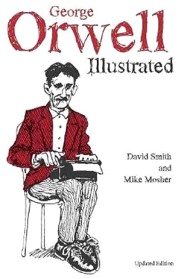 Back home, in my own comfort zone, I can heartily recommend George Orwell Illustrated. It is very accessible, with cartoons by Mike Mosher. It has two parts: Orwell for Beginners and Planet Orwell. In the second part, there is a human rights manifesto, co-authored by Orwell, with Bertrand Russell and Arthur Koestler. This returned me to my sixties reading on ‘Beyond Reductionism’, including contributions from Koestler, van Bertalanffy and CH Waddington. Other familiar Koestler titles were The Act of Creation and The Ghost in the Machine.
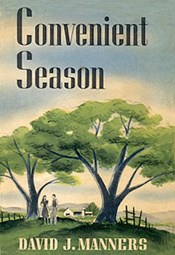 David Manners book:
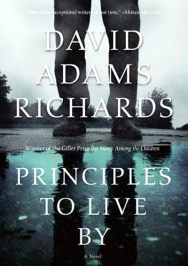 David Adams Richards book
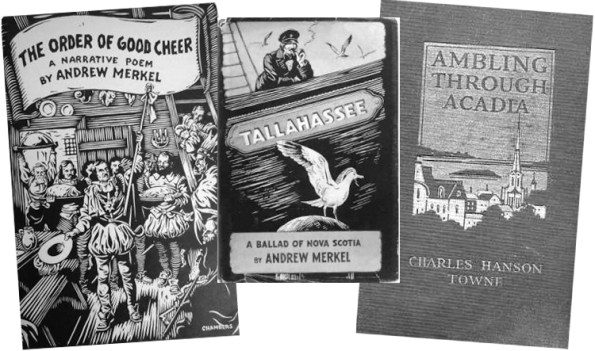 Evidence suggests that there has been a long tradition of self-publication in the Annapolis Valley. Anne Crossman arrived with a canvas bag full of books by local authors. Two notable historic treasures were Andrew Merkel’s narrative poems, The Order of Good Cheer and Tallahassee. Both published by Abanaki Press, Lower Granville, Annapolis County 1946. Second, Charles Hanson Towne’s Ambling through Acadia, 1923. It describes a trip from Yarmouth along the Annapolis Valley – Digby, Bear River, Annapolis Royal, Bridgetown, Wolfville to Halifax, with a side trip to Parrsboro.
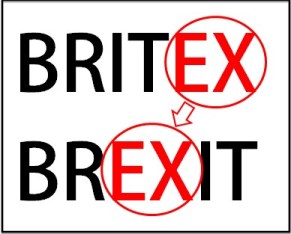 As we were discussing the relationship between ‘place’ and ‘writing’, I remember an earlier blog by Dick Groot on Highway #201 and the BRITEX plant in Centrelea. Centrelea was the home base for Ernest Buckler.
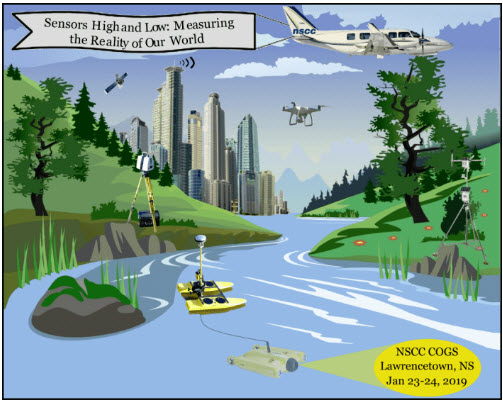 On Wednesday and Thursday (January 23 and 24th), COGS in Lawrencetown is hosting a two-day conference, entitled: Sensors High and Low: Measuring the reality of our world. A draft copy of the
 In the documentary, there was a focus on Energize Bridgewater, perhaps Annapolis Royal could play a similar focal role with Land Use. If so, they may seek to collaborate with the Centre of Geographic Sciences, Lawrencetown and develop current maps and statistics on the status of the forest, agriculture and other land use types in the County.
 From the audience, the comment was made that ‘we only have twelve years’. How can we organize resources that go beyond the Centre for Local Prosperity and the Municipality of Annapolis County? What can we do to change our institutions: provincial and municipal government, as well as schools and post-secondary education institutions? How do we fully utilize the creative human resources in the region? Are we taking full advantage of town hall-style meetings? We need to continue to keep looking everywhere for good ideas, innovation, and where appropriate new technology. Conversely, we need to share the special resources that we have locally with other communities. The impossible becomes an opportunity.


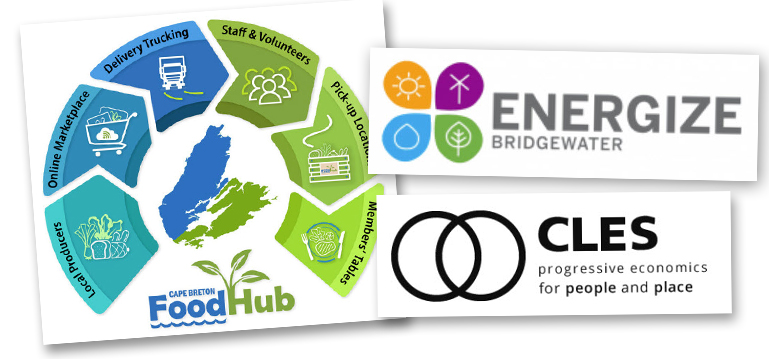 What did I hear? A number of stories, about pilot projects in Atlantic Canada. Specific Nova Scotia examples included the Cape Breton Food Hub, Energize Bridgewater. For import replacement, there were successful models in the UK (Preston, Lancashire) and in the USA (Cleveland). The concept is to replace the demand for goods and services by 10% (or more) by local procurement.
 Examples of local need and local producers included:
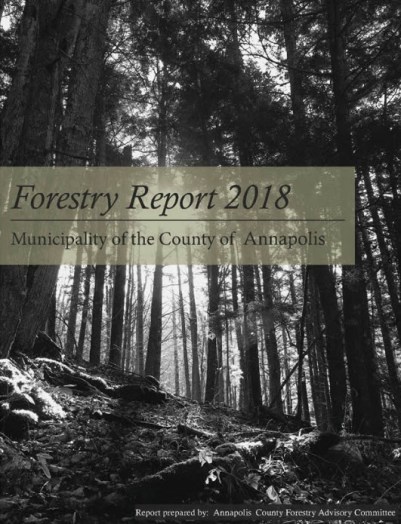 It was forwarded to me by Gregory Heming, Chair, Forestry Advisory Committee. It is a summary of their initial research and makes a set of recommendations to council. The primary recommendation is to adopt the ‘Climate Forest’ paradigm.


