For the last two weeks, I have been visiting friends and family in England. Specifically, I stayed in Byfleet, Surrey.
 My original intent was to meet my brother for a nostalgic walk throughout our childhood neighbourhood: Twickenham, Whitton, Hounslow, and Hampton. This was abandoned when a winter storm hit England and Europe (the Beast from the East) and he was unable to join me.
But, lets start from the beginning. I left Halifax for Heathrow airport reading Richard Holmes This Long Pursuit. By the time I had landed, the book was finished. I was up to date on the confessions of a Romantic Biographer. Filled with essays on the lives of Keats, Shelley, Byron, Coleridge and Blake.
First stop was the Royal Horticultural Society (RHS) gardens at Wisley. The large greenhouse had its annual display of tropical butterflies. On entering the gardens, I noted that the RHS Library had a book sale. This led two purchases. At the end of the visit, we ended up at the shop. There is a section of the store dedicated to gardening and the English landscape. With future walks in mind, I walked away with seven additional purchases (see references below).
As I pondered on my childhood days in England, I recalled listening to BBC Radio 4. When I found Caroline Hodgson For the Love of Radio 4, there were two quotations that struck a chord.
‘Robin Oakley relates that Jeffrey Archer once said to him that the world is divided into those who know how to make money and those who don’t. You, Robin, are in the second category !’ I guess that Bob Maher is in the second category too. p.89
(Jeffrey Archer is a British ex politician and story teller)
Talking about the program, Letter from America by Alistair Cooke:
‘It is perhaps the ultimate audio blog, and like all good bloggers Cooke knew that his words were intended for an audience rather than the product of a mere navel-gazing exercise’ p 232
This left me thinking, well who is my audience ?
I found a partial answer when I was reading The Spectator. Hugh Thomson reviewed two books under the title ‘A Drizzle of Nature Writers’. He reviewed books by Tim Dee and Paul Readman (see references). Readman references George Orwell (ah-ha):
‘the world centres around the English village, and round the trees and hedges of that village, rather than the houses and the people’.
Readman concludes his book:
‘ we still like to define ourselves as an essentially rural nation, despite all indications to the contrary’
or from Orwell:
‘There is no question that a love of what is loosely called Nature is widespread in England’
Leaving Thomson to state:
‘The fact is that those who really have to deal with Nature have no cause to be in love with it’.
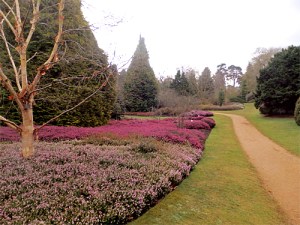 These literary digressions have to be put in the context of my time in England. Most days there was the opportunity to walk through the Surrey landscape. This included Windsor Great Park, Richmond Park, the River Wey Navigations. One trigger for me, was the branding of The Royal Landscape. To park your car and go for a walk through Savill Gardens or the Heather Gardens, you could purchase a membership card to The Royal Landscape. Likewise, if you were a polo player, you could do the same.
This raised the question of land ownership in Surrey. There are numerous estates, clubs, golf courses in this part of England. How does this contrast with rural England or rural Nova Scotia? My tentative conclusion is that they are totally different worlds, with very different sets of values.
My take home message, besides the books, is to research in more detail the writing of George Orwell, and then to move to the present day and look at current writers on ‘the houses and the people’.
One final story. At Waterstones, I noticed a small book (an essay) by Robert MacFarlane, The Gifts of Reading. The essay is only thirty four pages long. I purchased five copies to give away as gifts. From p 19, where MacFarlane references The Gift by Lewis Hyde.
“Gifts give on”, says Hyde, this is their logic. They are generous acts that incite generosity. He contrast two kinds of ‘property’: the commodity and the gift. The commodity is acquired, and then hoarded, or resold. But the gift is kept moving, given onwards in a new form. Whereas the commodity circulates according to the market economy, the gift circulates according to the gift economy. In the market economy, value accrues to the individual by means of hoarding or ‘saving’. In the gift economy value accrues between individuals by means of giving and receiving’.
What exactly has happened through the branding of The Royal Landscape? Is it a commodity? What is meant by the term ‘Middle England’? Is that the new ‘middle class’ in England?
References
Richard Holmes.2016 This Long Pursuit. Harper Collins, London.
Caroline Hodgson. 2014. For the Love of Radio 4. An Unofficial Companion. Summersdale Publishers Ltd.
At RHS Booksale
Peter Alfred Please. 1997. Holine – A British Journey Bulletins from the Wayside 1950-1997. Away Publications
Michael Leapman. 2000. The Ingenious Mr. Fairchild. The Forgotten Father of the Flower Garden. Headline Books.
At the RHS book store.
Rob Cowen. 2015. Common Ground.Windmill Books.
Nicholas Crane. 2007. Great British Journeys. Weidenfeld and Nicholson.
Nicholas Crane. 2016. The Making of the British Landscape.From the Ice Age to the Present. Weidenfeld and Nicholson.
Matthew Engel. 2014. Engel’s England. Thirty nine Counties, One Capital and One Man. Profile Books.
Kathleen Jamie. 2012. Sightlines. Sort Of books
Nan Shepard.2011. The Living Mountain. Canongate Books
Christoper Somerville. 2017. The January Man. A Year of Walking Britain. Black Swan.
Hugh Thomson. A Drizzle of Nature Writers. The Spectator. March 3, 2018. p 48.
He reviews books by Tim Dee and Paul Readman.
Tim Dee (ed). Ground Work: Writings of People and Places.
Paul Readman. Storied Ground: landscape and the shaping of National Identity.
Robert MacFarlane. 2016. The Gifts of Reading. Penguin Books. 34pp.
Thanks as always to Edward Wedler for his graphics capabilities.

 Passing by Nuttby Mountain, we remembered the Hermit of Gully Lake, written by Joan Baxter. Further along the Berichan Road, I was reminded of Peter Sanger’s book Spar: Words in Place. We also recalled attending ‘
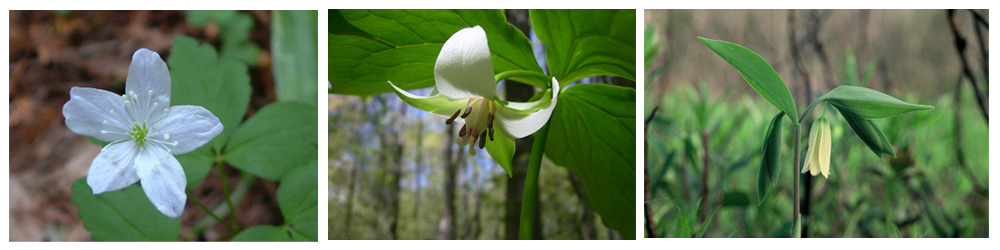 We found Anemone (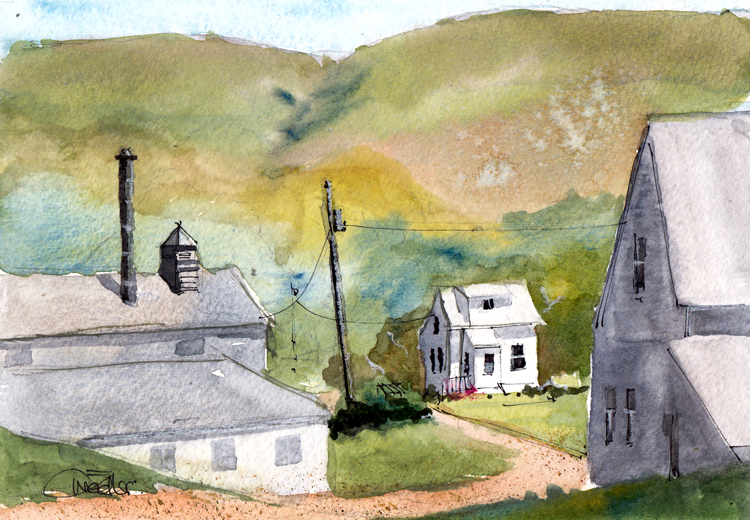
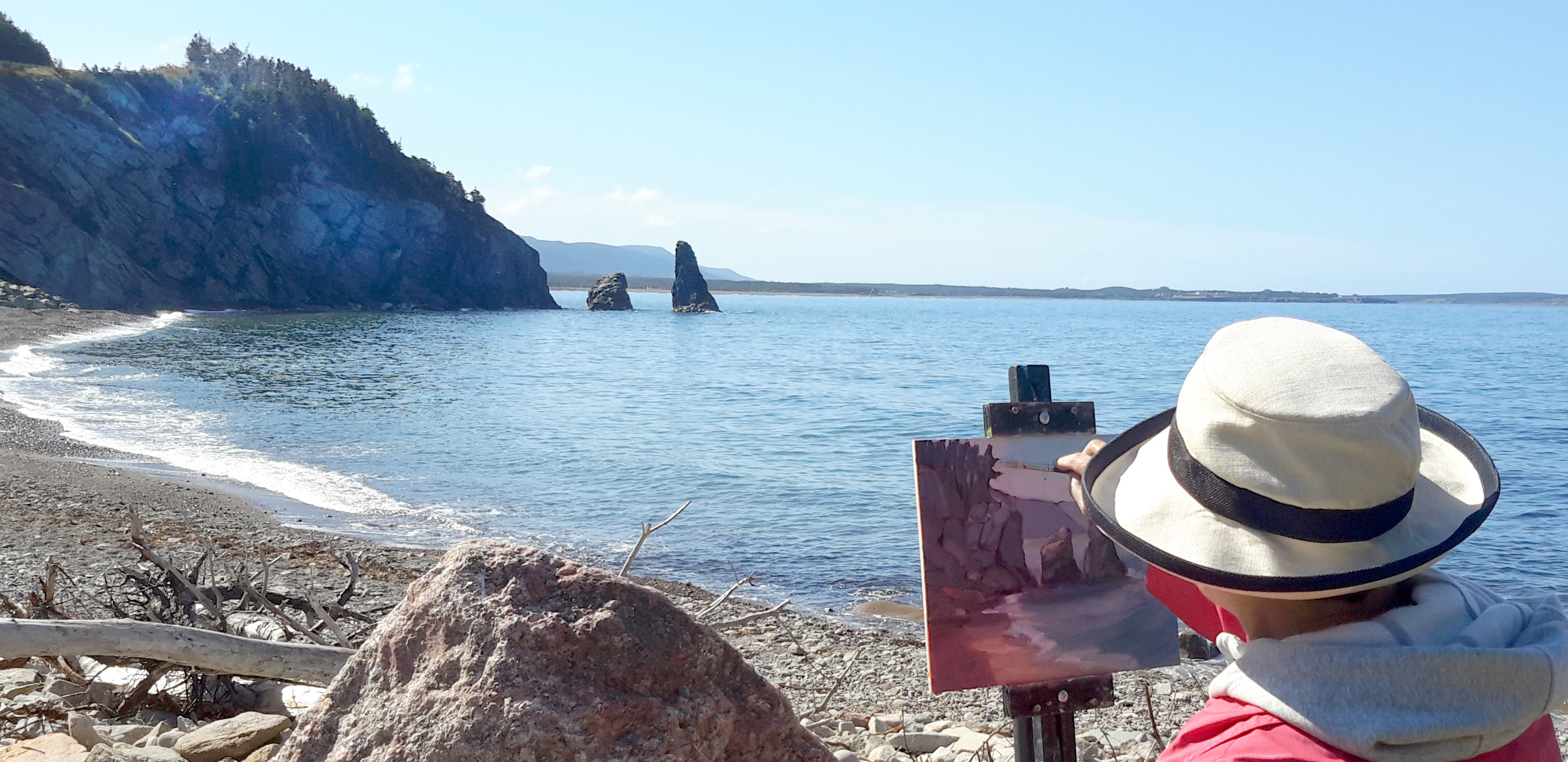 While painting Pillar Rock from Presqu-île, near the southern part of the Cape Breton Highlands National Park, we noted dozens of visitors come for a few minutes to snap photos then move on. Did they see the otters swim the nearby pond? Did they note how the sun lit up the rocky shoreline as it rose above Jerome mountain? Did they hear the high-pitched piping notes of the eagle?
 At the other extreme, we were greeted several times by the “
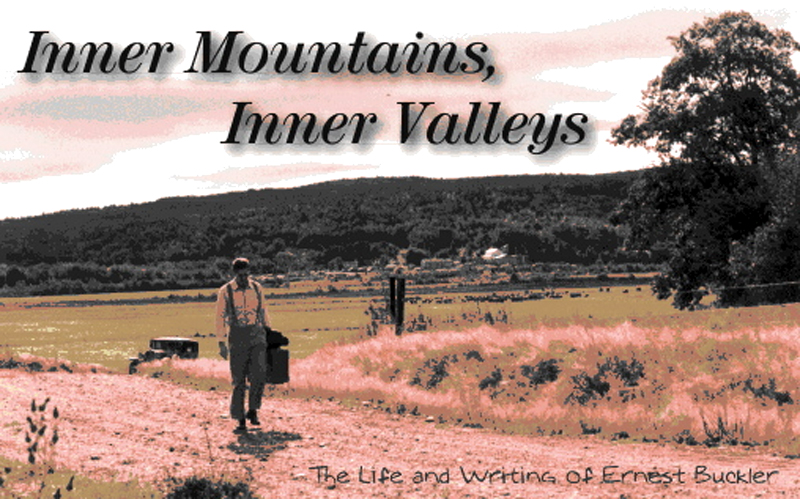 This set the scene, giving us a biography of Buckler’s life. Later in the program, we listened to readings by Ken Maher, Anne Crossman and a play “A Glance in the Mirror‘, featuring Ken Maher, Gordon Keel and Gloria Saesura.
 One last story, related to the event. On Friday, Heather and I were in Windsor to pick up a couple of rain barrels. We stopped at the Readers’ Haven, a second-hand bookstore in town. I found a copy of John DeMont’s earlier book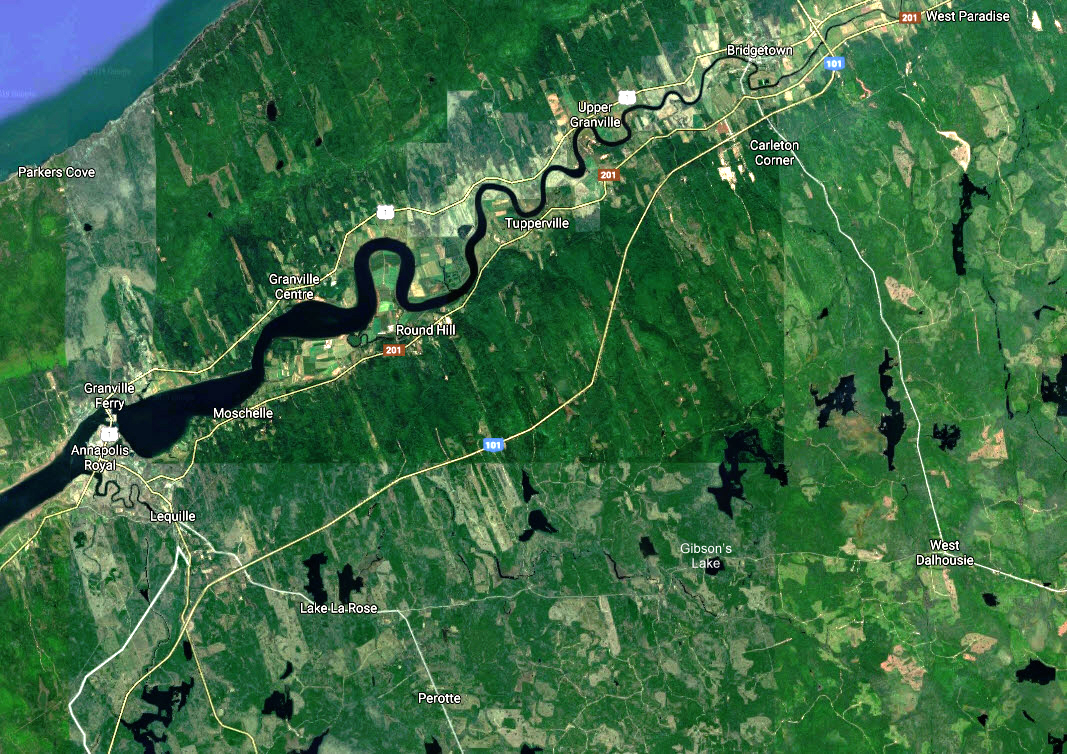
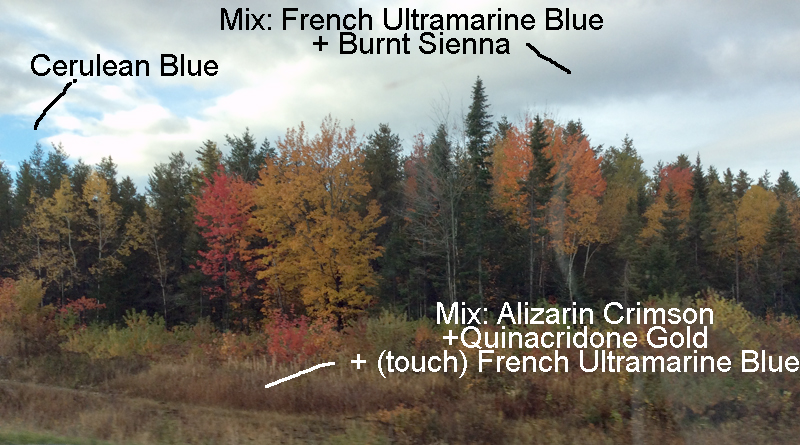 The sky wasn’t just overcast or sunny. The sky was a mix of Burnt Sienna with a touch of French Ultramarine Blue or was a variegated wash from Cerulean Blue to Cadmium Yellow. We were not just engulfed in fall foliage of colours. Hills became brushstrokes of Alizarin Crimson, Quinacridone Gold (I love that colour) and Prussian Blue.
 We divided the landscape into zones (foregrounds, mid-grounds, and backgrounds) and described how we would paint aerial perspective, “treat edges” and change tonal contrasts, to give a sense of distance.
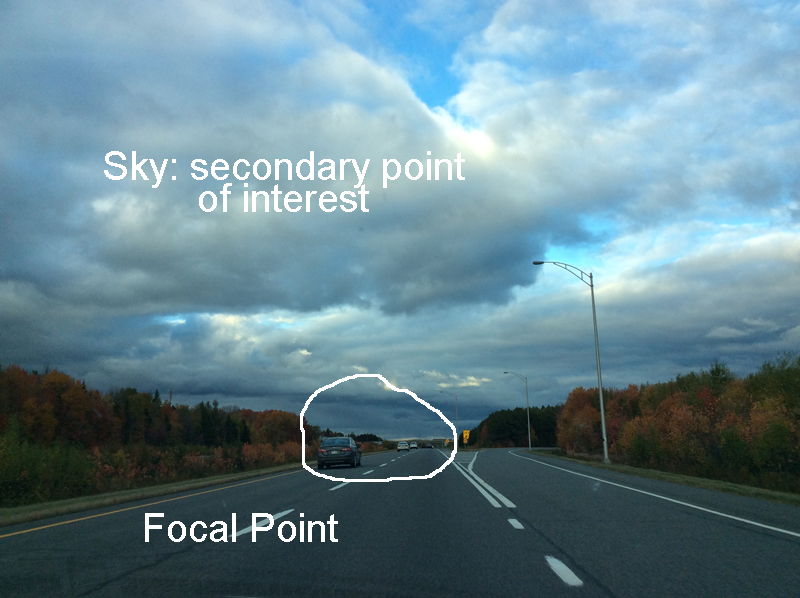 Many times we would identify a focal point in the landscape (almost with “eye-spy-with-my-little-eye enthusiasm) and would suggest ways to direct viewers’ eyes to that point. Would it be the slope of the hills, the line of our winding road, edges of forest stands or the illumination of light breaking through the clouds? How would our favourite artists, or The Group Of Seven treat that focal point?
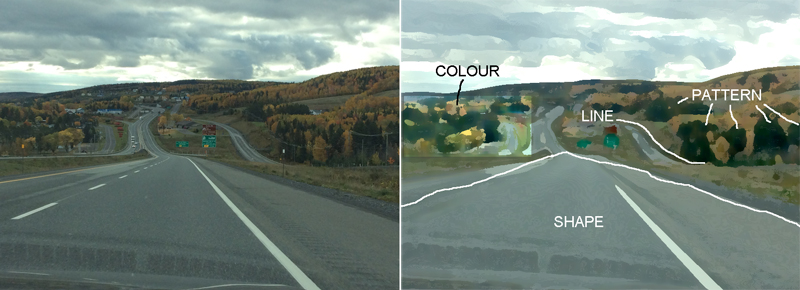 As we drove, we unpacked our landscape NOT in terms of “things” (such as houses, fence rows, barns, silos or cows) but in terms of shape, line, colour, patterns, gradation and composition. We became exhilarated, as artists, to not only view the landscape but to offer ways to interpret the landscape — whether it be as a realist, impressionist or abstract artist — in oils, acrylics, watercolours or inks.
 POSTSCRIPT:
 This Christmas, we decided to send
 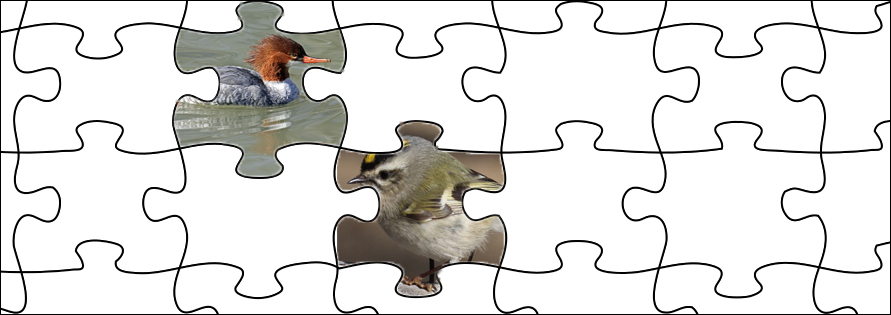 Last Thursday, it was the Christmas bird count. It was a cold (-15C) windy day. The birds were sparse. In the morning, we walked up the Inglisville Road to the top of the mountain, and then back down through our property for lunch at home. In the afternoon, we went down through Andrew’s property to the Annapolis River. We saw a Golden Crested Kinglet flitting around the upper branches of the poplars. On the river, we spied a Common Merganser.
 The Annapolis River was full of floating ice pans. The highlight was to see two river otters who were curious to see two humans on the bank.
 In Annapolis Royal at Bainton’s bookstore, I picked up Kent Thompson’s book Getting out of town by book and bike. It is an entertaining read, including the idea: “every now and again, I get on my bike and ride to a small town public library to look for Anna Karenina“. Thompson visits both the towns and writing of Ernest Buckler (Centrelea, West Dalhousie) and Elizabeth Bishop (Great Village). Writing of both EBs is of interest to me, and likely, to Nova Scotia.
 In this same spirit, Heather was reading Waterfalls of Nova Scotia. It describes one hundred waterfalls. Number #19 is Eel Weir Brook Falls up behind Lawrencetown on South Mountain. While a short hike, it gave us an excuse to ‘get out of town’.
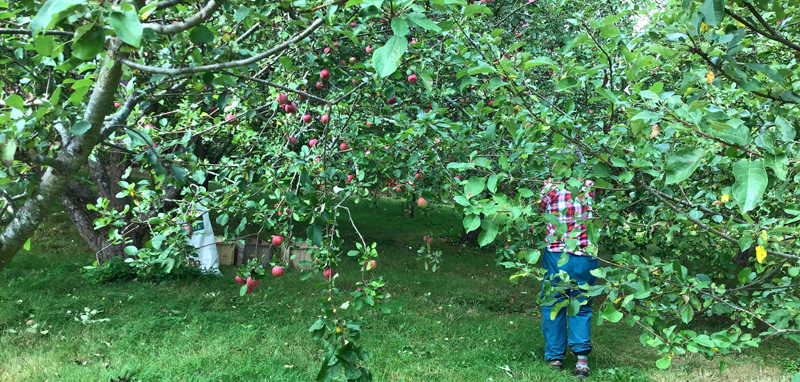 After a week in the orchard picking apples with ladder, picking bag and hook, I can appreciate the pleasure gained from low hanging fruit. However, it should be recognized that the best apples are found in the top branches of the tree. The low hanging fruit tends to be found on the side branches; smaller apples, more of them, but easily available for hand picking. There is no need for the combination of technology: ladder, picking bag and hook.
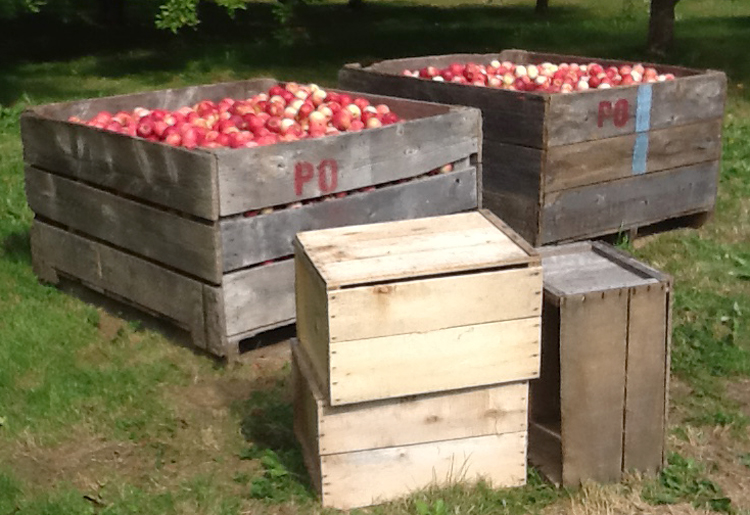 At the end of the week, we were able to celebrate ten bins shipped to Brian Boates for juice that will be a component of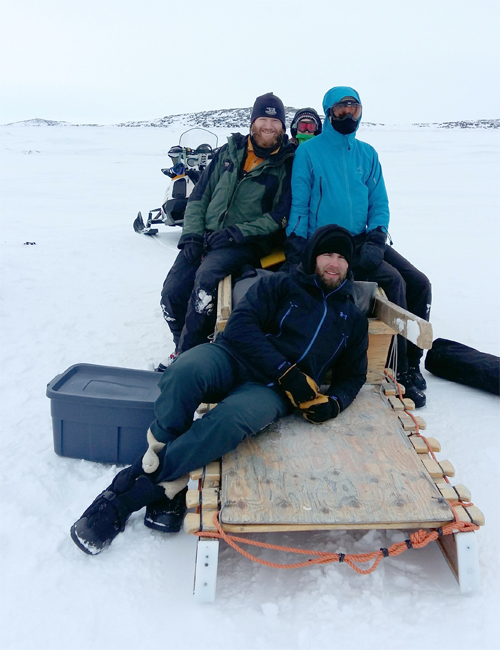

 Ernest Blair Experiment