Today, we drove home from New Glasgow to Middleton; clear blue sky and a carpet of white snow on the fields.
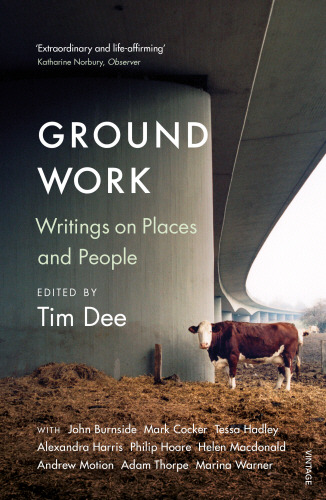
This week, I was reading the short essays from Tim Dee’s (Ed.) Ground Work: Writings on Places and People. The contribution by David Matless’ “Seaview: the Anthroposcenic” caught my attention. In particular, this description.
“Holidays at East Runton; forty years ago, with predictions of a new Ice Age, and in newer hotting times. A beach mile from Cromer, rock pools and sand, the wave cut platform and forest bed. A minute from door to paddle, cliff’s topping to North Sea summer icing, always a chill” p.187.
Our family lived in Whitton, Middlesex. I recall in the early 1950’s, when Dad purchased our first car. We called her ‘Aggy’ because of the license plate. In the Summer, we would head to the East coast, driving around London on the North Circular. We would rent a caravan at East Runton. This gave us easy access to the beach.
Christmas would not be the same without watching Mr. Bean. Likewise, it would not be the same, without making an English trifle. This necessitated a trip to Sobeys for jelly roll, Bird’s Custard powder and a bottle of Bristol Cream Sherry. This year, I had to go online to make sure that I had all the ingredients, including the whipping cream, glacé cherries and peach halves.
P.S. David Matless, Professor of Cultural Geography at the University of Nottingham, is author of ‘Landscape and Englishness’. (2016).
Reference
Acknowledgements
My brother, Peter, will likely recall both Aggy (AGI) and SeaPeeO (CPO).
Tim Dee (ed.), 2018, Ground Work: Writings on Place and People, Penguin Books
We have passed the trifle recipe on to the next generation.
On Friday evening, before our first Winter snow storm, we went to Bridgetown library. Caleb Miles was the on-duty librarian. I picked up the November issue of Rural Delivery, and Journey, Celebrating the Journey Prize. Selected short stories 1989-2023, edited by Alexander MacLeod and Souvankham Thammavongsa.
Rural Delivery published by Dirk van Loon has been going since 1976 (48 years). Articles of interest included Steve Skafte ‘ Fall of the House of Esser, Delaps Cove, NS. And Peter Redden ‘ Highly Motivated. Maritime Hand Mowing championship marks its 20th. Anniversary’. Peter was a neighbour of ours, living in Paradise on Highway #201.
Alexander MacLeod attended one of our Ernest Buckler Literary Event Society (EBLES) events in 2017. His most recent collection ‘Animal Person’ was named ‘ Book of the Year’ by the Globe and Mail and CBC books.
Today’s The Marginalian by Maria Popova includes ‘How to have enough: Wendell Berry on ‘Creativity and Love’. I have referenced his writing in previous blogs.
Our preparation for Christmas includes Shepherds Pie, Red Currant Jelly and fruit cake.
But for now, we must wait until tomorrow to see if there are snow-cleared roads between Middleton, in the Valley, and New Glasgow.
Postscript
Edward remains down South, away from the first snow storm of the Winter. This means that there will not be his usual cross- referencing to earlier blog entries, or appropriate graphics.
Edward is away in Florida. Hence, there will be no graphics or links with this blog.
At this time of year, it is perhaps appropriate to reflect on the supportive network available through the Internet. In my last blog post, I made reference to the work of Allen van Newkirk. Edward searched on his name, using Open AI Chat GPT. His second request was a Summary of Ernest Blair Experiment blogs for 2024.
As a result of this collegial initiative, I found that I had referenced van Newkirk in an earlier blog, ‘Books and Memory’, May 4, 2020.
This, in turn, raised another question. I have hard copy of all blogs that go back to 2013. Should I consider curating this collection ? At some point, this material may disappear from the Internet.
Edward’s support raises more questions. He used AI to generate a summary of the 2024 blogs. Would it be useful to use AI to summarize the changes in blog topics from 2013 to the present ? Have there been changes in the subject matter, or thinking ?
This morning, Anne Crossman sent me an electronic copy of her weekly column ‘ Christmases I have known’, dated December 19. This was followed, later in the morning by a Jacquie Lawson Christmas e-card. Again, a sign of the times.
Regardless of the technology, it is a delight to have access to a cadre of individuals who have complementary skills, who can help navigate the new world.
Meanwhile, we have discovered in suburban Middleton, that there is a neighbourhood watch, supported by the same technological network.
Postscript.
Today, Friday Heather and I went to Kentville hospital. We wanted to be tested for COVID, prior to visiting New Glasgow for Christmas. Now we wait for the results.
In Kentville, I stopped in at Gaspereau Press, coffee at the Half Acre Cafe and Tides Art Gallery. At the Gallery, I heard that Dick Groot passed away last month. He left an unfinished book on the Harvest Moon trail.
Acknowledgements
Our human networks are well complemented by the online environment. Thanks to Edward Wedler and Anne Crossman. But also, to Heather, and other individuals who provide feedback on my blog posts.
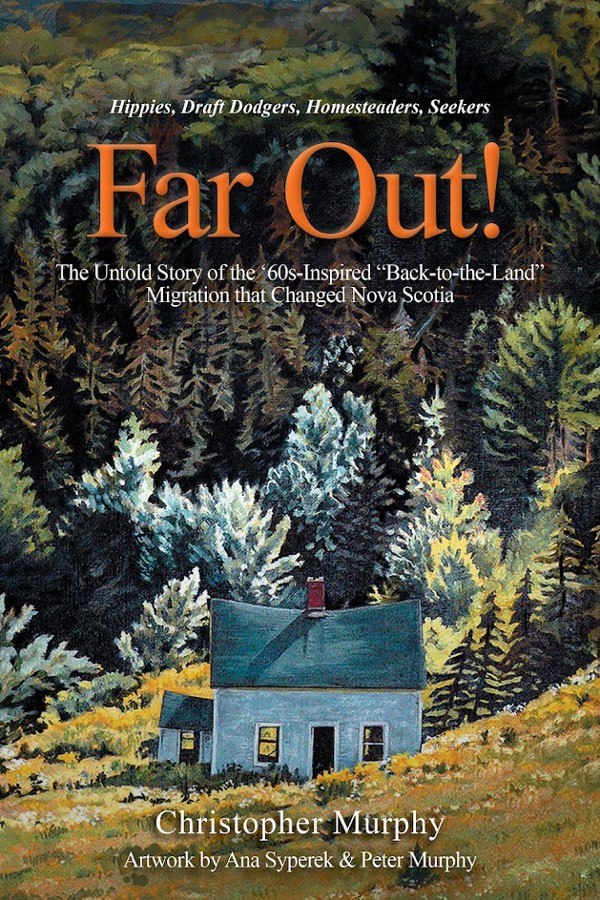
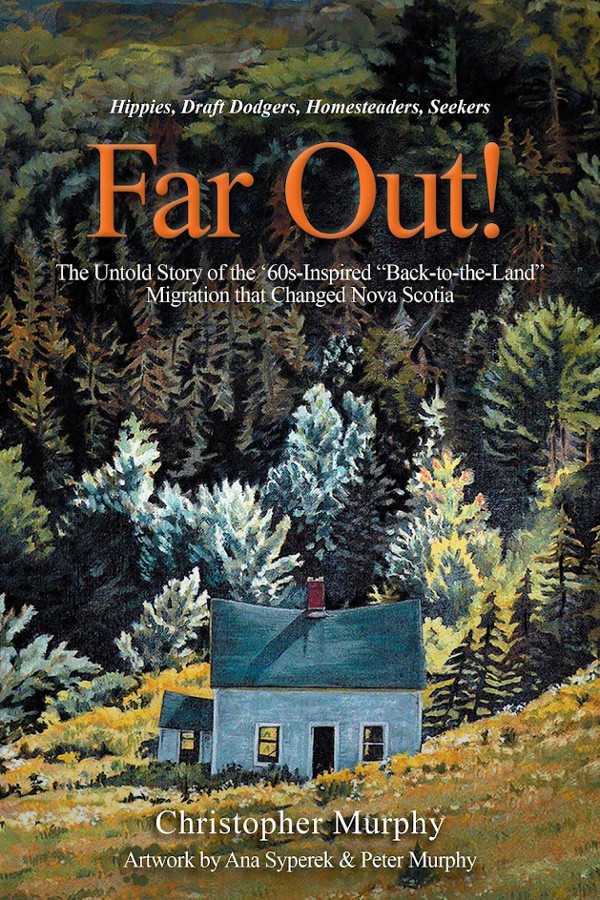
I have finished reading ‘Far Out!’. There were several names that I remembered from times past. For example, Dirk van Loon, publisher and writer of Rural Delivery. There were also some missing.
I recall in 1975, visiting Allen van Newkirk in Heatherton, outside of Antigonish. At the time, I was teaching Biogeography and Quantitative Methods at Memorial University (MUN) in St Johns. Heather and I did not move to Clarence in the Annapolis Valley until 1980.
Looking through the books in our basement, I discovered my first publication ‘Applied Research in Biogeography’ The Great Blafigria Is. volume 2 and 3, page123-132. Coming up to fifty years ago. This was inspired by my interaction with Allen.
This weekend, at Mare Gold, I discovered Les Wilson’ s book on Orwell’s Island. It is subtitled George, Jura and 1984. This takes me back further in time.
It covers Orwell’s life, born Eric Blair 1903, died 1949 ( forty six years old). He had recently finished the classic Nineteen Eighty- Four.
Part of the attraction, besides the description of life on Jura, was that I had taken the combination of Ernest Buckler and Eric Blair to devise an experimental blog: Ernest Blair Experiment.
This weekend, Heather and I walked two Middleton trails. The Scotney Pathway was rather short and unattractive, surrounded by ATV tracks. The second walk was a repeat from the Riverside Park to the Rails to Trails down to the Feed Shop on highway #1 and home. Longer, and more satisfying in its geography (see my post Middleton Walks).
This week has started on a ‘high note’ with an energy assessment of our new home by sustainablehousing.ca. We can expect a full report after the Christmas break.
Acknowledgements
Heather has shared both the reading and the living, over the last fifty years. Edward is en route to Florida, hence the graphics may be slim.
The Great Blafigria Is., 1975, Robert Maher p.123-132. Vol 2 and 3.
POSTSCRIPT
In the New Year, I will go to Integrity Printing and publish Volume 9 2024 of the Ernest Blair Experiment blog.
For more on Allen van Newkirk, search on Safari. OpenAI ChatGPT writes
Allen Van Newkirk is an American activist, poet, and writer known for his work in the countercultural and ecological movements of the 1960s and 1970s. He founded the Detroit Artists’ Workshop and the Resurgence Youth Movement, advocating for radical social change through art, poetry, and activism. Van Newkirk later shifted his focus toward environmental concerns, promoting biocentric values and deep ecology. His writings explore themes of anarchism, spirituality, and the interconnectedness of life, blending political critique with a profound respect for nature.
ChatGPT Summary of the Ernest Blair Experiment for 2024
In 2024, “The Ernest Blair Experiment” blog featured a variety of posts reflecting on personal experiences, technological insights, and artistic journeys.
In May, the author shared a commentary by George Argus titled “Technological Barriers,” expressing skepticism about relying solely on technology to address environmental challenges. Argus emphasized the necessity of ground truthing in remote sensing and critiqued society’s focus on consumerism and economic metrics.
The same month, the author discussed a meeting of the Ernest Buckler Literary Event Society (EBLES), highlighting their commitment to celebrating local writing under the motto “Reading where we live.”
Additionally, the author discovered old newspaper clippings from the Annapolis County Spectator, including articles on place-based economic development and cultural mapping. These articles underscored the significance of geography and history in understanding local development.
In April, the author recounted visits to various cultural sites in Nova Scotia. A trip to the ArtCan Kitchen & Studios café in Canning included encounters with works by geographer Dick Groot and ecologist Soren Bondrup-Nielsen. Another visit to Block Shop Books in Lunenburg led to the acquisition of Rebecca Solnit’s “A Paradise Built in Hell” and Annie Proulx’s “Fen, Bog and Swamp.”
The author also described a serene experience walking the Peter Point trail in Kejimkujik National Park, noting the tranquility of the closed park and minimal human presence.
In December, guest contributor Edward Wedler detailed a 5,000 km plein air painting journey across Newfoundland and Labrador titled “Footsteps Farther East.” Wedler emphasized the immersive nature of plein air art and hinted at future adventures in rural France and Ireland.
Throughout 2024, “The Ernest Blair Experiment” provided readers with reflections on the interplay between technology and environmentalism, the importance of local literature and history, and the enriching experiences of art and nature exploration.
After the election recount, David Bowlby is the representative for Annapolis County in the majority PC provincial government (read my post Joining the Dots).
Heather wanted to investigate the view of our property from the South side of the Annapolis River. We crossed over the bridge to Nictaux and found that we could spot our house and the spire of St Monica’s Catholic Church.
We turned off Highway #10 onto Orchard Drive. It is a cul-de-sac. At the end, we spotted a sign to the Scotney Pathway. When the weather improves, we will check out this addition to our local walks.
Yesterday, I went to CORAH for foot care. I had been living in my hiking boots for too many Winter days. For a reasonable sum, I was able to benefit from the attention of nurse Lillian.
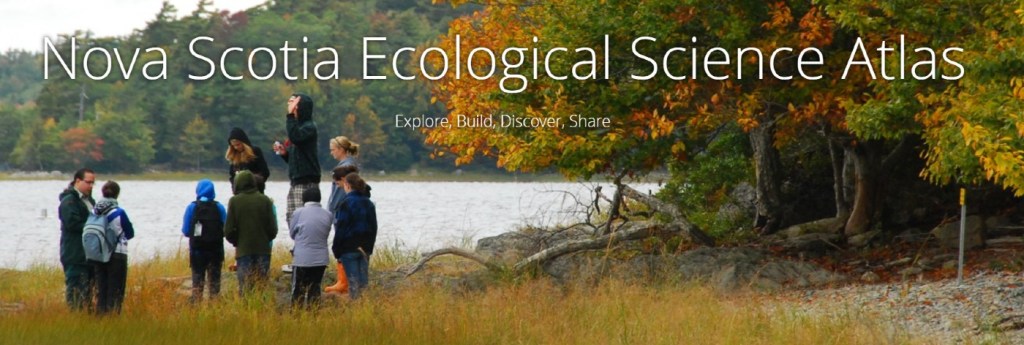
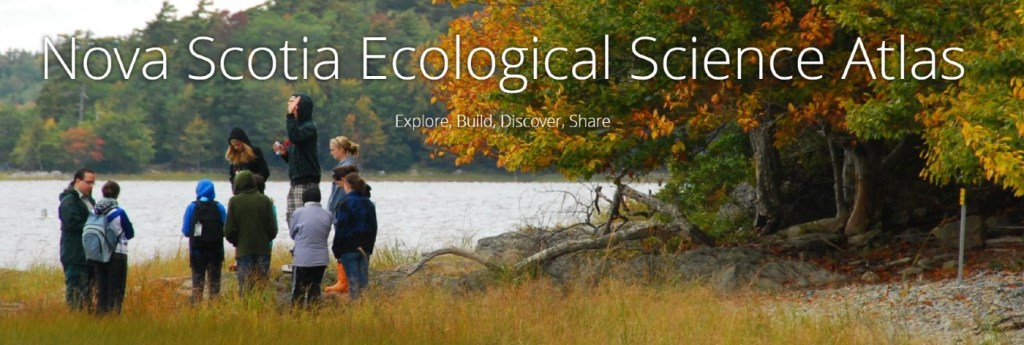
Ann Crossman forwarded to me the link for the Nova Scotia Ecological Science Atlas. “It provides online access to ecological and geographical information for public interest, educators, students, researchers and planners”. It is the result of collaboration between students and staff at the NSCC Centre of Geographic Sciences (COGS), and in collaboration with UNESCO Southwest Nova Biosphere Reserve Association (SNBRA).
They have developed a web-based platform providing easy access to scientific information for our province. HERE is a link to the Atlas as a StoryMap.
Here is a link to the Atlas as a StoryMap (June 2024).
The online chapters include : Climate, Geology, Topography, Freshwater, Coastal/Marine, Forests, Biodiversity, Protected/ Special Areas, Agriculture, Community, Culture/History.
Ann Crossman forwarded the online link to the Atlas. Paul Colville piqued my interest in ‘Far Out’. Edward added the links and graphics. Heather found the Scotney Pathway sign.
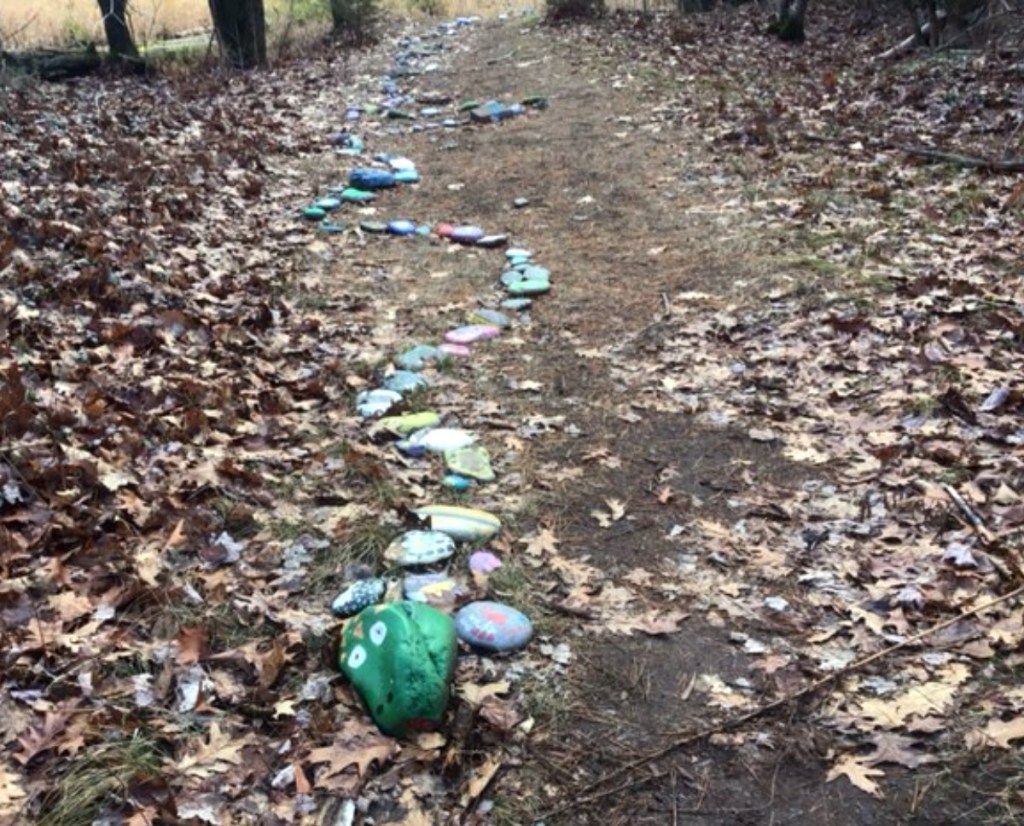
We went to Kingston this morning for a walk in the park. There we discovered Roscoe, the rock snake.
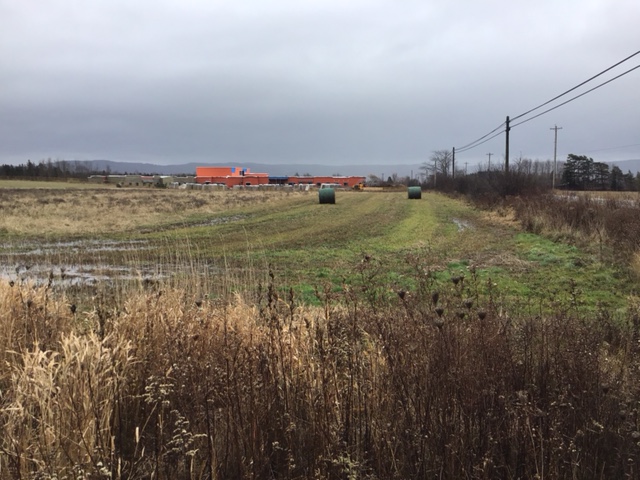
Afterwards, on our return, we pulled off Highway #101 to admire the rows of pumpkins, snaking across the field.
On another note, Frank Fox forwarded a YouTube link from England; an interview between James O’Brien and Guy Shrubsole about his book ‘The Lie of the Land‘.
‘Revealing how a small wealthy elite controls half of England’s land while claiming to be custodians of the countryside’.
From GoGeomatics Canada, I received a notice about LiDAR CANEX 2025.
The moderator is Tim Webster, Research Scientist with the Applied Geomatics Research Group (AGRG) in Middleton.
At The Inside Story bookstore in Greenwood, I noticed that most of the books by local authors, referenced in my previous blog post, were on display and available.
Edward contributed the links and graphics. Frank forwarded the interview with Guy Shrubsole, Jon Murphy, the notice on LiDAR CANEX 2025. Heather shared the discovery of the rock snake and the field of pumpkins.
Saturday was a dreary wet day. In The Reader, I noticed a book signing at Endless Shores in Bridgetown. It was a good excuse for a short drive. We met Cate Wilding. She lives in Port Lorne and has written three novels.
While at the bookstore, I picked up a flier ‘Great Reading Ideas for the Holidays’. It features Allison Maher’s “The Last of Firsts“, DJ Wiseman’s “Cara Rosa” and Sheila Graham-Smith’s “The View from Errisbeg“.
This set me thinking, about the relationship between authors and landscape and goes back to my abiding interest in Ernest Buckler and ‘The Mountain and the Valley’ (read my post The Mountain and the Valley).
What is the relationship between ‘place’ and our perception of ‘geography’?
Given the physical location of COGS (The Centre of Geographic Sciences) in Annapolis County, would there be merit in a book on ‘The Geography of Annapolis County’? (see earlier post Geobiography and the Annapolis Valley)
How would I define Geography?
Going back to my days at the University of Birmingham, it would include: Physical Geography: Geomorphology, Biogeography, Climatology. Economic Geography: Transportation, Settlement Infrastructure, Land Use Resource Management: Agriculture, Forestry, Mining, Fishing. Historical Geography, Regional Geography plus the various methodologies: Cartography, GIS, and Remote Sensing.
Saturday evening, I shared my thoughts over a beer with John Wightman. In particular, I was interested in the different trajectories of the towns: Annapolis Royal, Bridgetown, and Middleton, and the lack of a coherent vision.
John, correctly, expressed a concern that today, rather than think in terms of a book, we need to think in terms of an ‘online electronic presence’.
This led me to Bridgetown on a rainy Sunday afternoon. I wanted to photograph the site of the new building at Mountain Lea Lodge.
Photo by Bob Maher
What are the implications for the economic development of Bridgetown? If the Liberal party was successful in the provincial election, would we see a new hospital in town? Could Bridgetown become a centre of excellence in the long-term care for the elderly and infirmed? Would this attract a new generation of healthcare professionals to the Annapolis Valley? Would they be interested in understanding the Geography of Annapolis County? Would this expand the course offerings and the student population at the Annapolis Campus of the NSCC?
(Edward is unavailable for a few days. I decided to publish without the added value of his graphics and links)
This Fall, I realized that my Canadian passport had expired. Today, it was my top priority to obtain new photographs for the next ten years, and obtain the necessary references. We visited Rick’s Frame and Art in New Minas. Later we stopped at the Service Canada office in Kentville.
Not having a valid passport, certainly focuses the mind. Not that we desperately need to travel, especially to the United States. But if there is a family crisis in England or Europe, we are stuck.
With elections south of the border, but also at the federal ( ?), provincial and municipal level there is a certain drive to understand the impact on the community. In our case, this means Middleton and Annapolis County. In rural Nova Scotia do we really need three levels of government ? How does that address the need for services at the local level ? What we need is more creativity in solving local problems, based on accurate, current geographic information, accessible with today’s technology.
Instead we are being fed centralized CBC coverage, loaded with endless advertising for products and services that do not improve our daily lives.
As a sign of the times, Sunday afternoon, we were enjoying a time-out after collecting up bags of Autumn leaves, when we received a knock on the door from our Premier, Tim Houston with David Bowlby , PC Candidate for Annapolis County in tow.
Meanwhile, I am waiting on three books.
I am waiting to receive my copy of Merritt Gibson, Within the View of Blomidon from the Blomidon Naturalists Society (arrived). From the Inside Story, Christopher Murphy, Far Out, and Bruce Partridge The Joy of Looking from MooseHouse Press.
Acknowledgements
Thank you to Edward for finding the time to apply his technical skills(ignore). Heather also needed to obtain a new passport, and shared the journey.
This project was initiated in 2017. It is another example of collaboration between the NSCC and the community. It complements similar efforts with MapAnnapolis (check out past posts Crown Lands, Buffer Zone, and AGRG at 20) .
This morning, we had to go to Greenwood to pay the bill for furnace maintenance. At this time of year, buying a new house means ensuring that the heating systems are ready for Winter.
Afterwards, we stopped at the Kingston municipal park for a short but colourful walk (read post Happenstance), then stopped at Gouchers for beets and pumpkin.
“ Nova Scotia Ciders: as unique and beautiful as the land itself. Apples were first cultivated in Canada by early French settlers in the Annapolis Valley with planted trees appearing as far back as 1633. Enjoying significant geographic advantages including proximity to the Bay of Fundy, the ‘Valley’ enjoys more hours of sunshine without getting too hot, and a longer growing season than most places in Atlantic Canada, creating a perfect ecosystem – terroir – for growing apples for cider.”
Spurr Brothers in Wilmot is a must stop for local products and its agricultural vista.
Acknowledgements
Heather shared the Autumn drive. Edward added the graphics and links
Postscript 1
It’s tough to prepare two houses for the Winter season. Fortunately, we are able to enjoy the ‘terroir’ and its products. Today we voted online for the Middleton town council. Finished the afternoon, driving from Bridgetown to West Dalhousie, and across to New Albany on Highway #10 home. Again, the colours are stunning !
Postscript 2 from Edward
These days, maps come via various routes, as with the Mi’kmaw Place Names Digital Atlas QR code. I picked this up during my visit to the Lunenburg library this week.









 Ernest Blair Experiment