Posted in biographical sketch

Back Story

Last weekend, I met with John Wightman to discuss the transition from the Nova Scotia Land Survey Institute (NSLSI) to the College of Geographic Sciences (COGS).

John reflected on the structure of the programs, and the need to fill the new building in Lawrencetown.

In 1980, there were three departments: Planning and Cartography, Computer Programming, and Survey Engineering.

John’s objective was to create a technical institute, similar to ITC in Enschede. By adding new technology and faculty, he hoped to develop a relationship with one of the universities in the region.

From a computer technology perspective, this led to programs in Scientific Computer Programming, Business Computer Programming, Computer Graphics, Geographic Information Systems, Remote Sensing, and Business Geographics. Planning and Cartography remained similar with new technology. Likewise, Survey Engineering added Marine Geomatics Engineering to Geomatics Engineering Technology.

On the weekend I met with Bruce Gillis, Lawyer. He was interested in sharing with me the Annapolis County Atlas, produced by the Annapolis County Planning Department in 1984. This proves to be a remarkable document in light of the state of county planning today, 2024 (forty years later).

Both of these meetings shed light on the trajectory of COGS over the last fifty years, and the opportunity to apply both GIS and Remote Sensing technology. Evidently, John had close ties with both the Canadian Centre for Remote Sensing (CCRS) as well as the GIS community through Roger Tomlinson.

Postscript

We went to Hampton Beach. There were a couple of local volunteers cleaning up the old rope and plastic. Apparently, there is a group from Halifax that has taken on this mission. Concern for our marine environment.

Acknowledgements

To John Wightman and Bruce Gillis for their memories of both NSLSI and COGS. Edward added the graphics.

References

Annapolis County Atlas, October 1984, Published by the Annapolis County Planning Department.

Posted in Uncategorized

Lost Posters

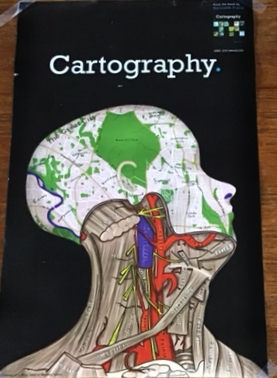
In my cluttered office, I found two posters that define my current thinking — from Esri, “Make Every Place a Creative Space” and a second from Kenneth Field’s book, “Cartography”.


Yesterday (Saturday), Heather and I went to ARTSPLACE in Annapolis Royal. We wanted to see the exhibition by artist Janice Leonard ‘Postcards of Paradise,’ (March 1-23).

These pieces are small 5” x 7” paintings on board. The time of day, place and date are noted on the back, as well as an excerpt from my journal of the day so as to mimic a postcard, an archaic form of communication.

The series of postcards of Paradise, Nova Scotia since 2016, reminded Heather and me of similar scenes we see on our walks around East Paradise, and along the Annapolis River.

Afterward, we stopped at the Brown Dog for lunch. In the Library, I found Thomas Cooper’s “The Roots of My Obsession: thirty great gardeners reveal why they garden”.

On the way home, we decided to take the Spurr Road from Round Hill to West Dalhousie. For old-times sake. Unfortunately, as we passed Wrights Lake and reached the junction with the old Military Road between Annapolis Royal and West Dalhousie, the road was closed (washed out ?). We back-tracked to Round Hill on Highway #201 and home.

Acknowledgements

Edward added the graphics and links. Heather shared the drive to Annapolis Royal and up onto South Mountain.

Reference

Thomas Cooper (ed.), The Roots of My Obsession: thirty great gardeners reveal why they garden, Timber Press, London.

Posted in Uncategorized

Two Emails

This morning, I received two emails from Anne Crossman. The first, her column, concerned the Coastal Protection Act (Annapolis Valley Register, March 7,2024).

YouTube link to CBC video “Coastal Protection Act scrapped in Nova Scotia”

I find it remarkable, given the coastal nature of this province, that the provincial government is not taking advantage of the post-secondary institutions in the province. Many Nova Scotia researchers understand both the science and the technology for monitoring coastal erosion.

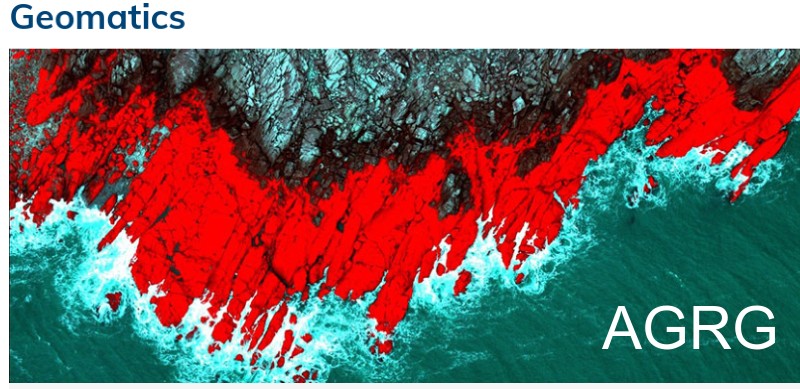
Even in rural Annapolis County, we have access to the resources and expertise of the Applied Geomatics Research Group (AGRG) in Middleton, led by Tim Webster.

Anne was also kind enough to forward the obituary for Gilles Plante. It brought back fond memories of our visits to Mabel Murple’s Bookstore and Dreamery in River John, the children’s stories of Sheree Fitch, as well as the Read by the Sea Summer Festival.


Meanwhile, here in Paradise, I continue to research new developments in both GIS and Remote Sensing; in particular, the impact of new technologies for collecting digital images of our landscape, the analyses; and the sharing with government and other agencies, both academic and community-based.

Acknowledgments

Anne shared both her column from The Register and the obituary from CBC PNA Maritimes. Edward added the graphics and links. Heather shared her memories of the Book Shoppe in River John.

References

Anne Crossman. Annapolis Valley Register. 7 March 2024.

Obituary for Gilles Plante. November 18,1956 – March 2, 2024. CBC Pensioners National Association.

Posted in Uncategorized

Fanfare

In the latest Grapevine, Issue 21.3 for March 2024, p.3 Redefining Tourism in the Annapolis Valley: the journey towards regenerative practices with FoodArtNature (FAN) is a collaboration between Wolfville Farmers Market, Blomidon Naturalist Society, and Earth Rhythms.

It’s about changing the way people think about tourism – not a passive act of consumption but a pro-active endeavour to nurture and restore rhe places we visit and love.’ (foodartnature.ca)

Heather and I met Celes Davar at Earth Rhythms when he helped us organize a tour of Raymond Hunter’s orchard (across the road on Andrew’s farm) (see posts Guided Walk and Preparing for Experiential Tourism).


This morning, I picked up Heather after Chair Yoga at CORAH. In the parking lot at NSCC, Middleton, I noticed a van with AVISPL on the side. The website was avispl.ca. They provide technology for online video conferencing. Helping the NSCC?

Acknowledgements

Congratulations to Celes Davar and others for inventing FoodArtNature (FAN). Heather conducted the tour of the Hunter orchard, including the brandy tasting.

References.

Grapevine, March 2024, Redefining Tourism in the Annapolis Valley: the journey towards regenerative practices with FoodArtNature (FAN), Issue 21.3 page 3.

Posted in Event Review

Arts for Life

On a dark, stormy Wednesday evening, we went to Kings Theatre, ‘Arts for Life’ in Annapolis Royal. They showed three new films by ARCAC and Andrew Tolson.

  1. Arts at the Centre (ARTSPACE): four decades of community artistry.
  2. It’s all about Love: An artist profile of Ken Flett.
  3. The History of Us: An artist profile of Deb Kuyzk and Ray Mackie.

After the intermission, ‘Rural Renaissance: How Canada’s oldest town reinvented itself’. A 2021 documentary about Annapolis Royal in the 1970’s and 1980’s. It was spearheaded by Jane Nicholson and AIRO, with the support of film-maker Andrew Tolson and researcher, Wilfred Allen (view the documentary in post Two Used Books).

Heather and I came to COGS in Lawrencetown in 1980. The film combined personal interviews, with historical perspectives, and a focus on place, in this case, Annapolis Royal. The combination of interviews and archival footage was compelling. It included the Historical Gardens, Kings Theatre, Sinclair Inn, etc. plus interviews with Greg Kerr, Paul Buxton, Barry Moody and others.

For the first time, I was able to fully appreciate the difference between the Annapolis Region Community Arts Council (ARCAC) and ARTSPACE ( the gallery) and now ARTSEEN ( the digital presence) – an exploration of the processes, minds and concepts that ignite the work of contemporary artists and arts centres..

This mixture of personal stories, historical footage and a sense of place offers an inspirational model for other communities, and other endeavours e.g. Science for Life at COGS in Lawrencetown.

Acknowledgements

Excellent Cinematography by Andrew Tolson. Edward Wedler added the graphics and links to the blog. Heather shared the stormy drive to Annapolis Royal. Janet Larkman hosted the event at the King’s Theatre.

References

Artseen link

ARCAC link.

Posted in Book Review

Two Used Books

This week, I found two interesting used books.

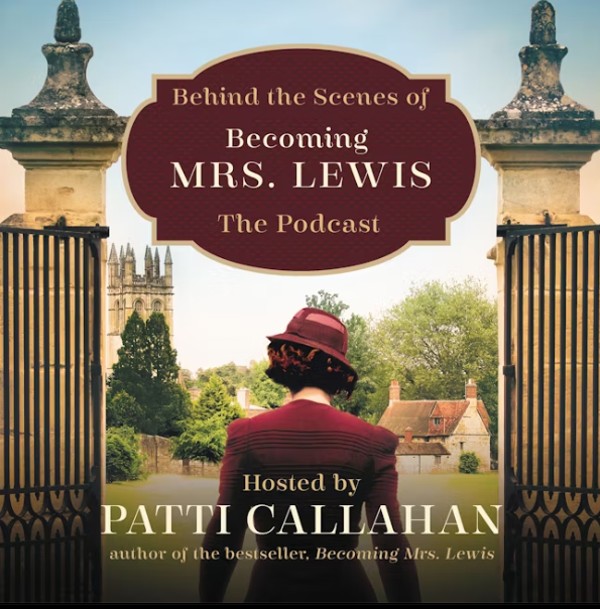
At Endless Shores, I picked up Patti Callahan’s Becoming Mrs Lewis. This was for Heather, as a follow-up to last week’s movie ‘Freud’s Last Session’ (see post Busy Wednesday). Joy Davidman became the wife of C.S.Lewis.

While looking for brown bread at Bees Knees, I discovered David Suzuki’s The Sacred Balance: Rediscovering our Place in Nature. It was a revised edition. I recall reading the original years ago. This time, I forwarded it to Patrick in Peterborough, as a belated birthday present.


I finished the draft abstract for my talk for June’s CSRS conference in Halifax (see post 50 years of Remote Sensing and GIS at COGS). I continue to research and receive links on the use of AI and GIS.

Michael Goodchild, my graduate supervisor at UWO sent a link to a conference at UC Santa Barbara, last December, in part sponsored by Esri. Edward Wedler sent me another link via email, ‘Bayanat, Geospatial and AI’. For both Edward and myself, we wonder what is required to prepare COGS graduates in these new technologies.


Meanwhile, Heather and I had a micro-adventure on our property, snow-shoeing along the powerline and following the west property line — a good two hour work out on crusty snow.

Acknowledgements

Thanks to Michael Goodchild and Edward Wedler for forwarding the links between AI and GIS. Heather shared the micro-adventure snowshoeing.

References

Patti Callahan, 2018, Behind the Scenes of Becoming Mrs. Lewis, Thomas Nelson.

David Suzuki, 1987, The Sacred Balance: rediscovering our place in Nature (25th anniversary edition, Greystone Books).

Bayanat Joins World Geospatial Industry as a Council Member, News Desk, Geospatial Worl, 26Feb2024

Michael Goodchild, Spatial Data Science in an Age of Scientific Disruption, 8-9Dec2023, UCSB Geography.

Postscript

This Wednesday evening (Feb 28) Arts for Life in Annapolis Royal, Kings Theatre 7pm, shows Films Celebrating the 40th anniversary of ARCAC and ARTSPLACE and Annapolis Royal’s Rural Renaissance.

Posted in biographical sketch

Busy Wednesday

Esri visited COGS to recruit new employees. Their head office is in Redlands, California.

The three members of the recruiting team were from Halifax and Connecticut. I attended the opening session in the AV room, because of my interest in GIS education.

I worked in Redlands in 1989, after a year in Indonesia and before moving to Ontario, to design and deliver GIS training for staff at the Ontario Ministry of Natural Resources (OMNR).

Here are a couple of items that caught my attention.

  1. Esri remains the world-leading GIS software company. They have 5,000 employees world-wide. They have eighteen R&D centres, one of which is in Ottawa. Esri purchased SpotOn in 2011. Both Derek Weatherbe and Jeff Sutherland work remotely for SpotOn.
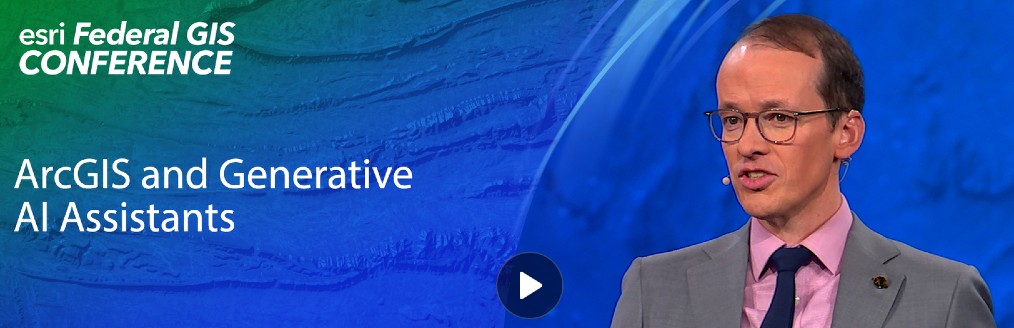
  2. Jeff gave a technical presentation on Data Pipelines. This included a video on Generative AI Assistants (HERE is the link).

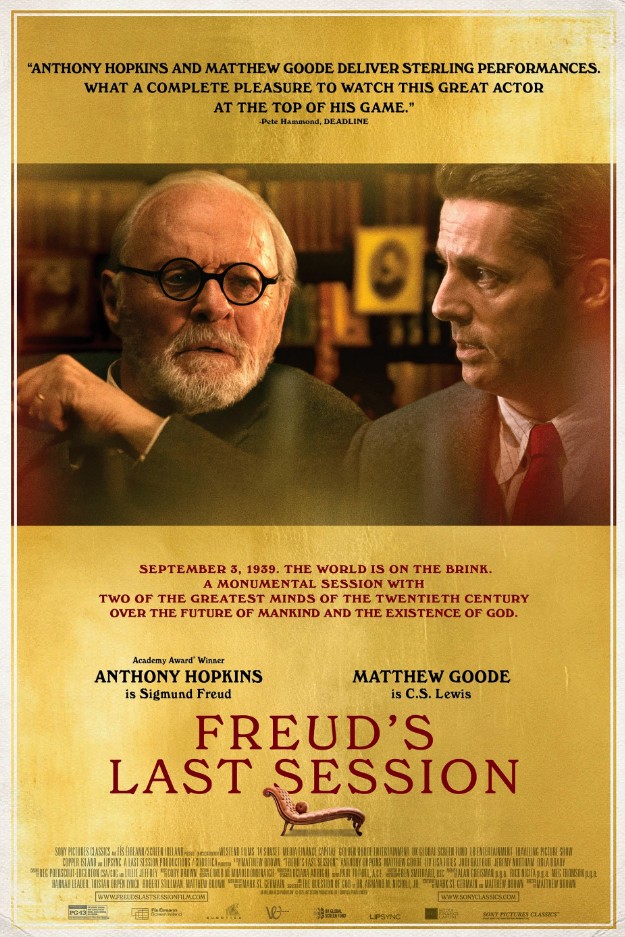
In the evening, Jeannie Shoveller offered us a drive to Annapolis Royal to see Freud ‘s Last Session

— a conversation between Sigmund Freud (Anthony Hopkins) and C.S. Lewis (Matthew Goode) set in London during the Second World War. C.S. Lewis is best known for The Chronicles of Narnia, and the Lion, the Witch and the Wardrobe.

It was an evening of contrasts. Jeannie used to babysit our children when we lived in Clarence. I am not sure if C.S. Lewis was on the reading list.

It was unsettling to watch a movie set in WWII, in a small community with its own theatre, at a time when the world is in a state of turmoil, given the war between Ukraine and Russia.

Postscript

In today’s Bridgetown Reader, I noticed a call for memories of Ride the Lobster. A uni-cycle relay race around Nova Scotia in 2008.


(Members of the Singapore and Nova Scotia teams are shown in this photo taken by Edward).

The brainchild of Edward Wedler. Doug Dockrill is preparing a book on the event.

Acknowledgements

Thanks to Derek Weatherbe for the invitation to the ESRI Technical presentation. Thanks to Jeannie for the invitation to Kings Theatre. Edward added the graphics and the links.

References

Esri Generative AI Assistants video.

Posted in biographical sketch

The Impact of AI

Today (Sunday), we took another micro-adventure to Annapolis Royal. The first stop was the French Basin trail; snow-covered but passable (see the video at Walking Paths). Afterward, we stopped at the Sissiboo cafe.

There, I found a copy of Matthew Rouse’s book ‘Will AI take my job?’ Apparently, Rouse wrote the book at the cafe.

This thought intersects with my research into the future of GIS (Geographic Information Systems) and RS (Remote Sensing) at COGS (Centre of Geographic Sciences). What will be the impact of AI (Artificial Intelligence) on that world?

With the availability of new sensors, drones, etc., how will we manage the deluge of geographic information? I can envisage a day when we may need to return to a new digital photogrammetry.

In the meantime, this week Esri will be at COGS recruiting new talent for their expanding business. I plan to attend, to see what skills are in demand from the 2024 graduates, aside from AI and digital photogrammetry.

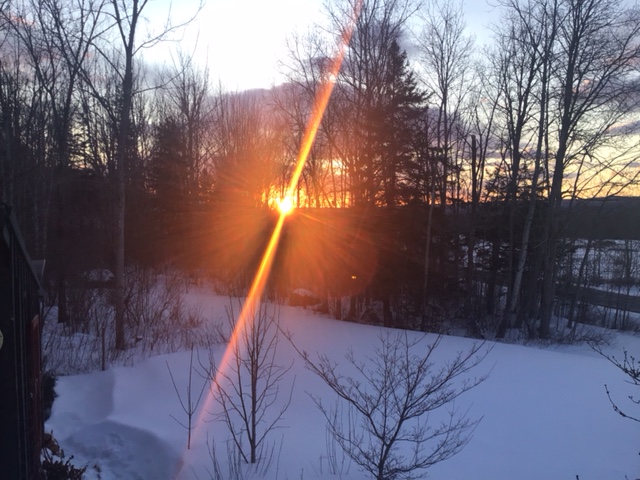
After Annapolis Royal, we ventured down to Lower Granville. We arrived home in time to take a sunset photograph.

Reference

Matthew Rouse, 2023, Will AI take my job?

Acknowledgments

Heather hiked the trail with me. Edward added the graphics. I expect to see Derek Weatherbe and the Esri team on Wednesday morning.

Posted in biographical sketch

Fifty years of GIS and Remote Sensing at COGS.

This June 10-13, 2024, Halifax is hosting the 45th Canadian Society for Remote Sensing (CSRS) annual conference. I have been invited to present a keynote talk. Below, I have a call for contributors to my keynote address.

Currently, I am preparing an abstract and undertaking background research.

I have divided the topic into three parts:
a) the history from my perspective;
b) current programs and projects at COGS;
c) speculation on future technology and their application.

I have had the opportunity to discuss history with John Wightman. For the current programs, I am able to meet with faculty responsible for GIS, RS and data analytics. For future directions, I will connect with my network of contacts in the education community, industry and applied research.

Within this context, I consider the conversations by John Wightman with researchers at CCRS, as well as input from Roger Tomlinson and Ray Boyle to have happened between 1974 and1980. In 1980, I moved to Nova Scotia, with Heather and a young family, to teach in the Scientific Computer Programming (SCP) program. My relationship with COGS continued until 2011. There were several breaks, in Indonesia, California, England, Ontario and British Columbia, I retired as Senior Research Scientist at the Applied Geomatics Research Group (AGRG) in Middleton, at the Annapolis Valley campus of the NSCC.

Since my retirement, I have maintained my life-long interests in Geography and Geographic Information Science. This includes a blog, under the title ernestblairexperiment.wordpress.com, with over 550 posts to date.

Over the next few months, I will appreciate any feedback through my blog
in particular, the trends in teaching and research, both from a Remote Sensing and GIS perspective.

My plan is to provide Amy Mui at CSRS with an abstract, later this month.

Postscript

I should be remiss if I did not mention that my colleague and blog partner, Edward Wedler. He was a Remote Sensing instructor at COGS in the ‘80’s.


Micro-adventure: West Inglisville

Heather and I snowshoed up through our property to the West Inglisville road on South Mountain. We returned back down to Paradise on Hwy #201 and home. These were excellent conditions for snow-shoeing — fresh snow on a hard crust.

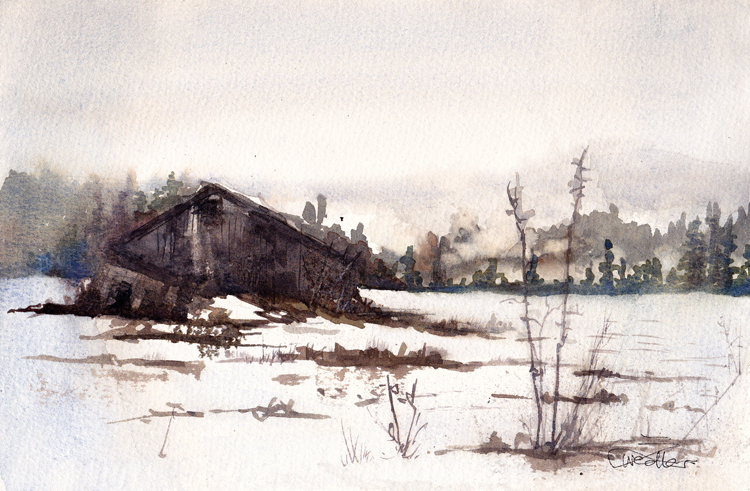
Abandoned Annapolis Valley Farmland, watercolour by Edward Wedler
Posted in Book Review

Birthday Blog

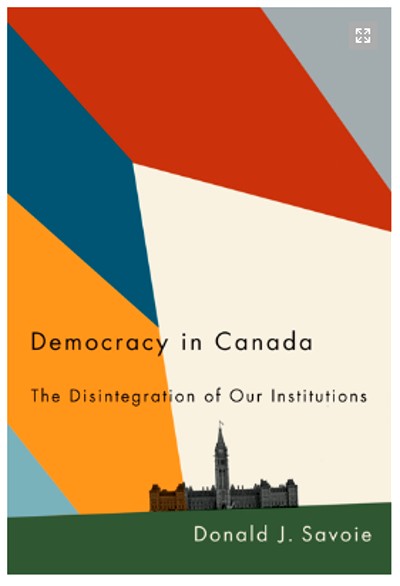
I finished reading Donald Savoie’s ‘Democracy in Canada’.

It is a very thorough history of democracy in Canada and its impact on Maritime Canada. One quotation early on caught my eye.

British-inspired political institutions are spatially blind because it suits England’s history and national character because England is a unitary state – and because its main political cleavages have not been around geography. Being spatially blind in England is one thing. Being spatially blind in Canada is quite another.” p.16.

Am I the blind leading the blind?

On the weekend, Heather and I snow-shoed through Andrew’s old property down to the Annapolis River, and then across to the Lawrencetown tree nursery. This reminded me of the potential at Lunn’s Mill. It is next door to the tree nursery. After snow-shoeing or cross-country skiing, one could return to the warmth of the brewery restaurant. Yet another micro-adventure (see post Explore Local).

For Valentine’s Day (my birthday) we will check out the fare at the Green Elephant in Kingston.

My next read will be John Norberg ,’Open: how collaboration and curiosity shaped mankind’. From the back cover,

Norberg examines why we’re often uncomfortable with openness – but also why it is essential to fight for it more than ever”.

Acknowledgments

Heather shared the snowshoeing micro-adventure. Edward added the graphics.

References.

Donald B. Savoie, 2019, Democracy in Canada: The Disintegration of our Institutions, McGill-Queens University Press.

John Norberg, 2021, Open: how collaboration and curiosity shaped humankind, Atlantic Books.

Postscript

I received Volume 8, 2023 blog from Integrity Printing, Bridgetown. This blog post is #563.

.