Posted in Book Review, Video Review

Borealis and Back to the Land

After weeks of Netflix and CBC Gem, it was refreshing to rediscover National Film Board (NFB) documentaries. For those seeking to change society’s perception of our forests, I would recommend the film, Borealis.
It describes the intrinsic values of the Boreal forest, especially in these times of climate change. Made me wonder whether there should be a similar film made on the Acadian forest.

For dessert, we watched the NFB (1992) documentary on The Northern Lights.

This has been a particularly long weekend. I just hope the snow stays around for a cross-country ski tomorrow (Sunday).

Over the Christmas holiday, I had the chance to read Paul Colville’s memoir, “Back to the Land”. It was an early draft that describes the journey of Paul and Ruth from the United States to Mosher’s Corner on North Mountain, and life thereafter.
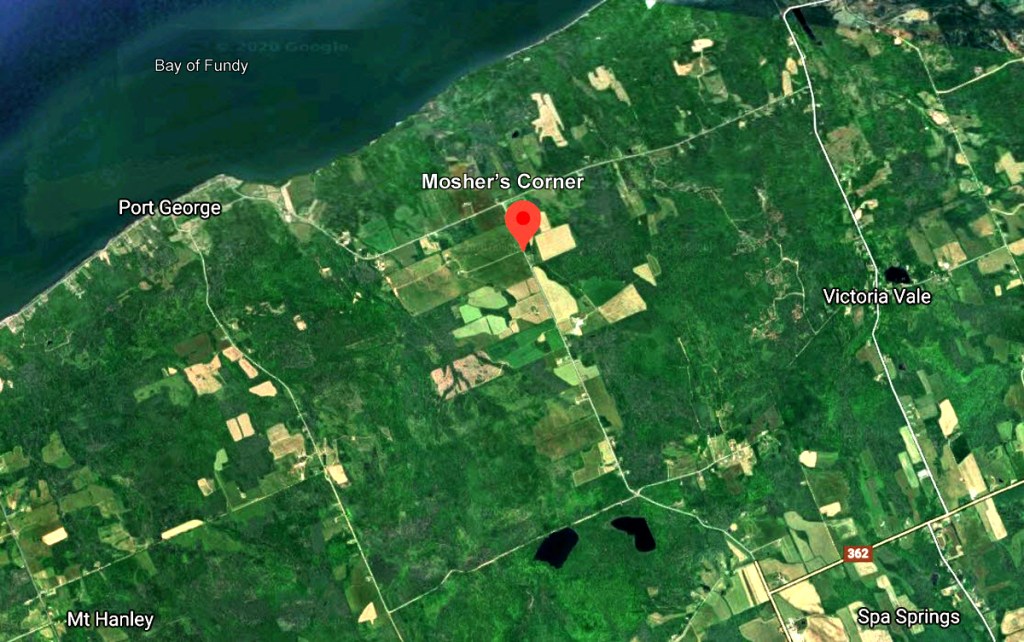
Google satellite View around Mosher’s Corner, Nova Scotia

Each chapter looks at a decade of living, as part of the rural economy in Nova Scotia. It is planned for publication in 2021 (publisher to be determined). I look forward to the final version. No pressure, Paul.

Time to shovel the snow, and put on the skis.

Postscript
Just back from skiing. For the local reader, we parked at Lunn’s Mill. Skied through the Lawrencetown tree nursery to the Annapolis River. Along the river to Andrew’s property and up to our house. Turn round, and reverse the trip to Lunn’s Mill. Wish they were open on a Sunday, could do with a beer. Oh well, we have a growler of Brickyard Red at home.

Acknowledgements

Paul Colville, for the good times that go back to the Chimney Sweeping days. Heather for sharing the journey. Edward for his editorial insights.

References

National Film Board (NFB), 2020, Kevin McMahon, Borealis.
Explore how the plants and animals of Canada’s Boreal forest communicate and survive in this unique cinematic documentary’.

National Film Board (NFB), 1992, Alan Booth, The Northern Lights

Paul Colville, 2021, Back to the Land. Publisher, TBD.

Posted in New thinking

Local Geography

Yesterday (Wednesday) Heather and I participated in the Winter Bird Count, coordinated by David Colville.

Mourning Dove

This gave us the opportunity to walk down to the Annapolis River in the morning. In the afternoon, we went up through the property to the Inglisville Road. Besides the exercise, on a cool day, -10 degrees, we observed mourning doves, chickadees, nuthatches, blue jays, crows, woodpeckers and juncos. The great majority preferring the easy pickings at our bird feeder.

The traverse from the river to the top of South Mountain brought memories of our local geography.

What would we learn if we made the traverse, once a month? Or four times per year?

This led, naturally to questions of citizen science. Previously, when employed at AGRG, we had climate stations on the property. What would we learn, if we had say, 4-6 stations in a transect from the river bank to the southern edge of our property on the mountain? What is the temperature and humidity profile along the transect? At different times of the year?

Let’s take it a step further. When I was at AGRG (NSCC) we had a network throughout the Annapolis Valley. Could we create a community based organization that would maintain this type of network? Could we find a group of landowners between Digby and Kentville who would be interested and willing to monitor a series of transects from the Bay of Fundy to North Mountain to the Annapolis River valley up onto South Mountain?

If we maintained the network, we would be able to monitor climate change in the region.

As a citizen scientist I would welcome the opportunity to participate in developing our understanding of the local climate, it’s relationship to the landscape, and to the other species which share this landscape.

As a citizen scientist I would welcome the opportunity to participate in developing our understanding of the local climate, it’s relationship to the landscape, and to the other species which share this landscape.

A note sent to me from Orion Magazine on the loss of contributing editor, Barry Lopez.

Orion Magazine: Photography by David Littschwager

 the world is losing a lot of light. Let us hope others will take it up and shine it brightly in 2021

— SANDRA BARRY

Acknowledgements

To David Colville for including us in the bird count. Heather for sharing the forest walk. Sandra Barry for forwarding the note on Barry Lopez. Edward for his magic touch.

References

Mary Ellen Hannibal, 2016, Citizen Scientist: Searching for heroes and Hope in an Age of Extinction. The Experiment.

Article on Barry Lopez (1945-2020) in Orion Magazine, December 31, 2020.

Some of my previous blog post links to Citizen Science:
A Proposal: Crowdsourcing and Citizen Scientists
We are all Geographers
Citizen Scientist…
Community Information Utility: it’s time has come.

Posted in Book Review

Christmas Books

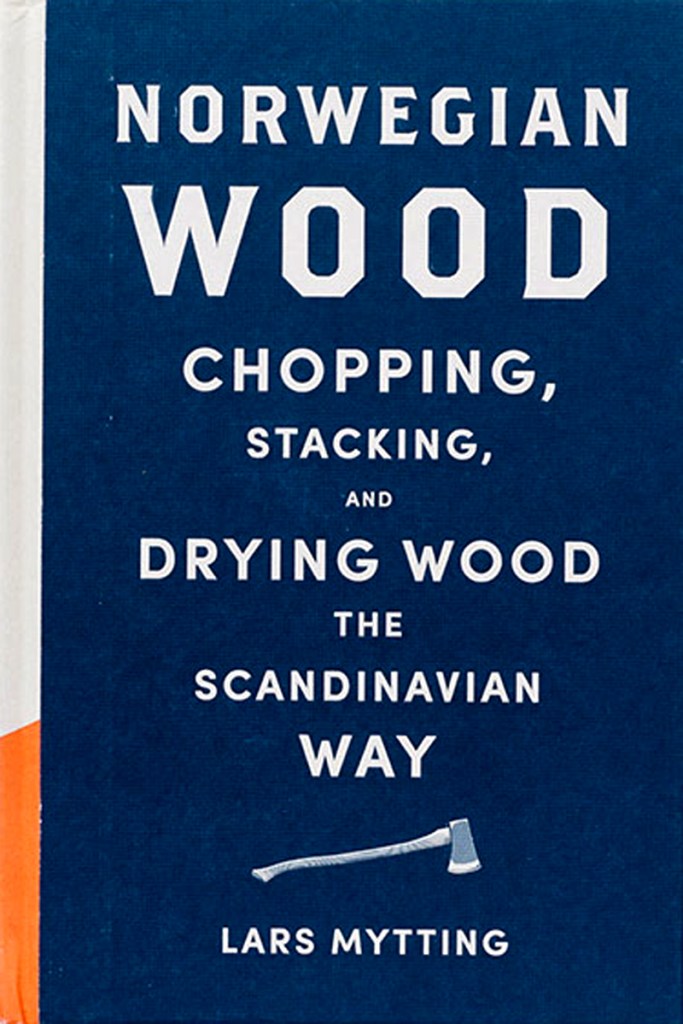
I received two books for Christmas from Patrick; Zena Hitz’ “Lost in Thought” and Lars Mytting’s, “Norwegian Wood”.

Hitz book is subtitled ‘The Hidden Pleasures of an Intellectual Life’. From the dust cover:

“Hitz says our intellectual lives are valuable not despite but because of their practical uselessness. And while anyone can have an intellectual life, she encourages academics in particular to get back in touch with the desire to learn for its own sake, and calls on universities to return to person-to-person transmission of the habits of mind and heart that bring out the best in us.”

Lars Mytting’s book is subtitled ‘Chopping, stacking and drying wood the Scandinavian Way’. Myttling talks about his neighbour, Ottar.

“For a man who had suffered his way through a long winter, struggling against age and ill health, here at last was a job where things made sense again. Once more he was able to enjoy the feeling of doing something meaningful, and the sense of calm security that comes to the man who knows he is well prepared, he is early, he has time on his side.”

In New Glasgow, John Stewart had two new books on his coffee table.

John Tattrie’s, “Peace by Chocolate”, and Donald Savoie’s “Thanks for the Business”.

Both books are about entrepreneurs. “Peace by Chocolate” describes the incredible journey by the Hadhad family from war-torn Syria to Antigonish, Nova Scotia, where they have re-established their chocolate making business. In “Thanks for the Business”, Donald Savoie describes the Irving Oil business in Atlantic Canada. He explains why ‘ I hold the view that Atlantic Canada needs to look to entrepreneurs and the private sector to grow their economy ‘.

Closer to home, in Lawrencetown, Annapolis County, we have another entrepreneurial example of the den Haan family who emigrated from Holland. Today, they are the primary supplier of cucumbers and other salad products in the region. As seen from our home, the night sky is illuminated in the direction of their greenhouses.

Acknowledgements

Patrick Maher for his online selection of Christmas books. John Stewart for access to his holiday reading. Heather for her photograph of the night sky. Edward for bringing together the graphics.

References

Zena Hitz, 2020, Lost in Thought: the hidden pleasures of an intellectual life, Princeton University Press.

Lars Mytting, 2020, Norwegian Wood: chopping, stacking and drying wood the Scandinavian way, Abrams Image.

John Tattrie, 2020, Peace by Chocolate: the Hadhad Family’s remarkable journey from Syria to Canada, Goose Lane Editions.

Donald J. Savoie, 2020, Thanks for the Business: KC Irving, Arthur Irving and the Story of Irving Oil, Nimbus Publishing.

Posted in biographical sketch

Seeds of Hope

As we approach the end of 2020, it seems appropriate to look for hopeful signs on the horizon for 2021. Two of the signs were forwarded by Anne Crossman.

  1. Announcement from the Nova Scotia Forestry Innovation Transition Trust.
  2. Hiring of the Founding Principal for Gordonstoun Nova Scotia School

The third sign comes from the quarterly newsletter of Bras d’Or Lake Biosphere Reserve.

LINK to Bras d’Or Lake Biosphere Reserve website: https://blbra.ca/

The Nova Scotia Forestry Innovation Trust of $50m was announced in February 2020. The NSCC will receive funding for a potentially multi-year project of up to $2m. The Forestry Innovation Voucher program will enable established businesses, new startups, non-profit community groups and Mi’kmaq partners to leverage the college’s infrastructure.

In 2021, we look forward to an official announcement of a Gordonstoun Nova Scotia founding Principal and any opportunity to connect the school’s interests with those at COGS/AGRG.

The Bras d’Or Lake BR newsletter includes a number of articles related to activities in Cape Breton. Specifically, there is information on climate change. Given the challenges in the Southwest Nova BR, this newsletter suggests a path forward.

At COGS/AGRG they have had an established climate network. A newsletter would allow sharing of this information with the local community. The same is also true of sea level rise, species at risk and the status of invasive species.

Rather than complain about the conflict between forestry practices and other values, let’s make sure that all members of the community have the best available information.

These seeds of hope suggest that we can better connect our educational institutions with the community at large, as well as the global community. We can collectively prepare ourselves for changes in our geography: economic, social and physical geography. The values of UNESCO-MAB will stand us in good stead.

Postscript

In New Glasgow, I have had the chance to re-read Dave Whitman’s book on Stephen McNeil. It offers useful insight into the politics of the Annapolis Valley. At the same time, it illustrates why we need to maintain a global perspective.

A video interview with Richard G. Thorne, Pro Tem Principal for Gordonstoun Nova Scotia, gives some insight to the Gordonstoun School background and mindset.

Acknowledgements

Anne Crossman for searching of the web. Edward and Heather for their support.

References

Dave and Paulette Whitman, 2014, Premier Stephen McNeil: a Story of a Nova Scotian Family, Bailey Chase Books

Posted in Opinion

A Time of Transition

This morning (Sunday), Heather left early to attend a Winter Solstice ceremony in Annapolis Royal.

Meanwhile, I am trying to adjust to the changes in government. At the municipal level, the departure of John Ferguson and Bruce Gillis. At the provincial level, Stephen McNeil has shut down the government process. What can we expect?

Clearly, the COVID pandemic will continue through 2021. Will we take the time to reinvent the democratic processes? Will we see a more inclusive approach towards communities and citizens?

Yesterday, I met with good friend, Paul Colville. As part of the conversation, we reflected on the changes in the rural economy of Nova Scotia over the last forty or more years. What was influencing those changes? Have the changes in our technologies made life easier or more challenging? There is the potential to be more informed, but what about the content of that information?

Every Sunday, I receive electronically, Brain Pickings. This week, the Annual Special : Favourite Books of 2020. It includes reference to twenty books. This is far too much for me to absorb.

What is not changing?

I could say, the birds looking for winter food, or the wintery weather. The view across the Valley to North Mountain. The need to load wood into the stove. And yet, if we look closely, these elements of the exterior environment are indeed changing too. In some cases, imperceptibly slowly.

The optimist in me, says that perhaps the human systems are changing too, also imperceptibly. And in what direction? My fear is that while we are caught up in the pandemic we, as a society, are unable to do two or more things at the same time. Even though, they are complexly intertwined.

Postscript

Illustration by Christelle Enault as in Emergence Magazine

From Emergence Magazine, The Serviceberry: an Economy of Abundance, essay by Robin Wall Kimmerer (Podcast available at the link).

Posted in Opinion

A Sad Day

It’s a sad day when a forestry company has to issue a court injunction against a group of citizens who are seeking to protect forest values. What has happened to the role of government to balance competing interests? Are crown lands supposed to be managed for multiple values?

We can do better. The technologies exist for detailed management of the landscape. This includes tree species, wildlife species, soil conditions, water and air quality. The same is true of our seascape. In other jurisdictions, it is no longer a race to the bottom. There are other values besides the $$$.

What needs to change?

  1. the accountability of government.
  2. the accountability of our educational institutions.
  3. citizen engagement.

We need a society which values our differences. That recognizes the richness of our landscape/seascape and its capacity to support a wide range of viewpoints. We should be a haven for different perspectives and points of view.

Southwest Nova Scotia did not embrace the biosphere reserve concept to see it ‘flushed down the toilet’ because of the inability of our government representatives to understand that society can uphold multiple values.

Let’s wake up! If not now, at least after the COVID pandemic is over. Indeed, now we have the time to think about doing things differently. If the politicians don’t understand it, then let’s change them. In turn, if the civil servants don’t understand it, then let’s change them. If educational institutions don’t understand it, let’s change the teaching and research agendas.

Perhaps, we could start by renaming the Nova Scotia Department of Lands and Forestry to the Nova Scotia Department of Landscape Ecology. A radical idea. Meaningless, unless there is a change in behaviour.

Posted in biographical sketch, Nature

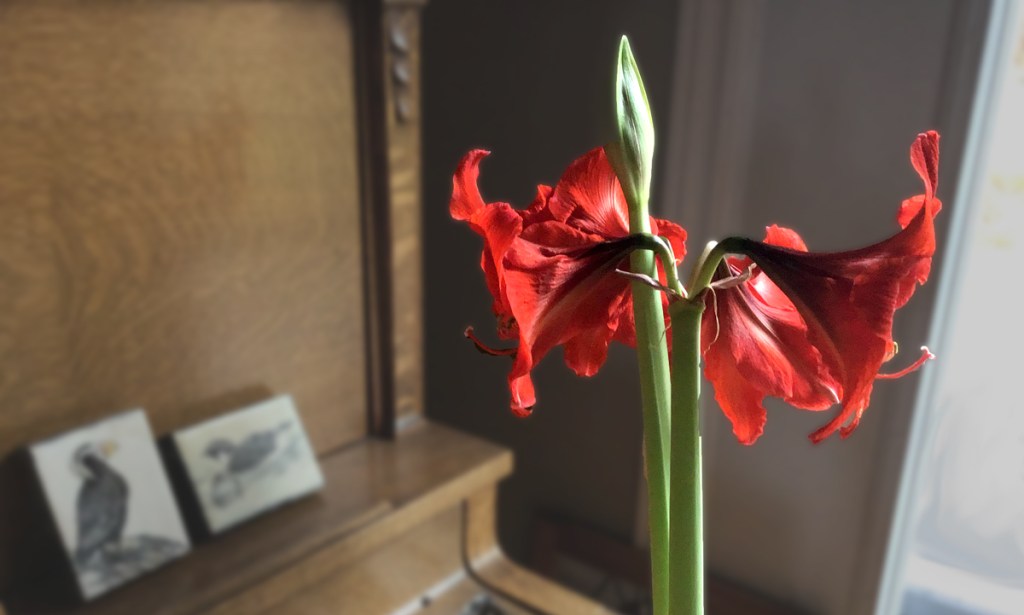
Amaryllis

In the Bridgetown Reader, I noticed an advertisement for MareGold bookstore. However, I had never visited. This time, I checked the web site MareGold.com and discovered both a retreat centre at Victoria Beach, as well as an excellent online bookstore.

This week, I received two books for Christmas from Amazon. Thank you, Patrick. I will savour them in the days ahead.

Zena Hitz 2020, Lost in Thought: the Hidden Pleasures of an Intellectual Life, Princeton University Press.

Lars Mytting, 2015, Norwegian Wood: Chopping, stacking and drying wood the Scandinavian Way, Abrams Image, NY.

On our trip to Kentville, I had time to stop at Shelf Life where I found a copy of Eric Enno Tamm’s Beyond the Outer Shores: the untold story of Ed Ricketts, the pioneering ecologist who inspired John Steinbeck and Joseph Campbell. This is the rediscovery of a book that I reviewed when in Haida Gwaii.

At Chisholm’s, I purchased Donald Savoie’s Thanks for the Business: KC Irving, Arthur Irving and the Story of Irving Oil. This was triggered by my interest in the logging of Southwest Nova by the Irving Woodlands group.

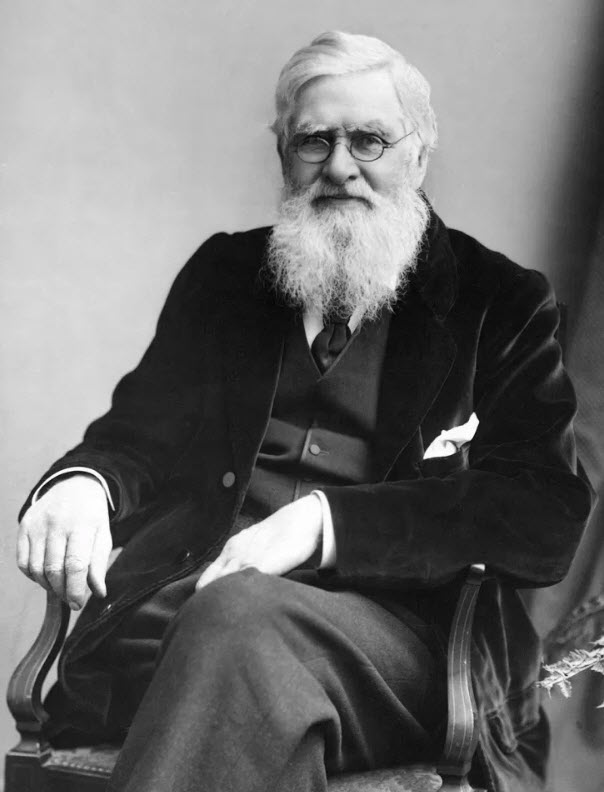
Alfred Russell Wallace (circa 1895)

Today (Sunday) Brain Pickings included two noteworthy pieces. From Robinson Jeffers :

“But I would have each person realize that his contribution is not important, it’s success not really a matter for exultation nor its failure for mourning; the beauty of things is sufficient without him”

From Alfred Russell Wallace:

“The struggle for wealth, and its deplorable results (in the human sphere) have been accompanied by a reckless destruction of the stored-up products of nature, which is even more deplorable because more irretrievable.”

Postscript

In Bridgetown, at the pharmacy, we noticed some Christmas cards on the counter drawn by a local high school student. We had to admire both the artistic talent and the entrepreneurship.

Acknowledgements

Thanks to Patrick, Heather and Edward. They all contributed to the blog,

References

Zena Hitz, 2020, Lost in Thought: the Hidden Pleasures of an Intellectual Life, Princeton University Press.
Lars Mytting, 2015, Norwegian Wood: Chopping, stacking and drying wood the Scandinavian Way, Abrams Image, NY.
Eric Enno Tamm, 2004, Beyond the Outer Shores: the untold story of Ed Ricketts, the pioneering ecologist who inspired John Steinbeck and Joseph Campbell, Raincoast Books.
Donald Savoie, 2020, Thanks for the Business: K.C. Irving, Arthur Irving, and the Story of Irving Oil, Nimbus Publishing.

Posted in Article Review

Mapping Annapolis County

One of the community mapping initiatives that came out of the Centre of Geographic Sciences (COGS) in the last ten years was MapAnnapolis.

It combines research by local citizens with mapping technology available through students from COGS. In response to my recent question on its status, Heather LeBlanc sent me the link to their web site. She mentioned, too, that they are currently upgrading the site with interactive videos and the use of Esri storyboards. The new version should be completed in early 2021.

Map: Acadian settlements.

The MapAnnapolis web site includes heritage properties, the Garrison graveyard, Acadian settlements, Black Loyalist history, cemeteries and churches, Bear River Artist studios, and more.

The Story of COGS project focused on the lives both JB Hall and Major Church. This complements the web site by Heather Stewart and myself on the story of COGS.

To date, I have received no new information on either Community Counts or the CLICK project. The first was a provincial initiative and the second supported by the municipalities. Given the COVID necessity for online learning, it is unlikely that we will see the return of local field work at COGS to support community mapping in the near term.

Yesterday, I had a fitness session to stretch the body. This compensates for an excess of sitting and reading. It is important to recognize the same need to stretch the mind. The COVID restrictions offer up the time, however it is now more challenging to share the ideas through the face to face social network.

I did manage to complete my reading of Harold Horwood’s memoir. Besides his opinions on many Canadian authors, from Farley Mowat to Margaret Atwood, Graeme Gibson to Margaret Lawrence and Alice Munro, Horwood recounts his travels in Atlantic Canada. He also took several longer trips across Canada and the United States. He provides a detailed natural history of these foreign places.

Acknowledgements

Heather LeBlanc for her web site update. Heather for COVID company. Edward for support.

References

MapAnnapolis go to mapannapolis.ca
Harold Horwood, 2000, Among the Lions, Killick Press.
The Story of COGS. see web site thestoryofcogs.ca

Posted in biographical sketch

AGRG at 20

This week, the Applied Geomatics Research Group (AGRG) in Middleton celebrated their twentieth anniversary. It was the first Applied Research unit at the Nova Scotia Community College (NSCC).

In 2011, Chris Hopkinson, Jeff Wentzell and I left the group. Chris went to Alberta and established his own research team. Jeff joined the Nova Scotia Department of Agriculture. I retired and then travelled with Heather on a variety of her Parks Canada assignments, to Baffin Island, Haida Gwaii, Churchill and Sable Island. More recently, I have been writing my blog.

As a follow up to the previous blog on Community Mapping, I contacted Brent Hall at ESRI Canada. I was interested in the potential to act a Geography mentor to my grandchildren. They are scattered from British Columbia, Ontario and Nunavut. I was curious if there was a program for children under ten years old. To my surprise, I discovered the GIS Ambassador Program which I will investigate further in the months ahead.

Click HERE for ESRI Ambassador Program

Further to the discussion on clearcutting and spraying on crown land, I can also report that Doug Hickman has offered a very clear response to SNBRA, UNESCO and the provincial government.

“The issues we highlighted are the types of forestry that are being practised and the location on crown lands where they are being practised (in this case within the UNESCO-designated Southwest Nova Biosphere Reserve).”

The engagement of the next generation in mapping our changing communities and the specifics of land use change are both worthy topics for applied Geomatics research. They would showcase the effective use of this technology in Nova Scotia and beyond.

Postscript

At the Great Expectations cafe in Annapolis Royal I found Harold Horwood’s memoir ‘Among the Lions’. Horwood lived for a number of years at Upper Clements, Annapolis County.

“Moreover, I discovered that I had invented a structure: my essays would begin with some local incident or observation, such as paddling a canoe on the Basin, working among bees and clover, examining a pond through glass-clear ice in winter. But following that, they would move from the local to the general, and from the general to the theoretical,” p.224.

Finally, I received Emergence Magazine. It contains an interesting video, Upstream, by Robert MacFarlane entitled Upstream. It follows a river in the Cairngorms to its source.

Acknowledgements

To Rocky and Debby Hebb. Support from Heather and Edward.

Reference.

Harold Horwood, 2000, Among the Lions: a lamb in the literary jungle, Killick Press.

Posted in Video Review

Community Mapping Update

(This blog has two links of interest: one from GoGeomatics and one from COGS).

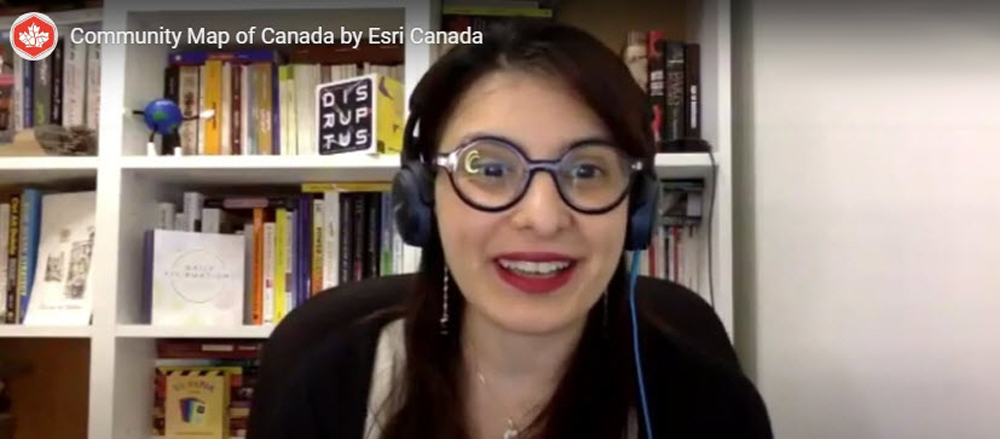
In a recent issue of GoGeomatics magazine, there was an online interview with Alia Kotb, Community Maps Advocate at Esri Canada.

Click HERE for video interview

This peaked my interest, and reminded me of earlier initiatives in Nova Scotia. For example, Community Counts, the CLICK project and MapAnnapolis. What is the current status of these initiatives?

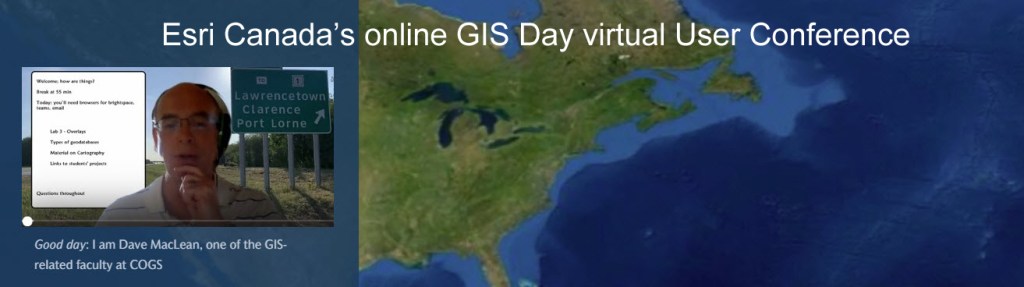
I raised the question with faculty at the Centre of Geographic Sciences (COGS). While I did not receive any definitive answers, I did have a response from Dave Maclean about the current virtual learning environment in Lawrencetown. Not being familiar with this world, I thought it worth sharing. Other members of the community may have an interest in the happenings inside the walls of COGS.

The virtual environment is global. So there is real potential to engage the GIS community in a network of mapping experiences. Here are a couple of possible examples.

One of my grandchildren lives in Iqaluit. What would it take to create a community map of the town from his perspective? Could the map be shared with his age cohort across other Northern communities? Or elsewhere in the world?

One of the issues in rural Nova Scotia is clearcutting the forests. Could we produce maps of clearcuts and potential clearcuts for Southwest Nova? Could we compare these maps of activity on crown land with equivalent maps in other countries, e.g. UK, New Zealand? If they apply ecological forestry, can we detect the difference? No spraying.

The reduction in face to face learning creates an opportunity. It can be more individualized, and less influenced by local context. Can we create customized networks around the individual needs of the community? Can we merge communities of place with communities of interest?

Acknowledgements

To Jon Murphy and Dave Maclean, both COGS graduates. Edward Wedler, COGS faculty in a earlier life.

References

GoGeomatics magazine interview, November 24, 2020.

Dave Maclean presentation for Esri Canada GIS Day Fall 2020.