Posted in Book Review

Buffer Zone

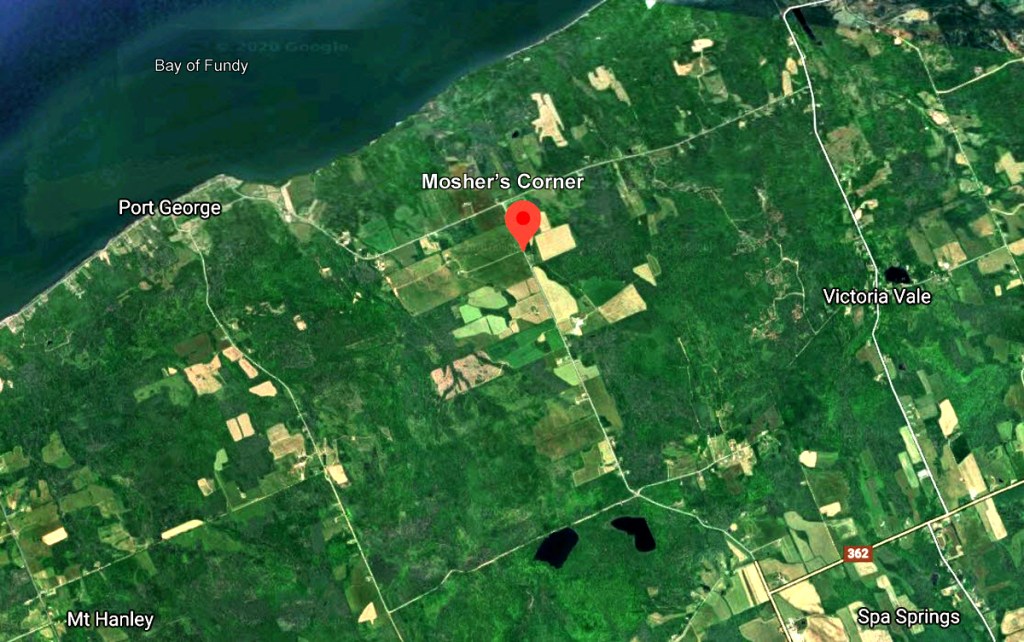
Today, Heather rediscovered her copy of the nomination document for the Southwest Nova Biosphere Reserve, dated July 2001.

I was interested in checking the designation of the buffer zone. At that time, the buffer zone included:

55 sq.km within Kejimkujik National Park (zone 3 and 4)

37 sq.km provincial crown land adjoining Kejimkujik National Park

53 km lower portion of the Shelburne River

Nova Scotia Power lands at north end of Lake Rossignol and upper reaches of the Mersey River.

Crown managed lands at Indian Fields, west of Tobeatic Wilderness Area.

Endorsements (i.e. in charge of the management of the buffer zone)

Nova Scotia Minister of Natural Resources, Fisheries and Agriculture

Freeman and Son Ltd

Nova Scotia Power Inc.

Mersey Woodlands

Where are we today, in 2020?

Clearly the description of the buffer zone (in 2001) did not satisfy the ten year UNESCO MAB review.

Today, we need to know :

a) the 2020 definition of the buffer zone. Which lands, where and size?

b) the parties in charge of the management of the buffer zone.

In the 2001 nomination document, there is a description of the values upheld by SNBRA.

“Ultimately the identity and success of the Southwest Nova Biosphere Reserve in addressing issues associated with advancing ecological, cultural and economic sustainability will depend on goodwill and civic spirit of the organization and citizens participating as members of the Association.”

LINK to http://agrgmaps.nscc.ca/SNBRA/

The same is true today.

On Sunday, November 29, 2020 there was an opportunity to watch the TVO documentary, Striking Balance that reaffirms these values. There is also the opportunity to protest the lack of transparency by the provincial government on its management of crown lands.

Acknowledgements

Heather produced the original submission in 2001. Edward added the graphics to this blog.

Reference

SNBRA, July 2001. Biosphere Reserve Nomination. Southwest Nova Biosphere Reserve
(link to 2010 Nomination Overview document)

Posted in biographical sketch, Video Review

Striking Balance

Last Sunday, we saw two very different views of the Southwest Nova Biosphere Reserve.

Around noon, we joined the protest by Extinction Rebellion (XR) at their encampment near the Silver River Wilderness Area.

Along with fifty or so other citizens, we formed a human chain along the forest boundary. We were protesting the impact of forest harvesting on the mainland moose habitat. The area is designated crown land and forms part of the buffer zone between the core protected area, Kejimkujik National Park and the Tobeatic Wilderness Area, and the working landscape. The Biosphere Reserve covers five counties in Southwest Nova Scotia. The mainland moose is designated as a species at risk.

In the evening on TVO, they aired the documentary Striking Balance.

Season 2, Episode 9 presented the Southwest Nova Biosphere Reserve. This one hour program showed numerous examples of invasive species (e.g. green crab, pickerel, woolly hemlock adelgid) in the region and the efforts, particularly by Parks Canada to control their spread. Other segments looked at sea level rise and coastal communities, lichens and acid rain, plus the development of an interactive digital atlas.

What was missing, was any reference to the forestry practices and their impact on wildlife habitat. In particular, the impact of clearcutting and spraying in the buffer zone. The buffer is made up of both crown land and private land ownership.

As we drove home from Digby County to Paradise (Annapolis County) we listened to the radio. There were interviews with the three candidates for leadership of the provincial Liberal party. They all made reference to the Lahey report and its implementation in 2021. As well, there was talk about revisiting the definition of ‘crown lands’. We must wait to see whether our government can find a better balance between ecological, cultural and economic sustainability.

Meanwhile, XR will continue to occupy their encampment. We are hoping for reform within the Nova Scotia Department of Lands and Forestry — a renewed respect for the forested landscape and the habitat of species at risk — by implementing the Lahey report recommendations, redefining of crown lands, and thus reducing the need for clearcutting and spraying.

Acknowledgements

Heather Stewart, Doug Hickman, Nina Newington and many others who support this worthy cause. Edward Wedler for his graphics contribution.

Reference

Striking Balance, tvo.org Season 2 Episode 8 Southwest Nova Biosphere Reserve.

Footnote

Forest protectors from 30Nov2020 Encampment Update Note. Credit: Laura Bright.

MEDIA UPDATES
Latest coverageChronicle Herald – McNeil Turns Blind Eye to Endangered MooseNS Forest Notes – Follow the new logging roadsNS Forest Notes – Shanni Bee to Iain Rankin
Social MediaBlockade to Stop Clear-Cutting – Facebook Event pageStand up for Moose Country Rally – Facebook Event pagePhone Blitz – loggers have arrived – Facebook Event page
ACTIONS OF SUPPORT
Calling WestFor & GovernmentShow support for the blockade by calling the company in charge of the logging and the government.  
WestFor main line: 9020-530-2362Marcus Zwicker (General Manager) 902-210-7073 communications@westfor.org
See below for Derek Mombourquette’s contact information.  
Letter WritingSend a letter to the Minister of Lands and Forests and others to note your support for the blockade and request an immediate moratorium on all proposed and current logging on Crown lands from Fourth Lake south to the Napier River in Digby County.  The opinion piece by Bob Bancroft from the Chronicle Herald) Clearcuts squeeze out beleaguered mainland moose is a great resource you can use to help with crafting your letters.  Contact Info: Minister of Lands and Forests – Derek Mombourquette – Mindnr@novascotia.ca Halifax Main Office: (902) 424-5935Sydney Office: 902-562-8870Premier – Stephen McNeil – Premier@novascotia.ca  (902) 424-6600Minister of Environment – Gordon Wilson –  Minister.Environment@novascotia.ca (902) 424-3600Your MLA: https://enstools.electionsnovascotia.ca/edinfo2012/and contact info here: https://nslegislature.ca/members/profilesLeader of the Opposition – Tim Houston: pictoueastamanda@gmail.com (902) 424-2731Auditor General –  Terry.Spicer@novascotia.ca (902) 424-5907
Posted in Book Review

Bookcase 2, Shelf 6

Brian, my neighbour, was over this morning to fix the bookcases. They had collapsed, likely under the weight of the books. This has given me the opportunity to rediscover a number of books collected in our travels. For example, shelf 6 focuses on Haida Gwaii.

As I try to understand the stand off between the citizens in rural Nova Scotia with their concern for the forested landscape and associated species and the provincial government, intent on clear-cutting and spraying, I wonder whether there are lessons from Lyell Island on Haida Gwaii.

My starting point was the book by Joseph Weiss, Shaping the Future: life beyond settler colonization on Haida Gwaii.

Is there life beyond settler colonization in Nova Scotia?

On the same shelf, I found Islands in the Salish Sea: a community atlas.

Two quotations, from Geographers struck home. In the Preface from Robert Bateman,

“In our global, packaged world we are losing a sense of place. This is a philosophical tragedy. It results in a lack of caring, a lack of sense of community and a neglect of civil responsibility. It is also an environmental and human tragedy. For with the loss of knowledge of and intimacy with our home place, we are losing our sense of spirit.”

In the Foreword, Briony Penn:

“One thing I have learned as a professional geographer is that whoever has the maps in their hand controls the fate of the land. Cartographers have been at the forefront of turning land and nature into polygons of commodities.”

I would also recommend the writings from Robert Bringhurst and Ian Gill. For readers interested in Haida Gwaii, I have provided a list of titles from Shelf 6. Perhaps, at a later date, we can visit other shelves.

Acknowledgements

Heather shared the Haida Gwaii experience. Edward provided the graphics.

References

Joseph Weiss, 2018, Shaping the Future: life beyond settler colonization on Haida Gwaii. UBC Press.

Sheila Harrington and Judi Stevenson (Ed), 2005, Islands in the Salish Sea: a community atlas. The Land Trust Alliance of British Columbia.

Christie Harris, 1992, Raven’s Cry. Douglas and McIntyre.

Ian Gill, 2004, Haida Gwaii Journeys through the Queen Charlotte Islands, Rainforest Books.

Karen Duffek and Charlotte Townsend-Gault (Ed), 2005, Bill Reid and Beyond: expanding on modern native art, Douglas and McIntyre.

Robert Bringhurst (Ed), 2009, Solitary Raven : the essential writings of Bill Reid, Douglas and McIntyre.

Thom Henley, 2017, Raven walks around the World, Harbour Publishing.

Robert Bringhurst, 2012, A Story as Sharp as a Knife. Douglas and McIntyre.

Ian Gill, 2009, All that we say is ours: Guujaaw and the reawakening of the Haida Nation, Douglas and McIntyre.

Dennis Horwood and Tom Parkin, 2006, Haida Gwaii: the Queen Charlotte Islands, Heritage House.

Ruth Kirk, 1986, Wisdom of the Elders: native traditions on the Northwest coast, Douglas and McIntyre.

Christie Harris, 1977, Mouse Woman and the Mischief-maker, McLelland Stewart.

Sean Markey et al., 2005, Second Growth: community economic development in rural British Columbia, UBC Press.

Posted in Opinion

Spot the difference?

Last Thursday, Heather and I went to the Extinction Rebellion (XR) encampment on crown land within the Southwest Nova Biosphere region.

It is about a two hour drive from our home base in Paradise. You take Highway #101 to Weymouth and then head inland towards the Tobeatic Wilderness Area. This requires driving over twenty kilometres on forestry roads.

On our return home, I wanted to check our route and thus went to the Nova Scotia Atlas. The area of interest is on page 71. What struck me was the difference in land use designation between 2001 (first edition) and 2019 (seventh edition). This is perhaps best illustrated by page 64. (See photographs).

Map LEFT: 2001 Map RIGHT 2019
Push the centre slider left/right to compare the two maps.

The map sheet has changed colour. From primarily white (private land ownership in 2001) to primarily green (crown lands) and yellow (provincial parks, wilderness areas and nature reserves) in 2019. My assumption is that this is the result of the Bowater Mersey land coming under the management of the provincial department of Lands and Forestry. In 2016, WestFor Management Inc. was established to implement the forest management.

The good news is that the yellow areas are ‘protected’ from clearcutting. The bad news is that the green areas ‘crown lands’ are available for cutting at the discretion of the provincial government, in association with WestFor.

These findings need to be placed within the context of the Biosphere Reserve. The Southwest Nova Biosphere Reserve was established in 2001. At that time, it defined as a core area: Kejimkujik National Park and the Tobeatic Wilderness Area and the surrounding working landscape. At the time of review, UNESCO MAB insisted on a definition of the buffer zone, which would require engagement of interested parties, in particular, the Nova Scotia Department of Lands and Forestry.

Last week, Doug Hickman sent a report to UNESCO, the provincial and municipal governments which identifies the need for a management plan which protects the habitat of endangered species in the region, in particular the mainland moose (see download links, below).

Meanwhile, cutting continues apace on both private land and crown land.

Acknowledgements.

Doug Hickman for producing a comprehensive review of the situation in a short time frame. Heather for her work on a safety plan. Edward for his graphics skills.

References

The Nova Scotia Atlas. 2001. Fifth edition co-published by Formac and the Province of Nova Scotia.

The Nova Scotia Atlas 2019. Seventh edition co-published by Formac and the Province of Nova Scotia

Doug Hickman, November 18, 2020. Backgrounder and Report (two documents) “GUTTED. Endangered Mainland Moose and how the government of Nova Scotia makes a mockery of UNESCO” (see below)

Posted in Event Review

Gordonstoun Nova Scotia

Thursday evening, I attended the Gordonstoun Nova Scotia Information Forum put on by Friends of Gordonstoun Nova Scotia (FOGNS) at Cornwallis Park. The moderator was Linda Hume Leahy. FOGNS is a citizen support group, numbering over 600 members.

Architect’s image distributed by Municipality of Annapolis County

The one and a half hour presentation was made by Richard Thorne and Kate Cornell on behalf of Gordonstoun NS. The event was under strict COVID social distancing and face mask rules. There were between 60-80 citizens in the audience. Thorne is Acting Principal. Cornell is Development Officer. Consultant, Edward Ferren was in the audience. Because of COVID there was no opportunity to ask questions from the floor.

Richard and Kate provided an in-depth background to the Gordonstoun philosophy, the role of Kurt Hahn and the establishment of Gordonstoun School in Moray, Scotland. Gordonstoun education for life includes teamwork, responsibility, resilience, achievement and compassion. The experience includes Outward Bound, the Duke of Edinburgh awards, and the Round Square movement. In the words of Hahn, it responds to the six declines of modern youth: fitness, initiative and enterprise, memory and imagination, skill and care, self-discipline and compassion.

From https://gordonstoun.org.uk/

The timeline for Gordonstoun Nova Scotia: they will be breaking the ground in late Spring 2021, hiring VP Academic and VP Finance by September 2021. First intake will be September 2022. There will be six hundred students, fifty-plus staff. The students will be Grade 9-12. The curriculum will be part of the International Baccalaureate (IB) program. The school will be not for profit and will offer full scholarships (two for Nova Scotia students and two for non- Nova Scotia students) valued at $78k for each of four years.

There will opportunity for the community to be involved through maintenance of the site, local provisioning and collaboration. The question posed : How are you going to be involved with us? And vice versa?

Overall, there was a lot of good background information. Via the Gordonstoun UK web site there are a range of videos on teamwork, responsibility, resilience, achievement, compassion. From a geographic perspective, there are many similarities between the Annapolis Basin and Moray, Scotland

Overall, there was a lot of good background information. Via the Gordonstoun UK web site there are a range of videos on teamwork, responsibility, resilience, achievement, compassion. From a geographic perspective, there are many similarities between the Annapolis Basin and Moray, Scotland

between mountain and the water

— Kurt Hahn

Acknowledgements

Thanks to Friends of Gordonstoun Nova Scotia for organizing the forum.

References

go to gordonstoun.org.uk to find the link to the videos

check Google for more on Kurt Hahn and his educational philosophy.

Ashley Thompson, SaltWire, 23 October 2020, “Citizen Group Formed in Support of Gordonstoun School”

Posted in Opinion

‘The Crown’ lands

In these COVID times, it was a relief to receive a new season of The Crown on Netflix (ten episodes ).

Creative Commons Attribution-NonCommercial-NoDerivs 3.0

Watching the first two episodes, one was reminded of the definition of crown lands in Great Britain. There were images of deer hunting, shooting grouse in the Scottish Highlands around Balmoral. It is the playground of the privileged. Seeing ‘Prince Charles’ one remembers his time at Gordonstoun.

How much of this colonial past are we bringing to Nova Scotia ? Is this a culture of monied privilege that we are importing into the Annapolis Valley ?

The good news is The Crown series, an excellent product from the BBC, reminds us both of the class system in Great Britain and acts as a vivid reminder of the term ‘crown lands’. At a time when we need to revisit the concept in Nova Scotia.

Driving down Highway #1 from Bridgetown to Annapolis Royal, just past The Broken Wheel B&B, Heather remarked on the invasion of multiflora rose (see earlier blog post) on the south side of the road towards the Annapolis River. Clearly, it does not take much neglect before these species colonize abandoned fields and take them out of production.

We noted, too, the new pavement on Highway #1. Unlike Highway #201, there seems to be little truck traffic, either logs or aggregate.

Is this because the Premier has a home on Highway #1? Is it because different highways have different codes? Or perhaps the residents on Highway #201 are less vocal in their opposition to logging and aggregate trucks? Or the logs and aggregate are coming off South Mountain? Incognito? Who knows.

Regardless, I am content that I am able to watch Netflix at home on a dark Winter evening.

Acknowledgements

Heather is my observant travel companion. Edward is my blog graphic designer.

Posted in biographical sketch

The Railway Era

After going to Kings County Honda in Kentville to service my CRV, we stopped at the Maritime Express Cider Company.

They are located in the old Cornwallis Inn. We sampled a flight of different ciders, and had the chance to chat with the cider maker, Jimi Doidge. This peaked our interest in the best mix of varieties for hard cider from our organic orchard.

Friday, Alex Cole from Little Foot Yurts stopped by the house to harvest some of the coppiced poles for his yurt operation. He anticipates a couple of workshops later in the year, on both charcoal making and yurt construction.

QSaturday was the opening of The Station in Bridgetown (previously, The End of the Line pub). This will be the primary retail outlet for Lunn’s Mill brewery. We wish them every success.

In this week’s Reader, there was notice of Gordonstoun Nova Scotia Information Forum next Thursday at Cornwallis Park. You can submit questions. Here is mine.
“How will Gordonstoun School work with educational institutions and educators in Annapolis County to implement ‘place-based ‘ learning ?”

There has been some discussion locally about the Southwest Nova Biosphere Reserve. David Colville at COGS provide me with a link to the current map that shows the core, the buffer and the working landscape. The core is Kejimkujik National Park and the Tobeatic Wilderness Area. The area of concern is the buffer zone that includes crown land.

Don’t forget the showing of Striking Balance on CBC Sunday, November 29th. The focus is the Southwest Nova Biosphere Reserve.

Congratulations to Anne Crossman. She will be writing a weekly column in Saltwire’s Annapolis Valley Register every Thursday. Anne has been a watchful observer of local politics, especially at the municipal level. With a new council, it is even more important to keep citizens informed about any changes in direction or policy.

Postscript

I had intended to write about a ‘sense of place’ but recognized that this region has a deep history from the Mi’kmaq time onwards. That time goes back, way beyond the railway era. Hence I revised the title. (See reference in Curated Magazine)

Acknowledgements

Bill and Anne Crossman for hosting Chinese Food Friday. Heather for her engagement with safety planning and the encampment. Edward always adds graphic value and feedback to my draft blog.

Reference

Curated: Food and Drink Magazine. September 2020. Vol 9. Issue 40. Article on Maritime Express. A Sense of Place. p.36-40.

Posted in Creative writing

Word Pressing

Working in the orchard, you learn that trees produce many products, if you look after them. Fresh apples, cider, vinegar, brandy. The products also feed others : deer, bear, squirrel, chipmunk plus numerous bird species.

Can we apply the same analogy to my use of WordPress? Another realization. In writing my blog over the last few years, I have become dependent on WordPress.

What would happen if you applied those same cyclic and sustainable lessons to the way we manage the trees in the forest ?

When I read Alistair MacLeod, I appreciate his descriptions of life, and the lives along the Cape Breton coastline. I appreciate his use of language, including Gaelic. Is the story telling process really word processing or, as in the case of cider pressing, extracting the essence from the fruit which comes from the trees which we manage for a variety of products?

We have a deep relationship with our landscape and we interact in many ways with the landscape and all the other species which co-exist with us. Why allow a single-minded fixation on wood supply to destroy this complex relationship with the forested landscape and its co-habitants? Why do we see changes in the climate ? Why do we see the changes in the population of these other species ?

I am willing to put my faith in the cider press, but also in the word press.

INPUT: Crown lands, Sustainability, Clear-cutting

OUTPUT: Haiku

Crown lands management

Like a war zone

Wildlife homeless.

— HAIKU by Heather Stewart

Postscript.

Please read Alistair MacLeod’s As Birds Bring Forth the Sun.

Acknowledgements

Each week, Edward helps me master the idiosyncrasies of the WordPress software. Heather continues to see the trees and not the wood.

References

Edward found this link to over forty classic British movies for free, hidden as a scavenger hunt on Google Maps. In his view, mixing maps, GIS and geography with entertainment is a powerful, educational and business notion. Looks like fun.

Posted in biographical sketch

Cider Pressing

After shipping our apples in bulk to Brian Boates for vinegar and brandy, we had eight boxes left of the three varieties: NovaMac, NovaSpy and MacFree. From each box, we will likely get two, two-litre containers of juice.

On the left is the press. On the right, it is the grinder.We grind up the apples. Fill cloth bag. Add blocks. And screw down tight.Juice flows out the bottom. Liquid gold. Organic apple juice. Yes it was a fantastic day. We have been apple processing all day. I turned the Spies into pie filling. Heather turned Nova Mac into juice

The fun part is mixing the varieties for sweetness and flavour. Less fun, is the preparation: washing, cleaning, cutting etc.

There is a real pleasure in being so task-oriented. It contrasts strongly with those parts of rural living that we cannot change – COVID, politics in the US, and the related politics regarding forestry and resource management in Nova Scotia (we are trying). Then there are the vagaries of rural Internet.

Last night, we attended a meeting of the Annapolis chapter of Extinction Rebellion (ER) at the Centrelea Community Hall. We wanted to hear the update on the forestry practices in the Tobeatic region of Digby County. ER have been occupying a camp for the last couple of weeks. Because of our orchard commitments, we have not had the time or energy to join them on the ground. From their descriptions we will try to make a visit, to understand the level and type of cutting and the network of logging roads that have been put in place.

The single minded focus on wood supply at the expense of other values inherent in the landscape appears to contravene the philosophy and values of the designated UNESCO Man and Biosphere (MAB) program.

Artwork by Tony Drehfal

As Robin Wall Kimmerer expresses in Emergence Magazine today:

”What does it take to abandon what does not work and take the risks of uncertainty”

Acknowledgements

Nina Newington and the Annapolis ER for their work on the ground in Digby County. Heather shares the pleasures of cider making. Edward for his graphics.

Reference

Robin Wall Kimmerer, Sky woman Falling, Emergence Magazine. November 10, 2020.

Posted in Event Review

Rising to the Challenge

We went to Annapolis Royal to see the exhibition, Annapolis Basin : Rising to the Challenge by Sally O’Grady and David Colville at the ARTsPLACE.

It is there until December 19th. Heather and I loved the townscape paintings by Sally. David provided the maps in the brochure (adding the geography).

It did make us ‘rise to the challenge’. The challenge is educating our Annapolis County community about climate change, and in this part of Nova Scotia, sea level rise.

I can imagine the following. Sally’s paintings show us the current skyline around the Annapolis Basin. Just think, using the latest estimates of sea level rise, and storm surges, with a projector unit, we could show where these estimates would impact the communities. This would offer a wonderful education opportunity. I am hoping there will be a second edition which gives citizens some idea of the changes in 2030 and 2050, based on the latest science. That’s my challenge!

Afterwards, we stopped at the Great Expectations Books & Cafe. JoAnn had found a copy of Swallows and Amazons by Arthur Ransome.

We had promised to find it, and send it on to Quinn in Iqaluit. Imagine our surprise in Lawrencetown, when an hour later we received in the mail from Indigo a modern reprint of the same book. Heather had ordered it, not expecting JoAnn to find the missing volume. A bonus for our grandchildren.

The afternoon was capped with a walk with Siqsiq around the French Basin trail.

Next week (Monday 7-9 pm) there is Annapolis County Extinction Rebellion meeting at the Centrelea Community Hall. This will give us an update on the forestry practices in the Tobeatic region. From the feedback to my last blog (Crown Lands), we need to continue to challenge NS Lands and Forestry on their Crown Lands policies.

This map could be the Annapolis Basin. The sailors could be from the new Gordonstoun School.

Acknowledgements

JoAnn for finding the Arthur Ransome book. Sally and David for their challenge. I hope they can take it to the next level.

References

Arthur Ransome, 1930. Swallows and Amazons Puffin Books (1962)

Alistair MacLeod, 1986. As Birds bring forth the Sun and Other Stories. McClelland and Stewart (PenguinRandomHouse).

Postscript

I found a copy of the Alistair MacLeod short stories at the Great Expectations Cafe. Meanwhile, Tony Berger’s book on Ella Manuel continues to inspire me with the local stories from Bonne Bay.