Posted in Opinion

Good Living

This week, I have pulled down three pairs of books.bookCover_livingTheGoodLife

Living the Good Life: how to live sanely and simply in a troubled world. Helen and Scott Nearing.
Loving and Leaving the Good Life. Helen Nearing.

Composing a Life. Mary Catherine Bateson.
Composing a Further Life. Mary Catherine Bateson.

The Making of a Counter Culture. Theodore Roszak.
The Making of an Elder Culture. Theodore Roszak.

Scott and Helen Nearing spent nineteen years of experimental homesteading in Vermont. This was followed by eighteen years at Harborside in Maine.

Last summer, Heather and I happened on the Good Life Center in Maine (EBE blog post, The Maine Line, July 7, 2019).

“Scott Nearing died three weeks after his hundredth birthday. He went with dignity, purposefully fasting, after a long and good life”.

After looking at the writing of both Bateson and Roszak, I decided to stay with Helen Nearing’s memoir. From the cover,

“At 87, Helen seems content to be nearing the end of her good life. As she put it, ”To have partaken of and given love is the greatest of life rewards. There seems never an end to the loving that goes on forever and ever. Loving and leaving are part of the living.”

Helen Nearing died in a single-car crash in 1995, aged 91.

pic_UkeTribute to Uke. Uqaliq (Rabbit)
“Uke” was born on Baffin Island in 2003. She moved with her sister Siksik (Arctic ground squirrel) to Prince George, BC. They were Patrick’s skijoring team. Later, they moved with the family to Cape Breton. Finally, they came to Paradise, Nova Scotia where they have enjoyed the walking trails through the orchard and the forest nursery. She will be missed by her human family and sister.
Postscript

banner_sparkWayfindingListening to CBC Spark, there was an interview with Michael Bond on his new book, From Here to There: The Art and Science Of Finding and Losing our Way. It is about space and memory. I have ordered it online, from the Inside Story.

Acknowledgements

Heather for her companionship in the search for good living. Edward for his artistic and technical support.

References

Helen and Scott Nearing. 1954. Living the Good Life. Schocken Books.
Helen Nearing. 1992. Loving and Leaving the Good Life.Chelsea Green.
Mary Catherine Bateson. 1989. Composing a Life. Grove Press.
Mary Catherine Bateson. 2020. Composing a Further Life. Knopf.
Theodore Roszak. 1969. The Making of a Counter Culture. Anchor.
Theodore Roszak. 2009. The Making of an Elder Culture. New Society.

Posted in biographical sketch

Blog Conversations

This week, I have had several conversations related to the Ernest Blair Experiment (EBE) blog. From Andrew in England, I received this link from Sam Peters at Planted. In particular, I enjoyed his descriptive language.banner_planted

From Sandra in Middleton, we talked about the demise of local newspapers. In the 1980’s I recall the Monitor in Bridgetown and the Mirror in Middleton. She used to write a column ‘Challenging Perspectives’. Today, we only have Saltwire service. Does the blog replace the local opinion column?

It has a much more limited distribution.

person_gregoryHemingI have been in touch with Gregory, one of our municipal councillors. If you go to www.gregoryheming.org you will find his thoughts on:

The Centre for Local Prosperity
Wisdom and Wilderness
Beauty and Grace
The Politics of Place

I had to connect with Clint at ESRI in Redlands, California. As a result of COVID-19 their annual GIS conference in July will be a virtual event. Given Esri technical expertise, I imagine it will be both a creative and educational experience.

person_gotzLast, I have been looking at our collection of music CDs, mostly Heather’s, and wondering how to incorporate music into the EBE blog. I have two CDs from Haida Gwaii featuring the guitar playing of Tassilo (Gotz):

Evocations from the Wilderness, 2000.
Touching the Place of Wonder, 2005.

Gotz lives in Rose Harbour, British Columbia. We last met in 2015. His music is original, instrumental acoustic guitar. From the 2000 cover:

“ I moved to the wilderness about twenty years ago with not much more for a start than a tent, a packsack, an axe and a guitar. Being alone in nature for long periods of time I had to be self-reliant in every aspect of life. After several years of exploring the surrounding landscape and many awe-invoking experiences, I was certain that this is where I wanted to settle, where air, water, land and forest meet.”

Hope you enjoy the music, as much as I do.

Thanks to Edward for his thoughts on blog enhancement through music and art.
Plus technology knowledge.

Acknowledgements

Andrew Ronay in England.
Sandra Barry and Gregory Heming in Annapolis County.
Brian Arnott in Lunenburg.
Heather Stewart in Paradise.
Clint Brown in Redlands, California.
Edward Wedler in Bedford, Nova Scotia.
All offered encouragement.

References

Sam Peters www.planted-cities.co.uk/gardening;why-its-good-to-care
Gregory Heming www.gregoryheming.org
Clint Brown www.esri.com/en-us/about/events/uc/
Tassilo. www.tassilomusic.com

Posted in Book Review

Turtle Talk

Turtle Talk is a slim collection of ‘voices for a sustainable future’, published by New Society Publishers.bookCover_turtleTalk It includes interviews by Christopher and Judith Plant with Gary Snyder, Peter Berg, Murray Bookchin and others. First published in 1990, with a Foreword by Kirkpatrick Sale. I found it hiding between Simple in Means: Rich in Ends and The Ecology of Wisdom (see the references, below). Deep Ecology is a large topic and won’t be discussed in this blog.

Sale tells the Lakota Sioux story of the creation of ‘Turtle Island’. Discussing the contributors:

“ What makes them special is that they are people not merely thinking but doing, despite the weight of the forces ranged against them – people who, it could be said, are sticking their necks out on behalf of all endangered species, including the human, including the living Earth itself. And it is the great lesson of the turtle, of course, that you can get ahead only when you stick your neck out.”

From Gary Snyder,

“The bioregional undertaking is to learn our region; to stay here and be at home in it, and to take responsibility for it, and treat it right.” p.14.

“ …you have people who say, “I’m not going to move” That’s where it gets new. People say “I’m going to stay here, and you can count on me being here in 20 years from now”. What that immediately does is make a politically-empowered community possible.” p.17.

From Peter Berg,

“The greatest shared value for the necessary upcoming ecological era is wilderness. Because wilderness already embodies systems, designs, purposes that are workable, are demonstratively eco-energetic – efficiënt in terms of energy and resources.” p.25.

“I think our working together to discover our own wildness, the wild Homo sapiens being within us, is very liberating, very exciting. It is the future from my point of view, and it’s pivotal in terms of human civilization.” p.29.

Finally, from Murray Bookchin:

“There’s a long tradition in New England and other parts of the United States, in which the town or the village is merely the nucleus of a much larger area, bringing the country and the town together.” p.130.

“We can decentralize our cities, we can use our land intelligently, ecologically, we can have people create new kinds of communities”. p.131.

It is a sobering thought to find this thin book, hidden away on the shelf. Also to realize that these interviews were recorded over thirty years ago.

What has changed? What is their relevance to today’s global predicament? Is there a sustainable future?bookCover_ecologyOfWisdom

Many of those voices are no longer with us.

PS. Given that the libraries are closed. Please contact me, if you want to borrow any of these books.

Acknowledgements

Heather for her turtle talk, whether Blandings or Wood turtle.
Edward who has chosen Turtle Island (North America) as his home too. Plus his graphics contribution.

References

Christopher and Judith Plant, 1990. Turtle Talk: Voices for a Sustainable Future.
The New Catalyst Bioregional Series.

Bill Duvall, 1988. Simple in Means, Rich in Ends: Practicing Deep Ecology. Gibbs and Smith.
Alan Drengson and Bill Devall (Ed.), 2008. The Ecology of Wisdom: Writings of Arne Naess. Counterpoint Press.

Posted in Book Review, Opinion

Books and Memory

In the early ‘70s, I remember driving through Nova Scotia on my way back to Memorial University of Newfoundland (MUN) in St Johns. I stopped in Heatherton (near Antigonish) to meet with Allen van Newkirk, and his wife, Susan. Allen was a poet from Detroit who had set up the Institute for Bioregionalism Research.map_bioregionsNAmerica I was teaching Biogeography and Computer Mapping in the Department of Geography at MUN.

Fast forward, almost fifty years, I have pulled off the bookshelf my collection of books on Bioregionalism. They include:

Reinhabiting a Separate Country. A Bioregionalism Anthology of Northern California, Edited by Peter Berg.
Bioregionalism, Edited by Michael McGinnis.
Bioregionalism and Civil Society, by Mike Carr.

bookCover_bioregionalismMcInnisIn the McGinnis book, there is an excellent chapter by Doug Aberley.

“The term Bioregionalism was first conceived by Allen Van Newkirk who had been active in eastern US radical politics and who met Berg in San Francisco in 1969 and again in Nova Scotia in 1971.”

As conceived by Van Newkirk:

“ Bioregionalism is presented as a technical process of identifying biogeographically interpreted culture areas ….called bioregions. Within these territories, resident human populations would ‘restore plant and animal biodiversity’, ‘aid in the conservation and restoration of wild ecosystems’ and ‘observe regional models of new and relatively non-arbitrary scales of human activities in relation to the biological realities of the natural landscape.”

This led me to further research the writing and life of Peter Berg (see reference).

Meanwhile, from Chelsea Green Publishing:

‘Books provide a window into places we’ve never been and help us nurture imagination and explore new ideas from our own home‘.

This includes Rob Hopkins From What Is To What If: Unleashing the Power of the Imagination to Create the Future We Want.

From Edward Wedler, he forwarded a link to the bookstore in Parrsboro, Nonesuch.banner_nonesuchBookstore They are offering a surprise package of five books on any topic you are interested in for $60 includes delivery. I should send my $60, my topic would be ‘Bioregionalism’.

Finally, Saturday, we took a quick day trip to New Glasgow to check on Heather’s Dad. It was a pure pleasure to drive through a different landscape, in this case, the Rawdon Hills from Windsor to Truro.

Acknowledgements

Edward for the link to the Parrsboro bookstore. Heather, for sharing the drive to New Glasgow and back.

References

Michael McGinnis (Ed.) 1999. Bioregionalism. Routledge.
Peter Berg (Ed.) 1978. Reinhabiting a Separate Country: A Bioregionalism Anthology of Northern California. Planet Drum books
Mike Carr.2004. Bioregionalism and Civil Society: Democratic Challenges to Corporate Globalism. UBC Press.
Cheryll Glotfelty and Eve Quesnel (Ed.) 2014. The Biosphere and the Bioregion: Essential Writings of Peter Berg. Routledge Environmental Humanities Series.

Posted in Book Review

Happenstance

Over the weekend, I had the time to read Sanctuary: the biography of Mary Majka, written by Deborah Carr.bookCover_sanctuary Mary was born in Poland in 1923. She was sixteen when Hitler invaded Poland at the start of the Second World War. Eventually, she arrived at Pier21 with her husband, Mike, in 1951. They moved to New Brunswick in 1961.

Mary Majka has done more to preserve the natural and cultural legacy of the Bay of Fundy than anyone in our time.” Harry Thurston.

“Through the example of her life, she has shown that by simply following our true nature, the nugget of passion that resides in each heart, we change our world. It doesn’t have to be large or grandiose; it just needs to be true”
Carr p.227.

On Sunday, Heather shared with me a Zoom talk given by Bob Howard to the Annapolis Royal Shambhala Group on biodynamic French intensive horticulture and the work of Alan Chadwick. This led to some preliminary online research. I found two books of Chadwick’s talks plus a memoir by Paul Lee on Chadwick and the organic movement in California. The memoir excerpts look very promising. I contacted Bob and he suggested that I check the YouTube video, Garden Song.

bookCover_bioregionalismMeanwhile, Heather continues to organize our book collection. This brought to my attention, Mike Carr, Bioregionalism and Civil Society: Democratic Challenges to Corporate Globalism. It looks relevant today and should sustain me this week.

Footnote

Happenstance Books and Yarns is an independent bookstore in Lakefield, Ontario. They also sell knitting supplies.

Acknowledgements

Bob Howard for the reference to Alan Chadwick and the link, Garden Song. Heather for her attempts to put order into the book collection. Edward for his graphics contribution.

References

Deborah Carr, 2010. Sanctuary: The Story of Naturalist Mary Majka. Goose Lane.
Mike Carr, 2004. Bioregionalism and Civil Society: Democratic Challenges to Corporate Globalism. UBC Press.
Paul Lee, 2013. There is a Garden in the Mind: A Memoir of Alan Chadwick and the Organic Movement in California. North Atlantic Books,
Alan Chadwick, 2008. Performance in the Garden: a collection of talks on biodynamic French intensive horticulture. Logosophia
Alan Chadwick, 2013. Reverence, obedience and the Invisible in the Garden. Talks on the biodynamic French Intensive system. Logosophia

.

Posted in Book Review

Community Matters

Even before the events in Portapique last weekend, the church in Middleton had displayed the sign, in relation to the COVID-19 restrictions.

Things that matter are hard.

For several days, the thought of writing a blog seemed impossible.

pic_cleaningTheOrchard
Cleaning out the brush along the east side of the orchard.

bookCover_sanctuaryEventually, I turned to the bookcase, and rediscovered the biography of Mary Majka. She was a naturalist, living on the shores of the Bay of the Fundy in New Brunswick. She was the driving force behind Mary’s Point Western Hemispheric Shorebird Reserve.

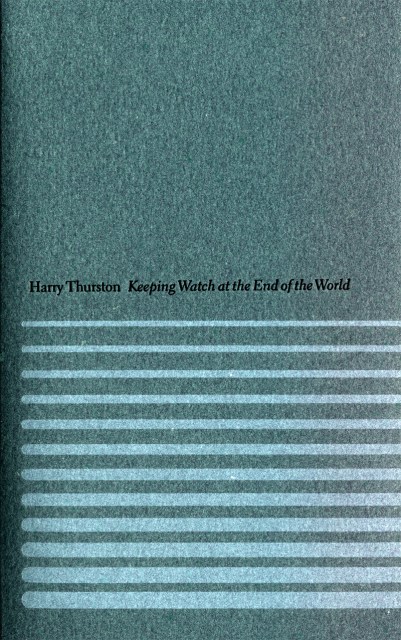
Harry Thurston makes the following comment on Sanctuary by Deborah Carr.

“Sanctuary is an engaging and clear-eyed portrait of her indomitable spirit – a celebration of a courageous life – and an important book”

This led me to pull down my collection of Harry Thurston books. Thurston lives in Tidnish Beach.

I recalled meeting Thurston at the annual meeting, last Spring, of the Elizabeth Bishop Society of Nova Scotia in Great Village. He attended, along with Sandra Barry And hence, I searched out her books too.

I hope you find enjoyment in these books.

Acknowledgements

To those writers who choose to describe life in small communities.
Heather for encouraging me to spend more time outdoors this week.
Edward for his helpful support. Sandra Barry for her encouragement.

References
Deborah Carr, 2010. Sanctuary: The Story of Naturalist Mary Majka.Goose Lane.
Harry Thurston, 2004. A Place Between the Tides. Greystone Books
Harry Thurston, 2005. The Sea’s Voice. An Anthology of Atlantic Canadian Nature Writing. Nimbus Press.
Harry Thurston, 2009. Animals of my own kind: New and Selected Poems. Vehicule Press.
Allan Cooper and Harry Thurston, 2013. The Deer Yard. Gaspereau Press.
Harry Thurston, 2015. Keeping Watch at the End of the World. Gaspereau Press.
Barry S., Davies P., Sanger G. (Ed.), 2001. Divisions of the Heart: Elizabeth Bishop and the Art of Memory and Place. Gaspereau Press.
Sandra Barry, 2011. Elizabeth Bishop: Nova Scotia’s “Home-made” Poet. Nimbus Press.
Sandra Barry and Laurie Gunn (Ed.), 2013. Echoes of Elizabeth Bishop. Elizabeth Bishop Society of Nova Scotia.

Posted in Opinion

Back to the Land

At this time of the year, we are normally resident in Iqaluit. It is a good time to be on the land.

people_upNorth_2
Andrew and his family, out on the tundra, near their cabin.

The sea ice is still frozen, and there is a good spring snow cover. Given the uncertainties of food supply in Northern communities, it is likely predictable that we shall see an increase in hunting and fishing. Traditional skills will have heightened importance. Quinn has built his first Igloo. Isla has started to drive the small family snowmobile..

Meanwhile, in the South, as the seasons change, there seems to be an excess of biomass. The sources include:

– firewood from coppicing for next Winter;
– chipping of brush and bark waste;
– charcoal and wood ash from the woodstove;
– kitchen waste in the compost bin;
– leaves and other organic matter for the hugel beds.

image_hugelBed_1The challenge is to integrate these resources ‘back to the land’. Recycling these materials will complement the planting of seeds in the greenhouse and cold frame.

bookCover_raisdBedGardeningWe will see a resurgence in gardening. We will pull off the shelves, books by Niki Jabbour and Adam Footer. We will read about the work of Bob Cervelli and others. We will seek advice from community gardeners; sharing ideas and seeds. We will investigate the properties of biochar. We will reinforce the edges of our pond.

Our life will be governed by the weather, and our ability to complete the multitude of land-related tasks.

Acknowledgements

Andrew and Julia for their insights into Northern living. Rick for his knowledge of biochar. Heather for planting the seeds. Edward for additional graphics.

References

Niki Jabbour. 2011. The Year-round Vegetable Gardener. Storey Publishing.
Simon Akeroyd. 2016. Raised-bed Gardening. Taunton Press.
Adam Footer. 2014. Bokashi Composting. New Society Publishers.
Robert Tindall et al. 2017. Sacred Soil. North Atlantic Books.


Posted in biographical sketch

Easter Weekend

Good Friday, Heather made two pies: blueberry and meat. This reminded me of a T-shirt that I picked up several years ago in Port Moody, BC.pie_3

Saturday, we started to reorganize the bookcases. There were many discoveries. Not the least, my collection of books by Wendell Berry and Theodore Roszak. I have included a list of references, in case there are any interested readers.

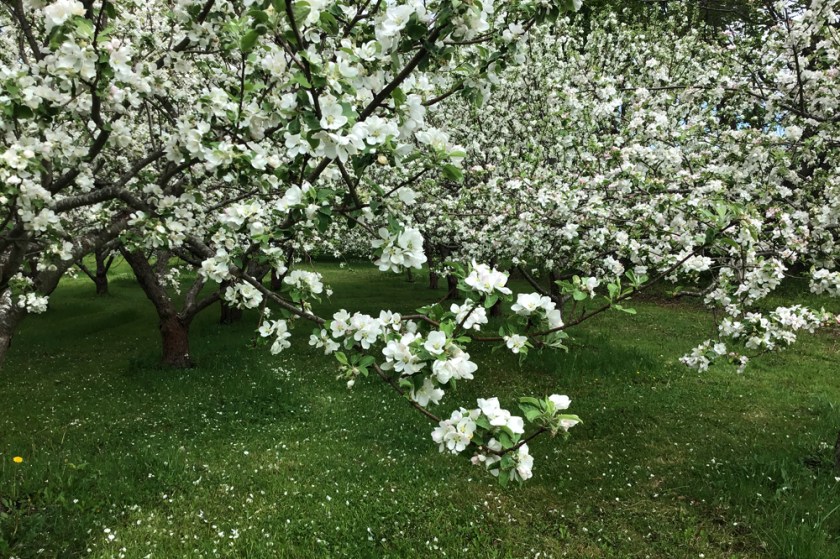
Once the snow squalls finished, we could return to the orchard. First, to add fertilizer (worm castings) around each tree, and then Sunday, to cut the young saplings from the hedgerows which were encroaching on our Apple trees.

This morning (Sunday) I received my weekly Brain Pickings.banner_brainPickings It contained two interesting links.

“ Anne Lamott’s wondrous letter to children about books as antidotes to isolation, portals to perspective and crucibles of self-discovery.”

“James Gleick’s splendid reading of and reflection on Elizabeth Bishop’s poem about the nature of knowledge.”

Bishop was born in Great Village, Nova Scotia.

I sent the first link for my grandson in Petawawa. And the second to Sandra Barry, a leading figure in the Elizabeth Bishop Society of Nova Scotia. Earlier in the week, Sandra had sent me a link to an interesting paper on the Spanish flu epidemic (Dr Alan Marble — Spanish Flu Lecture 2019).

If the weather holds, we can look forward to further work in the orchard.

image_easterOrchard
Note the fertilizer around the base of each tree.

Perhaps we can take the boundary back to the old stone wall. If the weather keeps us indoors, then there are many more books to rediscover. Some will head off to second-hand bookstores; others are ‘keepers’ and will be worth revisiting.

Postscript

We did finish watching CBC Gem’s Mother, Father, Son (eight, 45-minute episodes).
It is about the impact of fathers on their sons, in a somewhat fictitious British context.

Acknowledgements

Heather for her culinary skills. Sandra Barry for her comments on the blog.
Edward for his additions and feedback.

References

Wendell Berry. 1977. The Unsettling of America: culture and agriculture. Sierra Club Books.
Wendell Berry. 1983. A Place on Earth. North Point Press.
Wendell Berry.2000. Life is a Miracle. Counterpoint.
Wendell Berry. 2002. The Art of the Commonplace. Counterpoint.
Theodore Roszak.1969. The Making of a Counter Culture. Doubleday.
Theodore Roszak. 1972. Where the Wasteland Ends. Doubleday.
Theodore Roszak.1978. Person/Planet. Doubleday.
Theodore Roszak. 1986. The Cult of Information. Lutterworth Press.
Theodore Roszak.1993. The Voice of the Earth. Bantam Press.
Theodore Roszak. 2009. The Making of an Elder Culture. New Society.

Posted in Article Review, biographical sketch

Notes from Butternut Tree Farm

A few years ago, Roger Mosher gave us a bag of butternuts. We left them in a pot and promptly forgot about them. The end result was a cluster of butternut trees in the front garden.bookCover_3books_rogerDeakin

The blog title comes from Roger Deakin’s Notes from Walnut Tree Farm. Roger was the author of three books. The others are Waterlog and Wildwood. He came to the front of mind this week because of an essay in Emergence Magazine on the History of the Apple. It describes his trip to Kazakhstan, entitled East to Eden, with contribution from Robert MacFarlane.

honeycrispApplesLater in the day, I picked up a bag of Honeycrisp at Graves grocery store in Bridgetown. Grown locally at Inglis Farms in Tupperville. The Honeycrisp variety is a product from the Kentville Research and Development Centre.

Driving to Kentville yesterday, we noticed that the larger orchards in Kings County were burning their prunings. We checked locally with NS Lands and Forests. Our small pocket orchard, with less than one hundred trees, is too close to the woods. No burning. Instead, I had the opportunity to clear around each trunk and apply several scoops of vermiculture (worm castings).

banner_brickyardRedLunnsLater, we received our first online delivery of Brickyard Red beer from Lunn’s Mill. This complemented a couple of episodes of Mother, Father, Son; a BBC2 production, featuring Richard Gere, Helen McRory and Billy Howle, available on GEM. It is set in England and explores the relationship between the press and politics as well as the complexity of family dynamics. A single series with eight episodes.

Today, with snow on the wind, it looks like an indoor day, except for dog walking.

Acknowledgements

Roger Mosher for his enduring interest in fruit and nut trees. Chantelle at Lunn’s Mill, reminding us about online delivery. Heather for her Spring cleaning efforts in the greenhouse.Edward for his earlier blog and the graphics.

References
Emergence Magazine, April 5,2020. East to Eden. Roger Deakin with Robert MacFarlane.
Roger Deakin. 1999. Waterlog: A Swimmer’s Journey through Britain. Random House.
Roger Deakin. 2007. Wildwood. A Journey through Trees. Penguin Books
Roger Deakin. 2008. Notes from Walnut Tree Farm. Penguin Books.


Posted in New thinking, Opinion

Tracking Deplaned Passengers

Six years ago I proposed a real-time, interactive, contact heat map to track deplaned passengers from flights arriving into Nova Scotia (contact tracing). The idea, in fact, could have been applied anywhere to track the movement of (potentially) virus-infected people.map_virusContact
By October 2014, 4,500 people had died from a recent Ebola global outbreak. We had, in Canada, experienced H1N1 (Asian Bird Flu) and SARS.  The SARS outbreak of 2002-2003 killed 800+ people worldwide and killed 44 Canadians. In our current CoVid-19 outbreak, Canada has suffered 300+ deaths to date. More Canadians have now died from COVID-19 than SARS. Viruses know few boundaries. Deadly viruses such as Ebola, MERS, SARS, Asian Bird Flu (H1N1) and COVID-19 can easily spread with today’s travel. Forensic Studies have shown that viral outbreaks mirror air travel.

“The role of mass air travel in the recent worldwide spread of a number of diseases … has been documented, analysed and discussed by transnational and governmental agencies … clinical practitioners … and academic researchers.” (ScienceDirect)

My proposed interactive map rests on the emergence of the Internet of Things (IoT), G5 cellular technology and Artificial Intelligence, where we can respond to contact and movement and predict a possible outbreak brought in by deplaned passengers from an airline flight; possibly offering a public alerts/warning system. This complements the arduous task of forensic tracking of people’s whereabouts.

Could future technology seek, track and map, in real-time, when and where infected people might come into contact with others and with sensor-embedded objects (taxis, other cell phones, public venues, stores, farm animals, etc.)? Can we react faster and more judiciously to these outbreaks and forecast/model viral outbreaks due to deplaned passengers and crew and their contacts? How can we balance privacy rights with public health needs?

A recent article notes that a team led by MIT researchers are working to do contact tracing using Bluetooth technology while retaining privacy.

References

Science Direct, Airports, Localities and Disease. July 2010.
TechXplore. Kelly Foy (MIT). Bluetooth Signals from Your Smartphone, 09 April 2020.

Postscript

Apple and Google just announced a joint effort to fight COVID-19 via Bluetooth contact-tracing technology.