We all possess a ‘community of place’. In my case, it is civic address #6326 on Highway #201, just beyond the Lawrencetown village boundary. In essence, it could be called East Paradise. The nearest community is Lawrencetown.
We also belong to ‘communities of interest’. These start with the land. As operators of a certified organic orchard, we have an interest in organic farming. Last week, we attended a meeting of the Organic Council of Nova Scotia. This is a group of producers and processors who have been certified according to organic farming standards. To gain recognition as an interest group, we need to work with the Department of Agriculture to ensure that this perspective is represented in the province.
A second ‘community of interest’ is the small private woodlots owners. Again, we need to work with the Department of Lands and Forestry to ensure that this voice is heard.
With access to communications technology, it is easier for these ‘communities of interest’ to share their views and values with the wider society. Government agencies can support input from these communities through website development, membership lists and maps showing the availability of their products.
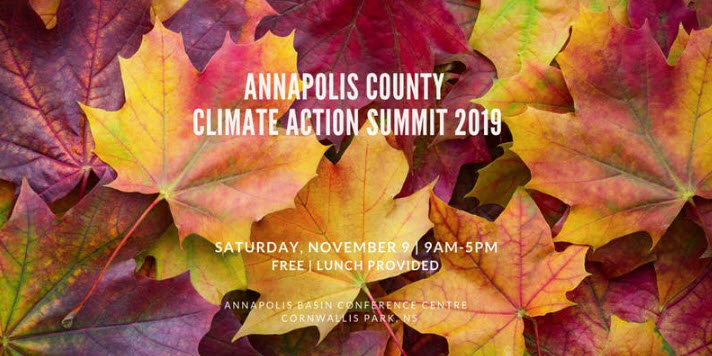
The challenge lies in the identification of these ‘communities of interest’, at a time when our ‘communities of place’ are at risk. There are, however encouraging signs. In Lawrencetown, we see significant leadership with the new health centre, as well as the expansion of CRIA business activities in the village. This weekend in Annapolis Royal, CARP hosted an educational event with Solar Nova Scotia. Next weekend, the Municipality is hosting a Climate Change Summit at Cornwallis Park.
To address the challenges ahead, we need to change the mechanisms whereby different levels of government work with communities of interest. We need to be more effective in the application of new technology for better public education, as well as more informed political decision making.
Acknowledgements
Rachel Brighton for her comments on ‘communities of interest’. Organics Nova Scotia for their interesting meeting. Solar Nova Scotia for their excellent educational forum.
References
Solar Nova Scotia website
Climate Action Summit website.
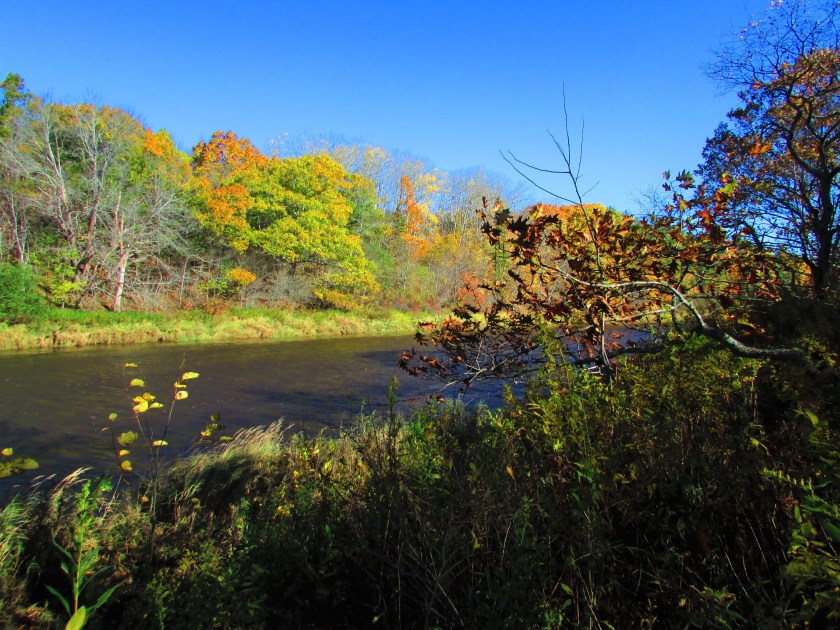
 Earlier in the week, we attended a talk, hosted by the Middleton Historical Society at the MacDonald Museum. Steve Skafte talked about the ‘lost roads of Nova Scotia’. He combined his interest in poetry and photography. Steve has self-published a number of books and maintains a tumbler site on the Internet.
 I also received email from Brian Arnott that Robert MacFarlane will be on CBC Sunday Morning with Michael Enright. (see the
 It is time to realize that the movement of individuals from elsewhere in Canada, or other countries, to Annapolis County is positive. It is time to stop thinking that more citizens who have reached retirement (arbitrarily, say 65 years) is negative. It is positive.
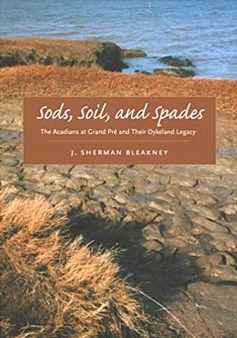 This discussion of the Language of Place took me back to my bookshelf. For Nova Scotia, I retrieved Sherman Bleakney’s book Sods, Soils and Spades: The Acadians at Grand Pre and their dykeland legacy. The word that triggered this search was aboiteau and its role in dykeland construction.
 This is his third book in the Politics of Place series. It includes chapters on walls in China, the United States, Israel and Palestine, the Middle East, the Indian subcontinent, Africa, Europe and the United Kingdom. Of particular interest was the chapter on the UK and its relationship to the Brexit vote. Looking at the map of voters who want to stay in the European Union and those who want to leave. Scotland, Northern Ireland, some of the cities in England want to stay whereas ‘rural’ England want to leave the EU.
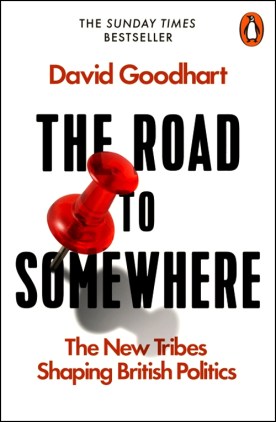 Marshall quotes from the book by David Goodhart,
  In Wolfville earlier this week, I picked up the
 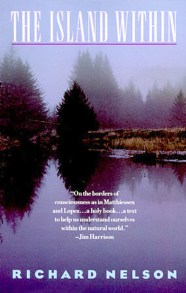 At the
  Brian Boates picked up eight bins for juicing in Woodville, before transporting it to Ironworks Distillery in Lunenburg. At the same time, I heard from Pierre that the first shipment of Hunter Brandy should be available later this month.
 My interest was the relationship between the different religious and education movements in rural Nova Scotia. Willy brought to my attention the book
  This week, there has been very little time or energy for reading. Picking apples in the orchard consumes both time and energy. I have fallen behind on my reading of George Woodcock’s story of George Orwell,
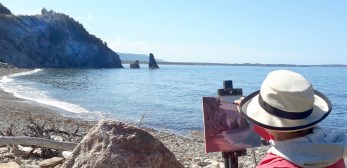 While painting Pillar Rock from Presqu-île, near the southern part of the Cape Breton Highlands National Park, we noted dozens of visitors come for a few minutes to snap photos then move on. Did they see the otters swim the nearby pond? Did they note how the sun lit up the rocky shoreline as it rose above Jerome mountain? Did they hear the high-pitched piping notes of the eagle?
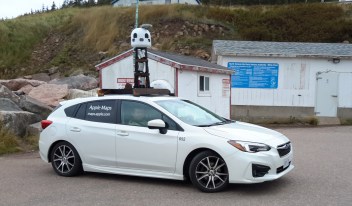 At the other extreme, we were greeted several times by the “
 Ernest Blair Experiment