 The idea for the Ernest Blair Experiment blog came from a combination of Ernest Buckler, writing about the Annapolis Valley and Eric Blair (aka George Orwell) known for his writing about England. When I came across John Sutherland’s book Orwell’s Nose – a pathological biography, it was hard to resist.
Sutherland, Emeritus Professor of English at the University College London describes Orwell’s life (b. 1903 and d. 1950) in terms of his literary career, but within the context of smells.
David Lodge, in his review of the book, states. ‘Orwell’s obsession with smells, agreeable and (more often) offensive, has been noted before, but never explored to such effect, not excluding the smells of shag tobacco and BO he emitted himself’.
Orwell was born before the First World War and died after the Second. He went to school at Eton, served in the Burma police service. He was inspired by social anthropologist Bronislaw Malinowski. He spent time ‘down and out in Paris and London’, as well as visiting the North of England (The Road to Wigan Pier).

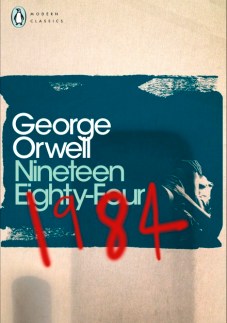
His final book was Nineteen Eighty-Four, completed on the remote Scottish island of Jura.
Robert MacFarlane, in The Wild Places, writes:
” It is clear that Orwell needed to be in that wild landscape to create his novel; that there was reciprocality between the self-willed land in which he was living and the autonomy of spirit about which he was writing. The price of this vision, though, was his life’. p.140.

It is interesting to reflect on the next generation in England, born around the start of the Second World War and subsequently emigrating to either Canada or Australasia. I am part of that generation, as well as my older brother. This year my artist-brother has put together a series of postcard paintings for his grandchildren, with notes for every five years of his life. This has now been supplemented with a YouTube video matching each postcard painting.
All of this reflection has set me thinking. How does the landscape enter into the writing task?
Acknowledgements
Thanks to Edward Wedler for his graphics contribution. Peter Maher for sharing his autobiographical work in progress. Shared memories indeed.
References
John Sutherland. 2016. Orwell’s Nose. Reaktion Books.
Robert MacFarlane. 2008. The Wild Places. Penguin Books.
George Orwell’s books include Burmese Days, Down and Out in Paris and London, Keep the Aspidistra Flying, The Road to Wigan Pier, Homage to Catalonia, Coming up for Air, Animal Farm, Nineteen Eighty-Four.
 This Christmas, we decided to send
 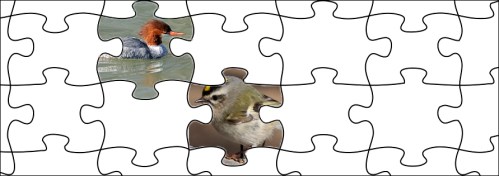 Last Thursday, it was the Christmas bird count. It was a cold (-15C) windy day. The birds were sparse. In the morning, we walked up the Inglisville Road to the top of the mountain, and then back down through our property for lunch at home. In the afternoon, we went down through Andrew’s property to the Annapolis River. We saw a Golden Crested Kinglet flitting around the upper branches of the poplars. On the river, we spied a Common Merganser.
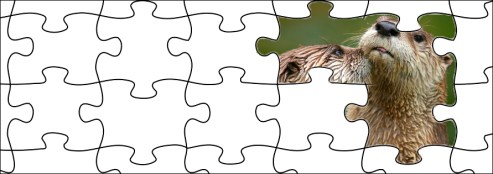 The Annapolis River was full of floating ice pans. The highlight was to see two river otters who were curious to see two humans on the bank.
 Fifty years ago in the United Kingdom, they created The Open University.
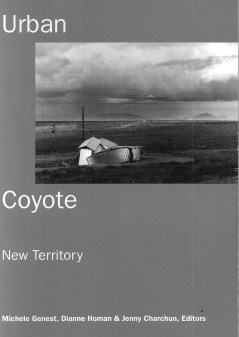 Over the Christmas break, I came across two connections to the Centre for Local Prosperity (CLP). Gregory Heming (Senior Advisor) forwarded to me a copy of his essay, entitled ‘Letter to Wendell Berry’, as well as ‘Conjectures of a Northern Journeyman’, published in Urban Coyote.
 The second connection was to discover a reference to the work of Robert Cervelli in the book by Niki Jabbour Year-round Vegetable Gardener. Cervelli (besides his role as Executive Director, CLP) grows vegetables in his cold frame and unheated greenhouse.
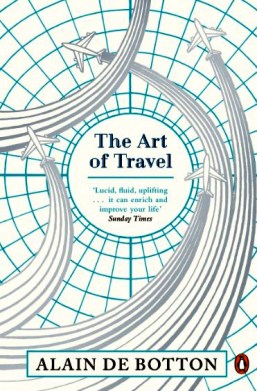 My second link relates to Alain de Botton’s book The Art of Travel. He describes the work of John Ruskin on word-painting.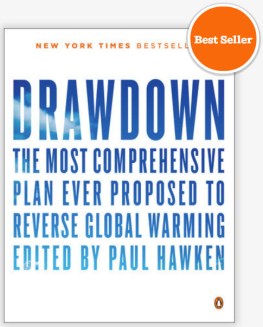
 In the documentary, there was a focus on Energize Bridgewater, perhaps Annapolis Royal could play a similar focal role with Land Use. If so, they may seek to collaborate with the Centre of Geographic Sciences, Lawrencetown and develop current maps and statistics on the status of the forest, agriculture and other land use types in the County.
 From the audience, the comment was made that ‘we only have twelve years’. How can we organize resources that go beyond the Centre for Local Prosperity and the Municipality of Annapolis County? What can we do to change our institutions: provincial and municipal government, as well as schools and post-secondary education institutions? How do we fully utilize the creative human resources in the region? Are we taking full advantage of town hall-style meetings? We need to continue to keep looking everywhere for good ideas, innovation, and where appropriate new technology. Conversely, we need to share the special resources that we have locally with other communities. The impossible becomes an opportunity.
 Ernest Blair Experiment