
“If you have a library and a garden, you want for nothing else”: British saying.
From Chapter 4. What we can learn from the British, Mark Cullen and Ben Cullen’s Escape to Reality: how the world is changing gardening and gardening is changing the world.

I found in the COGS Library Alice Sparberg Alexiou’s biography Jane Jacobs: Urban Visionary.
Chapter 10, Economist without Portfolio, starts with the question ” Why do some places get rich, but not others ?” (p 169).
In ‘On the Mechanics of Economic Development’, Robert Lucas, who would win the Nobel Prize for Economics in 1995, argued that places that thrive do so mostly as a result of what economists call ‘human capital’ (p169). When Lucas was developing his hypothesis, he read Jacob’s 1969 book The Economy of Cities. Her book, Lucas realized, was all about the external effects of human capital, and it helped his ideas take shape (p 170).
“As Jacobs had rightly emphasized and illustrated with hundreds of concrete examples, much of economic life is ‘creative’ in much the same way as ‘art’ or ‘science’ (p 171).
“All economic growth since the industrial revolution is due to ideas,” Lucas says ” But growth theory for years ignored the force of ideas. For Jacobs, this question is the centre of everything’. ” Jacobs, he says “shows that most of the ideas come from the ground, not R & D departments” (p 171).
From Jacobs, ” I think we are misled by universities … into thinking that there actually are separate fields of knowledge. But no, they link up … everything is a seamless web … and its a very functional thing, not just a poetic expression.”
 Combine these observations by Jacobs with the Chronicle Herald article on the new rural economy. The PLACE model of Community Development comes from seven years of research on Fogo Island by Memorial University in partnership with the Shorefast Foundation.
Promote community champions
Link Insiders and Outsiders
Assess local capacities
Convey compelling narratives
Engage both/and thinking
‘It is through a commitment to place, and principles of PLACE, that champions muster the energy, creativity and other resources to renew a community’s economy and sense of purpose.’
Further to my conversations with Brian Arnott (see my earlier blog) Jane Jacobs can be considered both an urban visionary and a rural visionary.
Postscript
This week, we settled on the format for the Local Authors Question and Answer session at the EBLES event on June 29th. Bob Bent, Marilyn Jones and Dianne LeGard, all members of Authors Ink, will discuss their work. They will address the question: Why do I write? What do I like to write about? How is my writing published? How to market my book(s)?
Acknowledgements
Brian Arnott for his thoughts on economic development in rural communities. Edward Wedler for his graphics contribution.
References
Alice Sparberg Alexiou. 2006. Jane Jacobs: Urban Visionary. Harper Collins Publishing.
Mark Cullen and Ben Cullen. 2018. Escape to Reality. How the World is changing Gardening and how Gardening is changing the World. Nimbus Books.
Barbara Dean-Simmons. Chronicle Herald. Friday, May 24,2019. How unexpected ideas are leading to a new rural economy. Part 3. Taking the Past into the Future. p A8-A9.
 We were comparing notes on community development in the Annapolis Valley and along the South Shore. In my previous blog, I had raised questions about technology and education from the perspective of a citizen living in rural Annapolis County. Asking difficult questions, and offering solutions are very different activities.
 Her Ph.D research is a comparative analysis of food tourism in the Okanagan Valley with the Annapolis Valley. As we talked about the structures in Nova Scotia , I realized there is a real difference in both approach and culture between BC and NS. Comparative research can help us redefine our approach to seemingly intractable issues: changing demographics, municipal competition, the relationship between communities and their educational institutions.
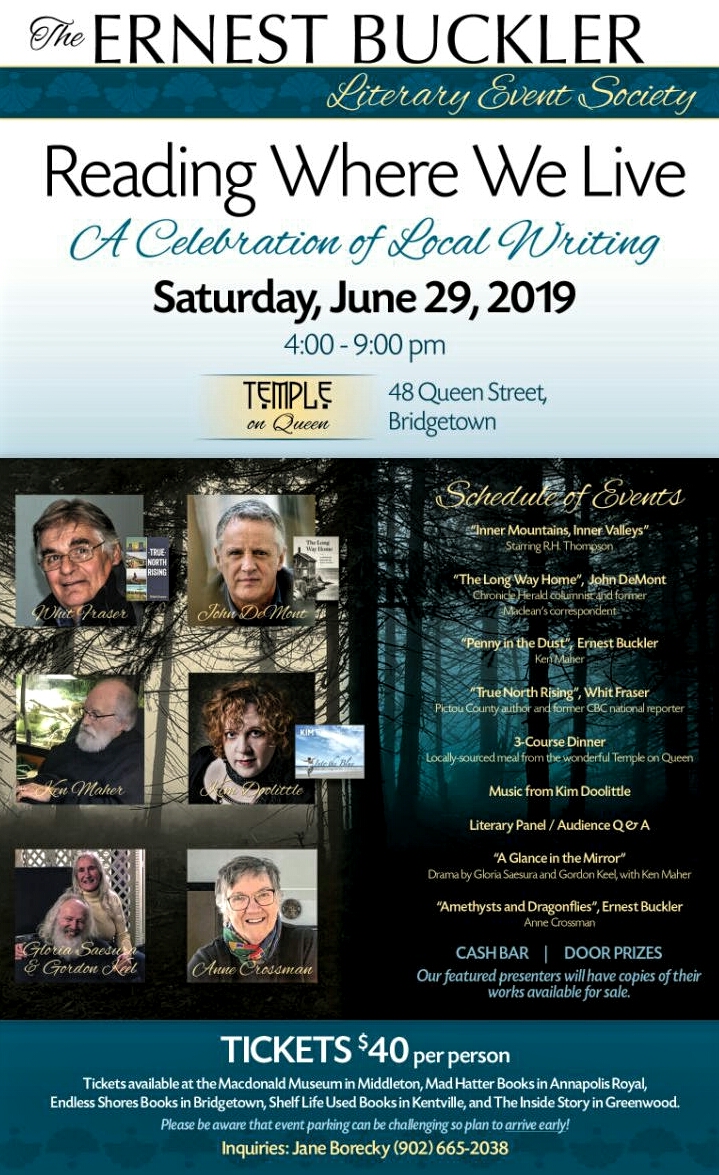 Tickets for the EBLES event are available at The Endless Shores Books, Bridgetown; Shelf Life Used Books, Kentville; The Inside Story, Greenwood; Mad Hatter Books, Annapolis Royal and the MacDonald Museum, Middleton.
 Later in the day, Heather and I stopped there for an inaugural lunch. This opening, combined with the renovations at the Lawrencetown restaurant, shows a real commitment by local business to the community. These investments are complemented by the activities across the river at the
 A couple of conversations caught my attention. The first was a chat about the conversion of a LiDAR-derived topographic landscape into a hooked rug. This resonated with a new book that I had signed out from the COGS library. Artistic Approaches to Cultural Mapping: activating imaginaries and means of knowing. The second conversation, with Ed Symons, related to my experience at the walk-in clinic in Berwick, looking for a doctor. There, I had picked up a brochure describing the process for 811 registration. Here was my question: why not allow communities to actively engage in the doctor shortage issue. Can we not map citizens who do not have a family doctor from the registry? Can we not map the communities where doctors are retiring? This would allow individual communities, without government oversight and control, to be
  Yesterday, Heather and I joined a group of about thirty woodlot owners for a field trip organized by the
 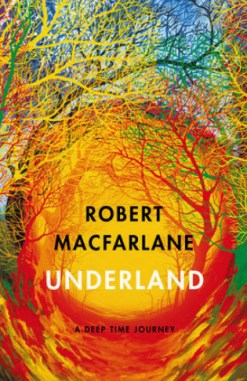 This week, I received emails, from my brother and Frank Fox, about the new book by Robert MacFarlane,
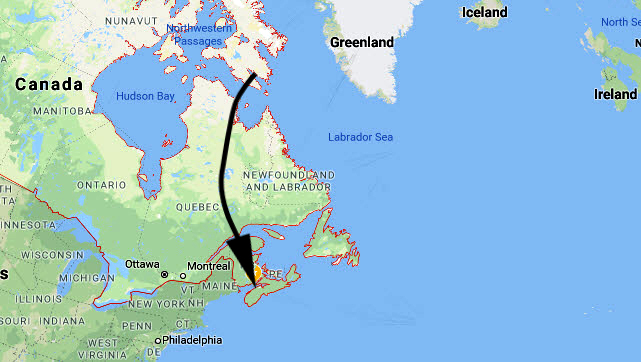 After five weeks in the North, what has changed on the home front? First, Dr Mackinnon has retired. This means no family doctor. Make sure that you have registered on the 811 list; not an encouraging sign, especially given the recent video that went viral on a young cancer patient. Second, Highway #201 is still full of logging trucks
  On a more positive note, courtesy of Amazon, I returned to find two new books by David Manners. You may recall from
 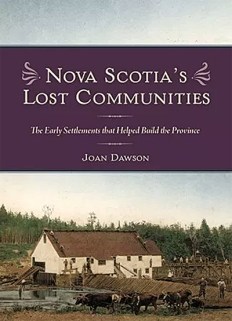 My last piece of reading, I picked up this week, at my father-in-law’s house in New Glasgow. The book is by Joan Dawson
 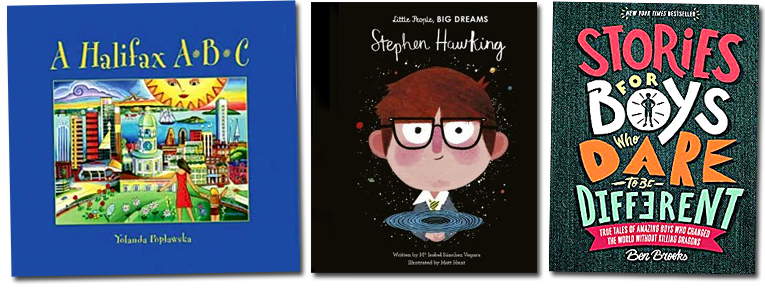 The Halifax ABC was picked up at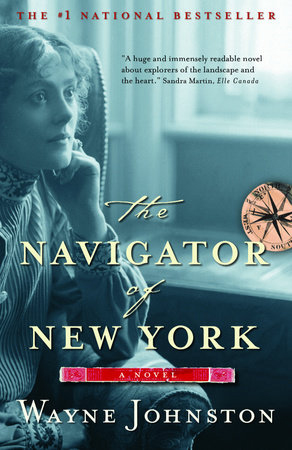
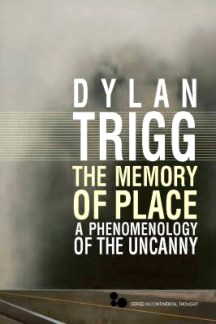
 From my brother, I received another BBC podcast,
 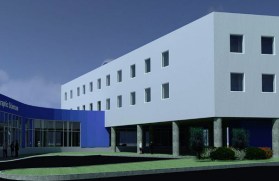 This week, I received an email about the
  In True North Rising, Whit Fraser describes meeting Mary Simon’s parents in the Arizona Desert (p.138). For nearly twenty years, the in-laws made winter camping trips. Bob May started work for the Hudson Bay Company at Arctic Bay, where he met his wife, Nancy. This story reminds me of the changes in technology, and its relation to elder travel.
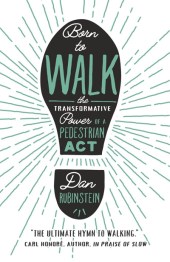 On our way North, we had a stopover in Ottawa. This was our chance to visit an urban Chapters bookstore. I picked up Dan Rubinstein’s
