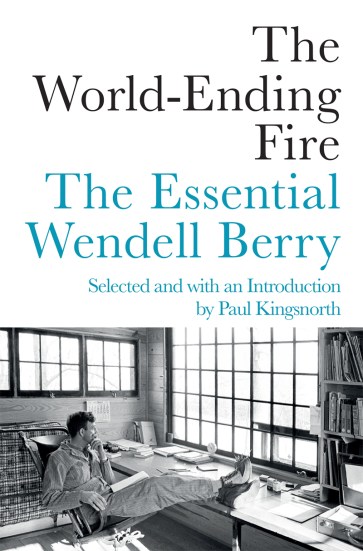
 In his essay ‘Two Minds’, Wendell Berry talks in terms of the Rational Mind and the Sympathetic Mind.
“We humans necessarily make pictures in our minds of our places and our world….. we live in two landscapes, one superimposed upon the other” p.177
“First there is the cultural landscape made up of our knowledge of where we are, of landmarks and memories, of patterns of use and travel.”
“And then there is the actual landscape, which we can never fully know, which is always going to be to some degree a mystery, from time to time surprising us.”
“These two landscapes are necessarily and irremediably different from each other.”
“If the cultural landscape becomes too different from the actual landscape, then we will make practical errors that will be destructive of the actual landscape or of ourselves or both” p178.
“And so conservationists have not done enough when they conserve wilderness or biological diversity. They also must conserve the possibilities of peace and good work, and to do that they must help to make a good economy.”p200.
Elsewhere, in the essay ‘In Defense of Literacy’.
“I am saying, then, that literacy – the mastery of language and the knowledge of books – is not an ornament, but a necessity. It is impractical only by the standards of quick profit and easy power” p295.
And so, I am facing two landscapes: the landscape of rural Nova Scotia and the landscape of suburban Greater Vancouver.

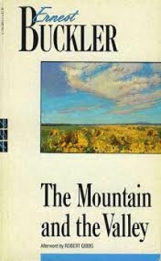
The landscape of rural Nova Scotia I can find described in the writing of Ernest Buckler or the recent column by John DeMont in the Chronicle Herald. Perhaps in the weeks ahead, I will find equivalent descriptions in British Columbia.
In the meantime, I shall enjoy the other essays in ‘The World-Ending Fire: The Essential Wendell Berry’.
Acknowledgements
To Anne Crossman for the Buckler and DeMont links. To John Rostron for early insights into BC living. To Edward Wedler for his graphics.
References
Wendell Berry. 2017. The World-Ending Fire: The Essential Wendell Berry. Selected and with Introduction by Paul Kingsnorth. Counterpoint Press.
John DeMont. Chronicle Herald July 16,2019. Most of Nova Scotia is Empty, Thank Goodness for That.
Ernest Buckler. Maclean’s. June 1,1949. Last Stop before Paradise.
https://archive.macleans.ca/article/1949/6/1/last-stop-before-paradise
Postscript ‘Praise for Wendell Berry’
“He writes at least as well as George Orwell and has an urgent message for modern industrial capitalism…..Nobody can risk ignoring him”. Andrew Marr, New Statesman.
AFTERWORD
This is chalkboard on the stairs in my daughter’s house.

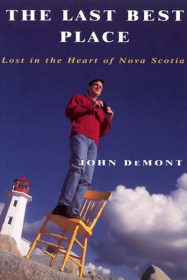 Before heading to Langley, BC via Calgary and Vancouver airport, there was time for some retrospective homework. On the plane, I had the time to read John DeMont
  This resulted in a link between COGS and BIOTROP. We designed a program linking Information Technology to Resource Management. Canadian graduates were hired to effect the technology transfer of GIS and other software. I look forward to receiving an update, after two decades. Will the programs mirror the conversations on citizen science described at the Esri User Conference?
 This week, between Canada Day and Independence Day, we went down to Brooksville, Maine to visit Andrew, Julia and family at Julia’s Mothers house. Besides the kayaking, sailing and beach access we discovered a part of ‘the back to the land’ history.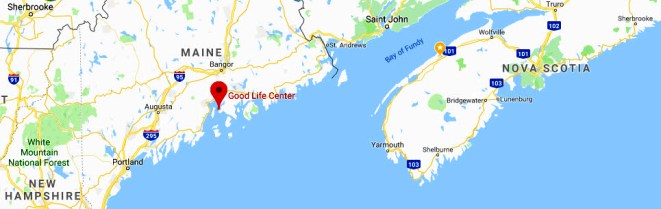
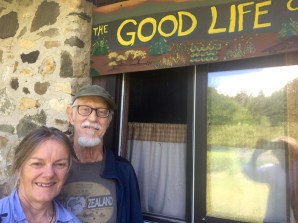 For those interested, check out the following web site
 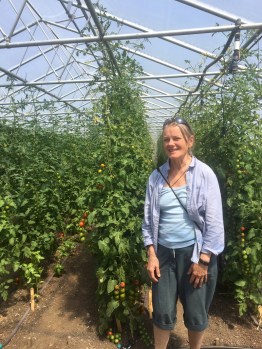 To get there is very simple. Take the Digby-St John ferry, drive to the Canada/US border at St Stephen/Calais. Take the Airliner, Route #9 towards Bangor. About two thirds along head south on #179 to Brooksville. Specifically, both The Good Life Centre and Four Season Farm are at Harborside.
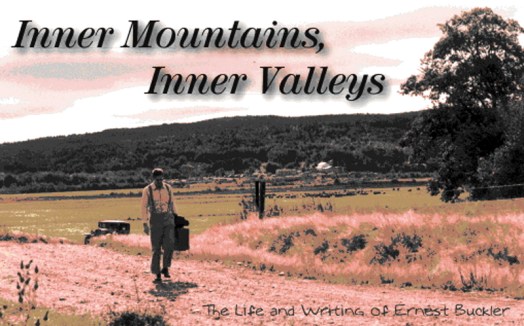 This set the scene, giving us a biography of Buckler’s life. Later in the program, we listened to readings by Ken Maher, Anne Crossman and a play “A Glance in the Mirror‘, featuring Ken Maher, Gordon Keel and Gloria Saesura.
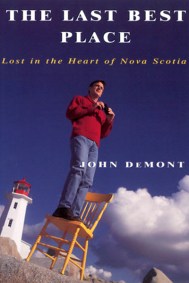 One last story, related to the event. On Friday, Heather and I were in Windsor to pick up a couple of rain barrels. We stopped at the Readers’ Haven, a second-hand bookstore in town. I found a copy of John DeMont’s earlier book
 Thursday morning at the Berwick Fire Hall, it was the Annual General Meeting (AGM) for the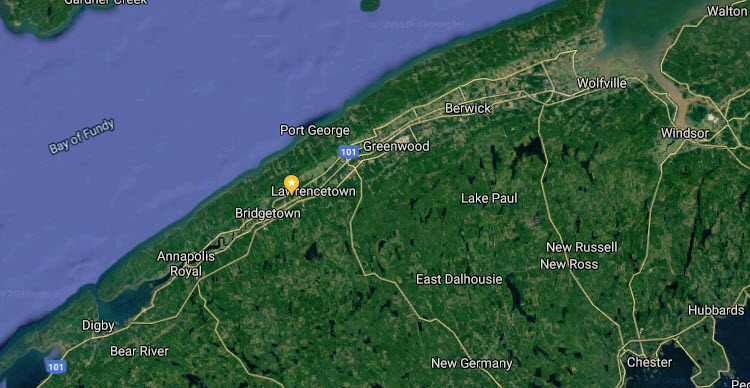
 Just stopped for lunch at the Paradise Corner Cafe, chowder and homemade meat pie. Their byline is:
 Besides the celebration, we checked out the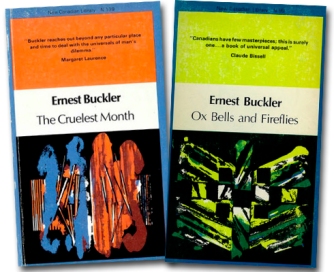

 Next weekend, the
  It is a dark, detective story, set and filmed in Iceland. Part of the attraction was landscape photography. This somewhat coincided with another Netflix offering
 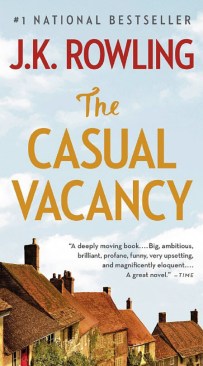 One idea came from a quick read of the first few chapters of the novel, “
 Anne Crossman sent me the link to a ‘green interview’ by
  One of Atwood’s action has been to contribute to the ‘
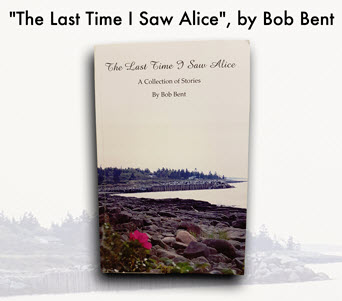 In preparation for the EBLES event on June 29th, we have been assembling a representative list of local books. This includes the work of Bob Bent, Marilyn Jones-Bent and Dianne Legard who are part of the Panel Discussion. It is truly remarkable the number of writers living in this part of Nova Scotia. Meanwhile, we are connecting with our invited guests: Whit Fraser and John DeMont.
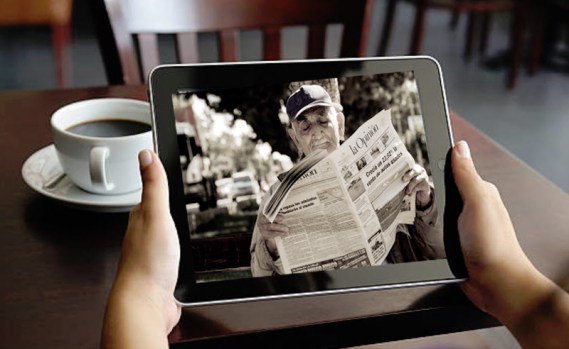 With the increased use of social media, how is that impacting the quality of the reporting in the traditional media? At what point, do we stop purchasing the newspaper? If all your information arrives electronically, then you are subjected to a barrage of advertisements and other material that matches your ‘electronic profile’.
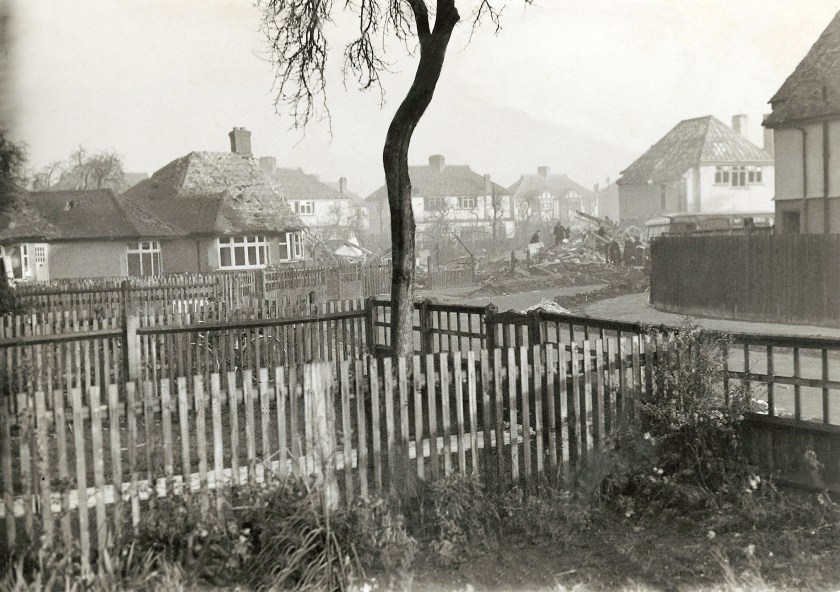 It is from another place and another time. We both grew up at 39 Hazel Close,
 To catch up with the activities at
  On CBC Writers and Company,
  Another item that crossed my desk was from May 24, 2019, The Guardian Weekly. It includes an extract from
