There is considerable discussion about ‘smart cities’, but what is the impact of these technologies on a rural lifestyle?

What needs should be addressed? One need is transportation, another is health care. At what point does technology-access, designed for an urban lifestyle, detract or destroy rural values? In Annapolis Royal, at the Library, we see the reality of an Innovation Lab, as part of a Community Hub. It gives everyone access to a range of modern communication technologies.
 This week, courtesy of the Internet, I received George Monbiot article on ‘dark money”. In return, this had me thinking about the money behind the Gordonstoun project. Is the Annapolis Valley ready for this type of colonization?
After our meeting at Burnbrae Farm (Morse Estate), I challenged myself to re-read Buckler’s The Cruelest Month. I think it answered my question. The setting is not likely the Morse Estate in Paradise, but rather Milford House on Highway #8 towards Kejimkujik National Park. What I had forgotten, was the quality of Buckler’s language and style. Now, I am charged to pull Ox Bells and Fireflies off the bookshelf.
 The other recent challenge was the French cooking at the Flying Apron (not really a challenge).
For the record, the menu included Salmon Rillette, Gougers, Coq Au Vin, and Creme Brûlée. All prepared by Chef Chris Velden. Each couple received a handout with the list of ingredients (and measures) and the method for preparation of each dish. Excellent!
Returning home, courtesy of the Internet, I received a review of Julia Blackburn Time Song: searching for Doggerland. This has prompted a new interlibrary loan request.
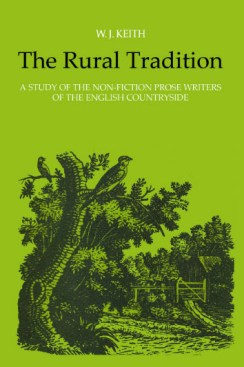 In attempting to understand ‘rural’. I pulled off the bookshelf, The Rural Tradition, written by W J Keith, Professor of English at the University of Toronto.
It is a study of non-fiction prose writers of the English countryside and includes chapters on such notables as Isaac Walton, Gilbert White and William Cobbett.
Keith, in his conclusion, asks the following question:
“Is country writing a thing of the past? In an age that can envisage hermetically sealed monster cities artificially protected from natural phenomena and a polluted atmosphere, that can seriously entertain the possibility that three quarters of the world’s animal species may be extinct by the end of the century, is it feasible to expect the survival of a literature centred upon the countryside and the rural way of life ?” p.258
Keith was writing in 1974.
Acknowledgements
Thanks to Rosemary Barron for the link to George Monbiot. To Frank Fox for the link to the review of Julia Blackburn’s book, and also for giving me a copy of Keith’s The Rural Tradition. To Heather Stewart for sharing the cooking experience at the Flying Apron. Edward for his graphics skills.
References
Ernest Buckler. 1963. The Cruelest Month. McClelland and Stewart
Ernest Buckler. 1968.Ox Bells and Fireflies. McClelland and Stewart.
W.J. Keith. 1974. The Rural Tradition. University of Toronto Press.
The Flying Apron website
Burnbrae Farm and Paradise Inn see link www.burnbraeparadise.ca
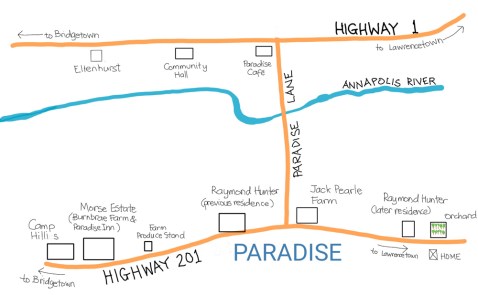
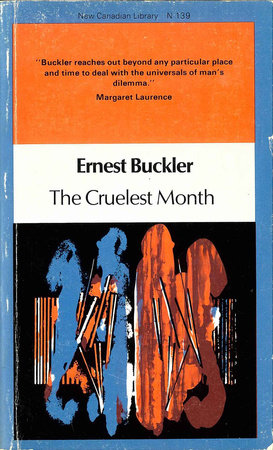 It describes a group of writers who go to Endlaw (an anagram for Walden), a country estate twenty miles from Granfort (aka Annapolis Royal). Buckler in his teenage years had spent time working at a similar resort in New England. Was the Morse Estate, part of Bucklers’ mental model?
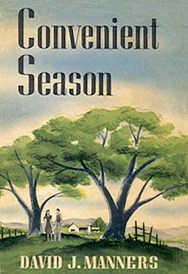 From my previous blog, you will know that David Manners wrote Convenient Season, published by EP Dutton in 1941.
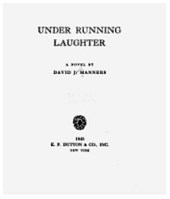 He wrote a second novel, Under Running Laughter in 1943. In his later life, he published several non-fiction works, The Soundless Voice, The Wonder within you, and Look through: an evidence of self-discovery.
 The photograph from David Hildebrand of the
  These socials and the national conference are but one mechanism for sharing ideas, experiences and business opportunities. If NSCC supported a COGS alumni database, we can envisage the engagement of this resource, shared stories and examples of the application of Geomatics technology to many of the concerns of both rural and urban Canadians. Indeed the reach is global. Many of our graduates moved to the United States and elsewhere; others found jobs working on global environmental issues.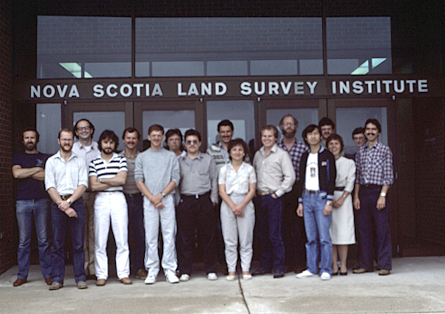
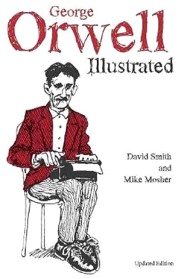 Back home, in my own comfort zone, I can heartily recommend George Orwell Illustrated. It is very accessible, with cartoons by Mike Mosher. It has two parts: Orwell for Beginners and Planet Orwell. In the second part, there is a human rights manifesto, co-authored by Orwell, with Bertrand Russell and Arthur Koestler. This returned me to my sixties reading on ‘Beyond Reductionism’, including contributions from Koestler, van Bertalanffy and CH Waddington. Other familiar Koestler titles were The Act of Creation and The Ghost in the Machine.
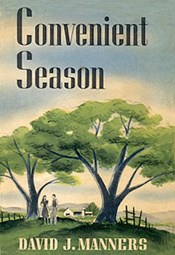 David Manners book:
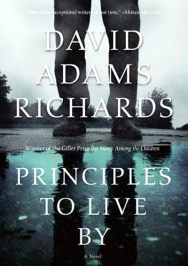 David Adams Richards book
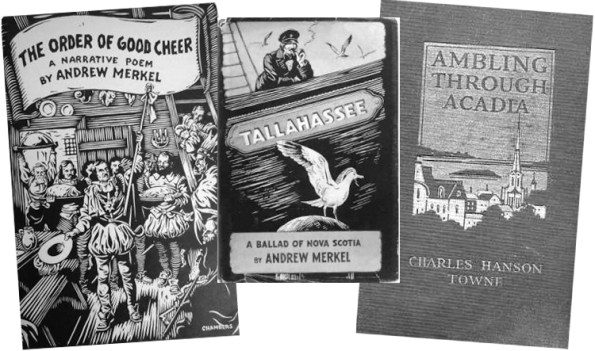 Evidence suggests that there has been a long tradition of self-publication in the Annapolis Valley. Anne Crossman arrived with a canvas bag full of books by local authors. Two notable historic treasures were Andrew Merkel’s narrative poems, The Order of Good Cheer and Tallahassee. Both published by Abanaki Press, Lower Granville, Annapolis County 1946. Second, Charles Hanson Towne’s Ambling through Acadia, 1923. It describes a trip from Yarmouth along the Annapolis Valley – Digby, Bear River, Annapolis Royal, Bridgetown, Wolfville to Halifax, with a side trip to Parrsboro.
 As we were discussing the relationship between ‘place’ and ‘writing’, I remember an earlier blog by Dick Groot on Highway #201 and the BRITEX plant in Centrelea. Centrelea was the home base for Ernest Buckler.

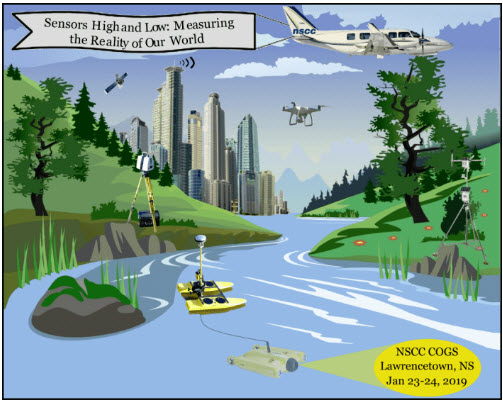 On Wednesday and Thursday (January 23 and 24th), COGS in Lawrencetown is hosting a two-day conference, entitled: Sensors High and Low: Measuring the reality of our world. A draft copy of the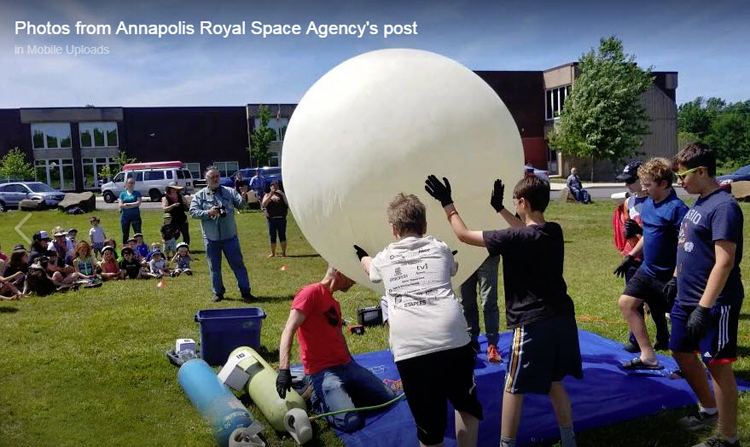
 The idea for the Ernest Blair Experiment blog came from a combination of Ernest Buckler, writing about the Annapolis Valley and Eric Blair (aka George Orwell) known for his writing about England. When I came across John Sutherland’s book Orwell’s Nose – a pathological biography, it was hard to resist.


 This Christmas, we decided to send
  Last Thursday, it was the Christmas bird count. It was a cold (-15C) windy day. The birds were sparse. In the morning, we walked up the Inglisville Road to the top of the mountain, and then back down through our property for lunch at home. In the afternoon, we went down through Andrew’s property to the Annapolis River. We saw a Golden Crested Kinglet flitting around the upper branches of the poplars. On the river, we spied a Common Merganser.
 The Annapolis River was full of floating ice pans. The highlight was to see two river otters who were curious to see two humans on the bank.