Posted in Event Review

Arts for Life

On a dark, stormy Wednesday evening, we went to Kings Theatre, ‘Arts for Life’ in Annapolis Royal. They showed three new films by ARCAC and Andrew Tolson.
  1. Arts at the Centre (ARTSPACE): four decades of community artistry.
  2. It’s all about Love: An artist profile of Ken Flett.
  3. The History of Us: An artist profile of Deb Kuyzk and Ray Mackie.

After the intermission, ‘Rural Renaissance: How Canada’s oldest town reinvented itself’. A 2021 documentary about Annapolis Royal in the 1970’s and 1980’s. It was spearheaded by Jane Nicholson and AIRO, with the support of film-maker Andrew Tolson and researcher, Wilfred Allen (view the documentary in post Two Used Books).

Heather and I came to COGS in Lawrencetown in 1980. The film combined personal interviews, with historical perspectives, and a focus on place, in this case, Annapolis Royal. The combination of interviews and archival footage was compelling. It included the Historical Gardens, Kings Theatre, Sinclair Inn, etc. plus interviews with Greg Kerr, Paul Buxton, Barry Moody and others.

For the first time, I was able to fully appreciate the difference between the Annapolis Region Community Arts Council (ARCAC) and ARTSPACE ( the gallery) and now ARTSEEN ( the digital presence) – an exploration of the processes, minds and concepts that ignite the work of contemporary artists and arts centres..

This mixture of personal stories, historical footage and a sense of place offers an inspirational model for other communities, and other endeavours e.g. Science for Life at COGS in Lawrencetown.

Acknowledgements

Excellent Cinematography by Andrew Tolson. Edward Wedler added the graphics and links to the blog. Heather shared the stormy drive to Annapolis Royal. Janet Larkman hosted the event at the King’s Theatre.

References
Artseen link

ARCAC link.

Posted in Book Review

Two Used Books

This week, I found two interesting used books.

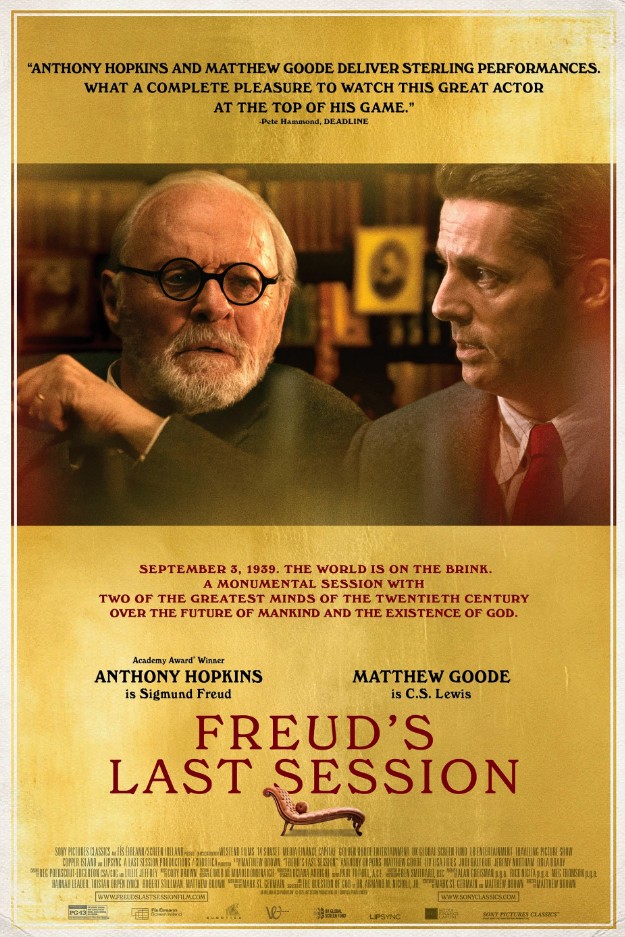
At Endless Shores, I picked up Patti Callahan’s Becoming Mrs Lewis. This was for Heather, as a follow-up to last week’s movie ‘Freud’s Last Session’ (see post Busy Wednesday). Joy Davidman became the wife of C.S.Lewis.

While looking for brown bread at Bees Knees, I discovered David Suzuki’s The Sacred Balance: Rediscovering our Place in Nature. It was a revised edition. I recall reading the original years ago. This time, I forwarded it to Patrick in Peterborough, as a belated birthday present.


I finished the draft abstract for my talk for June’s CSRS conference in Halifax (see post 50 years of Remote Sensing and GIS at COGS). I continue to research and receive links on the use of AI and GIS.

Michael Goodchild, my graduate supervisor at UWO sent a link to a conference at UC Santa Barbara, last December, in part sponsored by Esri. Edward Wedler sent me another link via email, ‘Bayanat, Geospatial and AI’. For both Edward and myself, we wonder what is required to prepare COGS graduates in these new technologies.


Meanwhile, Heather and I had a micro-adventure on our property, snow-shoeing along the powerline and following the west property line — a good two hour work out on crusty snow.

Acknowledgements

Thanks to Michael Goodchild and Edward Wedler for forwarding the links between AI and GIS. Heather shared the micro-adventure snowshoeing.

References

Patti Callahan, 2018, Behind the Scenes of Becoming Mrs. Lewis, Thomas Nelson.

David Suzuki, 1987, The Sacred Balance: rediscovering our place in Nature (25th anniversary edition, Greystone Books).

Bayanat Joins World Geospatial Industry as a Council Member, News Desk, Geospatial Worl, 26Feb2024

Michael Goodchild, Spatial Data Science in an Age of Scientific Disruption, 8-9Dec2023, UCSB Geography.

Postscript

This Wednesday evening (Feb 28) Arts for Life in Annapolis Royal, Kings Theatre 7pm, shows Films Celebrating the 40th anniversary of ARCAC and ARTSPLACE and Annapolis Royal’s Rural Renaissance.

Posted in biographical sketch

Busy Wednesday

Esri visited COGS to recruit new employees. Their head office is in Redlands, California.

The three members of the recruiting team were from Halifax and Connecticut. I attended the opening session in the AV room, because of my interest in GIS education.

I worked in Redlands in 1989, after a year in Indonesia and before moving to Ontario, to design and deliver GIS training for staff at the Ontario Ministry of Natural Resources (OMNR).

Here are a couple of items that caught my attention.

  1. Esri remains the world-leading GIS software company. They have 5,000 employees world-wide. They have eighteen R&D centres, one of which is in Ottawa. Esri purchased SpotOn in 2011. Both Derek Weatherbe and Jeff Sutherland work remotely for SpotOn.
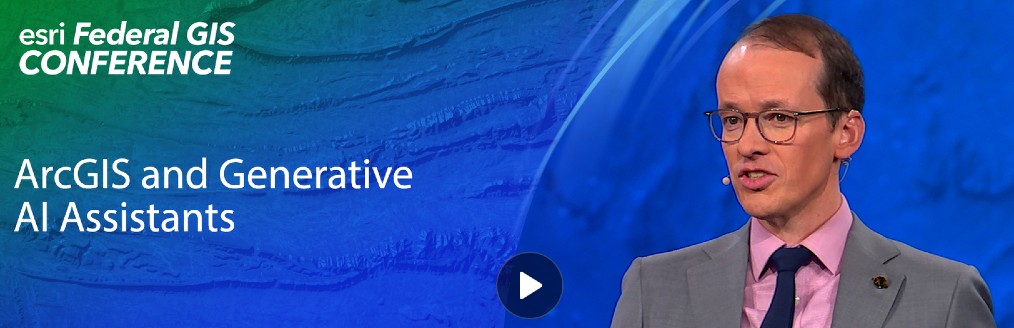
  2. Jeff gave a technical presentation on Data Pipelines. This included a video on Generative AI Assistants (HERE is the link).

In the evening, Jeannie Shoveller offered us a drive to Annapolis Royal to see Freud ‘s Last Session

— a conversation between Sigmund Freud (Anthony Hopkins) and C.S. Lewis (Matthew Goode) set in London during the Second World War. C.S. Lewis is best known for The Chronicles of Narnia, and the Lion, the Witch and the Wardrobe.

It was an evening of contrasts. Jeannie used to babysit our children when we lived in Clarence. I am not sure if C.S. Lewis was on the reading list.

It was unsettling to watch a movie set in WWII, in a small community with its own theatre, at a time when the world is in a state of turmoil, given the war between Ukraine and Russia.

Postscript

In today’s Bridgetown Reader, I noticed a call for memories of Ride the Lobster. A uni-cycle relay race around Nova Scotia in 2008.


(Members of the Singapore and Nova Scotia teams are shown in this photo taken by Edward).

The brainchild of Edward Wedler. Doug Dockrill is preparing a book on the event.

Acknowledgements

Thanks to Derek Weatherbe for the invitation to the ESRI Technical presentation. Thanks to Jeannie for the invitation to Kings Theatre. Edward added the graphics and the links.

References

Esri Generative AI Assistants video.

Posted in biographical sketch

The Impact of AI

Today (Sunday), we took another micro-adventure to Annapolis Royal. The first stop was the French Basin trail; snow-covered but passable (see the video at Walking Paths). Afterward, we stopped at the Sissiboo cafe.

There, I found a copy of Matthew Rouse’s book ‘Will AI take my job?’ Apparently, Rouse wrote the book at the cafe.

This thought intersects with my research into the future of GIS (Geographic Information Systems) and RS (Remote Sensing) at COGS (Centre of Geographic Sciences). What will be the impact of AI (Artificial Intelligence) on that world?

With the availability of new sensors, drones, etc., how will we manage the deluge of geographic information? I can envisage a day when we may need to return to a new digital photogrammetry.

In the meantime, this week Esri will be at COGS recruiting new talent for their expanding business. I plan to attend, to see what skills are in demand from the 2024 graduates, aside from AI and digital photogrammetry.

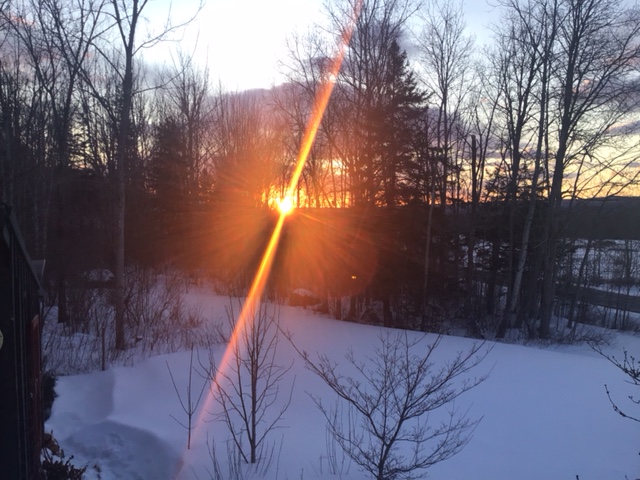
After Annapolis Royal, we ventured down to Lower Granville. We arrived home in time to take a sunset photograph.

Reference

Matthew Rouse, 2023, Will AI take my job?

Acknowledgments

Heather hiked the trail with me. Edward added the graphics. I expect to see Derek Weatherbe and the Esri team on Wednesday morning.

Posted in biographical sketch

Fifty years of GIS and Remote Sensing at COGS.

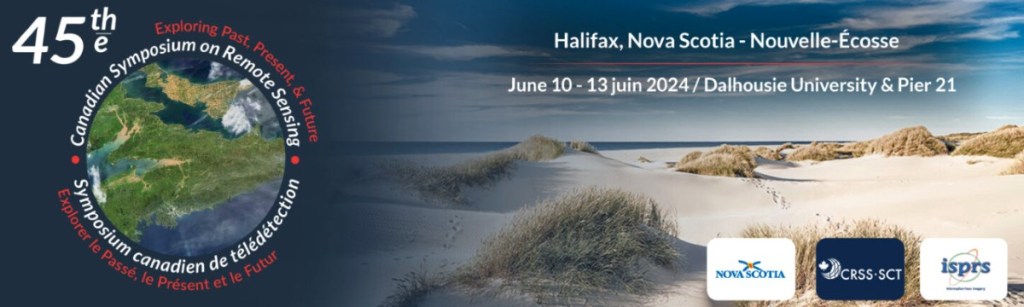
This June 10-13, 2024, Halifax is hosting the 45th Canadian Society for Remote Sensing (CSRS) annual conference. I have been invited to present a keynote talk. Below, I have a call for contributors to my keynote address.

Currently, I am preparing an abstract and undertaking background research.

I have divided the topic into three parts:
a) the history from my perspective;
b) current programs and projects at COGS;
c) speculation on future technology and their application.

I have had the opportunity to discuss history with John Wightman. For the current programs, I am able to meet with faculty responsible for GIS, RS and data analytics. For future directions, I will connect with my network of contacts in the education community, industry and applied research.

Within this context, I consider the conversations by John Wightman with researchers at CCRS, as well as input from Roger Tomlinson and Ray Boyle to have happened between 1974 and1980. In 1980, I moved to Nova Scotia, with Heather and a young family, to teach in the Scientific Computer Programming (SCP) program. My relationship with COGS continued until 2011. There were several breaks, in Indonesia, California, England, Ontario and British Columbia, I retired as Senior Research Scientist at the Applied Geomatics Research Group (AGRG) in Middleton, at the Annapolis Valley campus of the NSCC.

Since my retirement, I have maintained my life-long interests in Geography and Geographic Information Science. This includes a blog, under the title ernestblairexperiment.wordpress.com, with over 550 posts to date.

Over the next few months, I will appreciate any feedback through my blog
in particular, the trends in teaching and research, both from a Remote Sensing and GIS perspective.

My plan is to provide Amy Mui at CSRS with an abstract, later this month.

Postscript

I should be remiss if I did not mention that my colleague and blog partner, Edward Wedler. He was a Remote Sensing instructor at COGS in the ‘80’s.


Micro-adventure: West Inglisville

Heather and I snowshoed up through our property to the West Inglisville road on South Mountain. We returned back down to Paradise on Hwy #201 and home. These were excellent conditions for snow-shoeing — fresh snow on a hard crust.

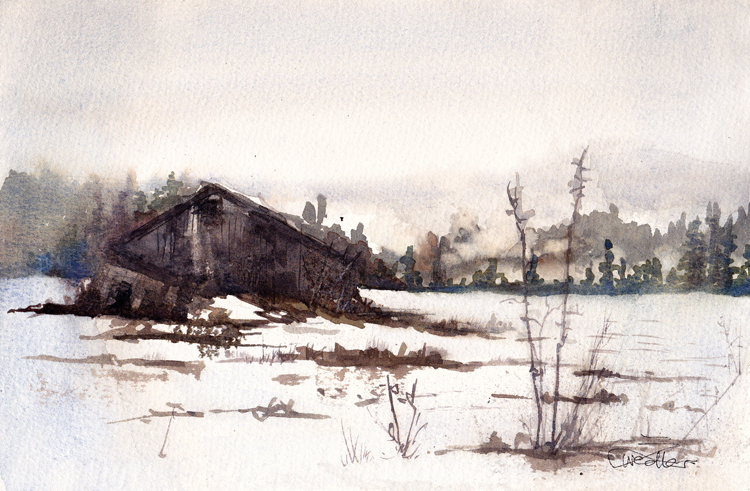
Abandoned Annapolis Valley Farmland, watercolour by Edward Wedler
Posted in Book Review

Birthday Blog

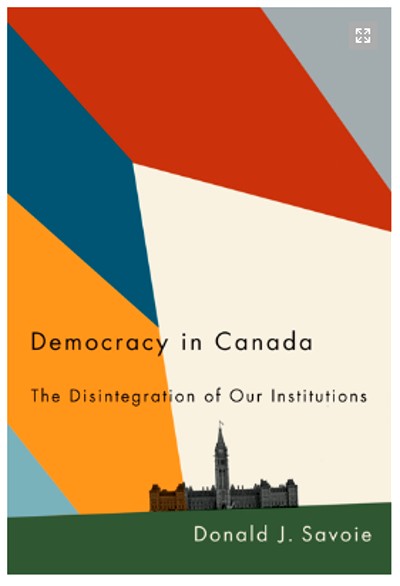
I finished reading Donald Savoie’s ‘Democracy in Canada’.

It is a very thorough history of democracy in Canada and its impact on Maritime Canada. One quotation early on caught my eye.

British-inspired political institutions are spatially blind because it suits England’s history and national character because England is a unitary state – and because its main political cleavages have not been around geography. Being spatially blind in England is one thing. Being spatially blind in Canada is quite another.” p.16.

Am I the blind leading the blind?

On the weekend, Heather and I snow-shoed through Andrew’s old property down to the Annapolis River, and then across to the Lawrencetown tree nursery. This reminded me of the potential at Lunn’s Mill. It is next door to the tree nursery. After snow-shoeing or cross-country skiing, one could return to the warmth of the brewery restaurant. Yet another micro-adventure (see post Explore Local).

For Valentine’s Day (my birthday) we will check out the fare at the Green Elephant in Kingston.

My next read will be John Norberg ,’Open: how collaboration and curiosity shaped mankind’. From the back cover,

Norberg examines why we’re often uncomfortable with openness – but also why it is essential to fight for it more than ever”.

Acknowledgments

Heather shared the snowshoeing micro-adventure. Edward added the graphics.

References.

Donald B. Savoie, 2019, Democracy in Canada: The Disintegration of our Institutions, McGill-Queens University Press.

John Norberg, 2021, Open: how collaboration and curiosity shaped humankind, Atlantic Books.

Postscript

I received Volume 8, 2023 blog from Integrity Printing, Bridgetown. This blog post is #563.

.

Posted in Travel

MicroAdventure : Annapolis Royal

Edward has been pushing me to expand my thinking on Alastair Humphreys’ micro-adventures concept (also, see post Explore Local). We returned from New Glasgow on Wednesday. So yesterday, we were ready to explore local.

I kicked off the day with the Senior Men’s Strength class at CORAH. Eighteen were in attendance.

Afterwards, Heather was up for a trip to Annapolis Royal (AR). The drive down Highway #1 was stunning: hoar frost on the trees, blue sky above.

We started, as usual, at the bookstores, the Mad Hatter and Mare Gold. Geoff Butler was on duty at Mare Gold. Heather found a reference book, Butterflies of Maine and the Canadian Maritime Provinces: photographs, maps, and collection history. This will come in handy for Summer.

Next stop, was ARTSPLACE Gallery on George Street. We enjoyed Sandra Smirle’s exhibition, “Wrought”.

She repurposes abandoned or ‘ghost’ ropes from the sea. ‘ Smirle has also been featured in the Map as Art: Contemporary Artists Explore Cartography, published by Princeton Architectural Press.

Up the road, we stopped at the AR Historic Gardens.

In the shop, we smiled at the garden ornament ‘Down Lost Memory Lane’. We were surprised that the trails had not been cleared. Next time, bring snowshoes or cross-country skis.

Time for a snack.

Tea and samosa at the Brown Dog Kitchen Cafe at the AR Library.

We needed some ‘light’ reading. “Let’s see what they have in the non-fiction section”. We hit pay dirt. We found three ‘heavy’ books.

For me, Donald Savoie, Democracy in Canada: The disintegration of our institutions. I have always found Savoie’s writing on regional economic development in Atlantic Canada profound and thought-provoking.

Heather found Johan Norbert’s, Open: How Collaboration and Curiosity Shaped Humankind and Manno Schilthuizen’s, Darwin Comes to Town: How the Urban Jungle Drives Evolution.

We headed home on Hwy #201. Stopping briefly in Bridgetown for a few grocery items. By this time, the hoar frost had melted off the trees. Exhilarated, we were keen to dig a path from the back door down to the greenhouse.

This was just a simple example of exploring local (see also, posts Hidden Treasures and For Viram). It motivates me to have that difficult conversation with the administration, faculty, and students at COGS on the need for a ‘Geography of Annapolis County’. Together, we can do it!

References

Donald J. Savoie, 2019, Democracy in Canada: the Disintegration of our Institutions, McGill-Queens University Press.

Johan Norbert, 2021, Open: How Collaboration and Curiosity Shaped Humankind, Atlantic Books.

Philip G. deMaynadier, et al, 2023, Butterflies of Maine and the Canadian Maritime Provinces, Cornell University Press.

Menno Schilthuizen, 2018, Darwin comes to Town: How the Urban Jungle Drives Evolution, Picador

Acknowledgements

Edward continues to contribute both his artistic talent and links to relevant readings. Heather brings her natural history and enthusiasm for outdoor adventures.

Postscript

Recognizing that we were home, last Thursday we celebrated and had lunch at the Bee’s Knees; home-made soup, quiche, and coffee.

Posted in Uncategorized

Shovelling and Puzzling

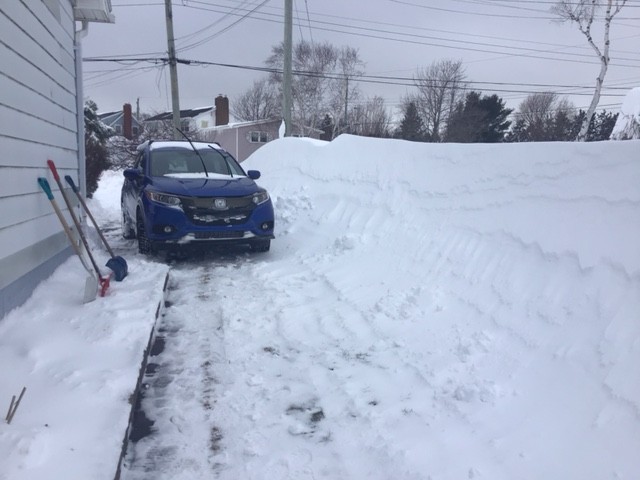
We arrived in New Glasgow last Friday. Over the weekend, we were impacted by a severe Winter storm. (Email note to Edward: “We are stranded in New Glasgow for a few days by a heavy Winter snowfall“.)

The days have combined shovelling the cars out of the driveway and finishing a one thousand-piece jigsaw puzzle, Songbird Tree.

The first strategy was to complete each of the birds. The second was to find each of the individual flowers scattered throughout the scene. Each flower had a different colour combination and a number of petals. The final strategy was to recognize that each puzzle piece had a unique shape. This, of course, started with finding the edge pieces.

The secret of success is to combine these individual strategies and maintain a holistic approach. Seems like a recipe for problem-solving. The same would be true when shovelling out cars lost in a two-metre snow drift.

It did not take much consideration to recognize that our quick weekend run has turned into a multi-day stay. We should be able to return mid-week.

On Saturday night, we were able to indulge in a ‘Brit-night’ on Maine PBS — “As Time Goes By”, and “Doc Martin”; afterward, Kate Humble’s “Coastal Britain”. The Southwest Coastal Path boasts the Valley that inspired R.D. Blackmore’s 1869 novel “Lorna Doone”. It certainly made me want to return to that part of England.

Acknowledgements

Thanks to Edward for the graphics. Thanks to John Stewart for his hospitality.

Posted in New thinking

Explore Local: a microadventure concept and its implementation

This week, I have been influenced by two books. John Terpstra’s ‘Falling into Place’ and Alastair Humphreys’, ‘Local: A Search for Nearby Nature and Wildness’.&

Terpstra is published locally by Gaspereau Press, Kentville.

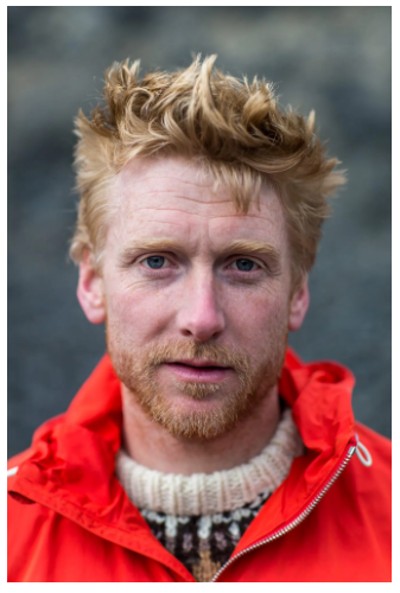
Humphreys is a British writer who is giving a talk at FOLDE in Dorset, UK next month (image taken from website).

COGS has been around since the end of the Second World War (initially as NSLSI). My connection goes back to 1980. Over the decades we have created a very intensive learning environment in a very rural setting.

What I want to do is produce a book (hard copy and online) that provides students with the opportunity to explore the local landscape. The content of the book would come from the literature, previous faculty and students, and current residents. In Humphreys terminology, a ‘suite of micro-adventures.’ Each microadventure would include an author, a map, details of the reason for the adventure, GPS points, photographs.

Here are ten plus, microadventures (off the top of my head).

Konrad’s mountain bike ride

Heather’s hike up to the Inglisville road

Mike Goodchild’s bicycle trip from Annapolis Royal

Peter Wyman’ s story about Delaps Cove

Dave Whitman and the Roxbury cycle ride

Valley View Park and beyond

Debby’s ride to Middleton

Canoeing the Annapolis River

The Big Chill Snowshoe Marathon

Walking from Bridgetown to Middleton along the crest of North Mountain

Bob’s nostalgia for Ernest Buckler and West Dalhousie

Lunn’s Mill loop through the Lawrencetown tree nursery.

Bridgetown WALKS

How would this work ?

I would collaborate with Edward to create a general template i.e. text, map, photographs, art, GPS points.

We would work with COGS faculty and students to ensure standardization of information, quality control, online version.

We would ask COGS to consider publication costs. Every student at COGS would gain an understanding of the history of the institution, information needed to initiate their own micro-adventure, away from the computer screen.

Initially, the focus would be on Annapolis County and outdoor activities. If the model is successful, we could expand beyond the county boundaries and include other aspects of ‘local’ e.g. museums, bookstores, food suppliers, restaurants and pubs.

I am looking for reaction/comments/ other examples. In a ‘perfect world’ , we would have a ‘Geography of Annapolis County’ centred on COGS in Lawrencetown.

Acknowledgements

Edward and Heather have both shared in these ‘micro-adventures’

References

John Terpstra, 2002, Falling into Place, Gaspereau Press

Alastair Humphreys, 2023, Local: A Search for Nearby Nature and Wildness.

Posted in Nature, Opinion

Two meetings; two questions

Sunday (28th), Heather and I attended two meetings.

First, it was the Save Our Old-growth Forest (SOOF) meeting at the Bridgetown Legion (see also previous posts Saving Forests, Twice To Annapolis Royal, and A Day in the Life). The Arlington Forest Preservation Society provided an update for the community. Nina Newington gave an update on their work on South Mountain between Highway #10 and Highway #8, and included a proposal to protect some rare lichen habitat.

Later, Heather and I met with John Wightman. John was interested in the status of lichens in the region and their relationship to his mineral exploration activity. Heather came with a selection of authoritative lichen texts (check out previous post The Bookshelf, and also listen to Montana Public Radio’s Whether Lichens Coceal or Reveal Depends on What You’re Looking For).


At the end of the day, we were both exhausted; trying to understand the position of the Nova Scotia Department of Natural Resources and Renewables.

It left me with two simple questions. However, before I pose the questions, overnight there was time for reflection. In the mid-70’s we were in Ottawa. I was working at the National Herbarium. I produced a publication on the Rare Plants of Nova Scotia. Besides helping to raise two boys, I was surrounded at work by taxonomists: lichens (Irwin Brodo), mosses (Bob Ireland) willows (George Argus). For the publication, we worked with Paul Keddy and David White.

Here are my two questions:

  1. Given that the streams of South Mountain flow into the Annapolis Valley, why are we spraying glyphosate on the forests in the region? It impacts the water supply and the forest ecology.
  2. Given the presence of old-growth forest on South Mountain, why can we not map these forest stands and ensure that they are part of the ecosystem complex into the future?

These lands could be the basis of a provincial commitment to conserve a percentage of crown land from forest activity (see previous post What is Truth?).

It is hard for Heather and myself with our botanical and geographic interests to simply sit back and watch the squabbling in our own backyard. Can we not take a more collaborative approach to answering these two simple questions, based on good science?

Reference

Robert Maher, David White, George Argus and Paul Keddy, 1977, The Rare Vascular Plants of Nova Scotia, Syllogeus 18, Published by the National Museum, Ottawa.