Posted in Book Review

Doc Martin

This weekend we went up to New Glasgow. By chance, late Saturday evening, we watched Doc Martin on PBS Maine. Besides the regular episode, there was a documentary on the final season of the show: number ten.
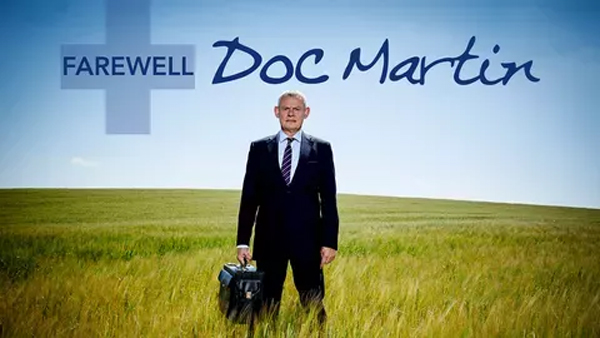
The show is set in the picturesque Cornish village of Portwenn.

The shows real life setting is Port Isaac, Cornwall, England.
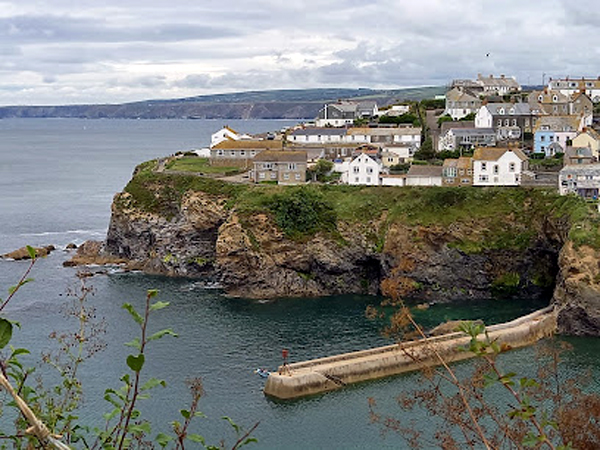
As I watched the documentary it was apparent that the series, on the air for eighteen years, has had a significant impact on tourism in rural Cornwall.

Would it be possible to take this model, and apply it to rural Nova Scotia? We have the geography. We have numerous writers who have set their stories in rural Nova Scotia . Could this form part of the ‘creative rural economy’ (see Edward’s blog post “What do the films Outlander, Titanic and DevCon-4 Have in Common?“)? Or can a model be a continuation of Celes Davar’s ‘Fundy Riches and Valley Traditions’, Experiential Tourism workshop (November 2007).

Or follow the work of Greg Baeker’s ‘Building a Creative Rural Economy (Municipal World, September 2008).

Another dimension would be to build upon the writing of Ernest Buckler, The Mountain and the Valley, and more recently the work of EBLES ( Ernest Buckler Literary Event Society).

From my bookcase, I pulled down seven volumes of blogs. Volume 1 GoGeomatics, Volume 2 2017 – Volume 7 2022.

In a few weeks, I shall go to Integrity Printing in Bridgetown and request Volume 8 2023. This blog will be #538

This week, I was invited to give a keynote talk at the upcoming Canadian Symposium on Remote Sensing, Halifax, June 2024. I accepted the invitation.

Fifty years of Remote Sensing and GIS at COGS (1974-2024) is my working title.

Initial research has led me to two sources.

  1. Making Government Science work for Canada and around the World{ A legacy of excellence at the Canada Centre for Remote Sensing (CCRS) June 2019.
  2. Bob Ryerson and Stan Aronoff, 2010, Why ‘where’ matters: understanding and profiting from GPS, GIS and Remote Sensing, Kim Geomatics Corp. (see book review by Jeff Thurston).

Acknowledgements

John Wightman provided the reference to CCRS. Heather stayed up late to watch the Doc Martin documentary. Edward added his contribution to the blog.

Doc Bob

Posted in biographical sketch

Community Health

ESRI Canada offered an online seminar “Where community matters: new horizons in Canadian Public Health using GIS“. I was unable to attend online but could share the recording.

My interest stemmed from two perspectives:
a) we have a health services crisis in rural Nova Scotia;
b) we have access to GIS technology at COGS.

Specific questions in Annapolis County would be:

  1. What are the demographics in the region (i.e. age distribution and geography)?
  2. What access to health care services exist (e.g. hospitals, family doctors, travel times to Kentville, Digby etc.)?

The application of GIS to these health questions would make excellent co-operative projects for COGS students.

Given our circumstances, it is critical that the population is proactive, in terms of health.


This week, we completed two, relatively short walks.

We went down to Mickey Hill Provincial Park. This is a loop trail near Graywood on the road to Kejimkujik National Park (see also AllTrails link).

The second walk was the new CARP Marsh Trail in Middleton. This suggest that our communities recognize the need for citizens to take local walks for health. Every community needs access to both short and long trails.


Last Saturday, at the Paradise craft market, I was able to pick up Barbara Bishop’s “Promises to Keep: A Story of Nova Scotia” (see Saltwire link). This traces stories of the Leonard family, going back to Wilmot, 1789.

From the back cover:

All were touched by the Landing at the Head of the Tide in a place known as Paradise. To step into this book is to see how our common humanity is changeless – that we can face the worst, sacrifice everything, and still find our way.’

Acknowledgements

ESRI Canada offered the online seminar. Heather joined me on the two short walks. Barbara Bishop signed my copy of her book.

References

Barbara Bishop, 2016, Promises to Keep: A Story of Nova Scotia, etc Press Ltd. (see Saltwire link)

Posted in biographical sketch

Two Walks

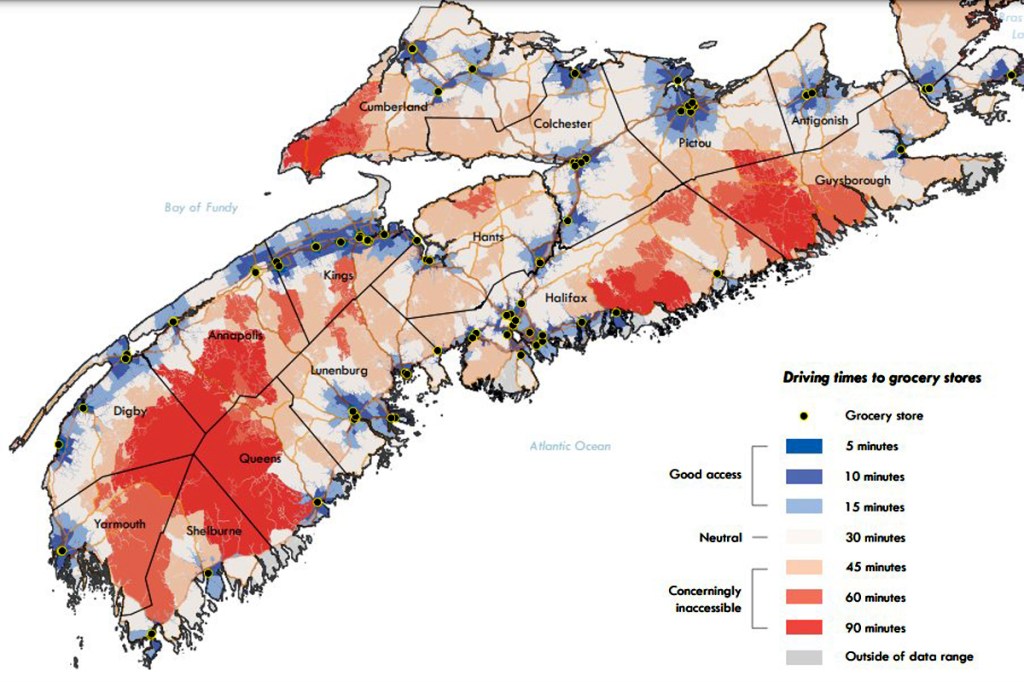
This morning (Saturday) I visited COGS. I was interested in reading the details of one of the cartographic displays. It was the winner of the 2023 President’s prize at the Canadian Cartographic Association (CCA). The work was by cartography student Hannah Genosko on food deserts in rural Nova Scotia and also in urban Halifax and Dartmouth — deserts, not desserts. It is located in the corridor (northwest corner/ Cartography).

from FoodDesertsNS Map by Hannah Genosko

This display encouraged me to think about ‘financial deserts’ and the associated methodology. Interestingly, in the COGS cafeteria, I did notice a Triton ATM machine.


Yesterday, Heather and I walked the Delaps Cove Wilderness Trail. On the Bohaker trail, at the shoreline, there is now a monument to a fishing boat that disappeared with all crew on board, a few years ago.

We have yet to try Charlie’s trail which adds a few more kilometers. Afterwards, we took the coast road to Hampton. Then over North Mountain and down to Bridgetown.

This trip reminded me , not only of The Mountain and The Valley (I.e. South Mountain and the Annapolis River Valley) but also the Mountain and the Bay of Fundy ( i.e. North Mountain and the Fundy Shore).

So many different landscapes and economies, all compressed into a small geography.

Postscript

Later in the day, Edward forwarded a link to a W5 article on the Haunted House of Hampton including an distressing video.

Acknowledgements

Heather joined me on the Delaps Cove Wilderness Trail. Edward added graphics and the links.

Posted in New thinking

Co-operative Projects

An important component of the GIS program at COGS has been co-operative projects with industry, government or non-profit partners. Good examples include the application of GIS technology to the geography of Southwest Nova (partner with SW Nova Biosphere Reserve) or to Annapolis County (partner with MapAnnapolis) (see posts, for example, “Community Information Utility“, “From Here to There“, and “COGS Student Presentations“).

“East Side Port L’Hébert” plein air oil painting by Anne Wedler

As Geographer Emeritus, I have had the opportunity to review these potential projects. There are always a couple of fundamental challenges:

a) the technology evolves year by year. This is often reflected in the user interface.

b) wherever possible, the college does not want the responsibility of ongoing maintenance of the database and the access tools.

If we are dealing with government datasets, e.g. GeoNova, the data can be managed by the collecting agency. If the partner is AGRG at COGS, then this presents less of a problem. Looking at the list of potential projects this year, we can see projects with other geographic partners e.g. East Port L’ Hebert, Truro Cemetery, Oxford EODG, Heritage Trust.

At COGS, I noticed a map display showing ‘food desert’ (e.g. access to grocery stores) (see also The Grocery Map). Given the current bank rationalization, I believe the same concept could be applied to ‘financial desert’ (e.g. access to banking services).

Another co-operative project could be the application of GIS technology to our utility networks (e.g. power grids, telephone and Internet).

These types of co-operative project provide input into issues of concern to Nova Scotians. At the same time, they require research into the application of GIS technology in other jurisdictions.

Postscript

Following up on Bob’s “desert” mapping note, ten years ago I blogged about opportunity mapping” in rural areas (see “Are We mapping Opportunities?“) and noted examples in Texas, Brisbane, and Dublin. We need to map Nova Scotia’s rural opportunities.

Acknowledgements

Thank you to David MacLean for access to the current potential project list. Edward added the links and graphics. He also reminded me that through the joint Masters degree in Applied Geomatics, COGS collaborates with Acadia University. One year, learning the technology, followed by a second year, applying it to a research project, of interest.

Posted in biographical sketch

Community Engagement

Tuesday night, we attended the Valley Credit Union meeting at the Bridgetown Fire Hall.

I wanted to hear the Community needs for banking in Annapolis County, in response to the closure of the ScotiaBank branches in Bridgetown and Annapolis Royal (see post Financial Desert). It was a very-well attended meeting. The Credit Union explained the philosophy and services available. There was a lengthy question and answer session.

My take away. Should I stay with ScotiaBank because it would mean simply transferring my finances to Greenwood? Or, should I support the Credit Union which has genuine concern for citizens who chose to live in rural Nova Scotia?


On Monday, we walked into Lawrencetown then stopped for a coffee at Bee’s Knees before returning home.

While sipping coffee, I was struck by the ambience and and the quality of the goods for sale, They reflected an adherence to a set of rural values.


This week, I finished reading Ghost Breezes by Daniel Lillford. While several of the short stories are set in our local geography, it painted a different set of rural values. My preferences are more aligned to the stories of Bob Bent (see post Finding Stories).

Postscript

Today, at COGS, I attended Dave MacLean’s FunGIS lecture. I also confirmed my status as “Geographer Emeritus at COGS”. I hope to be able to be resident at the College on Wednesday mornings.

This morning, Heather went to the Annapolis County Senior Safety Program at the Lawrencetown Firehall for ‘Stay Scam Free’. We appreciate the efforts of co-ordinator, Sharon Elliott; our neighbour, years ago, in Clarence.

Acknowledgements

Thank you to Edward for adding the graphics and links.

Posted in Book Review

Finding Stories

This weekend, we found ourselves in Kentville. I picked up a card giving directions to the new location of Tides Art Gallery between Brad’s Decor and the Half Acre Cafe.

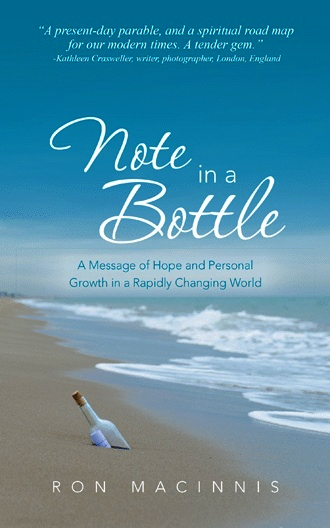
At this art cooperative, I found Ron MacInnis’s book, Note in a Bottle.

This was an uplifting memoir, describing life in Nova Scotia leading to the Oceanstone Seaside Resort on the South Shore. Part of the pleasure was the scattering of quotations throughout the book; each in a sense being ‘a note in a bottle’.

Given the state of the world, it was refreshing to read a personal journey, with an emphasis on joy, love and beauty.


Sunday morning, after checking out Cottage Cove on the Bay of Fundy, we arrived at the Clarence Country Christmas Market. We were pleased to bump into a number of old friends and colleagues. Again, I was attracted to a book stand. I picked up a free copy of Trap Street (Issue #1, November 2023). It included a short story, Making Believe by Bob Bent. He is the local author of Spy on Ice and Ida Red.

On the stand, I picked up Daniel Lillford, Ghost Breezes, a series of short stories. From the foreword by G.B Ween

Both in my personal world and in my professional life, do I think about small places, often with long histories, that are unique but also recognizably and often painfully entangled in large world phenomena. Some of these places appear similar in Norway, England, Canada, Australia.” G.B.Ween, University of Oslo.

Both of these books by local authors take me away from the relentless news of the times.

Acknowledgements

Heather and I appreciate the sterling efforts by local authors. I was happy to see Trap Street #1.

In cartography, a trap street is a fictitious entry in the form of a misrepresented street on a map, often outside the area the map nominally covers, for the purpose of ‘trapping’ potential plagiarists of the map”.

References

Daniel Lillford, 2022, Ghost Breezes, Short stories, Illustrations by Jesse Lillford-Brighton, Moose House Publications.

Ron MacInnis, 2014, Note in a Bottle, Balboa Press.

Posted in Opinion, Uncategorized

Financial Desert

On Thursday afternoons I pick up a copy of The Reader at the Lawrencetown Library.

This week, I was pleased to also find a copy of the current issue of The Grapevine for pick up.

In the Reader there were two articles of interest.

  1. On the front page, an announcement by the Valley Credit Union on a Banking Needs Survey meeting, Tuesday, November 14, 6:30 pm at the Bridgetown Fire Hall.
  2. In the centre fold, a letter from Carman Kerr, MLA Annapolis County to Krista Pridham, ScotiaBank, Director of Regional Banking, Atlantic Region. Carman notes that with the closure of the Bridgetown and Annapolis Royal branches, ScotiaBank will have no branches in Annapolis County.

While I was pleased to see some reaction in the Reader, there remain several unanswered questions.

  1. What is the position of the Municipality of Annapolis County? Are they representing the best interests of the citizens in the County?
  2. What about the educational institutions, e.g. Annapolis Valley campus in Middleton and Lawrencetown? Can they remain viable?

This evening, I did go down to the laundromat in Lawrencetown to see if it had a bank machine? NO.

I look forward to reading the response from ScotiaBank to Carman Kerr. I also plan to attend the Banking Needs Survey meeting in Bridgetown.

I would challenge our representatives on the municipal council of Annapolis County to host a public meeting on the potential ‘financial desert’ I.e. lack of access to face to face banking services.

I would challenge the students/faculty at COGS to produce a map that shows the potential ‘financial desert’ in Annapolis County, within the context of other Counties in Southwest Nova Scotia (note Scotia Bank closures).i.e. travel distance to nearest bank machine/bank.

Posted in Book Review

Future Thoughts

This weekend, I found myself in New Glasgow, without books. I checked the shelves and pulled out:

Lesley Choyce’s (Ed), Nova Scotia: Visions of the Future, Published in 2009, and Scott Milsom’s Voices of Nova Scotia Community: A Written Democracy, Published in 2003.

Choyce received responses from over forty Nova Scotians, ranging from Harry Thurston to Ron Colman.

Milsom provided articles from Coastal Communities News, as well as Communities Day to Day and Musings on Community. These articles were published in 2003.

What has changed in the last twenty years? The Foreword was written by the late Silver Donald Cameron (died in 2020).

Together these books reflect the relationship between community engagement and a shared vision of our common future. It would be valuable to revisit both of these books in 2023 ( 14 years and 20 years respectively). That is, perhaps, more critical for the contributors to Lesley Choyce’s book.

Postscript

Sad day in the Valley yesterday !

I received in the mail, notice from the Bank of Nova Scotia, that they are closing their branches in Bridgetown and Annapolis Royal, effective November 2024. A sign of the times.

Perfect Morning

Heather has been reading Jay Ingram, The End of Memory. A Natural History of Aging and Alzheimer’s. He recommends paying attention to both exercise and diet. I had the following agenda, despite the unsettled weather. We went to Annapolis Royal, via Highway#201, and walked the French Basin Trail. Afterwards we stopped at the Brown Dog Kitchen (at the Library). I wanted to try their takeout curries. We returned home via Highway #1.

On returning home, the wood stove was a bed of hot coals. We could enjoy a late lunch: meat and vegetarian curry, basmati rice and naan.

Acknowledgements

Edward found the time to overcome technical issues arising from his relocation to Florida. Heather shared our idea of a ‘perfect morning’ in rural Nova Scotia.

References

Lesley Choyce (Ed), Nova Scotia: Visions of the Future, Nimbus Publishing, 2009.

Scott Milsom, Voices of Nova Scotia Community: A Written Democracy, Fernwood Publishing, 2003.

Jay Ingram. 2014. The End of Memory. Harper Collins

Posted in biographical sketch, Nature

School Day

Last Wednesday morning, I attended Dave MacLean’s FunGIS class. The topic was calculating the area of a polygon using a Python script. Unannounced, at 9 am , there was an unveiling of artwork by Phillip Bailey in the AV room.

Phillip is a member of the African Nova Scotia community, from Lequille, Annapolis County, and grandson of Harold Cromwell.

The Art is now on display in the entry way at COGS. It is a composite of the African Nova Scotia flag, a topographic representation of the province and identifying the primary African Nova Scotia communities.

A third element of the morning was a presentation on the joint M.Sc. in Applied Geomatics between COGS and Acadia University. Unfortunately, the need for snow tyres meant that I was unable to hear the presentation. The program was established by John Roth at Acadia and myself at COGS.


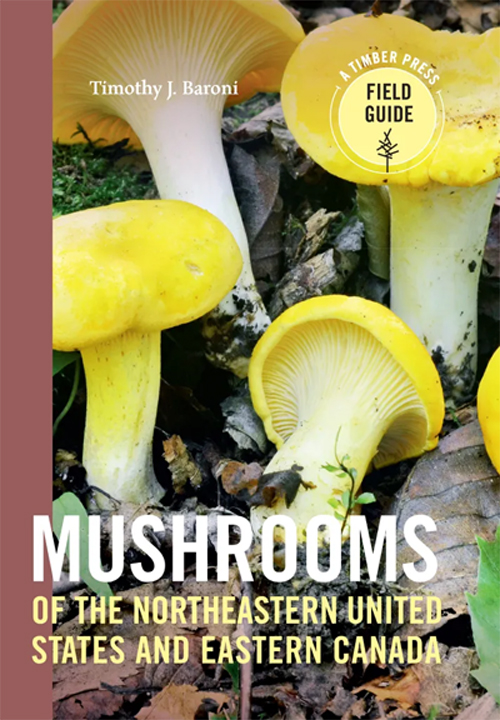
A couple of weeks ago, Heather attended a guided fungi walk with Keith Egger, organized by the Arlington Forest Protection Society (see post Saving Forests). On Keith’s recommendation we ordered Mushrooms of the Northeastern United States and Eastern Canada by Timothy Baroni.

It arrived this week at The Inside Story in Greenwood.

The excellent illustrations will be invaluable, as we continue to walk through our property to the Inglisville Road.

Acknowledgements

Dave MacLean’s class on Wednesdays, give me an insiders perspective on the activities at COGS. The guided walk by the Arlington Forest Protection Society added to our botanical reference collection.

Postscript

There will be a delays in posting these recent blogs, as Edward relocates to his Winter base in Florida.

References

T.J.Baroni, 2017, Mushrooms of the Northeastern United States and Eastern Canada, Timber Press.

Phillip Bailey, CartographMe. Combining cartography and art. I create hand-drawn maps that hold customized meaning through a description of people, places and events. https://www.cartographme.com

Posted in Book Review

Buy Local; Read Local

Today, I stopped at the Bees Knees Bakery in Lawrencetown. I ended up buying apple turnover for dessert and a book by Linda Hegland.

Sandra Barry had mentioned that there was a poetry reading at Bees Knees on Sunday, October 15th by Jan Coulter and Linda Hegland. We were on the road to Peterborough.

The store had several books by Linda Hegland.

Given my interest in ‘place’ and writing. I was intrigued to find that the author is now a resident of Clarence on North Mountain.

In response to my latest blog, Edward Wedler asked questions about the relationship between IoT ( Internet Of Things), AI (Artificial Intelligence) and GIS (Geographic Information Systems).

Did I see these other technologies interacting with GIS education at COGS?

Perhaps with time, I will be able to offer an informed response. It is certainly a changing technological complex world which will impact COGS and its graduates.

With the changing weather, today, I was able to celebrate by lighting the wood stove.

Postscript

I understand that there will be further literary events at the Bees Knees bakery. That’s good news. I intend to go to my next FunGIS class on Wednesday morning. This blog may be delayed, as Edward is travelling down to Florida.

Acknowledgements

Sandra Barry mentioned the poetry reading at Bees Knees. Edward continues to challenge my understanding of the changing technologies and Geography. Bees Knees offers a range of quality baked goods.

References

Linda Hegland, 2020, Place of the Heart: Life on Fat Hummingbird Farm, Published by Cyberwit.net

Jan Coulter, 2023, Fragments of the Mind, Published by Cyberwit.net

The Indian Institute of Remote Sensing, https://www.India today.in/education-today/news/story/isro-offers-free-certificate-course-in-remote-sensing-and-gis