Posted in Book Review

Happenstance

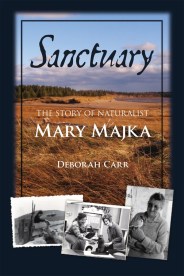
Over the weekend, I had the time to read Sanctuary: the biography of Mary Majka, written by Deborah Carr.bookCover_sanctuary Mary was born in Poland in 1923. She was sixteen when Hitler invaded Poland at the start of the Second World War. Eventually, she arrived at Pier21 with her husband, Mike, in 1951. They moved to New Brunswick in 1961.
Mary Majka has done more to preserve the natural and cultural legacy of the Bay of Fundy than anyone in our time.” Harry Thurston.

“Through the example of her life, she has shown that by simply following our true nature, the nugget of passion that resides in each heart, we change our world. It doesn’t have to be large or grandiose; it just needs to be true”
Carr p.227.

On Sunday, Heather shared with me a Zoom talk given by Bob Howard to the Annapolis Royal Shambhala Group on biodynamic French intensive horticulture and the work of Alan Chadwick. This led to some preliminary online research. I found two books of Chadwick’s talks plus a memoir by Paul Lee on Chadwick and the organic movement in California. The memoir excerpts look very promising. I contacted Bob and he suggested that I check the YouTube video, Garden Song.

bookCover_bioregionalismMeanwhile, Heather continues to organize our book collection. This brought to my attention, Mike Carr, Bioregionalism and Civil Society: Democratic Challenges to Corporate Globalism. It looks relevant today and should sustain me this week.

Footnote

Happenstance Books and Yarns is an independent bookstore in Lakefield, Ontario. They also sell knitting supplies.

Acknowledgements

Bob Howard for the reference to Alan Chadwick and the link, Garden Song. Heather for her attempts to put order into the book collection. Edward for his graphics contribution.

References

Deborah Carr, 2010. Sanctuary: The Story of Naturalist Mary Majka. Goose Lane.
Mike Carr, 2004. Bioregionalism and Civil Society: Democratic Challenges to Corporate Globalism. UBC Press.
Paul Lee, 2013. There is a Garden in the Mind: A Memoir of Alan Chadwick and the Organic Movement in California. North Atlantic Books,
Alan Chadwick, 2008. Performance in the Garden: a collection of talks on biodynamic French intensive horticulture. Logosophia
Alan Chadwick, 2013. Reverence, obedience and the Invisible in the Garden. Talks on the biodynamic French Intensive system. Logosophia

.

Posted in Book Review

Community Matters

Even before the events in Portapique last weekend, the church in Middleton had displayed the sign, in relation to the COVID-19 restrictions.

Things that matter are hard.

For several days, the thought of writing a blog seemed impossible.

pic_cleaningTheOrchard
Cleaning out the brush along the east side of the orchard.

bookCover_sanctuaryEventually, I turned to the bookcase, and rediscovered the biography of Mary Majka. She was a naturalist, living on the shores of the Bay of the Fundy in New Brunswick. She was the driving force behind Mary’s Point Western Hemispheric Shorebird Reserve.
Harry Thurston makes the following comment on Sanctuary by Deborah Carr.

“Sanctuary is an engaging and clear-eyed portrait of her indomitable spirit – a celebration of a courageous life – and an important book”

This led me to pull down my collection of Harry Thurston books. Thurston lives in Tidnish Beach.

I recalled meeting Thurston at the annual meeting, last Spring, of the Elizabeth Bishop Society of Nova Scotia in Great Village. He attended, along with Sandra Barry And hence, I searched out her books too.

I hope you find enjoyment in these books.

Acknowledgements

To those writers who choose to describe life in small communities.
Heather for encouraging me to spend more time outdoors this week.
Edward for his helpful support. Sandra Barry for her encouragement.

References
Deborah Carr, 2010. Sanctuary: The Story of Naturalist Mary Majka.Goose Lane.
Harry Thurston, 2004. A Place Between the Tides. Greystone Books
Harry Thurston, 2005. The Sea’s Voice. An Anthology of Atlantic Canadian Nature Writing. Nimbus Press.
Harry Thurston, 2009. Animals of my own kind: New and Selected Poems. Vehicule Press.
Allan Cooper and Harry Thurston, 2013. The Deer Yard. Gaspereau Press.
Harry Thurston, 2015. Keeping Watch at the End of the World. Gaspereau Press.
Barry S., Davies P., Sanger G. (Ed.), 2001. Divisions of the Heart: Elizabeth Bishop and the Art of Memory and Place. Gaspereau Press.
Sandra Barry, 2011. Elizabeth Bishop: Nova Scotia’s “Home-made” Poet. Nimbus Press.
Sandra Barry and Laurie Gunn (Ed.), 2013. Echoes of Elizabeth Bishop. Elizabeth Bishop Society of Nova Scotia.

Posted in Opinion

Back to the Land

At this time of the year, we are normally resident in Iqaluit. It is a good time to be on the land.

people_upNorth_2
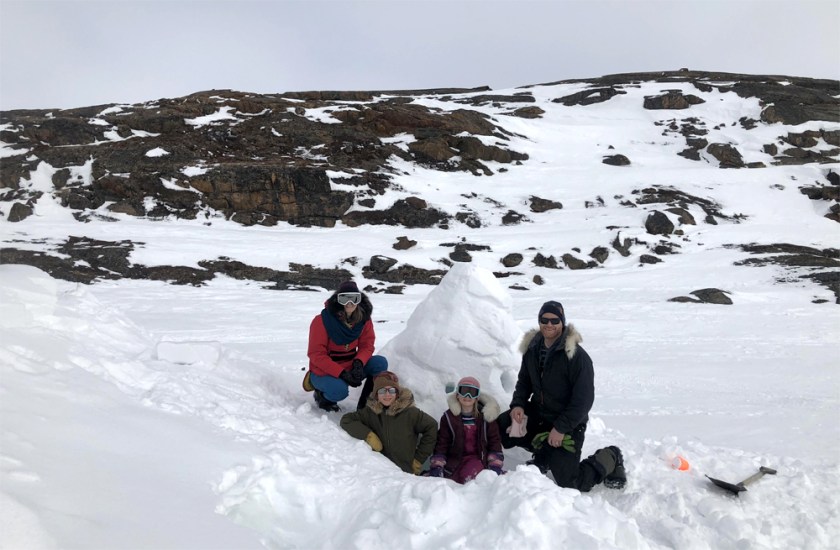
Andrew and his family, out on the tundra, near their cabin.

The sea ice is still frozen, and there is a good spring snow cover. Given the uncertainties of food supply in Northern communities, it is likely predictable that we shall see an increase in hunting and fishing. Traditional skills will have heightened importance. Quinn has built his first Igloo. Isla has started to drive the small family snowmobile..

Meanwhile, in the South, as the seasons change, there seems to be an excess of biomass. The sources include:

– firewood from coppicing for next Winter;
– chipping of brush and bark waste;
– charcoal and wood ash from the woodstove;
– kitchen waste in the compost bin;
– leaves and other organic matter for the hugel beds.

image_hugelBed_1The challenge is to integrate these resources ‘back to the land’. Recycling these materials will complement the planting of seeds in the greenhouse and cold frame.
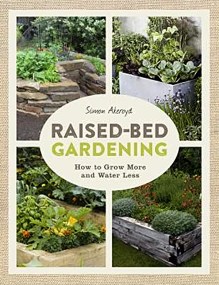
bookCover_raisdBedGardeningWe will see a resurgence in gardening. We will pull off the shelves, books by Niki Jabbour and Adam Footer. We will read about the work of Bob Cervelli and others. We will seek advice from community gardeners; sharing ideas and seeds. We will investigate the properties of biochar. We will reinforce the edges of our pond.

Our life will be governed by the weather, and our ability to complete the multitude of land-related tasks.

Acknowledgements

Andrew and Julia for their insights into Northern living. Rick for his knowledge of biochar. Heather for planting the seeds. Edward for additional graphics.

References

Niki Jabbour. 2011. The Year-round Vegetable Gardener. Storey Publishing.
Simon Akeroyd. 2016. Raised-bed Gardening. Taunton Press.
Adam Footer. 2014. Bokashi Composting. New Society Publishers.
Robert Tindall et al. 2017. Sacred Soil. North Atlantic Books.


Posted in biographical sketch

Easter Weekend

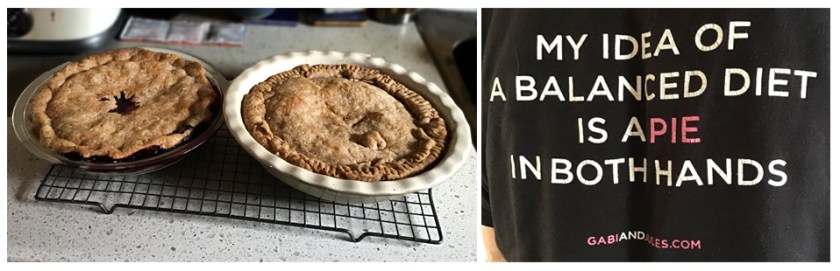
Good Friday, Heather made two pies: blueberry and meat. This reminded me of a T-shirt that I picked up several years ago in Port Moody, BC.pie_3

Saturday, we started to reorganize the bookcases. There were many discoveries. Not the least, my collection of books by Wendell Berry and Theodore Roszak. I have included a list of references, in case there are any interested readers.

Once the snow squalls finished, we could return to the orchard. First, to add fertilizer (worm castings) around each tree, and then Sunday, to cut the young saplings from the hedgerows which were encroaching on our Apple trees.

This morning (Sunday) I received my weekly Brain Pickings.banner_brainPickings It contained two interesting links.

“ Anne Lamott’s wondrous letter to children about books as antidotes to isolation, portals to perspective and crucibles of self-discovery.”

“James Gleick’s splendid reading of and reflection on Elizabeth Bishop’s poem about the nature of knowledge.”

Bishop was born in Great Village, Nova Scotia.

I sent the first link for my grandson in Petawawa. And the second to Sandra Barry, a leading figure in the Elizabeth Bishop Society of Nova Scotia. Earlier in the week, Sandra had sent me a link to an interesting paper on the Spanish flu epidemic (Dr Alan Marble — Spanish Flu Lecture 2019).

If the weather holds, we can look forward to further work in the orchard.

image_easterOrchard
Note the fertilizer around the base of each tree.

Perhaps we can take the boundary back to the old stone wall. If the weather keeps us indoors, then there are many more books to rediscover. Some will head off to second-hand bookstores; others are ‘keepers’ and will be worth revisiting.

Postscript

We did finish watching CBC Gem’s Mother, Father, Son (eight, 45-minute episodes).
It is about the impact of fathers on their sons, in a somewhat fictitious British context.

Acknowledgements

Heather for her culinary skills. Sandra Barry for her comments on the blog.
Edward for his additions and feedback.

References

Wendell Berry. 1977. The Unsettling of America: culture and agriculture. Sierra Club Books.
Wendell Berry. 1983. A Place on Earth. North Point Press.
Wendell Berry.2000. Life is a Miracle. Counterpoint.
Wendell Berry. 2002. The Art of the Commonplace. Counterpoint.
Theodore Roszak.1969. The Making of a Counter Culture. Doubleday.
Theodore Roszak. 1972. Where the Wasteland Ends. Doubleday.
Theodore Roszak.1978. Person/Planet. Doubleday.
Theodore Roszak. 1986. The Cult of Information. Lutterworth Press.
Theodore Roszak.1993. The Voice of the Earth. Bantam Press.
Theodore Roszak. 2009. The Making of an Elder Culture. New Society.

Posted in Article Review, biographical sketch

Notes from Butternut Tree Farm

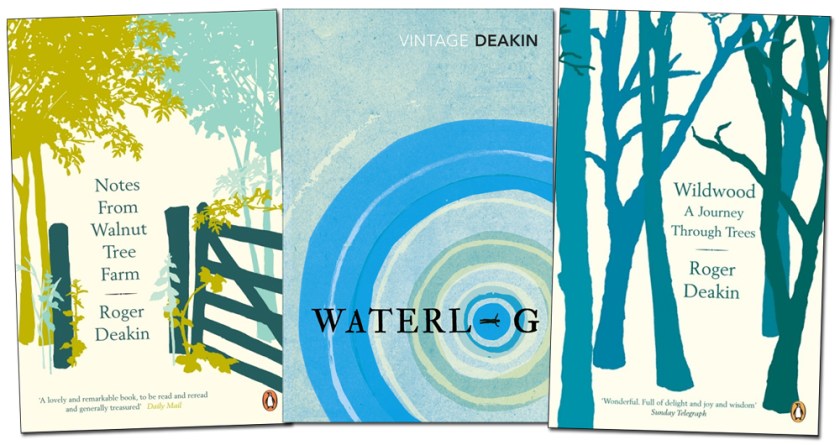
A few years ago, Roger Mosher gave us a bag of butternuts. We left them in a pot and promptly forgot about them. The end result was a cluster of butternut trees in the front garden.bookCover_3books_rogerDeakin

The blog title comes from Roger Deakin’s Notes from Walnut Tree Farm. Roger was the author of three books. The others are Waterlog and Wildwood. He came to the front of mind this week because of an essay in Emergence Magazine on the History of the Apple. It describes his trip to Kazakhstan, entitled East to Eden, with contribution from Robert MacFarlane.

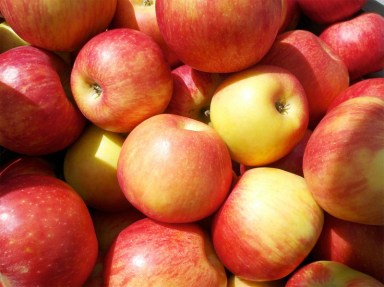
honeycrispApplesLater in the day, I picked up a bag of Honeycrisp at Graves grocery store in Bridgetown. Grown locally at Inglis Farms in Tupperville. The Honeycrisp variety is a product from the Kentville Research and Development Centre.

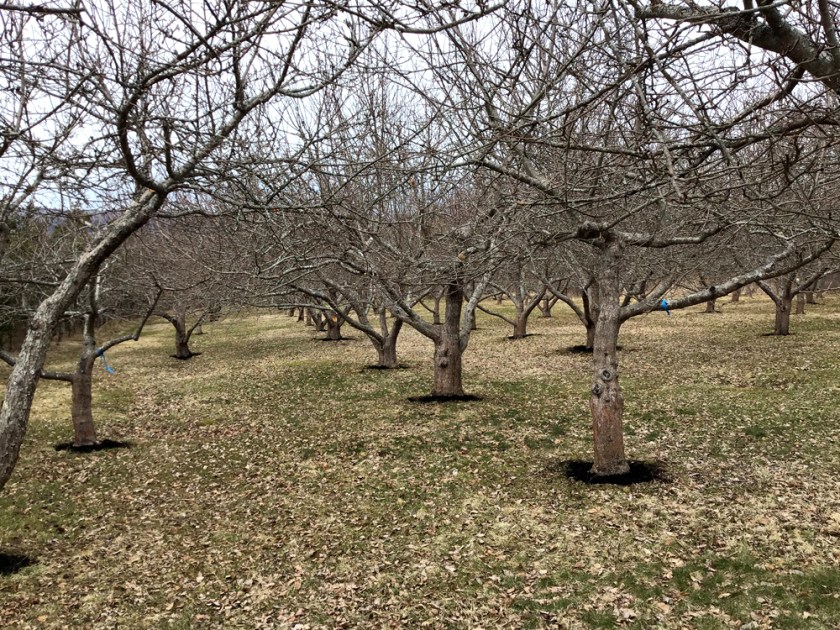
Driving to Kentville yesterday, we noticed that the larger orchards in Kings County were burning their prunings. We checked locally with NS Lands and Forests. Our small pocket orchard, with less than one hundred trees, is too close to the woods. No burning. Instead, I had the opportunity to clear around each trunk and apply several scoops of vermiculture (worm castings).

banner_brickyardRedLunnsLater, we received our first online delivery of Brickyard Red beer from Lunn’s Mill. This complemented a couple of episodes of Mother, Father, Son; a BBC2 production, featuring Richard Gere, Helen McRory and Billy Howle, available on GEM. It is set in England and explores the relationship between the press and politics as well as the complexity of family dynamics. A single series with eight episodes.

Today, with snow on the wind, it looks like an indoor day, except for dog walking.

Acknowledgements

Roger Mosher for his enduring interest in fruit and nut trees. Chantelle at Lunn’s Mill, reminding us about online delivery. Heather for her Spring cleaning efforts in the greenhouse.Edward for his earlier blog and the graphics.

References
Emergence Magazine, April 5,2020. East to Eden. Roger Deakin with Robert MacFarlane.
Roger Deakin. 1999. Waterlog: A Swimmer’s Journey through Britain. Random House.
Roger Deakin. 2007. Wildwood. A Journey through Trees. Penguin Books
Roger Deakin. 2008. Notes from Walnut Tree Farm. Penguin Books.


Posted in New thinking, Opinion

New Localism

bookCover_livingMountainShepherd was a localist of the best kind: she came to know her chosen place closely, but that closeness served to intensify rather than limit her vision

Robert MacFarlane p.x. The Living Mountain.

Yesterday (Sunday) we joined a Zoom conference with Nina Newington and a small group from the Extinction Rebellion. The topic was Forestry and the position of the Provincial government. Today, there are additional topics of local concern, particularly access to Health Services and the Internet.

Thinking about the relationship of citizens and community groups to these global concerns it struck me that you have to start at the local level. If we are going to develop a new ‘land ethic’ then perhaps we should be expressing these concepts to the municipal government. If we want to change the political process, more openness, decisions based on best practices and science, let us work at the local level.

banner_annapolisCountyIf we want to understand our Geography, let’s start with Annapolis County. Let us map the changes in our land use, whether Forestry, Agriculture, Fisheries, Mining. If we are concerned about the health of our citizens, let us map our demography; let us know the location, number and size of long-term care facilities in the County. Let us know and understand the population at risk.

Nan Shepherd described her relationship to the Cairngorms. Ernest Buckler described his relationship to the Mountain and the Valley. Can we not start with the Geography of Annapolis County? Can we not develop a different relationship between the Municipality, the landscape and its citizens. If we conducted that experiment in this county, we could share the lessons, positive and negative, with other counties. Make comparisons, and hence improve the overall provincial picture.

In Annapolis county, we have the added advantage of access to the Centre of Geographic Sciences (COGS).

Although today, Lawrencetown is a ‘ghost town’. Nothing is open. NO post office. NO XTR gas station. NO Shakes on Main, NO In Your Back Pocket Thrift store. NO Winemakers Tavern. NO COGS. And yet, we anticipate a new Health Centre later in the year. That is a fine example of citizen engagement.

Acknowledgements

Nina Newington for hosting the Zoom meeting. Municipality of Annapolis for their comments on previous blogs. Edward Wedler for his graphics touch.

References
Nan Shepherd. 2011. The Living Mountain. Canongate Books
Ernest Buckler.1952. The Mountain and the Valley. Henry Holt. NY.

Posted in Book Review, Opinion

Small Details

banner_dAubinMeats_3In these unusual times, it is the small details that catch one’s attention. Going to the grocery store is a different experience. Once a week, I stop at D’Aubin Meat Market in Bridgetown. This week, we needed a hambone to make our split pea soup. They had run out of bacon but offered instead a ham end, as a substitute. While there, I grabbed a bag of pea shoots, and goat cheese scones with chives and cranberries.
We are seeing changes in the availability of news from the Saltwire network. They publish the Annapolis Spectator and the Chronicle Herald. Instead, I notice an increase in online blogs – The Virus Diary (Anne Crossman), The Groundhog (Roger Mosher) and Ernest Blair Experiment (Bob Maher, Edward Wedler).

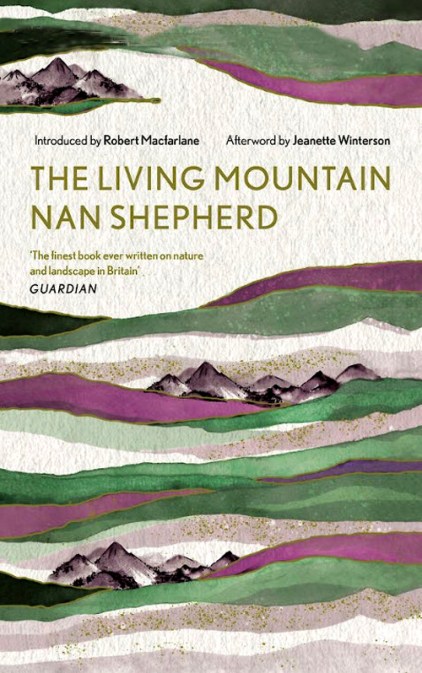
bookCover_livingMountainTwo years ago, I was in England and picked up Nan Shepherd’s The Living Mountain from the Weybridge Bookshop. After listening to Robert MacFarlane on CBC Radio, a couple of weeks ago, it was time to try to find my copy. The book, written towards the end of the Second World War but not published until 1977, describes her relationship with the Cairngorms in Scotland. It is considered a classic of nature writing. Twelve short chapters ranging from the Plateau through Water, Snow and Ice to Life (Plants, Birds, Animals, Insects and Man). She concludes with Being.

“I believe that I now understand in some small measure why the Buddhist goes on a pilgrimage to a mountain. The journey is itself part of the technique by which God is sought. it is a Journey into Being; for as I penetrate more deeply into the mountain’s life, I penetrate also into my own”. p.108.

In many ways, it is a Geography text.
MacFarlane provides an excellent thirty-page introduction to this slender book.

Acknowledgements

Ralph and Jennifer D’Aubin for their successful meat market and value-added products. Anne Crossman, Roger Mosher and Edward Wedler for their contributions to community blogs. Heather Stewart for her cuisine.

References
Nan Shepherd. 2011. The Living Mountain. Canongate Books

Posted in Article Review

On April Fool’s Day

Serendipitously, I noticed in Orion magazine, besides the article on David Quammen, that there was an article on a conversation between Tim DeChristopher and Wendell Berry, To Live and Love with a Dying World. DeChristopher is a Climate Activist, Berry is a writer and poet.deChristopherBerry

From their conversation, I took away Berry’s concern about machine civilization and the role of the state.

“Live so far as you can in opposition. You’ve got to live and love. You’ve got to find the answers in your heart”

And a couple of short poems.

“O when the world’s at peace and every man is free
Then will I go down unto my love.
O and I may go down several times before that.”

“Something better, something better!
Everybody’s talking about something better!
The important thing is to feel good
And be proud of what you got, don’t matter if it ain’t nothin’ but a log pen.”

After my last blog, I asked Andrew for a current photograph from Iqaluit.conditionsUpNorth In the background, you can see the roof of the arena. You can also see that there are not many people around. Social isolation.
For several weeks, I have been burning materials from the hedgerows. Every day, I would check the burn ban website, to see whether burning was permitted between 2 pm and 8 am. Then I noticed in the SaltWire-Spectator that someone was charged for ignoring the burn restrictions in the Village of Lawrencetown. Unbeknown to me, the Minister of Lands and Forests had put out a no-burn order until May.
To free up the Fire Departments in this time of crisis. Oh well, no rush!

Earlier in the week, I contacted Brent Hall at Esri Canada.person_BrentHall My interest was the impact of COVID-19 on teaching GIS in the universities. Brent observed that this pandemic will change the relationship between education and online learning. This caused me to reflect on Wendell Berry’s comment about ‘machine civilization’.

Postscript

Listening to The Jerry Cans CD, Nunavuttitut , to remind us of life in Iqaluit. Feels good!
And received our first email from grandson, Fraser Root-Maher, he deserves a special mention too. I hope he will become a blogger.

Acknowledgements

Andrew Maher for the new photograph. Brent Hall, Director, Education and Research at Esri Canada for his perspective on COVID-19 and Education. Edward Wedler for his graphics contribution. Heather for her long-distance walking, in the rain.

References

Orion Magazine. March 2, 2020. To Live and Love with a Dying World.Tim DeChristopher and Wendell Berry.
Nova Scotia Burn Restriction web site.
The Jerry Cans. CD Nunavuttitut.

Posted in Book Review

The Song of the Dodo

In the last few days, David Quammen’s name has come to my attention, twice.bookCover_spillover_2 The first was a podcast, available through Emergence Magazine. The second was from Sandra Barry about an article in Orion magazine. In both cases, they refer to his book, Spillover: animal infections and the next human pandemic. It was published in 2013.

My interest in Quammen’s writing goes back to the mid-’90s.bookCover_songOfTheDodo After finishing graduate work in Biogeography, and spending time in Indonesia, I could not resist the Song of the Dodo, with its subtitle, Island Biogeography in an Age of Extinction. Today, we continue to divide our landscape into islands. For example, consider the continued forestry practices in Nova Scotia.
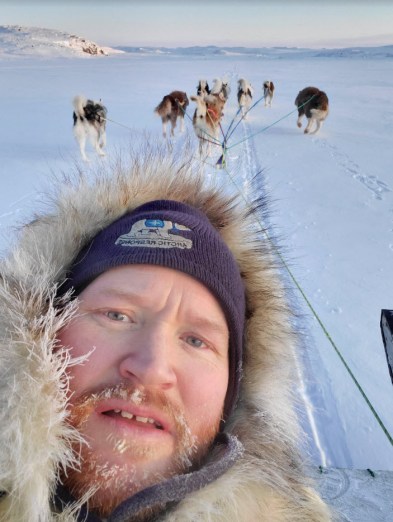
This Tuesday (March 31st) Heather and I were scheduled to visit grandchildren in Iqaluit.upNorthDogTeamSelfie Talking to Andrew (my son) on the weekend, the current procedure for visitors to Nunavut is two weeks quarantine in a designated hotel in Ottawa (or another transit centre) BEFORE travel. If the quarantine is successful, then one can visit. This provides a clear measure of the vulnerability of these Northern communities from the COVID-19 virus.

Today, Heather was noticing the lack of traffic on Highway #201. We were able to hear the songbirds that are arriving back in the Valley. On a beautiful morning, I had to break the silence, by getting the chainsaw out of the garage. There were yard chores — cutting off the larger dead branches from the Apple trees and trimming the silver maple in the front yard before it extends upwards to the Nova Scotia Power lines. The privet hedge contains too many old dead branches at their core.

The end result was a full day outside. If we can use this month of April (normally spent in the North) to clear out the old growth, then we can begin to imagine a larger garden and greater food self-sufficiency. At the same time, we add biomass to the compost pile and additional wood and kindling for the woodshed. This will warm us, sometime, next Winter.

Acknowledgements

Sandra Barry for resurrecting memories of David Quammen’s writing. Heather for sharing both the hard work and dreaming of a different future. Edward Wedler for his weekend blog, as well as his support and good humour.

References

David Quammen, 2013. Spillover: Animal Infections and the Next Human Pandemic WW Norton & Co.
Emergence Magazine podcast. Shaking the Viral Tree.
Orion Magazine. 17 March 2020. Why David Quammen is nor Surprised.
David Quammen. 1997. The Song of the Dodo. Island Biogeography in an Age of Extinction. Simon & Schuster.

Posted in New thinking

School of Life

Peter, my brother, sent me the link ‘On Confinement’ from the Book of Life. There is also a reference to Xavier de Maistre ‘A Journey Round my Room‘, written in 1790. At this time, we are all learning from the School of Life.banner_schoolOfLife

In response to the conversation between Janice Stein and Jane Jacobs, I received the following astute observations from Willy Hunter.

“Citizenship is a part-time job for us all. Some people express it via social works, and other’s via committee work, and others by being elected. Some people get to do it more or less in their jobs. Like teachers and nurses etc..

Forgiveness is actually for the forgiver and service is for the server “

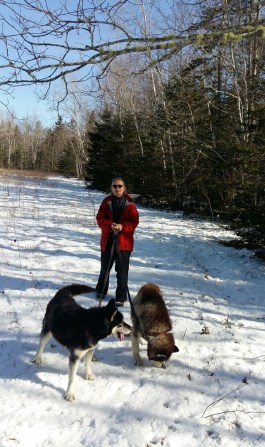
bobsDogs_2This week, we have tried to maintain our fitness regime through snowshoeing and walking. Unfortunately, the private gym at FE (Fitness Experience) in Middleton has been closed down. Similarly, the province has closed parks and trails. From Cathy, my personal trainer, I am beginning to understand my body. Now, I need to understand my mind. That seems to be one of the premises of The School of Life. Interestingly, there are several School of Life sites in Europe, but none in North America.

bookOfLifeActivitiesEmergence Magazine is offering a set of activities for the online community: a monthly book club, contributor conversations, biweekly Nature Writing course, and a facilitated workshop on the theme of vulnerability.

Before today’s snowfall (Tuesday) I was able to spend time clearing multiflora rose from the hedgerows. It was remarkable to see how different species grow together. Their form dictated by their interaction e.g. deadly nightshade, high bush cranberry. We continue to prune in the orchard, as well as topping the conifers which reach towards the overhead power lines. Today, for the first time, we were able to snowshoe down through the property.

bookCover_knittedBirdsPostscript

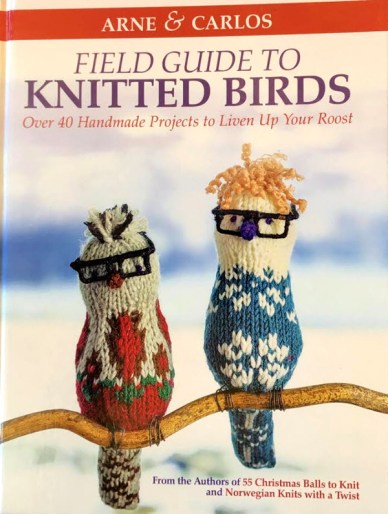
My favourite book on the coffee table is Arne and Carlos. 2017. Field Guide to Knitted Birds. Trafalgar Square Books.

Acknowledgements

Willy Hunter for the OK to quote from his email. Cathy Bruce West for her Healthy Bodies advice. Peter Maher for the link to The Book of Life. Heather for her companionship and custodian of the pruning instruments. Edward Wedler for his graphics contributions

References

On Confinement from The Book of Life.
Xavier de Maistre. A Journey Round my Room.
The School of Life. theschooloflife.com
Emergence Magazine. March 24,2020. Contributor Conversations, Book Club, Nature Writing Course, Embracing Vulnerability and Connection. New podcast released every Tuesday.