I want to use the word ‘accountability‘ in two very different ways. First, at the time of a municipal election, candidates are seeking to hold local government to account. This week’s The Reader (August 14) includes contributions from Susan Robinson-Burnie (District 7) and Alan Parish (District 3). Meanwhile, from the Municipality, we are now seeing coverage on the new waste management site in West Paradise.
If you will excuse a bit of ‘wordplay’, I would like to address ‘a County ability’.
I continue to be amazed that, at a time when so many of our issues are Geographic in nature (e.g. climate change, COVID, sustainable land management) that the county does not make better use of the resources at both COGS and AGRG. Many of these Geomatics technologies are in high demand (e.g. LiDAR, image analysis, GIS). Annapolis County could showcase a leadership role in municipal land management.
What is stopping us?
Is it the same reason we cannot collaborate with adjoining counties and towns?
In response to my queries, Edward sent me the link to the following TED talk …
It features Chris Fisher, archaeologist and founder of Earth Archive.
Edward’s question: “Could we develop a Nova Scotia Archive as part of the Earth Archive Mission [starting in the Valley]?
YES. And we could start by utilizing the skills, abilities and resources that reside in Annapolis County.
Postscript
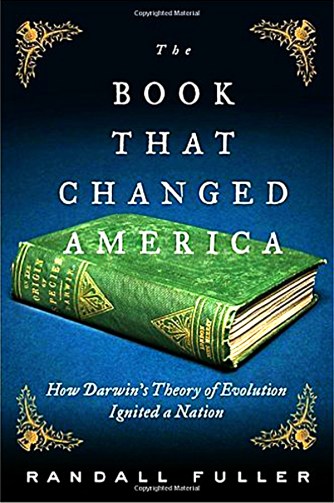
Finished reading Randall Fuller’s The Book that Changed America. Fuller describes the impact of Darwin’s Origin of Species on the intellectual community in Concord in 1860. This included Emerson, Thoreau and Asa Gray (the botanist). It was the time of Abraham Lincoln as President and the anti-slavery movement.
If you are a book-lover, check out the documentary The Booksellers on GEM.
Acknowledgements
Edward for the TED talks link. Heather for the help in the garden. Anne Crossman for the updates on the municipal scene. Jon Murphy for news from GoGeomatics.
We have started to see Municipal election signs appear along the roadside. In the current issue of The Reader, candidate Alan Parish (District 3) articulated his position. Clearly, time to figure out the councillor candidates for our district.
What are the issues of concern to residents of Annapolis County? My list would include:
loss of forested land (aka land use planning)
waste management
health services
internet services
Some of these issues include both municipal and provincial politics. Given there are no political parties at the municipal level, it’s hard to understand whether there is a slate of candidates who share a common platform or whether each district beats to its own drum. I suspect the latter is the case.
Let me unpack each of my four concerns.
forest land use.
Within the county, there are citizen groups concerned about the remaining forest cover. The county has produced a forestry report. However, decisions and practices appear to be under the control of the provincial government. Check out the Healthy Forest Coalition newsletter for an update.
waste management
This is portrayed as a financial matter. What we know is that we have waste management sites outside of Lawrencetown, on the Arlington Road, and now in West Paradise. Is this all necessary? What is the financial context for these decisions?
health services
The provision of health services is a provincial matter. However, the lack of services in our county impacts the quality of living in Annapolis County. We see new infrastructure in Middleton and Lawrencetown, but will it improve access to a family doctor?
internet services
There is a multitude of different providers in the county. What are the costs and quality of these services? Again, what is the relationship between municipal and provincial strategies? How complete is the coverage?
The bottom line is that every resident lives in a specific district. If you want to choose between candidates, you need to know what they stand for, what is their position on the above issues? Do they share their position with other councillors? Do they understand the provincial view on these same issues?
Given the recent appointment of Larry Powell, as public relations/press office to the Municipality, it would be exceedingly timely if there was transparency on these and other issues. Given municipal politics does not follow party lines, it is important to see if there is an alternative to the status quo.
Perhaps there could be a public debate between current councillors standing for re-election and those seeking election. Meanwhile, Larry could provide an objective factual report on previous decisions and their costs.
From previous blogs, I have had useful conversations with Brian Arnott in Lunenburg about ‘communities of place’ and ‘communities of interest’. I was on the board of the Valley Regional Enterprise Network (VREN) but found that neither the County nor the town of Annapolis Royal supported the organization. It proved to be very Kings County centric.
Ultimately, we must understand that we live within a nested series of geographies. My civic address places me in a specific district within Annapolis County, within the physiographic region called the Annapolis Valley. This is part of Southwest Nova Scotia, etc. I believe that we live in District 7, our current representative is Warden, Timothy Habinski.
This sunflower adorns our front yard.
In terms of my personal interest, this lies within education. What is happening at the Centre of Geographic Sciences, a sub-campus of the NSCC? What is happening to the Gordonstoun project? How do these initiatives fit within the municipal and provincial agenda? Will it improve the quality of education for everyone in Annapolis County? Are there sustainable economic development opportunities?
References
Municipality County of Annapolis, 2018. Forestry Report.
Acknowledgements
Much appreciation to those friends and acquaintances who respond on occasion to my blog. Heather for our discussions on a ‘sense of place’. Edward for his artistic contributions.
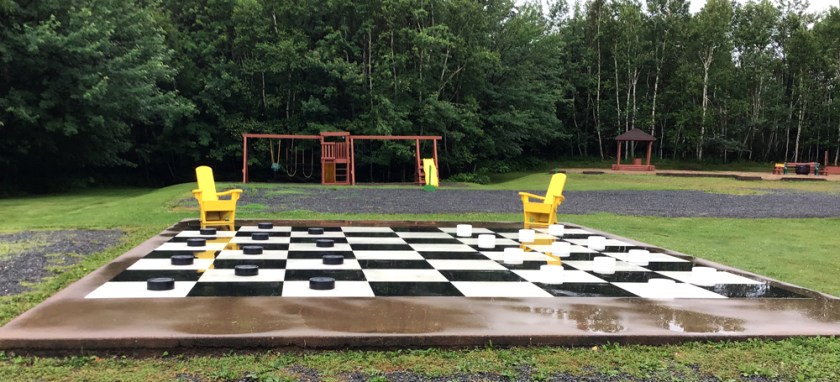
It has been the location for our family reunions since 2014. The lodge was built in 1926. Well-known visitors have included King George V and Princess Juliana of Holland during the Second World War. More recently, Brian Mulroney (1983), Condoleezza Rice(2006) and Jamie Oliver (2015). No reunion this year, cancelled by COVID-19.
At the lodge, I discovered a copy of At Home on the North Shore: The Summer 2020 special edition is sponsored by Healthy Pictou County. It contains an article Best Practices, by Crystal Murray, that describes the formation of a Citizens for Healthy Pictou County who agreed ‘that a collaborative effort was needed to institute transformational change to the local health care system’. Given the state of health care in Annapolis County, it begs the question: how can this model be deployed elsewhere?
‘A grassroots movement is part of the ethos of Pictou County and has been the key to the success of many community assets in the region’ p.12.
‘Hike in beautiful Pictou County known for its sandy beaches, warm community spirit and a fascinating industrial history. To qualify you must hike just over 30 km. along the trails and old rails in the region’
How about an Annapolis County badge?
The Divisions of the Heart, Elizabeth Bishop and the Art of Memory and Place includes a keynote address by Anne Stevenson. Her essay is entitled ‘The Geographical Mirror’.
‘Bishop has always been a difficult writer to ‘place’. She found self-placement, both geographical and psychological, so difficult that it is tempting to read the entire body of her work as an extended ‘Questions of Travel‘.
‘Who am I ?‘ and ‘Where do I belong? ‘ p.21.
For myself, through Heather who is from Pictou County, returning to Pictou Lodge raises similar questions. Or in Sandra Barry’s words.
“The book-end essays comprising ‘Her own Prodigal’ and ‘Borderlands’ speak to elements of self – the poetic and the political – which held Bishop’s attention her entire life. They situate Bishop in two fundamental dimensions of place: the imagination and the nation”. p.14.
Postscript.
Michael Goodchild recommended Sue Stuart-Smith‘s book ‘The Well-Gardened Mind’ in response to an earlier blog. Looks very promising.
Acknowledgements
Heather Stewart with her roots and understanding of Pictou County. Sandra Barry for her knowledge of Elizabeth Bishop, her life and poetry. Edward Wedler for his online graphics skills.
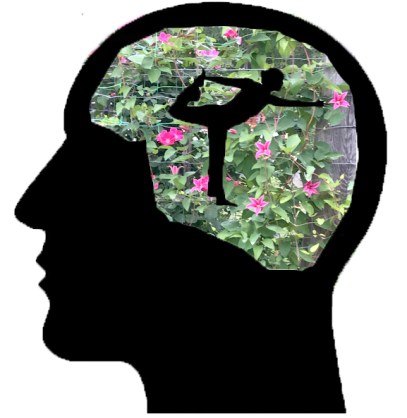
This week, I reconnected with Cathy Bruce-West. She is a personal trainer. Before COVID-19, I had worked with her to strengthen my knees. So we had two sessions ‘en Plein air’ at Andrew’s studio across the road. The local gymnasiums are still planning their re-opening. After too much sitting, the program is designed to open up the body, through a series of stretches and strengthening exercises.
What impresses me is the knowledge of anatomy – joints, ligaments, muscles, plus the discipline of the session. It does, however, raise an interesting question: what are the equivalent stretches to open up the mind?
Heather has shared with me the Walrus podcast for June 20 ‘Your brain in COVID-19’. Would highly recommend it, especially the contributions from Andrea Soddu and Philip Mai.
The Walrus · Your Brain on COVID-19
Another local non-fiction reference, from Heather this week, Geology of Nova Scotia, a field guide by Martha Hill and Sandra Barr. It provides directions and interpretation to forty-eight sites in the province. The better we appreciate our landscape, perhaps, the less likely we will tolerate its abuse.
This concept resonated with a message that I noticed on the public notice board at the Holy Trinity Anglican Church in Middleton.
Reading: how to install new software in your brain
Postscript.
Edward sent me the Gizmodo link as an illustration of the contribution of citizen science towards our understanding of nature.
Acknowledgements
Cathy Bruce-West for her patience and support. Heather for her ‘scientific’ approach to life. Edward for emails and online graphics skills.
1) Nature’s Calendar by Annamarie Hatcher
2) The Old Woollen Mill by Corrine Cash
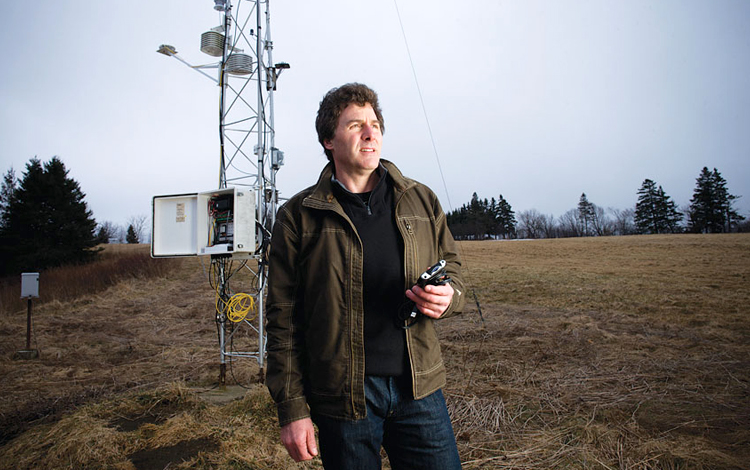
3) Cape Breton Weather Mesonet by Jonathan Buffett
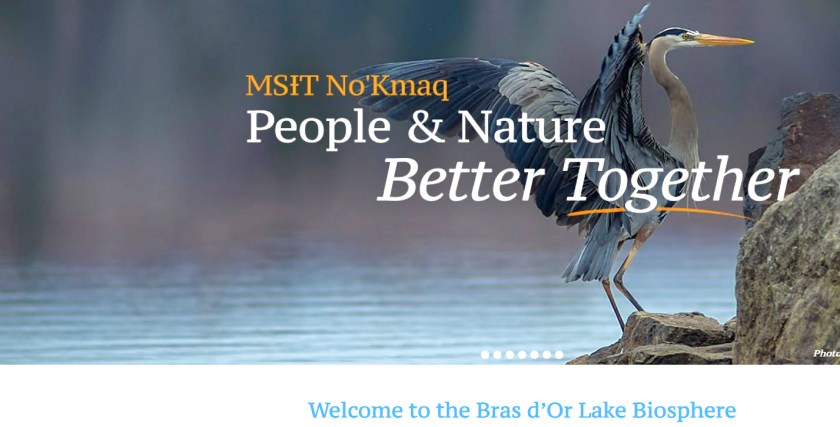
Annamarie Hatcher links the changes in Nature to the Mi’kmaq calendar. Corrine Cash describes the long history of the mills at Irish Cove. Jonathan Buffett is the founder of Cape Breton Mesonet, a network of community-owned Weather stations in Cape Breton and the eastern mainland.
Their solstice newsletter under the slogan ‘Msit No’Kmaq — People and Nature; Better Together — offers a model for SNBRA.
In Southwest Nova, David Colville at COGS has maintained a weather network for over a decade. In this time of climate change, perhaps it is time to consider a ‘community-owned weather station network for Southwest Nova?
As in Cape Breton, we should embrace the slogan: Msit No’Kmaq.
Can we take community ideas from there to here?
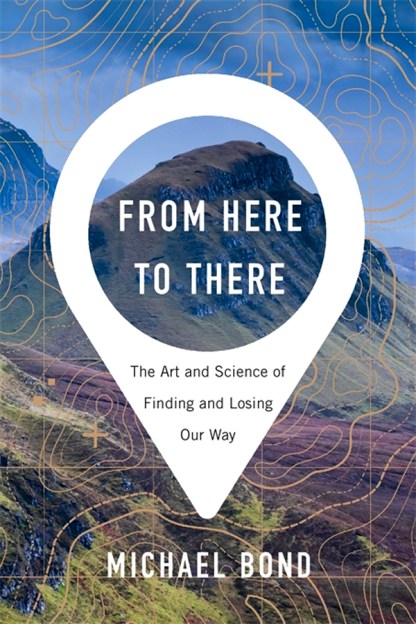
This week, Michael Bond’s book From Here to There arrived at the Inside Story. Bond has been Senior Editor at the New Scientist in England.
His book explores ‘the art and science of finding and losing our way’. He reviews the work of Claudio Aporta, Dalhousie University, on Inuit geographic knowledge in the Canadian Arctic. Bond describes the importance of exploration, spatial awareness and self-directed learning. He investigates the latest research from psychologists, neuroscientists.
“ The hippocampus and it’s neighbouring regions seem to have evolved specifically to help us build mental representations of the outside world that we can use to get around and orientate ourselves.” p.71.
In Chapter 8 Bond tells the story of Gerry Largay who is lost and dies on the Appalachian Trail. It includes the Search and Rescue process.
In the final Chapter (10) he looks at Alzheimer’s disease.
The discovery that Alzheimer’s disease disrupts the brain’s spatial system long before the disease takes hold has raised the prospect of using spatial tests to diagnose it. p.203.
Postscript
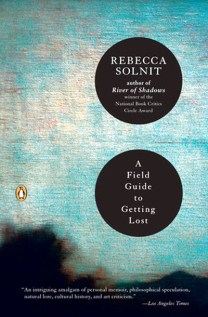
Reading the book by Michael Bond made me pull from the bookshelf, the writing of Rebecca Solnit, in particular, A Field Guide to Getting Lost.
Never to get lost is not to live, not to know how to get lost brings you to destruction, and somewhere in the terra incognita in between lies a life of discovery. p.14.
Acknowledgements
Edward added the graphics. Heather provided useful feedback.
As promised, I post an image of the apple orchard in blossom.
Two emails arrived in my Inbox this morning (Wednesday, May 27).
Google Alert on Gordonstoun from Anne Crossman
Natural Climate Solutions meeting from Nina Newington.
“BBD Education, the UAE school management consultancy, has announced it will help one of the world’s leading schools, Gordonstoun School, to support its brand expansion into Nova Scotia, Canada.”
“Earlier this year, the highly-coveted private school announced expansion plans in China with BBD Education support.”
For the Natural Climate Solutions meeting, there were three attached submissions to the European Union over Burning of Biomass for Energy.
From Norris Whiston, Earltown:
“Where I live I am presently surrounded by clear cuts and listen and watch trucks pass my home with logs of various sizes on their way to mills and chipping mills.”
The Gordonstoun announcement and date 2022 reminded me that there will be a post-COVID world. The Norris Whiston quote reminded me that our forested landscape is still for sale.
Can we not use this time to rethink our economy?
Do we have to destroy our forests because they represent jobs in rural Nova Scotia?
Currently, the lobster fishery is on hold because of the lack of a market in China.
What are the economic values behind the Gordonstoun project? Is this another example of the Nova Scotia landscape up for sale?
Is it a coincidence that BBD Education is expanding into China and Nova Scotia at the same time?
I am thinking that it is time for Nova Scotia (Canada) to re-examine its values in a post-colonial, post-COVID world. We could use the two-year window to help re-define the philosophy of education at Gordonstoun School within the context of community — an ethics of place and in a new collaborative global economy.
Anne Crossman for sending the Google Alert. Nina Newington for material for the next Natural Climate Solutions virtual meeting. Edward for his input and graphics.
References
Google alert email
Natural Climate Solutions email
Centre for Local Prosperity newsletter. May 27, 2020.
This week, I was in contact with the municipal councillor, Gregory Heming, about Aldo Leopold’s land ethic and the forestry practices in Annapolis County. Gregory was kind enough to share a presentation he made before the House of Commons Standing Committee on the Environment and Sustainable Development in 2006.
But first, let’s revisit Aldo Leopold. In The Sand County Almanac, there are a series of essays, including the Land Ethic (p.237-264) and Wilderness (p.264-279).
“A land ethic, then, reflects, the existence of an ecological conscience and this, in turn, reflects a conviction of individual responsibility for the health of the land. Health in the capacity of the land for self-renewal. Conservation is our effort to understand and preserve this capacity.” p.258.
Heming put forward four notions.
1) If CEPA (Canadian Environmental Protection Act) does not tie directly and pragmatically into community life, into rural civic life, it is not likely to gain the support of the people.
2) from David Kemmis,
“ it would be an insult to these people to assume that they are incapable of reaching some accommodation among themselves about how to inhabit their own place”
3) from Wilkinson,
“An ethic of place respects equally the people of a region and the land, animals, vegetation, water and air. An ethic of place ought to be a shared community value.”
4) from Erica Jong,
“Take your life in your own hands”, she said. “And what happens ?” A terrible thing “no one is to blame”.
Today’s reality. We have the Minister, Nova Scotia Lands and Forests talking about the practices for harvesting crown land on South Mountain. What will be the impact of these practices on the citizens living within the Annapolis watershed?
How can the ethics of place espoused at the municipal level be reconciled with the industrial forestry espoused at the provincial level? Edward Wedler reminded me about the Annapolis County Forestry report. We should evaluate it from the perspective of an Ethics of Place.
In these pandemic times, it is even more critical that we do not lose the voices of the citizens.
For supportive views on the ethics of place, check out the writing of Gary Snyder and Wendell Berry.
A Place on Earth (Berry)
A Place in Space (Snyder)
Postscript.
Watched Ellen Page 2019 documentary on Netflix about environmental racism in Nova Scotia, “There is something in the water.” Very relevant and thought-provoking. Highlighting Shelburne, Boat Harbour and Shubenacadie.
Acknowledgements
To Gregory Heming for sharing his 2006 presentation.Edward Wedler for his technical support. Heather Stewart for her moral support.
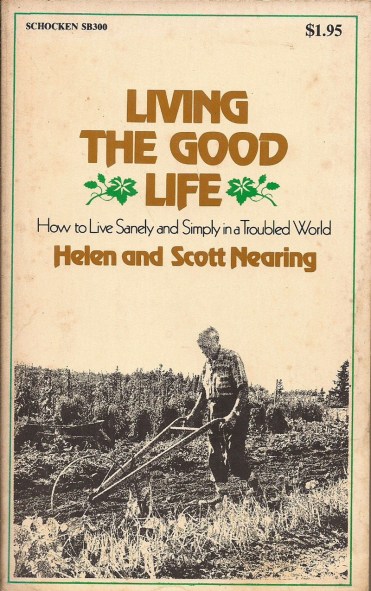
“Scott Nearing died three weeks after his hundredth birthday. He went with dignity, purposefully fasting, after a long and good life”.
After looking at the writing of both Bateson and Roszak, I decided to stay with Helen Nearing’s memoir. From the cover,
“At 87, Helen seems content to be nearing the end of her good life. As she put it, ”To have partaken of and given love is the greatest of life rewards. There seems never an end to the loving that goes on forever and ever. Loving and leaving are part of the living.”
Helen Nearing died in a single-car crash in 1995, aged 91.
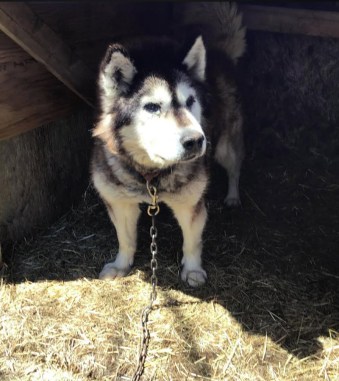
Tribute to Uke. Uqaliq (Rabbit)
“Uke” was born on Baffin Island in 2003. She moved with her sister Siksik (Arctic ground squirrel) to Prince George, BC. They were Patrick’s skijoring team. Later, they moved with the family to Cape Breton. Finally, they came to Paradise, Nova Scotia where they have enjoyed the walking trails through the orchard and the forest nursery. She will be missed by her human family and sister.
Postscript
In the early ‘70s, I remember driving through Nova Scotia on my way back to Memorial University of Newfoundland (MUN) in St Johns. I stopped in Heatherton (near Antigonish) to meet with Allen van Newkirk, and his wife, Susan. Allen was a poet from Detroit who had set up the Institute for Bioregionalism Research. I was teaching Biogeography and Computer Mapping in the Department of Geography at MUN.
Fast forward, almost fifty years, I have pulled off the bookshelf my collection of books on Bioregionalism. They include:
In the McGinnis book, there is an excellent chapter by Doug Aberley.
“The term Bioregionalism was first conceived by Allen Van Newkirk who had been active in eastern US radical politics and who met Berg in San Francisco in 1969 and again in Nova Scotia in 1971.”
As conceived by Van Newkirk:
“ Bioregionalism is presented as a technical process of identifying biogeographically interpreted culture areas ….called bioregions. Within these territories, resident human populations would ‘restore plant and animal biodiversity’, ‘aid in the conservation and restoration of wild ecosystems’ and ‘observe regional models of new and relatively non-arbitrary scales of human activities in relation to the biological realities of the natural landscape.”
This led me to further research the writing and life of Peter Berg (see reference).
From Edward Wedler, he forwarded a link to the bookstore in Parrsboro, Nonesuch. They are offering a surprise package of five books on any topic you are interested in for $60 includes delivery. I should send my $60, my topic would be ‘Bioregionalism’.
Finally, Saturday, we took a quick day trip to New Glasgow to check on Heather’s Dad. It was a pure pleasure to drive through a different landscape, in this case, the Rawdon Hills from Windsor to Truro.
Acknowledgements
Edward for the link to the Parrsboro bookstore. Heather, for sharing the drive to New Glasgow and back.
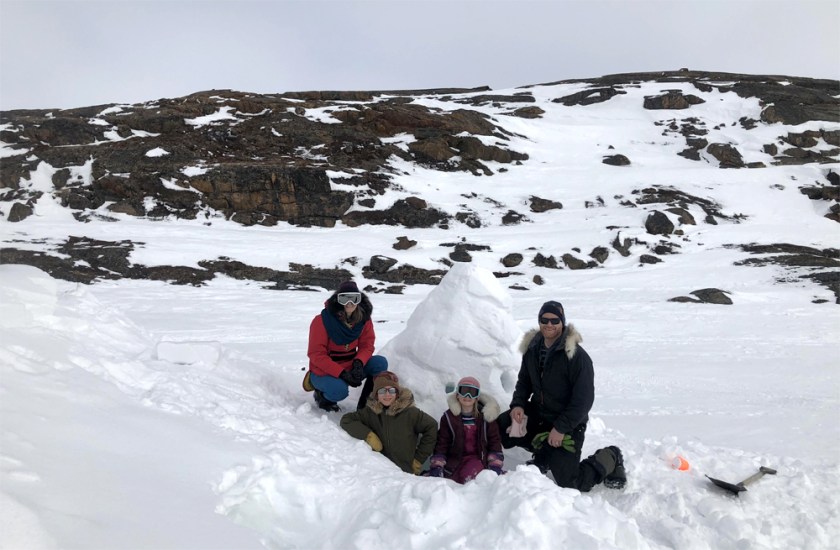
At this time of the year, we are normally resident in Iqaluit. It is a good time to be on the land.
Andrew and his family, out on the tundra, near their cabin.
The sea ice is still frozen, and there is a good spring snow cover. Given the uncertainties of food supply in Northern communities, it is likely predictable that we shall see an increase in hunting and fishing. Traditional skills will have heightened importance. Quinn has built his first Igloo. Isla has started to drive the small family snowmobile..
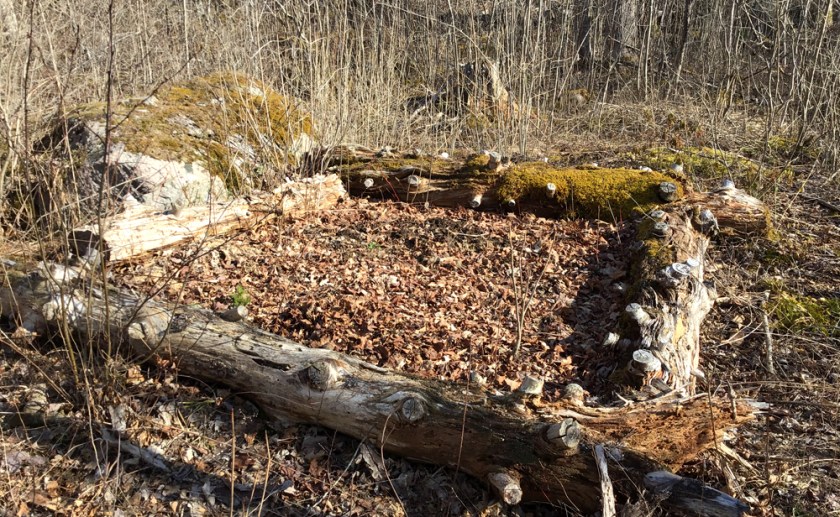
Meanwhile, in the South, as the seasons change, there seems to be an excess of biomass. The sources include:
– firewood from coppicing for next Winter; – chipping of brush and bark waste; – charcoal and wood ash from the woodstove; – kitchen waste in the compost bin; – leaves and other organic matter for the hugel beds.
The challenge is to integrate these resources ‘back to the land’. Recycling these materials will complement the planting of seeds in the greenhouse and cold frame.
We will see a resurgence in gardening. We will pull off the shelves, books by Niki Jabbour and Adam Footer. We will read about the work of Bob Cervelli and others. We will seek advice from community gardeners; sharing ideas and seeds. We will investigate the properties of biochar. We will reinforce the edges of our pond.
Our life will be governed by the weather, and our ability to complete the multitude of land-related tasks.
Acknowledgements
Andrew and Julia for their insights into Northern living. Rick for his knowledge of biochar. Heather for planting the seeds. Edward for additional graphics.
 First, at the time of a municipal election, candidates are seeking to hold local government to account. This week’s The Reader (August 14) includes contributions from Susan Robinson-Burnie (District 7) and Alan Parish (District 3). Meanwhile, from the Municipality, we are now seeing coverage on the new waste management site in West Paradise.
 In response to my queries, Edward sent me the link to the following TED talk …
 Postscript
 In the current issue of
 forest land use.
 waste management
 health services
 internet services
 From previous blogs, I have had useful conversations with Brian Arnott in Lunenburg about ‘

 For light reading, I brought along


 This week, I reconnected with Cathy Bruce-West. She is a personal trainer. Before COVID-19, I had worked with her to strengthen my knees. So we had two sessions ‘en Plein air’ at Andrew’s studio across the road. The local gymnasiums are still planning their re-opening. After too much sitting, the program is designed to open up the body, through a series of stretches and strengthening exercises.
 This Saturday, I received their
 This week, Michael Bond’s book
 Postscript

 Finally, tonight, I notice in the
 In

 Tribute to Uke. Uqaliq (Rabbit)
 I was teaching Biogeography and Computer Mapping in the
 In the McGinnis book, there is an excellent chapter by Doug Aberley.
 They are offering a surprise package of five books on any topic you are interested in for $60 includes delivery. I should send my $60, my topic would be ‘Bioregionalism’.
 The challenge is to integrate these resources ‘back to the land’. Recycling these materials will complement the planting of seeds in the greenhouse and cold frame.
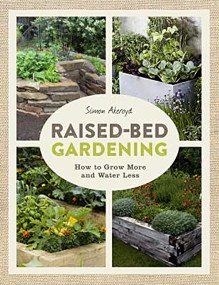 We will see a resurgence in gardening. We will pull off the shelves, books by Niki Jabbour and Adam Footer. We will read about the work of Bob Cervelli and others. We will seek advice from community gardeners; sharing ideas and seeds. We will investigate the properties of biochar. We will reinforce the edges of our pond.

